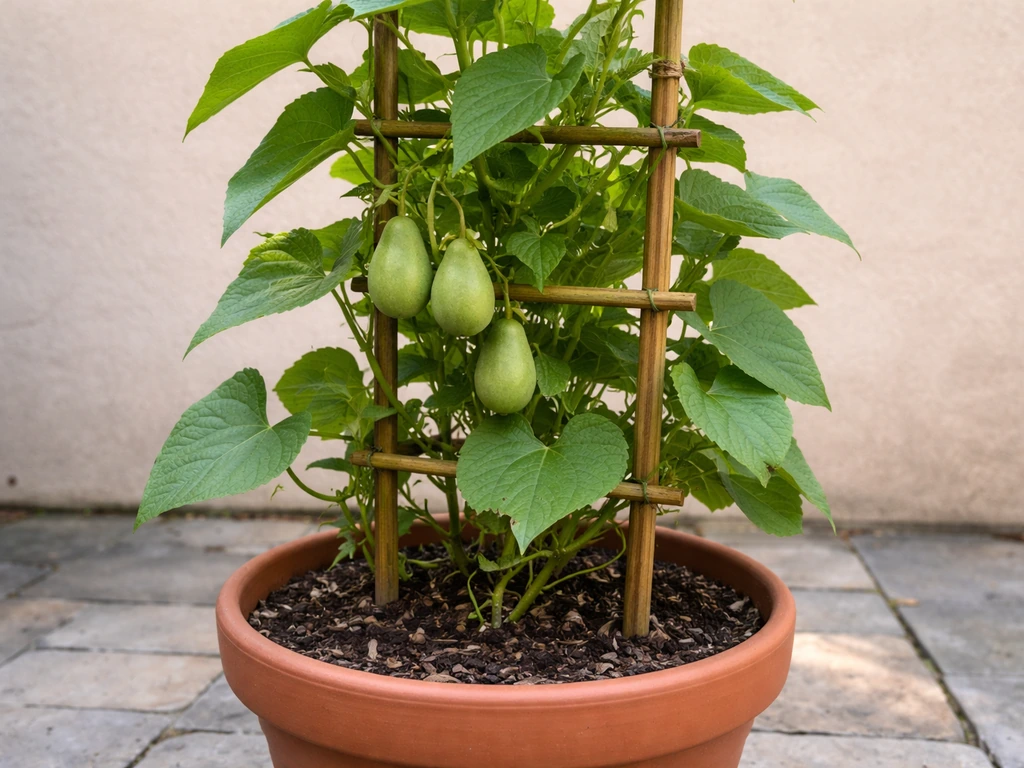
Yes, chayote can grow in pots, and it can actually do really well in a container if you give it the right setup. You need a big pot (at least 20 liters, or roughly 5 gallons, and bigger is better), excellent drainage, a sturdy trellis, and a full-sun spot. Get those four things right and you can realistically harvest fruit 120 to 150 days after planting. The main traps people fall into are using a pot that's too small, letting the roots sit in soggy soil, and underestimating how much vertical space this vine wants to claim.
How to Grow Chayote in Pots: Step-by-Step Container Guide
Marcus Whitley
5 May 2026
Can chayote grow in pots (and what to expect)
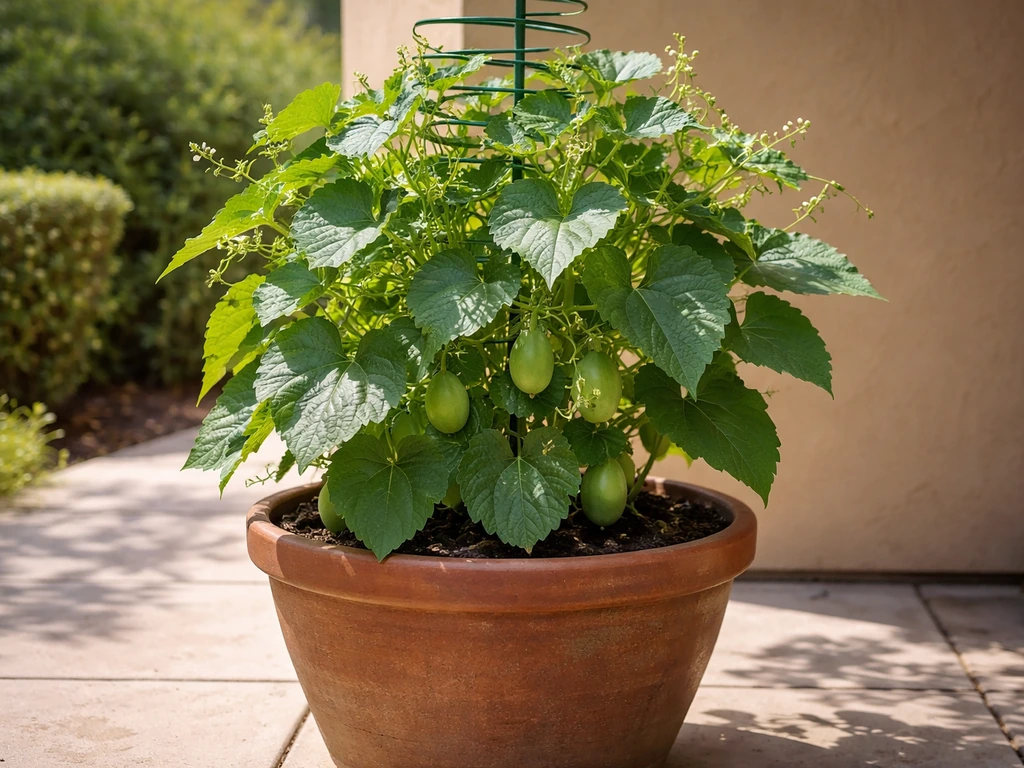
Chayote (Sechium edule) is technically a perennial, meaning in frost-free climates it can keep producing year after year. In a pot, it behaves more like an ambitious annual because container roots can't spread as freely as in-ground roots. That said, plenty of container gardeners get respectable harvests out of it. If you want something similar that also climbs in containers, you can look up how to grow Thunbergia in pots for the right pot, light, and trellis setup.
The honest expectation: you won't get the same volume as an in-ground plant sprawling across a fence, but you can absolutely get fruit. The vine is vigorous, it will climb and spread, and it needs your management to stay productive and not take over your balcony.
One thing worth knowing upfront is that chayote is a short-day plant. It starts flowering when day length drops below about 12 hours. That means in most climates it won't flower in midsummer when days are longest. Expect flowers to appear around 110 to 120 days after planting, and fruits to reach harvestable size roughly 4 to 6 weeks after pollination. Plan your planting date with that window in mind so your fruiting period lines up with shorter autumn days, not a frost.
Choosing the right pot, location, and trellis
Pot size is where most beginners shortchange themselves. Go with at least a 20-liter (5-gallon) container, but honestly a 40- to 60-liter pot gives the roots more room to breathe and leads to a stronger, more productive vine. If you are aiming for the best results, use this pot sizing guidance as part of your step-by-step plan for how to grow chayote in pots 40- to 60-liter pot. Wide and deep is better than narrow and tall. Drainage holes are non-negotiable: more is better. If your pot only has one small hole in the bottom, drill more before you plant anything.
Location matters as much as pot size. Chayote needs at least six hours of direct sun daily, and more is better in cooler climates. A south-facing wall or fence is ideal, especially because that wall gives you a natural anchor point for your trellis. In a small space, think of the vertical dimension as your growing area. The vine will want to climb several feet up, so position your pot where there's height to work with.
For the trellis, keep it practical and accessible. A system with posts around 5 feet tall works well because you can actually reach the fruit without a ladder, and if frost threatens you can drape plastic sheeting (6 mil thickness works well) over the whole structure to protect the plant overnight. Use netting, wire mesh, or horizontal strings spaced about 8 to 12 inches apart for the vine to grab onto. Make sure the trellis is anchored firmly into or against a wall because a loaded chayote vine is genuinely heavy.
Starting chayote in a container
Use the whole fruit, not just the seed
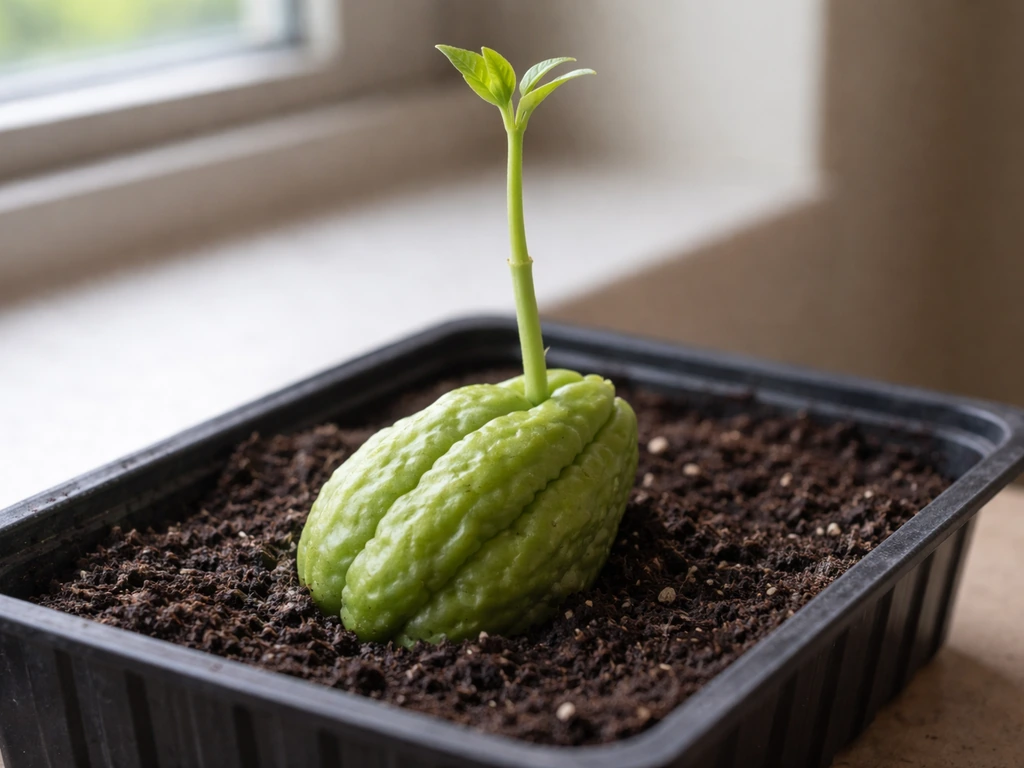
This is one of the most important things to get right. Chayote seeds germinate inside the fruit while it's still attached to the plant, a process called vivipary. If you try to remove the seed from the fruit and plant it separately, it very often fails to germinate. Don't bother. Instead, buy a whole chayote from a grocery store or market, let it sit at room temperature until you see a sprout emerging from the narrow end, and then plant the whole fruit.
Wait until the sprout is about 3 inches (7 to 8 cm) long before planting. Place the fruit in your pot at a slight angle, with the sprout end pointing upward and about half of the fruit above the soil surface. Don't bury it completely. The fruit itself acts as the seed's food source for early growth, and exposing part of it helps prevent rot while still anchoring the plant. Water it in gently and wait. Germination and early growth are usually steady once the sprout is going.
Timing your planting
Plant after your last frost date when nighttime temperatures are reliably above 50°F (10°C). Chayote needs a long, warm, frost-free growing season of at least 120 to 150 days to produce well. In most of the continental US, that means planting in spring, somewhere between late March and May depending on your region. If you're working with a shorter warm season, start the sprouted fruit indoors a few weeks early and transplant once conditions are right.
Potting mix, soil setup, and drainage
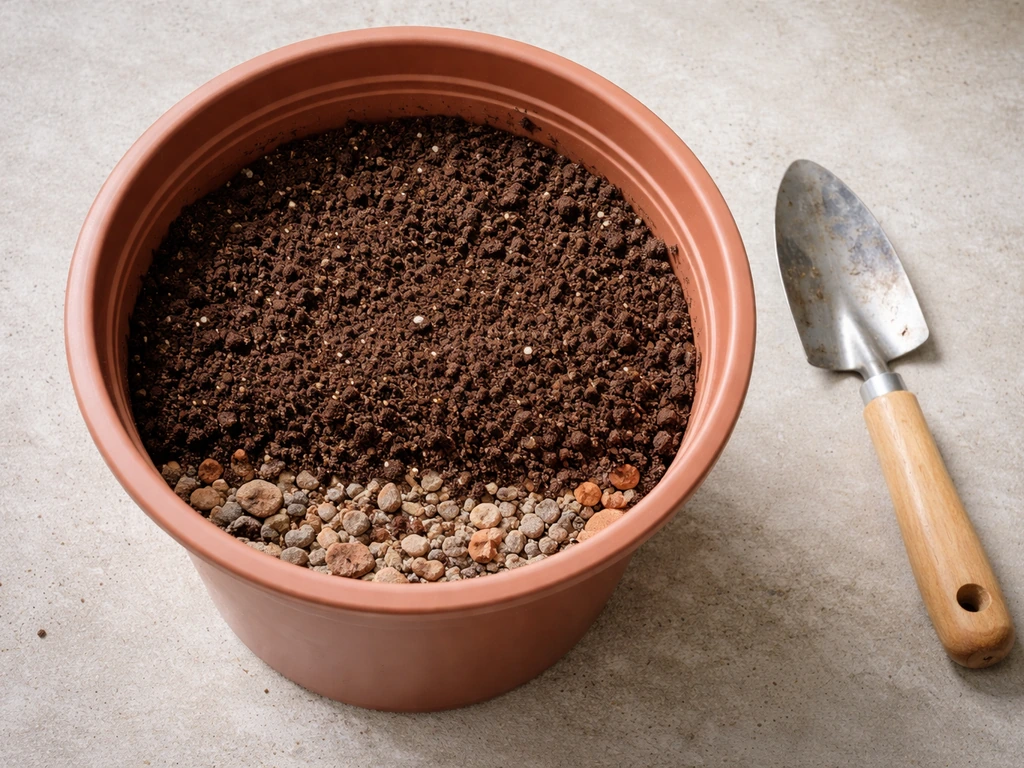
Chayote wants rich, loose, well-draining soil with a pH between about 6.0 and 6.8, though it can tolerate slightly more acidic conditions down to around 5.5. For containers, skip straight garden soil, which compacts too easily and drains poorly in a pot. Instead, build a mix that holds some moisture but never stays waterlogged. A good starting point is two parts quality potting mix, one part perlite or coarse sand, and one part compost or aged manure. This gives you the nutrients chayote wants and the drainage it needs.
At the bottom of the pot, add a one-inch layer of coarse gravel or broken terracotta pieces before filling with your mix. This keeps soil from blocking drainage holes without creating a perched water table. Then fill to about two inches below the rim so you have room to water without overflow. Waterlogging is genuinely one of the fastest ways to kill a chayote plant, so every part of your setup should be designed to let excess water escape quickly.
Watering and fertilizing schedule
Water consistently but never let the pot sit in standing water. In warm weather, most containers need watering every one to two days. Stick your finger about two inches into the soil: if it feels dry at that depth, water thoroughly until it drains freely from the bottom. In cooler weather or after rain, wait longer. The goal is evenly moist soil, not wet soil. If the pot feels heavy when you lift it (or tilt it), it still has enough moisture.
For fertilizing, chayote is a heavy feeder, especially in a pot where nutrients get washed out with each watering. Start with a balanced slow-release fertilizer (something like a 10-10-10 granule) worked into the top inch of soil at planting. Then, once the vine is actively growing, switch to a liquid fertilizer every two weeks. Use a balanced formula early in the season to build foliage, then shift to a lower-nitrogen, higher-phosphorus and potassium formula (like a tomato fertilizer) once flowering begins. That switch encourages fruit production over endless leafy growth.
Light, temperature, and keeping the vine manageable
Six hours of full sun is the minimum. Eight or more hours is what this plant really wants, especially if you're in a cloudy or northern climate. Insufficient light leads to a vine that grows aggressively but produces little to no fruit. Position the pot where sun hits it for most of the day, and rotate it occasionally if one side is shading out the other.
Temperature-wise, chayote is frost-sensitive and stops growing below about 50°F (10°C). Ideal growing temperatures are between 65°F and 85°F (18 to 30°C). In a pot, you have a big advantage over in-ground gardeners: you can move the plant. If an unexpected frost is forecast, wheel or carry the container into a garage or shed, or cover it with plastic sheeting overnight. This mobility is genuinely one of the best reasons to grow chayote in a container.
The vine will grow fast once it gets going, and in a pot you need to manage that growth actively. Train the main stem up your trellis early and pinch off competing side shoots at the base for the first month or so. Once the plant has established a strong main leader, you can let some lateral branches develop. Prune out any shoots that are heading in the wrong direction or crowding others. Without regular pruning, the vine can become an unmanageable tangle and airflow suffers, which invites disease.
Pests and diseases to watch for
Chayote belongs to the cucurbit family (along with squash, cucumber, and zucchini), so it shares many of the same pest and disease problems. In a container, good airflow from regular pruning and proper spacing does a lot of the protective work. Still, here are the main things to watch: Extension guidance for cucurbits notes that downy mildew can be suppressed with copper-based fungicides, which can be a useful option when conditions favor the disease.
- Powdery mildew: shows up as white powdery spots on the upper surface of leaves, usually starting mid-season. It's a fungal issue that thrives in warm days and cool nights. Improve airflow by pruning crowded growth, and treat early with a baking soda spray (1 teaspoon baking soda plus a few drops of dish soap in 1 quart of water) or a neem oil solution. Remove affected leaves and clean up any fallen plant debris around the pot, since the fungus overwinters in that debris.
- Downy mildew: looks similar but the powdery growth appears on the undersides of leaves, and the tops of leaves develop yellow angular patches. It's caused by a different pathogen and spreads quickly in wet, humid conditions. Avoid wetting the leaves when watering, improve drainage, and apply a copper-based fungicide at first signs.
- Squash vine borer: a serious pest east of the Rocky Mountains. The moth lays eggs at the base of the stem, and the larvae bore inside, destroying stem tissue and causing the vine to wilt suddenly. In a container, inspect the base of the stem regularly from early summer onward. If you find an entry hole with sawdust-like frass (waste material), you can slowly inject Bacillus thuringiensis (Bt) into the hole using a small syringe. Prevention through early-season row cover is more effective than treating after the fact.
- Aphids and spider mites: common on most cucurbits, especially in dry conditions. Knock them off with a strong stream of water, or apply insecticidal soap spray. Check the undersides of leaves regularly.
When and how to harvest to keep the vine producing
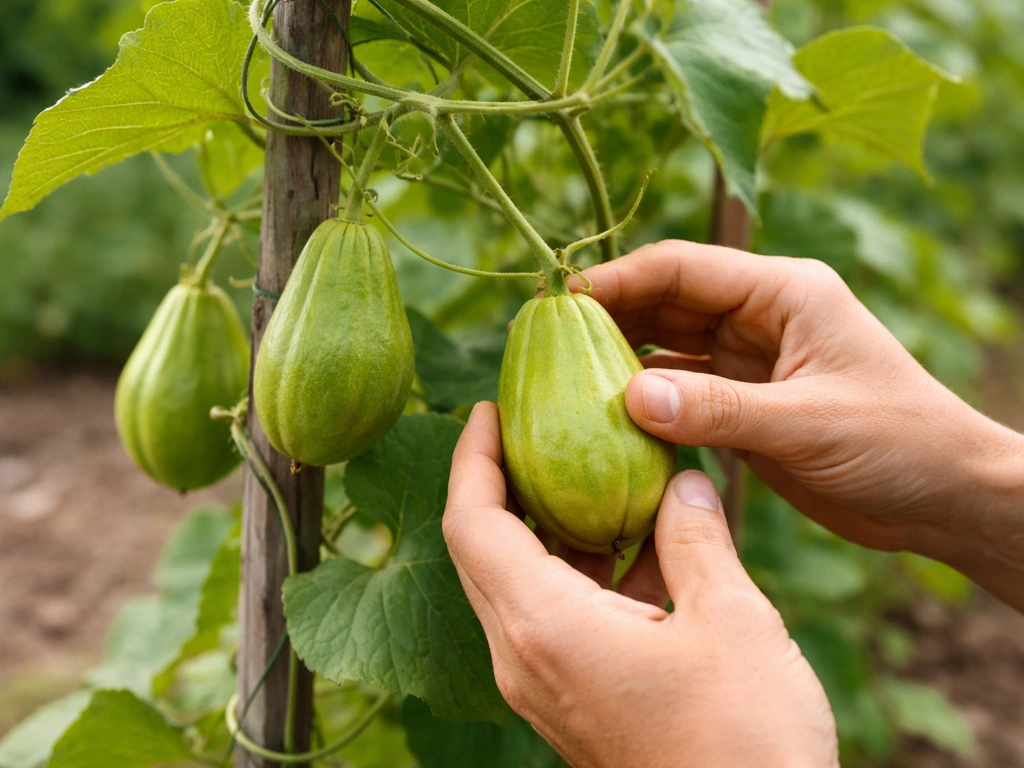
Fruit is ready to harvest when it reaches about 4 to 6 inches (10 to 15 cm) in diameter and the skin is still tender. Don't wait until the fruit is fully mature and hardened. Younger chayotes are more tender to eat and, critically, harvesting promptly signals the plant to set more fruit. Leave fruit on too long and production slows or stops.
Depending on when you planted and your local climate, you can expect your first harvest somewhere between 90 and 150 days after planting. Earlier in warm climates, closer to the 150-day mark in cooler ones. Once the plant starts fruiting, check it every few days. Use garden scissors or a small knife to cut the fruit cleanly from the vine, leaving a short stub of stem. Pulling or twisting can damage the vine.
To keep the vine productive through the season, keep harvesting regularly, keep the trellis clean and trained, and maintain your fertilizing schedule. As days shorten into autumn, the plant will naturally ramp up fruit production since it's a short-day flowering plant. In frost-free areas, a container chayote can be kept going year-round as a perennial. In colder climates, bring the pot indoors or to a frost-free shed when temperatures drop, cut the vine back hard, and let the plant rest until spring. Many gardeners have great results getting a second and third year of harvest from the same potted plant with this approach.
If you enjoy growing climbers and vining vegetables in containers, chayote is good company for plants like chokos (which is simply the Australian name for the same plant) and other vigorous cucurbits. The container setup, trellis requirements, and management approach for all of them follow very similar logic, so the skills you build here transfer well. To grow thotakura in pots, choose a large container with excellent drainage, give it full sun, and provide a sturdy trellis so the vine can climb.
FAQ
Can I grow chayote from a grocery store fruit, and how do I know it will sprout successfully?
Yes. Choose a firm, healthy fruit (avoid wrinkled or moldy ones), let it sit at room temperature until you see a clear sprout coming from the narrow end, then plant the whole fruit when the sprout is about 3 inches long. If no sprout appears after a couple of weeks, the fruit is often too old or too dry, and it usually fails to germinate.
Should I plant the whole fruit with the sprout end up, or can I cut the fruit first?
Plant the entire fruit, do not cut it. The fruit is the early food source and cutting often speeds up rot inside a container, especially if drainage is less than ideal. If you must replant, handle it gently and keep the partly exposed section similar to what you started with.
Why is my chayote vine growing but not producing fruit in the pot?
Two common causes are insufficient day length timing and too much nitrogen. Since it flowers when days shorten (around when day length drops below about 12 hours), a mid-summer start may push flowering too late. Also switch from a balanced feed to a lower-nitrogen, higher-phosphorus/potassium type once flowering begins to encourage fruit instead of leafy growth.
My pot seems to stay wet, even though I have drainage holes. What should I check?
Check for a compacted or “water-holding” mix and a clogged drainage pathway. Use a chunky container mix (potting mix plus perlite or coarse sand), verify the bottom layer is coarse and not fine compost, and make sure water actually runs freely from the bottom during watering. If the pot feels heavy long after watering, your mix is holding too much water.
How much sun does chayote really need in a container?
Aim for eight or more hours if you can. Six hours can be enough for survival, but fruit set is much more reliable with longer sun, especially in cooler or cloudy regions. Also rotate the pot occasionally so the trellis does not shade the fruiting areas.
What trellis height and type works best for balcony or patio growing?
A practical guideline is around 5 feet tall, anchored securely to the wall or posts. Use trellis material the vine can grip (netting, wire mesh, or spaced horizontal strings), and plan for harvest access. If your trellis flexes, a loaded vine can shift and pull itself loose from the container.
How often should I water potted chayote during hot weather?
In warm periods, it’s often every 1 to 2 days, but the interval should be judged by soil moisture. Stick a finger about 2 inches down, water thoroughly only when that depth is dry, and ensure the pot drains freely afterward. If you water on a schedule regardless of moisture, root issues are much more likely.
What potting mix should I avoid for chayote in containers?
Avoid heavy, compacting soils like straight garden soil. It tends to form dense clumps in pots, reduces oxygen around roots, and increases the chance of waterlogging. Instead, use a well-draining mix with added perlite or coarse sand for airflow.
Do I need to pollinate chayote by hand in a pot?
Often you do not, because container plants can still attract pollinators. If flowers appear but you see no fruit after a while, hand-pollination can help, using a small brush to transfer pollen from male flowers to female flowers early in the day. Persistent lack of fruit is also a signal to reassess day length and fertilizing balance.
When and how should I fertilize potted chayote to avoid leafy growth?
Start with a balanced slow-release fertilizer at planting, then switch once the vine is established and actively growing to liquid feeding about every two weeks. After flowering begins, move to a formula that is lower in nitrogen and higher in phosphorus/potassium (tomato-style works well) to support fruiting rather than constant vine growth.
How do I prevent the vine from turning into a tangled mess in a container?
Train one main leader up the trellis early, and during the first month pinch off competing shoots near the base. After the leader is strong, allow some laterals but prune anything that crowds or points the wrong way. This keeps airflow better and reduces disease pressure.
How can I protect potted chayote from unexpected cold snaps?
Use mobility if possible, move the pot into a garage or shed when frost is forecast, and cover overnight with plastic sheeting if needed. Avoid leaving it outdoors during prolonged cold because growth can stop below about 50°F (10°C), and repeated chilling increases stress even if the plant survives.
When should I harvest chayote, and why does timing matter for future fruiting?
Harvest when fruits are about 4 to 6 inches across and the skin is still tender. Picking younger fruit tells the plant to keep producing, leaving fruits to harden longer often slows or stops new set. Cut the fruit with scissors or a small knife, pulling can damage the vine.
Can I overwinter potted chayote and get a second or third season?
Yes in frost-free or controlled conditions. In colder climates, bring the pot indoors or into a frost-free shed before freezes, cut the vine back hard, and let it rest until spring. Keep the plant dry enough to prevent rot but not bone dry, then restart watering and feeding when new growth returns.