Yes, ivy grows really well in pots outdoors, and it's honestly one of the more forgiving vines you can grow in a container. If you're aiming for lavatera instead, the pot size, soil, and watering schedule will be a bit different, so it's worth following lavatera container tips closely how to grow lavatera in pots. English ivy (Hedera helix) and Boston ivy (Parthenocissus tricuspidata) both adapt to life in a pot, though they behave quite differently and need slightly different management. The key is matching the pot size to the type of ivy, giving it the right soil, and staying on top of pruning before it turns into a jungle. Get those three things right and you'll have a healthy, attractive plant all season long.
How to Grow Ivy in a Pot: Step-by-Step Care Guide
Marcus Whitley
11 May 2026
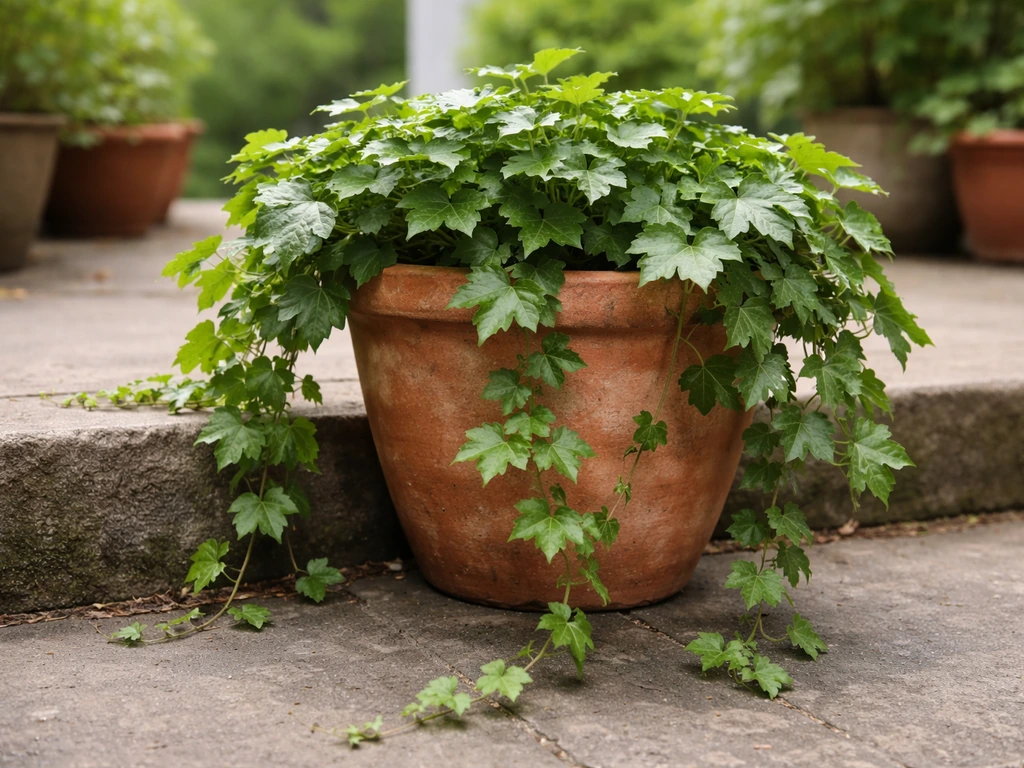
Can ivy actually thrive in an outdoor pot?
Both English ivy and Boston ivy can thrive in outdoor containers, but it helps to understand what you're working with before you choose one. English ivy is evergreen, stays leafy year-round in mild climates, and works beautifully as a trailing plant in window boxes or hanging planters. It's a great low-maintenance choice for shaded spots where little else grows. Boston ivy is a completely different beast: it's a vigorous, fast-growing deciduous vine that drops its leaves in winter. What it offers in return is incredible fall color and a tolerance for restricted root zones, meaning it actually copes with container life reasonably well as long as you prune it regularly.
One important thing to flag before you plant either: English ivy has a well-documented invasive history. English ivy is described by the National Park Service as a plant that can form dense groundcover and mats that crowd out native vegetation English ivy has a well-documented invasive history.. The National Park Service identifies it as a plant that can escape gardens and smother native ecosystems, and it can damage brick and tree bark with its adhesive aerial roots. Some areas have restrictions on planting it. Boston ivy is generally considered a better ecological choice for most gardens, though it's listed as potentially invasive in Connecticut and possibly a few other northeastern states. Check what's appropriate for your specific region before you buy.
Picking the right ivy type and pot size
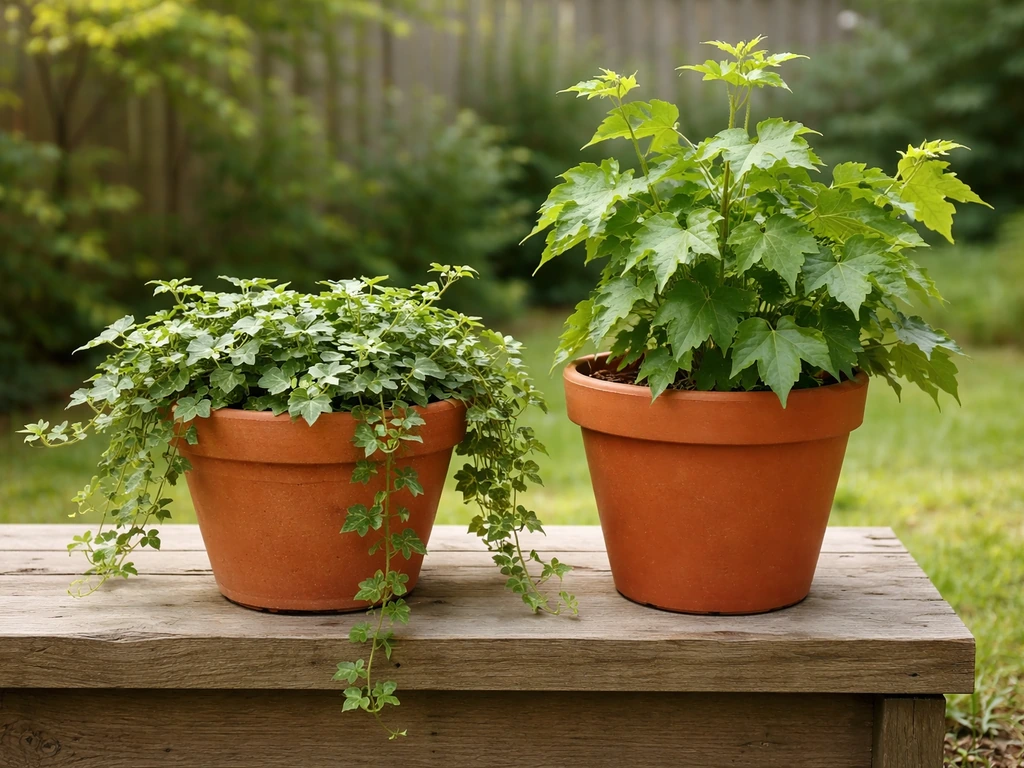
For container growing, the type of ivy you choose should match what you're going for aesthetically and how much maintenance you want to do. Here's a quick breakdown to help you decide.
| Feature | English Ivy (Hedera helix) | Boston Ivy (Parthenocissus tricuspidata) |
|---|---|---|
| Growth habit | Trailing/spreading evergreen | Vigorous climbing deciduous vine |
| Winter appearance | Stays green year-round (mild zones) | Loses leaves completely |
| Fall color | No significant change | Brilliant red and orange |
| Container difficulty | Easy to moderate | Moderate (needs regular pruning) |
| Root tolerance in pots | Good | Good (tolerates restricted roots) |
| Invasive risk | High in many regions | Lower, but check local guidelines |
| Best container use | Trailing, hanging baskets, window boxes | Trained on trellis, wall, or obelisk |
For pot size, aim for at least a 12-inch diameter container for English ivy and a minimum of 16 to 18 inches for Boston ivy. Boston ivy is a vigorous grower and will get root-bound quickly in anything smaller, which stunts its growth and stresses the plant. A 20-inch pot gives Boston ivy enough room to establish without constant repotting. For English ivy, you can get away with smaller pots, including 8 to 10-inch pots for compact trailing varieties, but growth will be slower and you'll need to water more often because small pots dry out fast. Go as big as you can manage, especially for outdoor pots exposed to summer heat and wind.
What changes with a small pot
Growing ivy in a small pot isn't impossible, but you need to adjust your expectations and your care routine. Smaller containers dry out faster, which can stress ivy and cause browning leaf tips. They also heat up more in direct sun, which can cook the roots. If you're using a small pot, stick to shade or partial shade, water more frequently (sometimes daily in summer), and plan to repot every spring as the roots fill the container. I've had English ivy do beautifully in a small 8-inch terracotta pot on a north-facing balcony, but I had to water it every other day and feed it more regularly than a plant in a larger pot.
Best potting mix and drainage setup
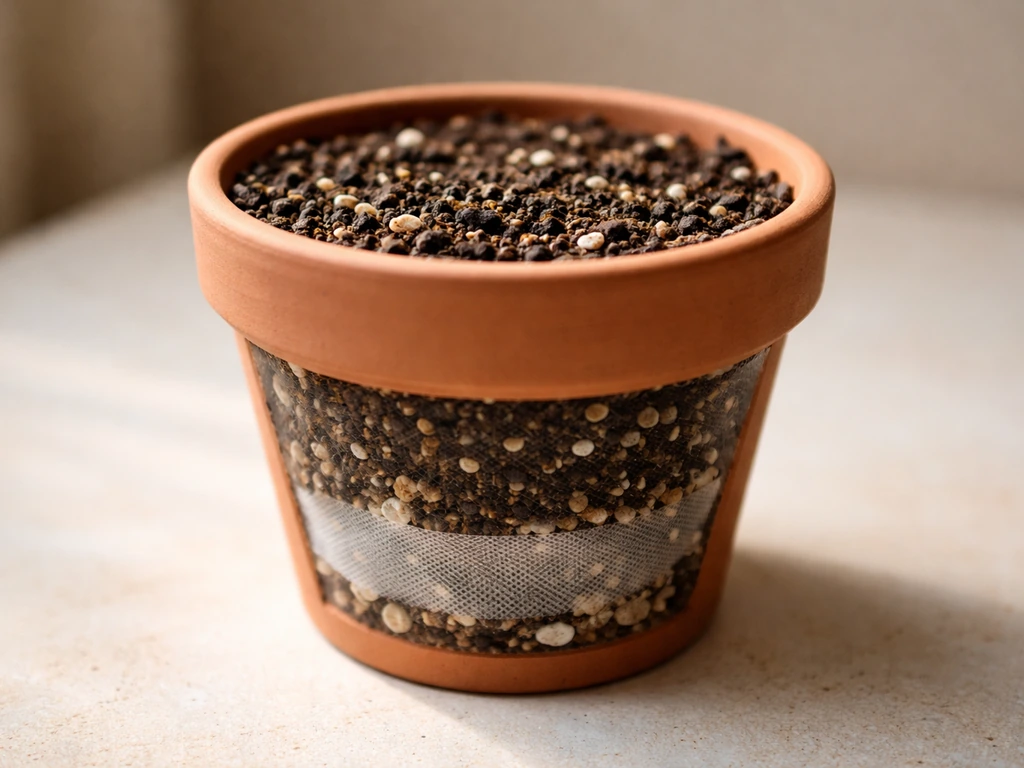
Ivy roots need oxygen just as much as water, so dense, compacted soil is their enemy. Don't use soil dug straight from your garden. Instead, use a good-quality all-purpose potting mix as your base and improve it slightly for drainage. A mix of about 60% potting mix, 20% perlite (the small white granules that keep soil airy), and 20% compost works really well. The perlite prevents waterlogging, the compost gives a slow-release nutrient boost, and the potting mix holds enough moisture to keep roots hydrated between waterings.
Drainage holes are non-negotiable. If your pot doesn't have holes, drill some or choose a different container. I'd recommend at least three holes in the base of any pot 12 inches or larger. You can place a piece of mesh or a coffee filter over the holes before adding soil to prevent mix from washing out, but skip the layer of gravel at the bottom because it actually reduces drainage rather than improving it (water pools above the gravel, not below it). Just fill with your soil mix straight over the mesh.
How to plant ivy in a pot, step by step
- Choose a pot with drainage holes at least 12 inches wide for English ivy or 16 to 18 inches wide for Boston ivy.
- Cover the drainage holes with mesh or a coffee filter to stop soil washing out.
- Fill the pot about one-third full with your potting mix blend (60% potting mix, 20% perlite, 20% compost).
- Remove your ivy plant from its nursery pot. Gently loosen any tightly circling roots at the base with your fingers.
- Set the plant in the pot so the top of the root ball sits about an inch below the rim. This gap makes watering easier and stops soil spilling over.
- Fill in around the root ball with more potting mix, pressing it gently to remove air pockets.
- Water thoroughly until water runs freely from the drainage holes. This settles the soil around the roots.
- If training up a trellis or support, position the support now and gently guide any long stems toward it.
Where to put your pot outside
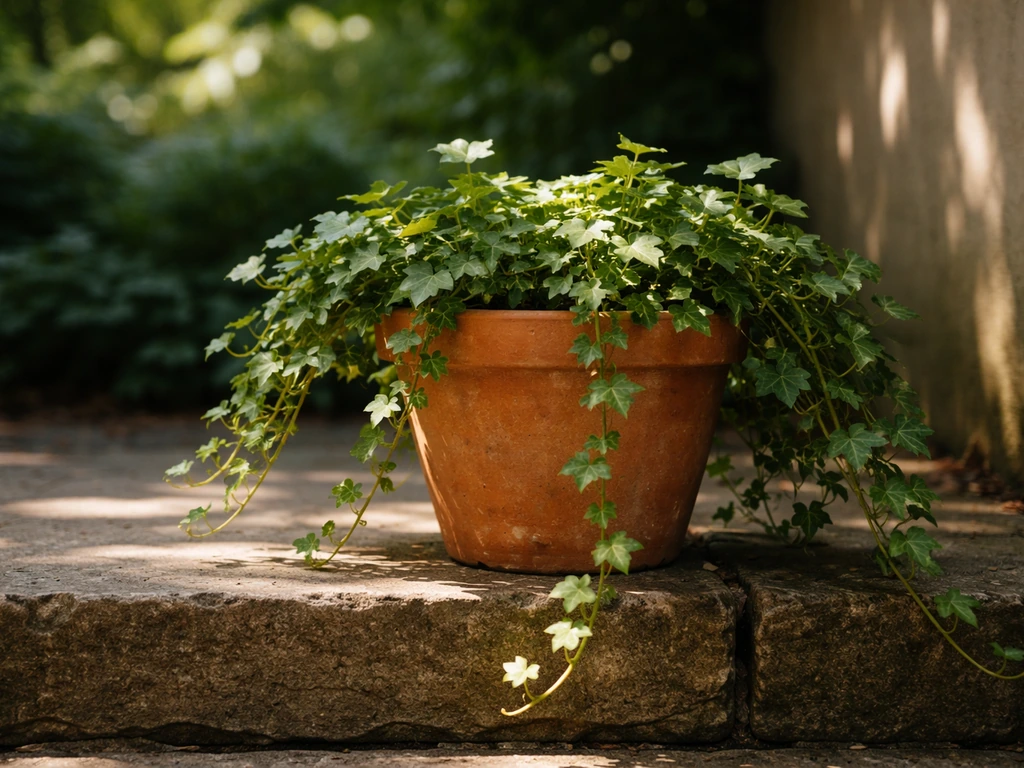
English ivy is happiest in partial to full shade, making it ideal for north-facing walls, covered patios, or spots under trees where most other plants struggle. It can handle morning sun but wilts and scorches in hot afternoon sun, especially in a pot. Boston ivy is more flexible: it grows in full sun to partial shade and actually prefers more light than English ivy. Full sun encourages the spectacular fall color Boston ivy is known for. That said, in very hot climates (Zone 8 and above), afternoon shade helps Boston ivy in a pot because the roots can't escape the heat the way they would in the ground.
Avoid placing pots directly on hot concrete or paving in summer. The heat conducts through the pot and can damage roots. Sit the pot on pot feet or a wooden board to allow airflow underneath. This also improves drainage and prevents waterlogging after heavy rain.
Watering and feeding your potted ivy
The most common mistake with potted ivy is inconsistent watering, either letting it dry out completely or keeping it constantly soggy. The goal is consistently moist but never waterlogged soil. Stick your finger about an inch into the soil: if it feels dry at that depth, water thoroughly. If it's still moist, leave it another day. In summer, most outdoor potted ivies need watering every two to three days. If you're interested in another container vine, see how to grow vinca in pots for a different approach to keeping plants thriving in limited space. In smaller pots or during heatwaves, you might need to water daily. In cooler months or shade, you can stretch watering to once a week or less.
For fertilizing, ivy in a pot benefits from regular feeding because nutrients wash out of containers faster than they do from garden soil. Use a balanced liquid fertilizer (something like a 10-10-10 NPK ratio) every two to three weeks during the active growing season, which runs from spring through early autumn. Don't feed in late autumn or winter when the plant is resting or, in the case of Boston ivy, fully dormant. Over-feeding pushes lots of soft leafy growth that's more vulnerable to pests and doesn't improve the overall health of the plant. Less is more.
Training, pruning, and keeping it from taking over
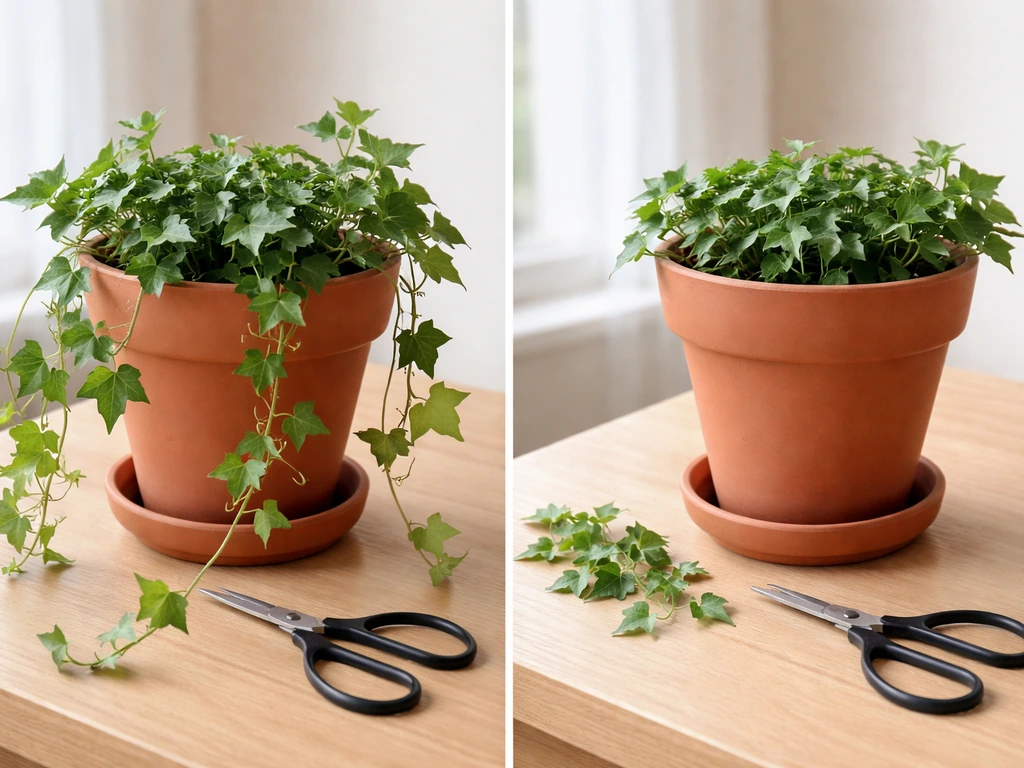
This is the part that makes the difference between a beautiful potted ivy and a tangled mess. Both English ivy and Boston ivy will spread aggressively if you don't stay on top of them, and in a container that growth can become overwhelming fast. The good news is that both types tolerate heavy pruning extremely well. You can cut ivy back hard and it will bounce back without complaint.
For English ivy trailing over the sides of a pot, trim back any stems that are getting too long or heading in the wrong direction every four to six weeks during the growing season. A pair of sharp scissors or pruning snips is all you need. For Boston ivy trained up a trellis or wall, prune in late winter before new growth starts, cutting back hard to keep the plant within bounds. During summer, snip off any shoots heading where you don't want them. Boston ivy grows fast, so don't be shy about cutting: it handles it well.
If you want to train ivy up a support, attach a small trellis panel, obelisk, or wire grid to the back of the pot. English ivy doesn't cling on its own the same way Boston ivy does: Boston ivy uses adhesive pads on its tendrils to stick to surfaces, so it's better at self-attaching. English ivy may need you to weave stems through a trellis. Either way, guiding the plant early makes training much easier than trying to untangle mature growth later.
Overwintering potted ivy outdoors
English ivy is hardy down to around USDA Zone 5 or 6 depending on the variety, but a pot offers far less insulation than the ground. Penn State Extension's guidance for overwintering container perennials is to assume your plant needs protection rated two USDA hardiness zones colder than your actual zone. So if you're in Zone 7, treat your potted ivy as though it's in Zone 9 conditions and give it some protection: move it to a sheltered wall, wrap the pot in burlap or bubble wrap, or bring it into an unheated garage during the coldest months. Boston ivy is impressively cold-hardy, rated down to USDA Zone 3, but the same pot insulation rule applies. Larger pots protect roots better, which is another reason to go bigger when you can.
Fixing common problems with potted ivy
Even when you do everything right, potted ivy can run into issues. Here's how to diagnose and fix the most common ones.
- Yellow leaves: Usually overwatering or waterlogged soil. Check the drainage holes aren't blocked, reduce watering frequency, and make sure your potting mix isn't compacted. If the soil smells sour or rotten, unpot the plant, trim any mushy roots, and repot in fresh mix.
- Brown, crispy leaf tips: Underwatering, low humidity, or too much direct sun. Move the pot to a shadier spot, water more consistently, and mist the foliage occasionally during dry spells.
- Leggy, sparse growth with long bare stems: Not enough light, or the plant needs a hard prune. Cut back leggy stems by about half to encourage bushier regrowth, and move the pot somewhere brighter.
- Poor growth overall: The plant may be root-bound. If roots are circling out of the drainage holes or the soil dries out within hours of watering, it's time to move up one pot size. Spring is the best time to repot.
- Spider mites (fine webbing, speckled leaves): Common in hot, dry conditions. Spray the undersides of leaves with a strong stream of water to knock mites off, then treat with insecticidal soap spray every five to seven days for two to three weeks.
- Ivy not attaching to a wall or support: English ivy doesn't adhere as readily as Boston ivy. Weave stems through a trellis manually and secure with soft plant ties. Boston ivy's adhesive pads will grip on their own once the plant is established.
- Plant looks dead in winter (Boston ivy): Don't panic. Boston ivy is deciduous and losing all its leaves is completely normal. Check the stems: if they're pliable and green inside when scratched, the plant is alive and will resprout in spring.
Your next steps
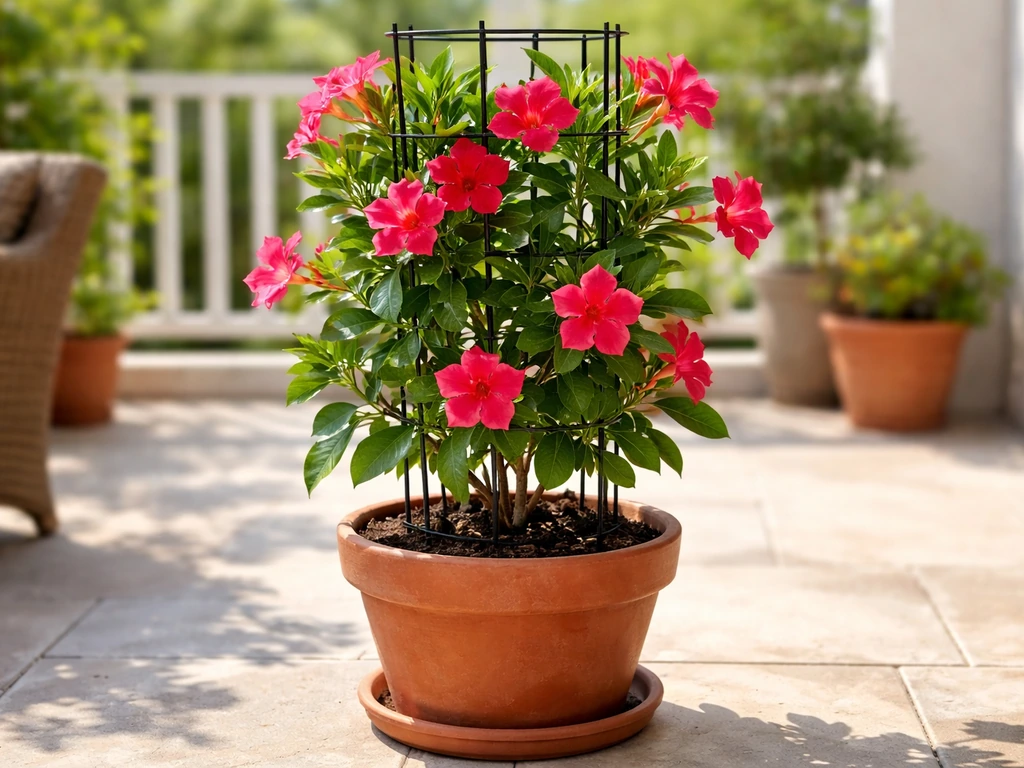
If you're starting from scratch, pick up a small nursery plant of English ivy or Boston ivy in spring, grab a pot that's at least 12 to 18 inches wide, mix up your potting blend, and plant it out once the risk of hard frosts has passed. If you want something with a brighter, showier bloom in the same container style, you may also like learning how to grow ixora in pots. Set a reminder to check the soil every two days for the first few weeks while you get a feel for how quickly your specific pot dries out. Prune early and often, feed every two to three weeks through summer, and you'll have a lush, well-behaved plant that earns its spot on your patio or balcony. If you also want a colorful, low-commitment container option, you can compare this ivy setup with how to grow violas in pots for a different seasonal look. If you want to try something different, learn how to grow violets in a pot for a softer, flowering look with similarly container-friendly care. If you enjoy growing trailing and climbing plants in containers, it's also worth looking at how other climbers and flowering vines like mandevilla or vinca perform in pots, since many of the same soil and watering principles apply.
FAQ
How often should I repot ivy growing in a pot?
In pots, ivy typically needs repotting when roots circle the container or drainage slows. For most gardeners, that means every 1 to 2 years for English ivy and every 1 year for Boston ivy (it becomes root-bound faster). Upgrade one pot size only, keep the crown at the same height, and water deeply right after potting.
How do I know the right watering schedule for potted ivy?
Because ivy has different needs in different light, use a simple rule: if the top inch of mix is dry, water. In brighter spots and warm spells, that may mean daily watering, while in cool, shaded locations it might be once or twice a week. Always water until excess runs out of the bottom, then empty the saucer so the roots are not sitting in runoff.
Can I use garden soil or should I stick to potting mix for ivy in containers?
Yes, but prioritize the potting mix. Use a high-quality potting mix plus perlite for aeration, and avoid garden soil because it compacts in containers. If your ivy always looks tired, consider checking pH and salt buildup: use a liquid fertilizer at the recommended rate, then every few weeks do a “deep flush” (run water through the pot until clear water drains) to prevent nutrient salts from accumulating.
Why is my ivy losing leaves, and does it mean it’s dying?
English ivy is evergreen in mild climates, but in containers it can still lose some leaves during cold snaps or when moisture swings happen. Boston ivy is deciduous, so expect leaf drop in fall, with new growth restarting in spring. If ivy is losing leaves outside its normal seasonal pattern, inspect for overwatering or underwatering first (check soil moisture at 1 inch depth) before assuming a nutrient issue.
What should I do if my potted ivy grows too fast or gets “leggy”?
Fertilizer is best as light, regular feeding during active growth. If your ivy is producing lots of soft growth but looks unhealthy or pests appear, it often indicates overfeeding or low light. Reduce feeding to every 3 to 4 weeks, ensure the plant gets the correct light (English ivy prefers shade, Boston ivy tolerates more sun), and prune back thin or leggy sections to encourage sturdier regrowth.
How do I train ivy on a trellis without creating a tangled mess?
Ivy grown up a trellis can be cut back and trained, but the trick is to start early and avoid letting stems get tangled. Guide stems while they are flexible, then prune long runners every few weeks during the growing season. For English ivy, you may need to gently weave stems through the trellis openings, while Boston ivy can self-attach, so focus on directing new shoots instead of trying to reposition mature growth.
My ivy looks unhealthy, how can I diagnose whether it’s underwatered or overwatered?
Most potted ivy issues trace back to stress from either heat and drying or waterlogged roots. Quick triage: if leaves brown at the tips and soil dries fast, increase watering frequency and consider partial shade. If leaves yellow and soil stays wet, improve drainage, confirm the pot has holes, and avoid watering until the top inch dries. If roots are consistently wet, repot with a chunkier mix (more perlite) to restore airflow.
Is English ivy safe to plant in a pot, or should I choose Boston ivy instead?
If you live where planting is restricted or you want a safer choice, Boston ivy is often a better starting point environmentally, but it can still be restricted in some states. The practical move is to check your local rules before purchasing. Within the same pot-culture approach, you can also choose cultivars marketed as noninvasive in your area when available.
How should I overwinter potted ivy in cold weather to prevent root damage?
In winter, the biggest container risk is root freezing and freeze-thaw cycles, not just the air temperature. Follow the “colder by two zones” idea by insulating the pot (burlap, bubble wrap) and moving it to a sheltered spot, like against a wall. Keep watering minimal but not zero, check occasionally on mild days, and avoid heavy winter fertilizing.
When is the best time to prune ivy in a pot, and how hard can I cut it back?
Yes, but it should be purposeful. For English ivy, frequent light trims help maintain a clean trailing shape. For Boston ivy on a trellis or wall, late-winter hard pruning is important to control size and prevent old woody tangles. During summer, remove shoots heading off-target so you do not end up doing a single massive cut later.