Yes, mandevilla grows really well in pots, and it's honestly one of the best ways to grow it. A container lets you move it to the sunniest spot on your patio, protect it from cold snaps, and bring it indoors over winter so you don't lose the plant every year. I've grown mandevilla in everything from terracotta to cheap plastic planters, and as long as you get the basics right, sun, drainage, and support, it rewards you with those big tropical blooms all summer long.
How to Grow Mandevilla in Pots: Container Care Guide
Marcus Whitley
27 Apr 2026
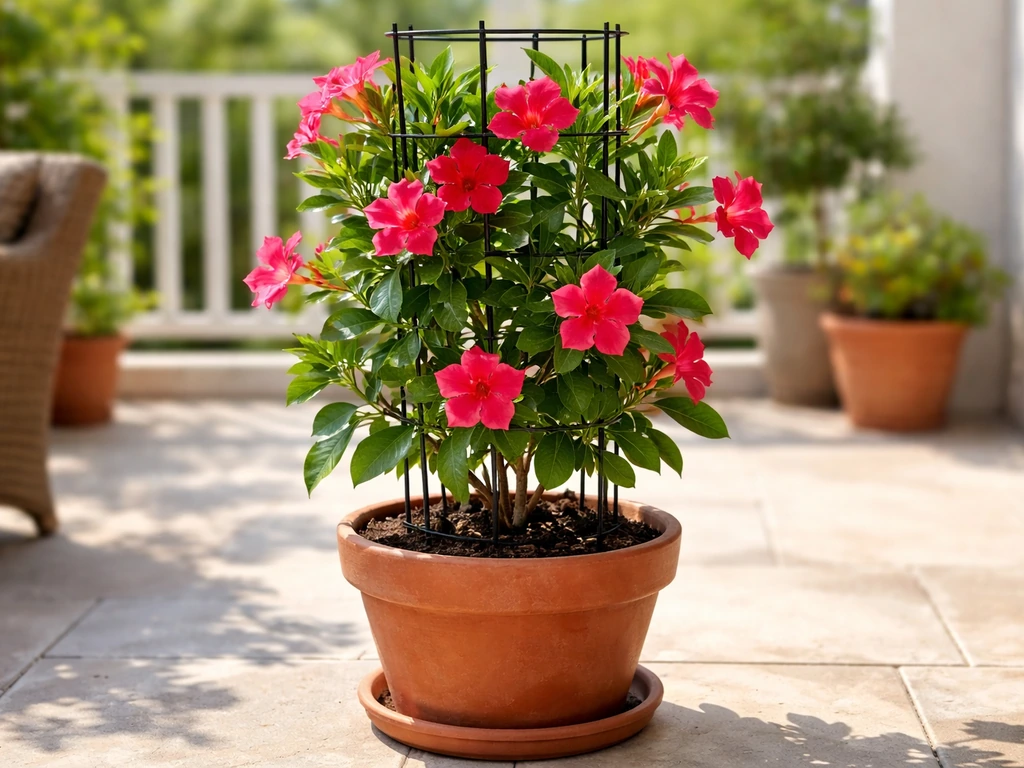
Can mandevilla actually grow in pots?
Absolutely. Mandevilla is actually a natural fit for container growing. It's a tropical vining plant that thrives in the warmth and sun, and a pot gives you full control over both. In the ground it can spread aggressively in warm climates, but in a container it stays manageable. You can train it up a trellis or let it trail from a hanging basket. Clemson University's Extension even calls out trellised containers and hanging baskets as ideal setups for mandevilla, so you're in good company going this route.
The other big reason to grow mandevilla in a pot is cold hardiness, or the lack of it. Mandevilla is tropical and doesn't tolerate frost. In most of the US and UK, it won't survive winter outdoors. A container means you can bring it inside when temperatures drop, saving a plant you've invested all summer in growing and blooming. That flexibility is the whole point.
Picking the right pot
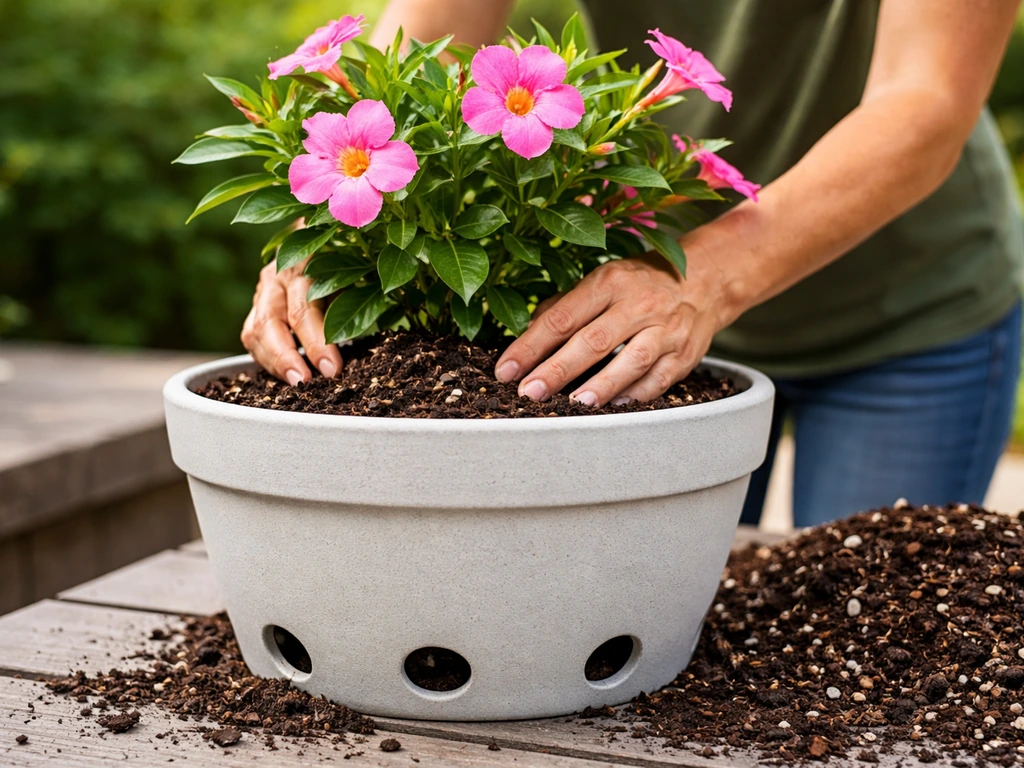
Start with a pot that's at least 12 to 16 inches (30 to 40 cm) in diameter. Mandevilla develops a decent root system and a cramped pot will slow its growth and reduce flowering. If you're starting with a small nursery plant, a 12-inch pot is fine for the first season. If you're going straight into a large container or repotting an established plant, size up to a 16-inch or even an 18-inch pot.
Drainage is non-negotiable. Pick a pot with at least one large drainage hole at the bottom, multiple holes is even better. Mandevilla doesn't like sitting in wet soil, and root rot is one of the fastest ways to kill it. Terracotta pots are great because they're porous and help the soil dry out evenly, which suits mandevilla well. Plastic pots work fine too, especially if you're in a hot, dry climate where you're watering frequently anyway. Just make sure whatever you use drains freely.
If you're placing the pot on a balcony or deck, skip the saucer or empty it after every rain. Water pooling under the pot defeats the purpose of those drainage holes.
Soil, planting, and fertilizing
The right potting mix
Don't just fill the pot with whatever bagged potting mix is on sale. Mandevilla needs a well-draining mix that doesn't stay soggy. The recipe recommended by Clemson University's Extension works really well: equal parts peat moss, standard potting mix, and builder's sand. That combination gives you good moisture retention while keeping drainage sharp. If you can't find builder's sand, coarse horticultural sand or perlite is a reasonable substitute. Avoid fine beach sand or play sand, it compacts and makes drainage worse, not better.
When you're planting, fill the bottom third of the pot with your mix, set the plant so its root ball sits about an inch below the rim, then fill in around it and firm gently. Don't bury the stem deeper than it was in its nursery pot. Water it in thoroughly right after planting so the soil settles around the roots.
Fertilizing for big blooms
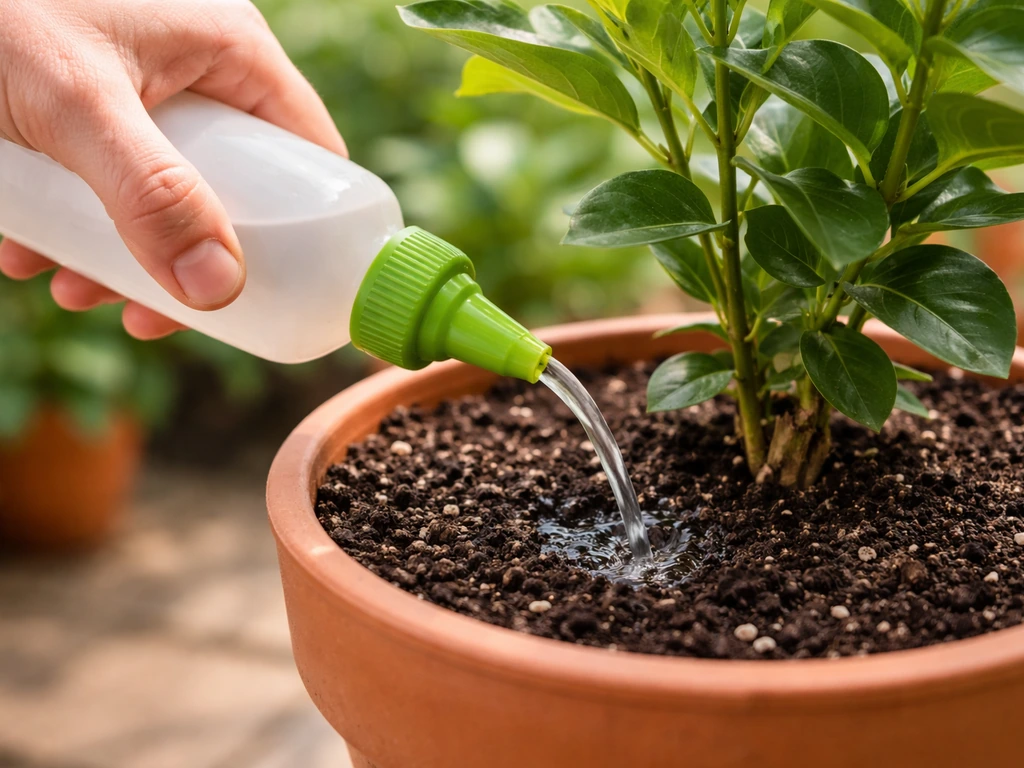
Potted mandevilla needs regular feeding during the growing season because nutrients wash out every time you water. In spring and early summer, feed every two weeks with a fertilizer that's high in phosphorus, something like a 10-20-10 formula. Phosphorus is the middle number, and it's what drives root development and flower production. Then in midsummer, switch to a potassium-rich feed like a tomato fertilizer to really push the blooms along. The RHS specifically recommends this switch, and in my experience it makes a noticeable difference in flower count. Stop feeding in late summer to early fall as the plant starts to wind down.
Light, temperature, and watering
Sun: more is more
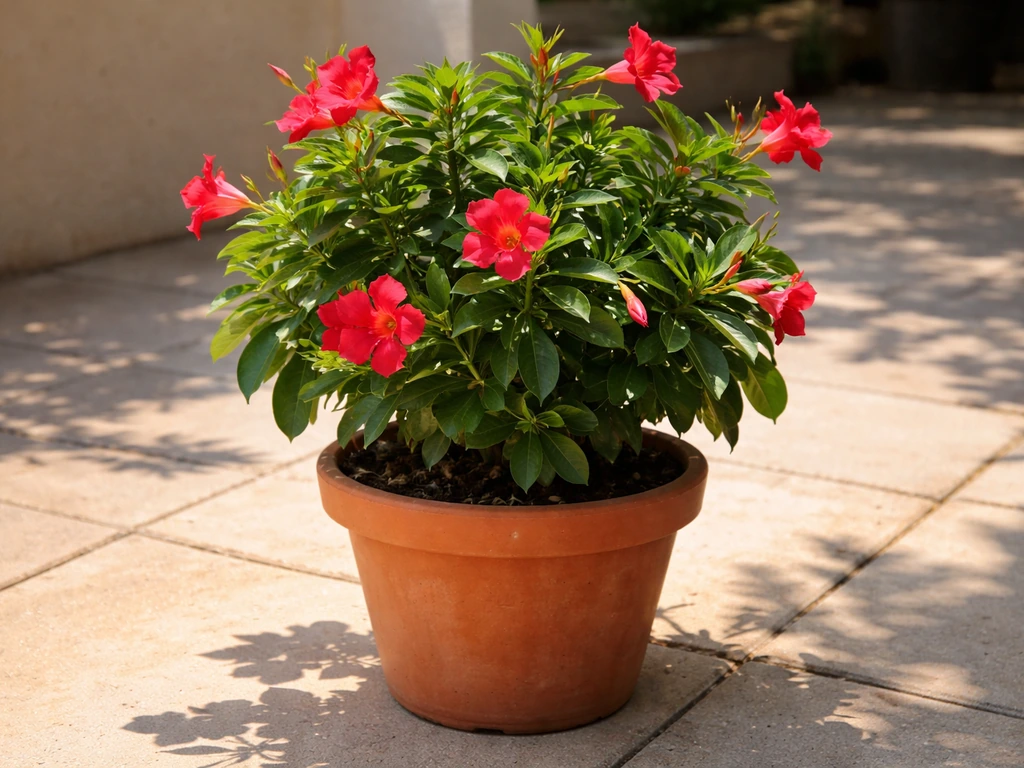
Mandevilla needs full sun to flower well. UF/IFAS is pretty direct about this: it needs to be in full sun if you want blooms. That means at least 6 hours of direct sunlight per day, and honestly 8 hours is better. This is where growing in a pot pays off, you can move it to your sunniest spot, whether that's a south-facing balcony, a patio that gets afternoon sun, or right up against a sunny wall. If your mandevilla is producing lots of leafy growth but very few flowers, the most likely culprit is not enough light.
Temperature: keep it warm
Mandevilla is happiest when temperatures are consistently warm. According to the RHS, if temperatures stay below 21°C (70°F) during spring and summer, the plant may struggle to flower. At the other end, winter temperatures below 10°C (50°F) can kill it. So in practical terms: get it outside once nighttime temperatures are reliably above 50°F (10°C), keep it in the warmest spot you have during summer, and bring it back inside before the first fall frost. Don't rush it out in early spring if nights are still cold.
Watering: consistent but not soggy
Water mandevilla when the top inch of soil feels dry. In hot summer weather with a pot in full sun, that might mean watering every day or every other day. In cooler or cloudier conditions, it might be every three to four days. The key is not letting it sit in waterlogged soil, but also not letting it completely dry out, bone-dry soil causes the plant to wilt and stresses the roots. Stick your finger an inch into the soil. If it's dry at that depth, water thoroughly until it runs out the drainage hole. If it still feels moist, wait another day.
Training, support, and pruning
Give it something to climb
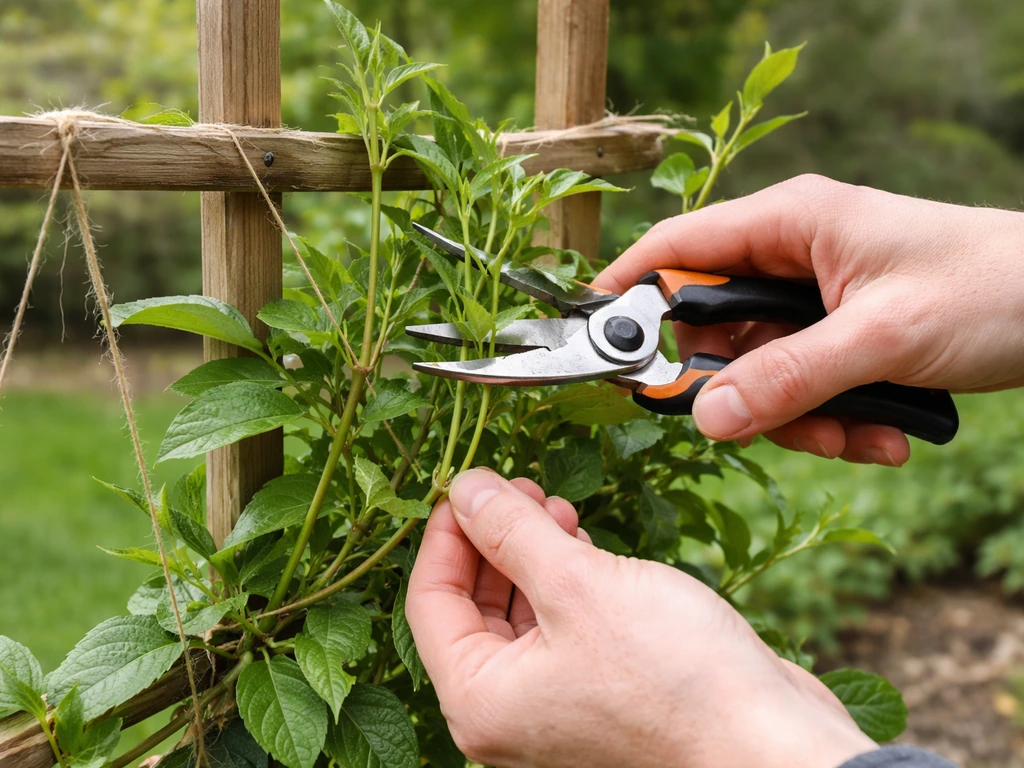
Mandevilla is a twining vine, which means it wraps itself around supports as it grows. Without something to grab onto, it'll flop around and look messy. The simplest solution is a trellis pushed directly into the pot. A circular wire trellis, bamboo canes arranged in a teepee shape, or a small obelisk all work well. As new stems grow, gently guide them around the support. You don't need to tie every shoot, once a stem gets a couple of loops around the support it holds itself. If you'd rather skip the trellis, a hanging basket works nicely because the vines just trail down naturally.
Pruning for shape and more flowers
Prune mandevilla in early spring before the growing season kicks off. Cut stems back by about a third to encourage bushy, compact growth and more flowering side shoots. If the plant gets leggy or outgrows its space mid-season, you can also do a light trim then without doing much damage. Mandevilla blooms on new growth, so pruning actually encourages more flowers rather than fewer. Don't be timid about it. The first time I pruned mine I was nervous I'd kill it, instead it came back fuller and bushier within a few weeks.
Troubleshooting common pot problems
| Problem | Likely Cause | Fix |
|---|---|---|
| Wilting despite watering | Root rot from waterlogged soil | Check drainage holes aren't blocked; let soil dry before watering again; repot if roots smell musty |
| Wilting and dry soil | Underwatering or pot too small | Water thoroughly; consider sizing up the pot if roots are cramped |
| Yellow leaves | Overwatering or nutrient deficiency | Let soil dry out more between waterings; resume regular feeding with a balanced fertilizer |
| Few or no flowers | Not enough sun or temperature too low | Move to a sunnier spot; ensure temps are above 70°F (21°C); check feeding schedule |
| Leggy stems, sparse leaves | Insufficient light | Move to full sun; prune back leggy growth to encourage bushier regrowth |
| White cottony patches on stems | Mealybugs | Wipe off with a cotton swab dipped in rubbing alcohol; treat with insecticidal soap if widespread |
Yellow leaves are one of the most common complaints I hear about potted mandevilla, and nine times out of ten it comes down to overwatering. Containers hold moisture differently than garden beds, and it's easy to water on a schedule without checking whether the soil actually needs it. Always feel the soil before you water rather than going by the calendar.
Seasonal care and how to overwinter it
Summer into fall
Keep feeding and watering regularly through summer. As days shorten and temperatures start dropping in early fall, taper off the fertilizer and begin reducing watering. Clemson University's Extension specifically recommends reducing watering frequency as cooler temperatures and reduced light naturally push the plant into a rest period. This is normal and healthy, don't panic if it slows down or drops a few leaves.
Bringing it indoors
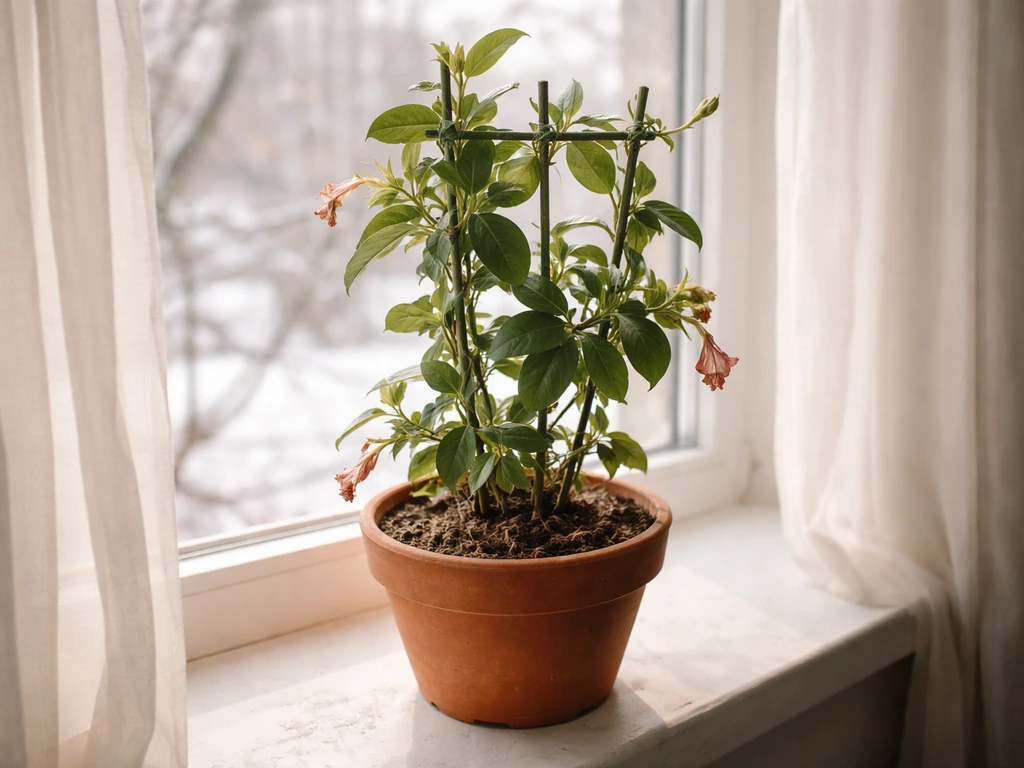
Before the first frost (or once nighttime temperatures start dipping below 50°F/10°C regularly), bring the pot inside. The University of Maryland Extension notes that mandevilla can be overwintered indoors successfully as long as you have a bright-light location. A south-facing window is ideal. East or west-facing windows can work if they get several hours of direct sun. An under-lit room will cause the plant to shed most of its leaves and struggle through winter.
Before bringing the plant inside, inspect it carefully for pests like mealybugs, spider mites, and scale. You don't want to bring an infestation indoors. Treat anything you spot before moving the pot, and give the foliage a gentle rinse with the hose. Also check that the pot and container itself are in good shape, UNR Extension points out that protecting both the plant and the container matters for overwintering success. Terracotta pots can crack in freezing temperatures if left outside, so bringing the whole setup in protects your pot investment too.
Through winter
Indoors over winter, mandevilla basically rests. Water sparingly, about once every week to ten days, just enough to stop the soil from completely drying out. Don't feed it. Keep it somewhere that stays above 50°F (10°C) at all times, and away from cold drafts near windows or doors. It may look a little rough by February, which is completely normal. Once late winter arrives and light levels increase, you can start watering a bit more and give it a light fertilizer dose to wake it back up before moving it outside again in spring.
If you're in a warm climate
If you're in a frost-free climate (USDA zones 10 to 11, or similar), your potted mandevilla can stay outside year-round. Just move it to a slightly more sheltered spot in winter if temperatures dip at all, and ease off watering and feeding during the cooler months. The rest of the care stays the same.
A few final tips to keep in mind
- Repot every two to three years or when roots start coming out of the drainage holes — going up one pot size at a time is enough.
- Mandevilla sap is mildly toxic and can irritate skin, so wear gloves when pruning.
- If you're also growing other flowering vines in pots, like vinca or lavatera, the same full-sun placement strategy applies — cluster sun-loving pots together to make the most of your sunniest space.
- Don't overdo the nitrogen-heavy fertilizers (those with a high first number). Too much nitrogen pushes leafy growth at the expense of flowers.
- A layer of mulch or gravel on top of the potting mix helps slow moisture evaporation during hot summer days, which means less frequent watering.
Growing mandevilla in a pot is genuinely straightforward once you give it the sun it craves and stay on top of watering and feeding. If you want to tailor all those container basics specifically to ixora, follow this guide for how to grow ixora in pots. If you want the step-by-step details for lavatera specifically, use these tips for how to grow lavatera in pots to nail the right container, soil, and watering schedule. If you also want to add a different kind of pot-grown flower, you can learn how to grow violets in a pot potted mandevilla. For more on the right container, potting mix, and light for violet growth, see our full guide on how to grow violas in pots. For vinca, you can follow the same container-focused approach and learn how to grow vinca in pots for reliable, low-maintenance color violets in a pot. It's a plant that pays you back generously for relatively modest effort, and having it in a container means you can keep it going year after year rather than treating it as a seasonal annual. If you want a similar container-style evergreen, you can also learn how to grow ivy in a pot. Get the pot and soil right from the start, put it somewhere sunny, train it up a trellis, and bring it in before frost, that's really the whole game.
FAQ
How often should I repot mandevilla in a container?
Plan on repotting about every 1 to 2 years, or sooner if roots are circling the pot or roots are coming out of the drainage holes. When repotting, keep the root ball intact, refresh only the top couple inches of mix if the plant is healthy, and only increase pot size by about 2 to 4 inches (5 to 10 cm) to avoid excess wet soil.
Why is my potted mandevilla dropping leaves after I move it outside (or bring it indoors)?
Leaf drop often happens due to a sudden change in light, temperature, or watering rhythm. Acclimate gradually for 7 to 10 days by moving it to brighter conditions in stages, and keep watering consistent by checking the top inch of soil instead of using a fixed schedule.
Can I grow mandevilla in a self-watering planter or one with a reservoir?
It’s risky unless you can control how much water reaches the root zone. Mandevilla dislikes constantly damp soil, so if you use a self-watering pot, set it so the reservoir only supplies water when the soil has dried sufficiently, and use an exposed drainage check (no standing water under the insert).
What’s the best way to prevent root rot in pots?
Use a pot with large drainage holes, a well-draining mix, and water thoroughly only after the top inch dries. Also empty any saucer after rain or after heavy watering, and consider adding a coarse layer (like perlite) mixed into the soil rather than a gravel “drainage layer,” since gravel can trap moisture.
My mandevilla has lots of vines but few flowers. What should I check first?
First check light, then temperatures. If it is getting enough sun (aim for 8 hours if possible) but nights are cool, flowering can stall. Also confirm you are switching fertilizer emphasis in midsummer (more potassium) and not overusing nitrogen-heavy feeds that promote leafy growth.
How do I keep potted mandevilla from getting leggy between prunings?
Rotate the pot every week or two so all sides receive similar light, and pinch back new growth lightly once you notice long, spaced shoots. If it is reaching toward the light, move it to a stronger sun spot rather than only pruning.
Can I take cuttings from container mandevilla to make new plants?
Yes. Take semi-hardwood cuttings in late spring or early summer when growth is active, then root them in a sterile, airy mix (like perlite-based potting mix). Keep humidity moderate (not soggy), and do not fertilize heavily until roots establish, since new cuttings are sensitive to salt buildup.
Is it normal for mandevilla to look worse in late fall or winter?
Yes. Even when overwintering successfully indoors, it commonly sheds leaves because light levels drop and growth slows. The key is to water sparingly (about every week to ten days) and keep it above 50°F (10°C) without letting it dry to bone-dry.
How can I tell whether yellow leaves are from overwatering or low light?
Overwatering usually comes with persistently wet soil and more general yellowing that may start lower on the plant, while low light often causes pale, weak growth plus leaf yellowing that improves once you move it to brighter light. Do a soil check first, then adjust light if soil moisture is already correct.
What pests are most common on potted mandevilla, and how should I manage them before bringing it indoors?
Look closely on leaf undersides and along stems for mealybugs, spider mites, and scale. Best practice is to inspect, rinse foliage, treat immediately as needed, and quarantine the plant indoors for a week away from other houseplants so you do not spread any hidden infestations.