Yes, olive trees grow really well in pots, and this is genuinely one of the best container trees you can grow at home. They're tough, slow-growing, drought-tolerant once established, and they look fantastic on a patio or balcony. The key is picking the right variety, giving them a decent-sized pot, and not drowning them with water. Get those three things right and an olive tree in a container can thrive for many years. I'll walk you through everything you need to know, start to finish. Oleanders also do well in containers if you use a large pot, provide full sun, and keep the watering consistent without letting the soil stay soggy how to grow oleanders in pots.
How to Grow an Olive Tree in a Pot Step by Step
Marcus Whitley
21 Apr 2026
Can olive trees (and tea olive) grow in pots?
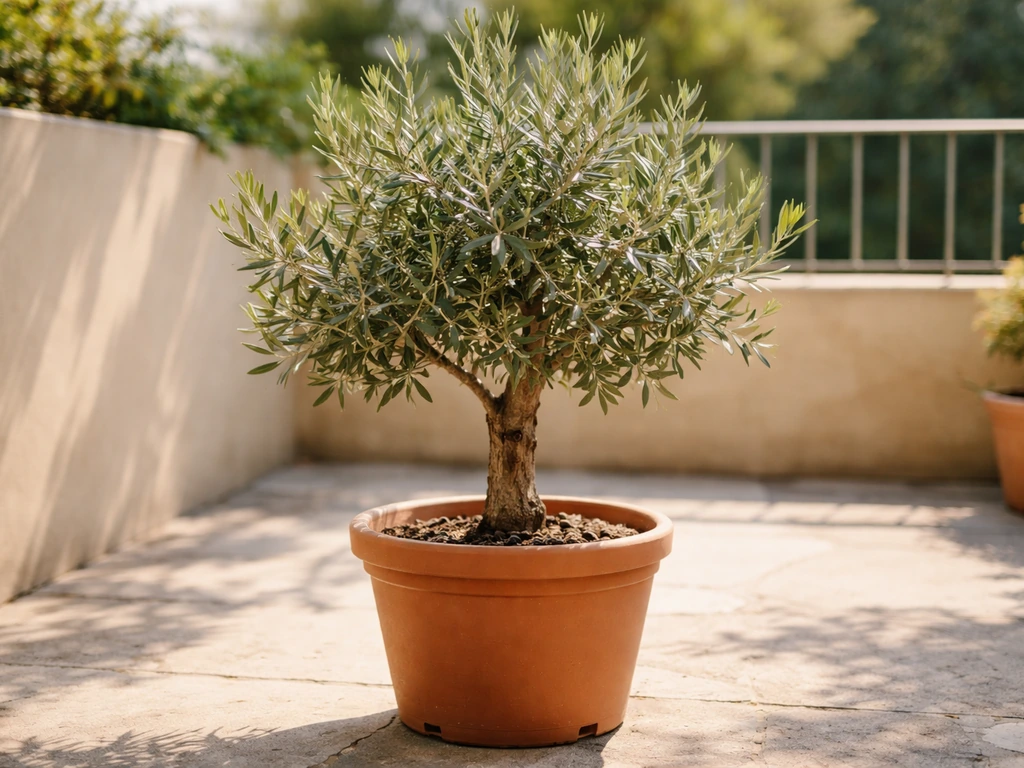
Common olive trees (Olea europaea) are actually ideal candidates for container growing. The RHS specifically recommends growing olives in large containers, partly because it restricts their size to something manageable and partly because you can move the pot indoors or into a sheltered spot over winter. In the right conditions, a potted olive can even reward you with a crop of fruit, though that takes patience and the right variety.
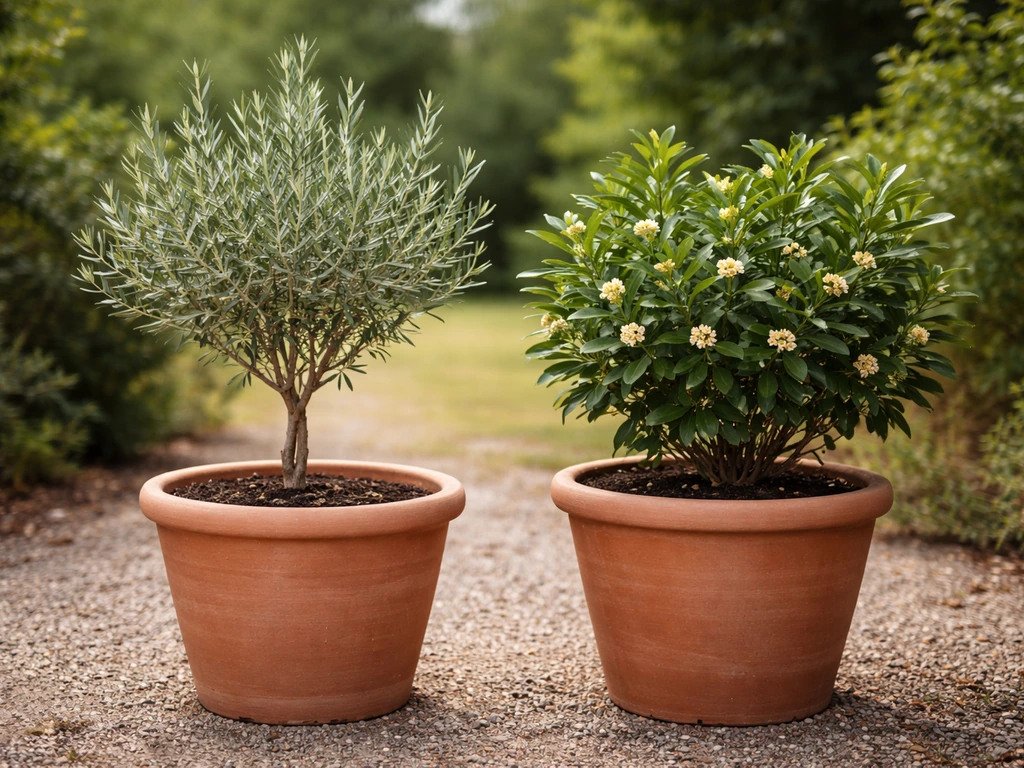
Now, if you've been searching for 'tea olive tree in a pot,' I want to flag something important: tea olive is a completely different plant. Tea olive (Osmanthus fragrans, also called sweet olive) is not related to the common olive tree at all. It's an evergreen shrub or small tree prized for its intensely fragrant, tiny white or orange flowers rather than for fruit. It's a beautiful plant and it does grow in containers, but its care needs are different. I'll cover both plants in this guide so you can choose the one that's right for you.
Tea olive is winter-hardy to around 10°F (-12°C) and is suited to USDA Hardiness Zones 7B through 11B depending on the variety (UF/IFAS and NC State Extension both confirm this range). In cooler climates, it can be overwintered indoors in a bright, cool location. In a pot, it stays compact and manageable, which is actually one of the reasons it works so well as a container plant. The rest of this guide focuses on the common olive tree, but I'll circle back to tea olive care specifics in the overwintering section.
Choosing the right olive variety and pot size
Not all olive varieties behave the same way in a pot, and choosing wisely saves you a lot of headaches later. For container growing, you want compact or slow-growing cultivars that won't outgrow a pot within two seasons. Some of the best options include:
- Arbequina: A Spanish variety that stays naturally compact, produces small fruit, and is probably the single best choice for containers. It's self-fertile, meaning you only need one tree to get fruit.
- Koroneiki: A Greek variety that's very small-leafed, drought-hardy, and well-suited to pot life. It's also self-fertile.
- Picholine: A French variety that's slightly larger but still manageable in a big container, with good flavor if you want to cure your own olives.
- Skylark Dwarf: A variety specifically bred for compact growth, great if space is really tight.
- Frantoio and Leccino: Excellent Italian varieties if you want fruit production, though they benefit from cross-pollination with each other.
For pot size, start with a container that's at least 40–50cm (roughly 16–20 inches) in diameter for a young tree. Within a few years, you'll want to move up to a pot that's 60–75cm (24–30 inches) wide. The pot needs to be deep too, at least 40–50cm, because olive roots like to go down. Terracotta is a classic choice and breathes well, but it's heavy when filled. Sturdy resin or fibreglass pots work well and are much easier to move, which matters when winter arrives. Whatever you choose, drainage holes are non-negotiable. Olives hate sitting in wet soil.
Best soil mix and planting setup
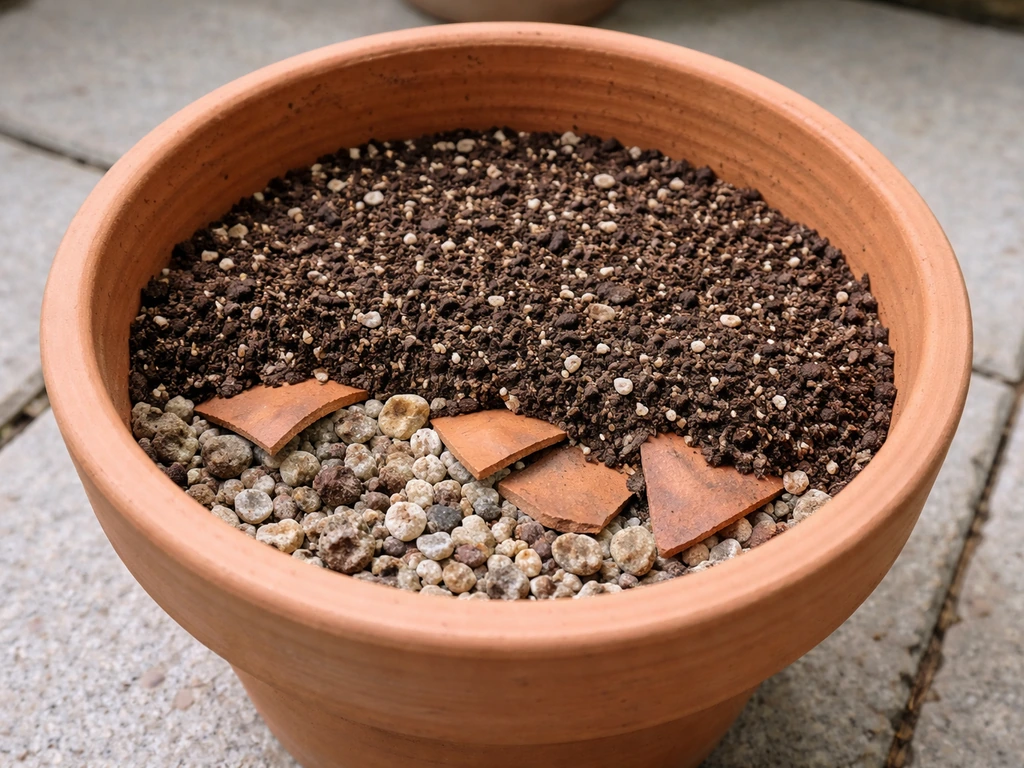
Olives need sharp drainage above everything else. Standard potting compost straight from the bag is too moisture-retentive and will cause root problems over time. Mix your own instead. A good ratio is roughly 60% loam-based compost (like John Innes No. 3 in the UK, or a quality potting mix with loam in the US) combined with 40% perlite or coarse grit. This creates an open, free-draining mix that still holds enough nutrients and structure for the roots to anchor.
When planting, put a layer of crocks (broken pot pieces) or coarse gravel over the drainage holes first to stop the mix washing out. Fill the pot about a third of the way, set your olive in at the same depth it was sitting in its nursery pot, then fill around the roots and firm in gently. Don't bury the trunk or pack the soil too tight. Water it in well after planting, then let it mostly dry out before watering again. That first watering settles the soil, and after that you switch to the more restrained routine I'll describe below.
Light, temperature, and watering schedule
Sun and heat
Olives are Mediterranean plants and they need full sun, ideally 6–8 hours of direct sunlight per day. Put your pot in the sunniest spot you have: a south-facing patio, balcony, or rooftop is perfect. They'll tolerate some partial shade, but you'll get slower growth, less vigor, and almost certainly no fruit. In very hot summers (above 35°C/95°F), the pot itself can overheat and damage roots, especially in dark-coloured containers. If this is a risk in your area, wrapping the pot in a light-coloured fabric or moving it to a spot with afternoon shade during peak summer helps.
Watering
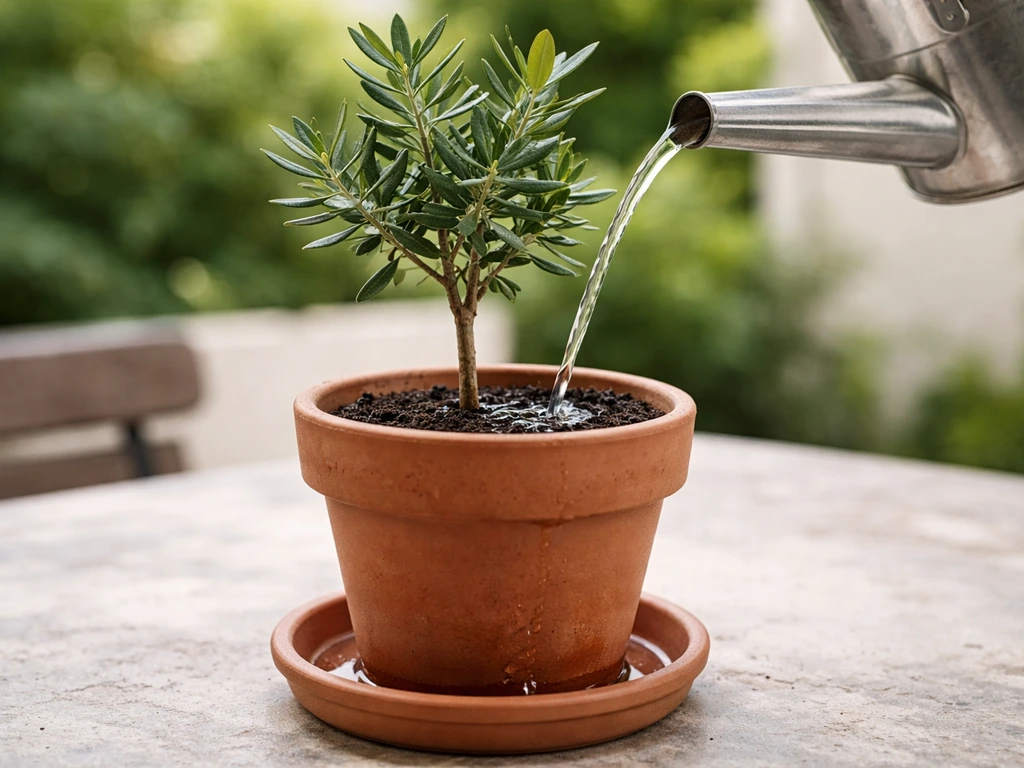
This is where most people go wrong. Olives are drought-tolerant, and overwatering kills them faster than almost anything else. If you want a similar container setup for a non-olive, learn how to grow sago palm in a pot by matching the right pot size, soil mix, and watering routine potted olive. If you want a flowering plant instead, this guide to how to grow osteospermum in pots will help you get the right pot size, soil, and watering routine. In spring and summer, water when the top 5cm (2 inches) of soil feels dry. That might mean watering every 7–10 days in moderate weather or every 3–4 days during a heatwave. Stick your finger in the soil rather than watering on a fixed schedule. In autumn, reduce watering significantly as growth slows. In winter, if the tree is outdoors, natural rainfall usually handles it unless there's a prolonged dry spell. Always water deeply when you do water, letting the water run out of the drainage holes, rather than giving it a small daily splash.
Fertilizing, pruning, and shaping in containers
Feeding your olive tree
Container olives need feeding more regularly than in-ground trees because nutrients wash out every time you water. From spring through to late summer, feed every 4 weeks with a balanced, slow-release fertilizer or a liquid feed. Nitrogen is the most important nutrient for overall growth and leaf health. UCANR research on olive nutrition confirms that olive trees use nitrogen equally well from organic or synthetic sources, so whether you choose a fish emulsion, a granular organic feed, or a standard NPK liquid fertilizer is up to you. In late summer, switch to a low-nitrogen, higher potassium feed (a 'tomato' fertilizer works well) to harden off the wood before winter. Stop feeding entirely from October through February.
Pruning and shaping
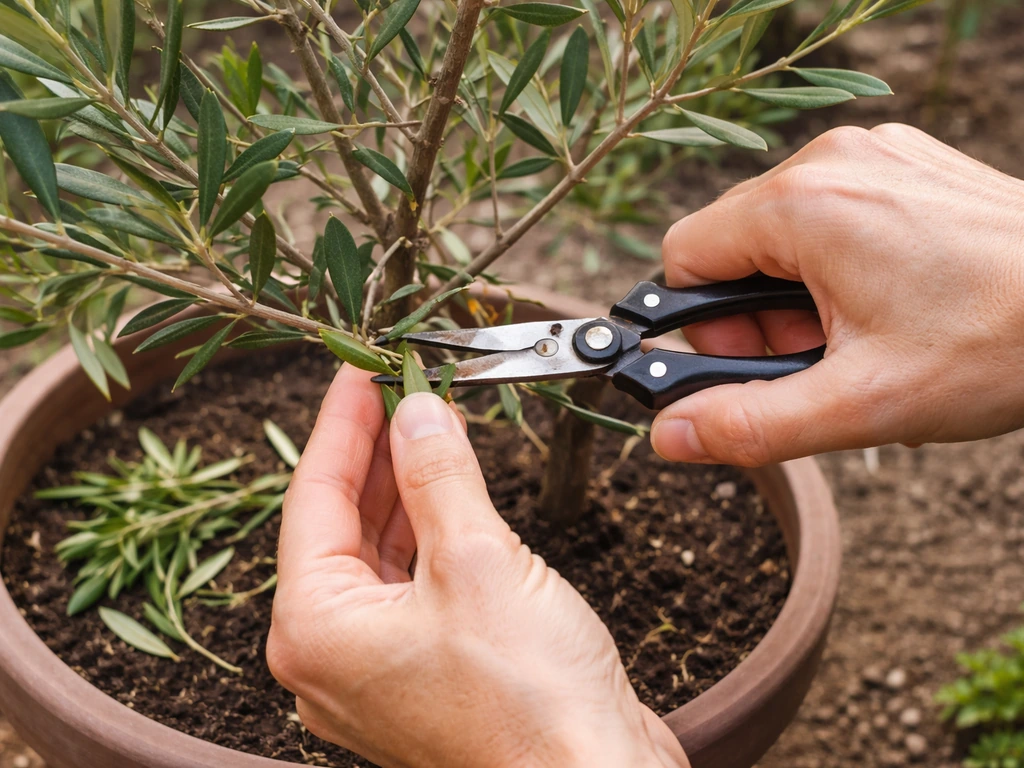
Olives are naturally slow-growing, so you don't need to prune aggressively. The goal in a container is to keep the tree at a manageable size and maintain good airflow through the canopy. The RHS recommends tip-pruning the main branches each year, cutting back to a good outward-facing replacement shoot. Do this in late spring once the risk of frost has passed. Remove any crossing branches, dead wood, or shoots coming from below the graft union (these are suckers from the rootstock and should always be removed). You can also prune for shape: many growers like a standard lollipop shape, which is achieved by gradually removing lower branches over a couple of years to expose a clean trunk.
Common problems and troubleshooting
Yellow leaves
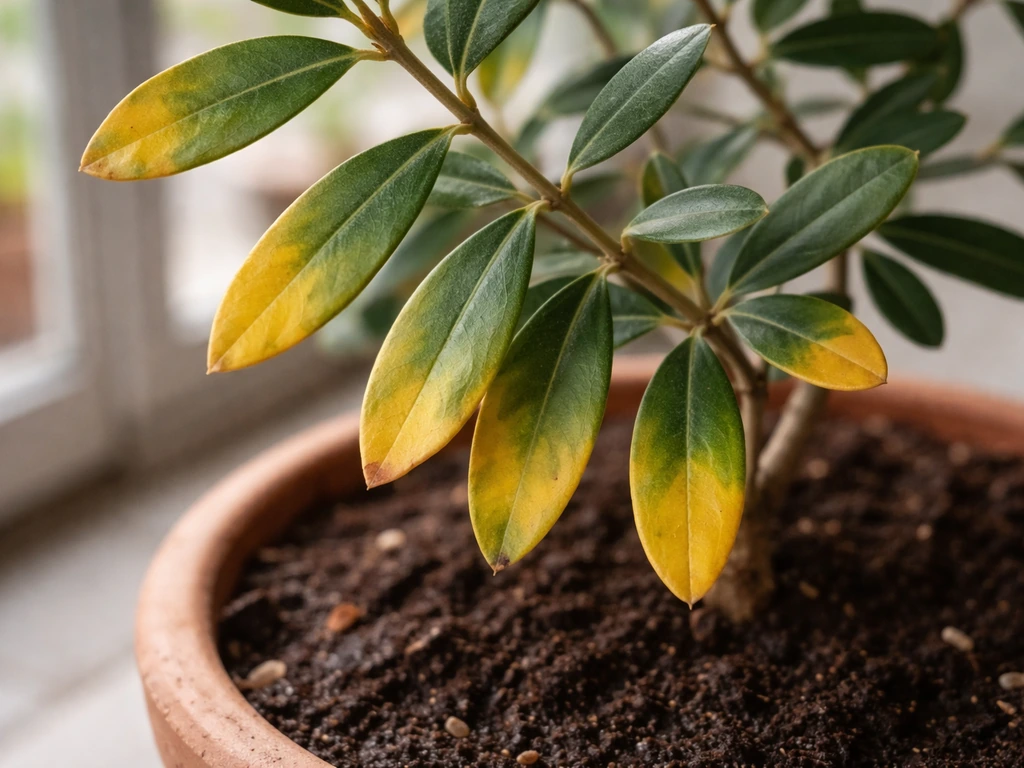
Yellowing leaves on a potted olive is one of the most common questions I see, and there are a few likely culprits. Overwatering is the top cause: if the soil has been consistently wet and the lower leaves are yellowing and dropping, ease off the water and check the drainage isn't blocked. Nutrient deficiency (especially nitrogen or iron) causes a more widespread yellowing, usually in the growing season, which responds quickly to feeding. A bit of natural lower-leaf drop in autumn is also completely normal as the tree sheds older leaves, so don't panic if it's only the oldest, innermost leaves going yellow in autumn.
Pests
Scale insects are the most common pest on container olives. They look like small brown or white bumps on stems and under leaves, and they cause sooty mould (a black sticky coating) on the foliage. Treat with a horticultural oil spray or wipe affected areas with a damp cloth dipped in diluted dish soap. Spider mites can also appear in hot, dry conditions, causing fine webbing and stippled leaves. Improving air circulation and misting the foliage occasionally helps prevent them. Olive fruit fly is a concern if you're growing for fruit, but it's more of an in-ground orchard problem and less common on a single pot-grown tree.
Root-bound and drainage issues
If you see roots coming out of the drainage holes, water running straight through without absorbing, or the tree looking stressed despite correct watering, it's likely root-bound. This means the roots have filled the entire pot and there's nowhere left to grow. The fix is to repot into a container one size up (about 5–8cm wider and deeper) in spring. Ease the root ball out, gently loosen the outer roots, trim any that are circling or dead, then replant in fresh mix. Olives don't need repotting often, typically every 3–4 years, but don't ignore the signs when they show up.
Overwintering and moving your olive through the seasons
One of the biggest advantages of growing an olive in a pot is that you can move it to protect it from cold. Established olives in the ground can handle light frosts, but container olives are much more vulnerable because the roots are exposed on all sides through the pot walls. Most olive varieties can tolerate temperatures down to about -7°C (20°F) for short periods, but sustained cold below that risks killing the roots.
In mild climates (USDA Zone 8 and warmer, or equivalent), your olive can stay outdoors year-round. Move it to a sheltered south-facing wall for winter and that's usually enough. In colder areas or during particularly harsh winters, bring the pot into a cold greenhouse, unheated conservatory, or covered porch. It doesn't need warmth, just frost protection. If moving the pot isn't possible, wrap the trunk and main branches with horticultural fleece or bubble wrap, and pile a generous layer of mulch (straw, bark, or even crumpled newspaper) over the top of the pot to insulate the root zone. This is the approach recommended by the RHS and UK horticultural experts for container olives that have to stay outside.
For tea olive (Osmanthus fragrans) in pots: since it's hardy to around 10°F (-12°C), gardeners in Zones 7B and above may get away with leaving it outside in a sheltered spot. In cooler zones, bring it indoors before the first hard frost and overwinter it in a bright, cool room. It doesn't go fully dormant, so it needs light even during winter. A cool spare room with a south-facing window works well. Water sparingly until you move it back outdoors in spring.
In spring, once the last frost has passed (typically April in most temperate climates), move your olive back to its sunny spot gradually. A week or two of 'hardening off' outdoors for a few hours a day before leaving it out full-time stops the leaves from getting sun-scorched after a winter indoors. Resume watering and feeding as new growth appears, and you're ready for another season.
A quick comparison: common olive vs. tea olive in a pot
| Feature | Common Olive (Olea europaea) | Tea Olive (Osmanthus fragrans) |
|---|---|---|
| Grown for | Fruit and ornamental foliage | Fragrant flowers and ornamental foliage |
| Pot size needed | 60–75cm diameter at maturity | 45–60cm diameter at maturity |
| Light requirement | Full sun, 6–8 hours minimum | Full sun to partial shade |
| Cold hardiness | To about -7°C (20°F) in a pot | To about -12°C (10°F) |
| USDA zones (pot) | Zone 8+ outdoors year-round | Zone 7B+ outdoors year-round |
| Watering | Very drought-tolerant, low frequency | Moderate, more regular than olive |
| Overwintering | Cold greenhouse or sheltered wall | Bright cool room indoors if below Zone 7B |
| Self-fertile? | Variety-dependent (Arbequina: yes) | Not applicable (no edible fruit) |
If you want fruit and the classic Mediterranean look, go with a common olive. If you want something with stunning, tea-like fragrance that's slightly more forgiving in partial shade, tea olive is worth considering. They're different plants solving different problems in a container garden. If you are aiming for a fragrant, slow-growing container tree instead, you may also like this guide on how to grow sandalwood tree in a pot.
Your next steps
If you're starting from scratch right now in April, this is actually a great time to plant an olive in a pot. Nurseries have good stock, the weather is warming up, and you'll have the whole growing season for the tree to get established before its first winter. Buy a named variety rather than an unnamed 'olive tree,' pick a pot that feels slightly too big (you'll grow into it), mix your own free-draining compost, find your sunniest spot, and water less than you think you need to. If you're looking for something different from olives, you can also learn how to grow palms in pots for a tropical container look. If you want a tropical fruiting tree, you can also learn how to grow a date palm in a pot. Those five things will get you most of the way there. The rest is just paying attention to what the tree is telling you over the seasons, which is honestly the most enjoyable part.
FAQ
How do I tell if my potted olive is getting enough sun, and what should I do if my patio is only partly sunny?
Aim for 6 to 8 hours of direct sun, if you get less, expect slower growth and reduced or no fruit. To troubleshoot, rotate the pot every 2 to 4 weeks so one side does not stretch, and try to place it where it gets the brightest morning light, morning sun is less punishing than afternoon sun when containers overheat.
What is the best way to water an olive in a pot if the weather is unpredictable?
Use the finger test each time, water only when the top 5 cm is dry. If you watered recently and a rainstorm hits, check drainage by feeling the pot weight 30 to 60 minutes after rain, if it still feels heavy, wait, olives prefer drying cycles rather than consistent moisture.
Can I grow an olive in a pot indoors year-round?
Long-term indoor growing is difficult because olives need sustained bright light. If you must keep it indoors, place it right by a very bright south-facing window, use a free-draining pot, and plan to move it outdoors in spring and summer to restore vigor. Winter indoors should still be cool and bright, not warm and dim.
Why are my olive leaves yellowing, but I think I’m watering correctly?
Yellowing can also come from poor drainage or compacted soil, not just overwatering. Check for blocked drainage holes, confirm the mix is free-draining, and if you see water running straight through, consider repotting into fresh mix rather than just adjusting watering.
Is it better to choose a terracotta pot or a plastic/resin pot for olives?
Terracotta breathes and can help the soil dry faster, which is helpful if you tend to overwater. Resin and fibreglass are lighter and easier to move for winter protection, but they can stay wet longer, so you must be extra strict about letting the mix dry between waterings.
How often should I repot a potted olive, and what size increase is safe?
Repot about every 3 to 4 years or when roots circle or come from the drainage holes. Increase pot size gradually, roughly 5 to 8 cm wider and deeper, jumping too large can keep soil wet longer and increase root stress.
What should I do if the tree is root-bound but it’s mid-season and I’m worried about disturbing it?
If it is truly stressed, repot in spring when frost risk is past, that is the safest window. If you notice roots early but the tree looks stable, delay repotting and focus on correct watering and feeding, then plan the pot upgrade at the next spring. Avoid repotting in peak summer heat.
Should I prune a potted olive, and how do I avoid making it too sparse?
Prune lightly, tip-prune in late spring and remove crossing or dead wood to maintain airflow. Avoid heavy cutting into old wood for container trees, olives respond slowly, so over-pruning can reduce flowering and fruiting for a season or two.
Will my potted olive produce fruit, and do I need cross-pollination?
Some container olives fruit, but it depends heavily on variety and having enough sun, and patience because olives take time. Many home olives self-pollinate, but fruit set is still more reliable with strong pollinator activity and high light, if you have flowers and no fruit, check sun hours first.
What pests should I watch for on patio-grown olive trees, and how do I handle them early?
Scale is common on container olives, catch it early by checking undersides of leaves and stems. Horticultural oil works best when applied thoroughly and repeated according to the product label, also improve airflow since crowded canopies make infestations harder to control.
Is there a fertilizer schedule I can follow without guessing nutrient amounts?
Feed every 4 weeks from spring through late summer, then switch to a low-nitrogen, higher-potassium fertilizer in late summer to help harden growth. Stop feeding from October through February, if you fertilize through winter, you can get weak, soft growth that is more vulnerable to cold.
What cold protection is actually necessary for olives in pots, and what if my climate is right on the edge?
If overnight lows often drop below about -7°C (20°F) for multiple hours, assume you need frost protection because roots are exposed. For borderline climates, prioritize insulating the root zone first, wrap the pot, mulch the top, and shelter the trunk against wind, bringing it under cover on the coldest nights can be enough.