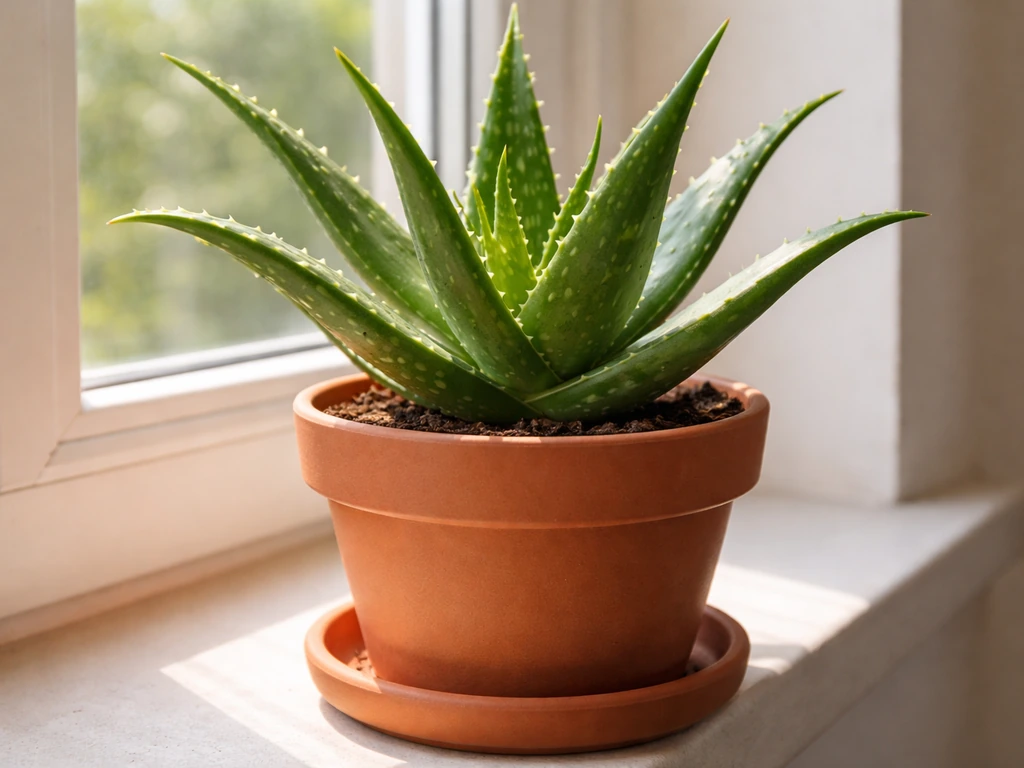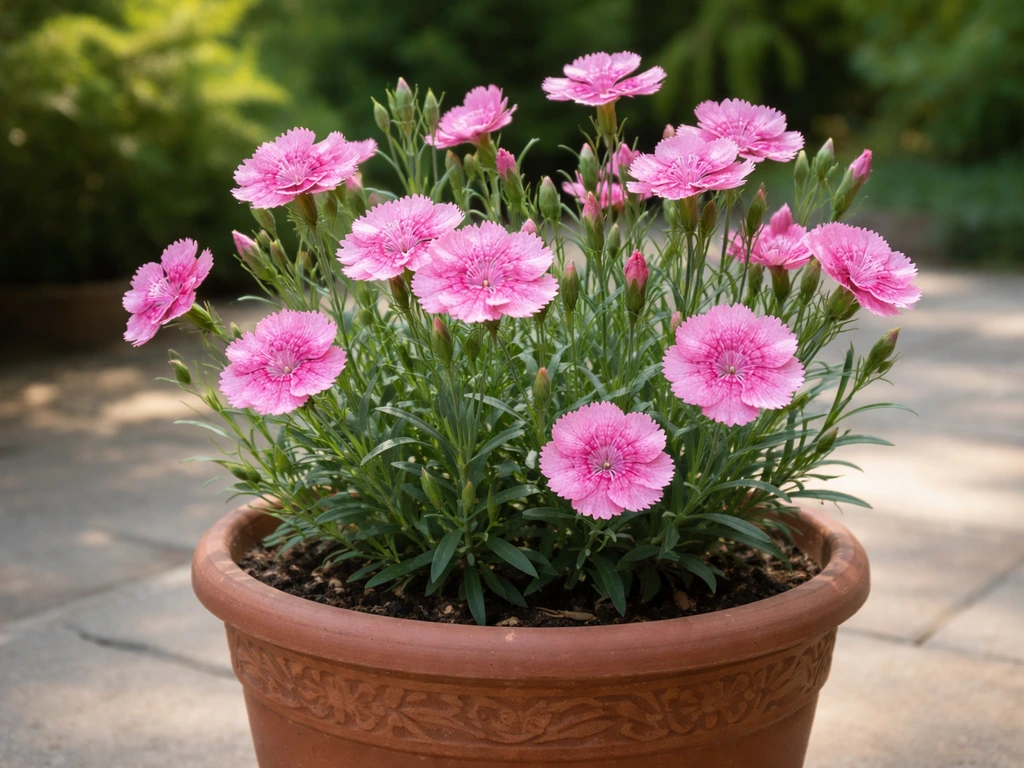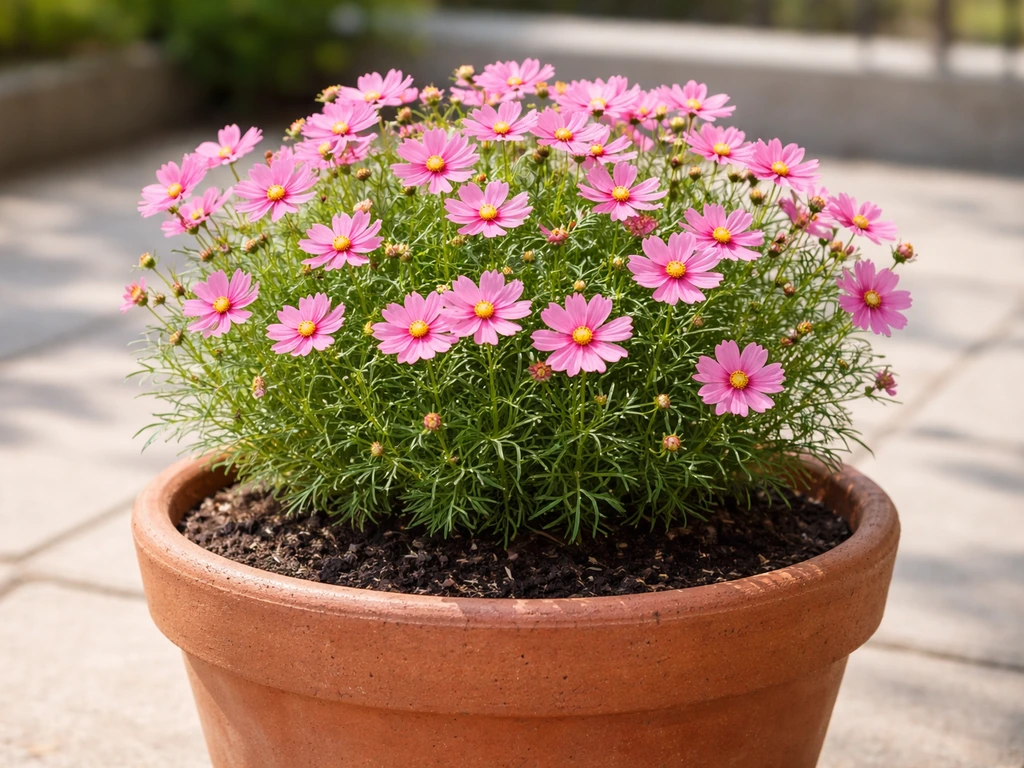
Yes, alstroemeria grows really well in pots, and it can flower prolifically for years if you get a few key things right. The biggest ones are pot size (go bigger than you think), drainage (non-negotiable), and keeping the soil evenly moist but never soggy. If you want to try a different plant, our guide on how to grow aloe vera plant in pot walks you through the key steps. Get those three right and you'll have armfuls of those gorgeous lily-like blooms from late spring through summer, and sometimes well into autumn.
How to Grow Alstroemeria in Pots: Step-by-Step Care
Marcus Whitley
30 Apr 2026
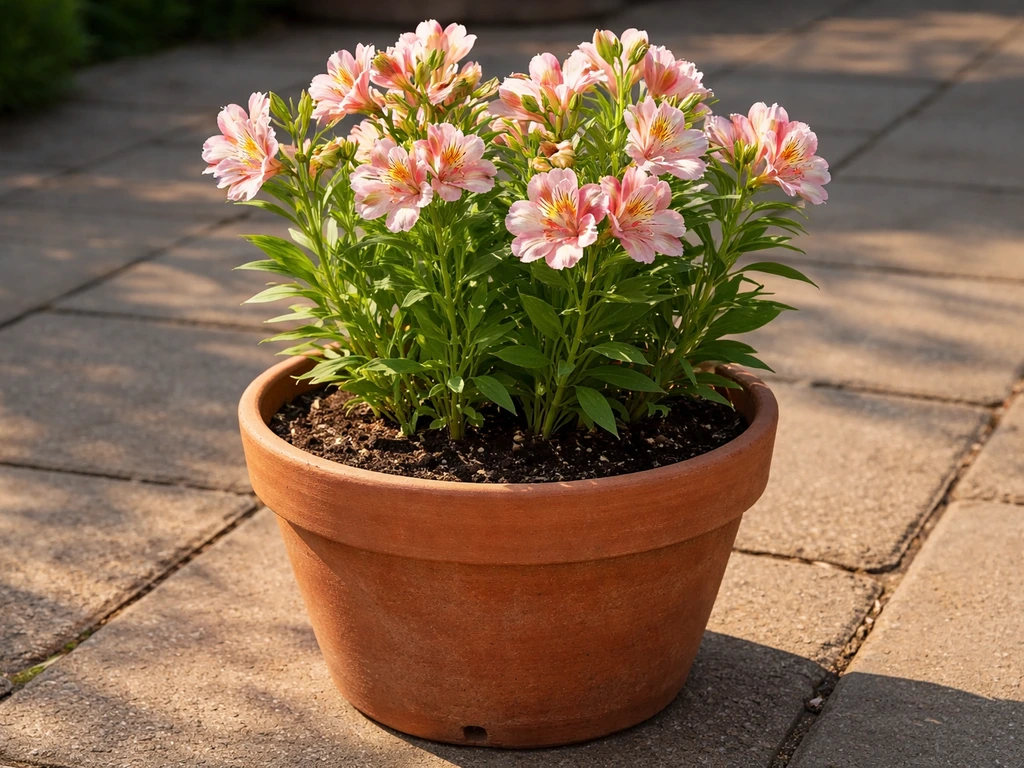
Can alstroemeria actually grow in pots?
Absolutely, and plenty of gardeners with no garden at all grow them brilliantly on patios and balconies. Alstroemeria, sometimes called the Peruvian lily or lily of the Incas, is a rhizomatous perennial that comes from the Andes mountains in South America. That heritage is worth keeping in mind because it explains a lot about how to care for it: it likes cool roots, good drainage, and consistent moisture. It does not like being baked in waterlogged compost or shoved into a tiny pot and forgotten.
One thing to be honest about: alstroemeria in pots takes a little more attention than, say, a tough drought-tolerant plant like agave. If you are also interested in agave, you will find similar container tips for choosing a pot, soil, and watering that prevents root issues agave in pots. It is not a set-it-and-forget-it plant. But it rewards you generously if you stay on top of watering and feeding, and a single pot can produce cut flowers all summer long. Most modern cultivars are rated H4 or H5 on the RHS hardiness scale, meaning they can handle cold winters, though container-grown plants need a little extra protection (more on that below).
Picking the right pot size and setup
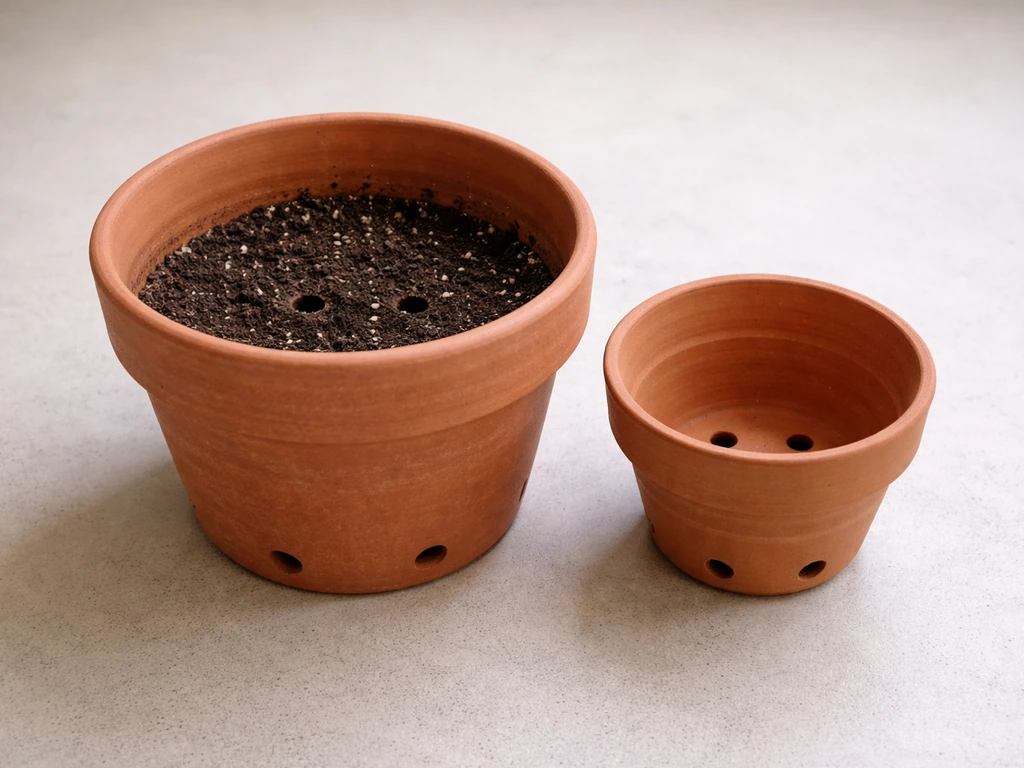
This is where a lot of people go wrong. Alstroemeria has fleshy, spreading rhizomes (underground storage roots) that need room to run. A small pot restricts that growth, and the plant will become pot-bound quickly, which the RHS specifically flags as something that hinders growth and flowering. My recommendation: start with a pot that is at least 30–40 cm (12–16 inches) in diameter, and ideally 30 cm deep. If you are planting two or three plants together for a fuller display, go up to 45–50 cm wide.
Material matters less than size and drainage, but heavier pots like terracotta or thick ceramic help keep roots cool in warm weather, which alstroemeria appreciates. Lightweight plastic pots work fine too, especially on balconies where weight is a concern. Whatever you choose, drainage holes are absolutely essential. If your pot does not have at least two or three decent drainage holes in the base, drill some before you plant anything.
- Minimum pot diameter: 30 cm (12 inches) for a single plant
- Ideal pot diameter: 40–50 cm (16–20 inches) for fuller plantings
- Minimum depth: 30 cm to accommodate rhizome spread
- Multiple drainage holes in the base are non-negotiable
- Raise the pot on feet or pot feet to allow free drainage underneath
- Terracotta or ceramic keeps roots cooler; plastic is fine for weight-restricted spaces
Soil, drainage, and fertilizing your container alstroemeria
Getting the mix right
Alstroemeria wants a free-draining but moisture-retentive potting mix, which sounds like a contradiction but it just means the soil should hold onto enough water to stay evenly moist without sitting wet. Alyssum is a great alternative container plant too, and the same basics like good drainage and consistent moisture help you grow it successfully in pots how to grow alyssum in pots.
A good starting point is a quality peat-free multipurpose compost mixed with around 20–30% horticultural grit or perlite by volume. This improves drainage significantly, and horticulture experts specifically recommend adding grit to the mix to prevent winter wet problems that can rot the roots. Aim for a slightly acidic to neutral pH of around 6. 0–6.
5, which is what most standard potting composts sit at naturally.
Before you add your compost, put a layer of crocks (broken pot pieces) or a handful of gravel over the drainage holes. This stops the mix from washing through while keeping water flowing freely. Do not use a saucer under the pot unless you empty it after every watering session. A saucer that stays full of water is basically a root rot waiting to happen.
Feeding: what to use and what to avoid
Alstroemeria is a hungry plant once it is actively growing, and container plants run out of nutrients much faster than those in the ground. Feed with a balanced soluble fertilizer that includes trace elements, applied every one to two weeks during the growing season (spring through summer).
A fertilizer with a roughly balanced NPK ratio is a good baseline, but avoid fertilizers where nitrogen comes primarily from ammonia sources, as Walters Gardens specifically flags this as something to avoid with alstroemeria. Walters Gardens advises avoiding ammonia-based fertilizers for alstroemeria, because ammonia is not readily converted to nitrate under cool growing conditions [nitrogen comes primarily from ammonia sources](https://www. waltersgardens. com/culture_sheet.
php? ID=46). Slow-release granules mixed into the compost at planting time give a good background level of nutrition, topped up by liquid feeds during the peak growing months.
How to plant alstroemeria in pots: step by step
Should you start with rhizomes, container plants, or seeds?
You have three options: bare rhizomes, container-grown nursery plants, or seeds. My honest advice is to skip the seeds entirely if you want reliable results. The RHS notes that alstroemeria can be tricky to grow from seed and that seedlings may not resemble the parent plant, which means you could end up with a very different flower colour or form from what you expected. Seeds are fun for experimenting, but if you want specific varieties and blooms this season, buy a container-grown plant from a nursery. The RHS also recommends this approach specifically, noting that establishment from container plants is more reliable than from dry tubers.
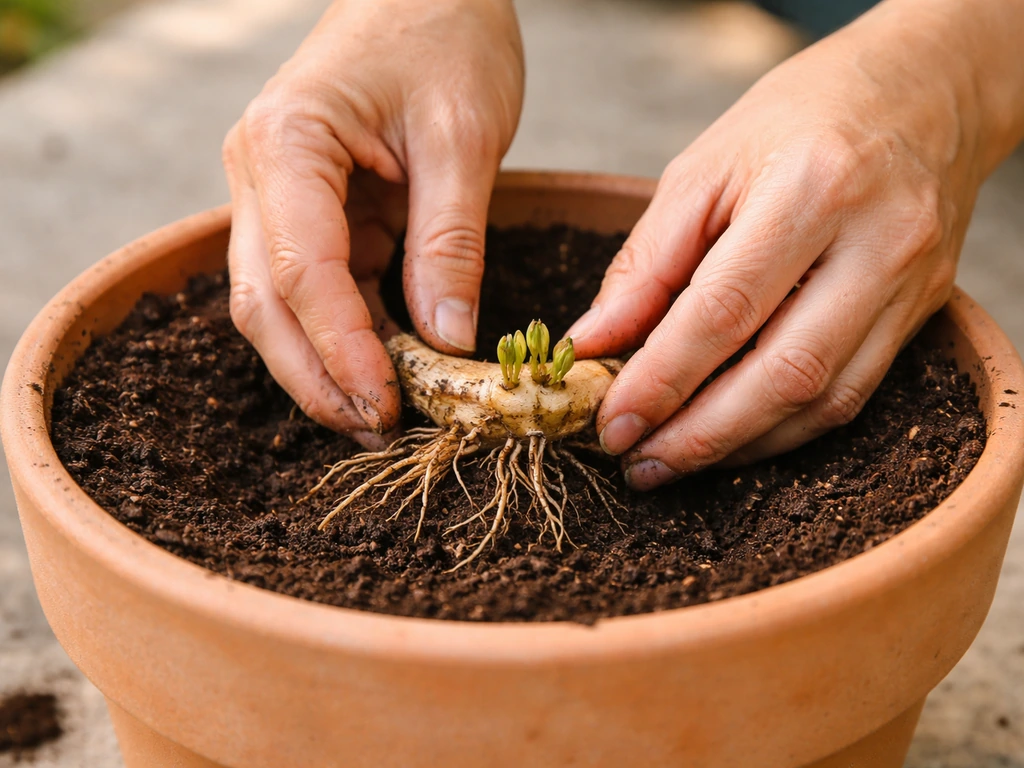
Bare rhizomes are an option if you can get them fresh and plump, not dried out and shrivelled. Handle them very gently because the roots are brittle and break easily, which can set the plant back significantly.
Step-by-step planting guide
- Choose your timing: plant container-grown alstroemeria in spring (April to May in the UK and most of the northern hemisphere) after the last frost has passed. This gives the plant a full growing season to establish.
- Prepare your pot: add crocks or gravel over the drainage holes, then fill with your compost and grit mix to about two-thirds full.
- Remove the plant from its nursery pot carefully, disturbing the roots as little as possible. Alstroemeria really does not like root disturbance.
- Place the root ball in the centre of your pot so the top of the root ball sits about 2–3 cm below the rim of the pot. This gives you room to water without overflow.
- Backfill around the root ball with your compost mix, firming gently. Do not bury the crown (where the stems meet the roots) too deep.
- Water thoroughly immediately after planting until water drains from the base. This settles the compost around the roots.
- Place the pot in its final position (see light guidance below) and avoid moving it repeatedly, as alstroemeria dislikes disturbance during establishment.
- If planting bare rhizomes instead: plant them about 8–10 cm deep with the growth buds pointing upward, handle gently, and expect a slower start than with container plants.
Light, watering, and temperature: the daily care routine
How much light does alstroemeria need?
Alstroemeria needs high light levels to flower well. A spot with at least six hours of direct sun per day is ideal, and a south or west-facing patio, balcony, or windowsill typically works well. That said, in very hot climates or during a heat wave, some afternoon shade is actually helpful because it keeps the root zone cooler. If you notice the plant flowering well in spring and then slowing dramatically in midsummer heat, try moving it to a spot with morning sun and afternoon shade.
Watering: the most important thing to get right
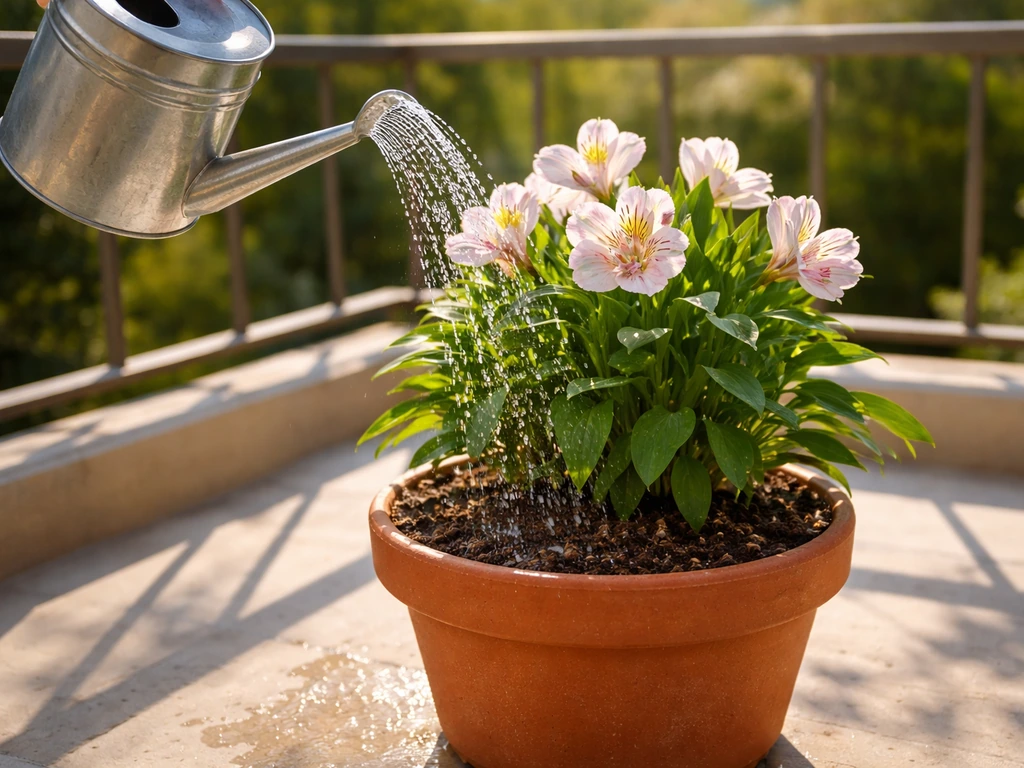
Alstroemeria is what commercial growers describe as a thirsty crop, but it is extremely sensitive to both overwatering and underwatering. The goal is even, consistent moisture. In practice, that means checking the compost every day or two during warm weather and watering when the top inch of compost feels dry. In hot summer weather, that might mean watering every day. In cooler spring or autumn conditions, every two to three days is more typical. Always water at the base of the plant rather than overhead, and always let excess water drain away completely. Never let the pot sit in standing water.
Temperature and seasonal considerations
Alstroemeria actually prefers cooler conditions than many gardeners expect, which makes sense given its Andean origins. It grows and flowers best when temperatures are moderate, roughly 15–22°C (60–72°F). It can handle light frost in the ground, but container-grown plants are much more vulnerable because the roots are not insulated by surrounding soil. When temperatures drop below freezing, move your pot to a frost-free location: an unheated greenhouse, a sheltered porch, or even a cool garage.
Do not bring it into a warm centrally heated room, as the warmth and low light combination will weaken the plant. In mild UK winters (which is most of them for H4 and H5-rated cultivars), wrapping the pot in horticultural fleece and moving it against a sheltered wall is usually sufficient.
Ongoing maintenance: deadheading, pruning, and feeding schedule
Keeping alstroemeria flowering all summer is really about staying consistent with a few simple tasks. None of them are complicated, but skipping them for a few weeks will noticeably reduce the number of blooms you get.
Deadheading and pruning
Deadhead spent flowers promptly and regularly. The RHS technique for alstroemeria is specific and worth following: rather than cutting the flower stalk with scissors, grasp it near the base and pull it sharply downwards and away from the main stem. This snapping motion removes the stalk cleanly without leaving a stub that can rot or harbour disease. Do this as soon as flowers fade and you will encourage the plant to produce new flower stems rather than put energy into seed production. Remove yellowing or dead leaves at the same time.
Feeding schedule through the season
| Time of year | Feeding recommendation |
|---|---|
| Early spring (March–April) | Apply slow-release granules to the compost surface or mix in at planting; start liquid feeds every two weeks once growth is active |
| Late spring through summer (May–August) | Liquid feed every one to two weeks with a balanced fertilizer including trace elements; avoid ammonia-based nitrogen sources |
| Early autumn (September) | Reduce feeding frequency to once every three to four weeks as growth slows |
| Late autumn through winter (October–February) | Stop feeding entirely; the plant is resting |
A healthy container alstroemeria can keep producing flowers for many years. Most gardeners find they get two distinct flushes of blooms: a main flush in early to midsummer and a second, smaller flush in late summer or early autumn. Consistent deadheading and feeding are what drives that second flush.
Troubleshooting common problems and when to repot
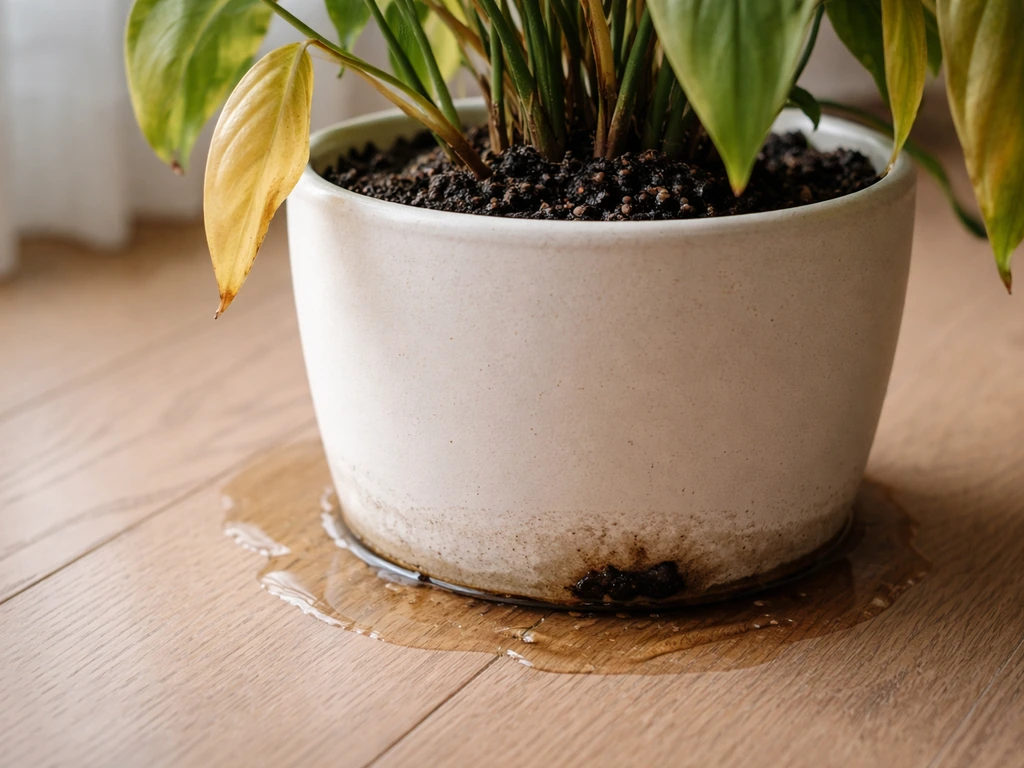
Common issues and what to do about them
| Problem | Likely cause | What to do |
|---|---|---|
| Yellowing leaves | Overwatering, waterlogged compost, or pot sitting in standing water | Check drainage holes are clear; reduce watering frequency; empty saucers after watering |
| Wilting despite moist soil | Root rot from prolonged waterlogging | Tip out of pot, remove damaged roots, replant in fresh well-draining mix with added grit |
| Few or no flowers | Insufficient light, pot-bound roots, or lack of feeding | Move to a sunnier position; check if roots are circling the drainage holes (sign of being pot-bound); increase feeding frequency |
| Weak, floppy stems | Too little light or overfeeding with high-nitrogen fertilizer | Increase light; switch to a balanced fertilizer rather than one high in nitrogen |
| Snail or slug damage (ragged holes in leaves) | Snails and slugs are a known pest of alstroemeria | Use pet-safe slug pellets or copper tape around the pot base; check under the pot for hiding pests |
| Fine webbing on leaves, stippled foliage | Spider mites, common in warm dry conditions | Increase humidity around the plant; spray with water to dislodge mites; use a suitable insecticide if severe |
| Sticky residue or tiny insects on stems | Aphids | Blast off with water; treat with insecticidal soap or neem oil |
When and how to repot
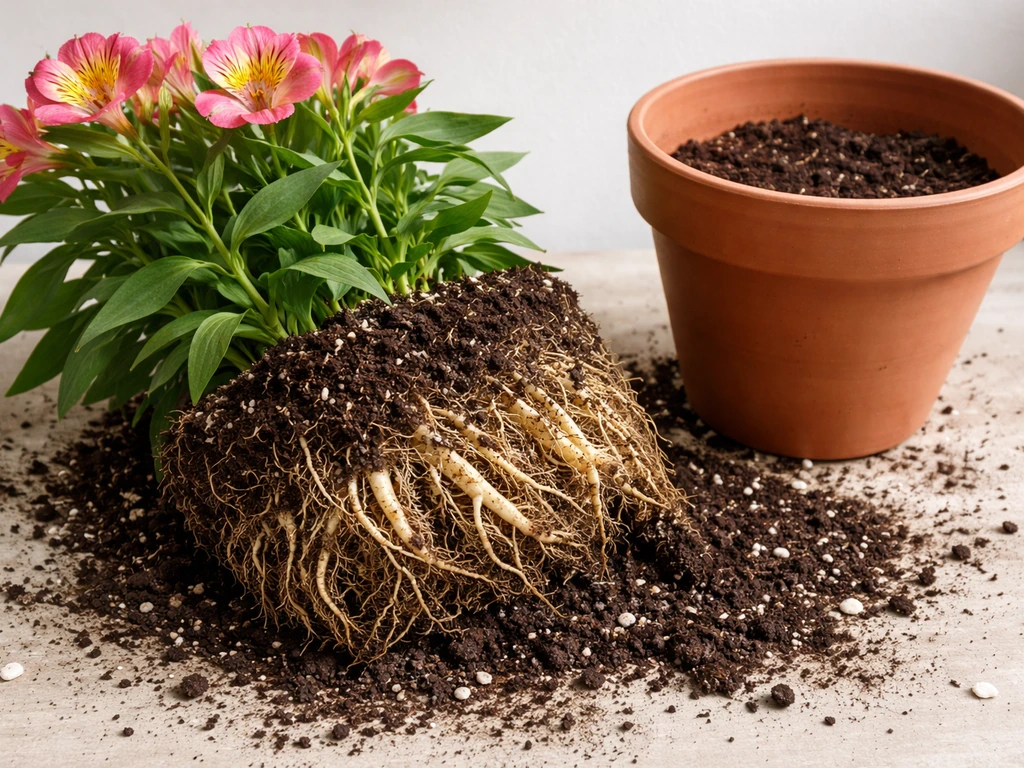
If you see roots poking densely out of the drainage holes, the plant producing fewer flowers than in previous years, or the compost drying out unusually fast, your alstroemeria is likely pot-bound. The RHS specifically flags this as a condition that hinders growth. Repot every two to three years, or sooner if those signs appear. Spring, just as growth is resuming, is the best time.
Move up one pot size (for example, from a 30 cm to a 40 cm pot) rather than jumping to a very large container, and refresh the compost entirely. Handle the roots as gently as you can because alstroemeria is notoriously sensitive to root disturbance. Expect a slight slowdown in flowering immediately after repotting while the plant re-establishes, but it should bounce back within a few weeks.
If you do not want to go up a pot size, you can divide the rhizomes instead: tip the plant out, gently separate the clumps of rhizomes, and replant a portion back into the original pot with fresh compost. The divided portions can go into new pots or be shared with other gardeners.
Your next steps today
If you are reading this in spring, you are at the perfect time to get started. Pick up a container-grown alstroemeria from a local nursery or garden centre, grab a pot at least 40 cm wide, mix in some horticultural grit with your compost, and plant it somewhere sunny. Water it in well, start feeding after a couple of weeks, and commit to checking it every day or two through the summer.
That routine, simple as it sounds, is genuinely all it takes to have a pot overflowing with flowers by early summer. If you enjoy growing other bold flowering plants in containers, agapanthus and alyssum are worth exploring as companions or neighbouring pots with similarly rewarding results in a small space.
FAQ
Can I move my potted alstroemeria to a different spot to get more flowers?
Yes, but do it carefully because alstroemeria dislikes being moved while it is actively growing. If you must relocate it, keep the pot at the same depth, handle the rhizomes with minimal disturbance, water thoroughly after moving, and expect fewer blooms for 2 to 6 weeks while new growth settles in.
Why is my alstroemeria flowering less than last year in its pot?
If bud formation stalls, check three container-specific issues first: the pot may be too small (pot-bound rhizomes), the soil may be drying out between waterings, or the light level may be lower than it needs for flowering. A quick fix is to move to more sun (aiming for at least 6 hours), then tighten watering to keep the top inch evenly moist.
How should I overwinter potted alstroemeria if my winters get below freezing?
Overwintering depends on your winter lows. If nights regularly fall below freezing, move the pot to a cool, frost-free spot like an unheated greenhouse or a sheltered porch, and keep watering light (only enough to prevent the compost from fully drying). In mild winters, fleece plus a sheltered wall can work, but avoid wrapping so tightly that moisture condenses around the stem.
Is it okay to keep water in a saucer under my alstroemeria pot during summer?
A saucer can be used only if it is emptied every time you water. Do not rely on capillary action or leave the pot sitting in runoff, because stagnant water in a container accelerates rot. If you want extra help in heat, use mulch on the compost surface instead of letting water collect.
What should I do if my alstroemeria dries out too fast in a warm weather spell?
Pots with very coarse compost that drains too fast can cause chronic underwatering even if you water frequently. To correct it, improve moisture retention by mixing in more fine compost or reducing the grit slightly (while still keeping it free-draining). Test by feeling the compost, if the pot dries in under a day in heat, adjust the mix.
My alstroemeria leaves are turning yellow, could it be a watering problem?
If leaves turn yellow and the compost stays wet, first stop any feeding, then check drainage by tipping the pot carefully and looking for soggy compost. The most common cause is poor drainage or a clogged drainage hole. The fix is to improve drainage immediately, or repot if the mix has become waterlogged and compacted.
How often should I water potted alstroemeria during autumn and winter?
You do not need to water more than necessary, but you should keep moisture consistent. In cold or rainy periods, water less often, based on the compost’s feel, do not follow a fixed schedule. A good rule is to water only when the top inch starts to dry, and to water less frequently once daytime temperatures drop.
Should I deadhead all year, and what’s the right way to clean up spent growth?
Yes, but make it easier to manage. Remove dead or fading flowers and pull the stalk from near the base, then stop deadheading once the plant has fully finished for the season to avoid repeated disturbance. For a clean look, also remove yellowing leaves as soon as you see them, using gentle handling so you do not snap stems or disturb rhizomes.
How can I prevent heat stress on alstroemeria in hot climates or heat waves?
Container alstroemeria can look “leggy” or fail to flower if it is grown too hot. If your summers are intense, aim for morning sun with afternoon shade, and consider placing the pot where it gets sun but the root zone stays cooler. Heavy pots and a slightly deeper pot also help reduce heat stress.
Can I grow the same flower color from seed like the parent plant?
Skip seed for true-to-type results. For reliable blooms on the variety you want, choose container-grown plants, then refresh the compost at pot-up or repotting. If you do try seeds, expect variation in flower color and shape, and plan for longer establishment time.
How do I know whether it’s time to repot my alstroemeria sooner than every few years?
Repotting is usually best every 2 to 3 years, but pot size and growth rate can change that. If you see dense roots at the drainage holes, faster drying, or fewer blooms, repot sooner. Always do it in spring when growth is resuming, so the plant can recover quickly.