Pudina (mint) is one of the easiest herbs you can grow in a pot, and you can start today with almost nothing: a cutting from a neighbor's plant, a basic potting mix, and any container that has a hole at the bottom. The trick is not making it grow, it's keeping it contained, well-watered, and regularly harvested so it stays lush instead of turning into a leggy, bitter tangle. Here's exactly how to do it. If you want to try a similar container herb next, here is how to grow methi in pots successfully.
How to Grow Pudina in Pots: Step-by-Step Container Care
Marcus Whitley
11 May 2026
Best pot size and drainage for pudina
Mint is naturally invasive. Utah State University Extension specifically calls it out as one of the most aggressive spreaders in the garden, which is actually a big reason why pots are the perfect home for it. When you grow pudina in a container, the walls keep the roots from taking over your entire balcony or garden bed.
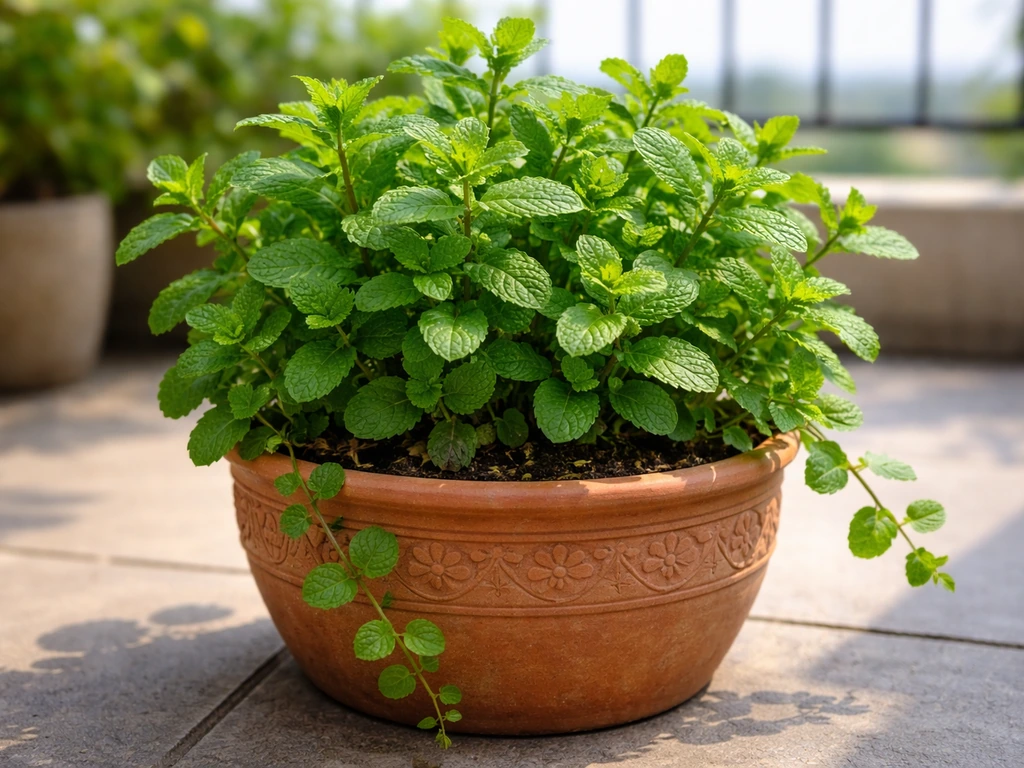
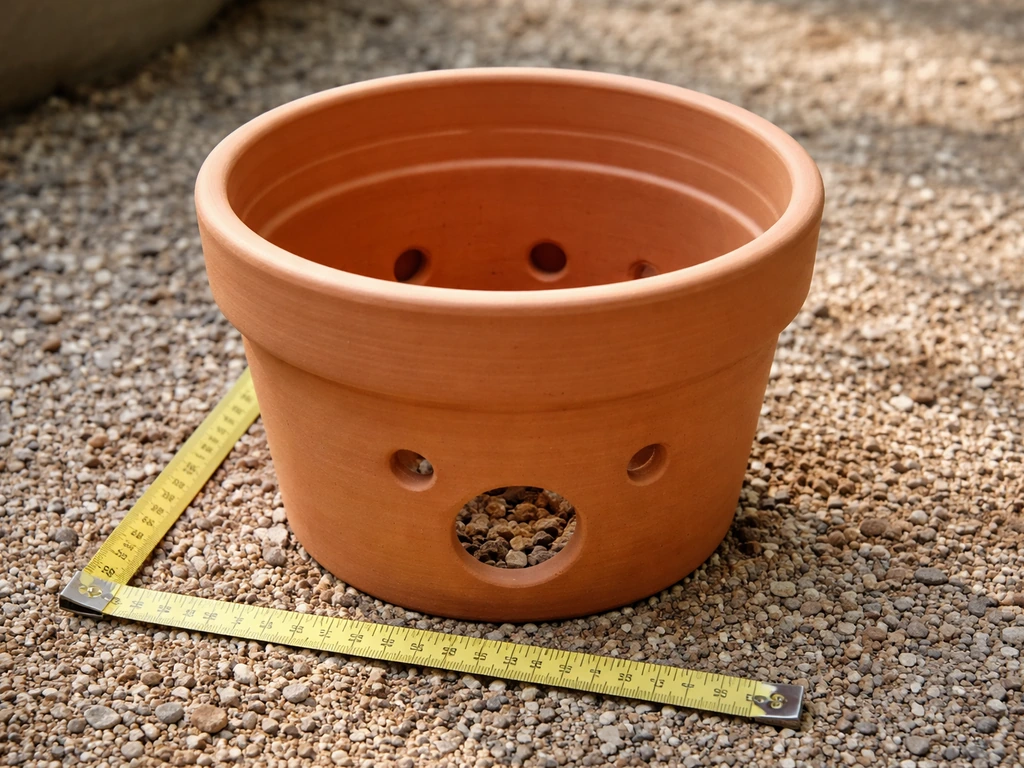
For a single plant, use a pot that is at least 8 inches deep and 10–12 inches wide. If you want a fuller, bushier plant or plan to harvest frequently, go wider rather than deeper. A 12–14 inch wide pot gives the roots room to spread laterally and lets you get a generous handful of leaves every few days. Terracotta, plastic, and grow bags all work fine. Plastic and grow bags hold moisture longer, which mint appreciates. Terracotta dries out faster, so you'll water more often.
Drainage is non-negotiable. Make sure your pot has at least one hole at the bottom, and ideally a few. If water sits at the roots, you'll get root rot fast. If you're using a decorative outer pot (one without holes), just place your growing pot inside it but always tip out any water that collects at the bottom after watering. Never let pudina sit in a saucer full of water for more than an hour.
One smart trick from University of Maryland Extension: if you want pudina in your garden bed but are worried about it spreading, you can sink the pot into the ground with the rim sitting about an inch above the soil surface. The container walls block the roots from escaping, and any runners that try to creep over the top are easy to spot and trim before they root into the surrounding soil.
Soil mix and where to get it right
Pudina likes moisture-retaining but well-draining soil. That sounds contradictory but it isn't. What you want is soil that holds enough water to keep the roots consistently moist without turning into a soggy swamp between waterings.
A good basic mix for pudina in pots is two parts standard potting mix (not garden soil, which compacts badly in containers) combined with one part cocopeat or perlite. Cocopeat holds moisture really well and is inexpensive. Perlite improves drainage and aeration. You can find both at most garden nurseries or online. If you can only get one, go with cocopeat for mint since moisture retention matters more than drainage for this plant.
Avoid using soil straight from the garden. Garden soil compacts in pots, reduces the airflow around the roots, and can harbor pests. Montana State University Extension notes that compaction and poor drainage are direct causes of root problems and nutrient deficiency in potted plants, which is the last thing you want right at the start.
If you want a ready-to-use option, any good quality herb or vegetable potting mix from a garden center will work. Just check that it doesn't already have a lot of slow-release fertilizer added, since you'll want to control feeding yourself. Fill the pot to about an inch below the rim so water doesn't splash out when you irrigate.
Seeds vs cuttings: which is better for starting pudina
You have two realistic options for starting pudina: seeds or stem cuttings. Cuttings are faster and more reliable. Seeds work, but they take more patience and care to germinate.
Starting from cuttings (recommended)
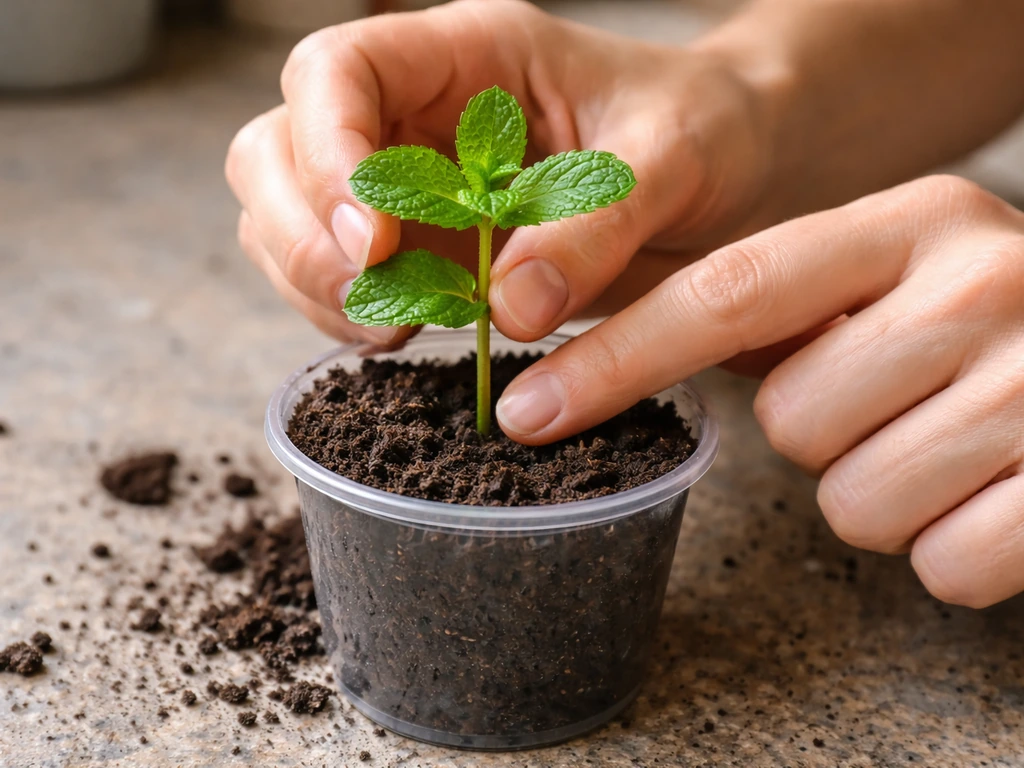
This is the method most gardeners swear by. Ask someone with a mint plant for a 4–6 inch stem cutting, or buy a small live pudina plant from a market or nursery and take cuttings from it. Strip the leaves off the bottom half of the cutting, leaving just the top few leaves intact. Place the bare stem in a small jar with about an inch (2.5 cm) of water at the bottom, just enough to cover the lowest nodes. Set it on a bright windowsill out of direct harsh sun. You'll see white roots forming within 7–10 days. Once the roots are half an inch to an inch long, pot the cutting into your prepared soil mix. It's that simple.
Starting from seeds
Mint seeds are tiny and need light to germinate, so don't bury them. Scatter the seeds on the surface of your damp potting mix and press them gently to make contact with the soil. Do not cover them with more soil. According to Johnny's Selected Seeds, mint seeds need light for germination and take 10–14 days at temperatures around 72–75°F (22–24°C). Keep the surface consistently moist during this time by misting gently every day. Germination can be uneven, so don't give up if you don't see sprouts at exactly day 10.
Planting steps and spacing in the container
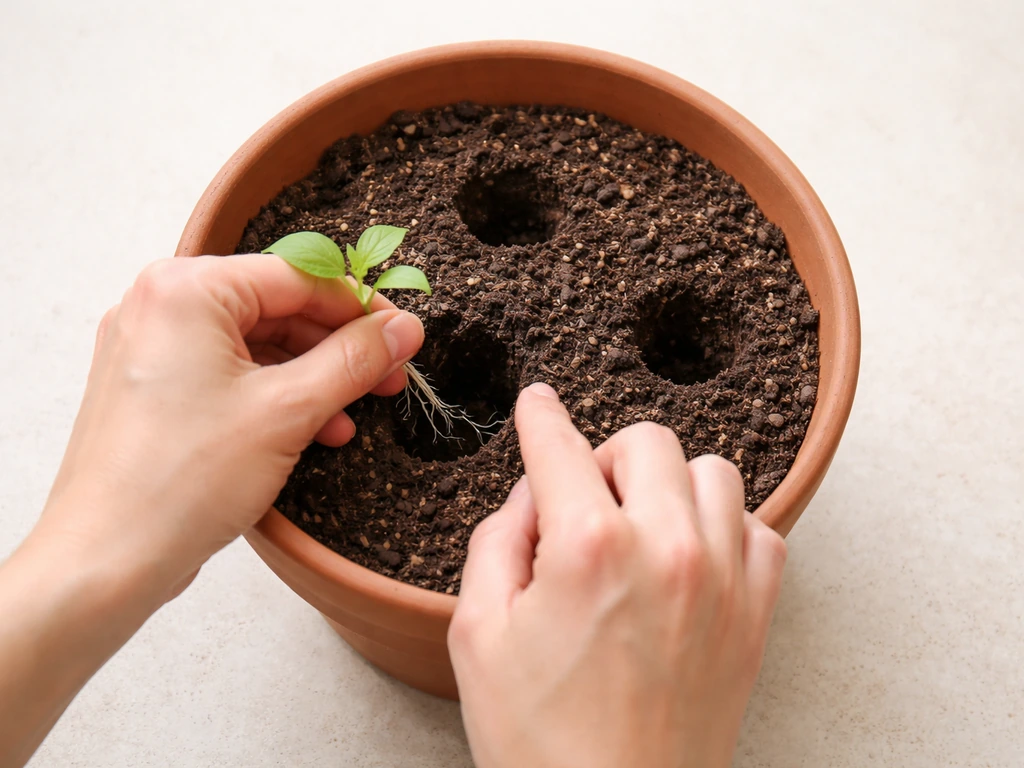
Whether you're planting rooted cuttings or transplanting seedlings, the process is the same. Here's how to do it cleanly.
- Fill your pot with the soil mix to about 2–3 inches below the rim. Don't pack it down.
- Make a small hole in the center (or space multiple holes about 6–8 inches apart if planting more than one cutting).
- Lower the rooted cutting or seedling into the hole so the roots are fully covered and the lowest leaves sit just above the soil surface.
- Gently firm the soil around the base, but don't compress it tightly.
- Water slowly and thoroughly until water drains from the bottom of the pot.
- Place the pot in your chosen spot (more on light below) and check the soil moisture daily for the first week.
For spacing: if you're planting multiple cuttings in one large pot, keep them 6–8 inches apart. Mint spreads horizontally as it grows, so crowding them right away will lead to competition and weaker plants. One cutting in a 10-inch pot, or two to three cuttings in a 14-inch pot, is a good starting point.
Light, temperature, and how often to water
Light
Pudina grows in sun or shade, but University of Maryland Extension is clear that it's most productive in full sun. Aim for 4–6 hours of direct sunlight per day for the best leaf production. A sunny balcony or a south or east-facing windowsill works well. If you only have a partially shaded spot, pudina will still grow, just a little slower and with slightly smaller leaves. Avoid deep shade where it gets less than 2 hours of sun, it'll become spindly and the flavor will suffer.
Temperature
Pudina thrives in mild to warm temperatures, roughly 65–85°F (18–30°C). It handles cooler weather well and is actually a perennial that dies back in cold winters but comes back in spring. In very hot climates (above 95°F / 35°C), move the pot to a spot with afternoon shade to prevent the leaves from scorching and the plant from bolting (going to flower early).
Watering
Mint likes consistently moist soil, but not waterlogged soil. University of Maryland Extension advises against watering on a fixed schedule. Instead, check the soil before watering every time. Stick your finger about an inch into the soil. If it feels dry at that depth, water thoroughly. If it still feels damp, wait a day and check again. In hot weather, this usually means watering every day or every other day. In cooler or more humid weather, every 2–3 days may be enough. Always water until you see it draining from the bottom holes, that's how you know the entire root zone got moisture, not just the surface.
Feeding, pruning, and harvesting for non-stop leaves
Fertilizing
Pudina in a pot uses up nutrients faster than plants in the ground because you water frequently and nutrients get flushed out. University of Minnesota Extension recommends starting fertilizer between 2–6 weeks after planting, depending on how fast the plant is growing. For a simple and low-maintenance approach, mix a slow-release granular fertilizer into the top inch of soil at the start of the season. Utah State University Extension recommends doing this in early spring with a complete (N-P-K) slow-release fertilizer. If you want to give the plant a boost mid-season, use a liquid fertilizer diluted to half strength every 2–3 weeks during active growing months. Don't over-fertilize: too much nitrogen makes mint grow fast but with less flavor.
Pruning
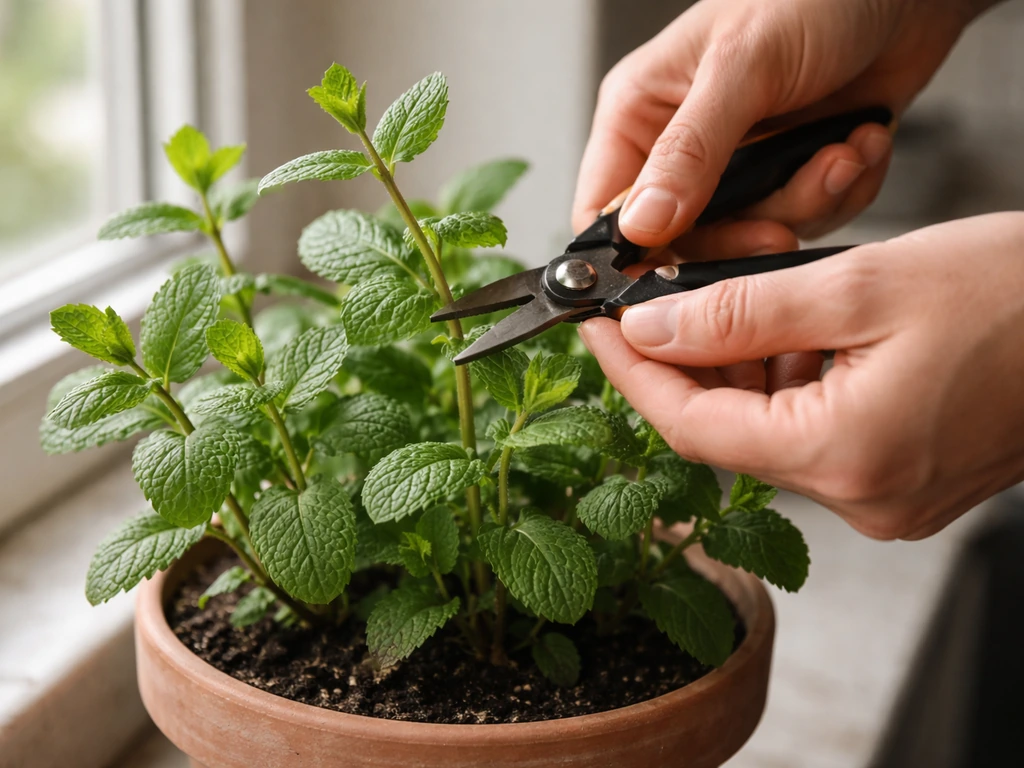
Regular pruning is what keeps pudina bushy and productive. Left unpruned, it goes tall and leggy with small leaves. Every time you harvest, you're also pruning. Utah State University Extension recommends cutting the plant back to within about an inch of the ground up to three times per season, especially just before it starts to flower. Utah State University Extension also notes that mint can be invasive, so regular container-focused pruning helps keep it under control and productive cutting the plant back just before it starts to flower. This sounds dramatic but mint bounces back fast, usually within 2–3 weeks.
Harvesting correctly
The right way to harvest is crucial for regrowth. University of Minnesota Extension advises cutting a few inches down the stem, just above a pair of leaves. That node (the point where leaves attach to the stem) is where new growth will sprout. Never just strip off individual leaves from the top; instead, cut the stem back by a third at a time. Harvest in the morning when the oils in the leaves are most concentrated and the flavor is best. Once you do this consistently, each cut stem branches into two, and your plant gets bushier every week rather than thinner.
Common problems in pots and how to fix them
| Problem | Likely Cause | Fix |
|---|---|---|
| Yellow leaves (bottom up) | Overwatering or underwatering; poor drainage | Check soil moisture before each watering; ensure drainage holes are clear; reduce watering if soil is soggy |
| Leggy, weak stems | Not enough light; not pruned enough | Move to a sunnier spot; cut stems back by a third to encourage bushy regrowth |
| Bolting (flowers forming) | Heat stress or plant maturity | Pinch off flower buds immediately; move pot to afternoon shade in hot weather; cut back hard |
| Aphids or mites | Soft-bodied pest infestation | Spray with diluted insecticidal soap every 4–7 days until gone; rinse leaves with plain water first |
| Slow or no growth | Cold temps, underwatering, or nutrient deficiency | Move to warmer spot; check watering; apply diluted liquid fertilizer |
| White powdery coating on leaves | Powdery mildew (fungal issue from poor airflow) | Improve air circulation; avoid wetting leaves when watering; remove affected leaves; treat with diluted neem oil |
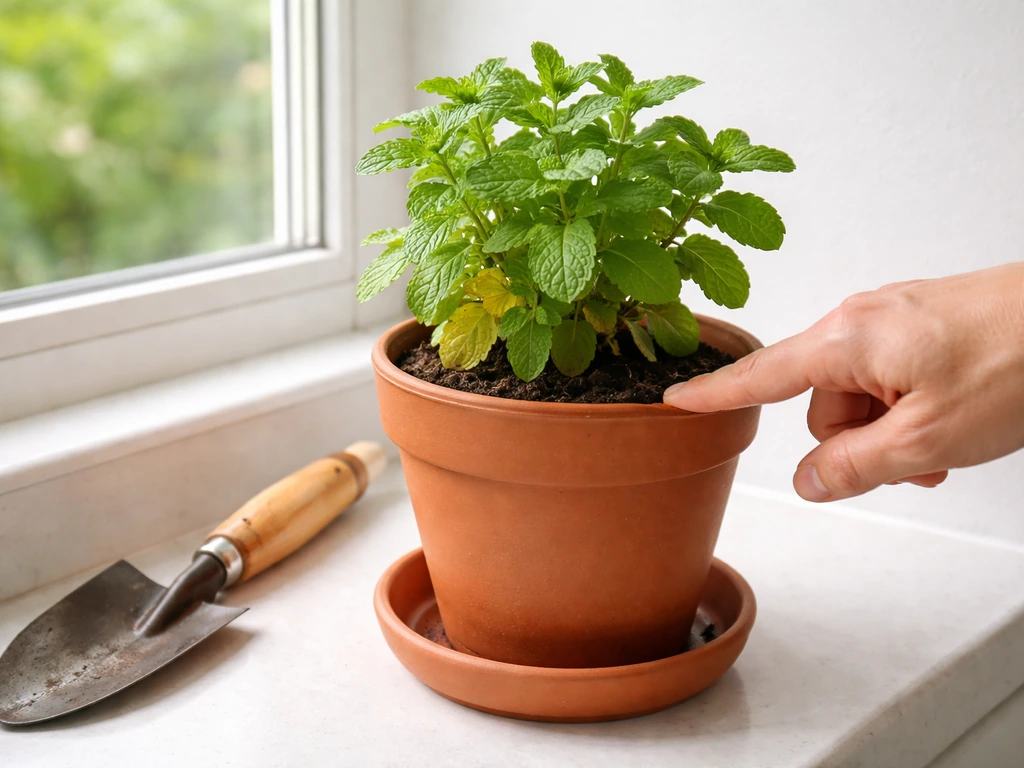
Yellow leaves specifically are worth discussing a bit more because they're the most common complaint. Ask Extension (University of Illinois) points out that leaves yellowing from the bottom up is usually a watering problem: either too much or too little. The fix is to adjust based on what the soil actually feels like, not what your schedule says. Compacted soil that drains badly is another culprit here, which is why starting with a good loose potting mix matters so much.
For pests like aphids and spider mites, Colorado State University Extension confirms that insecticidal soaps work well against soft-bodied insects. You may need to repeat applications every 4–7 days for persistent infestations. Since you're growing pudina for eating, always rinse the leaves well before cooking after any spray treatment.
Seasonal tips and indoor vs outdoor care
Outdoor care through the seasons
In spring and fall, pudina is in its happy zone. Mild temperatures and moderate sun mean active growth. Water regularly, fertilize every few weeks with liquid feed, and harvest frequently. This is the time to be aggressive with pruning because the plant will bounce back quickly.
In summer, especially in hot climates, watch for heat stress. Move the pot to a spot with morning sun and afternoon shade. Water more frequently since containers dry out much faster in heat. Watch for bolting: as soon as you see flower buds forming at the tips, pinch them off immediately. Flowering diverts energy away from leaf production and makes the leaves taste more bitter.
In winter, pudina naturally slows down or dies back to the roots. Don't toss the pot. Stop heavy fertilizing, reduce watering, and move the pot to a sheltered spot. In mild climates it'll stay green year-round. In colder areas the stems may die off entirely but the roots will survive and send up new growth in spring. Pechay, also called bok choy, can be grown in pots too, but it needs cooler weather, consistent moisture, and plenty of light grow pechay in pots.
Growing pudina indoors
Yes, pudina can live indoors year-round. The key is getting it enough light. A south-facing window that gets 4–6 hours of direct sun daily is ideal. If you don't have that, a grow light set to 12–14 hours per day will do the job. Indoors, growth is slower and the plant stays smaller, but it stays productive and you have fresh mint available even in winter. One thing to watch for indoors: low airflow encourages powdery mildew. Keep a small fan running nearby or open windows regularly to keep air moving around the plant.
Indoors, you'll also water less frequently since there's no wind and evaporation is slower. Always use the finger-test method rather than a fixed schedule. Pudina indoors may also benefit from a half-strength liquid fertilizer every 3–4 weeks since it won't be getting any nutrients from rain or natural soil processes.
If you're already growing other herbs in containers, pudina fits naturally alongside plants like fenugreek (methi), which has similar care needs in terms of light and watering. If you want to try growing fenugreek in pots too, focus on good drainage, consistent moisture, and enough sun to keep the plants compact and productive fenugreek (methi). Pudina is a bit more forgiving and faster to regrow after cutting, making it a great starting point if you're new to container herbs before experimenting with leafy vegetables like pechay or ladies finger that need a bit more space and feeding.
FAQ
Can I grow pudina in a pot that is smaller than 8 inches deep?
You can, but expect slower growth and more frequent watering. If you go smaller than about 8 inches deep, use the widest container you can, and water more carefully with the finger test so the mix never stays bone-dry. For reliable harvests, stick to at least the 8 inch depth guidance.
What’s the best way to keep mint from escaping over the rim?
Even in pots, mint can creep if the top stays open and the runners get light. Check the rim weekly, remove any shoots that appear above the soil line, and keep the pot filled to about an inch below the top so runners do not have an easy path to the outside.
How do I avoid root rot if my potting mix drains quickly but the soil still feels wet?
Root rot usually means water is sitting in the root zone, not just that the surface feels damp. Make sure the pot has multiple drainage holes, water until you see free drainage, then empty any outer pot saucer water within an hour. If the mix stays wet for more than a day in moderate weather, reduce watering volume next time and consider mixing in more perlite for extra aeration.
Should I use compost or manure in the potting mix for pudina?
For container mint, skip compost and especially avoid fresh manure. They can compact over time and may hold too much moisture, increasing the risk of yellowing and root issues. Use a quality potting mix plus cocopeat or perlite as the base, then fertilize on a schedule appropriate for containers.
How often should I fertilize, and what if my mint gets too leafy but tastes weak?
If the mint grows very fast but the leaves taste bland, it’s usually too much nitrogen or too much fertilizer concentration. Reduce feeding, switch to a complete slow-release or half-strength liquid at the lower end of the rate, and keep harvesting regularly to encourage branching rather than relying on extra nutrients.
My pudina leaves are turning yellow, but I’m watering regularly. What else should I check?
First confirm whether yellowing starts from the bottom up. If it does, the cause is often inconsistent moisture (too wet or too dry) or poor aeration from compacted mix. Re-check drainage, do not leave water in the saucer, and loosen aeration by repotting into a lighter potting mix if the soil has become dense.
What should I do when pudina starts to flower, and will it recover?
Pinch off flower buds as soon as you see them at the tips. Harvesting and light pruning right after bud removal helps redirect energy back to leaf production. With regular cuts, mint typically rebounds, but flavor can be slightly more bitter once flowering stress starts.
Can I propagate pudina in water and then plant directly into a larger pot?
It’s better to pot up after roots form, but start with a container that gives roots good contact with fresh mix. If moving to a large pot right away, ensure the mix is well-draining and do not overwater during the first week, since unused soil in a very large container can stay wet longer.
How long can I keep pudina cuttings or seedlings before repotting?
For cuttings, pot once roots are at least half an inch to about an inch long, generally within a couple of weeks. For seedlings from seed, repot when they have several true leaves and the stems look sturdy enough to handle without toppling. Keeping them too long in the germination setup can lead to weak growth and transplant shock.
Is it safe to use insecticidal soap on edible pudina?
Yes, but rinse thoroughly before cooking, especially if you spray during warm sunny periods. Spray in the evening or early morning to reduce leaf stress, and if pests persist, repeat at the interval you used initially rather than spraying daily.
Can I keep pudina outdoors year-round in cold winters?
In many climates it will die back above ground but regrow from the roots. Move the pot to a sheltered spot, cut back watering and stop heavy fertilizing in winter, and protect the pot from repeated freeze-thaw. In very harsh climates, grouping pots together and using insulation around the container can improve survival.
Why does my indoor pudina get leggy and small?
Legginess indoors is usually a light problem, not a pruning problem. Aim for 4–6 hours of direct sun daily on a south-facing window, or use a grow light on a 12–14 hour schedule. Keep harvesting frequently to promote branching, but fix light first because trimming cannot fully compensate for insufficient intensity.