Yes, you can absolutely grow gooseberries in pots, and they do surprisingly well as container plants. If you are also wondering can you grow goji berries in a pot, those have similar container-care basics but different sunlight and soil needs. A healthy gooseberry bush will fruit reliably in a pot for many years as long as you give it a big enough container, decent soil, a sunny spot, and a bit of winter chill. It's one of the more rewarding fruits you can grow on a patio or balcony, and if you've been wondering whether it's worth attempting, the short version is: go for it.
How to Grow Gooseberries in Pots: Step-by-Step Guide
Marcus Whitley
2 May 2026
Can gooseberries really thrive in a pot?
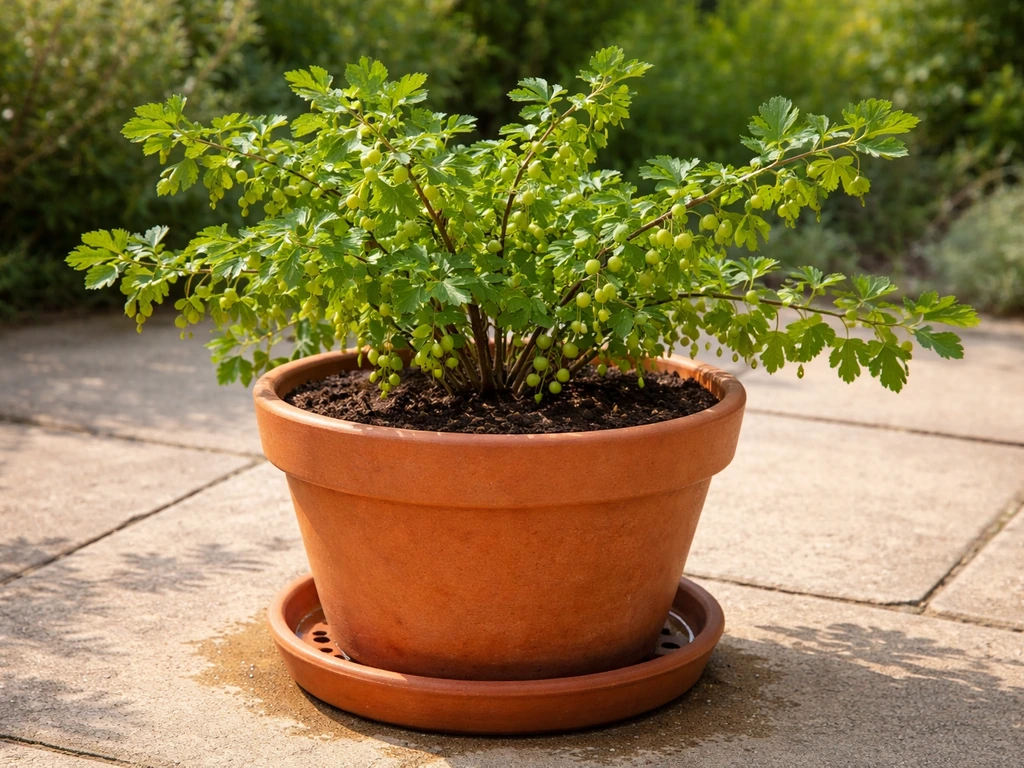
Gooseberries are genuinely well-suited to container growing. They're hardy, compact compared to many fruit bushes, and they don't need a massive amount of fuss once you get the setup right. The plant is cold-hardy down to zone 3, surviving mid-winter temperatures as low as -40°F, so winter hardiness isn't usually the problem for most gardeners.
The main thing to understand is that gooseberries actually need cold winters to fruit well. They require at least 1,000 hours of winter chilling (temperatures below about 45°F) for their buds to break properly in spring. That means they perform best in zones 3 to 6. If you're in a mild-winter climate, fruiting can be inconsistent. In a pot, the root system is more exposed to temperature swings than it would be in the ground, which is worth keeping in mind when positioning the container in winter.
The other thing that makes containers work well for gooseberries is that you control the drainage. In heavy clay or waterlogged ground, gooseberries struggle badly. In a well-draining pot with the right mix, you sidestep that problem entirely. Container plants can also be planted at any point during the growing season, so you don't need to wait for a specific window the way you might with bare-root plants in the ground.
Choosing the right pot size and variety
Pot size matters more than most people realise
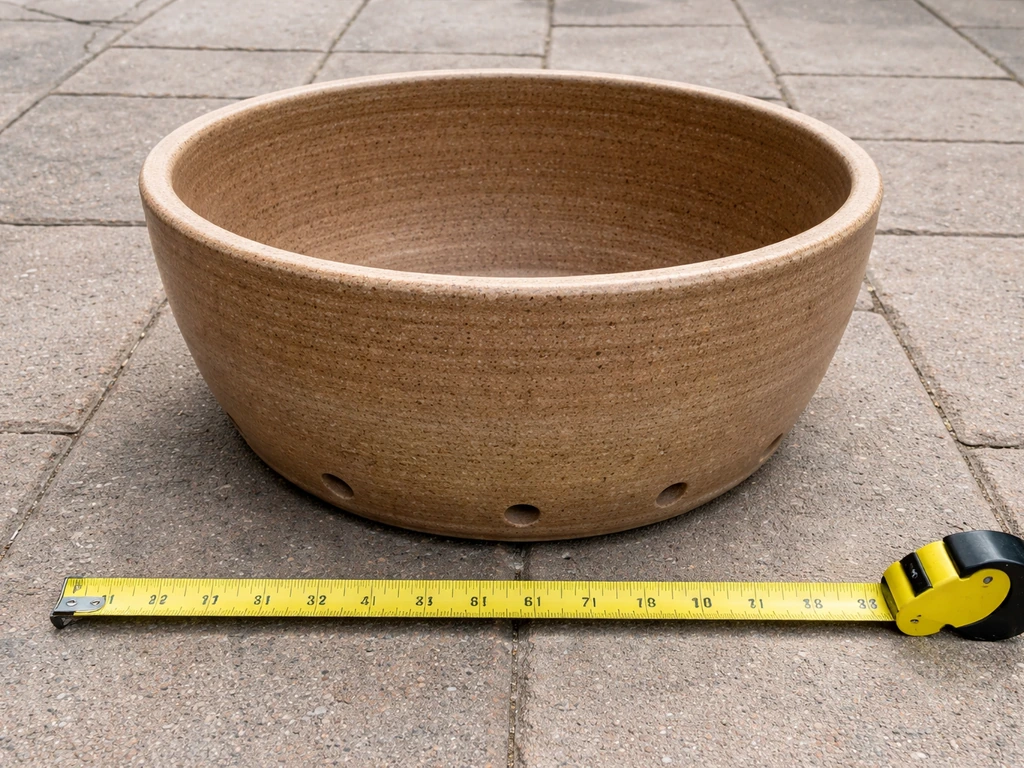
The RHS recommends a pot that's at least 40cm (about 16 inches) wide and deep, and that's the size I'd go with from the start if you can. Some guidance suggests you can get away with 30cm (12 inches), and technically you can, but a larger pot gives the roots more room, dries out less quickly in summer heat, and generally produces a more productive plant. Each bush needs its own container, one bush per pot, not multiple plants crowded together.
Drainage holes are non-negotiable. A pot without adequate drainage will kill your gooseberry faster than almost anything else. Clay or terracotta pots are great because they breathe, but any pot with several drainage holes at the base will work. If you're using a decorative outer pot, make sure the inner pot can drain freely and isn't sitting in standing water.
Which varieties work best in containers
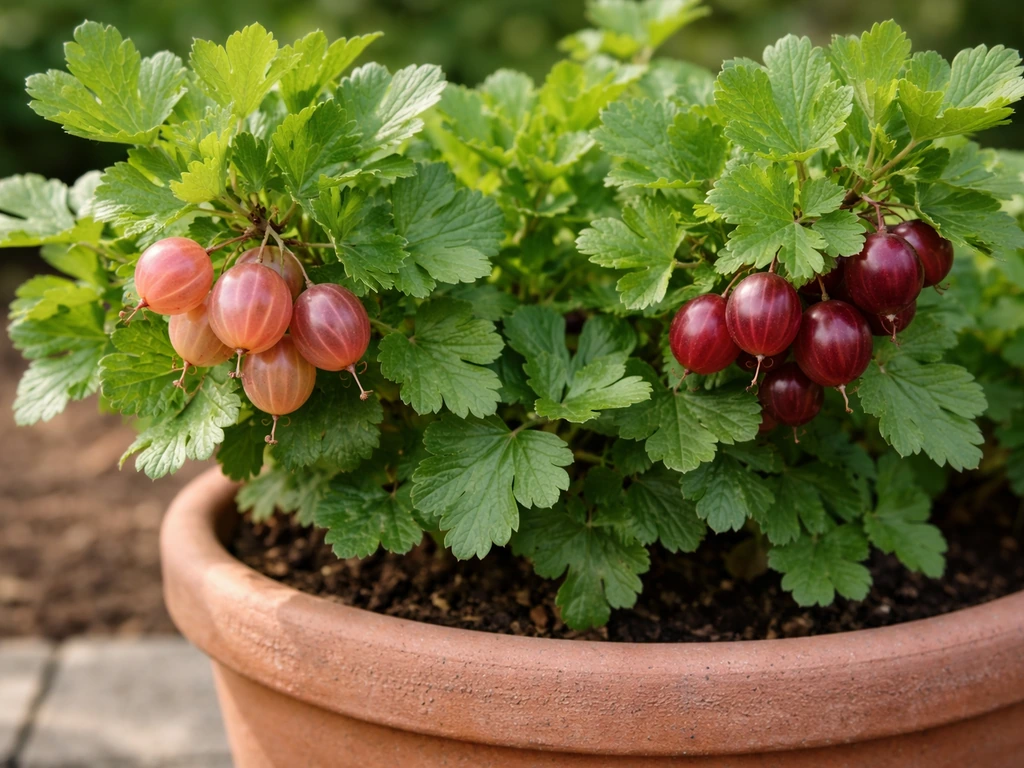
For containers, you want varieties that are naturally compact and, critically, resistant to powdery mildew. Mildew can devastate non-resistant varieties, especially in the slightly restricted airflow environment of a patio or confined garden space. Here are a few varieties worth considering:
- Captivator: An American-European hybrid with large, sweet, pinkish-red fruit. It has good mildew resistance and is widely recommended for home gardeners in the US.
- Pax: A red-fruiting variety frequently cited for container growing. It's thornless, which makes it much easier to handle in a pot on a patio.
- Chautauqua: Noted for its compact growth habit, which makes it particularly well-suited for container production.
- Invicta: A heavy-cropping green variety with good mildew resistance, popular in the UK.
If you're growing in a spot with moderate airflow and full sun, mildew resistance should be your top selection priority. Varieties without it can be completely devastated by US strains of the fungus in particular, and fighting mildew in a container is harder than in an open garden bed.
Soil mix, drainage, and how to plant
The RHS recommends peat-free, soil-based compost for container gooseberries, and that's solid advice. A soil-based mix (like a John Innes No. 3 in the UK, or a quality potting mix blended with around 20-30% compost in the US) gives the plant structure, holds nutrients better than pure peat-based mixes, and doesn't shrink away from the pot sides when it dries out. Gooseberries prefer rich soil with higher organic matter, so don't skip the compost component.
Aim for a soil pH of 6.0 to 6.5. That's the sweet spot for nutrient availability with this crop. You can buy a cheap pH test kit from any garden center, and it's worth doing before you plant rather than troubleshooting later. Most quality potting mixes fall somewhere in this range already, but it's worth checking.
For drainage, add a layer of crocks (broken terracotta pieces), coarse gravel, or perlite in the bottom inch or two of the pot before adding compost. This prevents the drainage holes from getting blocked and keeps the root zone from sitting in saturated mix. Avoid using fine sand, which can actually compact and reduce drainage over time.
When planting, set the bush at the same depth it was in its nursery pot. Water it in thoroughly after planting, then let it settle. Avoid planting when the compost is waterlogged, bone dry, or frozen. Other than those conditions, any time of year works for container planting.
Light, watering, and feeding through the seasons
Light requirements
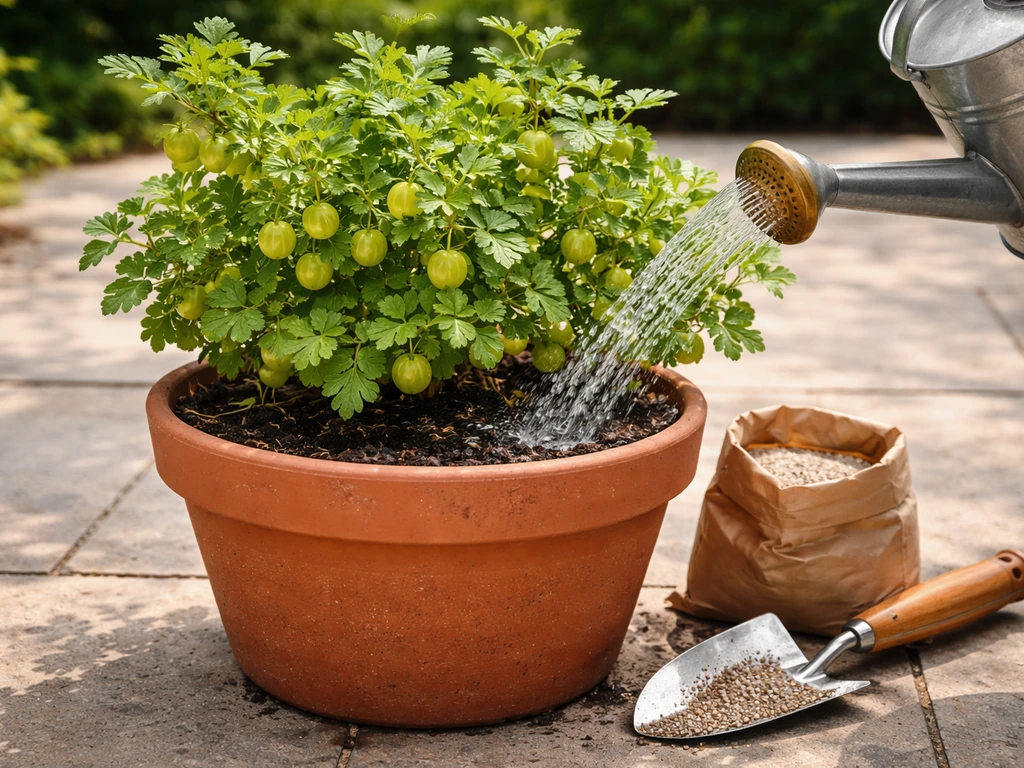
Gooseberries prefer a position with full sun to partial shade. Full sun gives you the best fruiting, but they'll tolerate some shade better than most fruit bushes. In a container, you have the advantage of being able to move the pot to follow the light or reposition it after harvest. If you're dealing with a north-facing wall or a shadier balcony, gooseberries are actually one of the better fruit choices for those conditions, though expect slightly smaller yields.
Watering
Container gooseberries dry out much faster than in-ground plants, especially in summer. If you want roses too, use similar container principles like choosing the right size pot, ensuring drainage, and following India-specific sunlight and watering guidance container gooseberries. Water consistently through the growing season and never let the pot completely dry out. When a container dries out fully, it triggers flower and fruit drop, so you can lose your whole crop if you miss watering during a dry stretch. In hot weather, that might mean watering every day or every other day. In cooler spring conditions, every few days may be enough. The best way to tell is to stick your finger an inch into the compost: if it feels dry, water.
Water at the base of the plant rather than over the foliage. Wet leaves in warm conditions encourage the fungal diseases gooseberries are prone to. In cold climates, keep watering right up until the ground freezes in autumn: going into winter well-hydrated reduces the risk of winter damage to the root system.
Feeding schedule
Feed with a balanced fertilizer at the end of winter or very early spring, just as the plant is coming out of dormancy. A balanced formula (something like a 10-10-10) works well. For an individual container plant, 1 ounce (about 2 tablespoons) of a balanced granular fertilizer in two applications through spring is a practical guide. Avoid going heavy on nitrogen: too much nitrogen pushes soft, lush leafy growth that is far more susceptible to powdery mildew. Balanced is better. A second light feed in early summer can support fruiting, but don't push the plant with heavy feeding in late summer, which encourages soft growth going into autumn.
Pruning, training, and managing pests and diseases
Pruning for a container
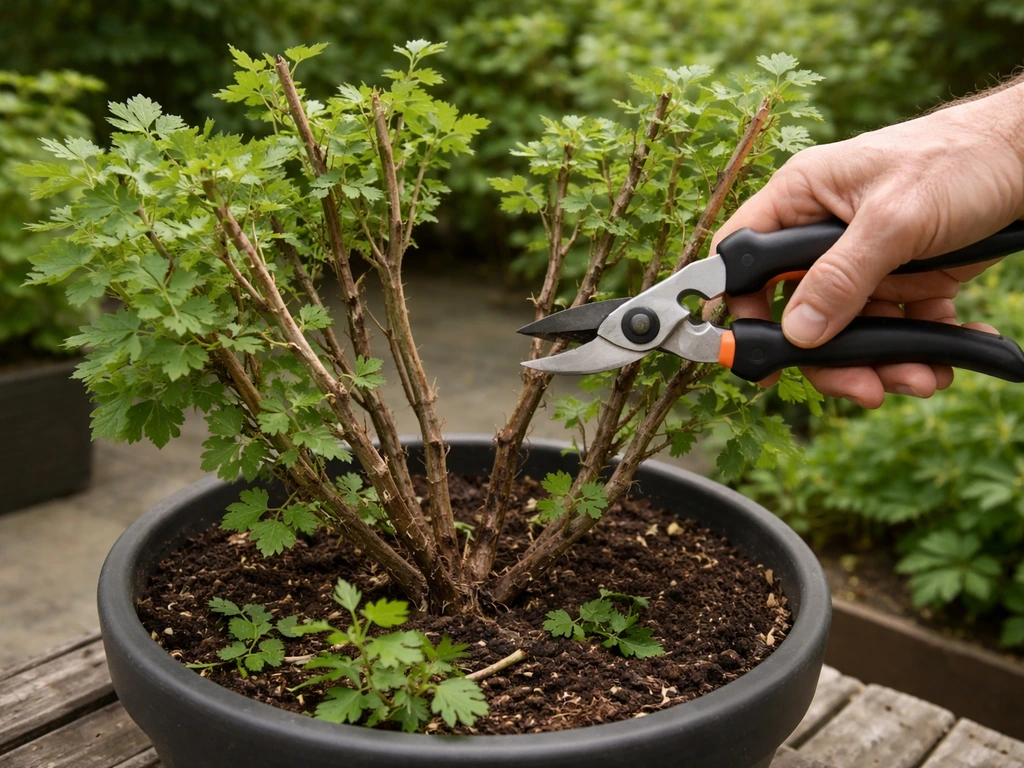
Pruning is one of the most important things you can do for a container gooseberry. Without it, the bush becomes tangled and congested, airflow drops, disease risk climbs, and productivity falls. The best time to prune is late winter or early spring when the plant is still dormant, before new growth starts.
For a container bush, you want to maintain an open, goblet-shaped structure with a clear center. Each year, remove any crossing, crowded, or inward-facing branches. Cut side shoots back to two or three buds from the main framework. If the bush is getting too tall for its space, you can reduce the height by cutting the tallest stems back by roughly half. The goal is a plant where light and air can move freely through the canopy, which both improves fruit quality and dramatically reduces disease pressure.
Powdery mildew
Powdery mildew is the most common disease problem with gooseberries in containers. It shows up as a white or grey powdery coating on leaves, shoots, and sometimes fruit. The fungus overwinters on infected twigs and plant debris, so end-of-season cleanup matters: remove fallen leaves, clear debris from around the base of the pot, and prune out any shoots with visible mildew signs. Varieties without resistance can be completely devastated by it. Water-stressed plants are more susceptible, so consistent watering is a genuine disease-prevention step, not just a care chore. Improving airflow through pruning and choosing a sunnier, less crowded spot for the container also reduces mildew pressure significantly. If mildew does appear despite good cultural management, a fungicide labeled for powdery mildew on fruit can be used, but start with the cultural fixes first.
Gooseberry sawfly
Gooseberry sawfly caterpillars can strip a bush of its leaves surprisingly fast, sometimes in just a few days in late spring. Check the undersides of leaves regularly, especially from late April onwards. Small caterpillars can be knocked off with a firm spray of water from a hose or spray bottle. Picking them off by hand works well for small plants in containers. A Reddit Gardening Ireland thread on gooseberry sawfly discusses gardeners managing sawfly larvae using hands-on physical removal and alternative biological sprays they are considering Picking them off by hand works well for small plants in containers.. One important note: Bt (Bacillus thuringiensis), a common biological control, does not work on sawfly larvae because sawflies are a different type of insect from caterpillars. Don't waste money on it for this problem.
Aphids
Aphid colonies can appear on new growth in spring. Again, a strong jet of water knocks most of them off. For heavier infestations, insecticidal soap or, if needed, malathion (following the product label carefully) are options. In most cases, catching them early with water sprays is enough.
Troubleshooting common container problems
| Problem | Likely cause | What to do |
|---|---|---|
| Wilting despite watering | Waterlogged roots or compacted soil blocking drainage | Check drainage holes are clear; tip pot slightly to drain; repot into fresh mix if roots are rotted |
| Wilting in hot weather | Pot drying out too fast | Water more frequently; move pot out of afternoon sun; mulch the surface of the compost |
| Flower or fruit drop | Pot dried out completely at a critical point | Keep watering consistent; never let the pot go bone dry during flowering and fruiting |
| White powder on leaves | Powdery mildew | Prune for airflow, remove affected growth, avoid overhead watering, check nitrogen levels aren't too high |
| Pale or yellowing leaves | Nutrient deficiency or pH too high/low | Test pH and adjust if needed; apply balanced fertilizer; check you're not overwatering |
| Poor or no fruit despite good growth | Insufficient winter chilling hours or planted too recently | Ensure the plant gets proper cold exposure in winter; container-grown first-year plants often fruit modestly |
| Leaves stripped suddenly | Gooseberry sawfly | Check leaf undersides; knock off with water; hand-pick larvae |
| Stunted growth overall | Pot too small or rootbound | Upgrade to a 40cm+ container with fresh soil-based compost |
Your next steps today
- If you haven't planted yet: choose a mildew-resistant variety like Captivator or Pax, get a pot at least 40cm wide and deep with good drainage holes, and fill it with a peat-free soil-based compost.
- If your plant is already growing: check whether it needs a bigger pot, test the soil pH if you're seeing yellowing leaves, and schedule a prune for late winter if you haven't done one this year.
- If you're dealing with mildew right now: prune out affected growth, move the pot to a sunnier spot with better airflow, cut back on nitrogen feeding, and water at the base not over the foliage.
- If your plant seems healthy: keep watering consistently through summer, feed once more lightly in early summer if you haven't, and look forward to harvest from late June through to August depending on your variety.
Gooseberries are genuinely one of the more forgiving and rewarding fruits to grow in a container. If you want to expand beyond gooseberries, this guide on how to grow fruits in pots will help you choose the right container, soil, and care for other fruit crops too. They're tougher than they look, and once you nail the basics of pot size, drainage, and a yearly prune, they tend to look after themselves with minimal fuss. To get the best results, follow a step-by-step plan for how to grow cape gooseberry in pots, including choosing the right container size and keeping the plants evenly watered. If you enjoy growing soft fruit in containers, strawberries and blackcurrants are also well worth trying in pots alongside your gooseberries, as they share similar care requirements and can make a productive little container fruit garden on even a small patio. If you want to expand your container fruit garden, see can i grow blackcurrants in a pot for specific tips on choosing varieties and getting good fruit blackcurrants in pots. If you want broader ideas for other fruit types, this guide on how to grow fruits in pots in India will help you plan crops for your space and climate. If you want to focus specifically on strawberry plants how to grow in pots, use a well-draining container, keep the mix consistently moist, and give them plenty of sun strawberries.
FAQ
Can I grow more than one gooseberry bush in a single pot to save space?
Use a single container per bush. If you try to share a pot, you usually get poorer airflow (more mildew), faster drying, and less consistent winter protection for the roots.
If my winters are mild, can I still grow gooseberries in pots by keeping them indoors or sheltered?
Yes, but only if you can provide enough cold exposure to meet the bud-chilling requirement. In very mild winters, move the pot into an unheated garage or cold frame for the needed chilling period, and expect weaker or uneven fruiting if the requirement is not met.
Why do my gooseberries keep struggling in a decorative pot even though the plant is “in a pot with drainage holes”?
Avoid placing the pot on a saucer or decorative outer pot that can collect water. With a breathable inner pot, you can empty the outer reservoir, but standing water around the base is a common cause of root problems in containers.
How do I know when to water my container gooseberry, and what happens if I miss a watering?
Once the compost starts drying regularly between waterings, the plant will often drop flowers or fail to set fruit. As a rule, water whenever the top inch is dry, and in hot spells this can mean daily checks (and sometimes daily watering).
What’s the best fix if my pot holds water too long after watering?
For container plants, treat drainage as the priority before any “improved soil trick.” If your mix is right but water still sits at the surface or drains very slowly, the issue is usually the potting structure or clogged holes, not fertilizer.
Why did my gooseberry grow lots of leaves but produce very few berries?
Don’t rely on nitrogen-heavy feeding. Too much leafy, soft growth increases powdery mildew risk and can reduce fruiting. Stick to balanced fertilizer in spring, and keep late-summer feeding light so growth can harden off before cold weather.
Can I prune my potted gooseberry during summer if it got overgrown or looks diseased?
Late winter or early spring pruning is the cleanest approach, but you can remove obviously diseased or severely damaged shoots anytime. Avoid major cutting right before a cold snap, because fresh cuts on a stressed pot plant can slow recovery.
What should I do if powdery mildew appears on my container gooseberry despite good care?
If you see powdery growth, first remove and discard affected leaves or shoots, then improve airflow with pruning and ensure the pot is in a brighter, sunnier position. Start with cultural steps, because repeated mildew in containers is often linked to poor airflow and water stress.
Is it worth changing varieties if my gooseberries keep getting powdery mildew in the same container?
Several compact, mildew-resistant varieties are more reliably productive in pots, especially on balconies. If you already planted and are getting repeated mildew, consider replacing the variety rather than continually treating, because prevention is harder once the fungus is established.
How should my feeding and pruning change in the first year after planting a gooseberry in a pot?
In the first year, focus on establishing the bush rather than maximizing berries. You can thin overly vigorous growth with pruning, but avoid heavy late-season fertilizing, and water consistently so the plant enters winter hydrated and stable.