Yes, strawberries grow really well in pots. In fact, for a lot of home and urban gardeners, containers are actually the better choice compared to growing in the ground. You get more control over the soil, the drainage, and the placement, and you can move plants to follow the sun or bring them inside before a frost. The RHS lists pots, growing bags, hanging baskets, and troughs as all perfectly suitable options, so you have a lot of flexibility here.
Strawberry Plants How to Grow in Pots Indoors or Outdoors
Marcus Whitley
24 Mar 2026
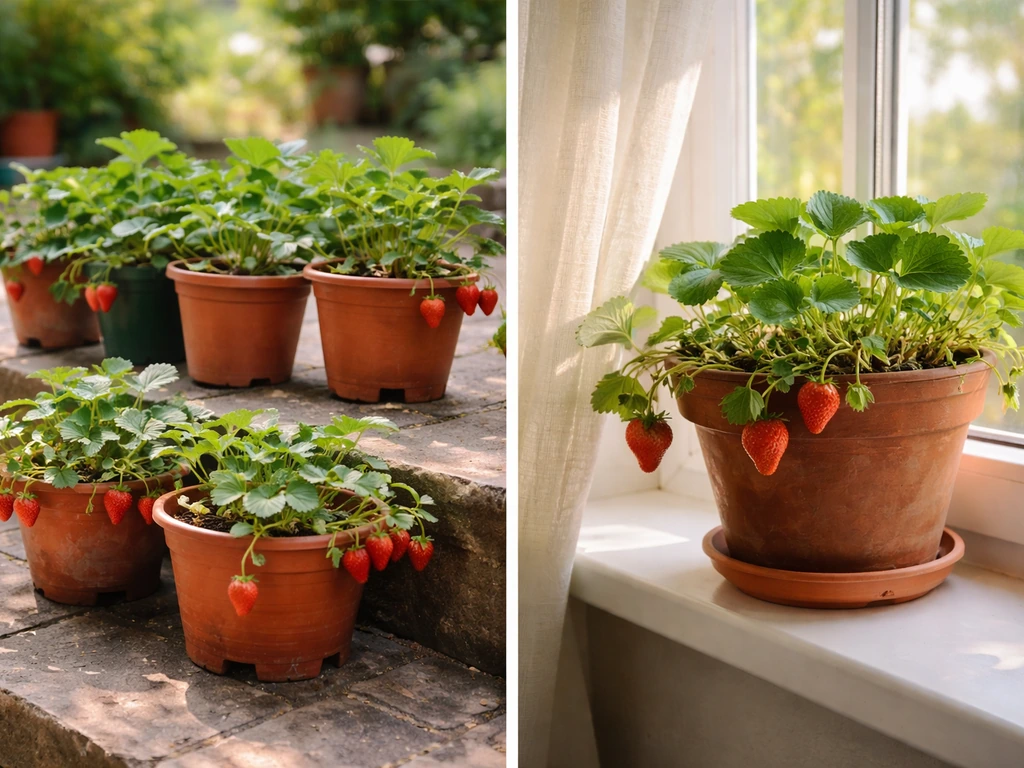
The key is picking the right variety, giving them a decent pot, and staying on top of watering. To get the best results, also follow general container-fruit tips like choosing the right pot size, using well-draining soil, and keeping up with regular watering grow fruits in pots (container fruit growing). Get those three things right and you will be harvesting strawberries from your balcony, patio, or windowsill within a single season.
Do strawberries actually do well in pots, or is the ground better?
This is a fair question and honestly worth thinking through before you buy anything. In the ground, strawberry plants spread via runners and build up a productive patch over a few years. That works brilliantly if you have the space, good native soil, and the patience to manage a spreading bed. In containers, you trade that long-term spread for much more control. You can dial in the soil pH (strawberries want 5.6 to 6.5, which your garden soil may not naturally hit), manage drainage precisely, and avoid common soil-borne diseases that plague in-ground beds.
Container growing also makes sense if you have limited space, poor or compacted soil, a paved garden, or want to grow on a balcony. The honest downside is that pots dry out faster than the ground, so you will be watering more often, sometimes daily in warm weather. Yields per plant are roughly comparable if you look after the containers well, but an established in-ground patch with dozens of plants will always outproduce a handful of pots in sheer volume. For most urban or small-space gardeners though, pots are entirely the right call.
Choosing your pot and your variety
Which strawberry variety to grow in containers
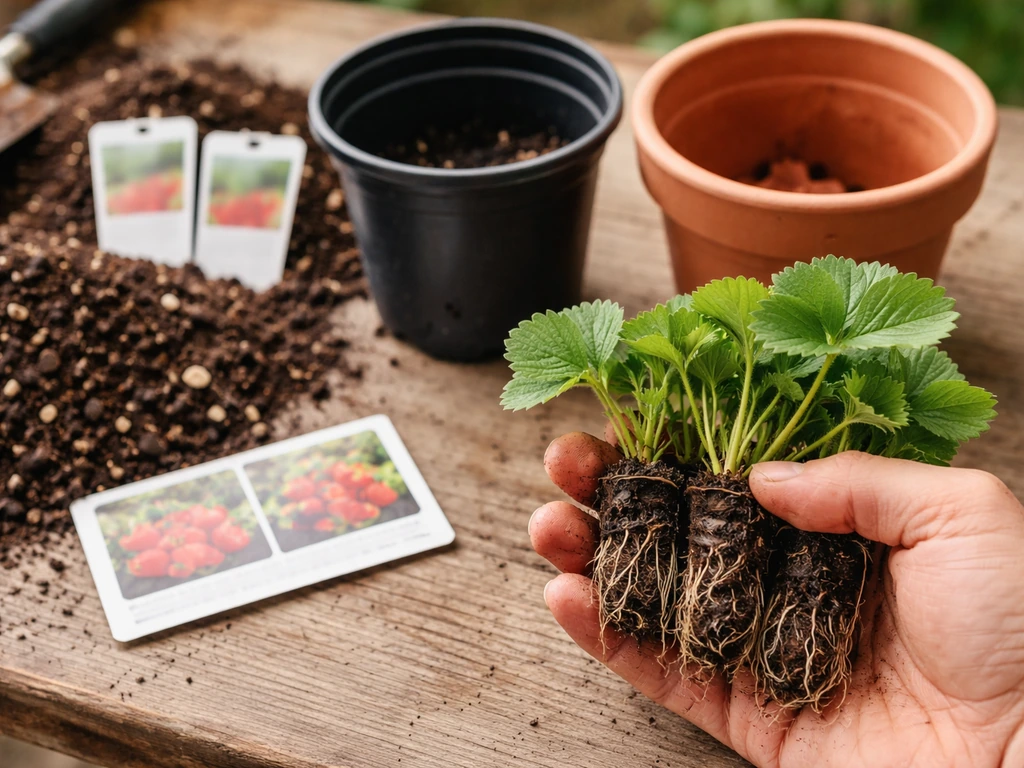
This is probably the single most important decision you will make. Go with everbearing or day-neutral varieties rather than June-bearing types. Iowa State University Extension specifically recommends everbearing and day-neutral cultivars for container growing because they fruit readily in their first year, which means you get strawberries the same season you plant. June-bearing varieties tend to produce runners heavily and only fruit once a year in early summer, which makes them a much worse fit for pots.
Day-neutral cultivars are particularly good. Oregon State University Extension notes they fruit almost continuously from around May right through to the autumn frost and don't produce many runners, which is exactly what you want in a container. Minnesota Extension describes their harvest window as typically July through October, or until the first killing frost. Everbearing types are similar but tend to have two main flushes, with the main crop coming in August to October according to UConn Extension. Either type works well. Popular varieties to look for include Albion, Seascape, and Tristar for day-neutral, and Ozark Beauty or Quinault for everbearing.
Wild strawberries (Fragaria vesca) are absolutely fine in pots too. They produce smaller fruit but are tough, compact, and often quite ornamental. They work especially well in smaller containers or as a filler in mixed plantings. Don't expect the big supermarket-style fruit, but the flavour is often intense and they need minimal fuss.
Pot size and type: what actually works
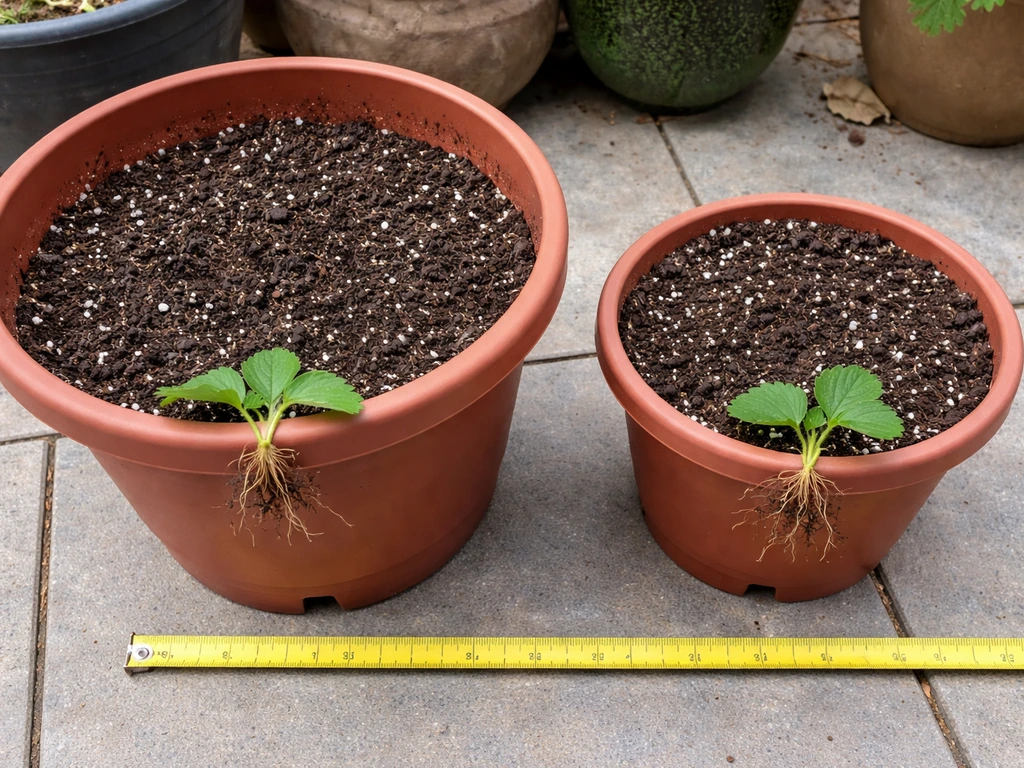
Strawberries are shallow-rooted, which is good news because it means they don't need enormous pots. The Almanac suggests a 12 to 14 inch (30 to 35 cm) diameter pot comfortably fits 2 to 3 plants. That is a solid starting point. For a single plant, you can get away with something as small as a 6 to 8 inch pot, but smaller than that and moisture management becomes genuinely difficult, especially in summer heat.
Whatever pot you choose, drainage holes are non-negotiable. Strawberries sitting in waterlogged compost will develop crown rot and die, so skip any decorative pot without drainage unless you are going to drill holes yourself.
Strawberry pots, the tall terracotta ones with pockets around the sides, look charming and can work, but Iowa State University Extension flags something worth knowing: those side pockets are notoriously hard to keep consistently moist. The top plants can dry out while the bottom ones sit in wet compost. If you use one, push a length of perforated pipe down the centre so you can water all the way through, and check individual pockets with your finger before watering. They are not a bad choice, just one that needs more attention.
Hanging baskets and grow bags also work well, particularly for trailing varieties. They dry out quickly, so line hanging baskets with a layer of plastic (with drainage holes poked through) to slow moisture loss.
Soil and planting basics
Use a peat-free multi-purpose potting compost or a soil-based compost. The RHS recommends both for container strawberries. Avoid heavy garden soil in pots as it compacts, drains poorly, and can introduce soil-borne problems. If you want to refine things further, check the pH of your mix and aim for that 5.6 to 6.5 range. Most multi-purpose composts sit somewhere in this range, but if you have access to a cheap pH tester, it is worth confirming. Slightly acidic is ideal and strawberries will struggle and look pale if the soil is too alkaline.
Planting depth is something beginners often get wrong, and it genuinely matters. The crown, which is the dense central knob where the leaves emerge from just above the roots, blank" rel="noopener noreferrer">must sit exactly at soil level. Not buried below the surface, and not perched too high above it. Burying the crown invites crown rot. Leaving it too high causes the roots to dry out. Iowa State University Extension and several other sources are very consistent on this: the crown sits at the soil surface, full stop. When transplanting a nursery plant, set it at exactly the same depth it was in its original container.
Space plants about 20 to 25 cm (8 to 10 inches) apart in larger tubs or troughs. In a standard 12 to 14 inch pot, two or three plants is your limit. Overcrowding reduces airflow and increases disease risk, and the plants end up competing for nutrients.
Light, watering, and feeding
Sunlight
Strawberries need a good six to eight hours of direct sun daily to fruit well. This is where containers genuinely shine: if your patio gets better afternoon sun than your garden bed, move the pots there. South or west-facing spots are typically best in the northern hemisphere. Less sun means fewer and smaller fruit, so choose your placement carefully and don't be afraid to shift pots around in the first few weeks until you find the sweet spot.
Watering
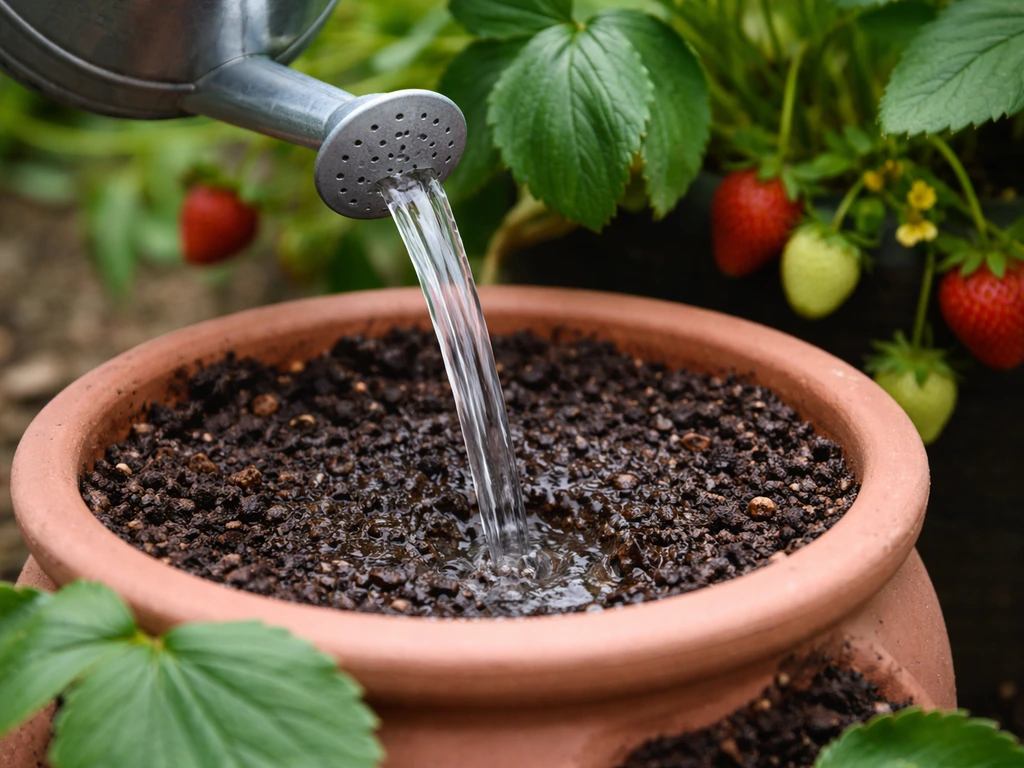
This is where most container strawberry failures happen. Pots dry out fast, especially small ones in warm weather, and strawberries are not drought-tolerant. If you are in India, you can apply the same container strawberry approach, but focus on heat management and consistent watering grow fruits in pots in India. Minnesota Extension states that at minimum you will likely need to water container plants at least once a day during warm spells. Check by pushing your finger an inch into the compost. If it feels dry at that depth, water thoroughly until it drains from the bottom. Do not just wet the surface.
Try to water in the morning so the foliage dries out through the day. Wet leaves overnight encourages grey mould (botrytis), which is a real and common problem on strawberries. If you can only water in the evening, aim at the compost rather than the leaves. Drip irrigation or self-watering containers are genuinely worth the investment if you travel or tend to forget to water.
At the same time, do not overwater. Compost that stays permanently soggy causes the same crown rot and root problems as drought. The goal is consistently moist but well-drained compost, never waterlogged. If your pot sits in a saucer, empty the saucer after an hour so the roots are not soaking.
Feeding
Most potting composts include enough nutrients for the first few weeks, so don't rush to fertilize. Minnesota Extension recommends starting regular fertiliser applications between two and six weeks after planting, depending on how fast the plants are growing and how heavily you are watering (which flushes nutrients out of the compost faster). After that initial period, feed every one to two weeks through the growing season.
For fertiliser type, go for something with higher phosphorus and potassium relative to nitrogen, which is sometimes labelled as tomato feed or a bloom-boosting fertiliser. High-nitrogen feeds push leafy growth at the expense of flowers and fruit, which is the opposite of what you want. A liquid tomato fertiliser is inexpensive, easy to apply with your watering, and exactly right for container strawberries.
Indoor vs outdoor growing: which setup works for you
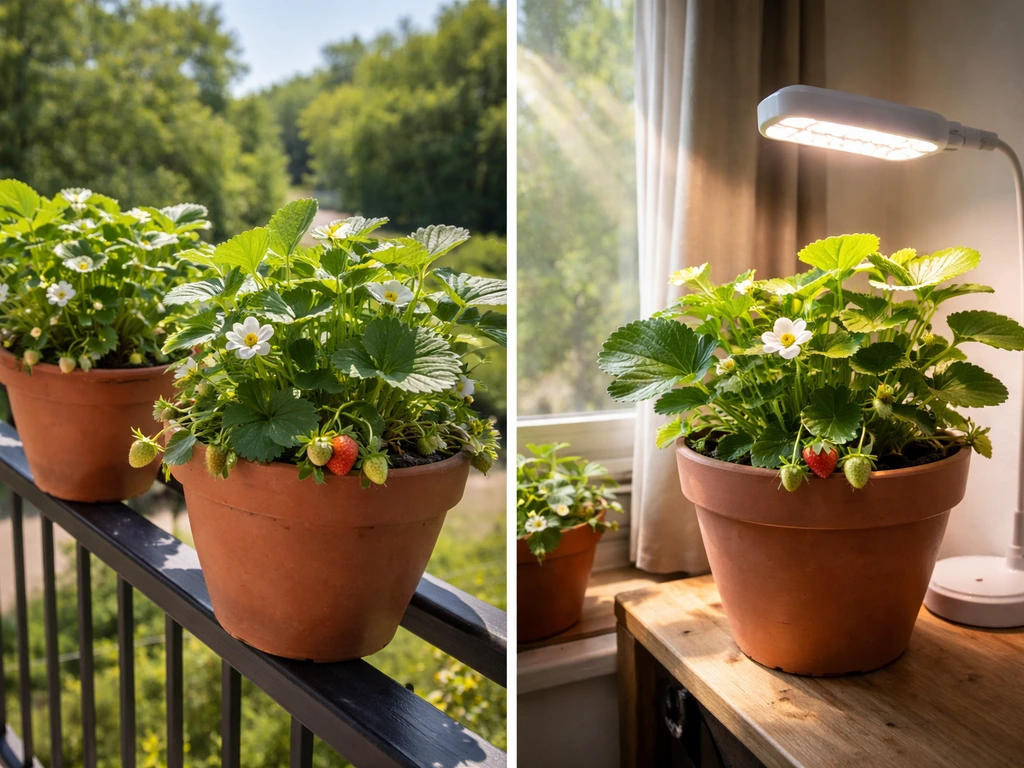
Outdoors is the natural home for strawberries and where they tend to perform best, as long as you have enough sun. A south-facing balcony, patio, doorstep, or windowsill outside all work well from late spring through early autumn. The plants get natural temperature variation, pollination from bees and other insects, and the light intensity they need.
Indoors is possible, and useful for extending the season or for people with no outdoor space at all, but it comes with real trade-offs. Natural light through a window is weaker than direct outdoor sun, so a sunny south-facing windowsill is the minimum you need. Supplemental grow lights make indoor growing much more reliable and are worth considering if you are serious about getting fruit. Indoors, you also lose natural pollinators, so when flowers appear, use a small paintbrush or cotton bud to gently transfer pollen between flowers each day. This is quick and effective.
Temperature matters too. Strawberries fruit best when daytime temperatures are between roughly 15 and 26 degrees Celsius (60 to 80 Fahrenheit). Very high indoor temperatures can stress plants and reduce fruit set. If your indoor space gets hot in summer, keep plants near a slightly open window for airflow.
| Factor | Outdoors | Indoors |
|---|---|---|
| Light quality | High, natural direct sun | Lower; south window needed or grow lights |
| Pollination | Handled by insects | Manual hand-pollination required |
| Watering frequency | Daily in warm weather | Every 1–2 days, less in winter |
| Season length | Spring to first frost | Year-round possible with grow lights |
| Fruit yield | Best yields | Moderate, improved with grow lights |
| Temperature control | Weather-dependent | Easier to manage |
| Setup effort | Low | Moderate to high if using grow lights |
Seasonal care, common problems, and getting better yields
Early season: the pinching trick that actually pays off
This feels counterintuitive but it works. When your newly planted everbearing or day-neutral strawberries throw out their first flower buds, pinch them off. Oregon State University Extension recommends removing that first flush of flowers to let the plant put its energy into establishing strong roots. You will get better yields later in the season as a result. It is genuinely hard to do, but worth it. After the first four to six weeks, let the flowers develop and set fruit normally.
Managing runners
Day-neutral varieties produce few runners, which is one of the reasons they are so well suited to containers. If you do see long trailing stems (runners) with a small plant at the end, snip them off unless you want to propagate new plants. Left on, runners divert energy away from fruit production.
Overwintering container strawberries
This is where container growing needs a bit more thought than in-ground beds, because the roots in a pot are more exposed to freezing temperatures. In cold climates (anything with hard frosts below around minus 7 Celsius or 20 Fahrenheit), Minnesota Extension recommends either burying the container in the ground over winter with leaves at ground level and mulch on top, or moving pots into an unheated but frost-sheltered garage or shed. Two to three inches of straw or leaf mulch over the crowns provides good insulation. In mild climates, simply moving pots to a sheltered spot and mulching lightly is usually enough.
Troubleshooting the most common problems
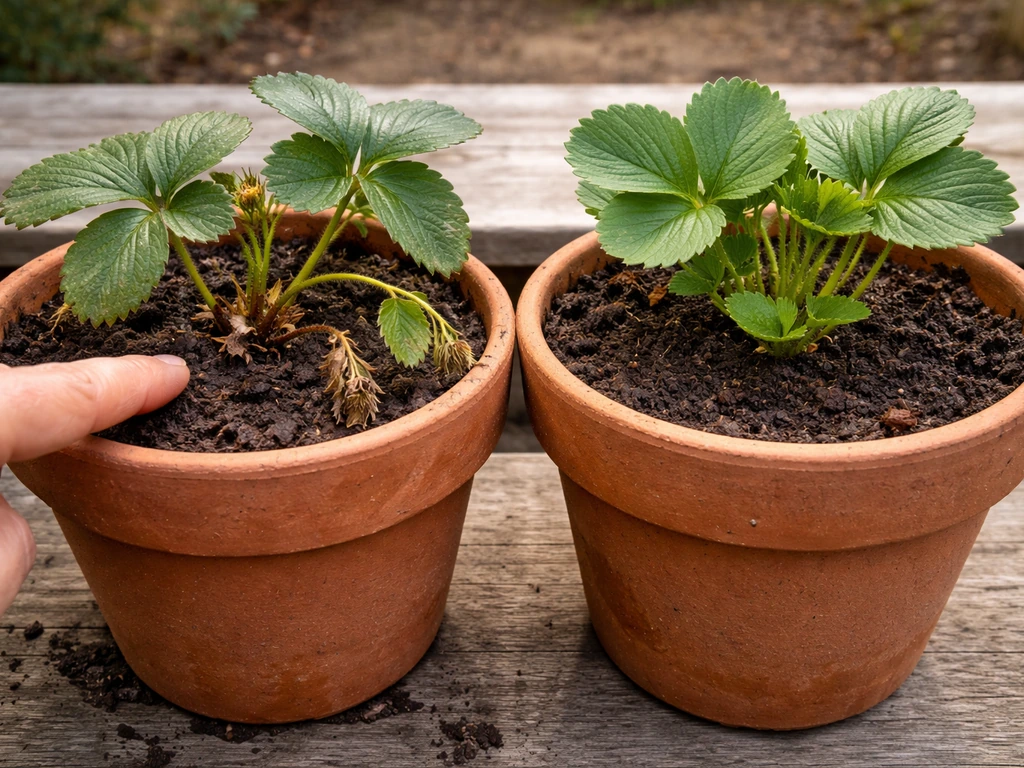
- Crown rot (plant collapses and the crown smells or looks brown): almost always caused by overwatering, waterlogged compost, or burying the crown too deep. Ensure drainage is working, check crown depth, and let compost dry slightly between waterings.
- Grey mould/botrytis (fluffy grey growth on fruit or leaves): common in cool, wet, humid conditions. Water in the morning, improve airflow between plants, remove any damaged or rotting fruit promptly, and avoid overhead watering.
- Powdery mildew (white or grey powder on leaves, leaf edges curling): caused by poor air circulation and inconsistent watering. UC IPM notes the white powdery coating and leaf curl as the signature signs. Increase spacing, improve airflow, and avoid water stress.
- Spider mites (leaves look pale and stippled, fine webbing underneath): tend to appear in hot, dry conditions. University of Maine Extension notes they feed on leaf undersides. Keep plants well watered and mist the undersides of leaves to discourage them.
- Slugs (holes in leaves and fruit, slime trails): more of an issue outdoors in cool wet weather. Copper tape around pot rims, grit on the compost surface, or evening slug patrols all help.
- Poor or no fruit: usually due to insufficient sunlight, not hand-pollinating indoors, or too much nitrogen fertiliser pushing leafy growth. Reassess placement, switch to a tomato-type fertiliser, and hand-pollinate if growing inside.
- Plants drying out too fast: add a layer of decorative bark or compost mulch on top of the potting mix (keeping it away from the crown) to slow evaporation. Consider moving to a larger pot or a self-watering container.
A note on hot, dry climates
University of Arizona Extension reports that dedicated strawberry pots and barrel/pyramid systems have not proven successful in Arizona's low and mid-elevation climates because they dry out so rapidly in the heat. If you are growing in a hot, dry region, prioritise larger containers that hold more moisture, use a moisture-retentive potting mix, apply a surface mulch, and move pots to a spot with some afternoon shade to reduce heat stress.
The 'strawberry tree in a pot' question, answered
Strawberries are not trees. They are low-growing herbaceous plants and no variety will grow into a tree shape on its own. If you have come across the term 'strawberry tree in a pot,' there are two things this usually refers to.
The first is a marketed product: a tiered or tower planting system that stacks multiple levels of strawberry plants vertically. One well-known example is the SISSI Strawberry system, marketed as the 'world's first strawberry tree,' which is essentially a 10-level stacked planter. These tower systems are genuinely useful for small spaces because they pack a lot of plants into a small footprint. They work on the same principles as any container, and the moisture management challenge described earlier for strawberry pots applies here too. Use a pipe through the centre to water all levels evenly.
The second possibility is that someone is searching for Arbutus unedo, the true strawberry tree, which is an ornamental shrub with small red fruits that look like strawberries but are not the same thing at all. Arbutus can be grown in a large pot (at least 40 to 50 litres) in a sheltered spot and makes an attractive container specimen. It is hardy, evergreen, and low maintenance. But if you want to eat actual strawberries, that is not your plant.
If you want the tall, lush, impressive look of a 'strawberry tree' from real strawberry plants, a tower planter or a tall column of stacked containers is the closest you will get, and it looks great on a patio or balcony.
Your next steps to start growing right now
If it is spring or early summer, you are in the ideal window to get started. Here is a quick action list to go from nothing to planted within a day or two. Cape gooseberry is another great option for container growing, and the same ideas about choosing the right pot and consistent care help it thrive how to grow cape gooseberry in pots.
- Pick up everbearing or day-neutral strawberry plants from a garden centre or online nursery. Two or three plants is plenty to start.
- Choose a pot at least 12 inches (30 cm) across with drainage holes, or a grow bag, hanging basket, or tower planter if you want more plants in less floor space.
- Fill with peat-free multi-purpose potting compost. Do not use garden soil.
- Plant so the crown sits exactly at the soil surface: not buried, not raised.
- Place in your sunniest spot outdoors (or your brightest south-facing windowsill if growing inside).
- Water thoroughly after planting, and then daily once the compost feels dry an inch below the surface.
- Pinch off the first flower buds for the first four to six weeks to help the plants establish.
- Start feeding with liquid tomato fertiliser two to four weeks after planting, every one to two weeks.
- Sit back and check daily. You should see flowers within a few weeks, and ripe fruit roughly four to six weeks after that.
Container strawberries are one of the most rewarding things you can grow in a small space. If you are also planning rose containers, the same pot-sizing and drainage rules apply, so follow a guide on how to grow roses in pots in india for the best results. The learning curve is gentle, the plants are forgiving of small mistakes, and there is something genuinely satisfying about picking fruit from your own pot.
If you enjoy growing fruit in containers, it is worth exploring other berries that work well in pots too, such as gooseberries, which you can grow by following our guide on how to grow gooseberries in pots, as well as can i grow blackcurrants in a pot and cape gooseberries, all of which suit a similar approach to container care.
You can also follow the same container approach to learn how to grow goji berries in a pot can you grow goji berries in a pot. can i grow blackcurrants in a pot how to grow fruits in pots. how to grow fruits in pots in india. how to grow roses in pots in india
FAQ
Can I grow strawberry plants in pots year-round, or do they need to be replanted every season?
In containers, many strawberry plants are repeat fruiters for several years, but yields usually drop after a couple of seasons. If your plants become less vigorous, stop flowering reliably, or produce noticeably smaller fruit, it is often time to replace them. For best results, refresh the potting mix and consider replanting crown divisions or new nursery plants rather than assuming the original plant will keep full production indefinitely.
How do I tell if my potting mix is too alkaline for strawberries?
You can confirm with a simple pH tester, but watch for early clues too. If plants look pale, grow slowly, or produce fewer flowers than expected while watering and sun are adequate, the soil may be drifting too high in pH. In that situation, replacing the mix is usually more reliable than trying to “fix” a worn-out pot over and over with minor amendments.
What is the safest way to water strawberries in pots if I use a saucer under the pot?
Water thoroughly until excess drains out, then empty the saucer after about an hour. Leaving the pot standing in runoff is a common shortcut to crown rot, even if you think you are “only keeping it slightly moist.” If runoff runs out very slowly, it can also signal compaction or poor drainage in the pot mix, which you should correct.
Do strawberries in pots need more fertilizer during hot weather?
They often do, but it is not just about heat, it is about how quickly nutrients wash out. In warm spells when you water more frequently, feeding earlier in the schedule and at slightly smaller, more regular intervals can prevent nutrient depletion. Avoid switching to high nitrogen to “make them grow,” use a bloom-leaning feed and follow the 1 to 2 week cadence through the growing season.
Should I prune strawberry runners in pots, and what if the plant is overcrowded?
If you do not want new plants from runners, snip them off when they appear, especially on day-neutral types that should focus on fruit. For overcrowding, remove the weakest plants and keep spacing appropriate for pot size, rather than trying to squeeze extra crowns into the same container. Good airflow is important in containers because dense foliage can increase gray mold risk.
Why are my strawberry flowers not turning into fruit indoors?
The most common cause is missing pollination, since window-growing still needs pollen transfer. When flowers open, transfer pollen daily with a small paintbrush or cotton bud. Also check that temperatures are in a reasonable range, very hot indoor conditions can reduce fruit set even with pollination done correctly.
How often should I rotate my pots, and does it matter if I rotate them every week?
Rotating can help keep growth balanced and prevents one-sided plants chasing light. A gentle rotation every 1 to 2 weeks is usually enough, but avoid moving them too aggressively right around when flowers are forming. If you are already in the “sweet spot” for sun, frequent repositioning can slow establishment.
Can I use mulch on top of strawberry pots, and what kind is best?
Yes, a light surface mulch can help moderate moisture swings and reduce splash onto leaves and fruit. Use straw or a fine, clean plant-based mulch, keep it away from the crown itself, and ensure it does not block drainage holes. In winter, mulch placement around the crowns is especially important for cold-protection, but still avoid burying the crown.
What should I do if my strawberries taste bland or sour in pots?
Taste is strongly affected by sun and consistent watering. If fruit is pale, small, or takes longer to ripen, increase direct light hours and double-check that you are watering deeply when the compost is dry. Uneven moisture, especially drying out then soaking suddenly, can also lead to inconsistent flavor and texture.
Are strawberry plants safe to bring indoors, and when should I move them?
It can work well to extend the season, but timing matters. Bring pots indoors before frost, and place them near the brightest available window, ideally a sunny south-facing one, or use grow lights for reliable flowering. Do not keep them in a dark room, and watch watering because indoor conditions can reduce airflow and increase mold risk on wet foliage.
Do ‘strawberry tree’ products actually grow edible strawberries in a normal pot?
Usually, the edible fruit part is still coming from real strawberry plants, just stacked vertically in a tower or tiered planter. However, the watering challenge is greater because lower pockets can stay wet while upper pockets dry. If you buy a tower system, choose one that supports even watering through the center and consider checking pocket moisture with your finger before committing to a schedule.