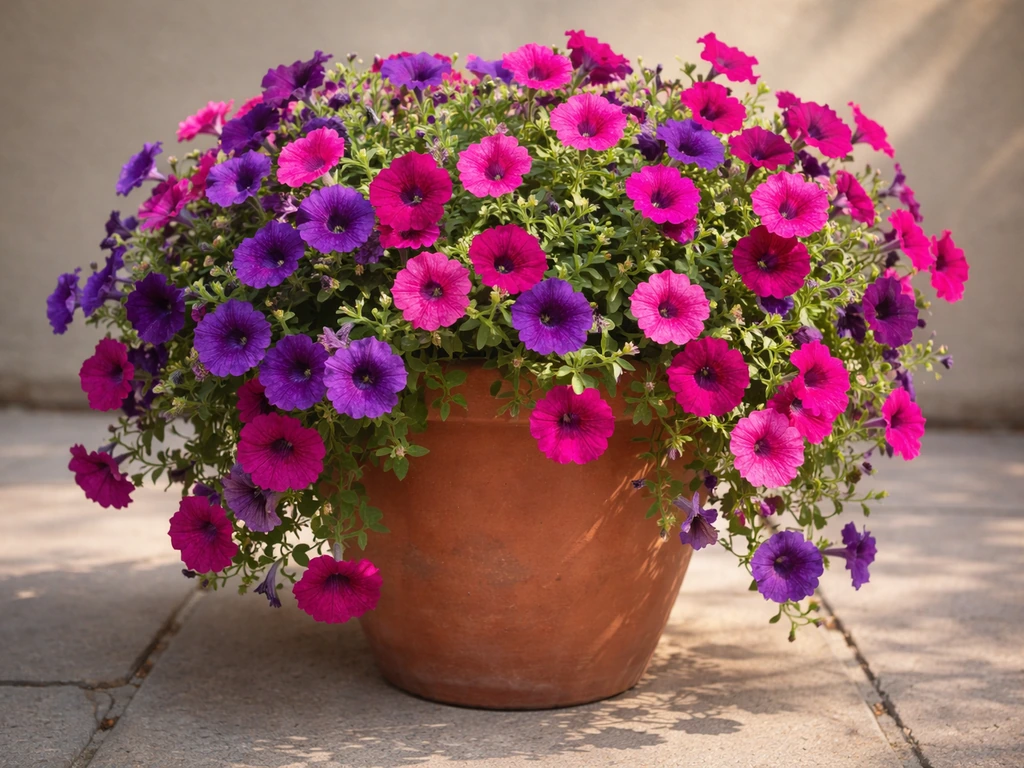
Petunias are one of the best flowers you can grow in pots. They bloom all season, handle heat well, come in almost every color imaginable, and genuinely thrive in containers when you get three things right: a pot with good drainage, consistent watering, and regular feeding. If you are wondering how to grow heather in pots, you can use the same container mindset for drainage and consistent moisture grow in pots. Get those three dialed in and you will have nonstop color from late spring right through to the first frost. If you want to expand to other bloomers, you can use similar container care principles for how to grow proteas in pots.
How to Grow Petunias in Pots: Step-by-Step Care Guide
Marcus Whitley
23 Apr 2026
Choosing the right pot and drainage
Pot size matters more than most beginners expect. A pot that is too small dries out within hours on a hot day, which stresses the plant and kills flower production fast. For most upright or mounding petunias, aim for a pot at least 10 to 12 inches (25 to 30 cm) wide. That gives the roots enough room to spread without the soil staying soggy for too long.
For Wave petunias specifically (the trailing, spreading type that cascades over the sides of a basket), a 10 to 12 inch round container or hanging basket is the sweet spot, and three plants per basket gives you that full, lush look without overcrowding. Overcrowding is a real problem with Wave varieties because the plants compete for nutrients and water, and the whole display suffers. More on spacing in a moment.
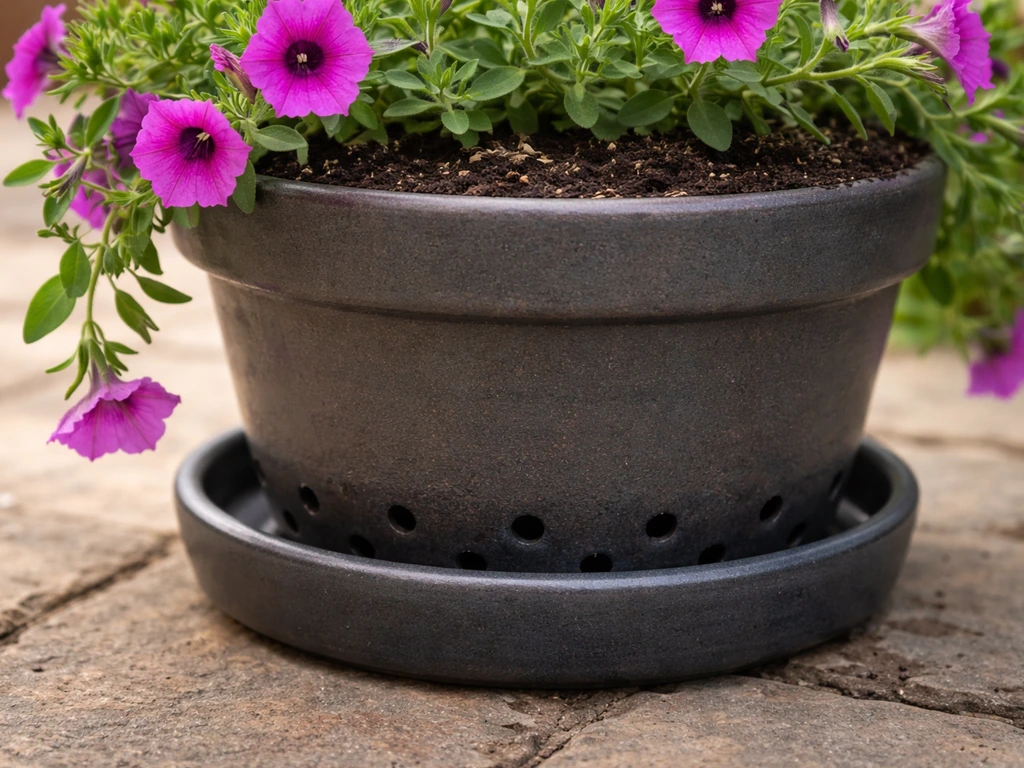
Whatever container you choose, drainage holes are non-negotiable. Petunias are extremely susceptible to root rot and crown rot when they sit in waterlogged soil, and a pot without drainage will kill them within days of a heavy rain or an enthusiastic watering session. If you love a decorative pot that has no holes, use it as a cachepot (an outer sleeve) and keep your petunia in a plain nursery pot inside it. Just make sure water is not pooling in the gap between the two.
Material-wise, plastic and glazed ceramic pots retain moisture longer, which can be an advantage in summer heat. Terracotta looks beautiful but dries out quickly and you will find yourself watering twice a day in July. If you are a forgetful waterer or a busy urban gardener, go with plastic or self-watering containers. Self-watering pots with a reservoir at the base are genuinely excellent for petunias and take a lot of the daily stress out of the routine.
Soil mix and planting setup for petunias in containers
Never use garden soil in a pot. It compacts, drains poorly, and introduces pests and disease. Use a good quality potting mix specifically made for containers. The difference in plant performance is immediately obvious.
At planting time, mix a slow-release granular fertilizer into the potting mix according to the package instructions. This gives the roots a steady supply of nutrients from day one without you having to do anything extra for weeks. Some premium potting mixes already include a starter charge of fertilizer, so check the bag before you add more.
When it comes to planting, most home gardeners buy petunia transplants (young plants in cell packs or small pots) from a garden center rather than starting from seed, and that is the easiest route. Seeds are tiny, slow, and fussy, so unless you enjoy that process, skip it and grab transplants. Fill your pot about two-thirds full with moistened mix, set your plants in place, then fill in around them and firm gently. For standard mounding petunias, space plants about 6 inches apart. For Wave petunias, space them 6 to 8 inches apart and stick to three plants in a 10 to 12 inch basket. More plants in a small space looks tempting but actually reduces the quality of the display over time.
After planting, water thoroughly until water runs freely out of the drainage holes. This settles the soil around the roots and tells you the mix is properly saturated, not just damp on top.
Light and temperature requirements (indoors vs outdoors basics)
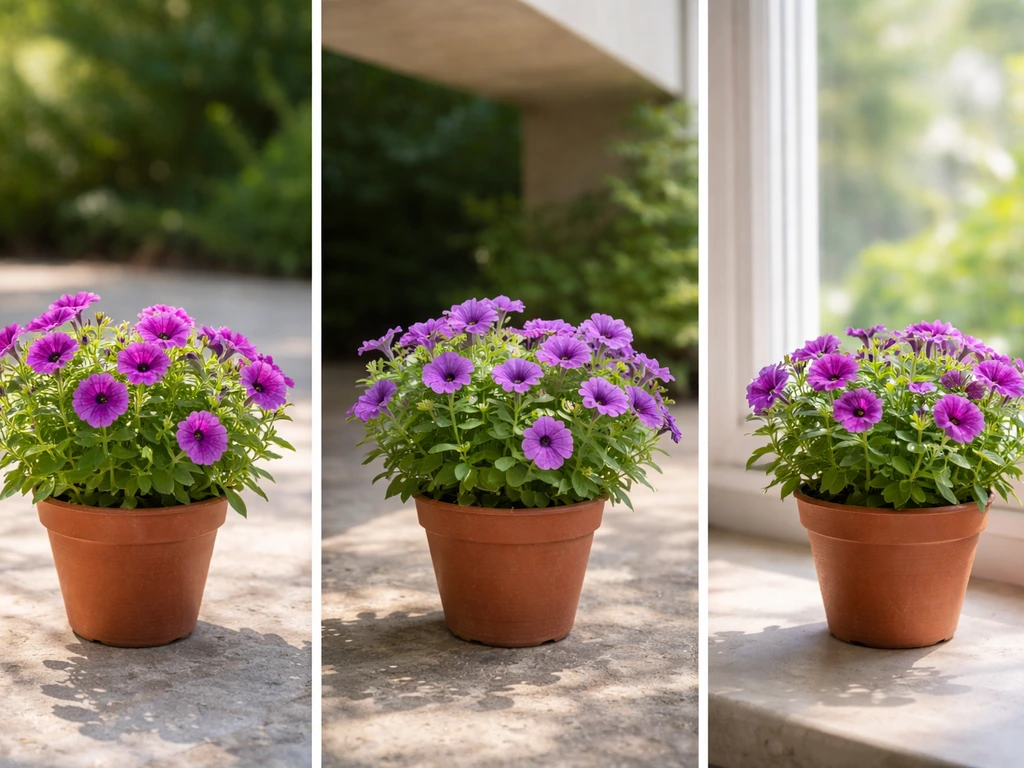
Petunias are sun lovers. If you are also wondering how to grow plants in a Serenitea pot, the same container basics apply, especially drainage and consistent moisture. They want at least 5 to 6 hours of direct sun per day to bloom well, and more is generally better. A south or west-facing balcony, patio, or windowsill is ideal. If you place them somewhere that gets only 3 to 4 hours of sun, you will get weak, leggy growth and far fewer flowers. This is the single most common reason container petunias disappoint.
Outdoors is always the better setting for petunias. They tolerate heat well, and as long as watering keeps up, they perform through summer temperatures without much complaint. Bring them indoors only if frost is forecast. They are frost-tender and even a light freeze will damage them significantly.
If you are growing petunias indoors on a windowsill, a south-facing window is your best option. Supplemental grow lights can help if natural light is limited, but honestly, petunias on an indoor windowsill rarely bloom as dramatically as outdoor container plants. Think of indoor growing as a short-term solution for spring and autumn, not a long-term strategy.
Watering routine and avoiding container stress
Watering is where most people go wrong with container petunias, and the failure usually goes in one of two directions: either they underwater and the plant wilts and stops flowering, or they overwater and the roots rot. Both are easy to avoid once you know what to look for.
The goal is to keep the potting mix consistently moist but never waterlogged. Check the soil daily by pressing a finger about an inch into the mix. If it feels dry at that depth, water thoroughly until it runs out of the drainage holes. If it still feels damp, wait another day. In peak summer heat, small containers can dry out within 24 hours, and Wave petunias in hanging baskets may genuinely need watering every day or even twice a day. That is not unusual, it is just the reality of container gardening in hot weather.
When you water, aim the flow at the soil surface rather than spraying over the leaves and flowers. Wet foliage in sun can cause scorch marks, and constantly wet leaves create the humid conditions that encourage botrytis (a grey mould disease). Direct watering also gets moisture to the roots more efficiently.
Overwatering shows up as yellowing or browning of the older, lower leaves. Underwatering tends to cause a general wilting and dullness across the whole plant. If you spot yellowing leaves and the soil is soggy, ease back on watering and make sure drainage is working. If the plant is wilting and the soil is bone dry, give it a deep soak immediately and consider moving it somewhere slightly less brutal in terms of afternoon sun.
Fertilizing for nonstop blooms (including wave petunias)
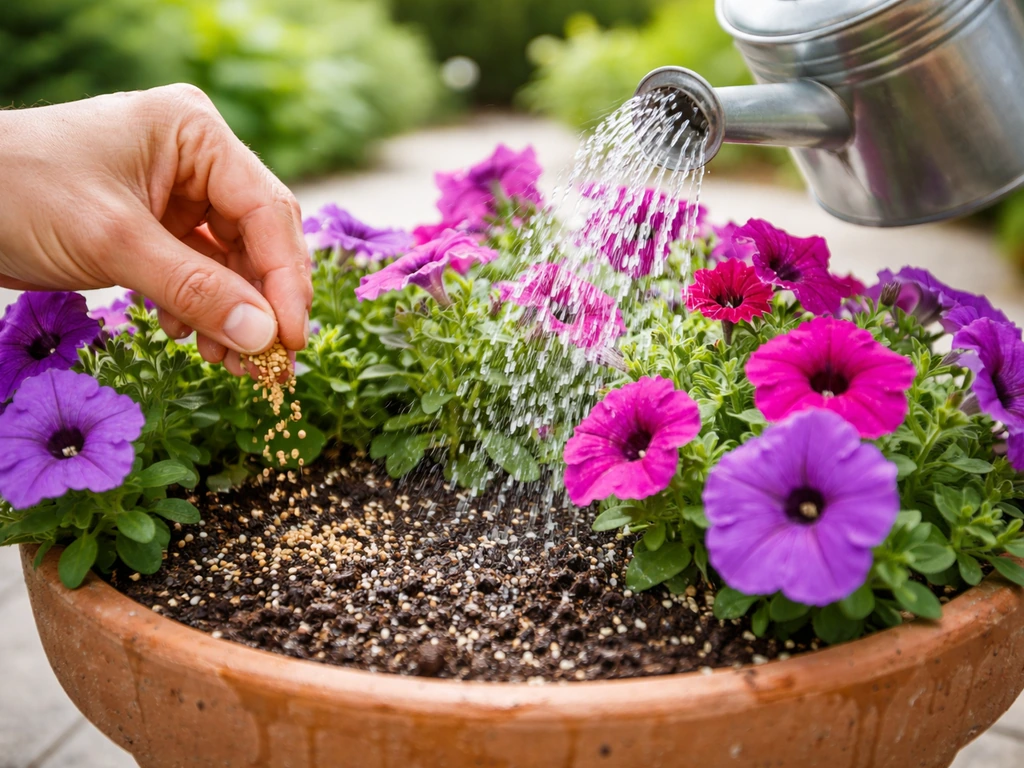
Petunias in pots are heavy feeders. Unlike plants in the ground that can send roots out to find nutrients, container petunias are entirely dependent on what you put in the pot. If you skip fertilizing, the blooms will slow down and the foliage will look pale and tired, usually within a few weeks of planting.
The easiest approach is a two-pronged strategy: start with a slow-release granular fertilizer mixed into the soil at planting (some formulas feed for up to six months), then supplement with a liquid fertilizer every one to two weeks throughout the growing season. For the liquid feed, choose one that is high in potassium (potash), which supports flower production rather than just leafy growth. A tomato fertilizer works perfectly well for this and is easy to find.
Wave petunias have an especially high appetite because of how vigorously they grow and spread. In summer, Wave petunias in containers may benefit from liquid feeding twice a week rather than once. If you notice the flowers slowing down or the stems looking pale between your regular feeds, that is a sign to increase feeding frequency rather than wait for the next scheduled dose.
| Petunia type | Feeding frequency | Notes |
|---|---|---|
| Standard mounding/upright | Every 10 to 14 days with liquid feed | Plus slow-release at planting |
| Wave (trailing/spreading) | Once or twice per week in summer | Higher nutrient demand due to vigorous growth |
| Slow-release only approach | Every 2 to 6 months per product label | Best used alongside occasional liquid top-ups |
Maintenance: deadheading, pruning, and growth control
One of the great things about Wave petunias is that they are largely self-cleaning, meaning the spent flowers drop off on their own and you do not need to deadhead them to keep the blooms coming. For standard petunia varieties, though, picking off faded flower heads as soon as they finish encourages the plant to keep producing new buds rather than putting energy into forming seeds. It takes about five minutes every few days and makes a noticeable difference.
Pruning is a slightly different task from deadheading and it is one many beginners are nervous about. But cutting back petunias is one of the best things you can do for them mid-season. When stems start to look long and bare with flowers only at the very tips (this is called getting leggy), it is time to prune. For Wave petunias, start a pruning schedule once stems reach about 8 inches long, pinching or cutting back 1 to 2 inches to encourage branching. As a regular habit, trim branches back by about a quarter to a half every two weeks or so to keep the plant compact and bushy.
For any petunia variety, if things have gotten seriously out of hand and the plant looks tired and straggly in midsummer, a harder cut removing about one-third of the stems is absolutely fine. Water and feed well afterward and the plant will rebound with fresh growth and a new flush of blooms within two to three weeks. I have done this more than once after a holiday away and it always works.
Common problems and quick troubleshooting
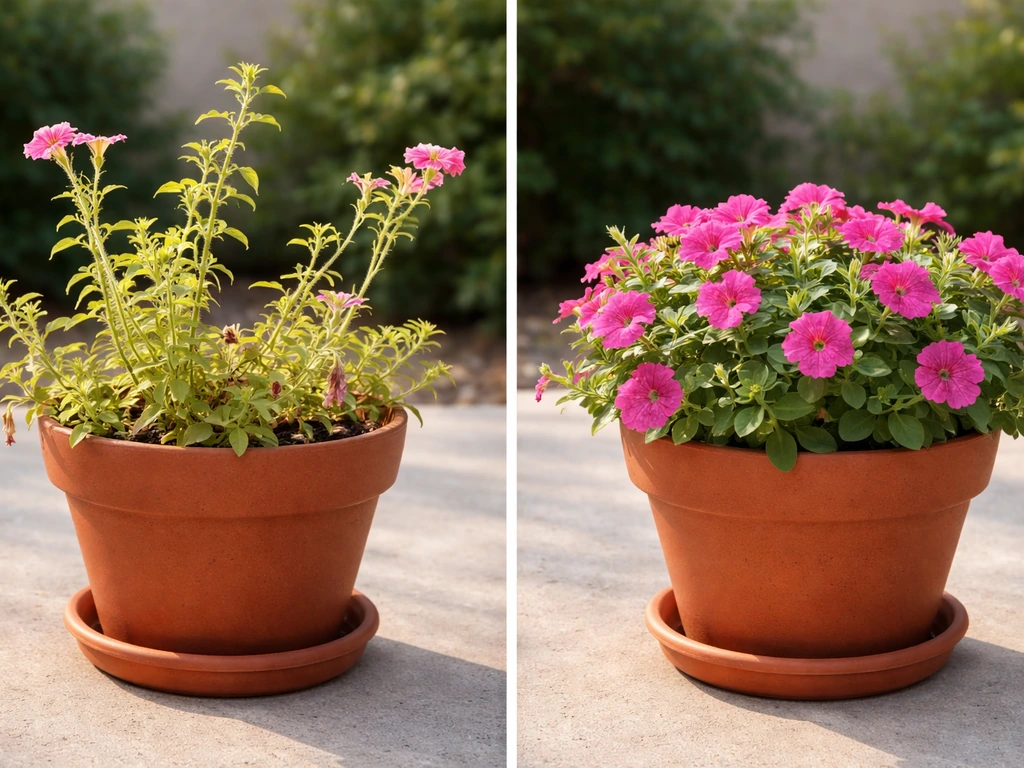
Most petunia problems in containers trace back to a small number of causes: too little sun, inconsistent watering, lack of feeding, or overcrowding. Here is a quick reference for the issues you are most likely to run into.
- Leggy growth with few flowers: Almost always caused by insufficient sun or skipping pruning. Move the pot to a sunnier spot and cut back the stems by a third to encourage bushy, flower-producing growth.
- Yellowing lower leaves with soggy soil: Classic overwatering or poor drainage. Let the soil dry out slightly before watering again and check that drainage holes are not blocked.
- Wilting despite moist soil: Can indicate root rot, especially if the stem near soil level is soft or brown. This is often caused by chronically waterlogged conditions and is hard to reverse once established. Prevention through good drainage is the only reliable fix.
- Pale, faded foliage and slow blooming: Almost certainly a fertilizer deficiency. Start a weekly liquid feed with a high-potash fertilizer immediately.
- Grey fuzzy patches on flowers or leaves (botrytis): A fungal disease that thrives in humid, still conditions and on wet foliage. Remove affected parts, improve air circulation by spacing plants well, and avoid wetting foliage when watering.
- Powdery white coating on leaves (powdery mildew): More common in warm days with cool nights or crowded conditions. Remove affected foliage and improve airflow. A fungicide spray can help if it spreads.
- Distorted new growth or sticky residue (aphids or whiteflies): Check the undersides of leaves for clusters of small insects. A strong jet of water dislodges aphids effectively. Persistent infestations respond well to an insecticidal soap spray.
- Silvery streaks or speckling on petals (thrips): Tiny insects feeding on flower tissue. Difficult to see but the damage is distinctive. Remove heavily affected flowers and treat with an appropriate insecticide if the problem persists.
The good news is that petunias are resilient. If something goes wrong, cutting back, correcting the watering, and feeding will usually get the plant back on track within a couple of weeks. Cornell University’s greenhouse fact sheet on powdery mildew advises removing affected leaves and initiating fungicide treatment immediately. Do not write off a struggling plant too quickly.
What to do right now to get started
- Pick up petunia transplants from your local garden center. Late April through May is prime planting time in most temperate climates. Choose healthy, compact plants rather than the tallest ones in the display.
- Select a container at least 10 to 12 inches wide with drainage holes. For Wave petunias, plan for three plants per basket of that size.
- Fill the pot with fresh potting mix and stir in a slow-release granular fertilizer at the rate shown on the label.
- Plant your petunias at the right spacing (6 to 8 inches for Wave varieties, 6 inches for standard types), water thoroughly until it drains from the bottom, and place the pot somewhere that gets at least 6 hours of direct sun daily.
- Set a simple care schedule: check soil moisture daily, water to drainage when the top inch is dry, and begin liquid feeding every one to two weeks once the plant has settled in (about a week after planting).
- Pinch off spent flowers on standard varieties every few days, and set a reminder to prune Wave petunias lightly every two weeks once stems reach 8 inches.
If you enjoy growing petunias, it is worth exploring other container-friendly flowering annuals. You can use the same container basics to learn how to grow impatiens in pots for shade-friendly color. Impatiens are a great option for shadier spots where petunias would struggle, and pansies are a natural choice for cooler spring and autumn containers when petunias are not in season. Each has its own container quirks, but the core skills you build growing petunias (watering consistently, feeding regularly, and staying on top of maintenance) transfer directly.
FAQ
Can I grow petunias in a decorative pot that has no drainage holes?
Yes. If you use a decorative pot without drainage, you must keep the nursery pot inside it and lift it slightly so the drainage holes stay clear. After watering, empty any water that collects in the outer sleeve, and avoid letting the container sit in a saucer for long periods.
How often should I water petunias in pots during extreme heat?
Try a simple rule: if the pot feels light for its size and the top inch is dry, water immediately, even if you watered yesterday. In very hot weather, Wave petunias in baskets can dry out faster than a daily schedule can handle, so checking weight or using the finger test twice a day can prevent bud drop.
My petunias have yellow leaves, is it always a watering problem?
If the soil stays wet and leaves yellow, it is usually overwatering, but if the plant wilts while the potting mix is damp, it can also indicate poor root health from compacted media or blocked drainage. Use fresh potting mix next time, confirm holes are open, and consider moving to a slightly shadier spot for a few days while you correct watering.
When should I start liquid fertilizer after planting petunias in pots?
Start feeding once the plant is established and actively growing (often a week or two after transplanting if the slow-release fertilizer is already in the mix). If you bought transplants with fertilizer already included, you can usually wait a bit before adding frequent liquid feeding to avoid overfertilizing and causing excessive foliage at the expense of blooms.
Can I put more than three Wave petunias in a hanging basket for a fuller look?
For Wave types in particular, keep to three plants in a 10 to 12 inch basket, but if you are using a larger hanging basket, do not increase plants linearly. As a guide, aim for about 3 plants per 10 to 12 inches of basket diameter, then scale up only with noticeably more space to prevent crowding later in summer.
What should I check first if my container petunias stop flowering?
If they stop blooming but the plant still looks green, check for insufficient sun and inconsistent feeding first. A less obvious cause is letting the pot dry out hard and then recover, which triggers stress and delays bud formation. Return to consistent moisture, then increase potassium-rich liquid fertilizer to match the growing pace.
How do I protect potted petunias from unexpected cold snaps?
Yes, but do it in a way that protects the root ball. Move the whole pot to a sheltered spot during cold snaps, and bring indoors only to avoid frost. Do not place it in a cold, drafty room, and expect reduced flowering until temperatures and light improve.
Is it safe to pinch or trim Wave petunias often?
On Wave petunias, you can pinch tips to encourage branching, but avoid cutting back so often that you repeatedly remove the areas producing flowers. A better approach is to follow the mid-season trim schedule, then only do additional pruning when stems become leggy or growth quality clearly drops.
Can I grow petunias in pots without regular fertilizing if I use a good potting mix?
Usually not, because petunias in pots depend on container nutrients and the fast drying cycle. If you want to reduce fertilizer frequency, use a reputable potting mix that includes a longer-lasting starter charge and top up with liquid fertilizer based on plant response, especially during hot weeks when Wave petunias need more.
What can cause flower quality to decline even when the plants look green?
If your petunias look healthy but keep getting blooms that fade quickly, inspect for windburn and water splashing onto flowers. Also watch for nighttime wetness from watering late in the evening, which can worsen grey mould conditions. Water at the soil surface and do it earlier in the day to keep foliage and blooms drier.