Yes, you can grow a real tree in a pot, and it can thrive for years if you set it up right from the start. The secret is not some special trick, it is matching the right tree to the right container, giving it a proper soil mix, and keeping up with a few seasonal routines. I have grown everything from dwarf citrus to bay trees and compact maples in containers on patios and balconies, and the process is more forgiving than most people expect. This guide walks you through every step, from picking your tree to managing it a decade from now.
How to Grow a Tree in a Pot: Step-by-Step Guide
Marcus Whitley
18 Apr 2026
Choosing the right tree for container life
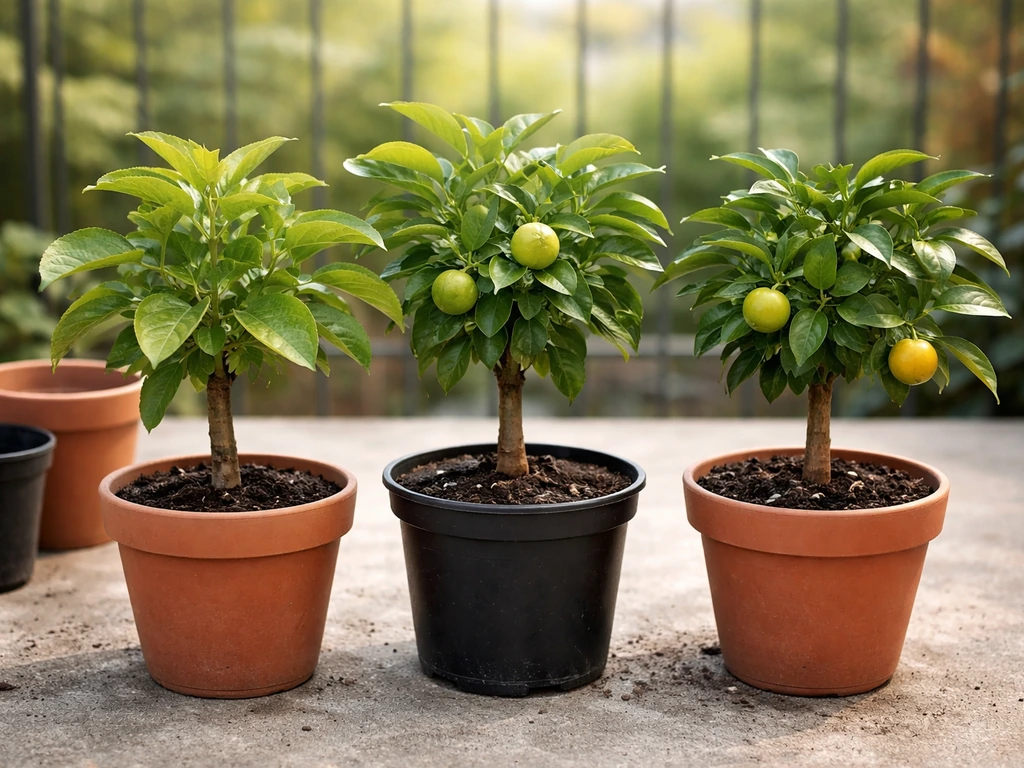
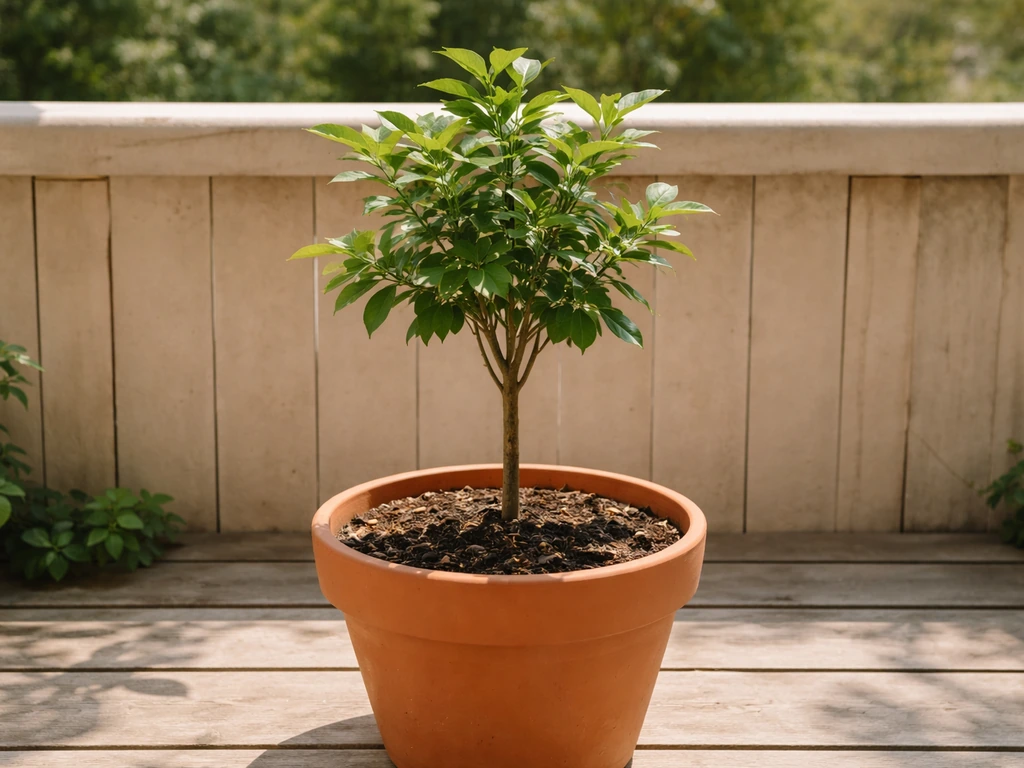
Not every tree belongs in a pot, and the most common mistake I see is someone buying a full-size oak sapling and expecting it to stay manageable on a balcony. The trees that genuinely do well in containers share a few traits: naturally compact or dwarf growth habit, tolerance for restricted root space, and ideally some usefulness (fruit, fragrance, or ornamental value that rewards the extra care).
Dwarf and semi-dwarf fruit trees are probably the best starting point for beginners. Dwarf citrus varieties like 'Improved Meyer' lemon, calamondin, and kumquat are classics for a reason, they stay under 6 feet, fruit reliably, and handle pot culture well. Dwarf apple and pear trees on dwarfing rootstocks (M9 or M26 for apples) can be kept in large containers for many years with regular pruning. Fig trees are arguably the easiest large-ish tree to pot because they tolerate root restriction without complaining. Bay laurel makes a wonderful pot tree if you want something more ornamental and culinary at the same time. Japanese maples are stunning in containers and naturally slow-growing. If you are interested in more unusual choices, drumstick trees (moringa) and even cocoa trees can be grown in pots in warm climates or indoors, and coconut palms can be started in containers too, though they eventually demand very large pots.
The single most important factor is matching the tree's cold hardiness to your situation. A tree rated for USDA Zone 8 will die outdoors in a Zone 6 winter, and in a pot the risk is even higher because the roots are exposed to air temperature rather than insulated by ground soil. Check the hardiness rating, then go one zone hardier than your local zone if you plan to leave the pot outdoors year-round. If you can move pots inside or into a garage for winter, your options open up considerably.
Also think honestly about mature size. A tree labeled 'dwarf' still needs room to grow. A dwarf apple in a 15-gallon pot will outperform the same tree crammed into a 5-gallon pot by a wide margin. Choose the smallest variety available for your species, and plan for a pot upgrade every few years.
Picking the best pot, size, drainage, and placement
The pot decision matters as much as the tree choice. Get this part wrong and you are fighting drainage problems or freeze damage for the life of the tree.
Pot size and material
Start with a pot that is roughly 2 to 4 inches wider in diameter than the root ball, and plan to size up every 2 to 3 years. For most young trees, a 10 to 15-gallon container (roughly 14 to 18 inches in diameter) is a good starting point. Mature dwarf fruit trees are happiest in 20 to 30-gallon containers, that is a big pot, but it gives the roots room to support fruiting and reduces how often you need to water.
Material matters for temperature and water management. Terra cotta looks beautiful but dries out fast, which can be a problem in summer heat. Plastic pots hold moisture longer, which is convenient but means you have to be more careful not to overwater. Fabric pots (grow bags) are increasingly popular for trees, they air-prune roots naturally, which prevents the circling root problems that plague standard plastic pots. Thick-walled foam or fiberglass containers insulate roots better in winter than thin plastic. If you live somewhere with harsh winters, insulation is worth prioritizing.
Drainage is non-negotiable
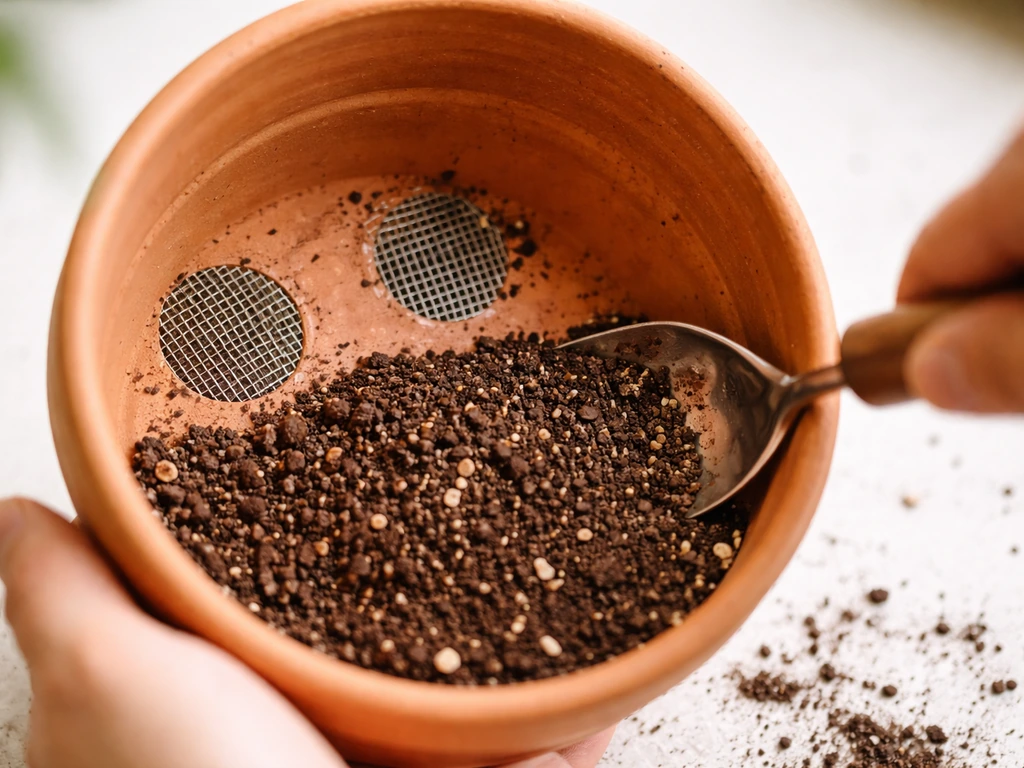
Drainage is the single most important structural feature of any container for trees. Root rot from standing water kills more container trees than almost any other cause. It is genuinely better to have too many drainage holes than not enough, drill extra holes in the bottom if yours feels light on openings. Make sure the holes are not blocked by potting mix by placing a piece of mesh or a broken pot shard (crocking) over each hole before filling. Never put gravel at the bottom thinking it improves drainage, research consistently shows this actually creates a perched water table that keeps the lower root zone wetter, not drier.
Where to put it
Most fruit and flowering trees want at least 6 to 8 hours of direct sun. Choose the sunniest spot you have. South or west-facing walls and balconies are ideal in the Northern Hemisphere. Airflow matters too, good air circulation reduces fungal disease. Avoid cramming pots into tight corners with no airflow. In summer, be aware that pots sitting on concrete or dark pavers absorb heat and can cook roots. Elevating pots on pot feet or a rack helps with both drainage and heat management.
Soil mix and fertilizing for container trees
Building the right mix
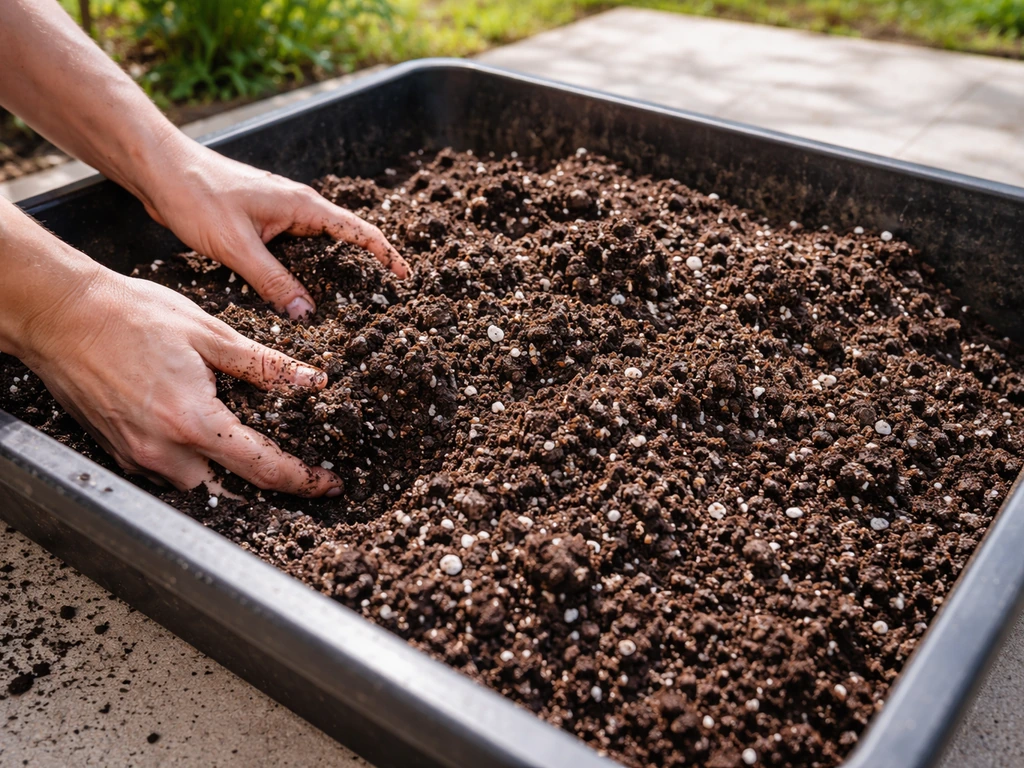
Never fill a container with garden soil. It compacts badly in pots, drains poorly, and brings in pests and diseases. A good container mix for trees is light, well-draining, and slightly acidic. The target pH for most container trees is around 5.5 to 6.5, woody plants generally prefer a slightly acidic medium, and citrus in particular does best between 5.8 and 6.5. If you are growing something like an oak, aim toward the lower end of that range.
You can buy a quality all-purpose potting mix and improve it, or build your own. A reliable recipe I use is roughly 60% quality potting mix (look for one that includes sphagnum peat moss, composted bark, and perlite), 20% extra perlite or coarse horticultural grit for drainage, and 20% composted bark or coconut coir. The coconut coir holds moisture and provides good root aeration, while the perlite keeps the mix from compacting. The composted pine bark brings the pH toward that 5.0 to 6.4 sweet spot and also contributes some natural disease resistance. Avoid mixes with a lot of fresh compost or high soluble salts, as these can stress tree roots.
Fertilizing your container tree
Trees in pots get hungry faster than ground-planted trees because nutrients leach out every time you water. Start regular feeding somewhere between 2 and 6 weeks after planting, depending on whether your potting mix already contained slow-release fertilizer. If it did, wait until you see signs of active growth, then supplement with liquid feed. If the mix was unfertilized, start sooner.
The two main approaches are slow-release granular fertilizer and liquid fertilizer. Slow-release products (like granules that claim to feed for up to 6 months) are convenient, work them into the top inch of mix or scatter on the surface per label directions. Liquid fertilizers give you more control and are easy to adjust based on how the tree looks. In practice, I use a slow-release granular fertilizer in spring and supplement with a diluted liquid balanced feed every two to three weeks during the growing season. In fall, stop feeding nitrogen to avoid pushing soft new growth before winter. Never fertilize a stressed or recently transplanted tree, wait until it settles.
Planting steps and watering routine
How to plant: nursery stock, bare-root, and seedlings
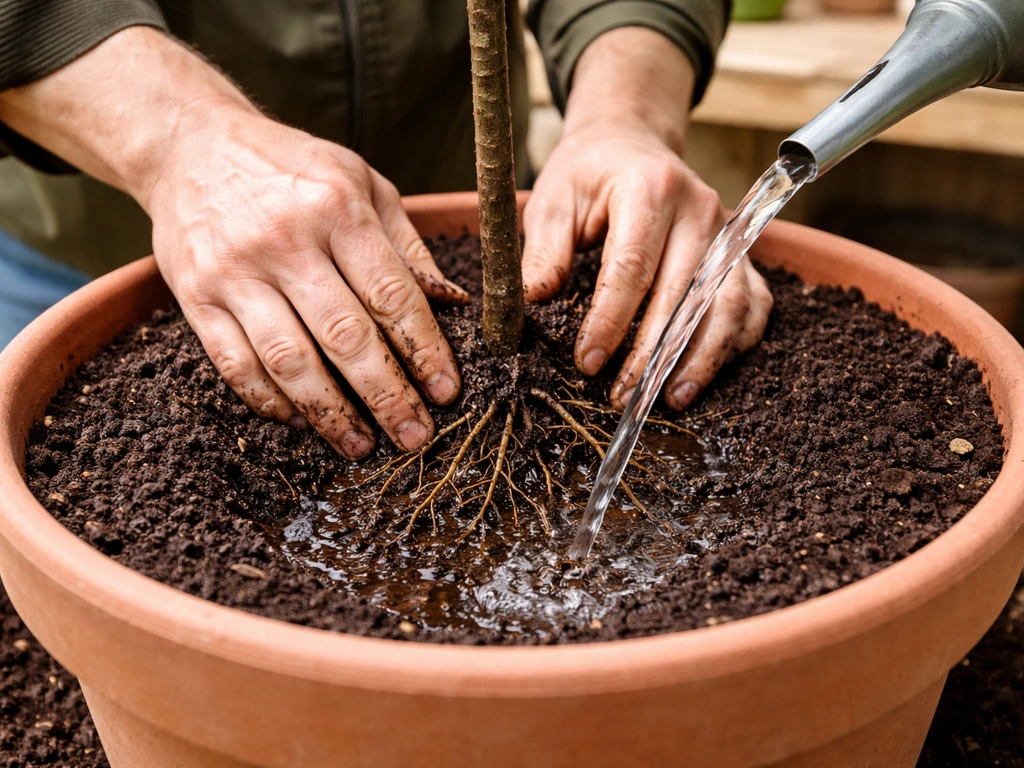
The planting process is slightly different depending on where you are starting from. Nursery-grown stock in a container is the easiest and most forgiving option for beginners. Bare-root trees (sold dormant without soil, usually in late winter to early spring) are cheaper and often establish quickly if planted correctly. Starting from a seedling is slow but rewarding.
- Choose a pot with good drainage and cover the holes with mesh.
- Add a layer of your prepared potting mix to the bottom — enough so the tree will sit at the right height.
- Find the root flare: the visible point where the trunk widens at the base before the roots splay out. This should sit at or just above the soil surface after planting. Burying the root flare is one of the most common planting mistakes and leads to rot.
- For nursery stock: remove the tree from its container, gently loosen any circling roots with your fingers, and trim any roots that are growing in tight circles around the root ball. Place the tree in the pot.
- For bare-root trees: soak roots in water for a couple of hours before planting. Make a small mound of mix in the center of the pot, drape the roots over it naturally so they splay outward and downward, then fill in around them.
- For seedlings: plant at the same depth they were growing in their original container or seed tray.
- Fill in with your potting mix, firming gently with your fingers to remove air pockets. Do not compress so hard that you squeeze out all the air.
- Water thoroughly until water runs freely from the drainage holes.
- Place in your chosen spot and keep the soil consistently moist (but not soggy) for the first 4 to 6 weeks while the tree establishes.
Watering routine that actually works
Container trees dry out far faster than ground-planted trees, especially in summer. The golden rule is to check before you water. Push your finger about 2 inches into the soil, if it feels dry at that depth, water thoroughly. If it still feels moist, wait another day. In hot summer weather, you may be watering every day or two. In cool weather or winter, you might go a week or more between waterings. Always water until it flows freely from the drainage holes, this flushes accumulated salts and ensures the whole root zone gets wet, not just the top inch.
The two failure modes here are overwatering and underwatering, and oddly they can look similar (yellowing leaves, poor vigor). Overwatering is more common and more deadly. If the soil stays wet for days after watering, your drainage or mix is the problem to fix, not your watering schedule.
Pruning, training, and managing root growth
Shaping and controlling the canopy
Pruning a pot tree serves two purposes: keeping it a manageable size and directing its energy into the parts of the tree you want. The best time for most pruning is late winter to early spring, just as the tree is coming out of dormancy but before it pushes new growth. Light tidying can be done any time.
There are two basic cut types you need to know. A thinning cut removes an entire branch back to its origin or a larger branch, this opens up the canopy without stimulating a lot of new shoots. A heading cut removes just part of a branch, cutting back to a bud or side branch, this encourages bushy growth below the cut and is useful for reducing height or making a tree branch out more. For most container trees, a combination of both works well: use thinning cuts to remove crossing, crowded, or inward-growing branches, and use heading cuts to reduce overall height and encourage a compact, branched shape.
For trees with a central leader (a single main vertical stem, like many apples and pears), you can head back the central leader to keep height in check and build a strong scaffold of side branches. Create 'light windows' in the canopy with thinning cuts so sunlight reaches the interior, this improves fruit quality and reduces disease. For naturally spreading trees like figs or Japanese maples, focus on an open, balanced structure rather than a strict central leader.
Root pruning: the part most people skip
Root management is essential for long-term container tree success, and most home gardeners never do it. Every time you move a tree to a larger pot, inspect the roots carefully. Remove any roots that are circling around the root ball, growing downward in tight spirals, or kinked, these will eventually girdle the tree and kill it. Use clean pruners or a sharp knife, and cut cleanly. Fabric grow bags help with this because they encourage air-pruning: roots reach the edge of the bag, hit air, and stop growing rather than circling. This is one reason I have shifted to fabric pots for most of my container trees.
Seasonal care: winter protection and summer heat stress
Summer: heat, wind, and drying out
Summer is when containers are most at risk from drying out too fast and from root heat stress. Dark-colored pots on hot surfaces can push root zone temperatures well above air temperature, which stresses roots and speeds moisture loss. Mulching the top of the pot with a 1 to 2 inch layer of bark or compost slows surface evaporation noticeably. In very hot climates, moving pots to afternoon shade or wrapping them with burlap or reflective material can protect roots. Check soil moisture daily during heat waves, and water in the morning so foliage dries before evening.
Winter: the frozen root problem
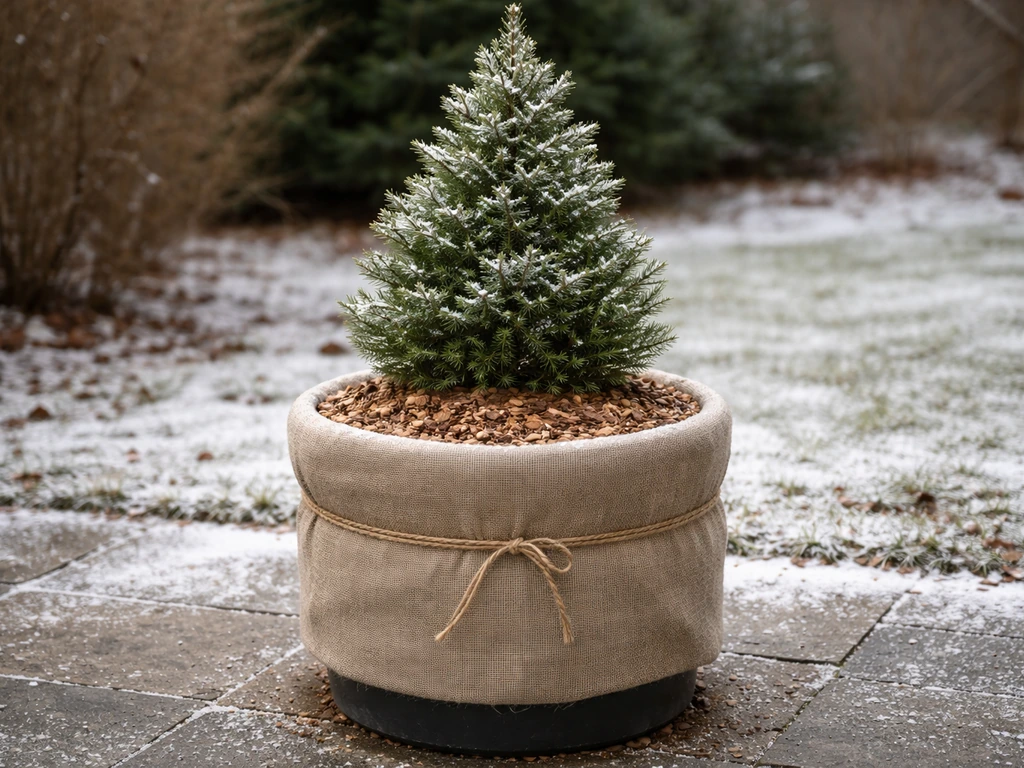
The main winter danger for container trees is not air temperature above ground, it is the roots freezing. Ground soil insulates roots from temperature swings, but pot soil is surrounded by air and can freeze solid in a hard winter, killing a tree that would have survived fine if planted in the ground. The goal is simple: prevent the soil mass from freezing, and maintain enough moisture so the roots do not desiccate.
Practical strategies include moving pots into an unheated garage, shed, or cool basement for the coldest months, cool and frost-free is the sweet spot, not warm. If the tree must stay outdoors, cluster pots together against a sheltered wall (the thermal mass helps), wrap the pots with bubble wrap, burlap, or hessian, and pile insulating material like straw, shredded leaves, or bark mulch around and over the pot. Larger pots freeze more slowly than small ones, which is another reason to size up over time. Water lightly through winter on mild days, the roots still need some moisture even when dormant.
Troubleshooting common container tree problems
| Problem | Likely cause | Fix |
|---|---|---|
| Yellow leaves all over | Overwatering or nutrient deficiency | Check drainage and soil moisture first; if consistently soggy, reduce watering. If well-drained, start a balanced liquid feed. |
| Yellow leaves with green veins (interveinal chlorosis) | Iron or magnesium deficiency, often from high pH | Test soil pH; if above 7, acidify with sulfur or switch to an ericaceous mix. Use chelated iron feed. |
| Leaf edge browning / scorch | High soluble salts or underwatering | Flush pot thoroughly with clean water to leach salts; increase watering frequency if soil is dry. |
| Poor growth, small leaves | Root-bound or nutrient-depleted | Check roots at drainage holes; if circling out, repot up one size. Resume feeding if it has been more than 6 weeks. |
| Wilting despite moist soil | Root rot from overwatering or poor drainage | Unpot and inspect roots; trim any black or mushy roots, repot in fresh well-draining mix. |
| Sticky residue on leaves or white cottony patches | Aphids, scale insects, or mealybugs | Wipe off manually, then treat with insecticidal soap or neem oil spray, repeating weekly for 3 to 4 weeks. |
| White powdery coating on leaves | Powdery mildew fungal disease | Improve airflow around the pot; treat with a diluted baking soda spray or a sulfur-based fungicide. |
| Sudden leaf drop in autumn on an evergreen | Temperature shock or overwatering | Move to a more sheltered spot; allow soil to dry slightly before next watering. |
Long-term plan: repotting, staying on top of pests, and deciding when to plant out
When and how to repot
Most container trees need repotting every 2 to 3 years when young, and every 3 to 5 years as they mature. Signs it is time: roots circling out of drainage holes, the tree drying out within a day of watering even with correct technique, visibly stunted growth, or a tree that tips over because it has become top-heavy relative to its pot. Spring, just before active growth starts, is the best time to repot. Go up one pot size at a time, jumping from a 5-gallon to a 30-gallon pot stresses the tree and makes it harder to judge watering. Every repot is also your chance to inspect and prune roots, refresh the potting mix, and remove any old fertilizer buildup.
Staying ahead of pests and diseases
Container trees are not immune to pests, and in fact aphids, spider mites, scale, and mealybugs can build up quickly in a confined growing environment. Check under leaves and at growing tips every time you water, catching an infestation early when it is a handful of insects is very different from dealing with a full outbreak. Good airflow, correct watering, and healthy soil go a long way toward prevention. Avoid over-feeding with nitrogen, which produces the soft, sappy new growth that pests love most.
Can you keep a tree in a pot forever?
Honestly, it depends on the tree and your commitment. Many trees, dwarf citrus, bay laurel, Japanese maple, fig, and compact fruit trees, can live in containers for 10 to 20 years or more with proper repotting, pruning, and care. Some trees, especially fast-growing species or large-growing types, will eventually run out of options for upsizing and will either stagnate or decline. If your tree has maxed out pot size and is struggling despite good care, moving it to the ground is the kindest option. Think of the container phase as a long, productive chapter rather than a permanent sentence, and enjoy the flexibility it gives you while it lasts.
If you want to go deeper on specific trees, the principles in this guide apply whether you are working with a bay tree, an oak, a coconut palm, or something more unusual like a cocoa or drumstick tree, each has its own quirks, but the fundamentals of good drainage, right-sized pots, proper soil mix, and seasonal attention are the same across all of them.
FAQ
What size pot is “small enough to be manageable” but still safe for most dwarf trees?
For many beginners, a 10 to 15 gallon pot works as a balance between weight and root space, but the real target is choosing the next step when the tree is actively growing. If you regularly have to water daily in summer, that is a sign you are probably at (or beyond) the pot size limit for that tree.
Can I keep a tree in the same pot for years without repotting?
You can sometimes slow decline by switching to top-dressing and careful feeding, but most container trees eventually suffer from root circling, mineral buildup, and exhausted structure in the mix. If drainage starts to slow, the mix compacts, or the tree becomes top-heavy, those are practical signals you need a repot rather than just more fertilizer.
How do I tell whether yellow leaves are from overwatering or underwatering?
Check the soil moisture at 2 inches deep and also watch the pattern. Overwatering usually comes with persistently wet mix for days (even if you skipped watering), while underwatering tends to show dryness sooner, drooping between waterings, and faster drying after you water thoroughly.
Is it okay to put gravel, rocks, or “potting chips” in the bottom for drainage?
Avoid it. In containers, gravel layers can trap water and create a wetter lower zone, which promotes root rot. The article’s drainage-hole-first approach is more reliable, and extra holes usually help more than any gravel layer.
What is the best way to water a potted tree during hot weather?
Water early in the morning and water deeply until water flows from the drainage holes, then stop. If you only wet the top inch, roots below stay dry and salt can accumulate at the surface. In heat waves, expect more frequent checks, sometimes daily, especially for dark-colored pots on concrete.
Do I need to fertilize year-round in a container?
No. During dormancy or near-dormancy, pause feeding, and in fall avoid nitrogen-heavy fertilizers to prevent tender growth that can be damaged by cold. For most trees, feeding starts after establishment and active growth is clearly underway, then you taper back as temperatures drop.
How do I manage salt buildup in a container pot over time?
Every so often, do a “leaching water” by watering thoroughly until excess drains freely, then let the mix drain completely. This flushes dissolved salts that come from fertilizer and hard water, which otherwise can stress roots even when you are watering correctly.
Should I prune roots when repotting, or only trim damaged ones?
Inspect for circling, kinked, or downward-spiraling roots and remove those that would girdle the tree later. Light corrective root pruning during repotting is typically better than leaving the problem in place and hoping it resolves, especially with standard plastic pots where roots tend to circle.
What do I do if my pot tree tips over or becomes unstable?
A tipping tree is usually a pot-size or root-volume issue, the tree is top-heavy compared with its container, or the pot needs more stability. Moving to a wider, heavier pot (or adding a sturdy base) often helps, and repotting on schedule is better than trying to compensate with extra top growth.
Can I grow an outdoor pot tree in a windy balcony where it dries out quickly?
Yes, but prioritize wind resistance and airflow balance. Use a slightly larger pot than you think you need, keep mulch on the soil surface to slow evaporation, and water based on actual 2-inch soil moisture. If wind regularly knocks leaves, consider putting the pot in a more sheltered spot that still gets adequate sun.
What is the safest winter strategy if I cannot bring the pot fully indoors?
If the roots can freeze solid, choose protection that targets the soil mass, not just the branches. Cluster pots near a sheltered wall, insulate the pot with wrap and bulk insulating material around the base, and water lightly on mild days so roots do not desiccate.
How do I choose between terra cotta, plastic, and fabric pots for my climate?
In hot or very sunny areas where pots dry fast, plastic or a fabric pot with good watering habits can be easier. In climates with harsh winters, thicker insulated containers and winter protection matter more than the pot type alone. Fabric pots are helpful for preventing root circling, but they generally require more consistent moisture monitoring.
Can I start a tree from seed in a pot instead of buying a nursery tree?
You can, but expect a long timeline and a higher failure rate for beginners. Seeds also give you less predictable results for size and fruiting compared with known dwarf varieties on dwarfing rootstocks. If you want faster results, nursery-grown dwarf or semi-dwarf stock is usually the most practical route.
When is the right time to repot, and how do I avoid shocking the tree?
Repot in spring just before active growth begins. Only move up one pot size at a time, and disturb the root ball as little as possible while still correcting circling roots. A large jump in pot size can make watering confusing and increase the risk of staying too wet for too long.