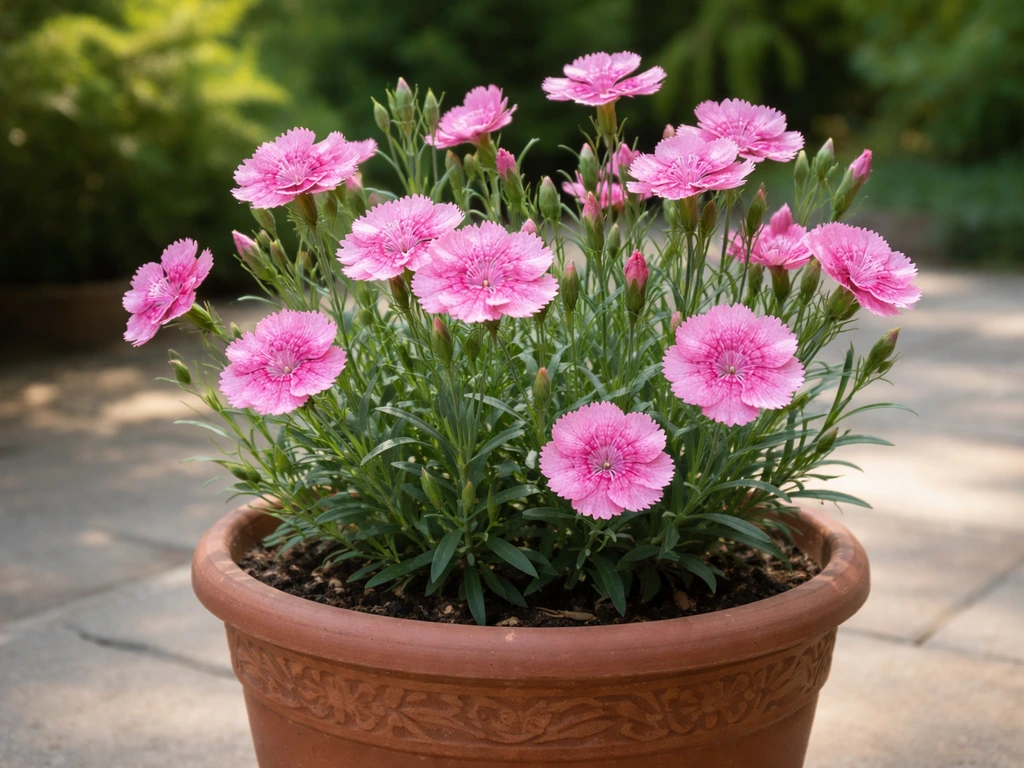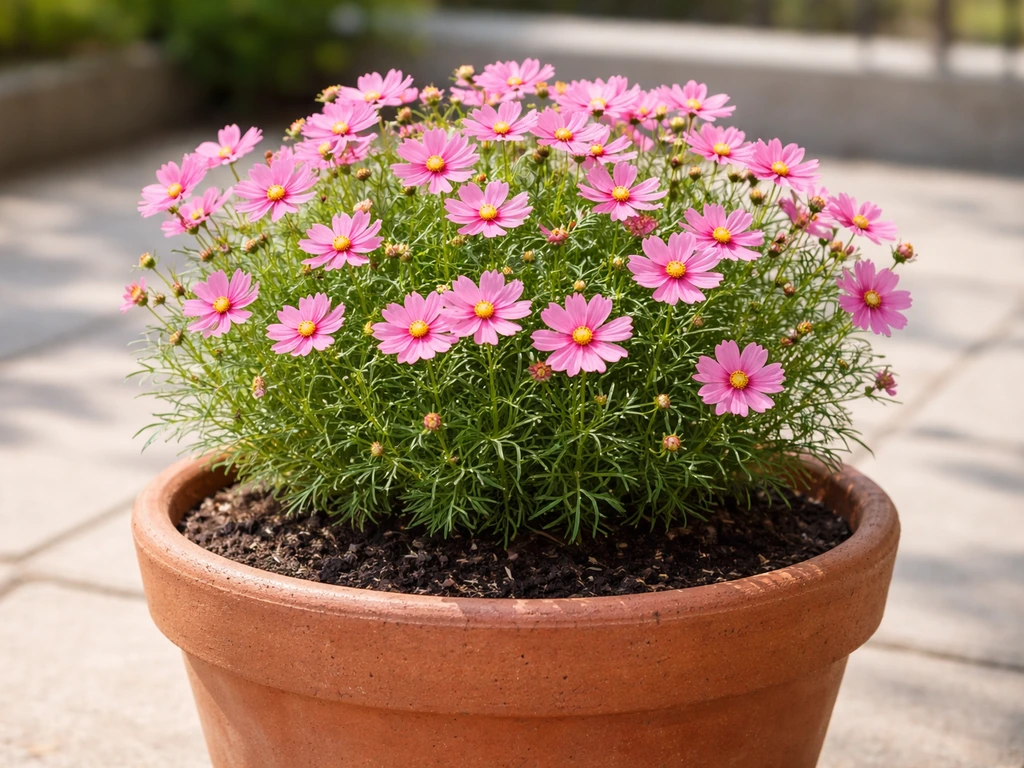
Yes, you can absolutely grow bitter gourd in pots, and it's more doable than most people think. Bitter gourd (also called karela or bitter melon) is a vigorous climbing vine, so it does need a decent-sized container and something to climb, but once you get those two things right, the rest is pretty straightforward. I've grown it on a small balcony with nothing more than a 15-gallon pot and a simple trellis made from bamboo stakes, and the plant produced more fruits than I expected. If you're ready to give it a go, here's exactly what to do.
How to Grow Bitter Gourd in Pots: Step-by-Step Guide

Marcus Whitley
19 Apr 2026
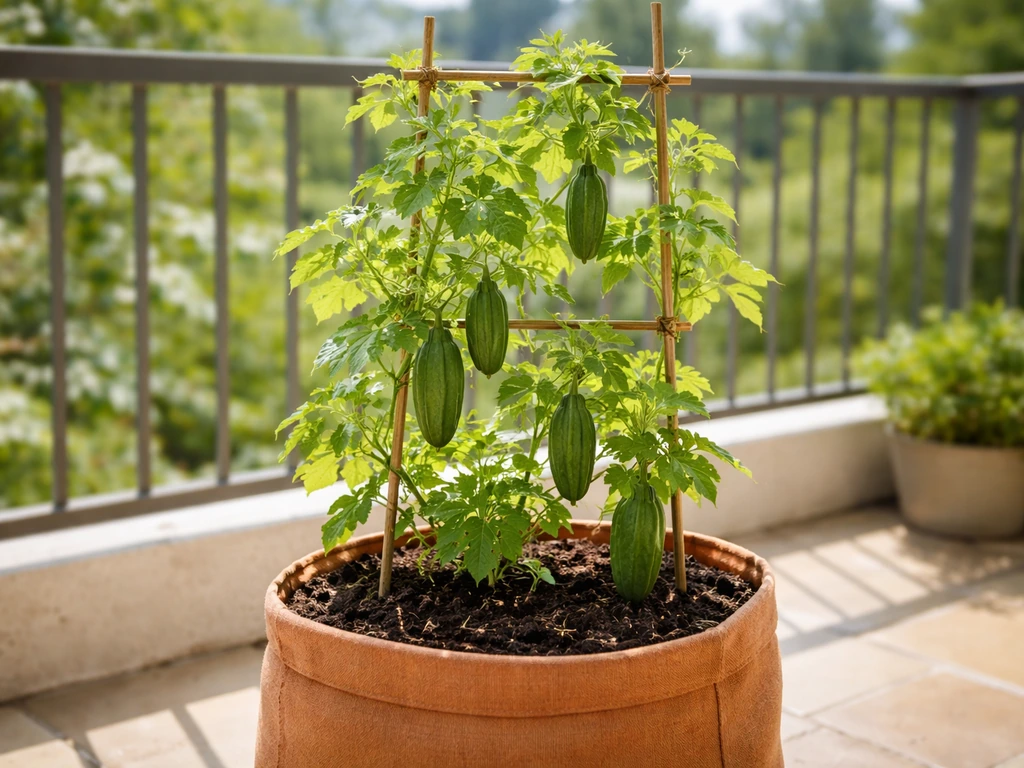
Can bitter gourd really grow in a pot? Here's what to expect
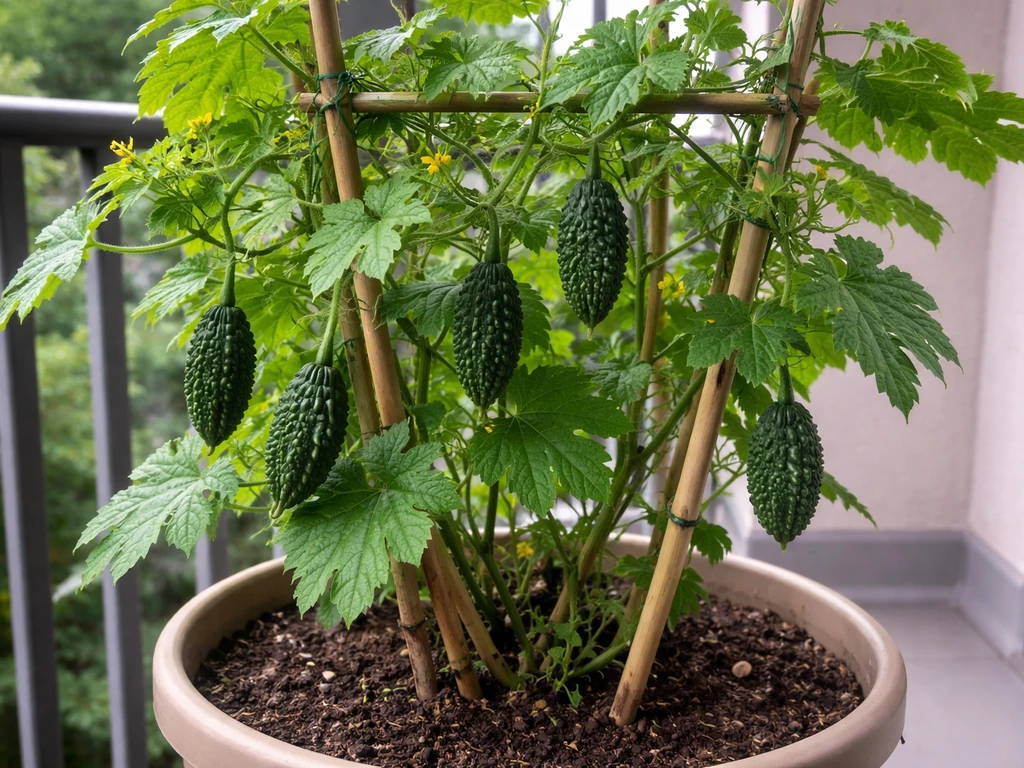
Bitter gourd is a warm-season vine that naturally wants to sprawl and climb. In the ground it can run several meters, but in a container it's perfectly manageable as long as you give it enough root space and vertical support. Expect the vine to start flowering somewhere around 40–50 days after sowing, and fruits to be harvestable roughly 55–70 days after sowing, with individual fruits ready to pick about 2–3 weeks after they flower. That's a satisfying turnaround for a container crop.
The honest caveat: pot-grown bitter gourd will likely produce fewer fruits per plant than a garden bed, and you'll need to be more attentive to watering and feeding because containers dry out and deplete nutrients faster. But for a balcony, terrace, or small urban garden, it's a completely realistic crop. Like other gourds in this family, including snake gourd, ridge gourd, and sponge gourd, bitter gourd rewards consistent care with a genuinely productive harvest. Ridge gourd is another great option for containers, and you can grow it at home in pots using a similar approach to pot size, trellising, and consistent care grow ridge gourd at home in pots. If you also want to grow another popular container vine, the same pot-and-trellis approach works well when you learn how to grow gourd in pots. You can use the same pot and trellis approach to grow snake gourd in containers too.
Picking the right pot and planning your trellis
Container size is the single most important decision you'll make. Go too small and the vine struggles, gives you yellowing leaves, and barely fruits. The sweet spot for bitter gourd is a pot that is at least 12–15 inches deep and 12–18 inches in diameter, which roughly translates to a 10–15 gallon container. If you can go bigger, a 15-gallon pot is even better, especially if you want a long productive season. Fabric grow bags in that size range work really well because they drain freely and prevent root-bound conditions.
The trellis is non-negotiable. Bitter gourd is a vine and it will not be happy flopped over the side of a pot. Set up your support before you even sow the seeds, because it's much harder to install after the plant is growing. A simple A-frame of bamboo canes tied together at the top, or a vertical net or rope trellis fixed to a wall or railing, works perfectly. Aim for at least 4–5 feet of vertical climbing space. The plant sends out tendrils and grabs onto strings and netting very readily, so it doesn't need much help once it gets started.
Getting the soil mix right
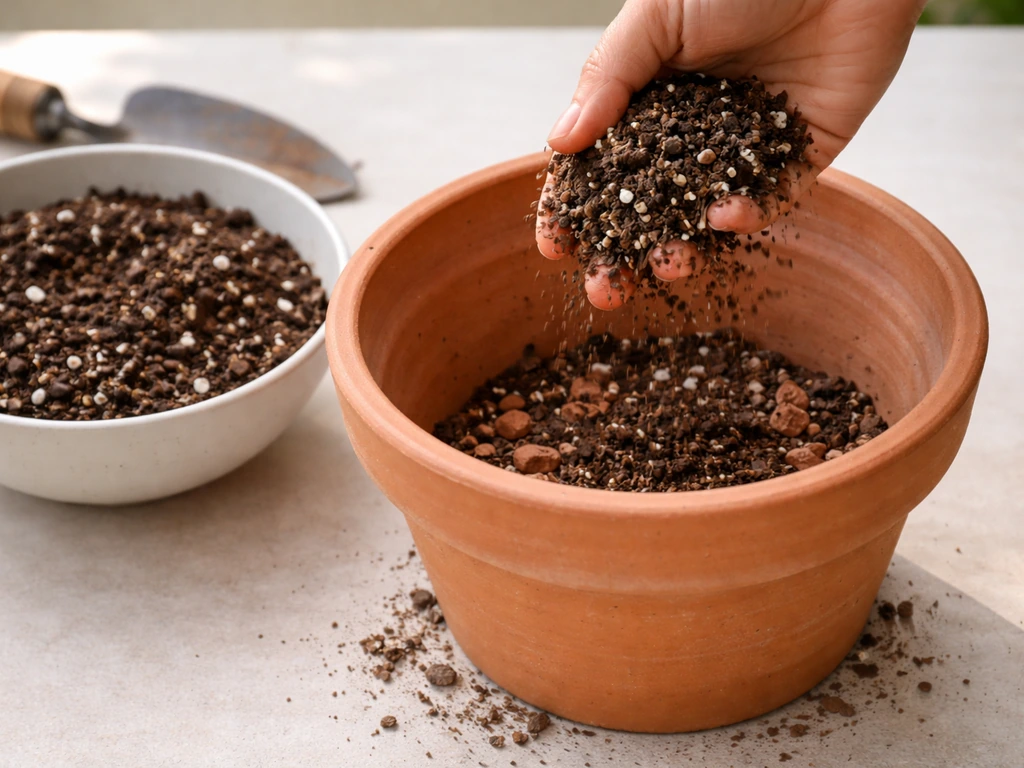
Bitter gourd likes a rich, well-draining mix with a slightly acidic to neutral pH, ideally between 6.0 and 6.7. A standard potting mix alone often doesn't have enough structure or nutrients for a heavy feeder like this vine, so I always mix in some extras. A good starting blend is roughly 60% good-quality potting mix, 20% compost or well-rotted manure, and 20% coarse perlite or river sand for drainage. This gives you the fertility the plant wants while preventing the waterlogging that kills more bitter gourd plants than anything else.
Before filling your pot, put a layer of gravel or broken pot shards over the drainage holes to stop them from getting clogged. Fill the pot to about 2 inches below the rim so you have room to water without spillage. If you're not sure about your soil's pH, a cheap pH meter or test strips are worth picking up, especially if you've had problems with yellowing plants in the past.
Starting bitter gourd from seed in pots
When to sow
Bitter gourd is a warm-weather crop that needs temperatures of around 23–26°C (73–79°F) to germinate and grow well. Sow after your last frost date, once nighttime temperatures are consistently above 18°C (65°F). In most temperate climates that means late spring or early summer. In tropical and subtropical regions you can sow in spring or again in late summer for a second crop.
Soaking and germinating your seeds
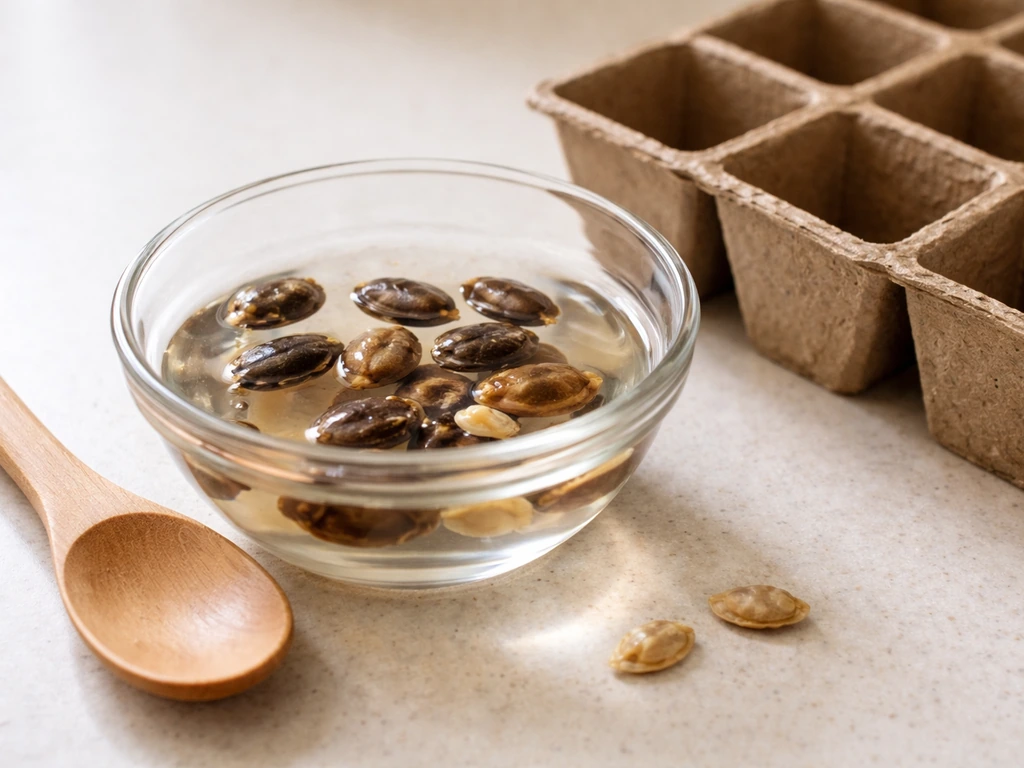
Bitter gourd seeds have a hard coat and can be slow to germinate if you just toss them in dry. Soak the seeds in warm water for about 24 hours before sowing. You'll often see them swell visibly, and some will even show a tiny sprout tip by the end of the soak. This step alone can cut germination time noticeably. After soaking, sow the seeds about 0.5 cm (roughly a quarter of an inch) deep in your prepared pot or in small individual seed-starting cells if you want to transplant later. Keep the growing medium consistently moist but not soggy, and maintain that 23–26°C temperature range. Under those conditions, expect germination in about 8–15 days.
Sowing directly vs. starting in cells
You can sow 2–3 seeds directly into the final container and thin to the strongest one once they've germinated, or you can start them in small peat pots or biodegradable cells and transplant when seedlings are about 3–4 inches tall with their first true leaves. Direct sowing is less fuss. If you do transplant, do it gently because bitter gourd seedlings don't love having their roots disturbed. Whichever method you choose, aim for one plant per 10–15 gallon pot. Crowding two plants into a single container leads to competition for nutrients and disappointing yields.
Caring for bitter gourd in a container
Sunlight
Bitter gourd wants full sun, meaning at least 6–8 hours of direct sunlight per day. Less than that and the vine will grow but flower and fruit poorly. A south-facing balcony or a sunny terrace is ideal. If you're working with a spot that only gets 4–5 hours of sun, you'll likely get some fruit but don't expect a bumper crop.
Watering
The watering rhythm matters more than people realize. In the early stage after planting, water every 3–4 days, letting the top inch of soil dry slightly between waterings. Once the plant starts flowering and setting fruit, step it up to watering every alternate day, or even daily in hot weather. Always check the soil before watering by sticking your finger an inch into the mix. If it still feels moist, wait. If it's dry, water thoroughly until it drains from the bottom. Inconsistent watering (feast and famine cycles) is one of the main reasons container bitter gourd drops flowers or produces deformed fruits.
Feeding
Bitter gourd is a heavy feeder and container soil gets depleted fast. Start with a balanced fertilizer (something like a 10-10-10 NPK) every two weeks during the vegetative growth phase to build a strong leafy vine. Once you see flower buds forming, shift to a fertilizer that's higher in phosphorus and potassium (like a 5-10-10 or a tomato-style bloom formula) and back off the nitrogen. Too much nitrogen at the flowering stage pushes leafy growth at the expense of fruit. Complete that fertilizer switch just before fruit set for best results. A liquid feed is convenient for containers because it gets absorbed quickly, but a slow-release granular fertilizer mixed into the top inch of soil also works well between liquid applications.
Training the vine
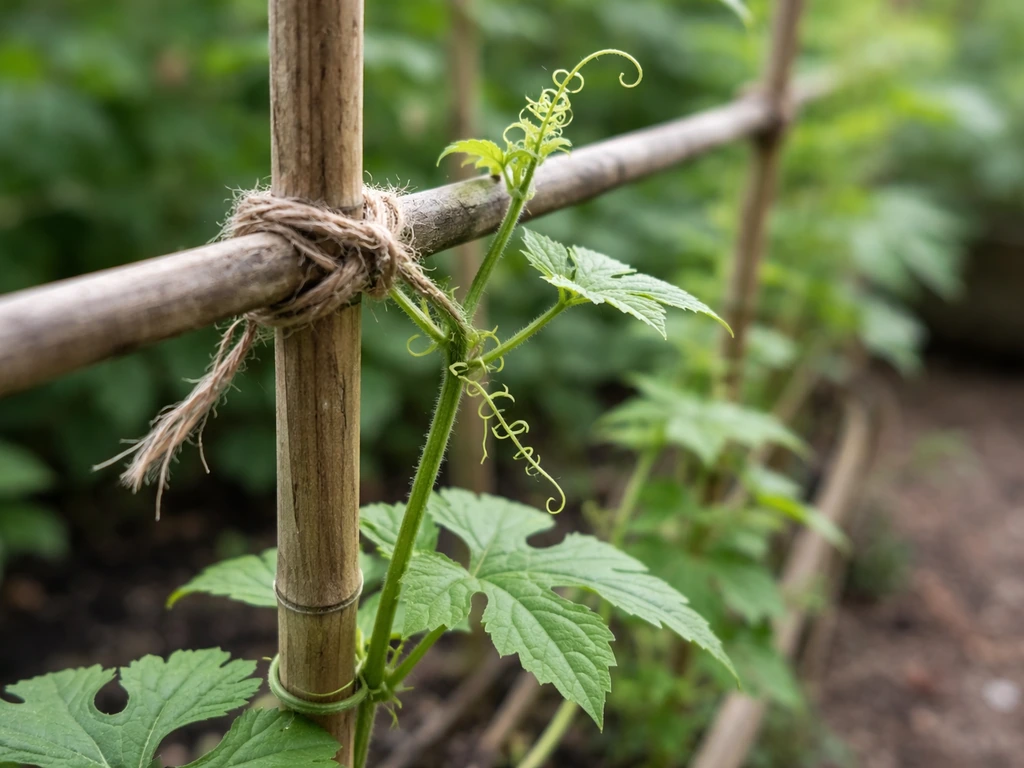
As the vine grows, gently guide its main stem toward the trellis. Bitter gourd puts out tendrils naturally and will attach itself once it finds something to grab. Pinch out the growing tip of the main stem when it reaches the top of your trellis. This encourages lateral (side) branches, which is where most of the flowering and fruiting happens. Let those laterals grow freely and they'll drape over the trellis and fill out beautifully.
Getting flowers to turn into fruits: pollination
This is where a lot of beginners get frustrated. They see flowers but no fruits forming. The problem is usually pollination. Bitter gourd produces separate male and female flowers on the same plant. Male flowers appear first, often in large numbers, and they don't produce fruit no matter what. Female flowers come later and are easy to identify once you know what to look for: the female flower has a tiny miniature fruit (a small, ridged, oval-shaped swelling) at its base right behind the petals. The male flower has a plain stem with no swelling.
In an outdoor garden, bees and other insects handle pollination. On a balcony or in an area with low insect activity, you may need to do it yourself, and honestly it takes about 30 seconds. On a balcony or in an area with low insect activity, UF/IFAS Extension notes that you may need to use manual hand pollination to transfer pollen from male to female flowers for fruit set. In the morning when flowers are fully open, pick a male flower or use a small soft paintbrush to collect the yellow pollen from its center (the anther). Then dab or brush that pollen directly onto the center (the stigma) of the female flower. That's it. Do this for each female flower you see, and you should see tiny fruits start to develop within a few days. If a pollinated flower doesn't set fruit, it will drop off, which is normal.
When to harvest
Pick bitter gourd while the skin is still firm, green, and slightly waxy, before it starts yellowing or turning orange. At that stage the flesh is crisp and usable. Harvest regularly (every 2–3 days once fruits start coming) because leaving mature fruits on the vine signals the plant to slow production. Fruits left too long also split and turn bitter beyond the point most people enjoy.
Solving the most common container problems
Yellow leaves
Yellowing leaves on a container bitter gourd are almost always caused by one of three things: overwatering (check that drainage is working and let the soil partially dry between waterings), nutrient deficiency (the pot soil has been depleted, so give a balanced liquid feed), or incorrect pH (outside the 6.0–6.7 range locks out nutrients even when they're present). Fix the watering first, then feed, and test pH if the problem persists.
Powdery and downy mildew
These are the two fungal diseases most likely to hit your bitter gourd, especially in humid weather or when airflow around the pot is poor. Powdery mildew shows up as white powdery patches on the leaf surface. Powdery mildew commonly infects cucurbits, including muskmelons and other cucurbits, and it is a prevalent cucurbit disease according to UMN Extension. Downy mildew produces a cottony white or grayish growth, usually on the undersides of leaves, with yellow patches on top. For both, improve airflow first by repositioning the pot or thinning crowded foliage. A spray of diluted neem oil (about 2% solution) applied every 14 days at first sign of symptoms is a practical organic option. For more stubborn powdery mildew, a Trichoderma-based biofungicide or a registered product like dinocap can be used according to label instructions.
Aphids, whiteflies, and spider mites
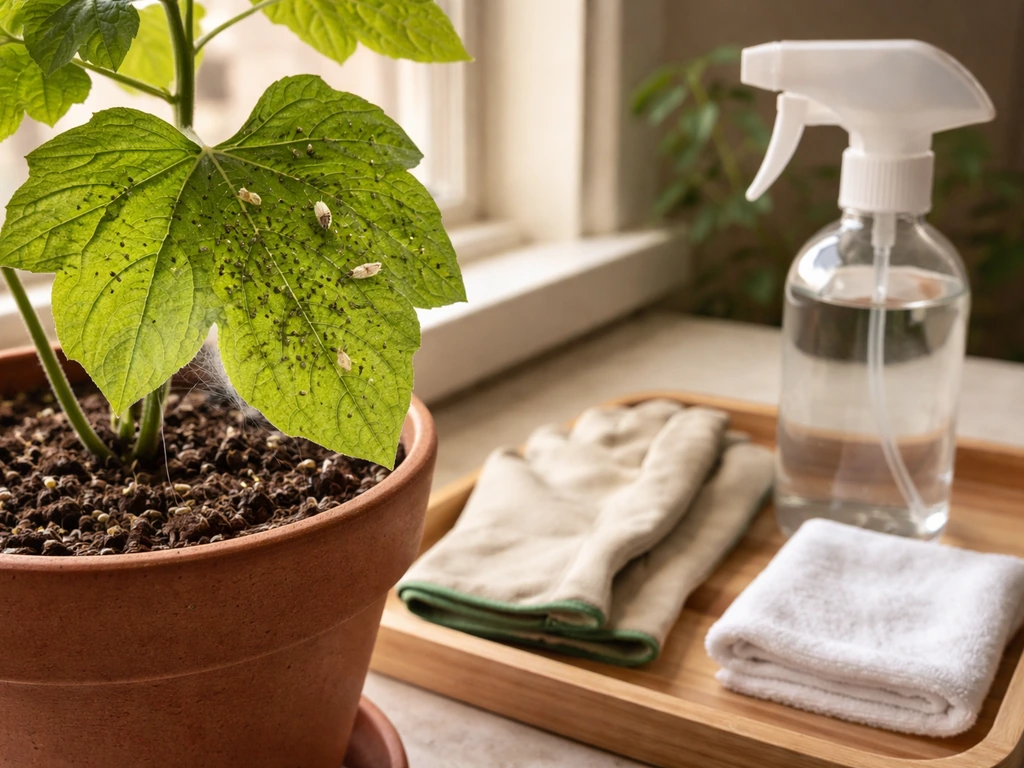
These soft-bodied pests show up on new growth and the undersides of leaves. Aphids cluster in groups and are usually green or black. Whiteflies flutter up in a cloud when you brush the plant. Spider mites leave fine webbing and a dusty, stippled look on leaves. All three respond well to insecticidal soap spray applied directly to the affected areas. Spray in the early morning or evening to avoid leaf scorch, and repeat every 5–7 days until the infestation is gone. A strong blast of water from a hose also dislodges aphids effectively.
Low yield despite flowers
If you're seeing flowers but very few fruits setting, the causes are usually poor pollination (revisit the hand-pollination section above), too much nitrogen in the feed (switch to a high-P/K formula), not enough sun, or heat stress from a pot sitting in direct reflected heat. Move the pot to improve conditions, adjust your feed, and hand-pollinate every female flower you see. Most container gardeners see a real improvement just by hand-pollinating consistently for a week or two.
| Problem | Most likely cause | Fix |
|---|---|---|
| Yellow leaves | Overwatering, nutrient depletion, wrong pH | Check drainage, liquid feed, test and adjust pH to 6.0–6.7 |
| Powdery mildew | High humidity, poor airflow | Improve airflow, spray neem oil (2%) every 14 days |
| Downy mildew | Wet conditions, poor airflow | Improve airflow, reduce overhead watering, neem oil spray |
| Aphids/whiteflies/spider mites | Warm dry conditions, stressed plant | Insecticidal soap spray, water blast for aphids |
| Flowers but no fruit | Poor pollination, excess nitrogen, low sun | Hand-pollinate, switch to high-P/K feed, maximize sun exposure |
| Slow/stunted growth | Too-small pot, insufficient watering or feed | Repot into 10–15 gallon container, adjust water and feed schedule |
Your next steps to get started
If you're ready to start today, here's the short version of the whole process: grab a 15-gallon pot, set up a trellis, mix your soil with compost and perlite, soak your seeds overnight, and sow 0.5 cm deep in warm conditions. Keep the soil moist, get it into full sun, and start feeding once the plant is established. When flowers appear, hand-pollinate the female ones, switch to a bloom fertilizer, and water every other day. Stay on top of pests and mildew early and you'll be harvesting your own bitter gourd in about 55–70 days. It's one of those crops that feels genuinely satisfying to grow in a container, and once you've done it once you'll want to try it again every season. If you want to expand your container garden beyond gourds, you can also learn how to grow ashwagandha in pots for steady, low-maintenance harvests. If you want to expand your container garden beyond gourds, you can also learn how to grow ashwagandha in pots for steady, low-maintenance harvests, and how to grow ash gourd in pots for another heat-loving vine.
- Choose a 10–15 gallon pot (at least 12–15 inches deep) and set up a trellis before sowing.
- Mix potting soil with compost and perlite; target a pH of 6.0–6.7.
- Soak seeds in warm water for 24 hours, then sow 0.5 cm deep in warm (23–26°C) conditions.
- Water every 3–4 days initially, increasing to alternate days at flowering and fruiting.
- Feed with balanced fertilizer during vegetative growth, then switch to high-P/K at flowering.
- Hand-pollinate female flowers in the morning using a brush or a picked male flower.
- Harvest fruits while still firm and green, every 2–3 days once they start coming.
- Watch for mildew and soft-bodied pests; treat early with neem oil or insecticidal soap.
FAQ
Can I grow bitter gourd in pots during very hot summer weather?
Choose a pot that is at least 10 to 15 gallons and do not skip vertical support, then keep the container on the coolest side of the balcony (morning sun, afternoon shade). In hot weather, watering daily is often needed once fruit set starts, and you should provide a bloom fertilizer with lower nitrogen to avoid leafy growth when temperatures are high.
What if my climate is warm year-round, can I still grow bitter gourd in pots?
Yes, but expect slower germination and uneven flowering if nights stay above about 26°C (78°F). To compensate, soak seeds, keep the medium consistently moist but not soggy, and protect seedlings from intense midday sun with light shade until they establish, usually after the first true leaves.
How do I know my hand-pollination worked (and what timing mistakes should I avoid)?
Hand-pollination is most successful when you do it shortly after the flowers fully open, in the morning. Focus on transferring pollen from the anther center of a male flower to the stigma center of a female flower, and repeat on each female flower you want to set, because a single missed day can mean the female flower drops.
My bitter gourd has mostly male flowers, how do I get more female flowers?
If the plant has lots of male flowers but few or no female flowers, the issue is usually stress (inconsistent watering, insufficient sun, or excessive nitrogen). Correct the basics, switch to a higher phosphorus and potassium feed once buds appear, and keep the pot in 6 to 8 hours of direct light.
Is it better to direct sow or start bitter gourd in seed trays for pots?
Yes, but you need to transplant carefully because the root ball breaks easily. Start seeds in individual biodegradable cells, keep them evenly moist, and move them to the final pot once they are about 3 to 4 inches tall with true leaves, disturbing as little as possible.
Can I grow two bitter gourd plants in one pot to get more harvest?
Aim for one plant per 10 to 15 gallons. If you already planted two, thin early once you see strong seedlings, because crowding reduces airflow, increases disease risk, and causes nutrient competition that leads to small, bitter, underdeveloped fruits.
My pot dries quickly. How do I know when to water more often without overwatering?
Watch for the water level trend, not just the top surface. If the container dries fast and you can feel moisture loss 1 inch down within a day, switch to watering every day during fruiting, and always water until it drains from the bottom to flush salts.
Why are my leaves turning yellow, is it watering or fertilizer?
Yellowing plus drooping can be overwatering, while yellowing with dry, crispy leaf edges often points to underwatering or salt buildup. If you recently fertilized heavily, flush the pot with clean water until it drains out, then resume feeding at the lower recommended frequency.
What should I do if powdery mildew keeps coming back on my container bitter gourd?
If you want fewer diseases, avoid leaving foliage crowded and do not water late in the evening. Neem oil is most useful at the first sign of mildew, but for ongoing outbreaks, reduce leaf wetness, improve airflow, and rotate or alternate with a different approved control method per the product label.
How can I stop aphids, whiteflies, or spider mites on a pot-grown vine?
Remove or isolate any heavily infested leaves, then spray insecticidal soap directly on undersides where pests hide. Repeat every 5 to 7 days because eggs hatch later, and check the trellis string and nearby foliage, since pests often move to adjacent plants.
When exactly should I change fertilizer from nitrogen-heavy to bloom formula in pots?
Use a simple schedule: balanced feed during early vegetative growth every two weeks, then switch to a bloom formula once flower buds form. If you keep nitrogen high after flowering, you will get vines and fewer fruits, so stop nitrogen supplements and stick with the higher phosphorus and potassium mix for fruiting.
How often should I harvest bitter gourd, and when is it too late?
Yes, harvest when fruits are firm and still green. If they start turning yellow or orange, they become more bitter and tougher, and if you leave them on the vine too long the plant slows production, so check every 2 to 3 days once you see a fruiting wave.