Yes, you can absolutely grow bottle gourd in pots, and it fruits reliably when you give it the right container, soil, and a sturdy trellis to climb. The vine is big and vigorous, so it does demand a large pot (think 15–20 gallons minimum), full sun, consistent watering, and regular feeding. Get those four things right and you can harvest bottle gourds from a balcony, rooftop, or small patio just as well as from a garden bed.
How to Grow Gourd in Pots: Bottle Gourd Step-by-Step
Marcus Whitley
29 May 2026
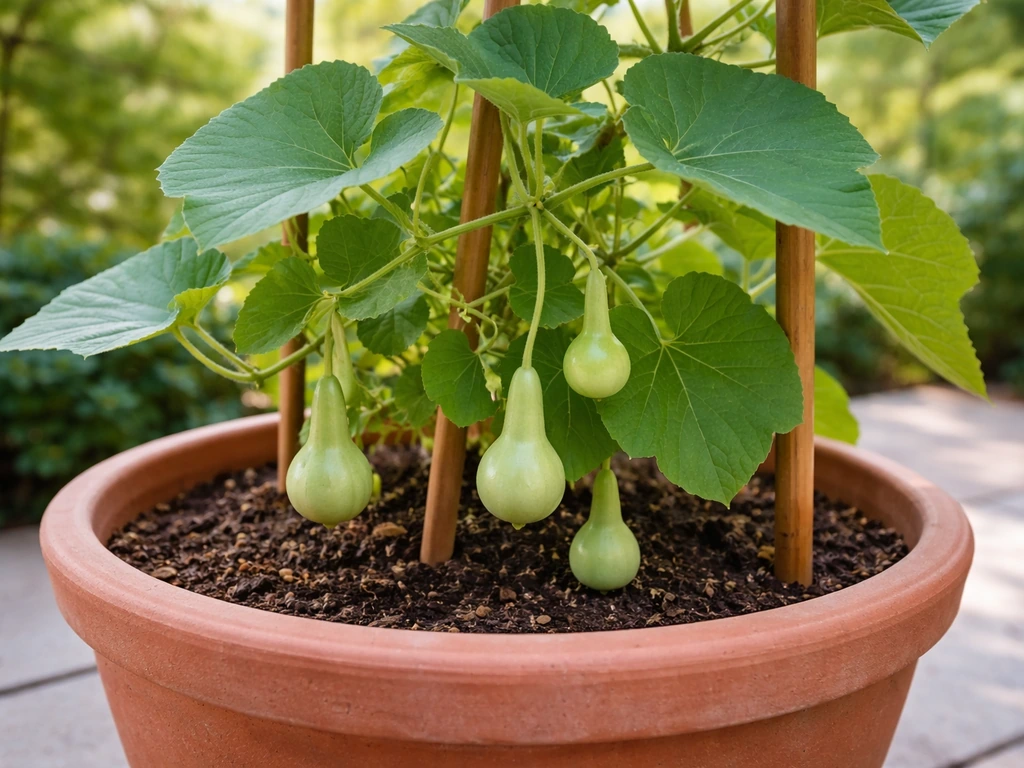
Can bottle gourd (and other gourds) grow in pots, quick reality check
Bottle gourd (Lagenaria siceraria) is a tropical vine that naturally wants to sprawl across the ground or climb whatever it can grab. That reputation puts a lot of gardeners off trying it in containers, but the vine doesn't actually care whether its roots are in the ground or in a pot. What it cares about is root space, warmth, and water. Give it a large enough container and something to climb and it behaves beautifully.
The honest caveat: bottle gourd is not a compact plant. A single vine can run 10–15 feet or more. You are not going to tuck it into a 6-inch pot on a windowsill. But on a sunny balcony with a trellis attached to the railing, or on a patio where you can run a rope or wire upward, it works very well. I have seen people grow full-sized bottle gourds in fabric grow bags hung on rooftop pergolas, and the harvests were genuinely impressive.
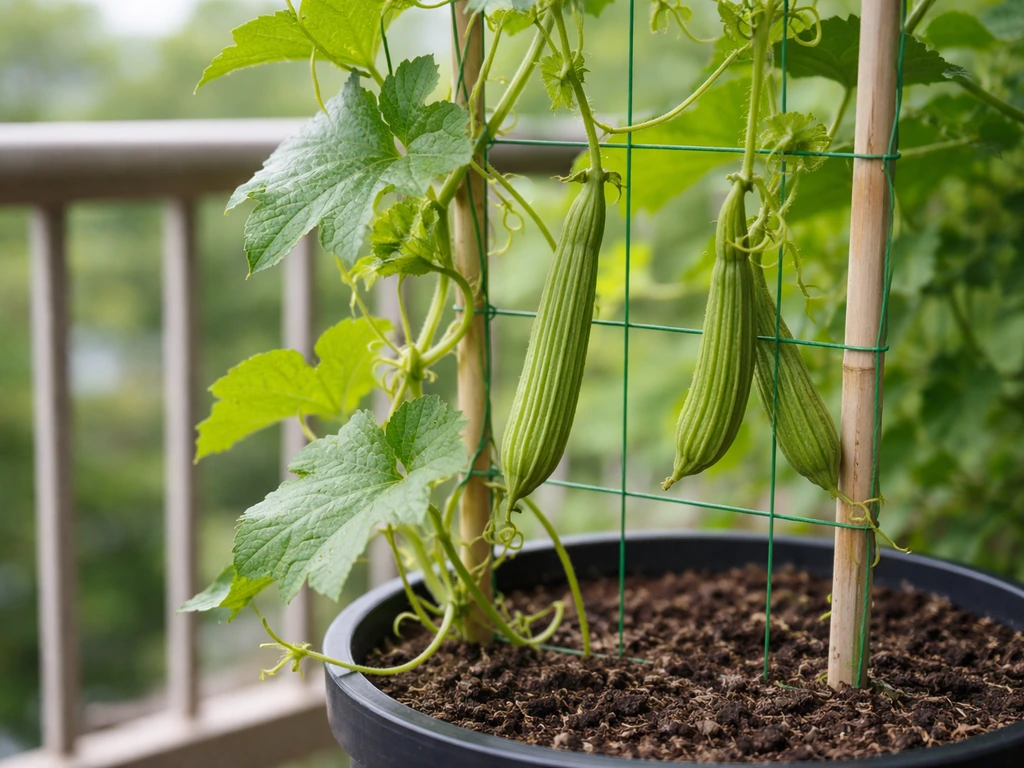
Other common gourds, bitter gourd, ridge gourd, sponge gourd, snake gourd, and ash gourd, follow a very similar playbook in containers. If you are specifically wondering how to grow sponge gourd in pots, use the same container, drainage, sun, and trellis setup, then adapt the watering a bit for its faster, more compact growth. If you are also interested in herbs, the same container mindset carries over to how to grow ashwagandha in pots.
Bitter gourd and ridge gourd are arguably easier to manage in pots because the fruits are lighter and the vines slightly less aggressive. If you are growing ridge gourd at home in pots, use the same container, drainage, and trellis principles outlined here, just adjust support for the lighter fruit. Ash gourd and snake gourd need even more vertical room because their fruits get very long or very heavy. The core principles in this guide apply to all of them, with bottle gourd as the main focus.
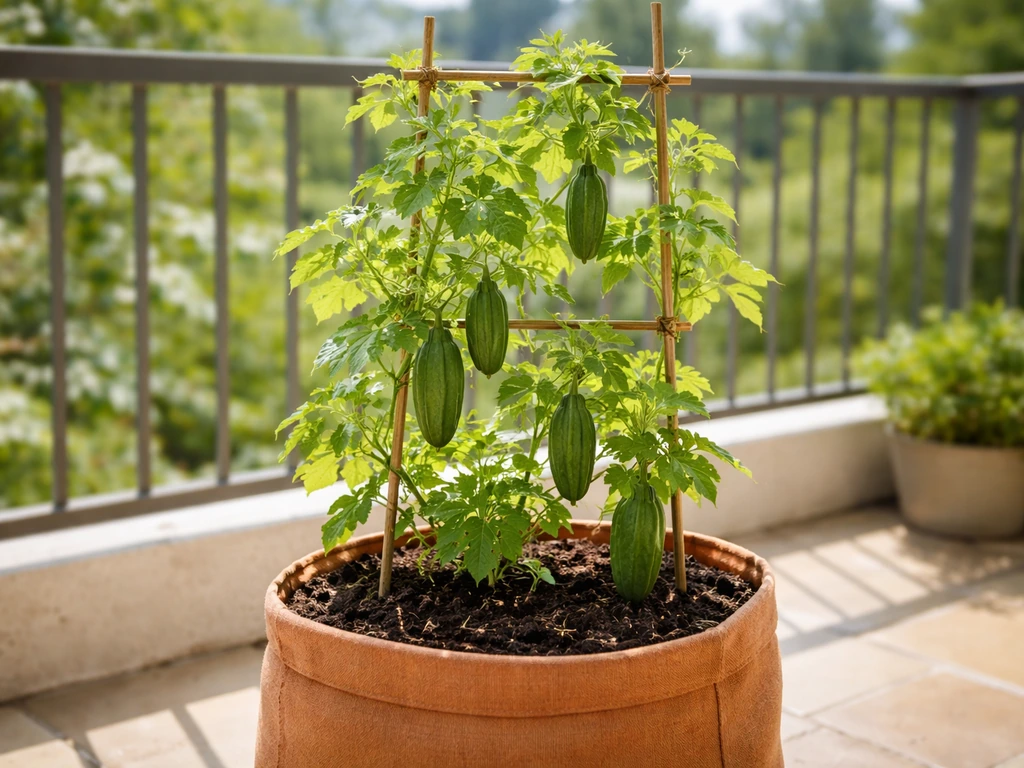
Best pot size, drainage, and support setup
Choosing your container
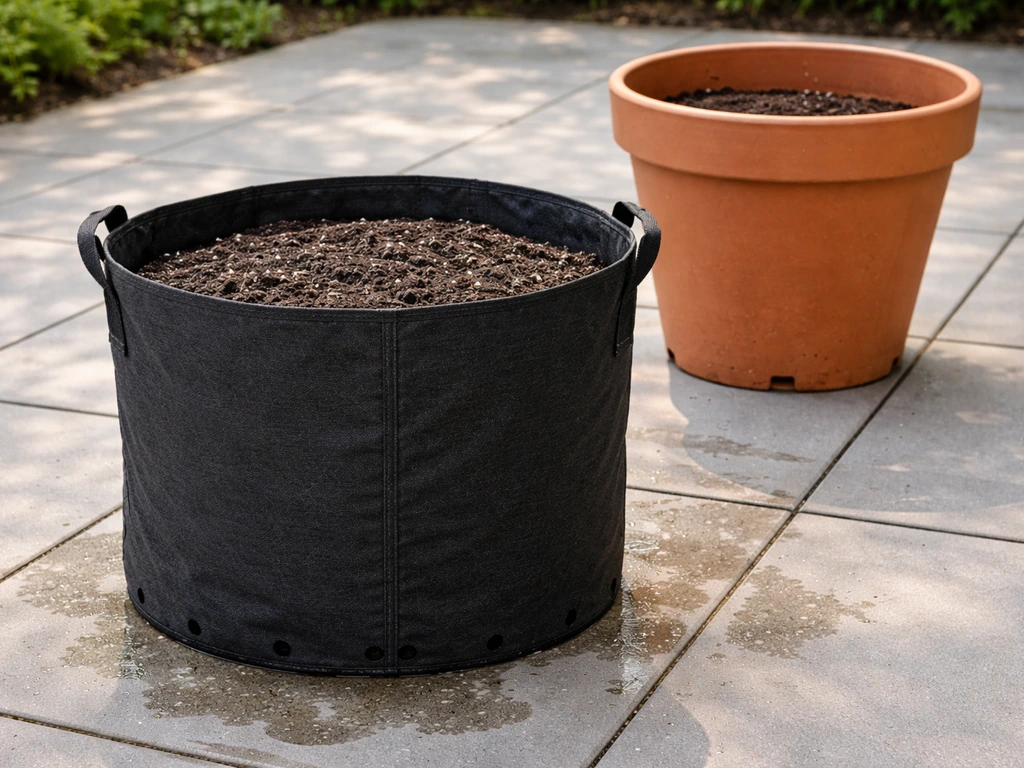
For bottle gourd, go with a container that holds at least 15 gallons of soil. A 20-gallon pot is even better. That translates roughly to a pot about 18–20 inches wide and 18 inches deep. The depth matters as much as the width because bottle gourd roots go down hard and fast. If you crowd the roots, the plant will struggle to set fruit no matter how well you feed it.
Fabric grow bags are a fantastic option for this plant specifically. They air-prune the roots (which means roots hit the fabric and stop growing in circles, making a healthier root system), and they're lightweight and easy to move before the vine gets established. A 20-gallon fabric bag costs very little and outperforms many heavy plastic pots for this purpose. If you go with plastic or clay, just make sure there are multiple drainage holes at the bottom, not just one.
Drainage and pot placement
Poor drainage is the single fastest way to kill a gourd vine in a container. Sitting water at the root zone causes root rot within days in warm weather. Before filling with soil, check that water flows freely through the drainage holes. If you are on a balcony and worried about runoff, put a tray underneath but empty it within an hour of watering. Never let the pot sit in standing water.
Building a trellis or support system
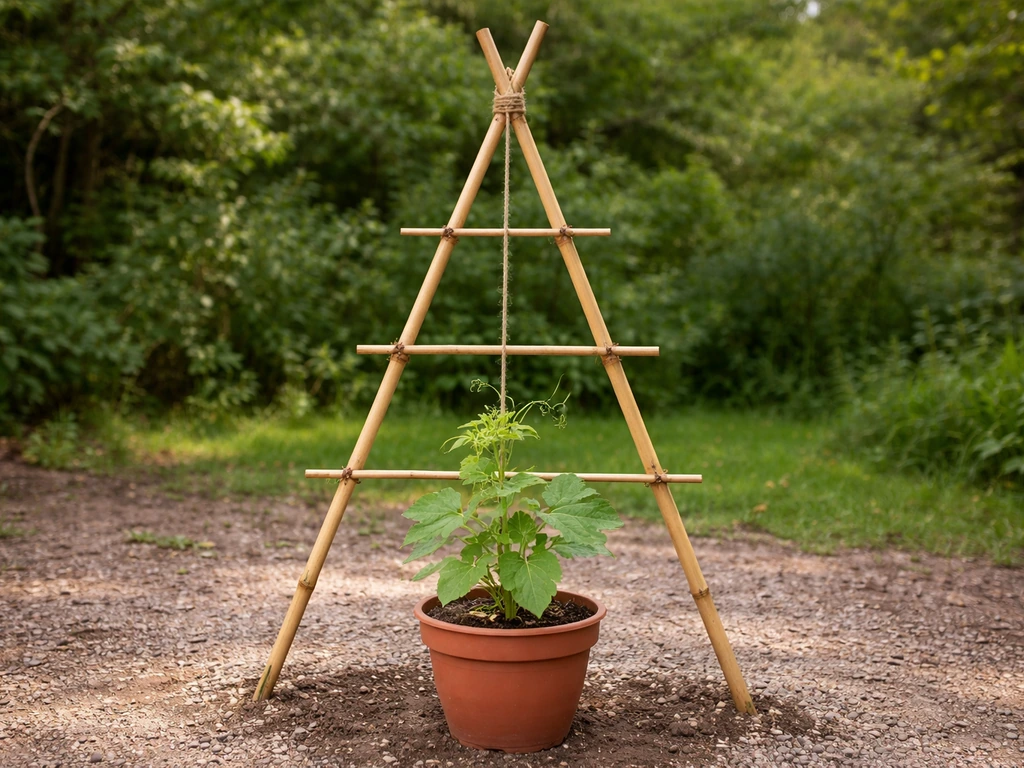
This is the part most beginners underestimate. Bottle gourd vines are heavy, especially once fruits start forming, and they need a strong structure. A basic bamboo teepee stuck into the pot will not hold a full-season vine with several gourds on it. Think about what is already around your space: a balcony railing, a pergola beam, a fence, or a purpose-built trellis panel leaned against a wall. You want something at least 5–6 feet tall that you can tie the vine to as it grows.
If you are building something from scratch, a simple A-frame trellis made from two bamboo or wooden panels tied at the top works well. Set the pot at the base and let the vine climb both sides. For heavier fruits like bottle gourd, consider making small slings from old pantyhose or mesh bags and tying them to the trellis to support individual gourds as they develop. This prevents the vine stem from snapping under the weight.
Soil mix and how to plant (seed vs. transplant)
The right soil mix
Bottle gourd does best in fertile, well-drained, slightly acidic soil (pH around 6.0–6.8). In a pot, you cannot just use garden soil, which compacts badly and drains poorly in containers. Make a mix that stays loose and drains well while still holding enough moisture and nutrients. A reliable starting mix is two parts good-quality potting mix, one part coarse sand or perlite, and one part compost. The potting mix gives structure, the perlite keeps drainage open, and the compost feeds the plant through the early weeks.
Fill the pot to within about 2 inches of the top to allow watering room. Before planting, water the mix thoroughly so it is evenly moist but not soggy. If you squeeze a handful and water streams out, it is too wet. If it crumbles and falls apart, it is too dry. You want it to hold its shape loosely when squeezed.
Starting from seed (recommended)
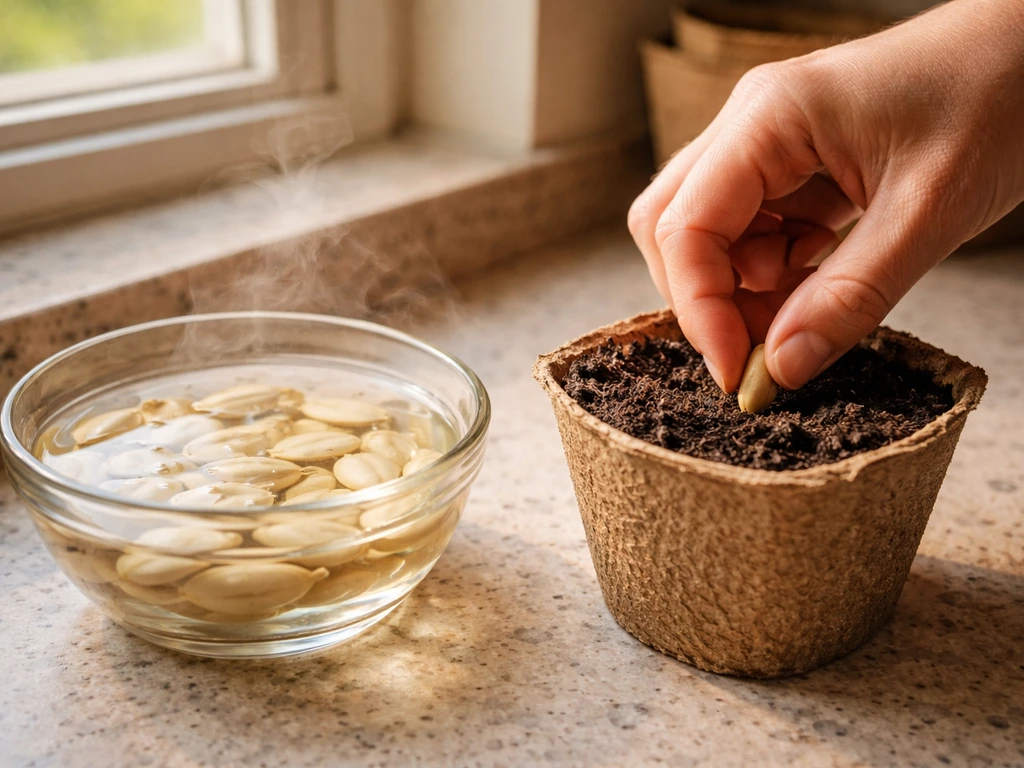
Bottle gourd is almost always started from seed, and it germinates quickly when conditions are right. Sow seeds when nighttime temperatures are reliably above 60°F (around 15°C), which in most temperate climates means late spring to early summer. In warm tropical climates you can sow almost year-round as long as it is not peak monsoon.
- Soak seeds in warm water for 12–24 hours before planting to soften the hard seed coat and speed up germination.
- Sow 2–3 seeds about 1 inch deep in the center of your prepared pot.
- Water gently and place the pot in a warm, sunny spot — soil temperature above 70°F (21°C) is ideal for germination.
- Seeds usually sprout within 7–14 days. Once seedlings have their first true leaves, snip off the weaker ones at soil level, leaving the single strongest plant.
- Do not transplant bottle gourd seedlings if you can avoid it — the roots dislike disturbance. Sowing directly into the final pot is always better.
Using transplants
If you are buying a transplant from a nursery or starting seeds indoors first, handle the roots carefully. Use biodegradable pots or newspaper pots so you can plant the whole thing without disturbing the roots. Transplant on a cloudy day or in the evening to reduce transplant shock, and water immediately after. Give transplants a week or two in a sheltered spot before moving them into full sun.
Sunlight, watering, and feeding your potted vine
Sunlight
Bottle gourd needs full sun, and that means a minimum of 6–8 hours of direct sunlight per day. It tolerates hot, humid summers very well, which makes it ideal for rooftops and south-facing balconies where many other vegetables would wilt. North Carolina State University Extension notes that bottle gourd performs best in sandy or loamy, well-drained soil in full sun and can tolerate hot, humid summers hot, humid summers very well. If your space gets only 4–5 hours of direct sun, the vine will grow but may produce very few flowers and even fewer fruits. Do not compromise on sun for this plant.
Watering
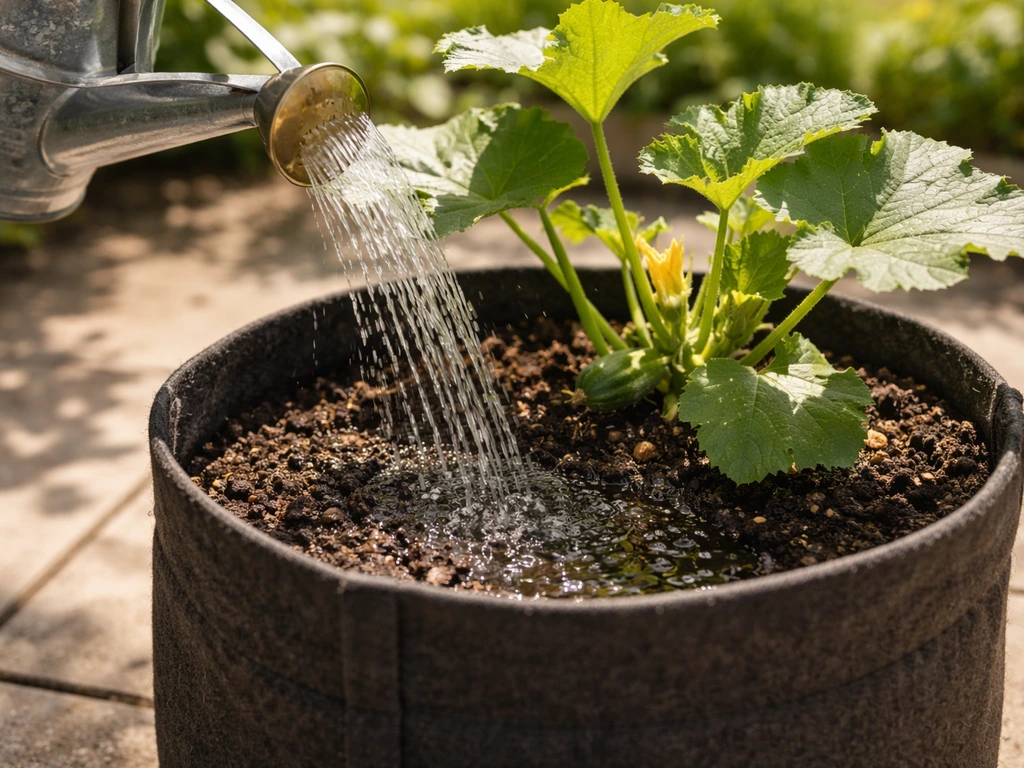
Container-grown gourds dry out faster than in-ground plants, especially in hot weather and in fabric pots. During active growth, you will likely need to water once a day in summer, sometimes twice if the pot is small or temperatures are very high. The easiest test: push your finger about an inch into the soil. If it is dry at that depth, water thoroughly until it drains from the bottom. If it is still moist, wait.
When watering, always water deeply. A light splash on top sends roots upward hunting for moisture, which makes them shallow and vulnerable. Water until you see it draining freely, then stop. Early morning is the best time to water because the foliage dries out through the day, which reduces fungal disease risk.
Fertilizing schedule
Bottle gourd is a heavy feeder and will run out of nutrients in a pot faster than you might expect. The compost in your starting mix will carry the plant for the first four to six weeks, but after that you need to feed regularly. A simple schedule that works well in containers:
- Weeks 1–4 after germination: No extra fertilizer needed if compost is in the mix. Focus on establishing the roots.
- Weeks 4–8 (vegetative growth): Apply a balanced liquid fertilizer (such as a 10-10-10 or similar NPK ratio) once a week. This supports leaf and stem growth.
- From first flowering onward: Switch to a fertilizer that is lower in nitrogen and higher in phosphorus and potassium (like a 5-10-10 or a tomato fertilizer). High nitrogen at this stage pushes leafy growth at the expense of flowers and fruit.
- Every 3–4 weeks: Top-dress the pot with a handful of compost or aged manure to refresh soil organic matter.
Do not over-fertilize. If the leaves are very dark green and lush but the plant refuses to flower, you are probably giving too much nitrogen. Cut back on fertilizer and let the plant feel a little stress, which often triggers flowering.
Training the vine and keeping growth under control
Bottle gourd will grow fast once it gets going, and in a container you need to actively manage where it goes. Without guidance, the vine will sprawl in every direction, tip over the pot, and generally create chaos. Training is not complicated but it needs to happen every few days during peak growth.
Training basics
As soon as the main vine has a few sets of leaves, gently guide it toward your trellis and secure it loosely with soft plant ties or strips of cloth. Do not use wire or anything that can cut into the stem. Check every two to three days and redirect any tendrils that are grabbing onto unintended surfaces like window frames, gutters, or neighboring plants.
Pinching and pruning
This step makes a big difference for fruit production in containers and most beginners skip it. When the main vine has grown to about 8–10 feet (or reached the top of your trellis), pinch off the growing tip. This redirects the plant's energy into producing lateral (side) branches, and it is on these lateral branches that most of the female flowers, and therefore fruits, appear.
Also remove any branches growing downward toward the pot or sideways away from the trellis. Keep the structure tidy. If the plant becomes very dense, remove some inner leaves to improve airflow, which is one of the simplest things you can do to prevent fungal disease. In containers especially, good airflow around the foliage is worth a lot.
Pollination, fruit set, and knowing when to harvest
How pollination works with bottle gourd
Bottle gourd produces separate male and female flowers on the same vine. Male flowers appear first (usually in clusters) and have a simple straight stem. Female flowers come later and have a tiny proto-gourd (an ovary) at the base of the flower. If you look closely, it looks like a miniature bottle sitting behind the petals. That little bump is what will become your gourd if the flower is successfully pollinated.
Pollination happens naturally when bees and other insects transfer pollen from male to female flowers. In a rooftop garden or high-rise balcony where insect traffic is low, you may need to hand-pollinate. This is easier than it sounds: pick a freshly opened male flower in the morning, peel back its petals, and brush its pollen-covered center directly against the center of an open female flower. Do this in the morning because both flowers are usually closed or done by afternoon.
If you see female flowers forming and then dropping off after a day or two without growing, that is almost always a pollination failure. More hand-pollinating, more often, usually fixes it.
Harvesting bottle gourd
Bottle gourd matures in roughly 90–95 days from sowing. For eating (as a vegetable), harvest when fruits are young and tender, usually when they are around 6–12 inches long, depending on variety, and the skin is still slightly soft and can be scratched easily with a fingernail. Young bottle gourd cooks quickly and has a mild flavor. If you leave it too long on the vine, the skin hardens and the flesh becomes fibrous and bitter.
For ornamental or decorative gourds (like birdhouse-style bottle gourds), leave the fruit on the vine until the stem connecting it has turned brown and dried out, then cure the gourd in a dry, ventilated space for several weeks. Cutting regularly encourages the plant to keep flowering and setting more fruit.
Dealing with common problems in pot-grown gourds
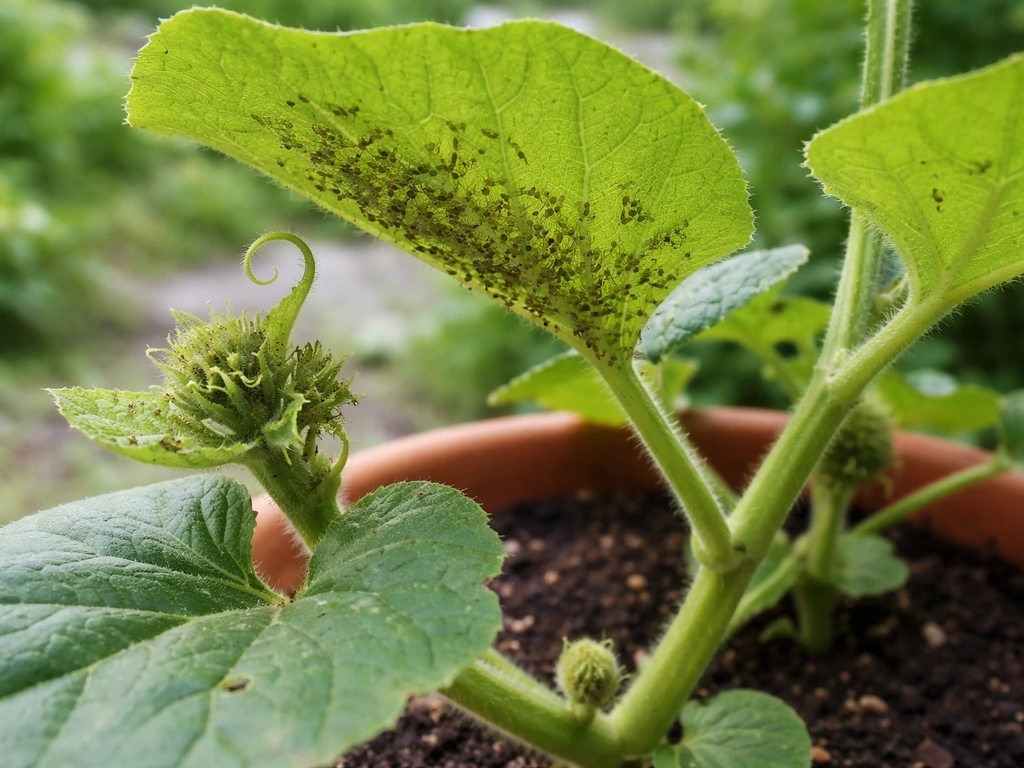
Pests
The most common pest on container-grown gourds is the aphid, which clusters on young shoots and the undersides of leaves. A hard blast of water from a hose knocks most of them off. For persistent infestations, spray the affected areas with a diluted neem oil solution (about 2 teaspoons neem oil plus a few drops of dish soap in 1 quart of water) in the early morning or evening. Avoid spraying in direct sun as it can burn the leaves.
Fruit flies and cucumber beetles also target gourds. Fruit fly damage shows up as sunken, discolored spots on developing fruits. Placing yellow sticky traps near the pot catches them early. Cucumber beetles chew irregular holes in leaves and can spread bacterial diseases; picking them off by hand works for small numbers and neem spray handles larger populations.
Diseases
Powdery mildew is the most common disease on container gourds, especially later in the season when humidity is high and airflow is restricted. It looks like white or gray dusty patches on the upper surface of leaves. Removing badly affected leaves immediately and improving airflow around the plant slows the spread. A spray of diluted baking soda (1 teaspoon per quart of water) can help as a preventative.
Root rot shows up as yellowing lower leaves, wilting even when the soil is wet, and a bad smell from the pot. It is almost always caused by overwatering or poor drainage. If caught early, remove the plant from the pot, trim away blackened roots, let them air-dry briefly, and repot in fresh well-draining mix. If the rot is extensive, the plant is unlikely to recover.
Nutrient problems
| Symptom | Likely Cause | Fix |
|---|---|---|
| Yellow leaves starting from the bottom | Nitrogen deficiency | Apply balanced liquid fertilizer weekly |
| Purple-tinted leaves and stems | Phosphorus deficiency | Use a phosphorus-rich fertilizer; check soil pH |
| Leaf edges turning brown and crispy | Potassium deficiency or underwatering | Water more consistently; add potassium fertilizer |
| Lush growth, no flowers | Too much nitrogen | Switch to a low-N, high-P/K fertilizer; reduce feeding |
| Pale, washed-out new leaves | Iron or magnesium deficiency (often pH issue) | Test soil pH; apply foliar spray of diluted Epsom salt for magnesium |
Your quick-start plan: what to do right now
If you want to get a bottle gourd started today (and it is late May, so the timing is excellent for most of the Northern Hemisphere), here is the straight path from pot to harvest.
- Get a 15–20 gallon pot or fabric grow bag with good drainage holes.
- Mix two parts quality potting mix, one part perlite, and one part compost. Fill to 2 inches from the top.
- Soak 2–3 bottle gourd seeds in warm water for 12–24 hours, then sow them 1 inch deep in the pot.
- Place the pot in full sun (6–8 hours minimum) and water gently.
- Set up your trellis or identify the wall or railing the vine will climb before it sprouts.
- After sprouts appear (7–14 days), thin to the strongest seedling.
- Begin weekly liquid fertilizer at week 4. Switch to a low-nitrogen, high-potassium formula once flowering starts.
- Train the vine to the trellis every few days. Pinch the main vine tip at 8–10 feet to encourage lateral branches.
- Hand-pollinate female flowers every morning if insect visitors are scarce.
- Harvest young fruits for eating at 6–12 inches, or leave to mature fully for ornamental use. Expect your first harvest around 90–95 days from sowing.
Once you are comfortable with bottle gourd, it is natural to want to try the other members of the gourd family in containers. If you specifically want to grow bitter gourd in pots, the same container, drainage, and trellis basics apply, but you will want to pay extra attention to watering consistency and fruit size timing.
Bitter gourd, ridge gourd, sponge gourd, snake gourd, and ash gourd all follow a very similar approach with a few tweaks for their specific fruiting habits and vine sizes. Ash gourd is one of the container-friendly gourds mentioned here, so use the same pot, drainage, and trellis setup and adjust for its longer, heavier fruit ash gourd in containers.
Snake gourd is one of the easiest gourds to scale up in pots once you match the container size, trellis, and watering routine. The skills you build growing one carry straight across to the others, and they all reward the same attentive, hands-on care that makes container gardening so satisfying.
FAQ
What size pot do I actually need for how to grow gourd in pots if I only want one vine?
Plan on at least 15 gallons per vine (a bit larger is better for beginners). Avoid putting two plants in one large pot, because even if they fit above ground, the root competition usually reduces flowering and fruit set.
Can I grow gourd in pots on a porch that only gets morning sun (not full-day sun)?
You can grow the vine, but fruit production is often poor with less than 6 to 8 hours of direct light. If your site is borderline, prioritize reflective surfaces nearby (light-colored walls, railings) and rotate the pot so the trellis side gets the most sun.
How often should I water bottle gourd in a pot during heat waves?
Use the finger test at about 1 inch deep, then water deeply until it drains from the bottom. In hot spells, fabric bags and smaller pots can require once daily, sometimes twice, but never water on a fixed schedule if the soil is still moist.
Why does my gourd vine look healthy but won't flower in containers?
The most common cause is too much nitrogen. If leaves are very dark and lush with no blooms, cut back fertilizer and avoid high-nitrogen feed. Also check that the plant is getting full sun and that the trellis is stable, because stress and airflow can influence bloom timing.
Do I need to fertilize bottle gourd in pots if my soil mix already has compost?
Yes, eventually. Compost supports the early weeks, but once growth accelerates, nutrients run short in a container. Switch to regular container feeding after the first 4 to 6 weeks, and keep feeding consistent to support later fruiting.
What’s the best way to support how to grow gourd in pots when the fruits get heavy?
Use more than a single stake. Tie the main vine to a sturdy trellis at least 5 to 6 feet tall, then add individual slings (mesh or old pantyhose) for each developing gourd so the stem does not snap as weight increases.
Should I prune bottle gourd grown in a pot, and where do I cut?
Yes, once the vine reaches about 8 to 10 feet or the top of the trellis, pinch off the growing tip to push energy into lateral branches where female flowers form. Also remove downward-growing or untethered side growth that spreads away from the trellis, and thin dense inner foliage for airflow.
How can I tell male and female flowers apart for hand pollination?
Male flowers have no swollen ovary behind the petals, they sit on a simple straight stem. Female flowers come later and show a tiny “proto-gourd” bump at the base of the flower, that bump is what develops if pollination works.
My female flowers form then drop, what should I do first?
Treat it as a pollination issue. Hand-pollinate in the morning using a freshly opened male flower, and repeat daily for a few days. In low-insect situations, skipping the morning window often leads to flower drop.
When is the right time to harvest bottle gourd from a pot?
Harvest for eating when fruits are young, typically around 6 to 12 inches long (depending on variety) and the skin is still tender. If you let them mature too long on the vine, the flesh can turn fibrous and bitter.
How do I prevent root rot when learning how to grow gourd in pots?
Make drainage your priority. Ensure multiple drainage holes, confirm water flows freely before planting, and never let the pot sit in a full tray. If lower leaves yellow while soil feels wet, address drainage and reduce watering immediately.
What should I do if powdery mildew appears on my container-grown gourd?
Remove badly affected leaves early, improve airflow by thinning and training the vine neatly, and avoid wetting foliage. If you use a baking soda spray, apply it as a preventative when growth is active, not after the plant is already heavily damaged.
How do I deal with aphids on bottle gourd vines without harming the plant?
Start with a hard water rinse to knock them off, then repeat if needed. For persistent clusters, use a diluted neem solution in early morning or evening, and avoid spraying in direct sun to reduce the risk of leaf burn.
Can I start gourd seeds indoors and transplant into a pot?
Yes, but minimize root disturbance. Use biodegradable or paper pots so you can transplant without breaking the root ball, transplant on an evening or cloudy day, water immediately, then keep plants sheltered for about a week or two before full sun.