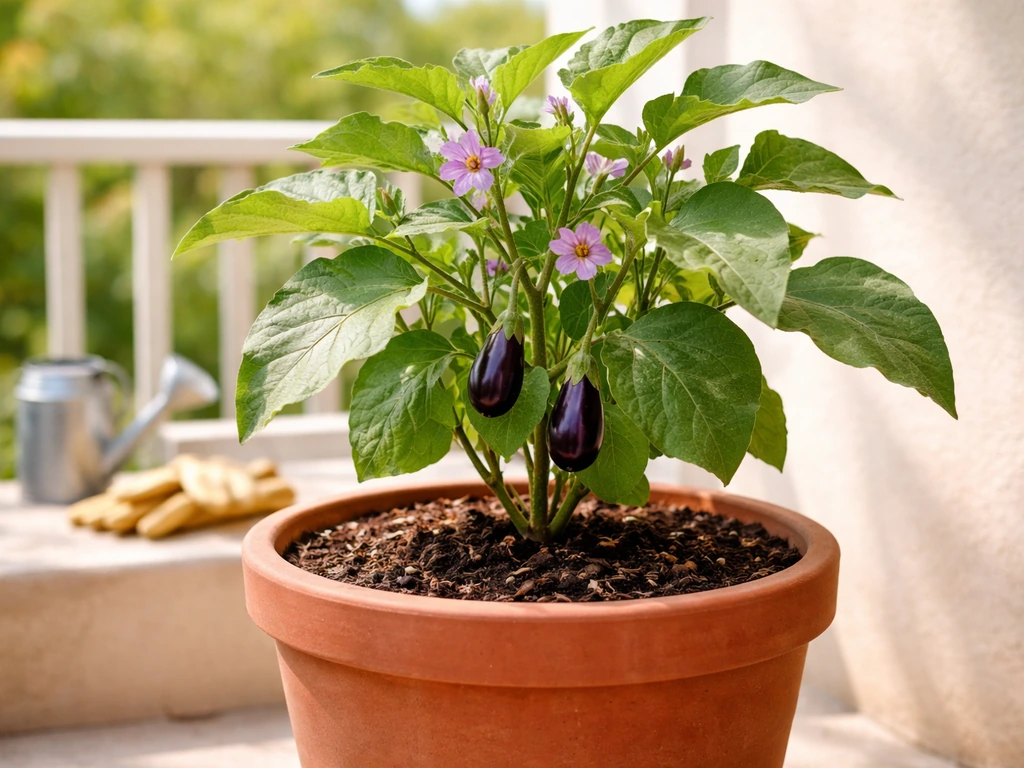
Yes, you can absolutely grow brinjal in a pot and actually get fruits from it. I've done it on a small balcony with nothing more than a 12-inch pot, decent potting mix, and a sunny spot. The key is making the right calls early: the right variety, the right pot size, and keeping the plant consistently fed and watered. If you’re specifically looking for how to grow mogra plant in pot, you can use the same container basics like a well-draining mix and plenty of sun. Get those three things right, and brinjal is honestly one of the more rewarding vegetables you can grow in a container.
How to Grow Brinjal in a Pot: Beginner Step-by-Step
Marcus Whitley
18 Apr 2026
Choosing the right brinjal variety for pots
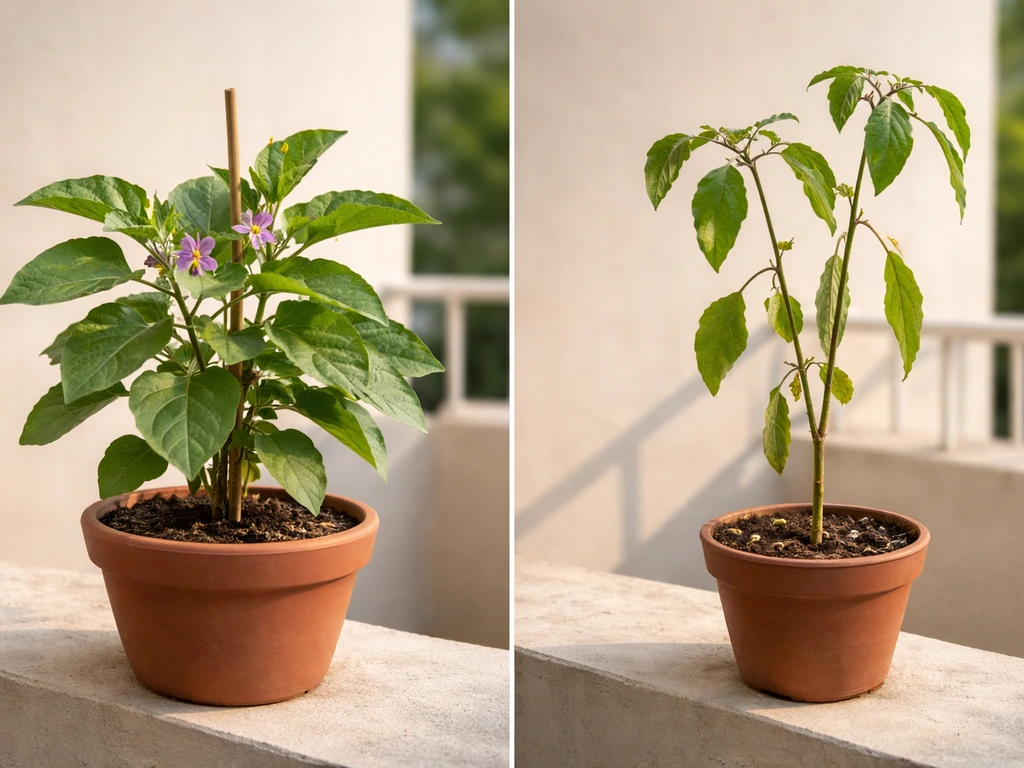
Not all brinjal varieties are built for containers. The standard large-fruited types can grow over 4 feet tall and want a lot of root space, which makes them frustrating in pots. You want compact, early-maturing varieties that are bred to produce lots of smaller fruits rather than a handful of giant ones. Here are three that genuinely work well in containers:
- Patio Baby: This is probably the best pick for a small balcony or terrace. It's a dwarf variety that only reaches about 16–20 inches tall, so it won't topple over or crowd out a small space. It produces small, glossy deep-purple fruits consistently and, according to its variety description, doesn't even need staking. If you're a first-timer, start here.
- Hansel (F1 Hybrid): An All-America Selections winner that grows to about 24–36 inches. It produces clusters of glossy black-purple fruits and is ready to harvest around 55 days from transplanting. It's more productive per plant than Patio Baby but will need a bigger pot and some staking as it grows.
- Little Finger: A compact, prolific variety that's ready at about 65 days from transplant. It produces many small finger-shaped fruits rather than a few large ones, which means a longer, more spread-out harvest window. Great for anyone who wants to pick regularly rather than all at once.
If you're growing in a truly tight space, like a windowsill or a narrow balcony railing setup, Patio Baby is the clear winner. For a rooftop or terrace with more room, Hansel gives you more fruit per plant. Avoid labeling yourself as 'advanced' before trying Hansel, though. It's still straightforward, just needs a bigger pot.
Picking a suitable pot size, type, and drainage
Pot size is the number-one thing people get wrong with container brinjal. Go too small and the plant becomes root-bound, stops fruiting, and dries out within hours on a warm day. The minimum I'd recommend for any brinjal variety is a 5-gallon container, which is roughly an 12-inch pot. For Hansel or Little Finger, which get bigger, aim for an 18-inch pot or larger. Extension gardening guidelines specifically recommend a 5-gallon minimum for one eggplant plant, and they're not being overly cautious about that.
One plant per pot is the rule. Don't try to squeeze two plants into a large pot thinking you'll get double the harvest. They'll compete for water and nutrients and both will suffer. One plant, one pot.
For pot material, you have a few options. Plastic pots are lightweight (great for balconies with weight limits) and retain moisture longer, which is helpful because brinjal is thirsty. Terracotta looks beautiful but dries out fast in warm weather, which means you'll be watering twice a day in summer. Fabric grow bags are an excellent choice for containers: they're light, encourage healthy root development by air-pruning the roots, and are easy to store when not in use. Whatever you choose, the single non-negotiable is drainage holes at the bottom. Brinjal roots sitting in waterlogged soil will rot quickly. If your pot doesn't have enough holes, drill a couple more before you plant anything.
Soil mix and potting setup for brinjal in containers
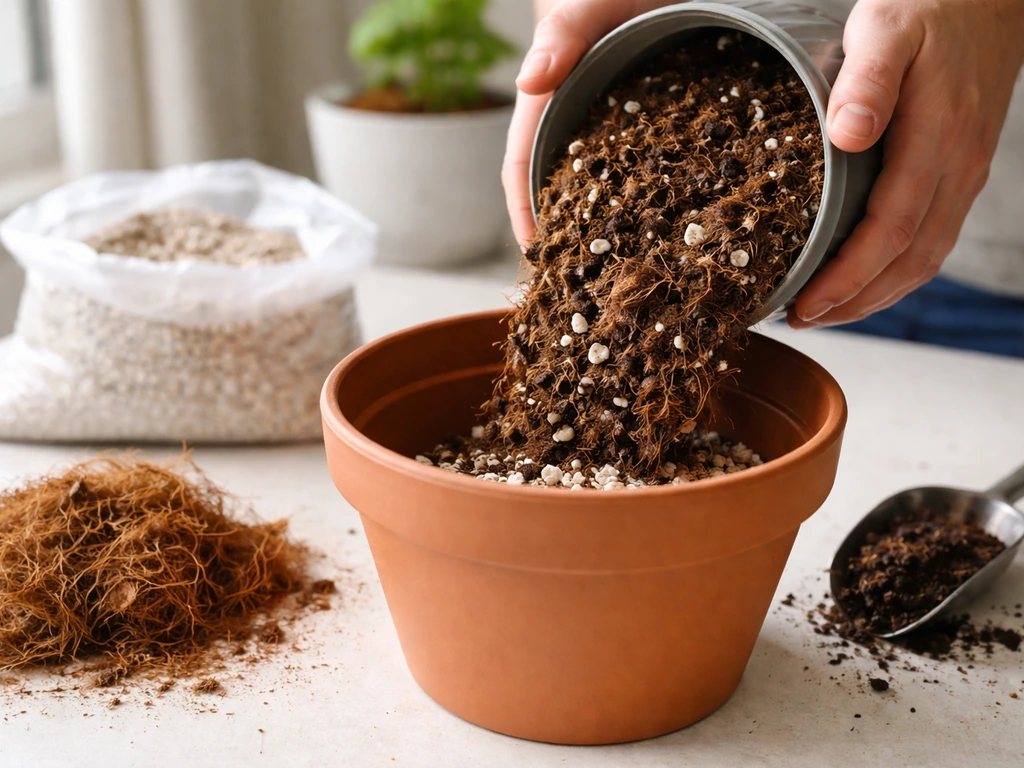
Never use garden soil in a container. It compacts, drains poorly, and often brings pests and diseases with it. You want a proper potting mix that stays loose, drains well, but also holds enough moisture and nutrients to support a fruiting plant.
A reliable DIY mix I use combines coconut coir (coco coir) as the base, perlite for drainage and aeration, and compost for nutrition. A roughly 40:30:30 ratio of coir, perlite, and compost works well for brinjal. Coir is a great peat alternative that holds moisture without becoming waterlogged. Perlite (those little white beads in commercial mixes) adds air pockets so roots can breathe and excess water drains easily. Vermiculite can replace part of the perlite if you want slightly better moisture retention and nutrient-holding capacity, which is useful if you're in a hot, dry climate where pots dry out aggressively.
If you'd rather buy a premade mix, choose a quality vegetable or container potting mix and blend in about 20–30% extra perlite. Most commercial mixes are too dense on their own for a long-season fruiting plant like brinjal. Before filling your pot, add a thin layer of gravel or broken terracotta pieces at the bottom to keep the drainage holes from getting blocked. Fill the pot to about 2 inches below the rim to leave room for watering without overflow.
Planting brinjal: seeds vs seedlings and spacing in pots
Starting from seed
Brinjal is slow from seed. Expect germination to take 7–14 days, and the seedlings won't be ready to move into their final container for another 6–8 weeks after that. If you're starting from seed, the soil temperature during germination really matters: the blank" rel="noopener noreferrer">optimal range is about 75–90°F (24–32°C). At room temperature in a cool home, germination can be painfully slow or fail altogether. A heat mat under the seed tray makes a big difference. Sow seeds at a depth of about 1/4 to 1/2 inch (6–12 mm) in a small cell tray or seed-starting mix, keep them warm and moist, and wait. If you want a similar container-friendly seed-starting approach, you can learn how to grow ajwain in pots from seeds.
Once seedlings develop their first set of true leaves (the second set of leaves that appear, which actually look like brinjal leaves), they're ready to transplant into their final pot. Handle the roots gently when transplanting. Brinjal seedlings that get cold-shocked or root-damaged at this stage can stall for weeks.
Buying seedlings from a nursery
Honestly, buying seedlings from a nursery is the smarter move for most beginners. It skips the fiddly germination stage and puts you weeks ahead in the growing season. Look for sturdy, dark-green seedlings with no yellowing, no visible pests, and a stem that's not leggy (stretched and thin). If you can choose, pick shorter, stockier plants over tall thin ones. They transplant better.
When planting into the final pot, dig a hole slightly deeper than the seedling's root ball, place the plant in so the soil level sits at the same height as it was in the nursery pot (unlike tomatoes, brinjal doesn't benefit from being buried deeper), firm the soil around it, and water thoroughly. One plant per pot, centered, with good airflow all around.
Sunlight, watering, and feeding schedule
Sunlight
Brinjal needs full sun: at least 6–8 hours of direct sunlight per day. This is non-negotiable for fruiting. A south- or west-facing balcony is ideal. If your spot gets only 4–5 hours of sun, you'll get a healthy-looking plant but very few fruits, if any. One of the advantages of container growing is that you can move pots to chase the sun. If you have a spot that gets morning shade but full afternoon sun, that often works well, especially in very hot climates where afternoon shade can prevent heat stress.
Watering
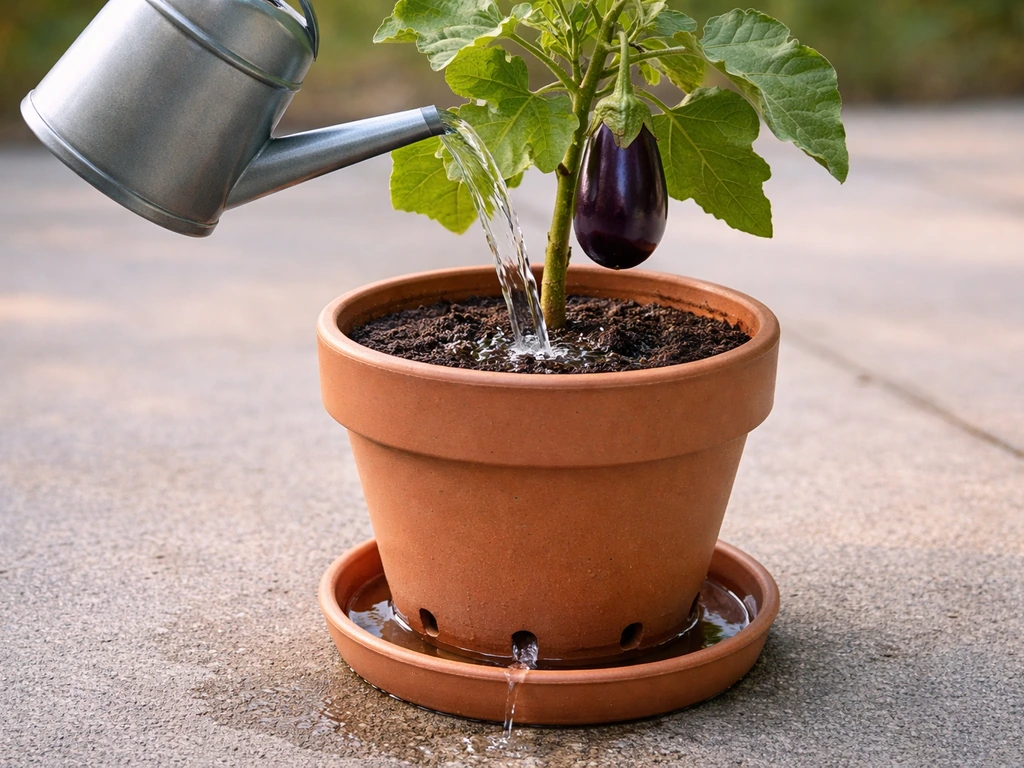
Container plants dry out much faster than plants in the ground, and brinjal is particularly sensitive to uneven watering. The rule I follow: check the soil every single day during warm weather, and water whenever the top 2 inches feel dry to the touch. Don't wait for the plant to wilt before watering. By the time you see wilting, the plant has already been stressed, and water stress during flowering is a major cause of flower drop and poor fruit set.
When you water, water deeply until it drains from the bottom holes. Shallow watering encourages shallow roots and makes the plant more vulnerable to drying out between waterings. In peak summer, a container brinjal in a sunny spot may need watering once or even twice a day. A layer of mulch (coco coir, straw, or even dry leaves) on the surface of the pot helps slow moisture loss significantly.
Feeding
Most commercial potting mixes include a fertilizer charge that lasts about two weeks. After that, your brinjal is entirely dependent on you for nutrients. A feeding schedule I've found reliable: fertilize every 2–3 weeks from planting until the first fruits start to form, then ease back to every 3–4 weeks once fruit set is underway. Use a balanced fertilizer to start (something like a 10-10-10 or a general vegetable feed), then switch to a lower-nitrogen, higher-potassium feed once flowers appear. Too much nitrogen at the flowering stage leads to lush leafy growth but poor fruiting, which is a very common frustration with container brinjal.
Staking, pruning, and encouraging fruit set in a pot
Staking
If you're growing a compact variety like Patio Baby, you won't need to stake at all. For taller varieties like Hansel (which can reach 36 inches), staking becomes necessary once the plant is about 12 inches tall and starts to look top-heavy. Push a bamboo cane into the pot close to the stem and tie the main stem loosely with soft twine or a fabric tie every 6–8 inches as it grows. Don't tie it tight enough to cut into the stem. The goal is support, not constriction.
Pruning
Light pruning keeps a container brinjal productive and manageable. Once the plant reaches about 12 inches tall, pinch out the growing tip to encourage branching. More branches mean more flowers, which means more fruit. Remove any branches that are crossing, rubbing together, or growing toward the center of the plant. Good airflow through the middle of the plant reduces disease risk. Also, remove any leaves that are touching the soil, since these are easy entry points for fungal diseases.
Helping fruit set along
Brinjal flowers are self-fertile, meaning they can pollinate themselves without a bee or another plant nearby. However, in a sheltered indoor or balcony setting with little wind or insect activity, fruit set can be poor. A simple fix: give the plant a gentle shake every few days when flowers are open. This mimics the vibration that bees produce when they visit flowers (called buzz pollination) and helps release pollen. You can also use an old electric toothbrush held against the back of a flower cluster for a second or two. It sounds fiddly but it genuinely works. Temperature also matters: brinjal sets fruit best when daytime temperatures are between 70–85°F (21–29°C). Prolonged heat above 95°F or cool nights below 60°F can cause flowers to drop before they set.
Common pests and diseases and how to handle them at home
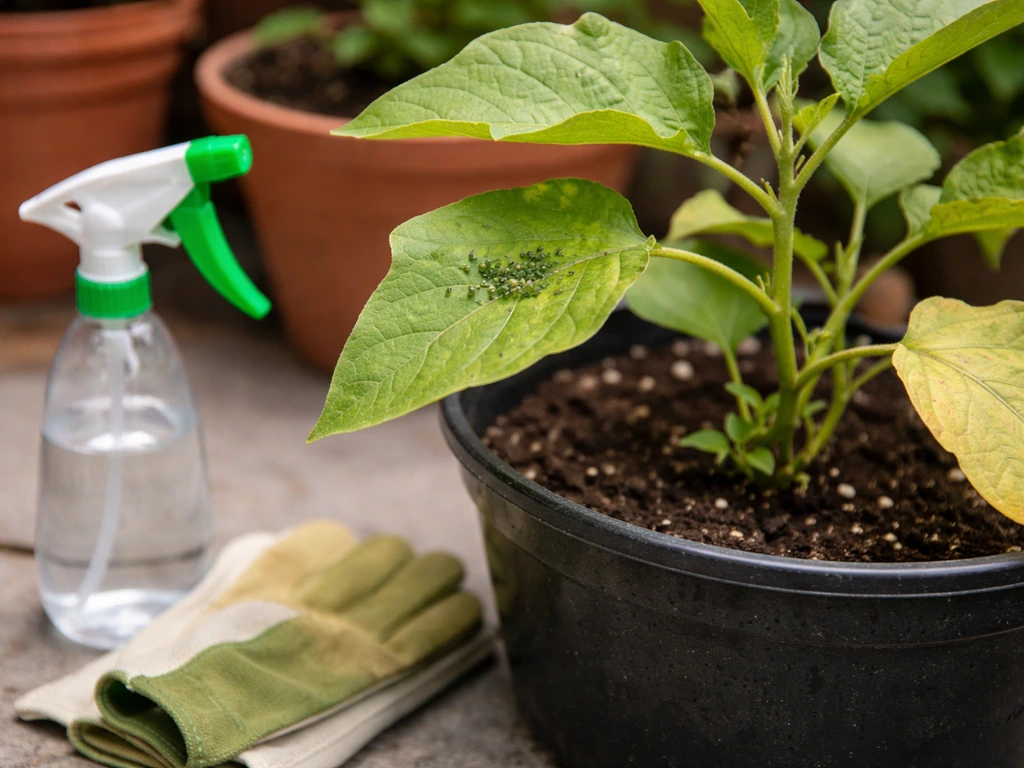
Container growing does reduce pest pressure compared to open garden beds, but it doesn't eliminate it. Here are the problems most likely to hit your pot-grown brinjal and what to do about them.
| Problem | Signs to look for | What to do |
|---|---|---|
| Aphids (green peach aphid) | Clusters of tiny soft insects under leaves; sticky residue on leaves | Blast off with water, then apply insecticidal soap spray directly on affected areas |
| Whiteflies | Tiny white insects that fly up when leaves are disturbed; yellowing leaves | Use yellow sticky traps; spray insecticidal soap on undersides of leaves |
| Spider mites | Fine webbing on leaves; speckled, dusty-looking foliage | Increase humidity around plant; use insecticidal soap or neem oil spray |
| Damping off (seedlings) | Seedlings collapse at soil level; stem looks pinched or rotted | Improve drainage; avoid overwatering; use fresh, sterile seed-starting mix |
| Blossom-end rot | Dark, sunken patch on the blossom end of developing fruits | Maintain consistent watering; avoid letting the pot dry out completely between waterings |
For most insect pests, insecticidal soap spray is your best first tool. It has to make direct contact with the pest to work, so spray thoroughly on leaf undersides where insects hide. Neem oil (which contains azadirachtin) is a good broader-spectrum option that also has some antifungal properties. Both are safe to use on food plants when applied as directed. With blossom-end rot, no spray will fix the damage already done: focus on preventing the underlying cause, which is irregular watering combined with calcium availability issues. Keep the pot consistently moist and the problem usually resolves itself as conditions stabilize.
Harvesting your brinjal and what to do after
Depending on your variety and growing conditions, you'll be harvesting around 55–80 days after transplanting. The reliable signs that a brinjal is ready: the skin is glossy and bright (dull, matte skin means the fruit is overripe), the fruit feels firm when gently squeezed, and it has reached a reasonable size for that variety. Don't wait for it to get as big as a supermarket brinjal if you're growing a mini variety. Overripe brinjal develops a spongy texture and bitter seeds inside.
Always cut the fruit off with scissors or a sharp knife rather than twisting it off. The stem is tough and twisting can damage the branch or uproot a poorly staked plant. Leave about an inch of stem attached to the fruit. Harvesting regularly, as soon as fruits are ready, is also the best thing you can do to keep the plant producing. A plant holding onto mature fruits slows down new flower and fruit production. Pick often and you'll keep getting more.
Once harvested, use brinjal within a few days if possible. It's sensitive to cold and should be stored at room temperature rather than in the fridge. If temperatures drop below 50°F (10°C), the flesh can become discolored and develop a pitted texture, so don't leave freshly picked fruits sitting on a cold outdoor table overnight.
Keeping the plant going after the first harvest
After your first flush of fruits, give the plant a light feed and check that the soil structure in the pot hasn't compacted. If the surface has become crusty and water runs off the edges instead of soaking in, gently loosen the top inch with a fork and top-dress with a little compost. A healthy brinjal plant in a pot can continue producing fruits for several months in a warm climate. In cooler climates, it'll wind down as temperatures drop. When the plant finally stops producing or starts looking exhausted, pull it out, refresh the potting mix, and start fresh next season.
If you find container vegetable growing enjoyable, brinjal pairs well with other pot-friendly crops. Aubergine (the name used for the same plant in the UK and parts of Europe) follows identical growing steps. Courgettes in containers are another productive option if you have a larger pot and more sun. And if you're interested in compact edible plants beyond vegetables, moringa and brahmi can also thrive in pots with a bit of attention. Moringa and brahmi can both be grown in containers, but brahmi prefers consistently moist soil and bright indirect light. If you want a similar container-friendly guide, learn how to grow moringa in pots for leafy growth and steady harvests. The same core principles apply across all of them: right pot size, good drainage, consistent water, and enough light.
FAQ
Can I grow brinjal in a pot smaller than 5 gallons if I’m only trying for a few fruits?
It usually backfires. If you go under the 5-gallon minimum, the plant becomes root-bound sooner, dries out faster, and flower drop increases. If space is tight, choose a truly compact variety and use the largest pot your balcony can support, even if you only expect a modest harvest.
What’s the best way to tell when to water brinjal in a container?
Don’t rely on wilting. Check the soil by finger depth daily in warm weather, water when the top 2 inches feel dry, and water slowly until excess drains from the bottom. After heavy watering, wait and recheck the next day, because potting mixes can take a while to re-wet.
Should I move the brinjal pot closer to the wall or keep it away for airflow?
Keep it with airflow all around, especially in humid weather. Crowding against a wall reduces ventilation in the middle of the plant and increases the chance of fungal problems. If you must place it near a barrier, rotate the pot every few days so one side does not stay too shaded and damp.
How much fertilizer is too much for container brinjal, and how do I avoid leaf growth without fruits?
Too much nitrogen is the common cause of lots of leaves and few flowers. Use a balanced feed early, then switch to a lower-nitrogen, higher-potassium option once you see flowers. If your plant looks lush and starts flowering poorly, reduce feeding frequency and ensure the soil dries slightly between waterings (not wilting, just less saturated).
Do I need to prune my potted brinjal, and when should I start?
Yes, light pruning helps container plants stay productive and manageable. Start once the plant is around 12 inches tall by pinching the growing tip to encourage branching, then remove crossing branches and any leaves touching the soil. Avoid heavy pruning after flowering has begun, because it can reduce blossoms.
Why are my brinjal flowers dropping but the plant looks healthy?
The top causes are uneven watering, very hot days, and cool nights. Make sure you water consistently during flowering, try to prevent the pot from overheating (morning sun with afternoon shade can help in extreme heat), and note temperature conditions. Also, lack of wind can matter in sheltered spots, so do a gentle shake during bloom as you would outdoors.
What pollination help should I do if my balcony is indoors or very sheltered?
Brinjal can self-pollinate, but sheltered conditions reduce effective pollen transfer. Shake the plant gently every few days while flowers are open, or briefly use a soft electric vibration near the flower cluster. Stop and reassess if you still get poor fruit set, because the real issue may be moisture stress or temperatures.
How do I prevent blossom-end rot in a pot?
Don’t chase it with sprays after it appears. Focus on steady soil moisture and consistent calcium availability by avoiding big water swings. Use a quality potting mix, water deeply, and keep feeding balanced rather than high-nitrogen, since overly lush growth with irregular moisture can worsen the problem.
Should I harvest when the fruit is small, or wait until it matches supermarket size?
Harvest when the fruit is glossy and firm for your variety, not when it reaches the biggest size you see in stores. Mini or compact types are meant to be picked earlier, and waiting too long can cause bitterness, spongier texture, and more seeds.
Can I store harvested brinjal in the fridge?
Best is room-temperature storage for a short window. Cold storage below about 50°F (10°C) can cause discoloration and a pitted texture. If you must refrigerate, minimize time and move it to room temperature before cooking for best texture.
My brinjal isn’t fruiting, but it’s growing tall. What should I check first?
Start with pot size and sunlight. Root restriction and insufficient direct sun are the fastest ways to get tall leafy growth without fruit. Next check watering consistency during flowering, then feeding balance (too much nitrogen), and finally temperature extremes that trigger flower drop.
Is it better to start brinjal from seed or buy seedlings for container growing?
For beginners, seedlings are usually the smoother route because seed germination can stall without enough warmth. If you do start from seed, use bottom heat (a heat mat) and keep germination warm, then transplant gently to avoid root damage that can delay growth for weeks.
How do I keep the pot from waterlogging even if I water frequently?
Water deeply, but only in a container with reliable drainage holes, and use a potting mix designed for containers (not garden soil). If you notice water running off the edges or the surface crusting, loosen the top inch and top-dress with compost to restore absorption and prevent pooling.
What should I do after the first round of fruits, and can the same plant produce for months?
After the first flush, give a light feed, check for potting mix compaction, and refresh the top layer if water penetration has worsened. In warm climates, the same plant can keep producing for months, but in cooler weather it naturally slows, so plan to refresh the potting mix and start fresh when temperatures drop.