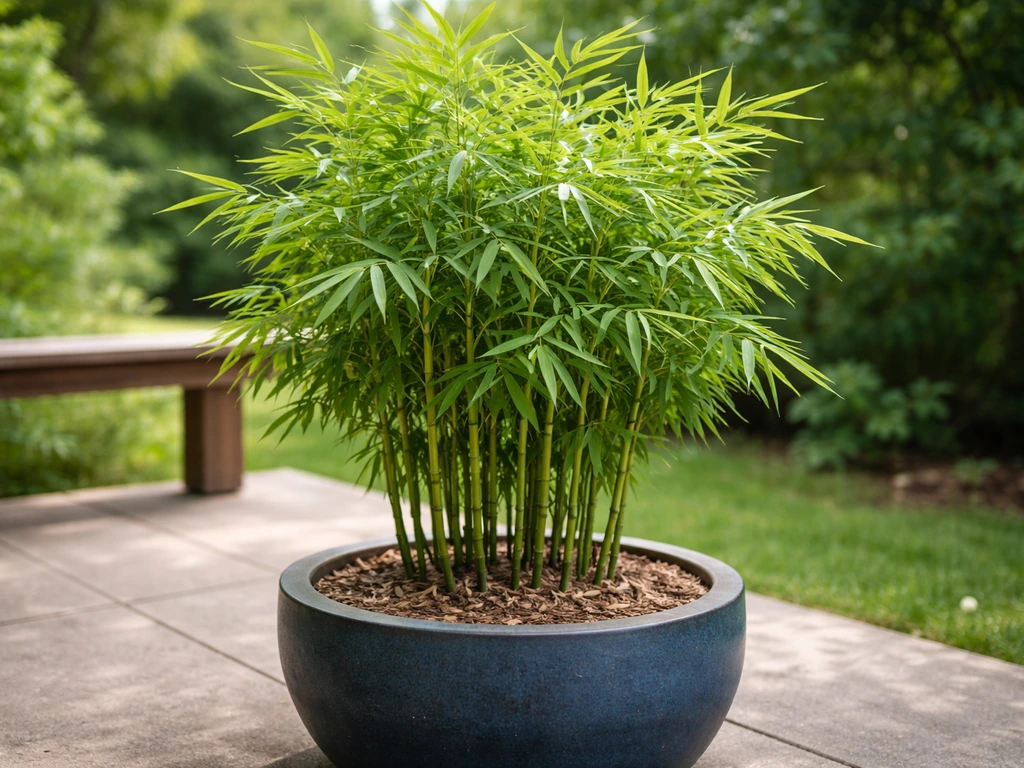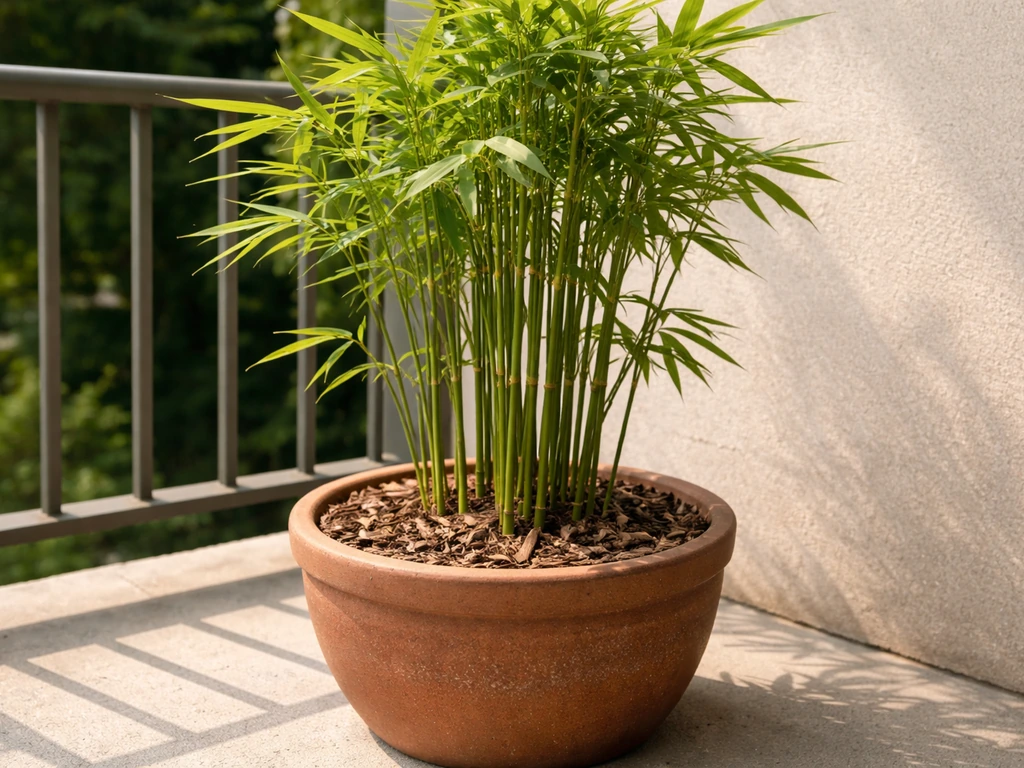
You can absolutely grow bamboo in pots for privacy, and it works better than most people expect. The key is picking a clumping bamboo variety (not a running one), using a large container with proper drainage, and feeding it consistently through the growing season. Do those three things right and you can realistically have a 6 to 10-foot living screen within two to three growing seasons, without bamboo ever escaping into your neighbor's garden.
How to Grow Bamboo in Pots for Privacy: A Step-by-Step Guide
Marcus Whitley
18 May 2026
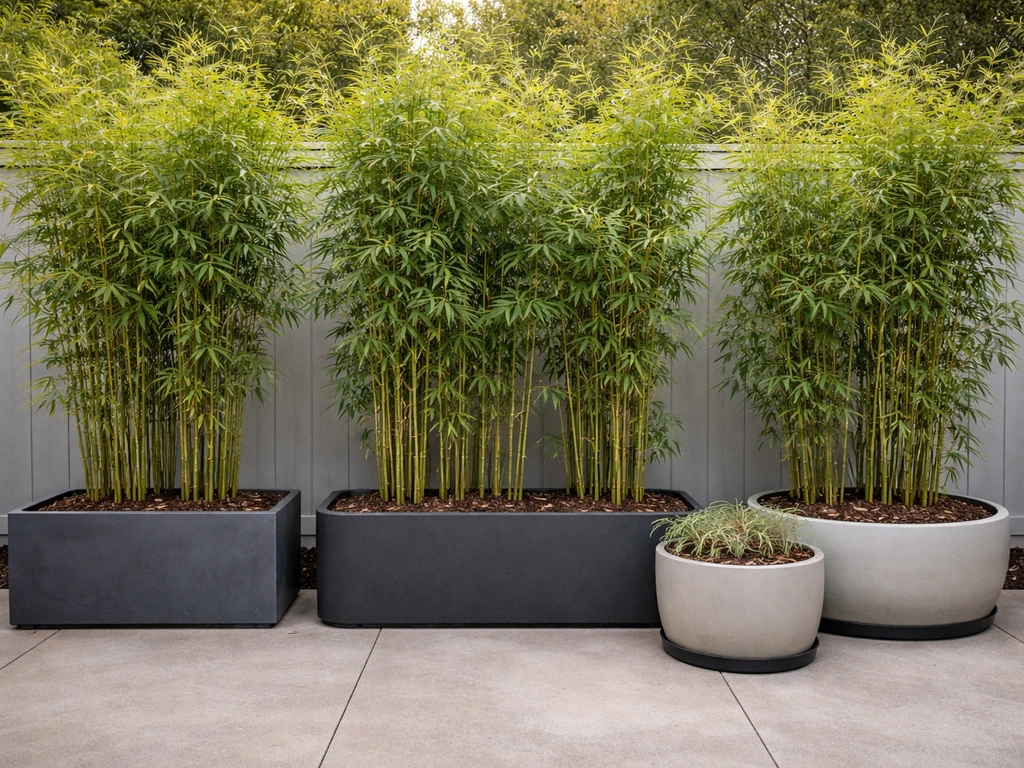
Choosing the right bamboo type for container privacy
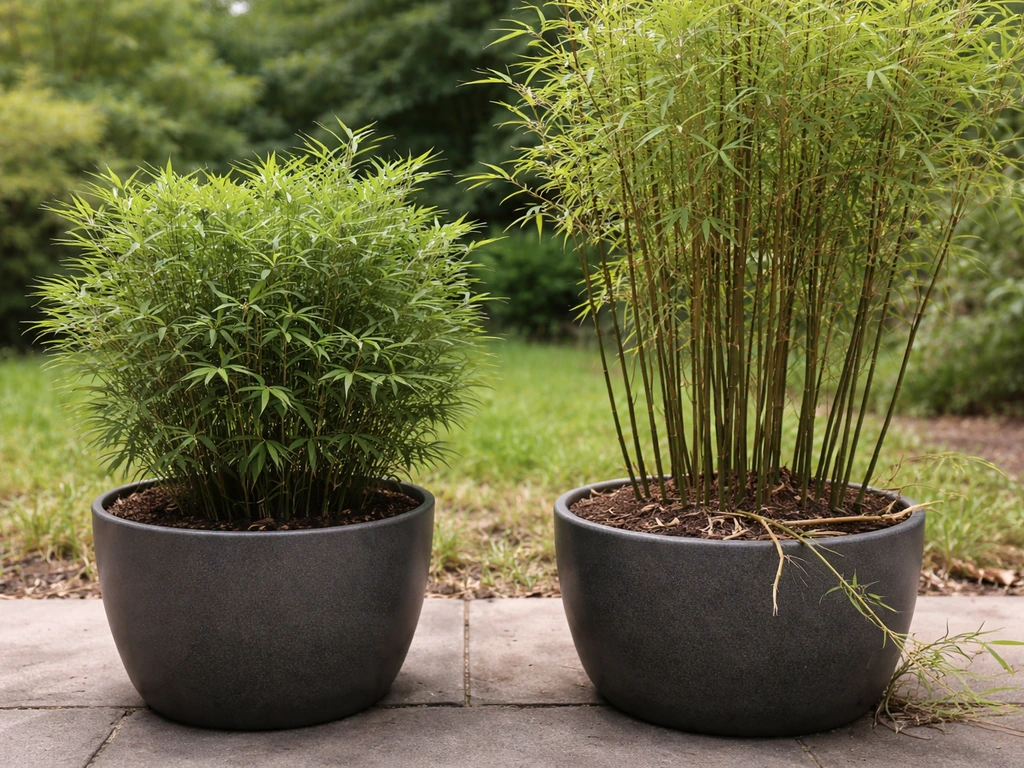
This is the single most important decision you'll make, so let's spend a moment on it. There are two broad groups of bamboo: clumping and running. Clumping bamboos spread slowly outward in a tight, predictable clump. Running bamboos send out long underground stems called rhizomes that can travel several feet from the parent plant each year. In a garden border, running bamboo is a headache. In a pot, it's genuinely risky unless you contain it properly (more on that below). For most home gardeners growing bamboo on a balcony, patio, or driveway edge, clumping bamboo is the smarter, lower-stress choice.
For cold climates, Fargesia robusta is one of the best container privacy options around. It's a clumping bamboo that grows 10 to 15 feet tall and is hardy from zone 5a through 8b, so it handles real winters without dying back. It stays upright, looks tidy, and gets genuinely dense with a little time. Other solid clumping choices include Fargesia murielae (umbrella bamboo, similar hardiness) and Fargesia nitida. In warmer zones (8 and above), Bambusa multiplex varieties like 'Alphonse Karr' or 'Golden Goddess' work brilliantly in pots and stay manageable in size.
If you're set on using a running bamboo species like Phyllostachys (golden bamboo, black bamboo, etc.) because you want maximum height fast, you can do it in a pot but you need a serious rhizome barrier setup that I'll cover later. The privacy payoff can be impressive, but the containment work is not optional.
One thing worth flagging: what's sold as 'lucky bamboo' in supermarkets and gift shops is actually Dracaena sanderiana, a completely different plant. If you meant Dracaena sanderiana, the indoor “lucky bamboo” look can still be maintained in a pot, but the care needs are different from true outdoor bamboo. It won't give you outdoor privacy screening. If you're interested in that plant for indoor growing, that's a separate topic entirely.
Pot size, spacing, and setup for a screening clump
Bamboo is a hungry, thirsty plant with an ambitious root system. Undersized pots are probably the number one reason container bamboo stays stubby and stressed. For a meaningful privacy screen, go as big as you can manage. I'd call 20 gallons the minimum per plant, and 25 to 30 gallons is genuinely better. Half wine barrels (roughly 25–30 gallons) are a great practical option because they're inexpensive, attractive, and hold enough soil volume to buffer temperature and moisture swings. A pot that's at least 18 inches wide and 18 inches deep gives clumping bamboo room to establish.
For spacing along a fence line or patio edge, position pots 3 to 5 feet apart center-to-center. At 3 feet apart the bamboo will knit together into a solid wall relatively quickly. At 5 feet you'll get a screen eventually but it'll take an extra season. I tend to go 3 to 4 feet for balconies or tight spaces where I want fast results.
Material matters too. Thick-walled plastic pots and fiberglass containers hold moisture better and insulate roots from summer heat. Terracotta looks beautiful but dries out fast and can crack in freezing weather if left outdoors. Dark-colored pots absorb heat and can cook roots in full sun during summer. If you're using dark plastic pots in a hot spot, wrapping them with burlap or sitting them inside a slightly larger decorative outer container makes a real difference.
Soil mix and pot drainage for healthy container bamboo
Bamboo does not tolerate waterlogged soil. Roots need oxygen as much as water, and when soil stays saturated the air spaces in the soil fill with water and roots essentially suffocate. This is one of the most common ways container bamboo dies, and it looks confusingly like drought stress (yellowing, drooping leaves) because the plant can't take up water even though the pot is wet.
A good container mix for bamboo is well-draining but moisture-retentive. I mix roughly 60% quality loam-based compost (something like John Innes No. 3 in the UK, or a good peat-free potting mix in the US) with 30% perlite or coarse grit to open up the drainage, and about 10% composted bark for structure. Avoid using straight garden soil, which compacts in pots and drains poorly. Avoid mixes that are mostly peat or coir on their own as they can become hydrophobic when they dry out.
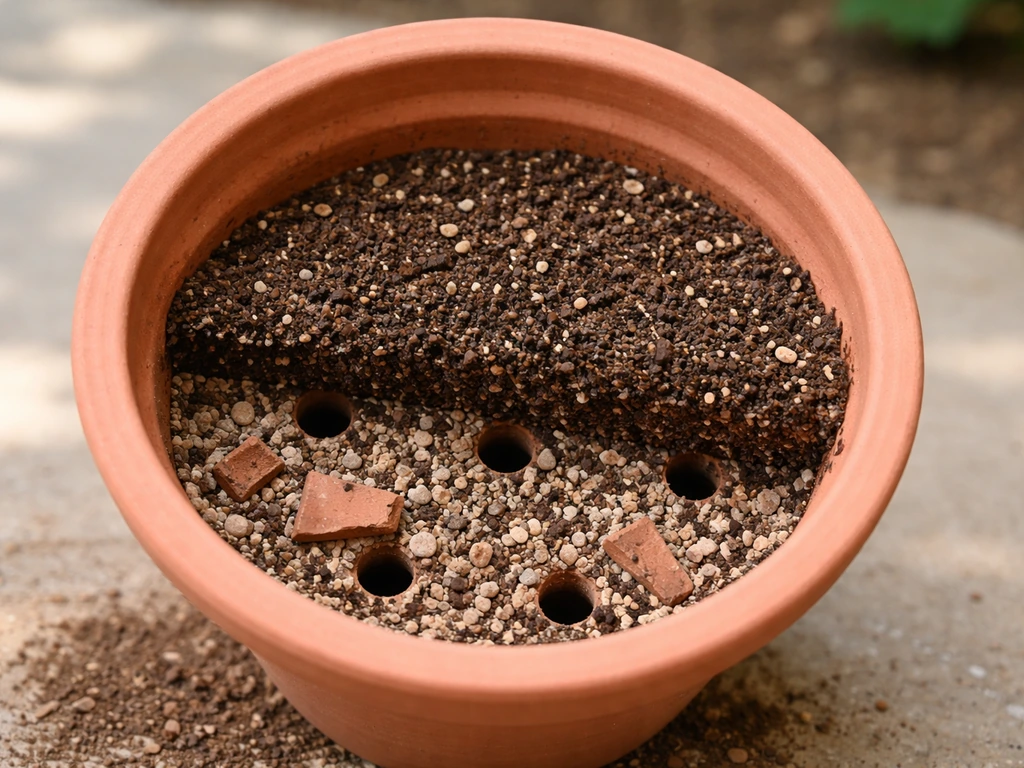
Every pot needs drainage holes, full stop. If your decorative pot doesn't have them, drill at least four to six holes in the base. Raise pots slightly off the ground using pot feet or bricks so the holes don't get blocked. Check periodically that holes aren't clogged with roots or debris, especially in year two and beyond when the root system gets dense.
Planting and initial care timeline
Spring is the ideal time to plant, once your last frost date has passed and soil temperatures are climbing. That said, bamboo from a container nursery can be planted any time the ground isn't frozen, as long as you water it in well.
Here's how to plant it step by step:
- Add a 2-inch layer of gravel or broken crocks over the drainage holes to keep them clear.
- Fill the pot about halfway with your soil mix.
- Remove the bamboo from its nursery pot and tease out any circling roots at the base.
- Place it in the new pot so the top of the rootball sits about 1 to 2 inches below the rim of the container, with a thin layer of fresh soil covering the original rootball surface.
- Fill in around the sides, firming the soil gently but not compacting it.
- Water thoroughly until water runs freely from the drainage holes.
- Apply a 1-inch layer of bark mulch on the surface to retain moisture and regulate soil temperature.
For the first two weeks, water regularly and keep the plant out of intense midday sun if possible while it settles in. Bamboo can drop some leaves after transplanting and that's normal. Don't panic and over-water. Give it two to six weeks before starting any fertilizer, letting it focus on root establishment first. Once you see new shoots or fresh leaf growth, that's your cue that it's settled and feeding can begin.
Watering, feeding, and seasonal maintenance
Watering
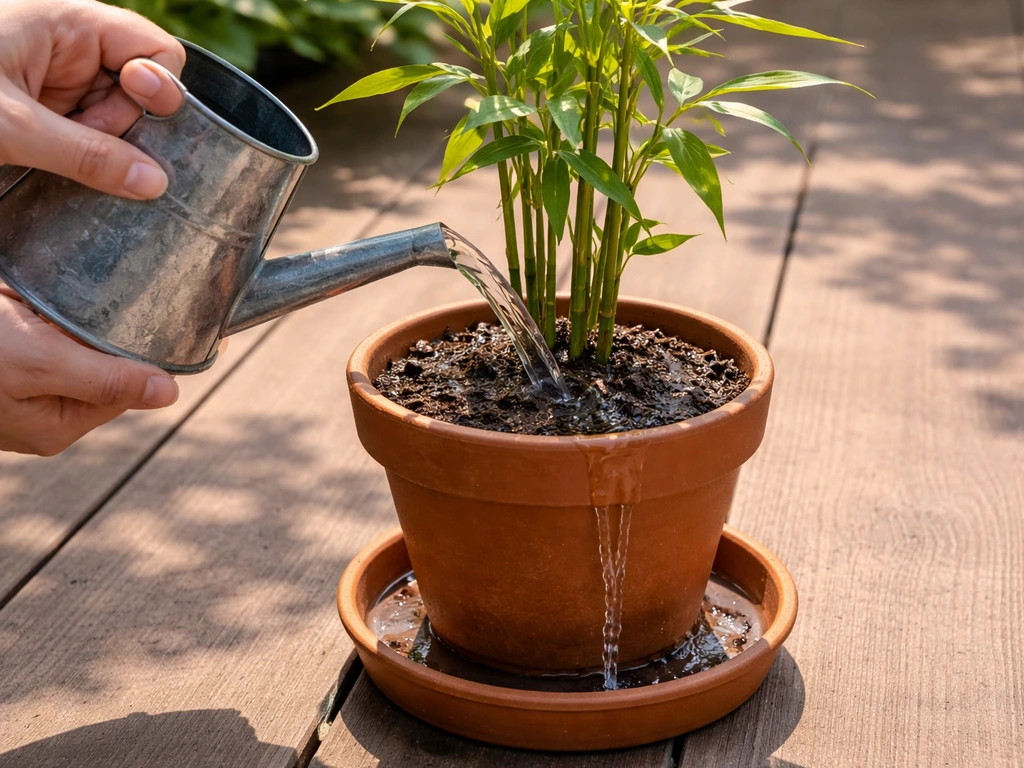
Container bamboo dries out faster than in-ground bamboo, especially in summer. A good rule of thumb during the growing season is to water two to three times per week in normal weather, and potentially every day during heat waves or strong winds. The sign you've let it go too long is leaves that curl inward lengthwise along the midrib, almost like they're rolling into a tube. That's the plant conserving moisture and it bounces back quickly with a good soak, but repeated stress like that will stunt growth over time. In autumn and winter, reduce watering significantly but never let the rootball dry out completely, even when the plant looks dormant.
Feeding
Bamboo is a grass, and like all grasses it responds well to nitrogen. Start feeding two to six weeks after planting and continue through the growing season from spring to late summer. A balanced slow-release granular fertilizer (something like a 10-10-10 or 14-14-14) applied in spring gives a steady base feed. Top that up with a liquid high-nitrogen feed every two to four weeks through summer. Stop feeding entirely in late August or September so the plant can harden off before cold weather. Bamboo that's pushed with nitrogen too late in the season produces soft, frost-vulnerable growth.
Seasonal care
Each spring, top-dress pots with fresh compost and a fresh layer of mulch. Every two to three years, consider potting up into a slightly larger container or dividing the clump if it's getting crowded and growth is slowing. In autumn, remove any dead or yellowed canes at the base to keep the screen looking tidy and to improve airflow. In colder zones (5 and 6), wrapping pots in horticultural fleece or bubble wrap over winter and moving them to a sheltered spot against a wall protects roots from freezing solid, which is more damaging in a pot than in the ground.
Containment, rhizome barriers, and root control
If you're growing clumping bamboo in containers, the pot itself acts as a natural barrier and you don't need to do much beyond monitoring the drainage holes. Clumping species do slowly expand outward but won't shoot sideways underground the way running types do.
Running bamboo in pots is a different story. The pot may slow spread but rhizomes are strong and determined. If they find a drainage hole or a crack, they'll take it. If you want to grow a running species (Phyllostachys, for example) here's how to contain it properly: GardenDesign.com notes that for running bamboo, the most effective containment is heavy plastic installed about 3 feet deep all around the clump, using heaviest-gauge material (for example 80 mil) and avoiding punctures or runner breaches Here's how to contain it properly.
- Use a heavy-duty rhizome barrier inside a large raised bed or in-ground planting instead of a standard pot. The barrier should be 60 mil polypropylene (PP) or high-density polyethylene (HDPE) at minimum, and 80 mil is better for vigorous species. Overlap the material by at least 4 feet at the seam to make a secure circle.
- Install the barrier 30 to 36 inches deep. Rhizomes travel surprisingly deep, especially in loose potting mix.
- If using a standard pot as containment, inspect the drainage holes every spring and cut back any rhizomes attempting to exit. Replace pots every three to four years before roots become destructive.
- Avoid cheap or thin plastic barriers. In colder climates especially, thin material can crack or fail, and once rhizomes breach the barrier containment is very hard to restore.
Honestly, for most readers growing bamboo on a balcony or patio for privacy, the simplest advice is this: just use a clumping species. You get most of the height and density with a fraction of the containment stress.
Getting fast, reliable privacy: what to expect
Bamboo has a reputation for growing fast, but container-grown bamboo is slower than in-ground bamboo in years one and two because the root system is constrained. Here's a realistic timeline:
| Timeframe | What to expect |
|---|---|
| Year 1 | Establishment. Some new shoots appear but height gain is modest (1–3 feet of new growth). Focus on root development. |
| Year 2 | Noticeable acceleration. New culms (canes) come up taller than the previous year. Clumps start to fill out. Partial screening is achievable. |
| Year 3 | Full screening effect for most clumping varieties. Dense, upright canes 6–12 feet tall depending on species and pot size. |
| Year 4+ | Mature screen. Annual maintenance to thin and tidy. Growth continues until pot limits are reached. |
Fargesia robusta, one of the top choices for privacy, can reach 10 to 15 feet at full maturity. In a pot it'll typically hit 6 to 8 feet by year three under good care. To maximize density, don't prune new shoots in the first two years. Let everything grow. Density comes from a full network of canes, not from cutting back. Once you have that bulk, you can thin out the oldest, thinnest canes each spring to keep it looking good.
Spacing pots 3 feet apart center-to-center will give you a much faster visual screen than 5 feet apart. If budget is a constraint and you can only afford fewer plants, go for 4-foot spacing as a compromise.
Common problems and how to fix them
Yellowing leaves
A few yellow leaves in spring or autumn is completely normal, bamboo sheds old leaves seasonally. Widespread yellowing throughout the plant usually means one of three things: overwatering and root rot (check drainage immediately and let the pot dry out), underwatering (check soil moisture and increase watering frequency), or nitrogen deficiency (start or increase feeding). If the soil is soggy and roots smell bad when you dig in, root rot has set in. Repot into fresh dry mix, cut away any black mushy roots, and cross your fingers.
Stunted or slow growth
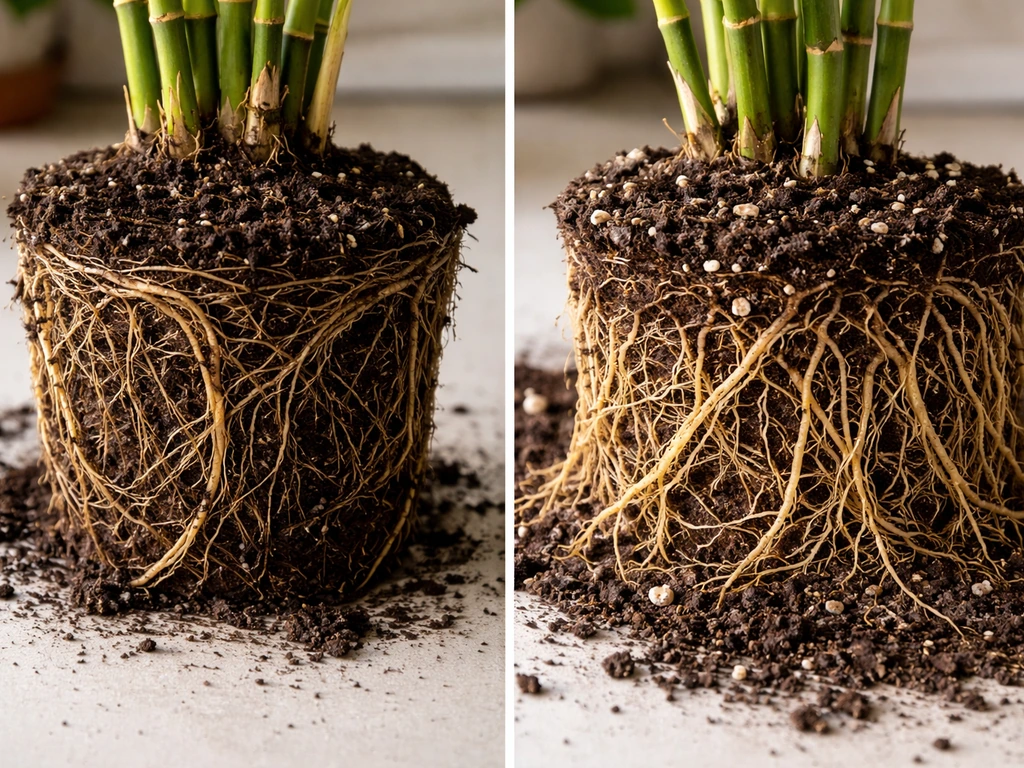
Most often caused by a pot-bound root system, nutrient deficiency, or insufficient watering during the active growing season. Check if roots are circling densely inside the pot or exiting drainage holes. If so, pot up to the next size. If the plant is in a reasonably sized pot but not moving, bump up feeding and make sure it's getting enough water in summer.
Leaf curl and wilting
Leaves curling lengthwise is a drought stress signal. Water immediately and deeply. If curling happens even when soil is wet, check drainage, as waterlogged roots can prevent water uptake. Also check for extreme heat and sun exposure. Moving pots to afternoon shade during heat waves can prevent this entirely.
Pests
Container bamboo is relatively pest-resistant, but mealybugs and spider mites can appear on stressed plants, especially indoors or in dry conditions. If you’re growing bamboo in a pot indoors, keep an eye on humidity and stress levels so spider mites and other pests don’t get a foothold especially indoors. A strong blast of water from a hose knocks spider mites back. Neem oil spray works well for persistent infestations. Bamboo mites (tiny specks causing bronze leaf discoloration) are more specific to bamboo and respond to miticide sprays or horticultural oil.
Winter and cold damage
Pots freeze through much more readily than the ground, and frozen roots are the real danger, not frozen foliage. Even cold-hardy varieties like Fargesia robusta (hardy to zone 5a in the ground) need extra protection when their roots are in a pot. Wrap pots with fleece or burlap, push them against a sheltered wall, and consider moving them to an unheated shed or garage during the coldest weeks if you're in zone 5 or 6. If foliage browns and dies back from frost but roots are alive, cut the dead canes to the ground in spring and wait. New growth will often emerge.
Heat stress in summer
Pots heat up fast in direct summer sun, particularly dark-colored plastic ones. Overheating roots stress the plant even if you're watering correctly. Solutions: move pots to a spot with afternoon shade, double-pot into a larger decorative container for insulation, or wrap the outside of pots in light-colored material to reflect heat.
Your next steps right now
If you're ready to get started, here's what to do this week. First, decide on your variety based on your climate zone. For zones 5 to 8, order Fargesia robusta or Fargesia murielae from a reputable bamboo nursery. For zones 8 and above, look at Bambusa multiplex cultivars.
Second, source your pots. Aim for 25 to 30-gallon containers per plant and calculate how many you need based on 3 to 4-foot spacing along your target screen length. Third, mix up your soil (60% quality potting compost, 30% perlite, 10% composted bark) and get your plants in the ground while the growing season is on your side.
The sooner you plant in spring or early summer, the more growing season you capture in year one, and every bit of root establishment this year means significantly more height next year.
FAQ
How many bamboo plants do I need in pots to get a continuous privacy hedge?
Use the pot spacing you want as your multiplier. If you space at 3 to 4 feet center-to-center, plan on about 3 to 5 plants per 15 feet of fence line (roughly 1 plant every 3-4 feet). Count the first and last plants using the edge-to-edge length you’re covering, not just the “screen length,” and allow a little overlap time since density builds over seasons.
Can I mix different bamboo species in the same line of pots?
You can, but only if they have similar mature height, growth speed, and water needs, otherwise one variety will dominate visually and the slower one may look thin. Also keep in mind cold tolerance varies by species, so in zone 5 to 6 you generally want all clumping choices that are similarly hardy to avoid uneven dieback.
What’s the best way to tell if my container bamboo is suffering from root rot versus drought?
Check the drainage outcome and the pot weight. Drought stress usually follows dry, light pots and the soil surface looks dry, while root rot comes with consistently wet soil, a heavy pot, and often a sour or rotten smell when you lift the rootball slightly. Yellowing alone can be misleading, but soggy mix plus odor is the quickest decision aid to confirm rot.
Should I prune container bamboo for privacy, or is it better to let it grow untouched?
For faster privacy, don’t start heavy pruning in the first one to two growing seasons. Once established, you can thin the oldest, thinnest canes each spring to improve airflow and fullness, and remove dead or weak culms as needed. Cutting back green, healthy shoots too early can delay dense cane formation in a pot.
How do I repot or divide clumping bamboo without losing my privacy timeline?
Repotting is best in spring after frosts, and division should be done only when clumps are crowded and growth is stalling. Expect a temporary slowdown, so if you need privacy quickly, divide just part of the line and keep the other pots intact for uninterrupted screening. After division, hold off on strong fertilizer for a few weeks while roots reestablish.
How much mulch should I use on top of container bamboo?
Apply a thin layer only, about 1 to 2 inches, and keep it off the very base of canes to prevent trapping moisture against the crown. Too-thick mulch can reduce evaporation but also create a cooler, wetter surface that may increase fungus or keep the mix overly wet in rainy periods.
Do I need to fertilize container bamboo if it’s in a rich compost mix?
Yes, but frequency matters. A good compost-based mix feeds initially, yet container nutrients get depleted faster because water drains out. Use slow-release in spring as a base, then supplement with a nitrogen-forward liquid during active growth, but stop in late summer so new growth hardens before cold weather.
Why are my leaves curling even when I watered, and what should I do immediately?
Curling while the soil is still wet often points to poor drainage or root stress from oxygen deprivation. Immediately check that drainage holes are open and the mix drains freely, then adjust watering rather than increasing it. If the pot stays saturated for long periods, plan to repot into a more aerated mix rather than only changing how often you water.
How should I water in extreme heat or during windy conditions?
In heat waves or strong winds, water needs can jump to near-daily, especially for smaller containers. Water deeply until excess drains out, then re-check after a day or two by pressing a finger into the mix 1 to 2 inches down. If it’s drying from the top but staying wet below, you may need to adjust the mix aeration so water penetrates evenly.
What winter protection actually matters for potted bamboo?
Root protection is the priority, since pots freeze through more easily than ground beds. Wrap the container, insulate around the sides, and shelter the pot against a wall, ideally moving it to a garage or unheated shed during the coldest stretches in zone 5 or 6. Also reduce fertilizer, and avoid soggy winter watering that encourages root rot when growth is slowed.
My bamboo loses leaves after planting, should I be worried?
Some leaf drop after transplanting is normal, especially if you planted during warm weather or moved it from a nursery pot. The key indicator is new shoots or fresh leaf emergence, which usually shows roots are recovering. Don’t overcorrect by overwatering, instead keep moisture consistent and protect from intense midday sun for the first couple of weeks.
Can I grow bamboo in containers on a balcony with limited root space and sunlight?
You can, but expect slower growth unless the pot volume and sun are sufficient. Choose clumping bamboo and use the largest pots you can manage, because undersized containers are the most common reason for stunting. For light, aim for as much sun as your climate allows, and if summers are harsh, use afternoon shade to prevent overheating and drying stress.