Yes, you can grow bamboo in a pot, and it can look absolutely stunning on a balcony, patio, or deck. The key is picking the right type of bamboo from the start and setting up your container correctly. Get those two things right, and the rest is mostly just consistent watering and occasional feeding.
How to Grow Bamboo in Pots: Step-by-Step Guide
Marcus Whitley
19 Apr 2026
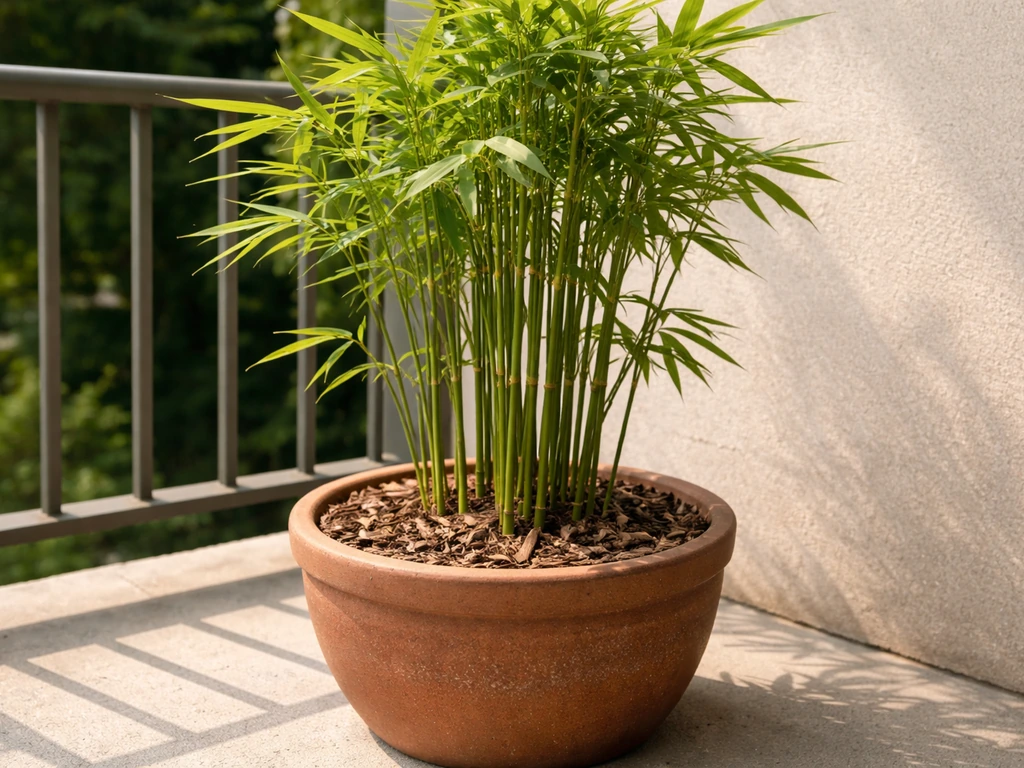
Get them wrong, and you'll either end up with a plant trying to escape through your garden fence or a sad, root-bound bamboo that barely grows. This guide walks you through every step, from choosing your plant to keeping it healthy year after year. If you need the full walkthrough, see our step-by-step guide on how to grow bamboo tree in pot how to grow bamboo tree in pot in a container (full guide).
Choosing the right bamboo for pots
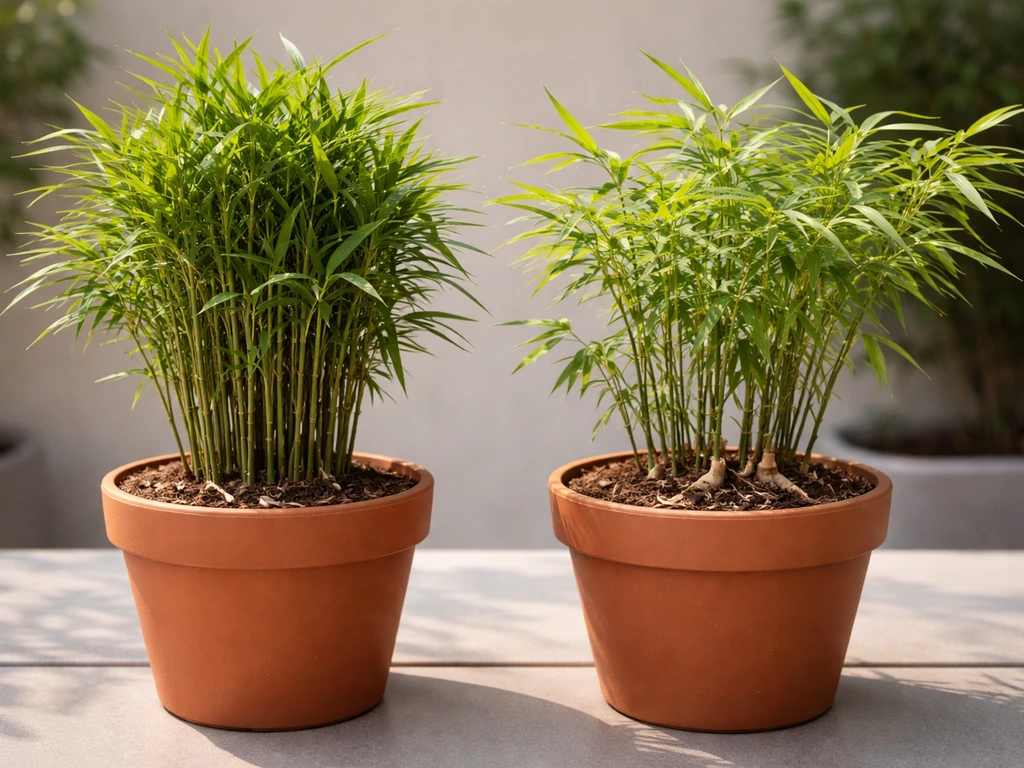
This is genuinely the most important decision you'll make, and it's one a lot of beginners skip. There are two main categories of bamboo: clumping and running. Clumping bamboo grows in a tight, outward-expanding cluster and stays reasonably where you put it. Running bamboo sends out long underground stems called rhizomes that can travel several feet in a single season, popping up new shoots wherever they please. In the ground, running bamboo is infamous for being invasive. In a pot, it's manageable, but you need to stay on top of it.
For most container gardeners, clumping bamboo is the smarter choice. My top recommendation for pots is Golden Goddess (Bambusa multiplex). blank" rel="noopener noreferrer">Golden Goddess (Bambusa multiplex) is described by Boething TreeLand Farms as clumping and non-invasive, available in container sizes including #5 and #15. blank" rel="noopener noreferrer">It's non-invasive, stays at a manageable size in containers, and handles the slightly restricted growing environment of a pot better than most varieties. It's also genuinely forgiving for beginners. Clumping types are generally more drought tolerant than runners because their roots grow fairly deep, which matters a lot when you're growing in a pot and watering might be inconsistent.
Running bamboo in containers isn't impossible, but it demands more attention. If you want a running variety, you'll need to be serious about checking root growth regularly and repotting or root-pruning every year or two to stop it from becoming pot-bound or pushing out the drainage holes. Running bamboo does handle dry, hot air reasonably well, which can be a plus for sunny exposed spots, but the containment work is real.
If you're specifically looking for bamboo to create a privacy screen in a pot, that's a slightly different conversation worth exploring separately, since variety choice for screening shifts your priorities. If your main goal is privacy, you can also tailor your variety and spacing for how to grow bamboo in pots for privacy as a related consideration.
One more thing worth knowing: container-grown bamboo typically reaches about 10 to 20 percent less than its predicted mature size. So if a variety is listed as growing to 15 feet, expect something closer to 12 feet in a pot. That's not a bad thing, it just helps you set realistic expectations and choose a variety that'll still be useful at a slightly smaller scale.
Best pot size, drainage, and container setup
Bamboo has a strong root system and it will use every inch of space you give it, so go bigger than you think you need. For a young plant or a division, start with a container that's at least 15 to 20 gallons. If you're planting something you want to grow significantly or you're aiming for a taller, more impressive plant, go for 25 to 30 gallons. Small pots cause bamboo to become root-bound quickly, which stunts growth and stresses the plant.
Material matters more than people think. Heavy-duty plastic pots work well because they're lightweight and retain moisture longer, which suits bamboo's thirsty nature. Terracotta looks beautiful but dries out fast, meaning you'll be watering constantly in warm weather. Wooden barrels and fabric grow bags are both solid options too. Whatever you choose, make sure it has multiple drainage holes at the bottom. Bamboo does not like sitting in waterlogged soil, and poor drainage is one of the most common reasons container bamboo struggles or dies.
If you're growing a running variety in a pot, some gardeners add a physical root barrier inside the container as an extra precaution. A dense liner cut to fit the inside walls can slow rhizome escape. For in-ground containment, guidelines suggest barriers need to be at least 36 inches deep to stop running bamboo rhizomes, which gives you a sense of just how determined these roots can be. In a pot, the container walls act as your barrier, but checking regularly for roots sneaking out the drainage holes is a must.
Raise your pot slightly off the ground using pot feet or a small platform. This improves airflow under the container, prevents roots from anchoring into the ground below, and makes drainage actually work instead of pooling under the pot.
Soil mix and planting (rhizome or cutting)
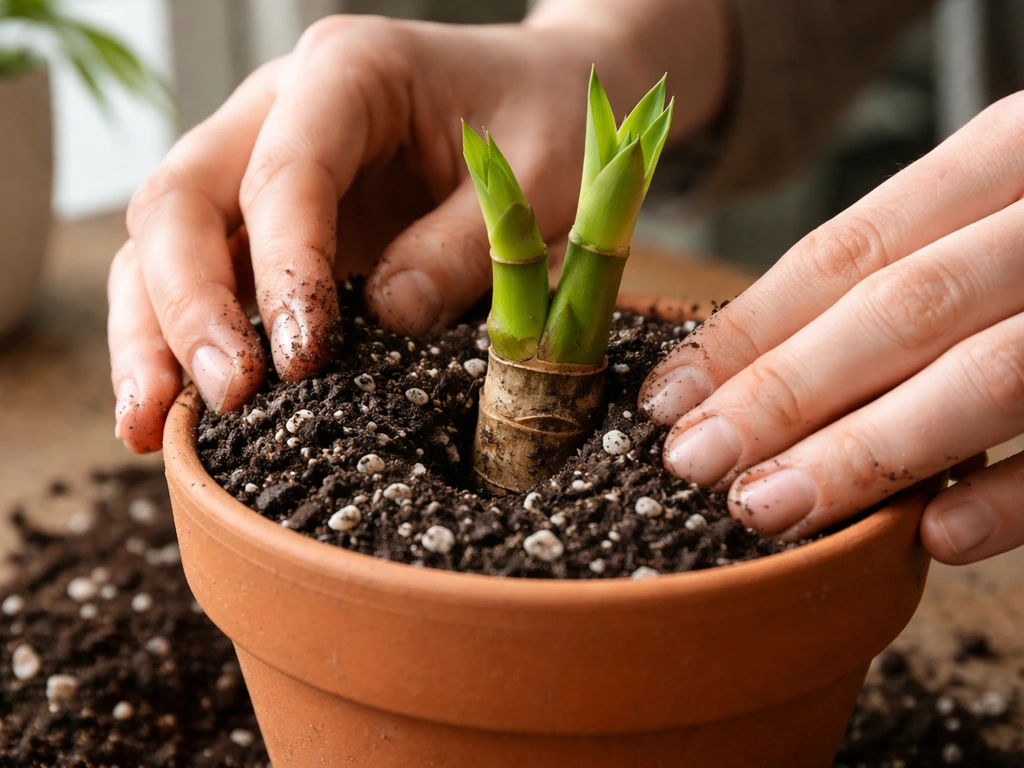
Bamboo is not fussy about soil, but it does best in a well-draining mix that still holds some moisture. A mix of about 60 percent quality potting soil and 40 percent perlite or coarse horticultural grit works really well. The perlite keeps things from compacting and improves drainage, while the potting mix retains enough moisture and nutrients to keep the plant fed between waterings. Avoid heavy, clay-rich garden soil in pots. It compacts, holds too much water, and suffocates roots.
Most people start bamboo from a division or an established plant rather than seeds, and this is honestly the easiest route. Here's how to do it step by step.
- Fill your container about one-third full with your potting mix.
- Remove the bamboo from its nursery pot or carefully separate a division from a larger clump, keeping as many roots intact as possible.
- Place the root ball or rhizome section in the center of the pot. The top of the root ball should sit about 1 to 2 inches below the rim of the pot.
- Fill in around the roots with more potting mix, firming it gently with your hands to remove air pockets.
- Water thoroughly until water drains freely from the bottom holes.
- Place the pot in its permanent position before it gets too heavy to move easily.
If you're working with a rhizome cutting rather than a full division, lay it horizontally in the pot about 2 to 3 inches deep and cover with soil. Keep it consistently moist and be patient. Rhizome cuttings can take several weeks to show any above-ground growth, but they're working underground the whole time.
Growing bamboo from seeds in pots (starter steps)
Growing bamboo from seeds is possible, but I want to be upfront: it's slow, it requires patience, and bamboo seeds can have variable germination rates. Most home gardeners skip seeds entirely and buy an established plant or division, and that's perfectly sensible. But if you want to try seeds, here's a reliable approach.
- Source fresh bamboo seeds from a reputable supplier. Old seeds lose viability quickly, so check the harvest date if you can.
- Soak the seeds in lukewarm water for 12 to 24 hours before planting to help soften the outer coating and encourage germination.
- Fill small individual pots or a seed tray with a lightweight seed-starting mix. A blend of peat-free compost and perlite at roughly equal parts works well.
- Sow seeds about half an inch deep and cover lightly with mix.
- Keep the soil consistently moist but not soggy. A spray bottle is handy here to avoid overwatering.
- Place the tray or pots somewhere warm, ideally 65 to 75°F (18 to 24°C). A heat mat helps if your space is cool.
- Expect germination anywhere from 10 days to 6 weeks depending on the variety and conditions. Don't give up too early.
- Once seedlings have two or three sets of leaves and are a few inches tall, transplant them into individual 4 to 6 inch pots with your standard bamboo potting mix.
- Grow on in a sheltered spot for the first season before moving to a larger container and a more exposed position.
Bamboo seedlings are delicate compared to established plants, so hold off on fertilizing for the first month or so. Let the roots establish first, then begin a diluted feeding schedule once you see steady growth.
Watering, light, and feeding routine
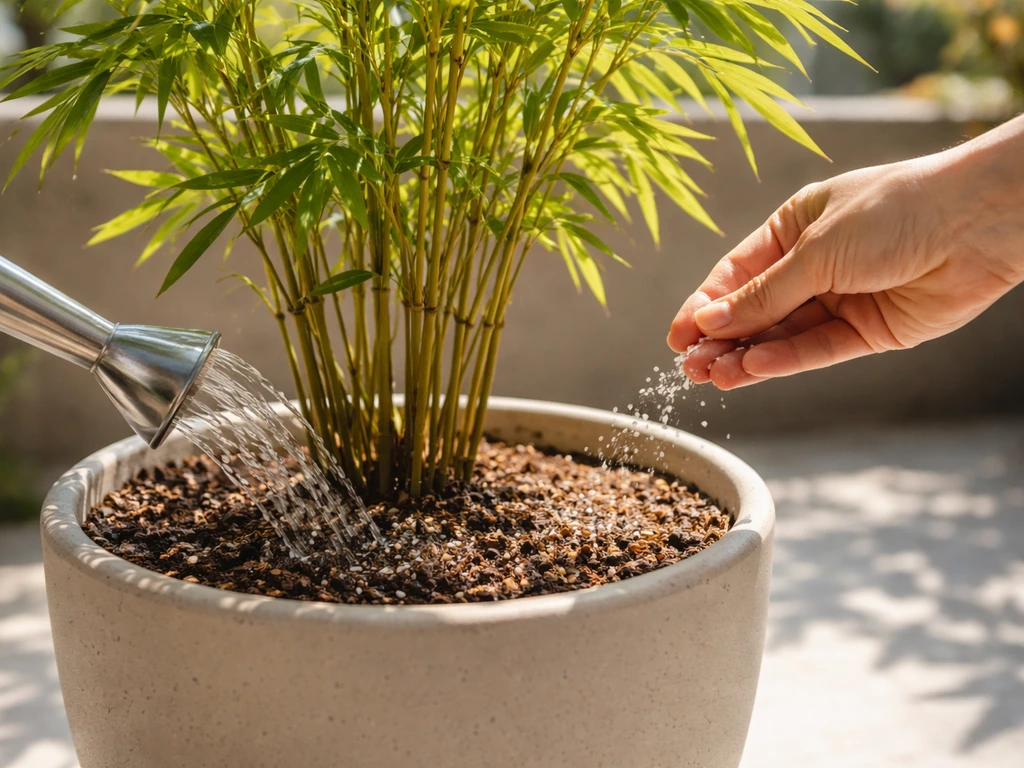
Bamboo is thirsty, especially in summer and especially in a pot. Container soil dries out faster than garden beds, so you'll need to water more frequently than you might expect. During the growing season (spring through early autumn), check the soil every day or two. When the top inch feels dry, water deeply until it runs out the drainage holes. In hot weather, that might mean watering every day. In cooler months, you can back off significantly, watering once or twice a week or even less. The goal is consistently moist, never waterlogged.
Bamboo wants as much sun as you can give it. Most varieties perform best with 4 to 6 hours of direct sun per day. A south or west-facing spot is ideal. That said, in very hot climates or during a heatwave, some afternoon shade can actually help prevent leaf scorch, especially on younger plants. If you're growing indoors, place the pot near your brightest window. If you want to grow bamboo in a pot indoors, start by placing it near a bright window and keep the soil consistently moist without letting it sit in water. Growing bamboo indoors long-term is its own topic with slightly different considerations, but for outdoor and patio growing, maximum light is your friend.
For fertilizing, bamboo responds well to a balanced slow-release granular fertilizer applied in early spring as new growth begins. A 10-10-10 or similar balanced formula works well. You can supplement this with a liquid feed (seaweed extract or balanced liquid fertilizer) every 3 to 4 weeks through the growing season. Bamboo is a heavy feeder and will reward you with faster, lush growth when fed consistently. Stop feeding in late summer to allow the plant to harden off before winter.
A quick step-by-step walkthrough to follow
If you want a single clear sequence to follow from start to finish, here's the whole process condensed. Think of this as your checklist before you get started and as you work through the first season.
- Choose a clumping variety like Golden Goddess for ease, or a well-contained running variety if you're experienced and committed to monitoring it.
- Select a container of at least 15 gallons with good drainage holes, and raise it off the ground.
- Mix 60% quality potting compost with 40% perlite or horticultural grit.
- Plant your division or rhizome so the root ball sits 1 to 2 inches below the pot rim, fill with mix, and water thoroughly.
- Position in a spot with at least 4 to 6 hours of direct sun daily.
- Water whenever the top inch of soil dries out, which in summer may be daily.
- Apply slow-release fertilizer in spring, then liquid feed every 3 to 4 weeks through summer.
- In autumn, stop feeding, reduce watering, and check drainage holes for escaping roots.
- Every 2 to 3 years, either repot into a larger container or divide the root ball to refresh the plant and prevent root-binding.
Ongoing care, controlling spread, and troubleshooting
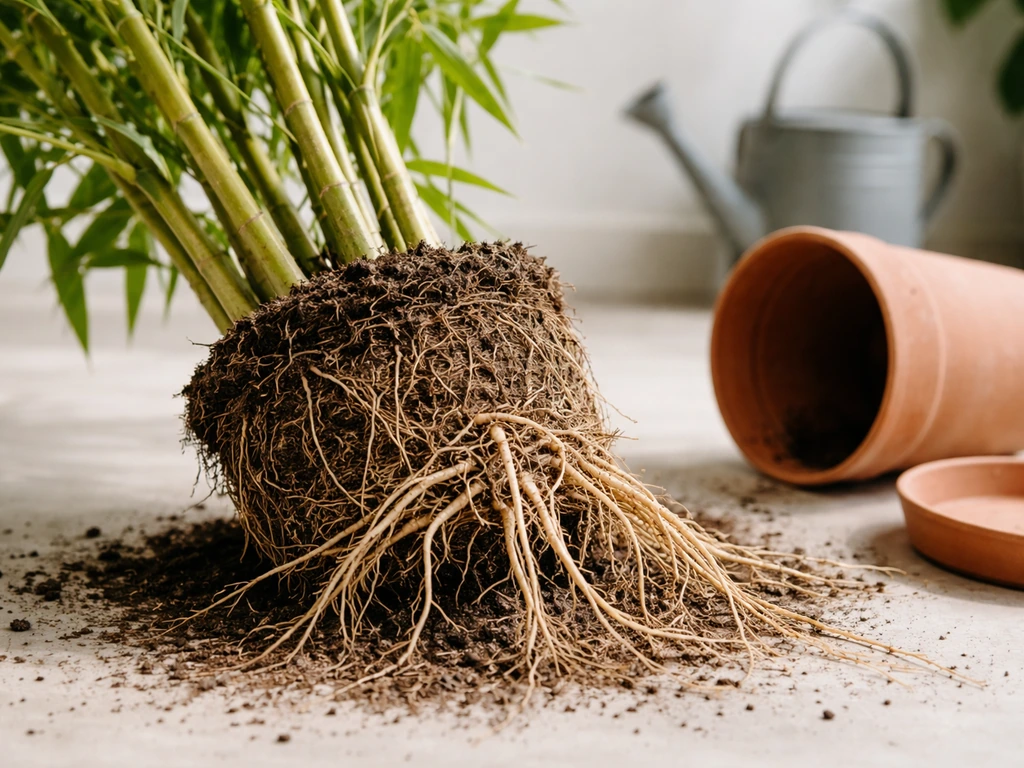
Once your bamboo is established and growing, the main ongoing tasks are watering, feeding, and managing the roots. Every spring, tip the plant out of its pot if you can and check how congested the root ball is. If roots are circling tightly around the outside or pushing out the drainage holes, it's time to either move up to a larger pot or divide the clump. Dividing is straightforward: use a sharp spade or pruning saw to cut the root ball into sections, pot each section into fresh mix, and water well. It's not as dramatic as it sounds, and the plant bounces back quickly.
For running bamboo, check the base of the pot and drainage holes monthly during the growing season. If you spot rhizomes trying to escape, cut them back immediately. Left unchecked, running bamboo will root into the ground below the pot and begin spreading, which defeats the whole purpose of container growing.
Here are the most common problems you'll run into and how to fix them.
| Problem | Likely Cause | Fix |
|---|---|---|
| Yellow leaves | Overwatering or waterlogged soil | Check drainage holes aren't blocked; reduce watering and let soil dry slightly between waterings |
| Brown leaf tips | Low humidity or underwatering | Water more consistently; mist leaves in dry indoor conditions |
| Slow or no growth | Root-bound or nutrient-poor soil | Repot into a larger container with fresh mix; resume fertilizing |
| Leggy, sparse growth | Too little light | Move to a sunnier position with at least 4 to 6 hours of direct sun |
| Roots escaping drainage holes | Pot too small or long overdue for root management | Repot or divide immediately; trim escaping roots |
| Pale, washed-out leaves | Nutrient deficiency, usually nitrogen | Apply a balanced liquid fertilizer every 2 to 3 weeks during growing season |
Winter care depends on your climate. Hardy clumping varieties like Golden Goddess can handle temperatures down to around 15 to 20°F (-9 to -7°C), so if you're in a mild-to-moderate climate, your plant should be fine outdoors. In colder regions, move the pot to a sheltered spot, wrap the container in hessian or bubble wrap to insulate the roots, and reduce watering significantly. The foliage may look rough by late winter but the plant will push fresh new growth in spring. I've lost bamboo to winter cold before, mostly by leaving a pot fully exposed on a north-facing wall, so some protection really does make a difference.
One last thing: don't panic if your bamboo drops a lot of leaves in its first few weeks after planting. This is normal transplant stress. Keep watering consistently, give it good light, and resist the urge to over-fertilize to 'help' it along. New leaves will come, and once the plant settles in, you'll see just how vigorous and rewarding bamboo in a container can be.
FAQ
How often should I check my bamboo pots for root-bound stress?
In addition to the seasonal check, inspect the drainage holes every 2 to 4 weeks during active growth. If you see roots circling or filling the bottom, move up one pot size or divide sooner rather than waiting for spring, because congestion can cut watering efficiency and stunt new shoots.
Do I need to completely replace the soil when I repot or divide bamboo in a container?
When dividing, use fresh potting mix for the new sections. For a simple pot-up, you can remove some outer, exhausted mix but avoid disturbing the healthy root mass too aggressively, since bamboo dislikes extended root disturbance.
What should I do if my bamboo stays wet even after drainage, and the leaves start yellowing?
First confirm the pot has unobstructed drainage holes and the pot is raised on feet so runoff can escape. If the mix holds water too long, top-dress with perlite or repot into a higher-perlite, coarser blend, because persistent soggy soil is a common cause of root stress and leaf drop.
How do I tell the difference between normal transplant leaf drop and a true problem?
Transplant stress usually causes scattered leaf drop within the first few weeks, while new shoots are still forming or the plant looks stable. If leaves are yellowing steadily, growth stops, or you notice a sour smell from the pot, treat it as an ongoing issue, usually related to drainage, sun intensity, or an overdrying-and-wilting cycle.
Can I grow bamboo in a pot outdoors on a deck if it gets hot and windy?
Yes, but you should increase monitoring during heat and wind because evaporation is faster than in calmer locations. Use a larger pot (25 to 30 gallons if possible), keep consistent deep watering, and consider brief afternoon shade for younger plants to prevent scorch.
What is the best way to water potted bamboo to avoid waterlogging?
Water deeply until it runs out the drainage holes, then wait until the top inch dries before watering again. Do not water lightly multiple times in a day, that method keeps upper soil wet while roots remain under-oxygenated.
Should I fertilize bamboo that is struggling or not putting out new shoots yet?
Hold off on feeding if you recently planted, divided, or repotted and the plant is showing stress, especially in the first month. Once you see steady new growth, resume a diluted feeding rhythm, because heavy feeding during weak establishment can worsen root problems.
How can I prevent running bamboo from escaping through drainage holes?
Check the base and holes monthly during the growing season and trim any escaping rhizomes promptly. If you repeatedly see escapes, upgrade to a larger pot, consider a rigid internal barrier sized to your pot, and ensure the drainage holes are not being partially blocked by compacted roots or mesh.
Is it safe to keep potted bamboo indoors long-term near a bright window?
It can work short-term, but long-term indoor growing is harder because light intensity is often lower than outdoors and drying patterns differ. If you try it, prioritize maximum light placement, consistent moisture without pooling, and be prepared to rotate the pot so growth stays balanced.
What pot size should I choose for privacy screening in a container?
For a privacy effect, pot size affects both speed and density. A good rule is moving to 25 to 30 gallons earlier so you get thicker growth, then space plants appropriately for the chosen variety, because narrow pots can keep plants small and reduce the screening height you expect.
When should I move my potted bamboo back outside after winter?
Wait until nighttime temperatures are consistently above your bamboo’s cold tolerance and the risk of hard frost has passed. Warm, bright days are useful, but if nights stay near freezing, the roots can stay sluggish and damage is more likely than with steady cool conditions.
My bamboo is growing, but the culms are weak and the plant looks stretched. What’s wrong?
This is often an under-light issue, especially indoors or in a too-shady spot. Increase sun exposure gradually, aim for the higher end of the direct-sun range outdoors, and avoid over-fertilizing with nitrogen, since that can encourage soft, weaker growth.