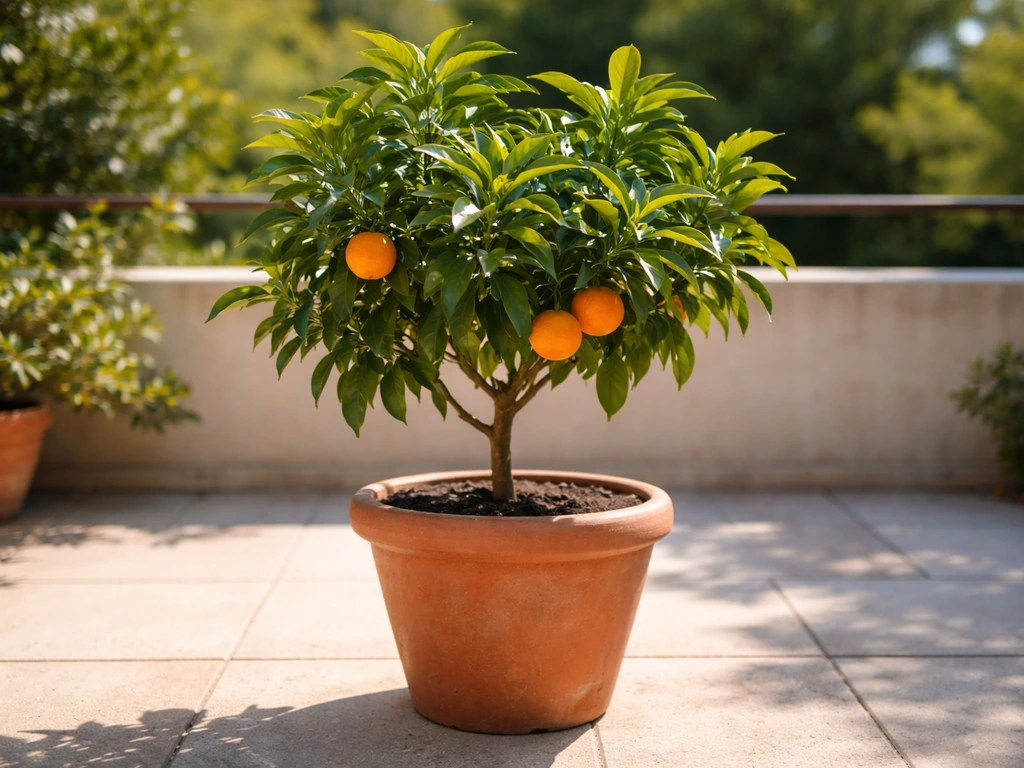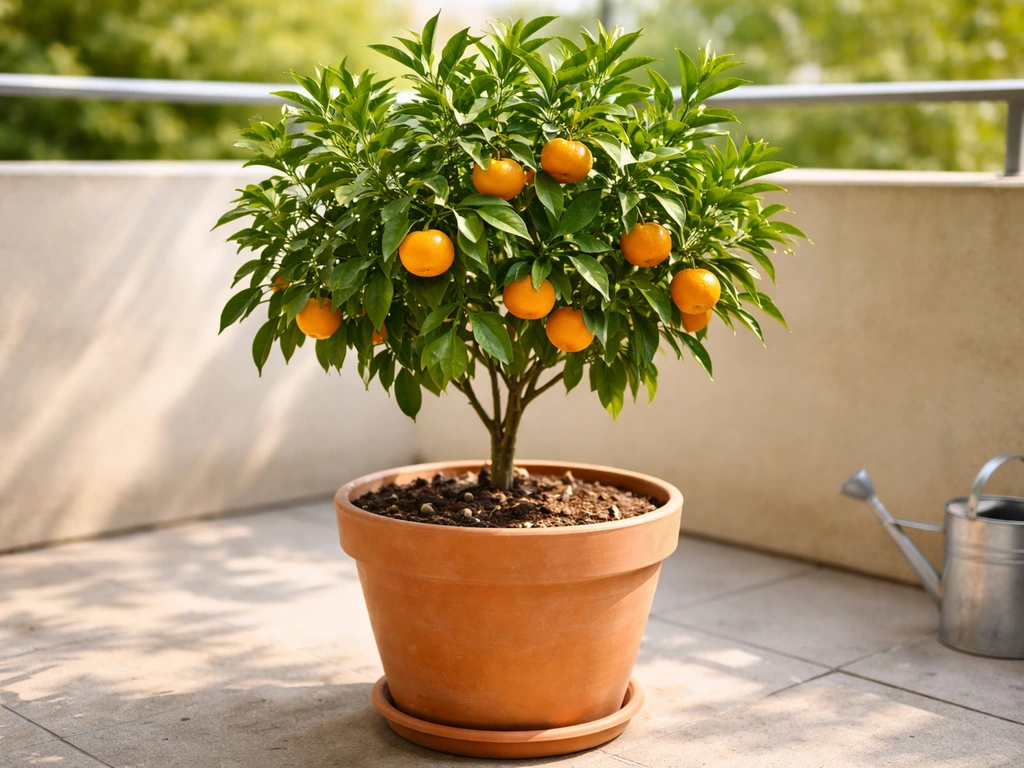
Yes, you can absolutely grow custard apple in a pot, and plenty of home gardeners do it successfully on balconies, patios, and even small courtyards. You won't get an orchard-scale harvest, but a well-managed container tree can fruit within 3 to 5 years from a seedling, or sooner from a grafted sapling. The key is starting with the right pot size, getting the soil drainage right from day one, and understanding that this tree rewards patience and a bit of hands-on attention during flowering.
How to Grow Custard Apple in a Pot Step by Step
Marcus Whitley
22 May 2026
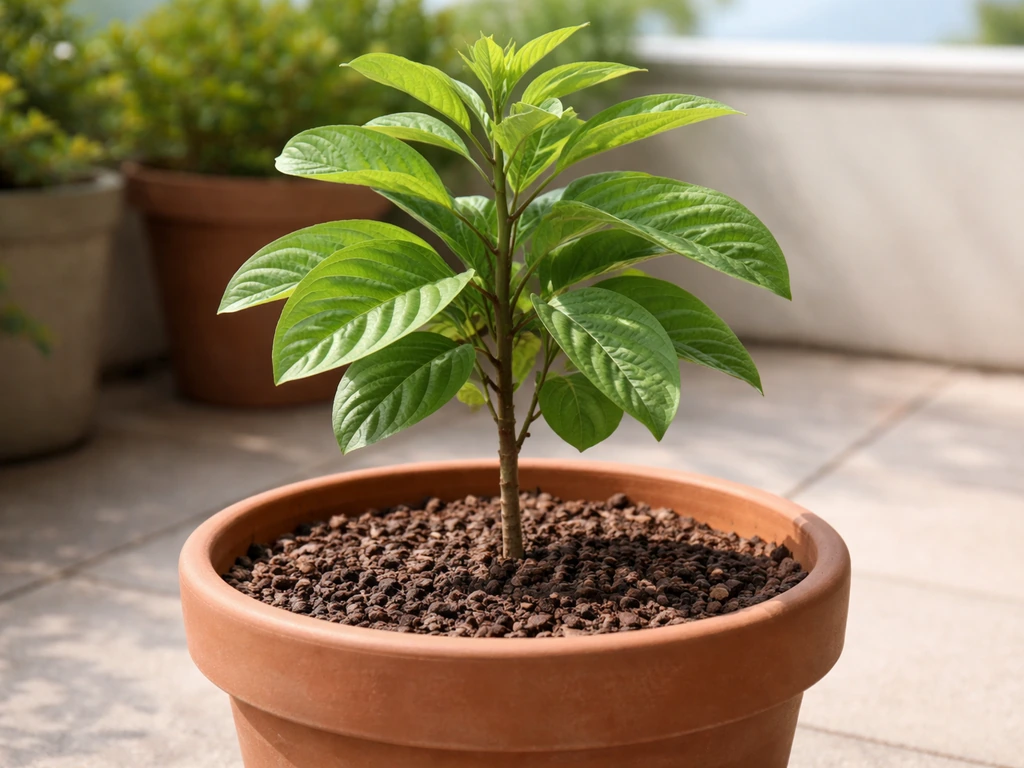
Can custard apple really grow in a pot? Here's what to expect
Custard apple (Annona species, including cherimoya, sugar apple, and their hybrids) are naturally medium to large trees, but they respond well to container growing when their roots are managed properly. In a pot, the tree stays smaller, which is actually a feature if you're tight on space. What you're trading is ultimate yield for flexibility: you can move the tree to protect it from frost, control its soil conditions precisely, and keep it at a manageable height for easy hand-pollination (which you'll almost certainly need to do).
Be realistic going in. A container-grown custard apple is unlikely to produce bushels of fruit like a mature backyard tree. A good season might give you 5 to 15 fruits depending on the variety, pot size, and how well you manage pollination. That said, even a handful of homegrown custard apples tastes far better than anything from a supermarket, so most container gardeners find it completely worth the effort.
Picking the right plant, pot, and variety
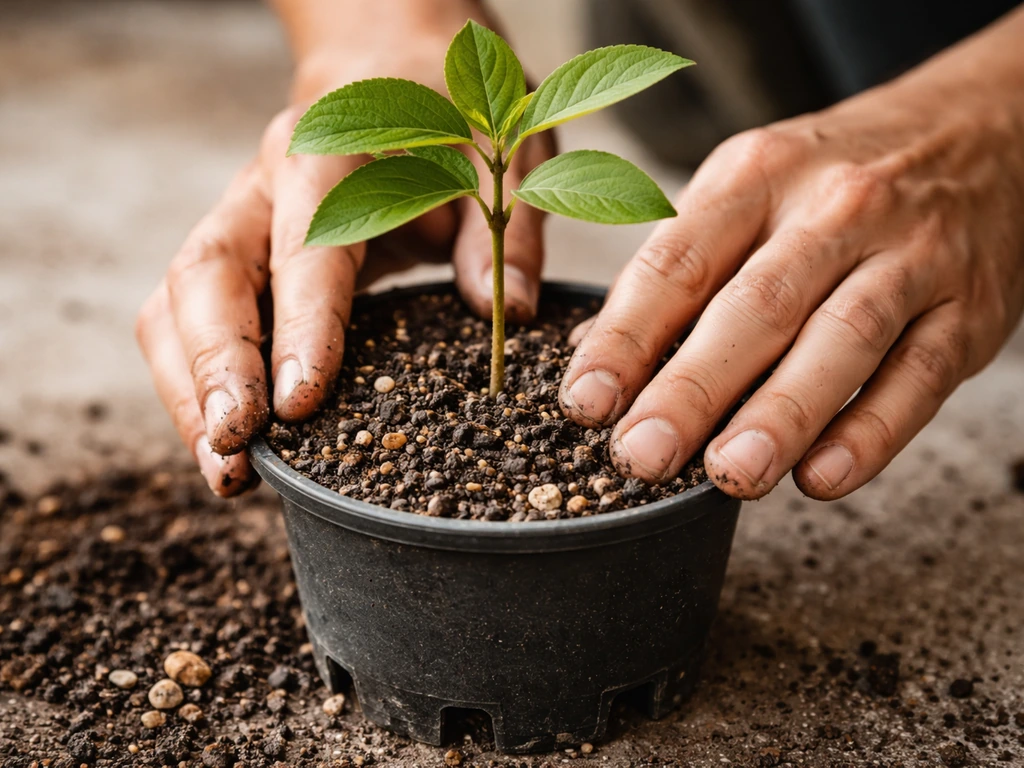
Seedling vs. grafted sapling vs. cutting
If you want fruit sooner rather than later, start with a grafted sapling from a nursery. Grafted trees can fruit in 2 to 3 years in a container. Growing from seed is cheaper and genuinely satisfying, but you're looking at 5 to 7 years before fruit, and you won't know the fruit quality until it actually produces. Cuttings are an option but can be tricky to root. My honest recommendation for beginners: buy a grafted sapling, get it established, and learn the tree's habits before worrying about propagating your own.
Which variety to choose
For containers, look for varieties described as compact or semi-dwarf where available. Cherimoya (Annona cherimola) and atemoya (the cherimoya-sugar apple hybrid) both do well in pots. Atemoya varieties like 'African Pride' and 'Dream' are popular with home growers and tend to be a bit more forgiving in variable conditions. Pure sugar apple (Annona squamosa) is also very container-friendly and typically more tolerant of heat. If you're in a cooler climate, lean toward cherimoya hybrids. In a tropical or subtropical garden, sugar apple is hard to beat.
Getting the pot right
Start a young sapling in a 10- to 12-inch (25 to 30 cm) pot, then move up to a 20- to 25-liter container (roughly 15 to 18 inches in diameter) as the tree establishes over the first year. For a mature fruiting tree, aim for a 40- to 60-liter pot (18 to 24 inches in diameter). Going too large too soon actually slows growth because the excess wet soil around the roots can cause rot before the roots fill the space. Drainage holes are non-negotiable: every pot needs at least two or three large holes in the base. Without them, water sits around the roots and root rot follows quickly, which is one of the most common ways container custard apples die.
Material matters less than drainage, but terracotta pots breathe well and help prevent overwatering. Plastic pots are lighter if you need to move the tree indoors for winter. Avoid dark-colored pots in very hot climates because they can overheat the root zone on sunny days.
The right potting mix for a fruiting custard apple
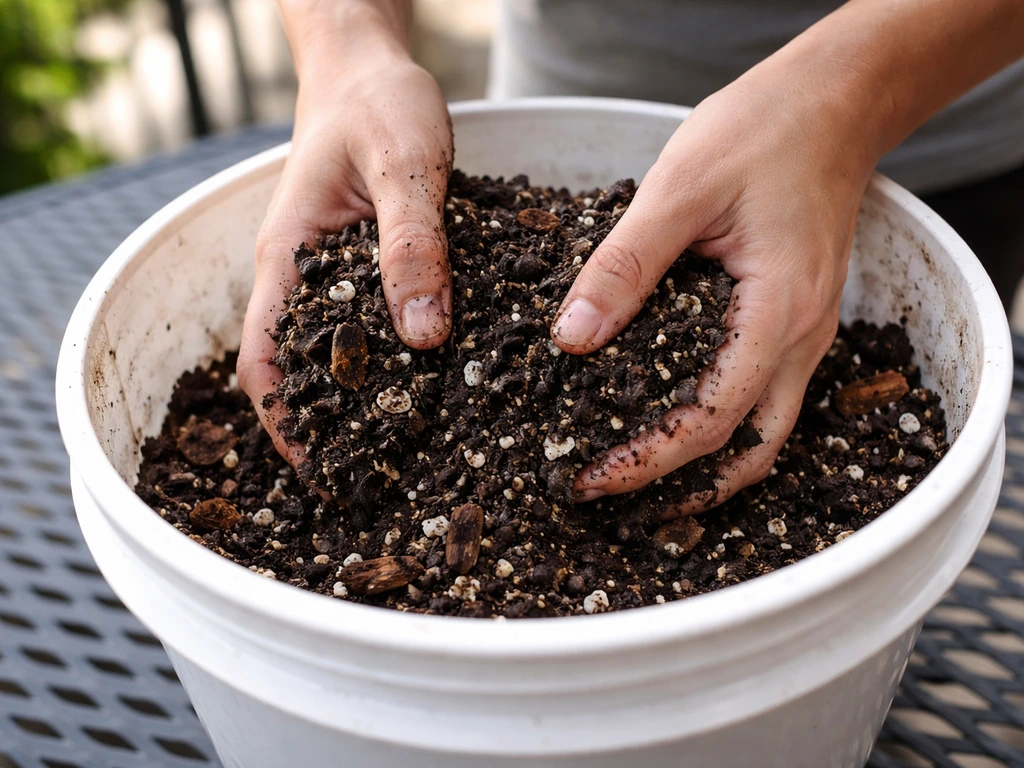
This is where a lot of people go wrong. Standard potting mix on its own is usually too moisture-retentive for custard apple. The roots need good drainage and some air, or they'll rot. I use a mix that's roughly 50% good quality potting compost, 30% coarse perlite or pumice, and 20% coarse sand or fine pine bark. This gives the roots structure, nutrients, and fast drainage all at once.
Custard apple prefers a slightly acidic to neutral pH, somewhere between 6.0 and 7.0. If you're unsure, a cheap pH test kit from a garden center will tell you in minutes. Avoid heavy clay-based mixes entirely. Before filling your pot, place a small piece of mesh or broken pot shard over the drainage holes to stop the mix from washing out without blocking water flow.
- 50% quality potting compost for nutrients and base structure
- 30% coarse perlite or pumice for drainage and aeration
- 20% coarse sand or fine pine bark for additional drainage
- Target pH between 6.0 and 7.0
- Never use garden soil straight from the ground in a container
Light, temperature, and where to put the pot
Sunlight needs
Custard apple wants full sun for most of the day, ideally 6 to 8 hours of direct sunlight. A south-facing or west-facing balcony or patio is ideal. That said, in the peak of summer, intense afternoon sun can scorch the leaves, especially on young trees. If your spot gets brutal afternoon sun from 2 pm onward, some light shade during those hours actually helps rather than hurts. Morning sun is always better than harsh afternoon sun.
Temperature and winter care
Custard apple is a warm-climate tree and cold is its biggest enemy in containers. It can tolerate light frost briefly when mature, but container trees are more vulnerable than in-ground trees because the roots have no insulation from the cold soil mass. If temperatures in your area drop below about 27°F (-3°C) in winter, you need to move the pot indoors or into a greenhouse. There's also an interesting wrinkle: cherimoya-type trees actually need around 100 hours of cool weather at or below 43°F (6°C) over winter to trigger proper spring growth and flower development. So if you're in a tropical area with no winter cool-down, cherimoyas may struggle to flower. Sugar apple and atemoya are better choices for consistently warm climates.
Balcony vs. patio vs. indoors
| Location | Pros | Cons | Best for |
|---|---|---|---|
| Outdoor patio/courtyard | Maximum sunlight, good airflow, easy pollination | Exposed to frost and wind, harder to protect in winter | Subtropical and warm temperate climates |
| Balcony | Good sun if south/west-facing, easy to move indoors | Limited space, wind exposure on upper floors | Urban gardeners in mild to warm climates |
| Indoors (bright window/conservatory) | Full frost protection, stable temperature | Rarely enough light for fruiting, no natural pollinators | Winter storage only, not year-round growing |
The practical takeaway: grow it outdoors for most of the year, move it under cover or indoors only when frost threatens. Trees kept indoors full-time rarely fruit well due to low light and lack of pollinators.
Watering and fertilizing for healthy growth and fruiting
Watering schedule
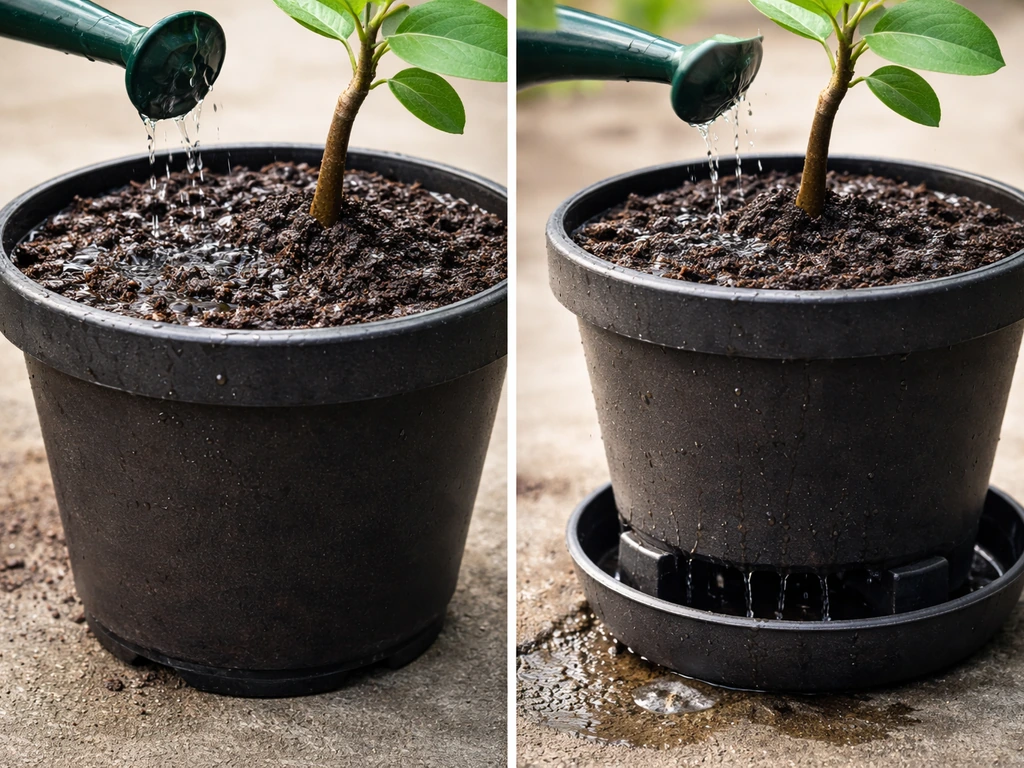
Container trees dry out faster than in-ground trees, but custard apple still hates sitting in wet soil. The rule I follow: water thoroughly until it drains from the bottom, then wait until the top 2 inches (5 cm) of soil are dry before watering again. In summer, that might mean watering every 2 to 3 days. In winter when the tree is semi-dormant, once a week or even less is usually enough. Stick your finger into the soil before every watering session during the first few months until you get a feel for how quickly your specific pot dries out.
One thing to watch: in very hot weather, the tree may look droopy in the afternoon even when the soil is moist. That's heat stress, not thirst. Wait until evening and check again before reaching for the watering can. Overwatering is one of the top killers of container custard apple.
Fertilizing routine
Feed the tree regularly during the growing season (spring through early autumn). Use a balanced slow-release granular fertilizer (something like a 10-10-10 NPK) at the start of spring, worked lightly into the top inch of soil. Then during the active growing season, supplement with a liquid fertilizer every 3 to 4 weeks. Once buds start forming and through flowering, switch to a low-nitrogen, higher-phosphorus and potassium fertilizer (like a 5-10-10 or a tomato-type feed) to encourage fruit set rather than leafy growth. Stop feeding in late autumn when the tree slows down for winter.
Avoid over-feeding with nitrogen. Too much nitrogen produces lush, fast-growing shoots, which sounds good but actually reduces flowering because custard apple flowers best on shorter, less vigorous shoots called spurs. Lush leafy growth with no flowers is almost always a nitrogen excess or pruning problem.
Pruning and training to keep it compact and productive
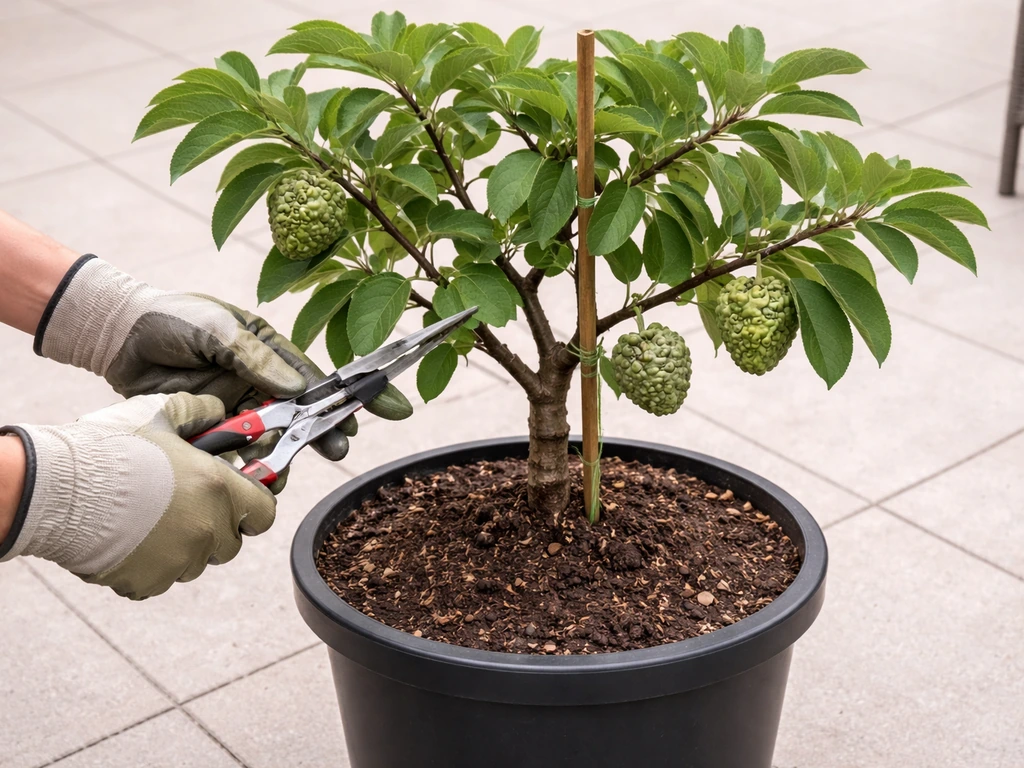
Pruning is genuinely important for container custard apple, not just for size control but because it directly affects how many flowers you get. The tree flowers on short, low-vigor shoots called spurs. Very long, fast-growing shoots (the kind that shoot straight up when you over-fertilize or skip pruning) tend not to flower well. Your job is to encourage moderate, compact growth.
Do the main pruning in late winter or early spring, just before new growth starts. Remove any crossing, crowded, or dead branches first. Then tip-prune (cut back the tips of longer shoots by about one-third) to encourage branching and spur development. Keep the overall height to around 4 to 6 feet (1.2 to 1.8 meters) in a container so you can reach all the flowers for hand-pollination. A light trim after harvest to tidy the canopy also helps set up next year's growth.
For young trees in their first two years, focus on building a strong framework: choose 3 to 4 main branches and let those develop before worrying too much about detail pruning. Think of it like teaching the tree its basic shape before asking it to fruit.
Flowering, fruit set, and what to do when things go wrong
Hand-pollination: the step most beginners miss
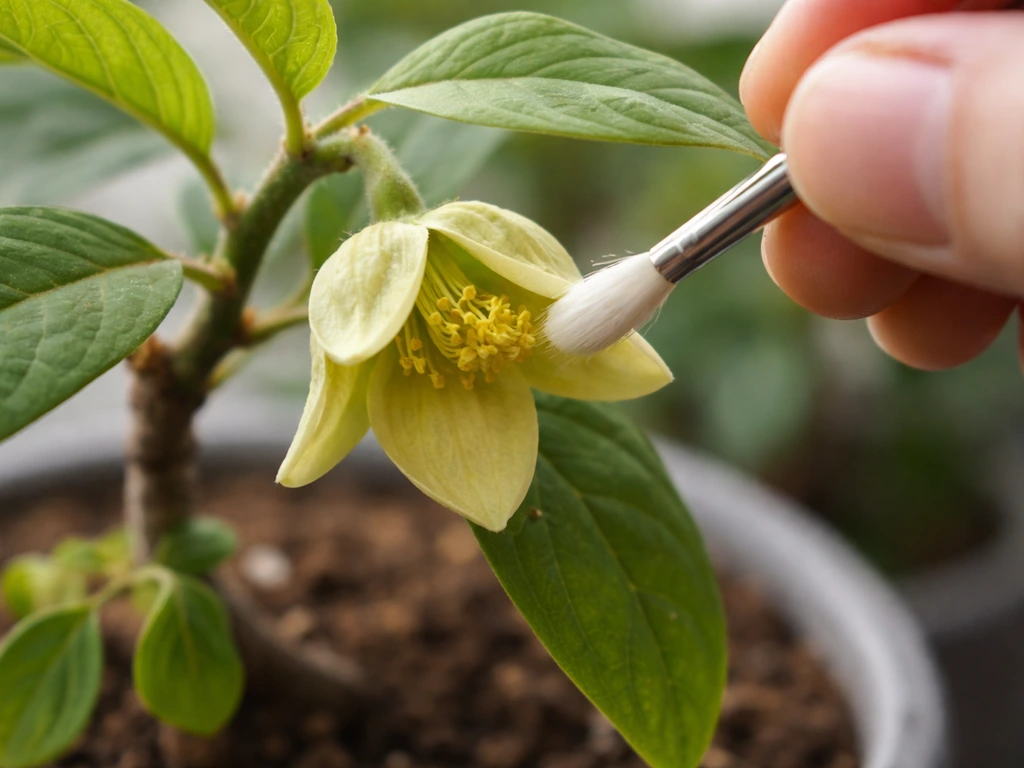
Here's the honest truth that many articles bury: container custard apple almost always needs hand-pollination to set fruit. In the wild, the flowers are pollinated by specific beetles and insects that aren't usually present in your garden or on your balcony. The receptive window for a flower's stigma (the female part) is only about 6 to 8 hours, so timing matters. Flowers go through a two-stage process: they first open in a female phase (stigma receptive, petals slightly open, inner parts creamy), then later open fully in a male phase (shedding pollen). You need to collect pollen from a male-phase flower and transfer it to a female-phase flower.
Use a small soft paintbrush or even a cotton swab. Collect the dusty pollen from a fully open flower (male phase, usually in the afternoon) and dab it gently onto the tip of a half-open flower in female phase (usually in the morning of the same or next day). Do this for every flower cluster you can reach. It sounds fiddly, but after the first few times it takes less than five minutes and dramatically improves your fruit set. If you're growing two plants, even better: cross-pollinate between them.
Temperature during flowering
Pollen viability drops significantly in hot conditions. Studies show custard apple pollen germinates best around 68°F (20°C), with noticeably lower performance at 86°F (30°C) or above. If flowering coincides with a heat wave, fruit set can fail even with good hand-pollination technique. On very hot days, try to pollinate in the early morning when temperatures are cooler, and consider moving the pot to a slightly shadier spot temporarily during extreme heat events. Flower and fruitlet drop in hot summers is frustratingly common but normal.
Common problems and fixes
| Problem | Likely Cause | Fix |
|---|---|---|
| Yellow leaves, drooping | Overwatering or root rot | Check drainage, reduce watering, let soil dry between waterings |
| Lots of leaves, no flowers | Too much nitrogen or over-vigorous shoots | Switch to low-N fertilizer, prune to encourage short spurs |
| Flowers but no fruit | Poor pollination or heat stress | Hand-pollinate daily during flowering, avoid peak heat |
| Small fruit that drops early | Temperature stress or water stress during fruit development | Keep watering consistent, avoid extreme temperature swings |
| White cottony clusters on stems | Mealybugs | Wipe off with alcohol-soaked swab, spray with neem oil solution |
| Sticky leaves, brown bumps on stems | Scale insects | Scrape off, treat with horticultural oil spray |
| Black or brown stem near soil level | Collar rot or root rot | Improve drainage immediately, remove affected roots if possible, reduce watering |
Seasonal care and your next steps checklist
Container custard apple follows a fairly predictable annual cycle once established. Spring is for new growth and (eventually) flowering. Summer is for fruit development. Autumn is harvest time and light post-harvest pruning. Winter is semi-dormancy and (for cherimoya types) the chilling period that sets up next spring's flowering. Here's how to work through each phase practically.
Spring (September to November in the Southern Hemisphere / March to May in the Northern Hemisphere)
- Move the tree back outdoors once overnight temperatures stay reliably above 45°F (7°C)
- Apply slow-release balanced fertilizer to the top of the pot and water in well
- Do main structural pruning and tip-pruning before new growth flushes
- Watch for new growth flush: expect it within 3 to 6 weeks of warming temperatures
- Begin checking daily for flowers as temperatures rise
Summer (active growth and fruiting season)
- Water every 2 to 3 days in hot weather, always checking soil moisture first
- Switch to low-nitrogen fertilizer once you see flower buds forming
- Hand-pollinate every morning during flowering (the most important task of the year)
- Move pot to slight afternoon shade during heat waves above 95°F (35°C)
- Watch for mealybugs and scale insects, especially in humid weather
Autumn (harvest and wind-down)
- Harvest fruit when they give very slightly to gentle pressure and the skin lightens slightly
- Handle fruit with extreme care as they bruise very easily
- Do a light tidy-prune after harvest to remove any dead wood
- Gradually reduce watering as temperatures drop
- Stop fertilizing by mid-autumn
Winter (dormancy and protection)
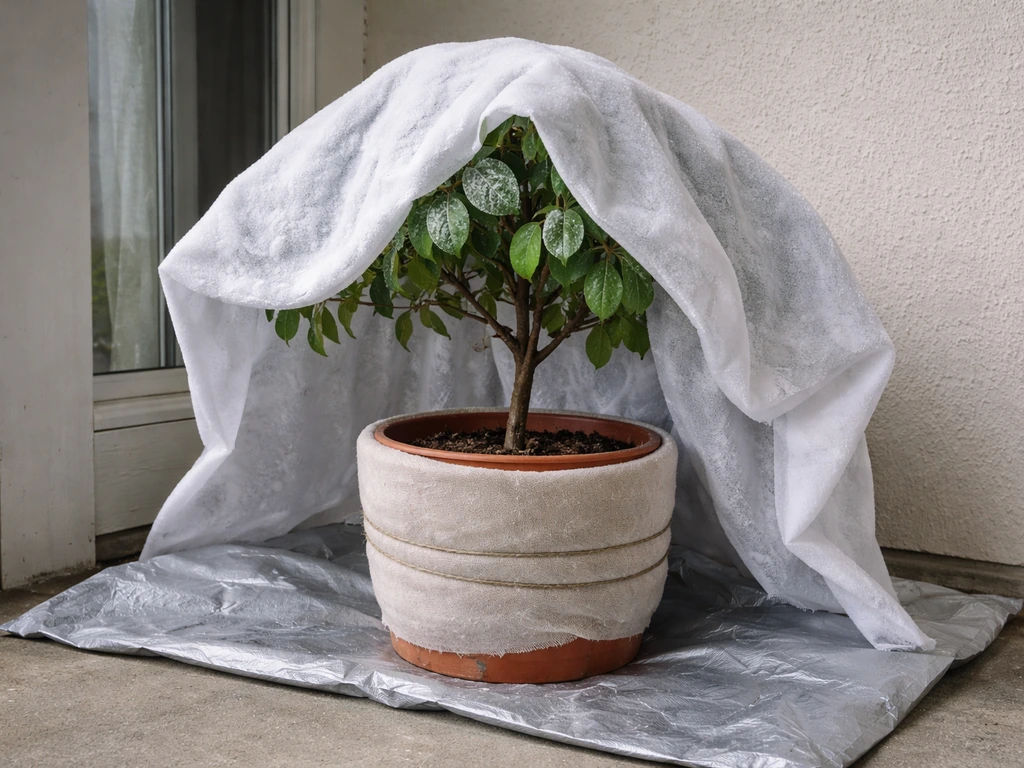
- Move pot to a frost-free location if temperatures will drop below 27°F (-3°C)
- For cherimoya types, allow the tree to experience some cool weather (around 43°F / 6°C) for at least 100 hours total to set up spring flowering
- Water minimally, only when soil is very dry
- Do not fertilize
- Check the pot for roots coming out of drainage holes: if heavily root-bound, repot one size up in early spring
What to do this week if you're just starting out
- Source a grafted custard apple or atemoya sapling from a nursery if you can, or plant a seed in a small pot to start the process
- Prepare your potting mix using the 50/30/20 blend described above, or buy a well-draining cactus/citrus mix as a starting point
- Choose your largest available pot with good drainage holes, or order a 20- to 25-liter container
- Pick your sunniest outdoor spot that gets 6 or more hours of direct sun each day
- Plant, water in well, and put the pot in its spot — then let the tree settle for two weeks before doing anything else
- Set a reminder to check soil moisture daily for the first month so you can learn how fast your specific pot dries out
Growing custard apple in a pot is a slow-burn project compared to something like tomatoes or herbs, but the payoff when you pick your first homegrown fruit is genuinely satisfying. If you also enjoy tropical container fruits, the approaches for growing related trees like mango or sapota in pots share a lot of the same principles around pot size, drainage, and heat management, so the skills carry over well. If you want to try a different kind of citrus, check out how to grow mandarin oranges in a pot for container-specific tips on light, watering, and fruiting. If you want another citrus option for containers, see how to grow tangerines in a pot, including what to plant and how to manage sunlight and watering. Sapota in containers also needs a well-draining potting mix, consistent watering, and enough warmth to keep growth steady sapota in pots. To speed up mango trees in pots, focus on choosing a sunny spot, using a well-draining potting mix, and feeding properly during active growth so the tree establishes fast. Give the tree a good first season to settle, stay consistent with watering, and prioritize hand-pollination when flowers appear. That combination will carry you most of the way to fruit.
FAQ
Can I grow custard apple in a pot from seed and still get good fruit?
Yes, but it changes your expectations. Seedlings often take longer and may not come true to the parent fruit type. If you plant seed, start with a warm, consistent germination environment, then plan on a longer “learning” phase (5 to 7 years). If you want specific fruit quality or reliable timing, grafted nursery saplings are the safer route.
How large should the pot be when I first plant my custard apple?
Choose the pot size based on the tree’s current root mass, not only the calendar. A typical mistake is jumping straight to a 40 to 60 liter pot before the roots fill the smaller container, which keeps soil too wet and increases rot risk. Instead, upsize gradually over the first year or two (for example, 10 to 12 inch to 20 to 25 liter, then larger when the tree is clearly established and actively growing).
How do I know whether my pot custard apple needs water or is being overwatered?
Don’t rely only on “feels dry” watering. In containers, the top few centimeters can dry while the lower soil stays wet, especially after a cool night. Use a finger check 2 inches down, and make sure water actually runs out of the bottom each time. If you get drainage but leaves still wilt, the issue may be heat stress, not thirst.
When should I prune a potted custard apple, and should I prune after it starts flowering?
Use pruning mainly to manage flowering and spur formation, not to force dwarfing. After the main cut in late winter or early spring, avoid heavy summer pruning that removes potential spurs. If you must correct shape during the year, do only light tidy trims, and keep the overall height reachable for hand-pollination.
What if I hand-pollinate but my fruitlets still drop?
Hand-pollination is easiest when you can control timing. If you see flowers in different phases, you may need to revisit the same cluster over 2 days, because the receptive (female) window is short. Also, pollen performs worse during very hot weather, so if temperatures are high, move the pot to light shade temporarily and pollinate early morning.
Will my custard apple fruit if I live in a tropical area with no winter chill?
Yes, and it’s a useful troubleshooting tool. In winter, a cool-down is required for cherimoya-type trees to trigger proper flowering, so if your nights never cool enough, flowers may fail even with correct care. Sugar apple and atemoya are generally more forgiving in consistently warm areas, so climate matching is often the deciding factor.
How can I tell if my potted custard apple has root rot, and what should I do?
A pot can create root-rooting problems that don’t show up immediately. Look for peeling bark, a sour smell from the soil, or leaves that yellow while the mix stays wet. The fastest fix is to check drainage first, then reassess your potting mix (custard apple needs fast drainage and air). If rot is suspected, repot into fresh mix and remove any dark, mushy roots.
What fertilizer schedule works best for potted custard apple flowering?
Inconsistent fertilizing can reduce spur growth and flowering. During active growth, use the balanced slow-release start, then switch to a lower-nitrogen, higher-phosphorus and potassium formula once buds are forming. A common mistake is continuing nitrogen-heavy feeding past the point where you want flowers, which can create lush shoots with fewer blooms.
Should I move my potted custard apple to shade during summer heat?
Yes, and it affects light management and fruit set. Full sun helps, but young trees can scorch in intense afternoon heat. If your balcony gets harsh sun from mid-afternoon onward, provide temporary light shade (not full removal of sun) during the hottest hours, and keep the pot where morning sun is strongest.
Can I keep my custard apple indoors all year to avoid frost?
It can, but it depends on what “indoors” means. If indoors is the only option during winter, prioritize maximum light near a bright window or under grow lights, and expect reduced flowering quality due to less light and fewer pollinator cues. Better results usually come from moving the pot indoors only when frost threatens, while keeping the tree outdoors for most of the year.
My pot drains but still stays soggy, what should I check first?
Watch the drainage system and soil structure, not just the plant. If you see water pooling after watering, your pot may be too dense at the bottom, the drainage holes could be partially blocked by compacted mix, or the pot sits in a saucer that prevents runoff. Lift the pot slightly off the ground, ensure multiple large drainage holes, and avoid blocking them with an overly thick layer of mesh.