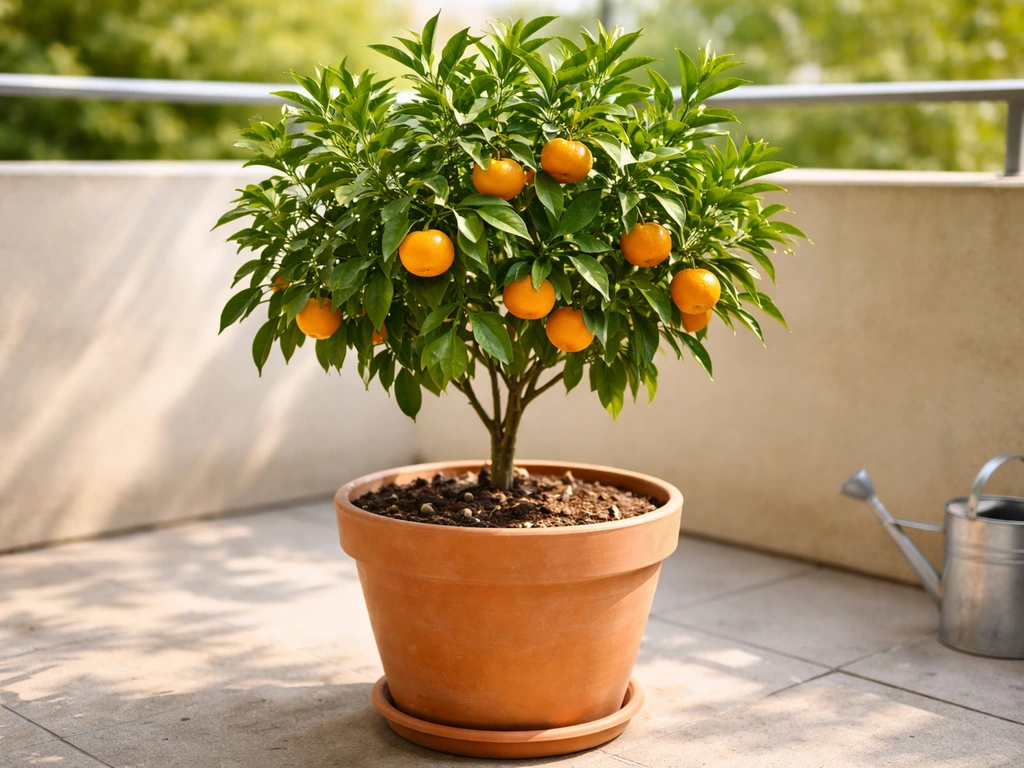
You can absolutely grow mandarin oranges in a pot, and they're honestly one of the most rewarding citrus trees to grow in a container. Pick a dwarf variety, get your pot size right (at least 15 gallons once the tree matures), use a fast-draining citrus potting mix, give it 8 or more hours of direct sun, water consistently without letting it sit in soggy soil, and feed it regularly with a citrus-specific fertilizer.
How to Grow Mandarin Oranges in a Pot: Step-by-Step Guide

Marcus Whitley
16 May 2026
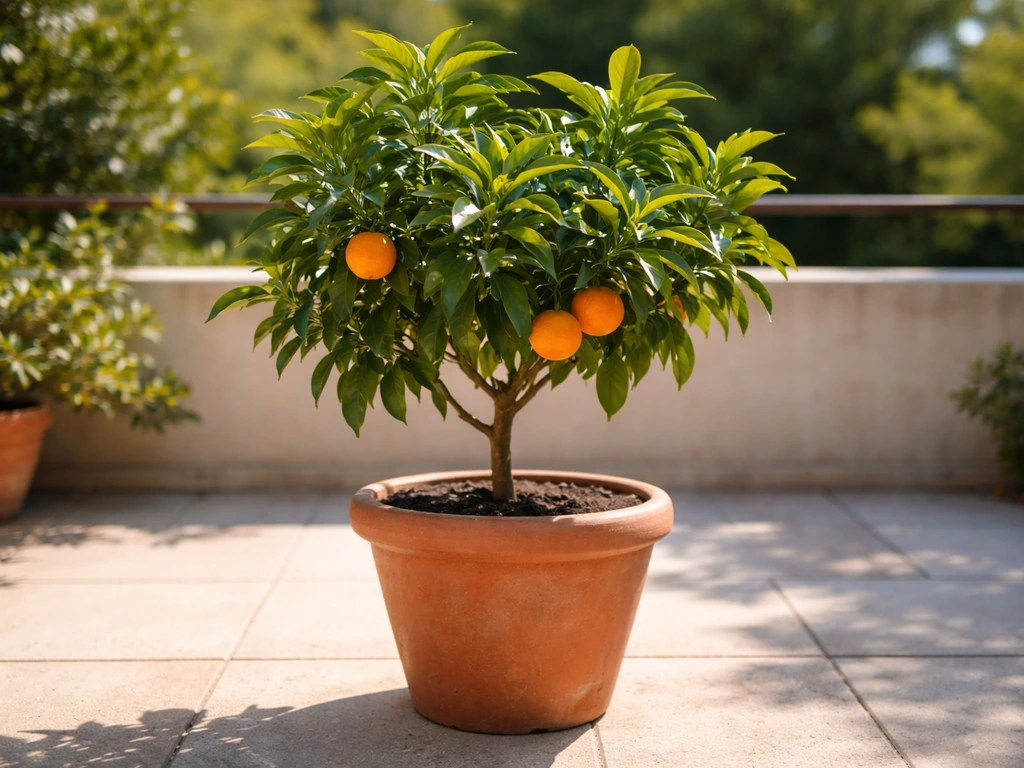
Do those things and you'll have a healthy tree producing sweet, peelable fruit even on a balcony or patio. If you’re specifically aiming for tangerines, the same container-size and care basics apply, but you’ll want to choose a true tangerine variety suited to your climate grow tangerines in a pot.
Choosing the right mandarin variety and container size
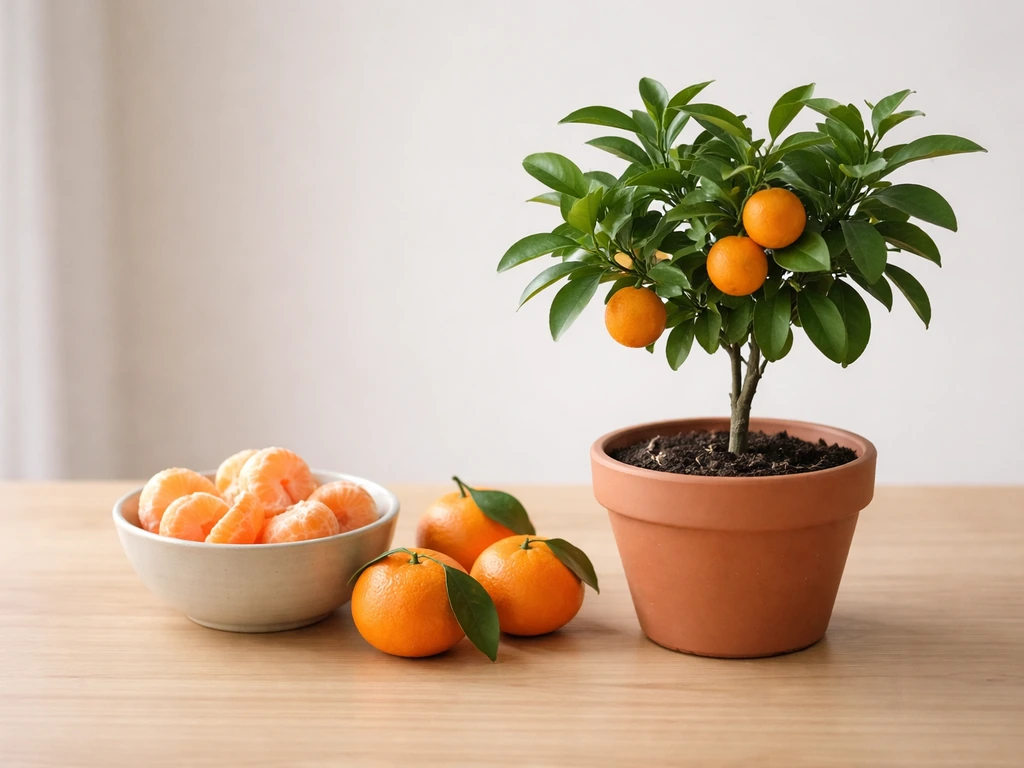
Not every mandarin variety is a great fit for container life. You want a naturally compact or dwarf tree that won't outgrow your pot in two seasons. Here are the varieties that consistently do well in pots:
- Clementine (Citrus clementina): Compact, sweet, and one of the most popular choices for containers. Fruits reliably and stays a manageable size.
- Satsuma (Citrus unshiu): Excellent cold tolerance compared to most citrus, making it ideal if you live somewhere with chilly winters. Very sweet fruit with almost no seeds.
- Owari Satsuma: A specific Satsuma cultivar that's especially well-suited to containers and is widely available at nurseries.
- Kishu: A tiny, seedless mandarin that stays naturally small. Great for tight spaces.
- Tango and W. Murcott: Newer seedless varieties that fruit heavily and handle container growing well.
On pot size: this is where a lot of beginners go wrong by starting too small and never upsizing. [A small pot actively limits root growth](https://content. ces. ncsu.
edu/extension-gardener-handbook/18-plants-grown-in-containers), which in turn limits the canopy and, critically, reduces flowering and fruiting. Start a nursery tree in a 5-gallon container if it's small (under 2 feet), then move it up to a 10-gallon as it grows, and plan on settling into a 15-gallon container for the long term. A 15-gallon pot is roughly 16 inches wide and deep, which gives the roots enough room to support a good-sized fruiting tree.
Go wider rather than deeper if you have a choice, since citrus roots spread outward more than they go straight down. Terracotta and fabric pots both work well. Terracotta looks great but dries out faster, which can actually be a feature if you tend to overwater. Fabric pots (grow bags) are lightweight and promote excellent drainage but you'll water more frequently in summer.
Potting mix, soil setup, and drainage essentials
Citrus hates sitting in wet soil. The number one killer of potted mandarins is root rot from poor drainage, so getting the soil mix right from day one makes everything easier. Do not use standard garden soil or basic potting soil straight from the bag. Garden soil compacts in a pot and holds too much moisture. Instead, use a dedicated citrus and cactus potting mix, or blend your own by combining two parts high-quality potting mix with one part perlite or coarse pumice. The perlite opens up the mix so water flows through freely and air gets to the roots.
Drainage holes are non-negotiable. Your pot needs at least two or three drainage holes at the bottom. If you want to place a saucer underneath to protect your patio or floor, that's fine, but never let the pot sit in standing water. Empty the saucer after every watering.
Roots left in water even for a day or two start to rot, and once rot takes hold it's very hard to reverse. If your pot doesn't have enough holes, drill more before you plant. A quick trick to improve drainage further: place a one-inch layer of coarse gravel or broken pot shards at the very bottom of the container before adding soil. This keeps the drainage holes from getting clogged with roots or compacted mix over time.
Aim for a slightly acidic soil pH between 6.0 and 7.0. Most citrus mixes are already formulated in this range. If you're mixing your own, you can pick up a cheap pH test kit at any garden center and adjust with sulfur (to lower pH) or lime (to raise it) if needed.
Planting and your best options for getting started
Nursery tree vs. seed: what actually makes sense
Growing from seed is possible, but I'd honestly steer most people toward a nursery-grown grafted tree, especially if you want fruit in a reasonable timeframe. A seed-grown mandarin can take 7 to 15 years to produce its first fruit, and the fruit quality is unpredictable because mandarin seeds don't always grow true to the parent variety. A grafted tree from a nursery, on the other hand, can start flowering within 1 to 3 years and you know exactly what you're getting. Look for a tree that's at least 1 to 2 years old and already showing healthy, dark green foliage. If it already has a few small branches, even better.
If you do want to try seed starting out of curiosity or for the experience, use seeds from a fresh, ripe mandarin. Plant them about half an inch deep in moist seed-starting mix, cover the pot with plastic wrap to retain humidity, and keep it somewhere warm (around 70 to 85°F). Germination usually takes 2 to 4 weeks. Once seedlings have two sets of true leaves, pot them up individually. Just go in with realistic expectations about the long timeline to fruit.
How to plant your nursery tree
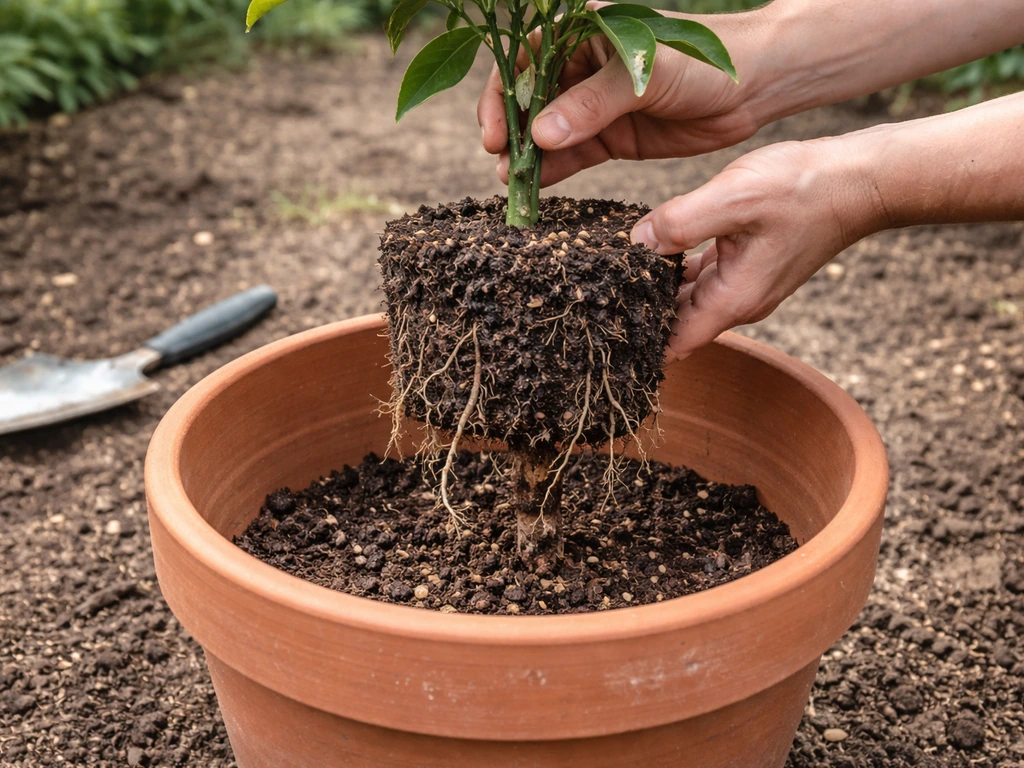
- Fill your pot about one-third of the way with your citrus potting mix.
- Remove the tree from its nursery container and gently loosen the outer roots if they're circling the root ball.
- Place the tree in the pot so the graft union (the slight knobby bump near the base of the trunk) sits at least 2 inches above the soil line. This is important: burying the graft union can cause problems.
- Fill in around the roots with potting mix, firming it gently as you go. Leave about an inch of space between the soil surface and the rim of the pot for watering.
- Water thoroughly until water runs freely from the drainage holes.
- Place in a sunny location and resist the urge to fertilize for the first 4 to 6 weeks while the tree settles in.
Light, watering, and feeding: the everyday routine
Light requirements
Mandarins need a lot of sun, full stop. Aim for at least 8 hours of direct sunlight per day. Outdoors, a south-facing or west-facing spot is ideal. Indoors, a south-facing window with genuinely bright, unobstructed light is the minimum. If your indoor light isn't strong enough, supplement with a full-spectrum grow light for 12 to 14 hours a day. Leggy, pale growth and a lack of flowers are almost always a sign the tree needs more light. If you're moving the tree outdoors for summer, do it gradually over 7 to 10 days to avoid sunscald on leaves that have been adapting to indoor light.
Watering
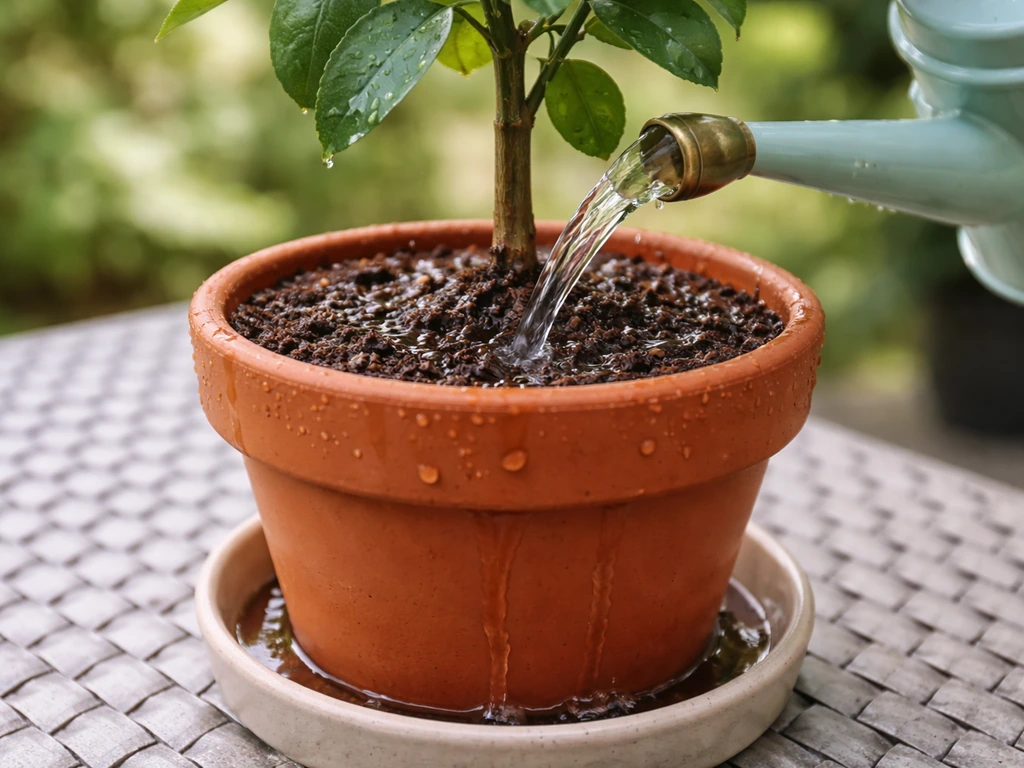
The goal is to keep the soil evenly moist but never waterlogged. In practice, this means watering when the top 1 to 2 inches of soil feel dry to the touch. In summer, that could be every 2 to 3 days for a smaller pot or every 4 to 5 days for a larger one. In winter, it could be once a week or even less.
The best test: stick your finger an inch or two into the soil. If it feels dry, water. If it still feels moist, wait. When you water, water slowly and thoroughly until it drains freely from the bottom, then stop.
Never let the pot sit in that runoff water. Both underwatering and overwatering cause leaf drop, which makes it hard to diagnose, so when in doubt, check the soil before watering rather than following a rigid calendar schedule.
Fertilizing
Potted citrus are heavy feeders and they'll exhaust the nutrients in their potting mix faster than trees planted in the ground. Use a slow-release granular citrus fertilizer at the start of spring, following the package directions for pot size. Then supplement every 4 to 6 weeks through spring and summer with a liquid citrus fertilizer or a balanced water-soluble fertilizer (like a 10-10-10 or citrus-specific formula). Ease off in fall and stop feeding altogether in winter when growth slows. Magnesium deficiency (yellowing leaves with green veins) is common in potted citrus. If you see it, a diluted Epsom salt solution (one tablespoon per gallon of water, applied monthly through the growing season) usually clears it up within a few weeks.
Temperature, pruning, and getting your tree to flower and fruit
Temperature and overwintering
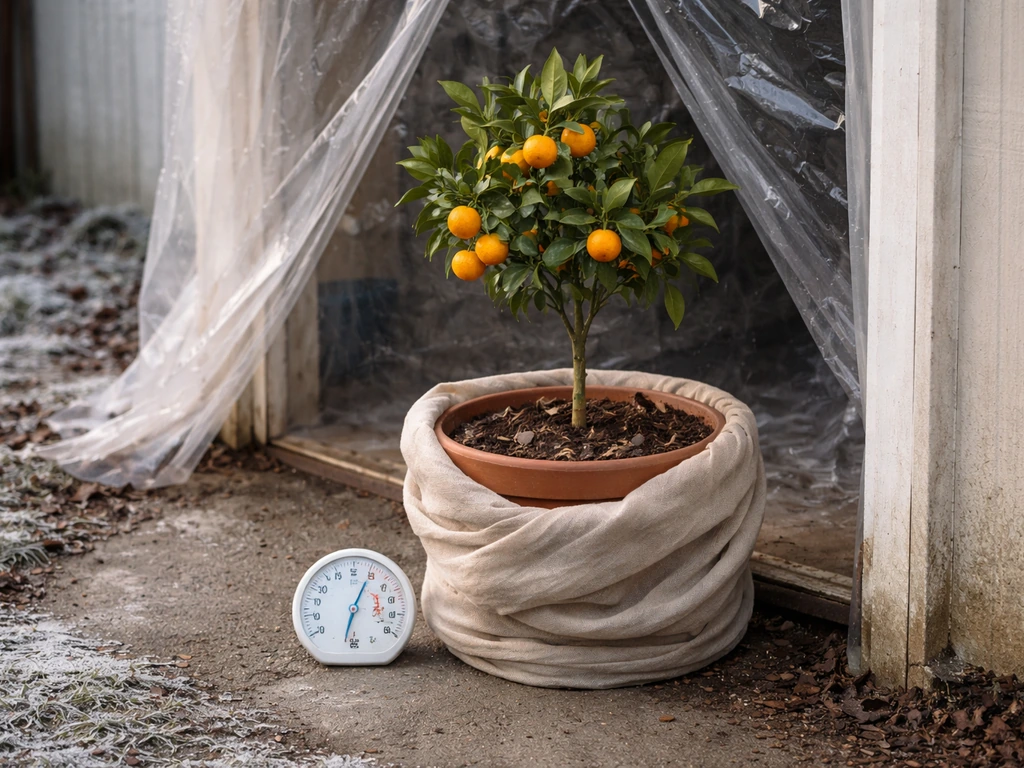
Mandarins thrive between 55 and 95°F. Most varieties can tolerate a light frost briefly, but sustained temperatures below 28 to 32°F will damage or kill the tree. Satsumas are the most cold-hardy of the bunch and can handle temperatures down to around 15°F for short periods, which is one reason they're a smart choice for gardeners in marginal climates. If you live somewhere with cold winters, bring your potted mandarin indoors before the first frost.
Place it near your brightest window or under grow lights. Reduce watering in winter since the tree is semi-dormant, and stop fertilizing until spring. One thing that helps flowering the following season: a slight cool-down in late fall (nights around 40 to 50°F for several weeks) acts as a natural trigger for the tree to set flower buds. If you can give it a few weeks of that before bringing it fully inside, you'll likely get better bloom in spring.
Pruning and shaping
Container mandarins don't need heavy pruning, but light shaping keeps them manageable and actually improves fruit production. The best time to prune is in late winter or early spring, just before new growth kicks off. Remove any dead, damaged, or crossing branches first. Then trim back any branches that are making the canopy too dense (good airflow through the canopy reduces pest and disease problems).
If you want to keep the tree compact, cut back the longest shoots by a third. Always cut just above an outward-facing bud or leaf node. Suckers (shoots growing from below the graft union at the base of the trunk) should be removed immediately whenever they appear. They're growing from the rootstock, not the fruiting variety, and if left alone they'll take over the tree.
Encouraging flowering and fruiting
Beyond good light and proper feeding, a few things specifically encourage a mandarin to flower and fruit in a pot. First, a slight water stress just before the expected bloom period (late winter to early spring) can trigger flowering. Ease off watering for about two weeks, letting the top few inches of soil dry out more than usual, then resume normal watering. Second, the cool-night cue mentioned above is genuinely effective.
Third, resist the urge to over-fertilize with high-nitrogen feeds in late summer and fall. Too much nitrogen pushes leafy growth instead of flower buds. Switch to a lower-nitrogen, higher-phosphorus fertilizer (like a bloom booster) in late summer to encourage the tree to put energy into flowering. Finally, if your tree sets a very heavy crop of small fruitlets, thin them by hand to about one fruit every 4 to 6 inches of branch.
This feels counterintuitive, but thinning produces larger, better-quality fruit and prevents the tree from exhausting itself.
Common problems and how to fix them fast
| Problem | Likely Cause | Quick Fix |
|---|---|---|
| Yellowing leaves (overall) | Nitrogen deficiency or overwatering | Check soil moisture first; if not waterlogged, apply a balanced liquid citrus fertilizer |
| Yellow leaves with green veins | Magnesium or iron deficiency | Apply Epsom salt solution monthly; use iron chelate if veins stay green after 3 to 4 weeks |
| Leaf drop (sudden) | Overwatering, underwatering, or temperature shock | Check soil moisture and move tree away from cold drafts or heating vents |
| Sticky residue on leaves | Scale insects or aphids | Wipe leaves with insecticidal soap solution; repeat weekly for 3 to 4 weeks |
| Tiny webs on leaf undersides | Spider mites (usually in hot, dry conditions) | Mist undersides of leaves daily; use neem oil spray every 5 to 7 days |
| No flowers despite healthy growth | Too much nitrogen, insufficient light, or no cool period | Reduce nitrogen, ensure 8+ hours of sun, and allow cool nights in fall |
| Fruit drops before ripening | Inconsistent watering or low humidity | Establish a regular watering routine; group with other plants to raise local humidity |
| Root bound / stunted growth | Pot is too small | Repot into the next size up (2 to 4 inches wider) in early spring |
One pest worth specifically watching for indoors is scale insects. They look like tiny brown or tan bumps on stems and the undersides of leaves and are easy to miss until the infestation is significant. The sticky residue they leave (called honeydew) is often the first sign. Catch it early and it's easy to deal with: a cotton swab dipped in rubbing alcohol applied directly to each bump works well for small infestations, followed by a neem oil spray to prevent reinfestation.
Harvesting, overwintering, and keeping your tree going long-term
When and how to harvest
Mandarin oranges don't ripen off the tree, so the timing of harvest matters. Most varieties are ready between October and January, though Satsumas can be ready as early as September and some late-season varieties extend into March. Don't rely solely on color: mandarins can turn orange while still being tart inside, and in warm climates they sometimes stay greenish-orange even when fully ripe. The best test is to gently squeeze the fruit.
A ripe mandarin feels slightly springy and the skin pulls away easily from the fruit inside. Taste one before picking the whole crop. When you're ready to harvest, use scissors or pruning snips and cut at the stem just above the fruit rather than pulling, which can tear the peel and shorten shelf life.
Long-term container care
A healthy potted mandarin can live and fruit productively for 10 to 20 years or more with proper care. Every 2 to 3 years in spring, check whether it's time to repot. You'll know the tree is root-bound when roots start growing out of the drainage holes, water rushes straight through without being absorbed, or growth slows significantly despite good care.
When repotting, go up one pot size (not two), refresh the potting mix completely, and prune back any damaged or circling roots you find. If you've hit your maximum manageable pot size (most home gardeners stop around 20 to 25 gallons), you can do a root prune instead: carefully remove the tree, trim back the outer roots by about 20 to 25 percent, and replant in the same pot with fresh mix.
Every spring, scrape away and replace the top two inches of potting mix with fresh mix. This refreshes nutrients and removes any salt buildup from fertilizers that accumulates on the soil surface over time. Flush the entire pot with plain water every few months (water heavily until it runs clear from the drainage holes) to push out excess salt. These small habits make a big difference over the years and keep your tree productive long after the initial excitement of getting your first fruit has worn off.
If you enjoy growing citrus in containers, mandarins are a great gateway. If you want to try another container-friendly fruit tree next, you can also learn how to grow sapota in a pot by matching its sunlight, warmth, and potting mix needs mandarins are a great gateway. Once you have the routine dialed in, other container fruit trees like mangoes and sapota follow many of the same core principles around pot size, drainage, and sun exposure.
The habits you build growing a mandarin will serve you well across a whole range of container fruit trees. Custard apple in pots needs a similarly well-draining mix, bright light, and careful watering so the roots never sit wet grow custard apple in pot. If you want to try something new after mandarin, these same pot-growing fundamentals also apply to learning how to grow custard apple in pot container fruit trees.
FAQ
How can I tell if my potted mandarin is actually getting enough water when the weather changes?
Use a two-part check, feel plus weight. After watering, lift the pot, then weigh it again a day later or after a hot spell, if it feels dramatically lighter you likely need water sooner. Also re-check moisture depth (top 1 to 2 inches) because surface soil can dry while deeper soil stays moist.
My mandarin flowers but drops the fruitlets. What should I adjust first in a pot?
Start with light and watering consistency, then avoid late nitrogen. Flower drop often happens when the tree goes slightly dry or wet during bloom. Confirm the pot sits in uninterrupted sun for 8+ hours, then keep watering steady and switch to a lower-nitrogen, bloom-friendly fertilizer as you approach late summer into fall.
What is the best potting mix “recipe” if I cannot find citrus mix locally?
Aim for high air space and drainage: use high-quality potting mix plus perlite or coarse pumice (about 2 parts potting mix to 1 part perlite/pumice). Make sure the mix is loose and doesn’t form a tight clump when squeezed. If it compacts easily, you need more perlite/pumice.
Should I use a saucer under my pot, and how do I prevent root rot?
You can use a saucer only as a barrier for floors, not as a water reservoir. Water until it drains out, wait a few minutes, then empty the saucer completely. If you notice standing water after watering, improve drainage or add more drainage holes.
Can I grow a mandarin indoors year-round in a pot, and will it fruit?
Yes for healthy growth, fruiting is harder without strong light and the right temperature cues. Plan for a south-facing window with unobstructed light, and if growth becomes leggy or pale, add a full-spectrum grow light 12 to 14 hours daily. For better flowering, provide a cool-night period in late fall before fully bringing it inside.
Do I need to protect my mandarin from cold nights in a container the same way as an in-ground tree?
No, containers cool faster and warm faster, so be more proactive. Bring the pot indoors or use protection before sustained cold near 28 to 32°F. If you can only cover it outside, use a breathable wrap and keep the pot’s roots insulated, not just the branches.
My leaves are yellow with green veins, is it always magnesium deficiency?
Often it is, especially in pots where nutrients deplete faster, but check for also overwatering or poor drainage since stressed roots can mimic nutrient issues. If the symptom matches (yellowing with green veins) apply a diluted Epsom salt solution monthly during the growing season, and at the same time make sure your watering pattern and drainage are correct.
How often should I repot, and what do I do if my roots keep filling the pot?
Plan to check every 2 to 3 years in spring. If roots are coming out of drainage holes or water runs straight through, upsize by one pot size. If you’ve reached your workable maximum, do a root prune (trim about 20 to 25% of outer roots) and refresh the mix, then keep watering a bit lighter for 1 to 2 weeks to reduce transplant stress.
What’s the safest way to encourage bloom without damaging the tree?
Avoid high-nitrogen fertilizer late in the season. If you try the pre-bloom water stress, do it gently and only in late winter to early spring when buds are expected, drying the top few inches more than usual for about two weeks. Resume normal watering afterward, and do not combine stress with major pruning at the same time.
How do I thin mandarin fruitlets without making a mess or harming the tree?
Thin when fruitlets are small and count spacing carefully. Remove the weakest-looking fruitlets by hand, leaving about one fruit every 4 to 6 inches along the branch. Work slowly and avoid twisting aggressively, quick, gentle pinching is usually enough.
Scale insects are on my plant, what should I avoid doing during treatment?
Avoid simply spraying once and assuming it’s gone. Sticky honeydew can protect some scale from treatments, so spot-treat each visible bump first. After alcohol swabbing for a small infestation, follow with neem oil to reduce reinfestation, and repeat as needed over a few weeks if you see new bumps.
How do I know my mandarin is ripe if color is misleading?
Do two checks: skin pull and taste. A ripe fruit will feel slightly springy and the skin should come away more easily from the segments. Since mandarins do not ripen after picking, always taste one fruit first before harvesting the whole batch.
What should I do with fallen leaves or leaf drop in a pot, is it always a disease?
Not necessarily. Leaf drop in potted citrus is frequently triggered by watering swings, sudden temperature changes, or moving it between indoor and outdoor conditions. Before treating anything, check soil moisture (don’t guess), confirm sun exposure, and avoid fertilizing right after major stress like cold exposure or repotting.