Anthuriums are one of the best flowering houseplants you can grow in a pot. If you want to try another colorful bulb for your patio, learn how to grow grape hyacinth in pots with the right container and watering routine. They're forgiving enough for beginners, dramatic enough to feel rewarding, and they'll bloom repeatedly for years if you get a few basics right: the correct pot size, a chunky well-draining mix, bright indirect light, and a watering routine that keeps the roots moist but never soggy. Get those four things sorted and your anthurium will thrive on a windowsill, balcony shelf, or apartment corner with very little fuss.
How to Grow Anthurium Plants in Pots: Step-by-Step Guide
Marcus Whitley
2 May 2026
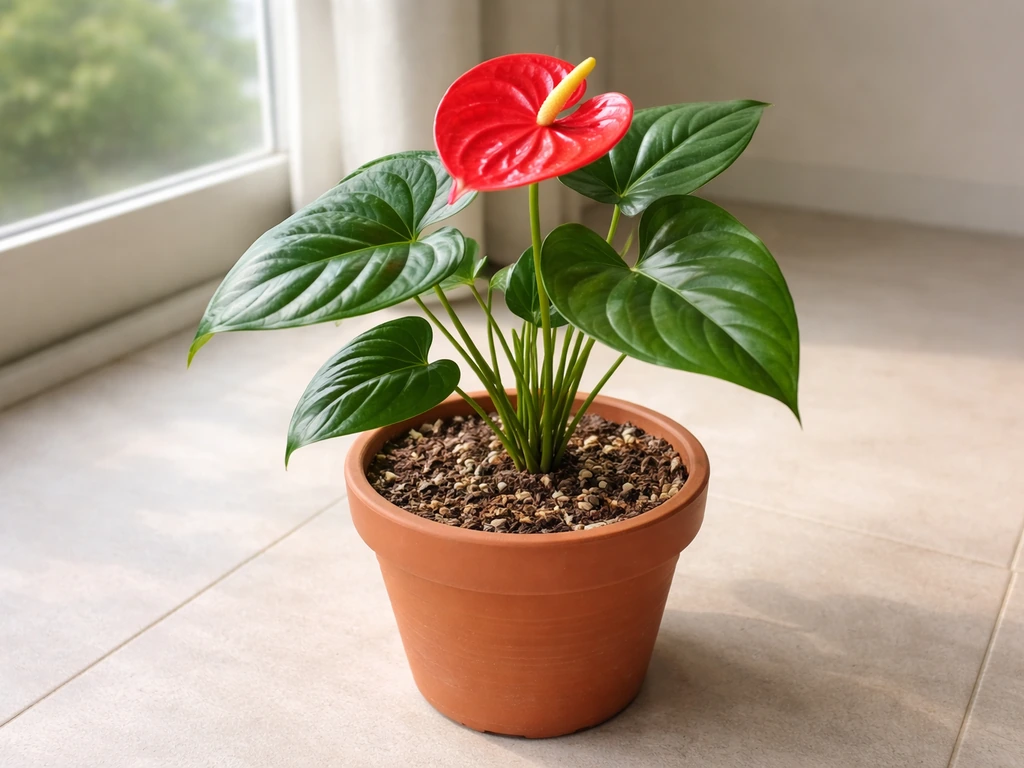
Picking the right anthurium pot setup
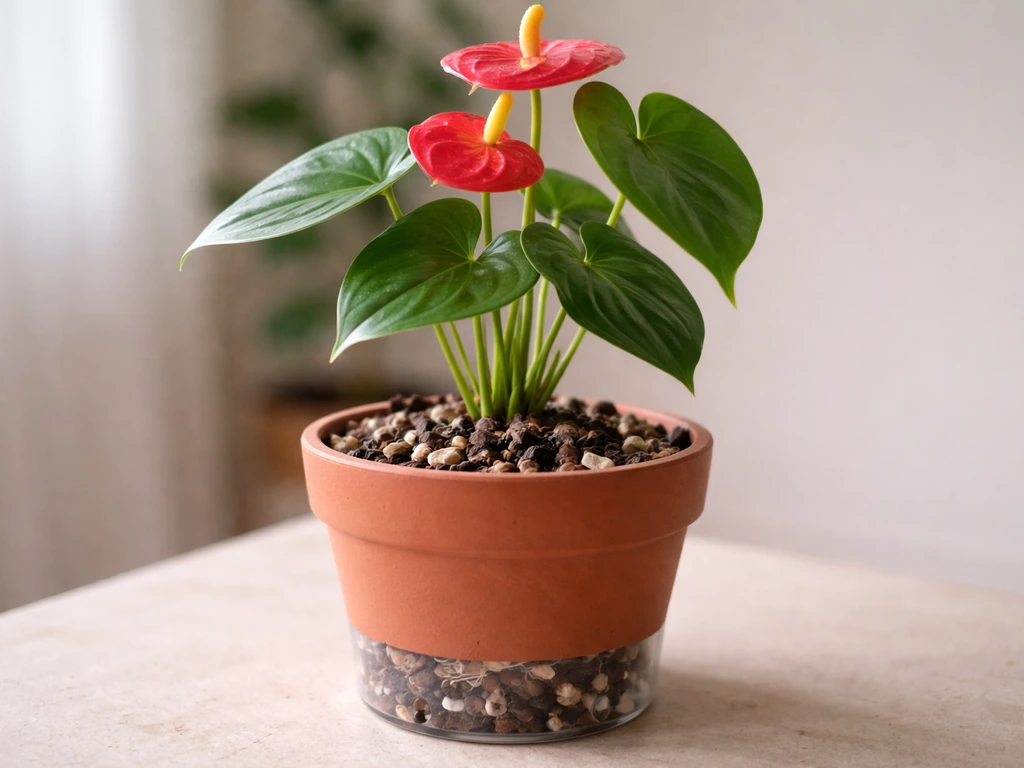
Pot size matters more with anthuriums than with most houseplants because their roots hate sitting in excess soil that stays wet. A pot that's too large holds too much moisture and that's a fast track to root rot. For a young anthurium or a recently purchased store plant, start with a pot that's only about 2 inches (5 cm) wider than the root ball. A 15 cm (6-inch) pot is a good starting point for most plants you'll find at a garden center. When you move up later, go one size at a time, not several.
Drainage is non-negotiable. Anthuriums genuinely cannot handle waterlogged roots, so every pot needs at least one drainage hole at the bottom. Terracotta pots are excellent because they're porous and let the mix dry a little faster between waterings, which is exactly what anthuriums prefer. Plastic or glazed ceramic pots work too, but you'll need to be more careful not to overwater in them because they hold moisture longer. Whatever pot you choose, never sit it in a saucer full of standing water. Empty the saucer after every watering.
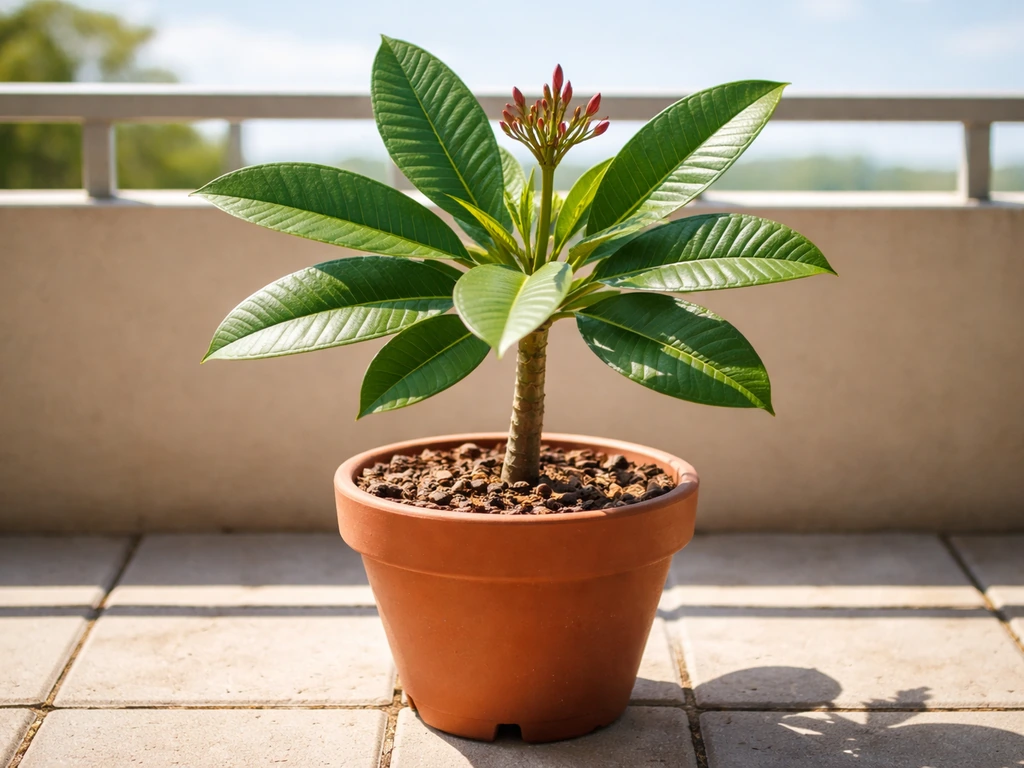
For placement, find a spot with bright indirect light. To grow frangipani in pots successfully, focus on giving it as much bright sun as you can, along with a fast-draining mix and careful watering bright indirect light. A west- or east-facing window is ideal. A south-facing window works well if you filter the sun with a sheer curtain, since direct afternoon sun will scorch the leaves. According to the RHS, anthuriums also do fine on north-facing windowsills where light is gentler, though flowering may slow down a little. Avoid dark corners and avoid direct sun. That middle ground of bright-but-filtered is where these plants really shine.
Best potting mix and how to plant in containers
Regular all-purpose potting soil on its own is too dense and water-retentive for anthuriums. They're epiphytes in the wild, meaning their roots are adapted to clinging to trees and getting loads of airflow. You need to recreate that loose, chunky texture in a pot. The good news is it's easy to mix at home and you don't need anything expensive.
The best DIY anthurium mix uses roughly 50% orchid bark (medium grade), 30% standard peat-free potting compost, and 20% perlite. The bark keeps things airy and open, the perlite improves drainage, and the compost holds just enough moisture and nutrients. If you can't find orchid bark, chunky coco coir or composted pine bark works as a substitute. The goal is a mix that drains freely within a few seconds of watering but doesn't go completely bone dry within a day.
How to plant your anthurium step by step
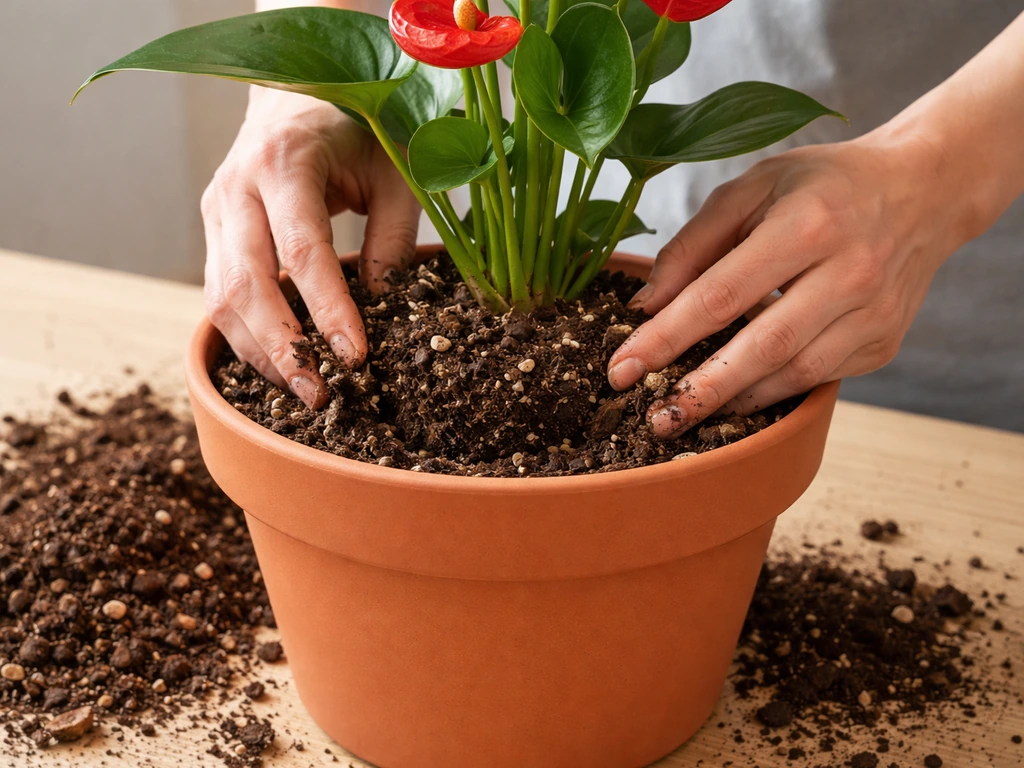
- Add a thin layer of your mix to the bottom of the clean pot so the plant sits at the right height (the top of the root ball should sit about 1–2 cm below the rim of the pot).
- Gently remove the plant from its nursery pot and loosen the roots slightly if they're tightly coiled.
- Check the roots and trim off any that are brown, mushy, or smell bad. Healthy roots are white or light tan.
- Set the plant in the centre of the pot and fill around the roots with your mix, pressing gently to eliminate air pockets.
- Water thoroughly until water drains freely from the bottom, then place in your chosen spot.
- Hold off fertilizing for about 4–6 weeks to let the plant settle in before you push any growth.
Light, temperature, and humidity for potted anthuriums
Light is one of the two biggest levers you have over how often your anthurium blooms. Bright indirect light produces the most flowers. If your plant is getting too little light, it'll grow slowly, produce mostly leaves, and the existing blooms will fade fast. Too much direct sun and you'll see bleached or scorched patches on the leaves. BBC Gardeners World notes that north-, north-east, or north-west windowsills suit them well, while the RHS points to west- or east-facing windows as a top choice. Both are right; it depends on your home. The key is to avoid harsh midday or afternoon sun hitting the leaves directly.
Temperature is straightforward: anthuriums like warmth and hate cold drafts. The sweet spot is between 16 and 30°C (60 to 85°F), which the RHS confirms as the preferred range. A blank" rel="noopener noreferrer">University of Florida Anthurium production guide also discusses keeping day and night temperatures in mind, along with aiming for high relative humidity, to support good cultivation performance. In practice, University of Florida research puts the optimal indoor growing range at 70 to 90°F (21 to 32°C), and Akatsuka Orchid notes that daytime temperatures around 78 to 90°F encourage the best growth. What that means for your home: a heated living room or kitchen works perfectly year-round. Keep them away from air conditioning vents in summer and cold windowsill glass in winter. If the temperature at your window drops below about 60°F (16°C) at night, move the plant back a few feet from the glass.
Humidity is where most indoor growers fall short. Anthuriums naturally come from humid tropical environments and their preferred relative humidity is around 70 to 80%, which is higher than a typical home (usually 40 to 50%). You don't need a greenhouse to hit this. Group your anthurium with other plants, since plants release moisture and raise the local humidity around each other. A small humidifier nearby is the most effective solution if you have dry indoor air. Misting the leaves works only briefly and can encourage fungal spots if the leaves stay wet, so it's not the best method. A pebble tray with water under the pot adds a little humidity as the water evaporates, without the roots sitting in water.
Watering and fertilizing schedule that prevents root rot
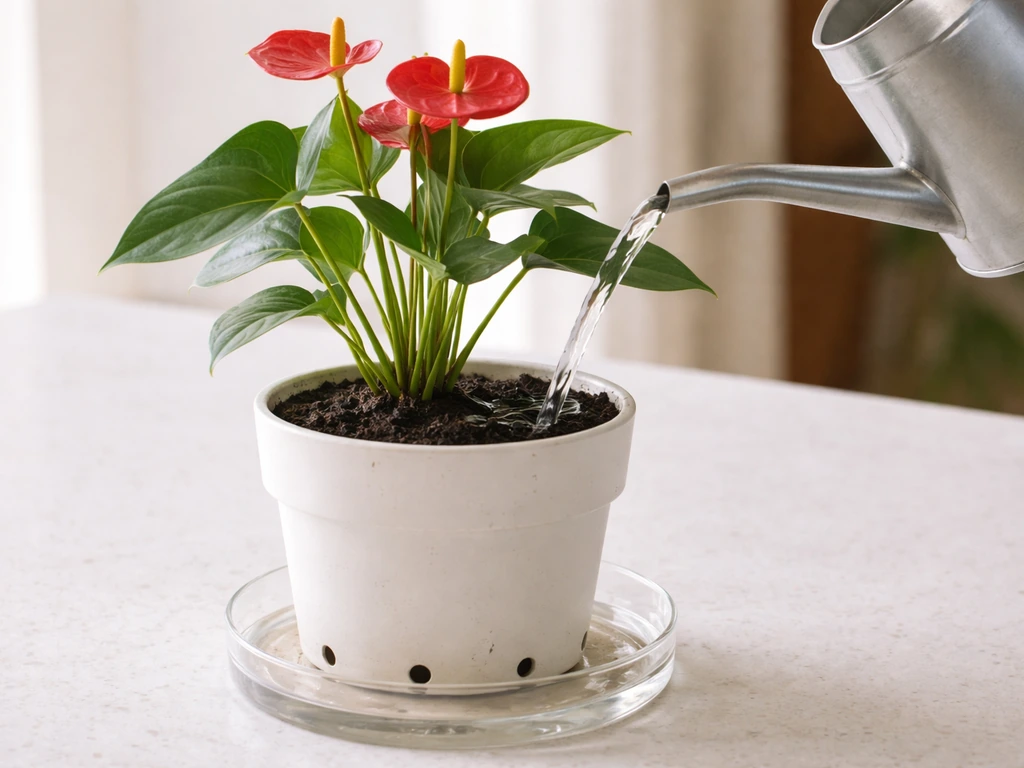
Root rot is the most common way people accidentally kill anthuriums in pots, and it almost always comes from watering on a fixed schedule rather than checking what the plant actually needs. If you’re also learning how to grow poinsettias in a pot, the big takeaway is similar: stick to the plant’s real needs by checking soil moisture rather than following a fixed watering routine watering on a fixed schedule rather than checking what the plant actually needs.. The golden rule: water when the top 2–3 cm (about an inch) of the mix feels dry when you poke your finger in. Plumeria in pots does best with a similar approach, watering only after the mix has dried slightly and never leaving it soggy in a container how to grow plumeria in pots. If it still feels damp at that depth, wait another day or two. When you do water, water thoroughly so it flows out the drainage holes, then don't water again until that top layer dries out. Blooming Expert describes this method well: water thoroughly, let the excess drain completely, and don't water again until the top centimetre or so has dried.
In practice, this works out to about once a week in summer and once every 10 to 14 days in winter, but treat those as rough guides, not a schedule. Actual frequency depends on your pot size, mix, temperature, and how much light the plant gets. A terracotta pot in a sunny spot in summer might need water every 5 days. A plastic pot in a cool room in January might need it every two weeks. Check the soil, not the calendar. That single habit change will save your anthurium from root rot.
For fertilizing, use a balanced liquid fertilizer diluted to half the recommended strength, applied every 4 weeks through the active growing season (roughly April to September in the Northern Hemisphere). A formula with slightly higher phosphorus (the middle number on the NPK label) will encourage more blooms. From October through March, drop fertilizing to once every 6 to 8 weeks or skip it entirely while growth slows. Never fertilize a dry plant: water first, then apply fertilizer to avoid burning the roots.
Quick-reference care schedule
| Care task | Spring/Summer | Autumn/Winter |
|---|---|---|
| Watering | Every 5–7 days (check soil first) | Every 10–14 days (check soil first) |
| Fertilizing | Every 4 weeks at half strength | Every 6–8 weeks or pause entirely |
| Humidity | Group plants or run humidifier | Humidifier especially important with central heating |
| Light | Bright indirect; filter direct sun | Move closer to window for maximum light |
| Temperature | 16–30°C (60–85°F) | Keep above 16°C; away from cold glass |
Repotting timeline and long-term container care
Anthuriums don't need to be repotted very often and they actually bloom better when slightly pot-bound. A good rule of thumb is to repot every 2 to 3 years, or when you see roots circling the bottom of the pot, poking out of the drainage holes, or if the plant seems to be drying out much faster than usual (because roots have filled all the space). The best time to repot is spring, when the plant is waking up for the growing season and can recover quickly.
When you repot, go up only one pot size (about 2 inches/5 cm larger in diameter). Refresh the potting mix completely rather than just adding new soil on top, since old mix breaks down over time and stops draining well. This is also a great opportunity to inspect the roots, remove any dead or rotten sections with clean scissors, and give the plant a fresh start. After repotting, hold back on fertilizing for 4 to 6 weeks.
Long-term care is pretty low maintenance once you get the basics right. Wipe the large glossy leaves with a damp cloth every few weeks to remove dust, which blocks light absorption and attracts pests. Remove any spent blooms (spadix and spathe) by cutting the stem down at the base once the flower fades. This encourages the plant to put energy into producing new blooms. You don't need to prune the leaves unless they're yellowing or damaged. If you have aerial roots appearing above the soil surface, that's completely normal for anthuriums and you can tuck them into the mix or just leave them.
Common problems and quick troubleshooting in pots
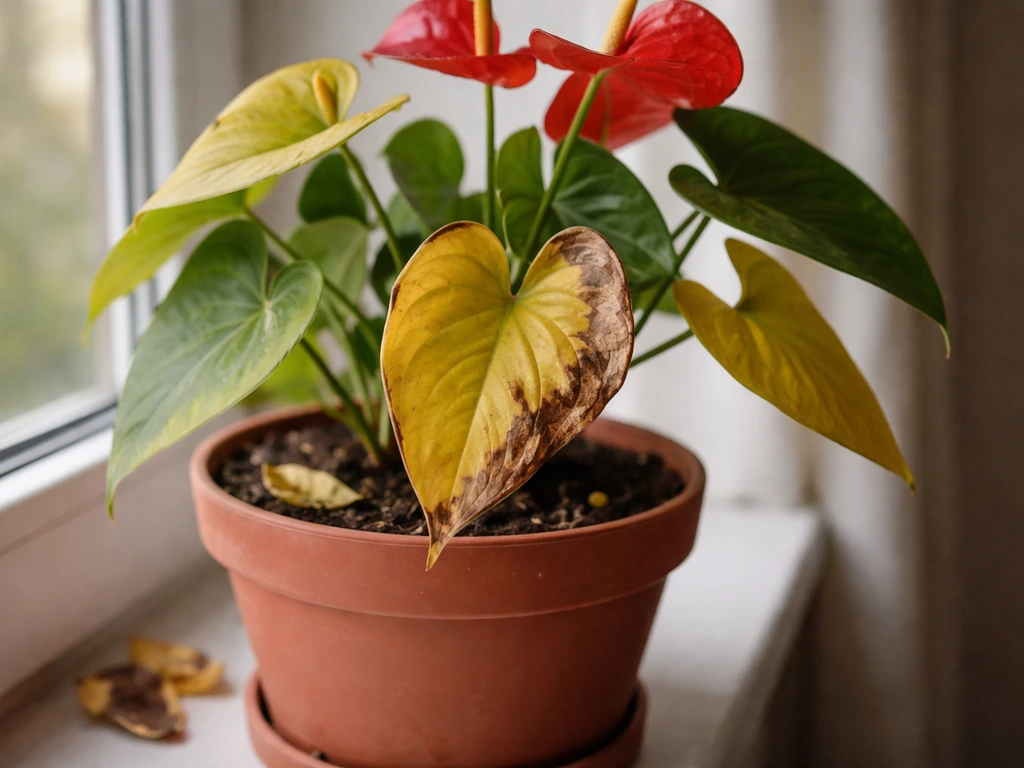
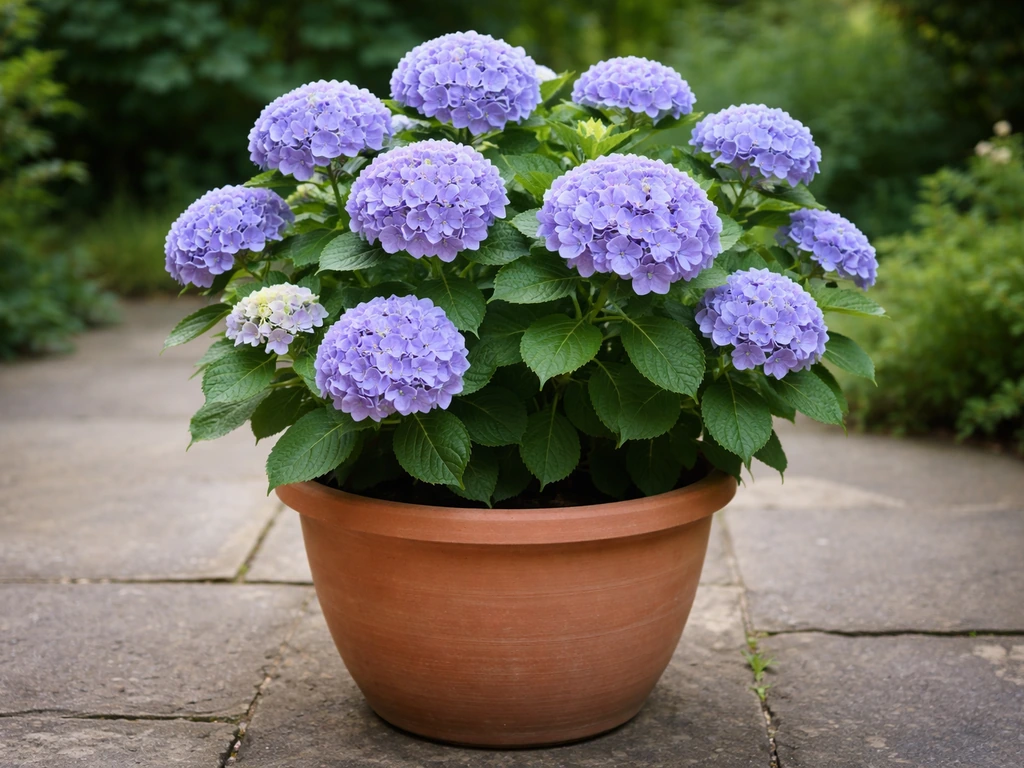
Most problems with potted anthuriums come down to light, water, or humidity being off. These troubleshooting tips can also help if you're learning how to grow hydrangea in pots and need to dial in your container care potted anthuriums. Before reaching for any treatment, work through those three first. Here's what different symptoms usually mean and what to do about them.
Yellowing leaves
Yellow leaves are the most common complaint and they have several possible causes. Overwatering is the most frequent culprit: if the lower leaves are yellowing and the soil has been consistently wet, let the mix dry out more between waterings and check the roots for rot. Underwatering can also cause yellowing, but the mix will be bone dry and the plant may be drooping too. Yellow leaves combined with slow growth and pale color usually point to too little light. Move the plant to a brighter spot and see if new growth comes in greener.
Brown, crispy leaf edges
Crispy brown edges almost always mean low humidity or the plant has been exposed to direct sun, cold drafts, or air conditioning. If the rest of the leaf looks healthy, the issue is environmental rather than disease. Boost humidity with a humidifier or pebble tray, move the plant away from vents and cold glass, and trim the brown edges with clean scissors if they bother you aesthetically.
Drooping or wilting
A drooping anthurium that has dry soil needs water right away. Hippeastrums can also be grown in pots, but they have different needs for light, watering, and feeding than many other flowering houseplants how to grow hippeastrums in pots. A drooping anthurium in wet soil is a red flag for root rot: tip the plant out, check the roots, trim anything mushy and dark, repot in fresh mix, and cut back on watering going forward. Drooping can also happen if the plant has been moved somewhere much cooler or colder, so check the temperature too.
Fungal leaf spots
Dark or water-soaked spots on leaves that spread can indicate a fungal infection. University of Maryland Extension research points to the fix: lower humidity, reduce leaf wetness (stop misting directly on leaves), and improve airflow around the plant. Move the plant to a spot with better air circulation, remove badly affected leaves, and avoid wetting the foliage when watering. In most cases, fixing the environment is enough without needing a fungicide.
Pests
Mealybugs, spider mites, and scale are the most common pests on indoor anthuriums. Mealybugs look like tiny white cotton clusters, usually in leaf joints. Spider mites show up as very fine webbing under leaves with tiny dots. Scale looks like small brown bumps on stems. For all of them, start by wiping the affected areas with a cotton ball dipped in rubbing alcohol, then treat with insecticidal soap or neem oil spray, repeating every 5 to 7 days for a few weeks. Isolate the affected plant from others while you're treating it.
Not blooming
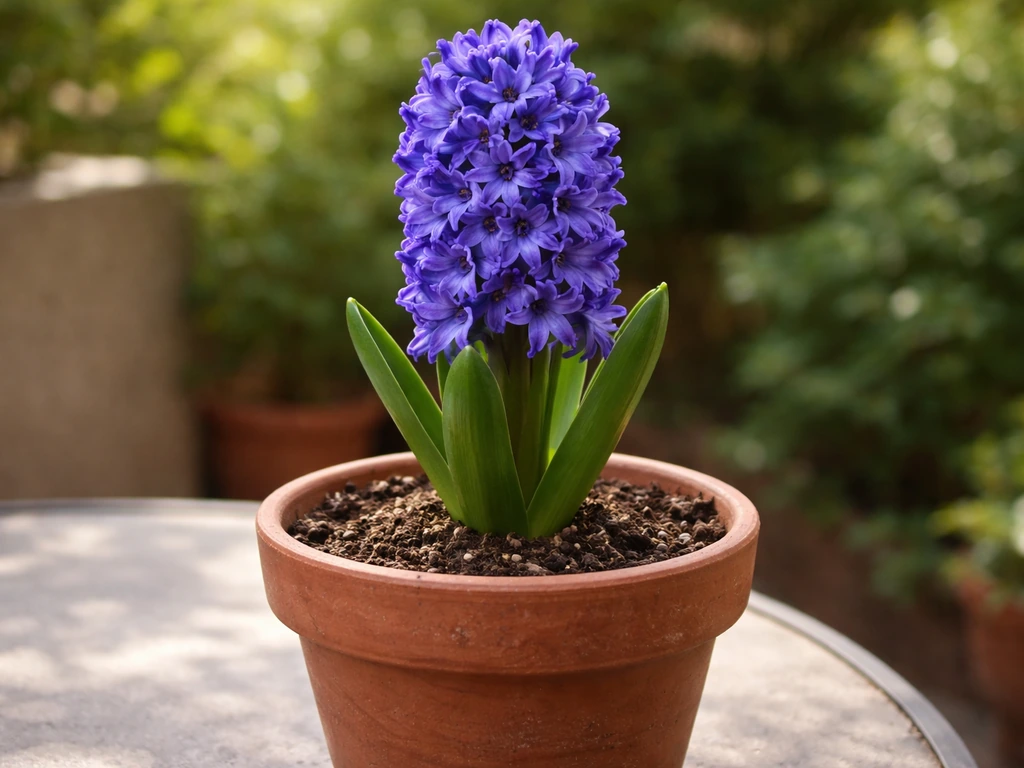
If your anthurium is growing well but not producing flowers, the most likely reason is insufficient light. For a similar container-focused approach, follow the right timing for planting and consistent potting conditions when learning how to grow hyacinth bulbs in pots. Move it to a brighter location and be patient: it can take a few weeks to a couple of months to initiate new blooms after a change in conditions. Make sure you're fertilizing regularly during the growing season with a product that has some phosphorus in it, and confirm the temperature isn't dropping too low at night. Sometimes a brief period of slightly cooler temperatures in autumn can actually trigger flowering, so don't stress if the blooms take a little while to appear.
Your container setup checklist
- Pot with drainage holes, only 2 inches (5 cm) wider than the root ball
- Chunky, well-draining mix: 50% orchid bark, 30% potting compost, 20% perlite
- Bright indirect light spot (east, west, or filtered south-facing window)
- Temperature kept consistently between 16–30°C (60–85°F), away from vents and drafts
- Humidity source nearby: humidifier, pebble tray, or grouped plants
- Watering routine based on checking top 2–3 cm of soil, not a fixed schedule
- Saucer emptied after every watering
- Half-strength balanced liquid fertilizer applied every 4 weeks in the growing season
- Leaves kept clean and dust-free
- Spent flowers cut back to encourage reblooming
FAQ
What pot size should I choose when I buy an anthurium that’s already root-bound in a nursery pot?
If the store plant is tight and roots are circling, start with a pot only about 2 inches (5 cm) wider than the current root ball, not a large jump. Large increases in volume keep the mix wet too long and raise the risk of root rot, especially with plastic pots or low winter light.
Should I use a cachepot or decorative outer pot without drainage holes?
Avoid placing the anthurium inside an outer decorative pot that holds water after watering. If you must use one for looks, use it only as a sleeve, remove the inner pot to water, and keep the bottom completely free of standing water. Empty any drainage water promptly.
How can I tell whether my anthurium mix has stayed too wet before watering again?
Check moisture at 2 to 3 cm depth, but also look at weight. If the pot feels heavy for days, the mix is staying saturated, and the next watering should be delayed. Another clue is a sour smell from the mix or persistent sogginess, both of which mean you should slow down immediately.
Do anthuriums need a peat-free mix only, or can I use regular potting soil if I add bark and perlite?
You can use standard potting compost as long as you still achieve the airy structure the plant needs. If the base mix is very dense, the added orchid bark and perlite may not be enough, so consider switching to a lighter peat-free compost or a more chunk-forward medium.
Is misting my anthurium leaves a good way to increase humidity?
Misting provides only a short-lived humidity bump and can increase fungal spotting if droplets stay on leaves. For long-term humidity, use grouping, a humidifier, or a pebble tray, and keep airflow good to dry surfaces between misting.
My anthurium won’t bloom, but the leaves look healthy. What are the most common overlooked causes?
The most frequent cause is light that is bright but not strong enough, especially during winter. Also confirm you are fertilizing during the active growing season with a slightly higher-phosphorus blend, and check that night temperatures are not dropping near the lower limit too often.
How do I know if my anthurium needs to be repotted, beyond just roots poking out?
Repot if watering frequency suddenly changes (it dries unusually fast or stays wet much longer than before) or if you see the mix breaking down, becoming finer, and draining more slowly. Anthuriums can tolerate being slightly crowded, so avoid repotting on a calendar if conditions still look right.
If I see brown tips or edges, should I cut off the entire leaf?
You can trim only the browned sections with clean scissors, leaving a thin margin of healthy tissue to reduce further damage. If multiple leaves are affected together, first correct the environment (direct sun, cold drafts, or low humidity) because cutting alone won’t solve the cause.
Can I propagate anthuriums in pots by dividing the plant?
Division can work when the plant has multiple growth points, but only separate sections that have their own roots. Use a very airy mix after potting, keep moisture moderate (not wet), and expect slower establishment compared with older plants.
What should I do if my anthurium has root rot but the plant still has leaves?
Unpot immediately, remove all mushy or dark roots with sterile scissors, and repot into fresh chunky mix in a slightly smaller pot if needed for faster drying. Water lightly, then adjust so the top layer dries before the next watering. In severe cases, skip fertilizing until you see new growth.
Are aerial roots above the soil a problem?
No, aerial roots are normal for anthuriums. Tuck them into the mix if they fit, or leave them as-is. Tucking them helps stability and moisture access, but avoid burying them too deeply into dense soil.