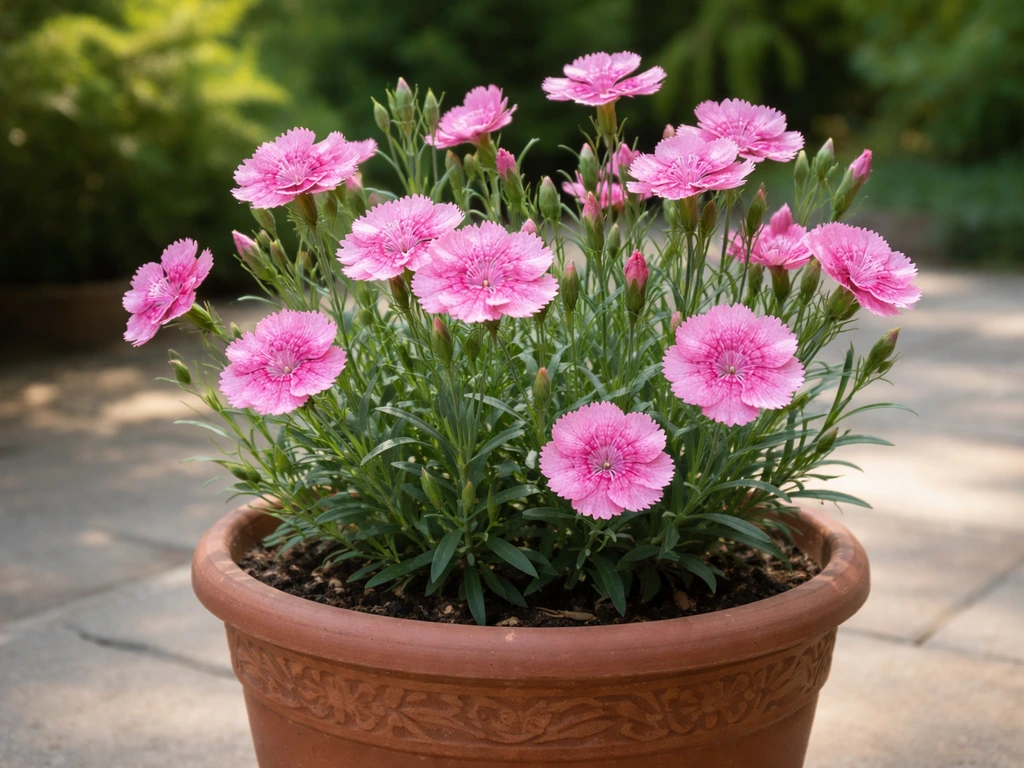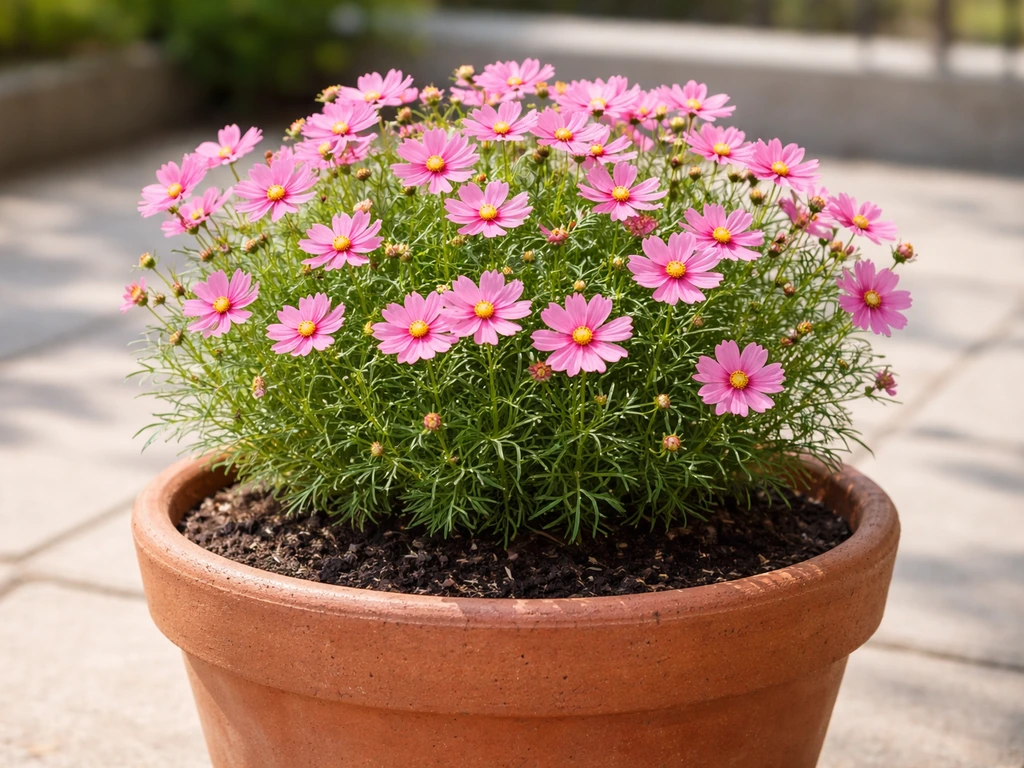
Yes, you can absolutely grow hydrangeas in pots, and they can look stunning on a patio, balcony, or doorstep. The key is picking the right variety, giving them a decent-sized container, and not letting them dry out (which is the number one mistake most people make). Get those three things right and you're most of the way there. This guide walks you through everything from choosing your plant to keeping it alive and blooming year after year, with specific advice for UK growers.
How to Grow Hydrangea in Pots: UK Container Guide
Marcus Whitley
17 Apr 2026
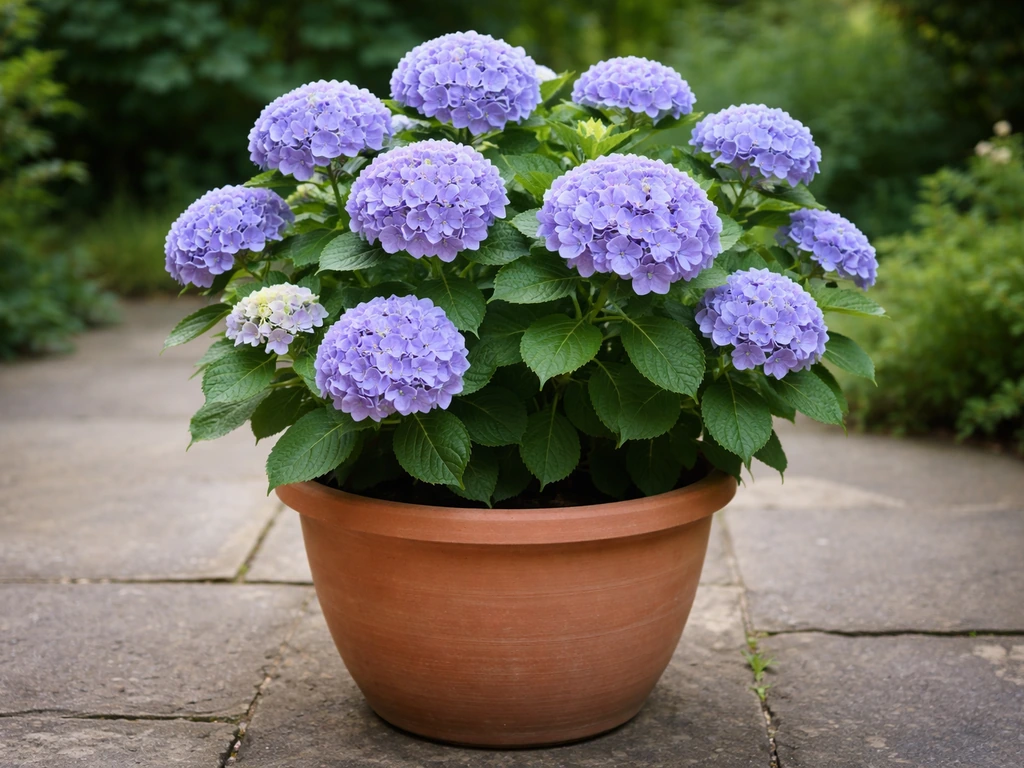
Choosing the right hydrangea for pots
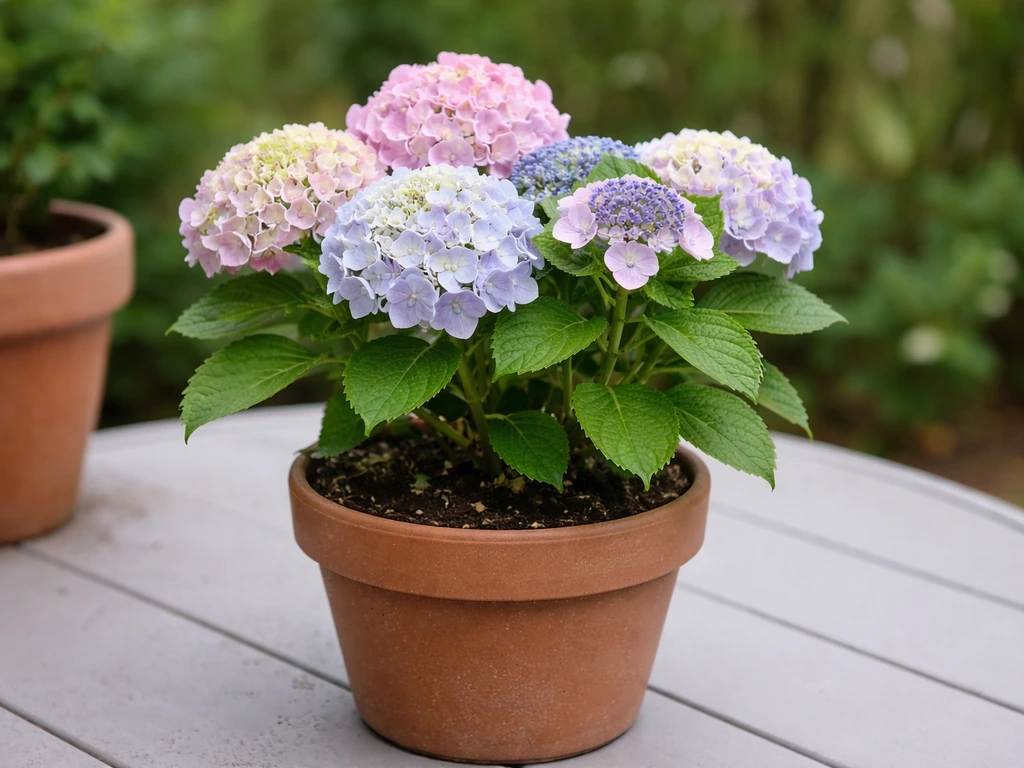
Not all hydrangeas are well-suited to life in a container. The two types that genuinely thrive in pots are Hydrangea macrophylla (the classic mophead or lacecap types you see everywhere) and Hydrangea paniculata (the cone-shaped flowering types that tend to be tougher and more drought-tolerant). Most other species, like climbing hydrangeas or the big shrubby Hydrangea arborescens, are really better off in the ground where their roots can spread properly.
Within those two species, go for a compact or dwarf variety if you can. Dwarf selections typically stay in the 60 to 90 cm range (roughly 2 to 3 feet), which is much more manageable in a container than a full-sized shrub that wants to hit 1.5 metres or more. Good compact macrophylla varieties include 'Mini Penny', 'Little Hottie', and 'Forever and Ever'. For paniculata, look at 'Bobo' or 'Little Quick Fire', which both stay relatively tidy. The smaller the eventual mature size, the longer your plant will be happy in a pot before needing to be repotted or moved to the garden.
If blue flowers are your goal specifically (more on how to actually achieve that colour later), you need a macrophylla variety, because paniculatas don't produce blue blooms regardless of what you do to the soil. Lacecap types like 'Bluewave' or a classic blue mophead are your starting point for that look.
Pot size, drainage, and where to put it
Hydrangeas have chunky root systems, so a small pot will stress them fast. Start with a container that's at least 30 to 45 cm (12 to 18 inches) in diameter. If you're buying a plant that's already in a 2-litre nursery pot, move it into something at least 30 cm wide straight away. When you repot in future years, go up one size at a time rather than jumping to a huge pot, which can cause the soil to stay too wet and lead to root rot.
Drainage is non-negotiable. The pot must have holes in the base. If you've fallen for a decorative pot without drainage, either drill holes yourself or use it as an outer sleeve with a plain plastic pot inside. Standing water at the roots kills hydrangeas surprisingly quickly. Raise the pot slightly off the ground using pot feet or bricks so the drainage holes don't get blocked.
For placement, hydrangeas in pots do best in morning sun with afternoon shade, especially in the UK where a south-facing spot in July can still scorch them. An east-facing wall or a spot that gets dappled light through the day is ideal. They can handle full sun in cooler parts of the UK, but you'll need to water more often. Avoid deep shade as well, which tends to reduce flowering. In terms of shelter, a position near a wall or fence helps protect the plant from wind, which dries out pots much faster than you'd expect.
Soil mix and planting setup
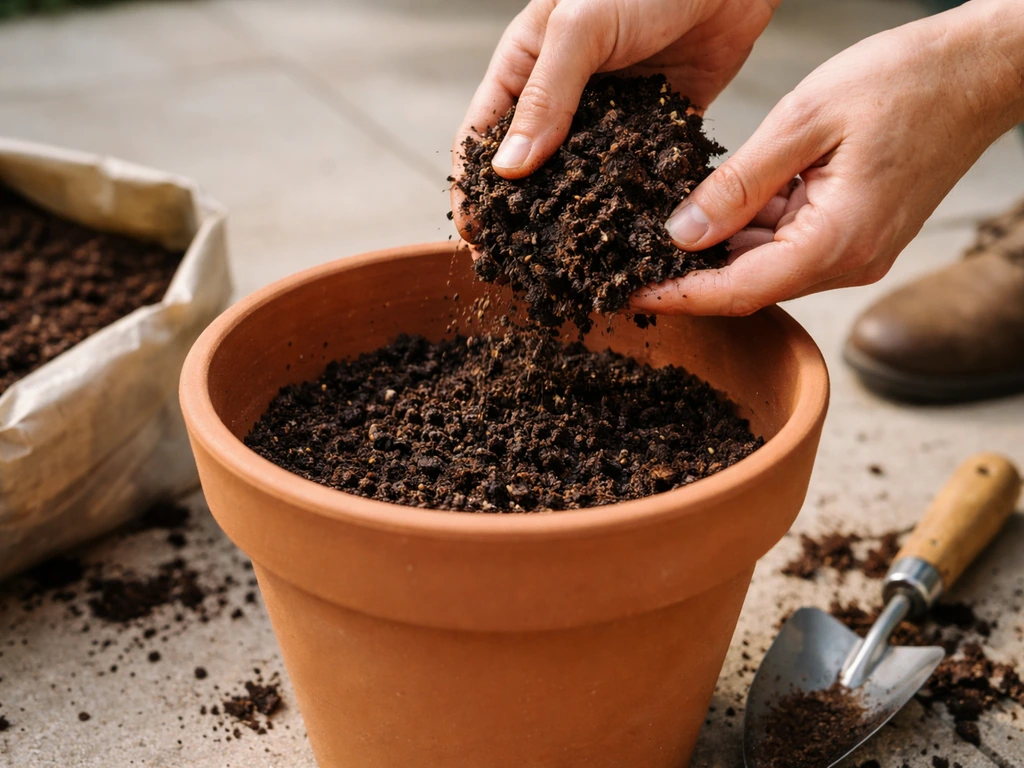
Don't use garden soil in a pot. It compacts, drains poorly, and introduces pests and diseases. You want a mix that holds moisture (because hydrangeas are thirsty) but also drains freely so roots aren't sitting in water. A good starting mix is roughly 60% peat-free multipurpose compost, 30% John Innes No. 3 (a loam-based compost that adds weight and nutrients), and 10% perlite or horticultural grit for drainage. John Innes No. 3 is widely available in UK garden centres and is worth the extra cost for the stability it adds.
When planting, half-fill your pot with the mix, position the plant so the top of the root ball sits about 2 to 3 cm below the rim of the pot (this makes watering easier), then fill around it and firm gently. Don't bury the stem deeper than it was in the original nursery pot. Water thoroughly after planting until it runs freely from the drainage holes, then let it settle in a sheltered spot for a week or two before moving it to its final position.
Adding a layer of mulch on top of the compost, something like bark chips or even a handful of gravel, helps retain moisture and keeps the roots cooler in summer. This is a small thing that makes a real difference during dry spells.
Watering and feeding: keeping up with a thirsty plant
Hydrangeas are the plant most likely to make you feel like you've killed something when you haven't. They wilt dramatically and quickly when dry, which can look alarming. The good news is they usually recover fast once watered. In summer, a potted hydrangea in full growth may need watering every day in dry weather, or every other day if it's cooler. Push your finger an inch into the compost: if it feels dry, water it. In spring and autumn, every few days is usually enough. In winter, most outdoor pots barely need watering at all unless it's been unusually dry.
For feeding, start in spring when you see new growth appearing (usually March to April in the UK) and continue through to August. A balanced liquid fertiliser works fine, but a fertiliser formulated for flowering plants or specifically for hydrangeas gives better results. Feed every two weeks through the growing season. Stop feeding in September to allow the plant to harden off before winter. Overfeeding with a high-nitrogen feed encourages lots of lush leaves but fewer flowers, so avoid anything marketed mainly for lawns or leafy plants.
One practical trick: if you're prone to forgetting watering, water-retaining gel crystals mixed into the compost at planting time can act as a buffer. They're not a substitute for regular watering, but they buy you an extra day or two before the plant starts to struggle. If you've found success growing other thirsty container plants like plumeria in pots, you'll already know the importance of consistent moisture management, and hydrangeas are much the same.
How to get blue hydrangea flowers in a container
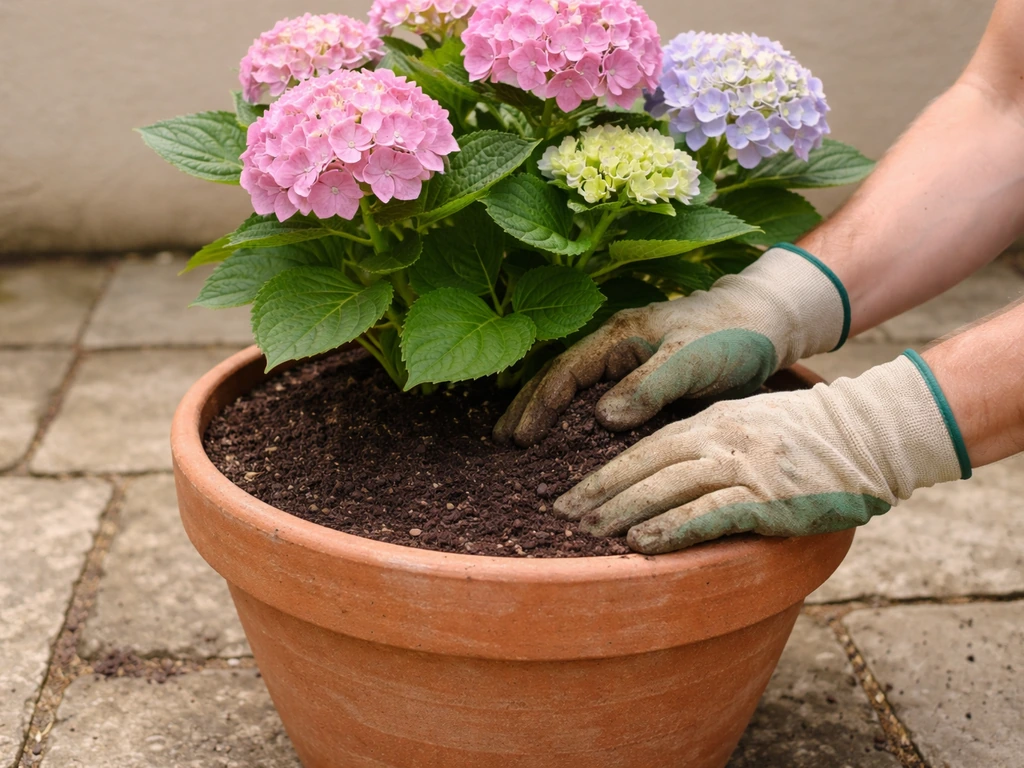
Here's something that surprises a lot of people: hydrangea flower colour is directly tied to soil acidity (pH), not just the variety. A macrophylla hydrangea that produces pink blooms in alkaline soil will produce blue or purple blooms in acidic soil. This happens because acidic conditions make aluminium available to the plant, and it's aluminium absorption that triggers blue pigmentation. The target soil pH for the best blue flowers is around 5. Sprint Horticulture’s hydrangea bluing resource notes that the ideal pH for the best blue is around 4.3 and warns not to drop below 4.0, as it can kill the plant around 5. 5. In a pot, you have complete control over this, which is actually an advantage over growing in the ground.
To encourage blue flowers, start by using ericaceous (acid) compost instead of standard multipurpose when you plant. RHS also advises that to retain blue flowers in alkaline soil, you should grow hydrangeas in containers using ericaceous compost. This is compost formulated for acid-loving plants like rhododendrons and blueberries, and it's stocked at any UK garden centre. Watering with rainwater rather than tap water also helps, since mains tap water in many UK areas is alkaline and can gradually raise the pH of your compost over time. A water butt is worth the investment if blue flowers matter to you.
If you already have a plant that's producing pink or muddy purple blooms and you want to push it bluer, aluminium sulphate can be applied annually to lower the pH in container compost. You can buy this as a specific hydrangea colourant (often labelled 'hydrangea bluing tonic') at garden centres. Follow the packet rates carefully: too much aluminium is toxic to the plant. Apply in spring when growth begins, and expect the colour shift to show in the following season's blooms rather than immediately. White hydrangeas won't change colour regardless of soil pH, so save this effort for pink or purple varieties.
Seasonal care and overwintering in the UK
Spring (March to May)
This is when you get the plant set up for the year. Repot if the roots are visibly coming out of the drainage holes or the plant seems to be drying out unusually fast. Start feeding in March or April. For macrophylla types, prune in April if needed, but don't cut too far back. Because macrophyllas flower on old wood (meaning the stems that grew last year), cutting them hard will remove the flower buds and you'll get very few blooms that summer. Just remove dead or damaged stems and tidy up the shape. Paniculatas flower on new wood, so you can cut them back more confidently in spring.
Summer (June to August)
This is peak watering season. Check the pot daily in warm or windy weather. Deadheading spent blooms encourages some varieties to produce more flowers, though many modern hydrangeas are fairly self-sufficient in this regard. Keep feeding every two weeks and enjoy the show. If you notice the compost surface looks compacted or water is running straight off rather than soaking in, gently loosen the top layer with a fork.
Autumn and winter (September to February)
Stop feeding in September. Let the plant start to wind down naturally. Many gardeners leave the dried flower heads on through winter, both for visual interest and because they offer some protection to the buds underneath. In the UK, most hydrangeas are reasonably frost-hardy, but a pot raises the roots above ground level, making them much more vulnerable to hard freezes than a plant in the ground. If temperatures are forecast below -5°C, move the pot to a sheltered spot, against a wall or into an unheated greenhouse or shed. You can also wrap the pot itself in bubble wrap or hessian to insulate the roots without covering the whole plant. In most mild UK winters this protection is precautionary rather than essential, but in colder northern areas or in a particularly bitter year, it can save the plant.
This kind of seasonal overwintering approach applies to a lot of container plants that aren't fully frost-proof in pots. If you've worked through similar seasonal routines for something like anthurium plants in containers, you'll find the logic is comparable, even if the specific temperatures differ.
A seasonal care snapshot
| Season | Key tasks | Watering frequency | Feeding |
|---|---|---|---|
| Spring (Mar–May) | Repot if needed, prune macrophylla lightly, start feeding | Every few days | Every 2 weeks from April |
| Summer (Jun–Aug) | Water daily in dry spells, deadhead, apply bluing tonic if needed | Daily or every other day | Every 2 weeks |
| Autumn (Sep–Nov) | Stop feeding, leave flower heads for protection, reduce watering | Weekly or less | None |
| Winter (Dec–Feb) | Insulate pot in hard frosts, move to shelter if below -5°C | Rarely, only if very dry | None |
Troubleshooting common pot problems
Wilting leaves
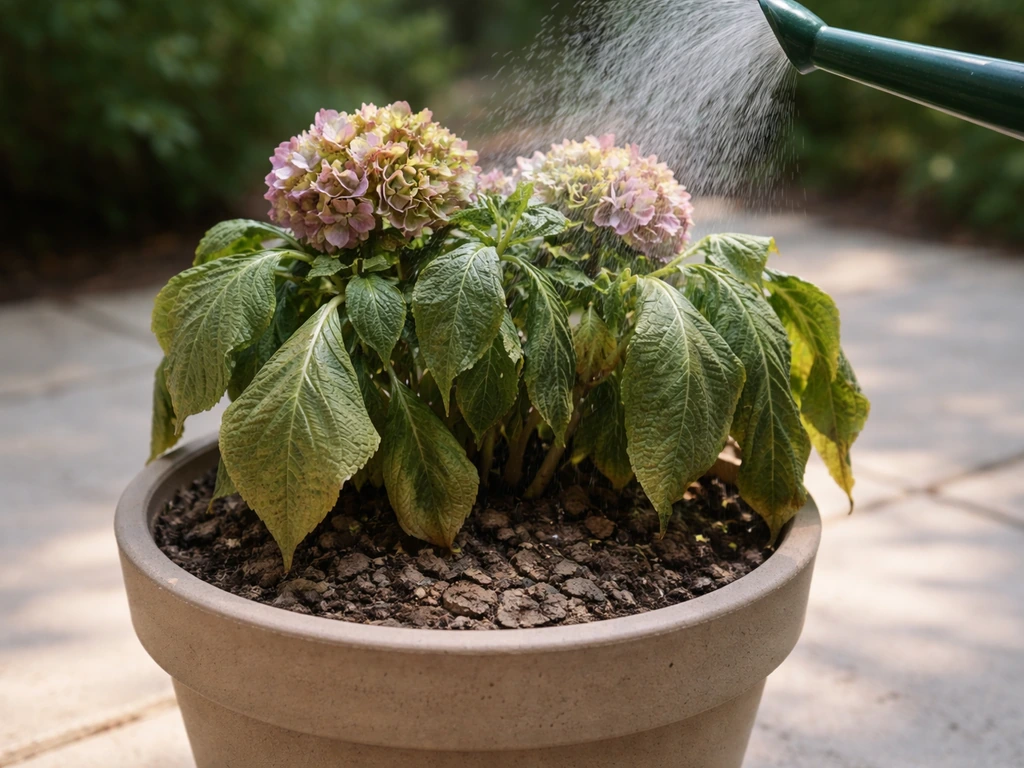
Nine times out of ten, wilting means the plant needs water. Check the compost, water thoroughly, and the plant should perk up within a few hours. If the compost is already wet and the plant is still wilting, you may have root rot from poor drainage. Remove the plant from the pot, check the roots (healthy roots are white or light tan; rotten roots are brown, mushy, and smell bad), trim off any rotten sections, and repot into fresh compost with better drainage.
No flowers
The most common reason a macrophylla hydrangea doesn't flower in a pot is that it was pruned too hard the previous season, removing the flower buds on old wood. Other causes include too much shade, too much nitrogen-heavy fertiliser, or frost damage to the buds in early spring. Check your pruning timing and technique first, then consider light levels and feed type.
Yellow leaves
Yellowing between the leaf veins (where the veins stay green but the leaf goes yellow) usually points to iron or manganese deficiency caused by soil that's too alkaline. This is called chlorosis. In a pot it's easily fixed: switch to ericaceous compost on your next repot, water with rainwater, and use a sequestered iron product available from garden centres. General all-over yellowing can be a sign of overwatering, underfeeding, or a plant that's pot-bound and needs a move to a larger container.
Scorched or brown leaf edges
Brown crispy edges usually mean the plant has dried out, been hit by wind, or received too much direct afternoon sun. Move the pot to a more sheltered position and improve watering frequency. In the UK this tends to happen most in July and August during heatwaves, or in spring when cold dry winds catch new growth.
What about growing other bulbs and flowering plants in pots alongside?
If you enjoy growing flowering plants in containers, hydrangeas pair nicely in a display with other pot-grown bloomers. Spring-flowering bulbs like those covered in growing hyacinth bulbs in pots can fill the gap before your hydrangea gets going, while smaller bulbs like the ones in a grape hyacinth pot setup make good low-growing companions at the front of a display. For a more exotic patio look, frangipani grown in containers can complement the lush look of a hydrangea in a sheltered urban garden. If you like bold, architectural flowering pot plants, it's also worth exploring how to grow hippeastrums in pots for dramatic indoor winter colour when your hydrangea is dormant outside. And for another example of managing a seasonally sensitive pot plant through the colder months, the guide to keeping poinsettias alive in a pot covers some of the same protective thinking.
Your ongoing care checklist
- Use a pot at least 30 to 45 cm wide with good drainage holes
- Mix ericaceous compost with John Innes No. 3 and perlite for the ideal growing medium
- Water daily in summer, check compost moisture before every watering
- Feed every two weeks from April to August with a flowering plant fertiliser
- For blue flowers, use ericaceous compost, water with rainwater, and apply hydrangea bluing tonic in spring
- Prune macrophylla lightly in April only, removing dead wood rather than cutting hard
- Insulate the pot in winter if temperatures drop below -5°C
- Repot every two to three years or when roots fill the container
- Watch for wilting (water stress), yellow leaves (pH or nutrient issue), and brown edges (sun or wind scorch)
FAQ
When is the best time to repot a hydrangea in a pot, and when should I avoid it?
In the UK, the simplest safe rule is to pot up early in spring (around March to April), when the plant is already waking up, not in midsummer or late autumn. If you must move it in summer, do it in the coolest part of the day and keep the compost evenly moist for 1 to 2 weeks, because disturbed roots can dry out quickly in containers.
How do I know if I’m watering correctly, not too much or too little?
For bloom success in pots, aim for “consistent damp” rather than a constantly wet mix. After you water, the compost should soak and then drain freely, so the pot never sits in runoff. If water rushes straight out, your mix may be compacted or the root ball may be hydrating poorly, loosen the surface lightly and consider switching to your preferred mix (with grit or perlite).
My macrophylla hydrangea is healthy but not flowering. What’s the most likely reason?
If your macrophylla has leaf growth but no flowers, the most common cause is flower buds lost on old wood. Before the next pruning season, check that your stems are not being cut back in late winter or spring, and protect the pot from early frosts. A second likely cause is low light, so try morning sun with afternoon shade and keep wind exposure under control.
Can I change my hydrangea from pink to blue right away, or will it take time?
Do not “fix” blue-to-pink colour changes by repeatedly adding bluing tonic or aluminium sulphate mid-season. In containers, pH shifts take time, and over-application can harm the plant. Apply only once in spring when growth begins, follow label rates exactly, and expect the colour shift mainly on the next blooms rather than immediately on existing flowers.
What size hydrangea should I buy for a pot, so I don’t outgrow it too quickly?
Choose a variety based on its mature size, not just the size you buy. A compact dwarf macrophylla (often 60 to 90 cm at maturity) typically stays manageable longer. If you buy a “normal” mophead that will reach over 1.5 m, it may still grow in a pot, but you will need frequent pot upgrades and more careful winter protection.
Is it possible to grow hydrangeas in pots from cuttings, or should I buy a ready plant?
Yes, but only if the plant is already established and you can keep moisture steady. Avoid cutting a newly potted hydrangea because it is most vulnerable to drying out after disturbance. When you propagate, use fresh cuttings in spring or early summer, keep them humid, and expect better success with macrophylla varieties than with paniculata in small pots.
What should I do if my hydrangea wilts even after I water it?
If the compost feels dry on top but the plant stays wilty, the root zone may be hydrophobic or the pot is drying from the edges. Try a deep soak by standing the pot in water for a short period until the compost darkens evenly, then let excess drain. Going forward, keep a mulch layer and check more than once a day during windy, hot weather.
My leaves are yellow between the veins, what should I do first for pot-grown hydrangeas?
Use a sequestered iron product when you see chlorosis (yellowing between veins) that is typical of alkaline conditions, and switch to ericaceous compost at the next repot if you are aiming for long-term improvement. If the yellowing spreads quickly across the whole leaf, also reassess overwatering and ensure the pot is not staying waterlogged.
How do I overwinter a potted hydrangea in cold UK weather without causing rot?
For winter, protect the pot rather than the whole plant. If frost dips are forecast below about -5°C, move the container to a sheltered spot and insulate the pot (bubble wrap or hessian works), while keeping the foliage uncovered so it can breathe. Water lightly only if the compost is dry, because constantly wet compost plus freezing temperatures increases root damage risk.