Carnations grow really well in pots, and honestly they might be better suited to container life than most people realize. They're compact, they love good drainage (which pots naturally provide), and the smaller varieties stay tidy without taking over your balcony or patio. Give them at least six hours of direct sun, a well-draining potting mix, and a pot with plenty of drainage holes, and you'll get those classic clove-scented blooms without needing a garden bed at all.
How to Grow Carnations in a Pot: Step-by-Step Guide
Marcus Whitley
1 May 2026
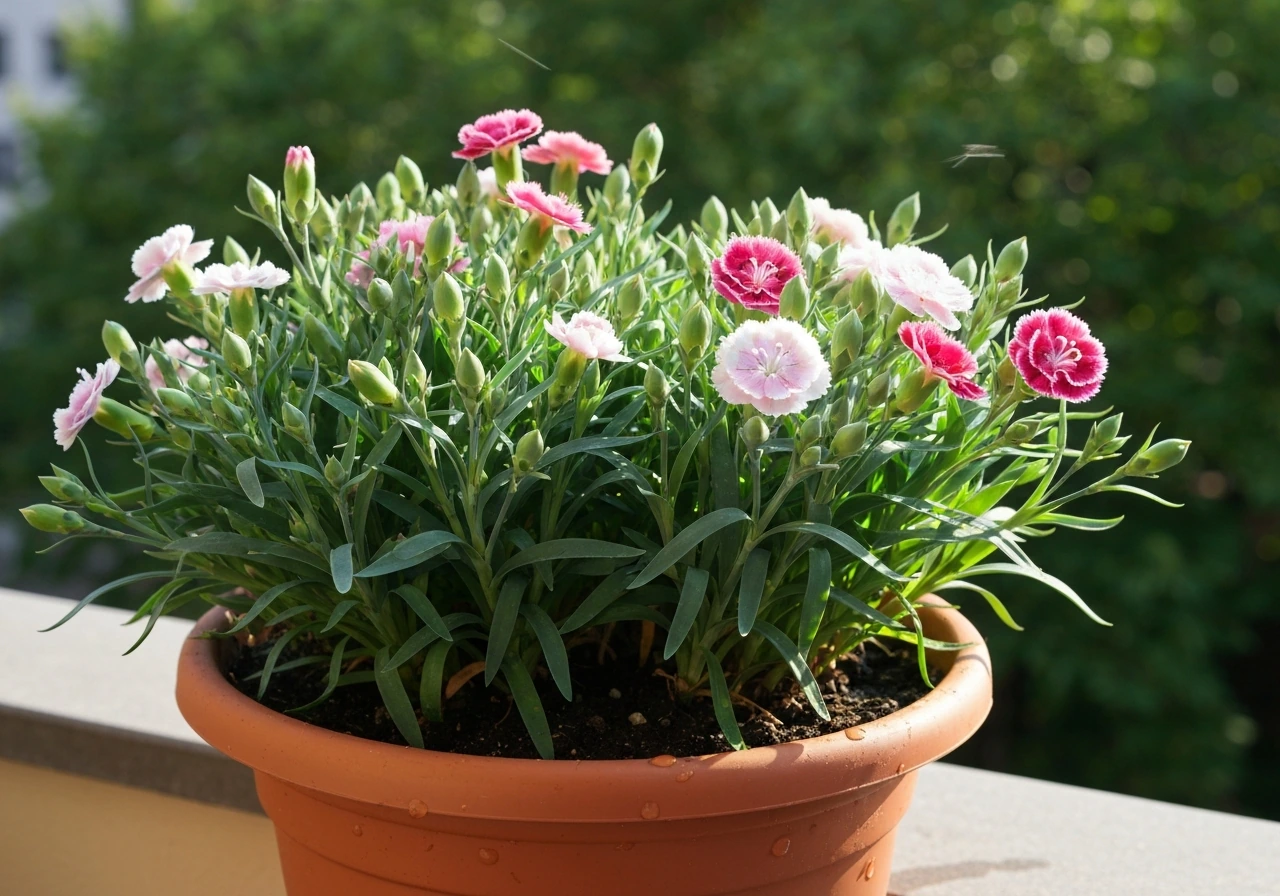
Can carnations actually grow in pots (and when do they thrive)?
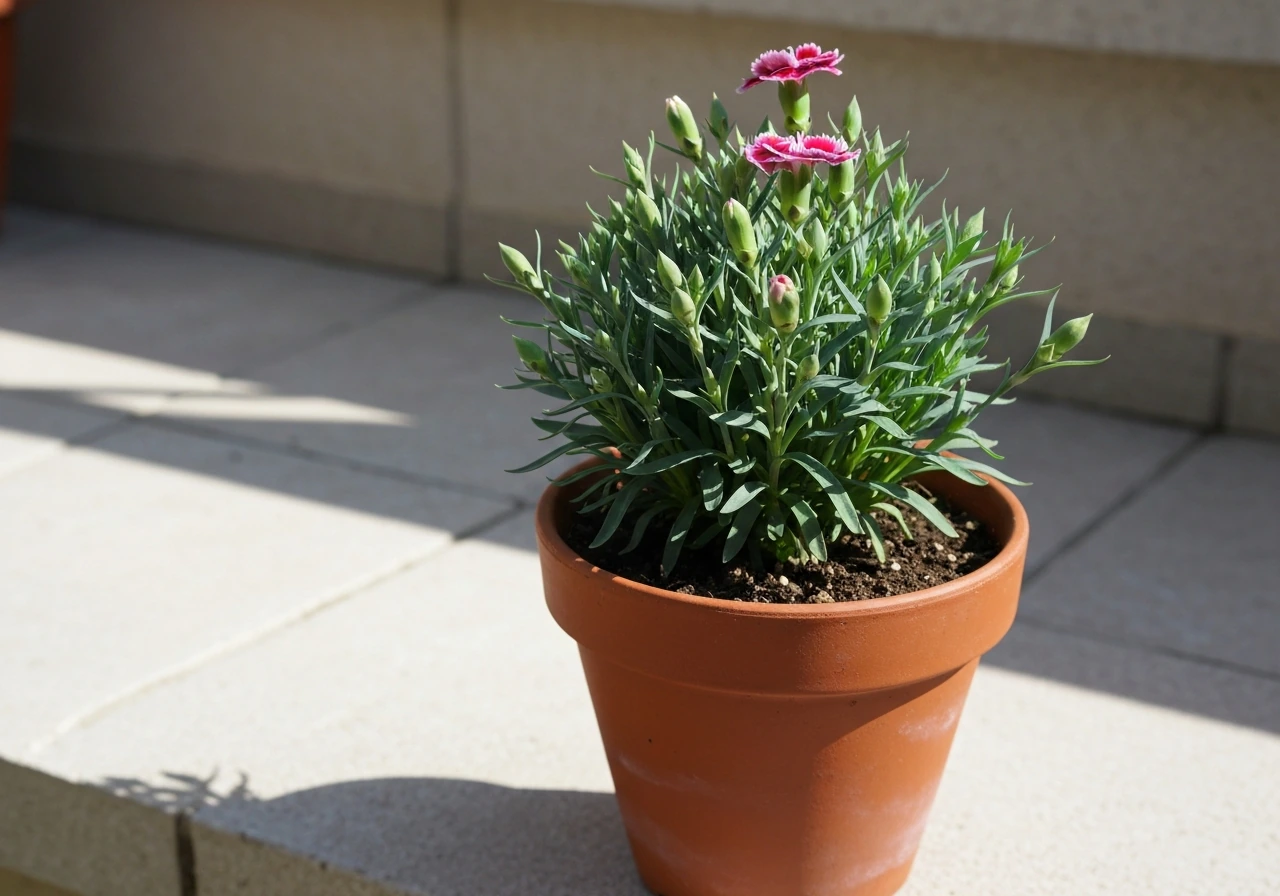
Yes, carnations (Dianthus caryophyllus) and their close relatives in the Dianthus family are genuinely well-suited to container growing. Their root systems are relatively compact, they're not heavy feeders by flower standards, and they actively prefer the sharp drainage that a pot with good holes delivers better than most garden soil. Where they struggle in containers is when drainage is poor (roots rot fast), when light is insufficient (they go leggy and stop blooming), or when they're planted in a pot that's too small and dries out every single day in summer heat.
They thrive in pots when you're in a climate with cool to moderate temperatures, when you can place the container somewhere sunny, and when you're growing one of the dwarf or border varieties rather than the tall florist-type carnations. Florist carnations can hit 24 inches or more and get floppy without support, so they're not the easiest choice for a patio pot. Stick with compact varieties and you'll have a much easier time.
Picking the right pot: size, drainage, and where to put it
Pot size
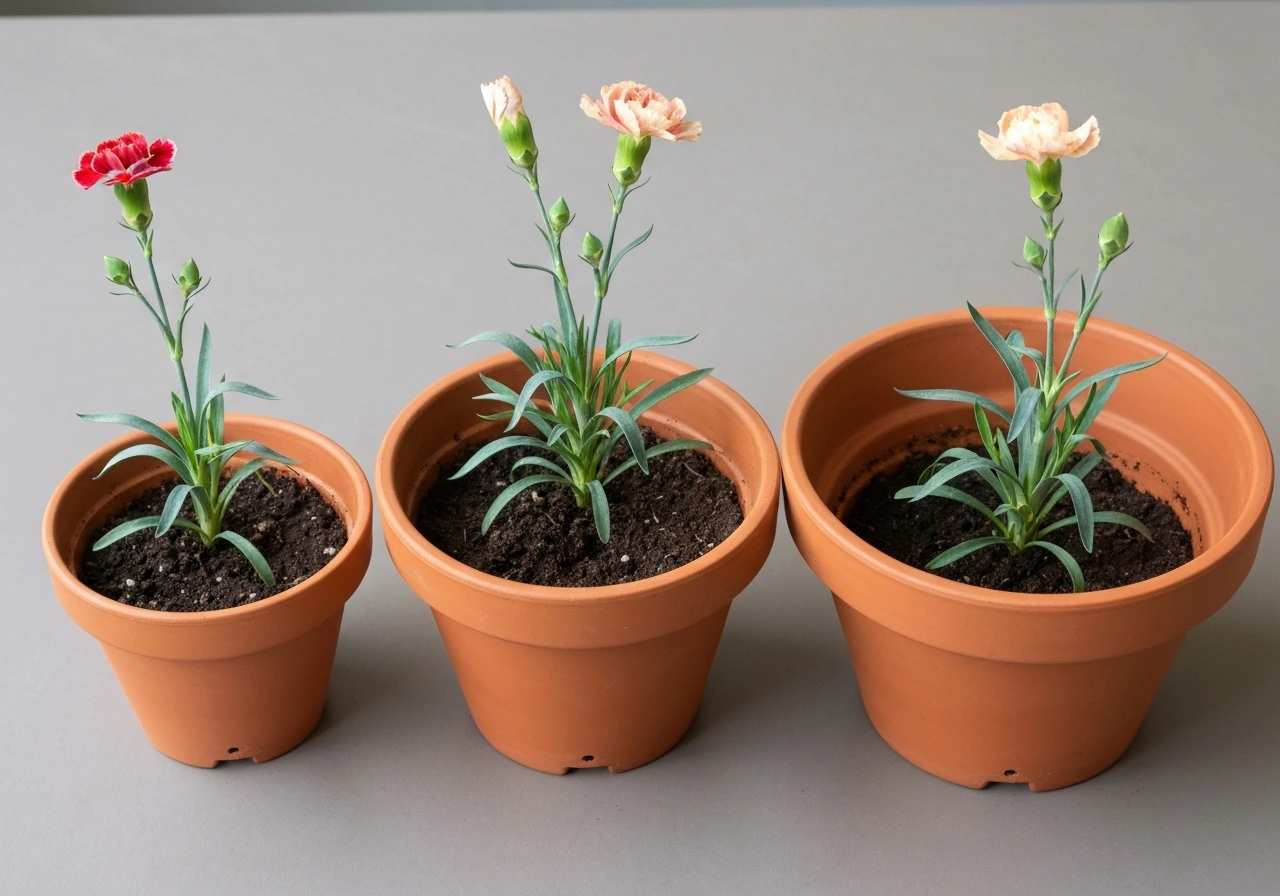
For a single carnation plant, a pot that's at least 8 to 10 inches in diameter works fine. For a grouping of two or three plants that will fill out nicely, go for a 12 to 14 inch pot. Avoid going too small, a tiny pot dries out almost daily in summer sun, and carnations don't like wild swings between bone-dry and waterlogged. Deeper pots (at least 8 to 10 inches deep) also matter because shallow containers reduce the air space in the potting mix around the roots, which can stress plants even if you're watering correctly.
Drainage holes
This is the single thing I'd tell every new carnation grower to pay attention to. Carnations are very quick to rot at the crown (the point where the stem meets the soil) if water sits around the roots. A pot with one small hole in the bottom is not enough. You want [multiple drainage holes covering at least 20% of the pot's base area](https://extension.
okstate. edu/fact-sheets/containers-and-media-for-the-nursery. html), which is something Oklahoma State University Extension specifically recommends for container media. If your favorite decorative pot only has one tiny hole, either drill more holes or use it as a cachepot (drop a plain nursery pot with good drainage inside it).
MSU Extension also points out that one large hole doesn't drain as effectively as several smaller ones spread across the base, so more holes is genuinely better here.
Light and airflow
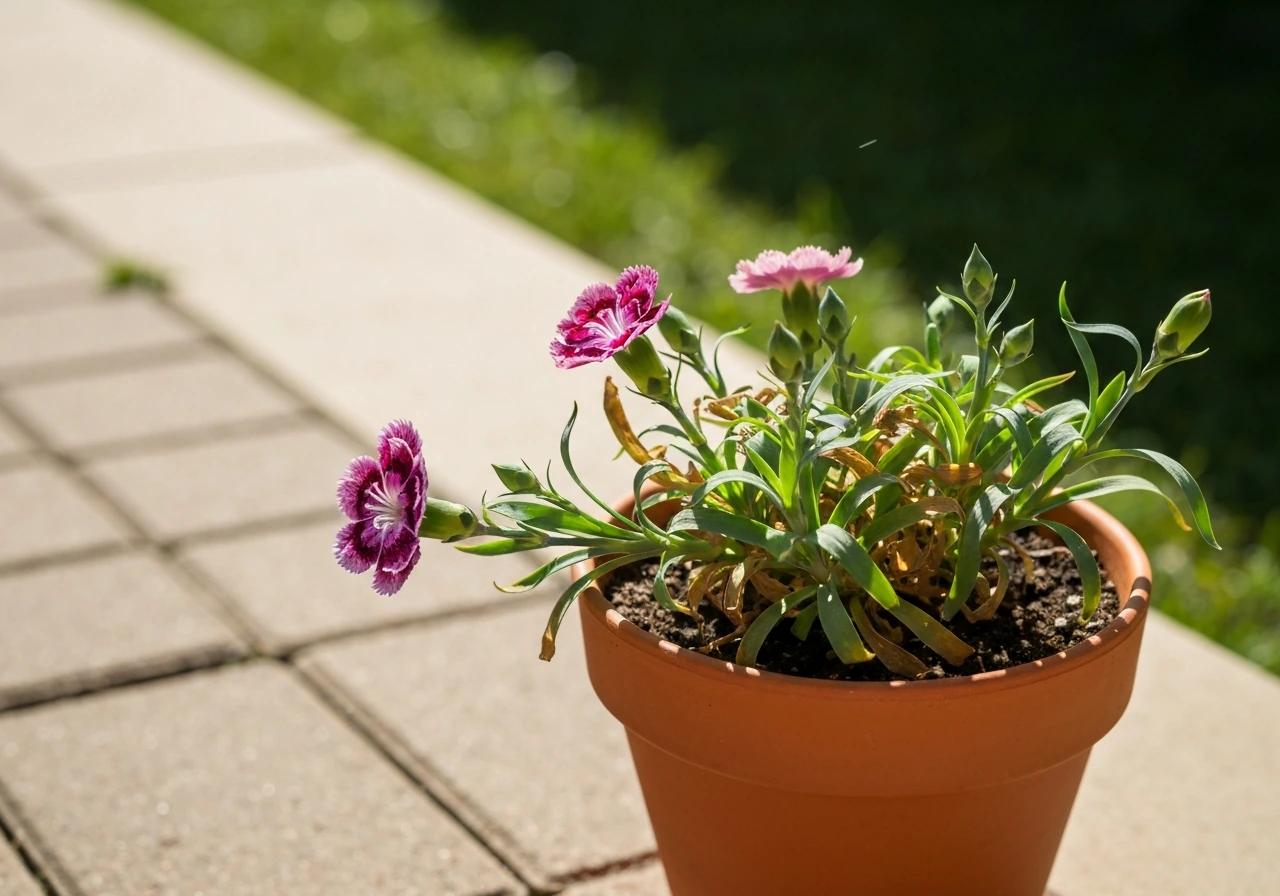
Carnations need full sun, meaning at least six hours of direct sunlight per day, and they appreciate good air circulation around the foliage. On a balcony or patio, position the pot where it gets morning and midday sun if possible. Low light is one of the main reasons potted carnations go soft and stretchy (what gardeners call leggy growth) and stop producing flowers. If your plant is reaching toward the light and producing thin stems, that's the signal it needs a sunnier spot. Good airflow also helps prevent fungal issues like powdery mildew, which we'll cover later.
Choosing a carnation variety that actually suits a pot
Not all carnations are created equal for container growing. The tall, long-stemmed florist carnations you see in bouquets are bred for greenhouse production and tend to get floppy and difficult in a pot. The varieties that really shine in containers are the dwarf and border types.
- Dwarf dianthus cultivars: Some compact varieties stay as small as 6 to 8 inches tall and spread 12 to 14 inches wide, making them perfect for pots and even window boxes.
- Border carnations: These typically reach 12 to 18 inches, flower reliably, and hold their form well without staking.
- Dianthus 'Chabaud' series: A classic garden carnation that stays manageable and produces fragrant double blooms in a wide range of colors.
- Dianthus 'Ideal' series: A popular compact series that blooms early and performs well in containers.
- Dianthus 'Ideal Violet': A reliably compact variety if you want something specific to look for at a nursery.
If you're buying from a local nursery, look for plants labeled as 'dwarf,' 'compact,' or 'border' carnations. If you're growing from seed (and growing flower seeds in pots is a great project for beginners), start seeds indoors about 8 to 10 weeks before your last frost date for blooms in late spring to early summer.
The right soil mix and how to fertilize
Soil
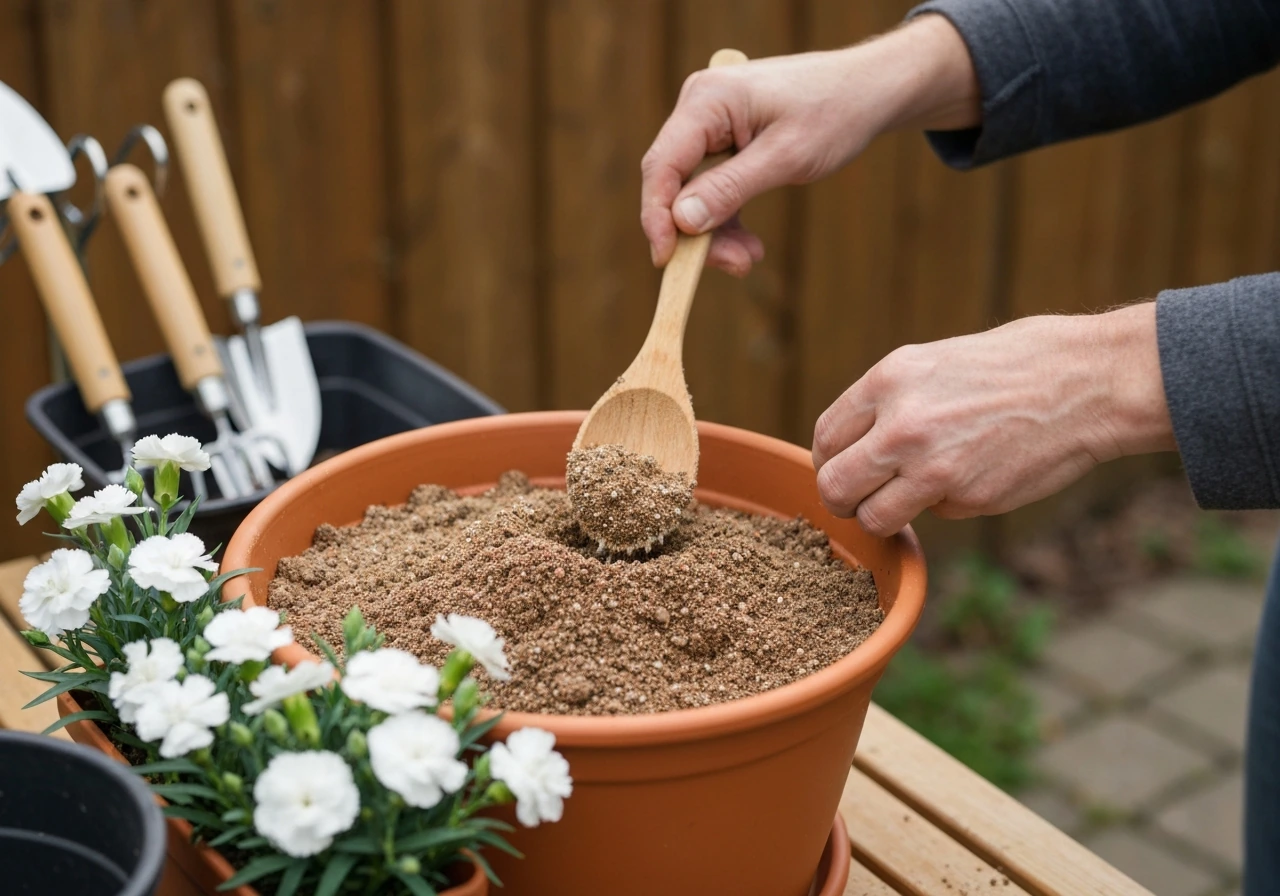
Always use a quality potting mix in containers, never garden soil or field soil. Garden soil compacts in pots, drainage suffers, and roots struggle. A standard peat- or coir-based potting mix works well, ideally one that includes perlite for extra drainage. Carnations prefer a slightly neutral to alkaline pH, anywhere from 6.0 to 8.0 according to NC State Extension, so most commercial potting mixes are fine right out of the bag. If you're mixing your own, a blend of two parts potting mix to one part perlite or coarse sand gives you the sharp drainage carnations love. You can also add a small amount of horticultural grit or fine bark to keep things open and airy.
Fertilizing
Container plants need more regular feeding than in-ground plants because watering flushes nutrients out of the potting mix over time. To get started, follow a simple process for how to grow seeds in a pot, including choosing the right mix and keeping the seed-starting moisture consistent. During the growing season (spring through early fall), feed your carnations every two to three weeks with a balanced liquid fertilizer, something like a 10-10-10 or a bloom-booster fertilizer higher in phosphorus (the middle number) to encourage flowering. Avoid over-fertilizing with high-nitrogen feeds, which push leafy growth at the expense of blooms. In winter, when the plant is resting, you can stop feeding entirely or drop to once a month at most.
Watering schedule and temperature tips
Carnations in pots need consistent moisture, but they absolutely cannot sit in soggy soil. The goal is to keep the mix evenly moist but never waterlogged. A practical way to check: push your finger about 1 to 2 inches into the soil. If it feels dry at that depth, water thoroughly until water drains freely from the bottom. If it still feels moist, wait another day and check again. NC State Extension advises that containers should never be allowed to dry out completely between waterings, because this damages the fine feeder roots that support flowering. But drowning them is equally harmful.
In hot, windy weather or when the pot is sitting in full sun, you may need to water every day or every other day. Dark-colored pots absorb more heat and dry out faster than light-colored ones, so keep that in mind when choosing your container. In cooler weather or partial shade, you might water just once or twice a week. When you water, try to water at the base of the plant rather than overhead, since wet foliage increases the risk of fungal disease. UC IPM specifically recommends not wetting the foliage with irrigation water on carnations for exactly this reason.
Temperature-wise, carnations prefer cool to moderate conditions. They bloom most happily when daytime temperatures are between 50°F and 75°F (10°C to 24°C). Most varieties can handle light frost, but prolonged freezing will damage or kill them. In extreme summer heat above 85°F to 90°F, flowering can slow down or stop temporarily. Moving the pot to a spot with afternoon shade during a heatwave can help them push through.
Keeping your carnations happy: deadheading, pruning, and dealing with pests
Deadheading
Deadheading means removing spent (dead or fading) blooms before the plant has a chance to set seed. This is probably the single most impactful thing you can do to keep carnations blooming for months instead of weeks. When a flower is allowed to go to seed, the plant gets the signal that its job is done and flowering slows down dramatically. blank" rel="noopener noreferrer">Snip off spent flowers right down to the nearest set of leaves or a side shoot, not just the petals. Gardening Know How specifically notes that blank" rel="noopener noreferrer">regular deadheading extends dianthus blooming, and cutting back elongated stems after blooms fade encourages reblooming. Make it a weekly habit when plants are in full bloom.
Pruning
Beyond deadheading, give your carnations a light trim after a main flush of flowering to encourage a second round. Cut stems back by about a third, just above a leaf node (the point where a leaf meets the stem). This keeps the plant tidy and redirects energy into new growth and buds. Don't prune too hard all at once, especially with repeat bloomers, as that can stress the plant and delay reblooming.
Common pests and diseases in pots
A few things tend to show up on potted carnations. Here's what to watch for and what to do:
| Problem | What you'll see | What to do |
|---|---|---|
| Powdery mildew | White powdery coating on leaves and stems | Improve airflow, avoid wetting foliage, apply a systemic fungicide (both protective and curative for carnations per UC IPM) |
| Crown/stem rot | Stem blackening or rotting at the soil line | Check drainage immediately, reduce watering, remove affected tissue, repot into fresh mix if needed |
| Spider mites | Tiny webbing under leaves, stippled yellowing leaves | Blast with water, apply insecticidal soap or neem oil |
| Thrips | Silvery streaks or distorted flowers and foliage | Remove heavily affected blooms, use sticky traps, apply insecticidal soap |
| Slugs and snails | Ragged holes in leaves, silvery slime trails | Hand-pick at night, use iron phosphate bait around pot base |
Powdery mildew is worth a specific mention because it loves carnations in warm, humid conditions with poor airflow. If you see that white dusting on the leaves, don't panic. Move the pot to a breezier spot, stop watering overhead, and if it's spreading, a systemic fungicide applied as a foliar spray will act as both a treatment and a preventive going forward. Catching it early makes a big difference.
Step-by-step: setting up your first pot of carnations
- Choose your pot: At least 10 to 12 inches wide and 8 to 10 inches deep, with multiple drainage holes across the base. Terra cotta is great for drainage; just know it dries out faster than plastic or glazed ceramic.
- Fill with potting mix: Use a quality potting mix blended with perlite (roughly 3 parts mix to 1 part perlite). Fill to about 2 inches below the rim to leave room for watering.
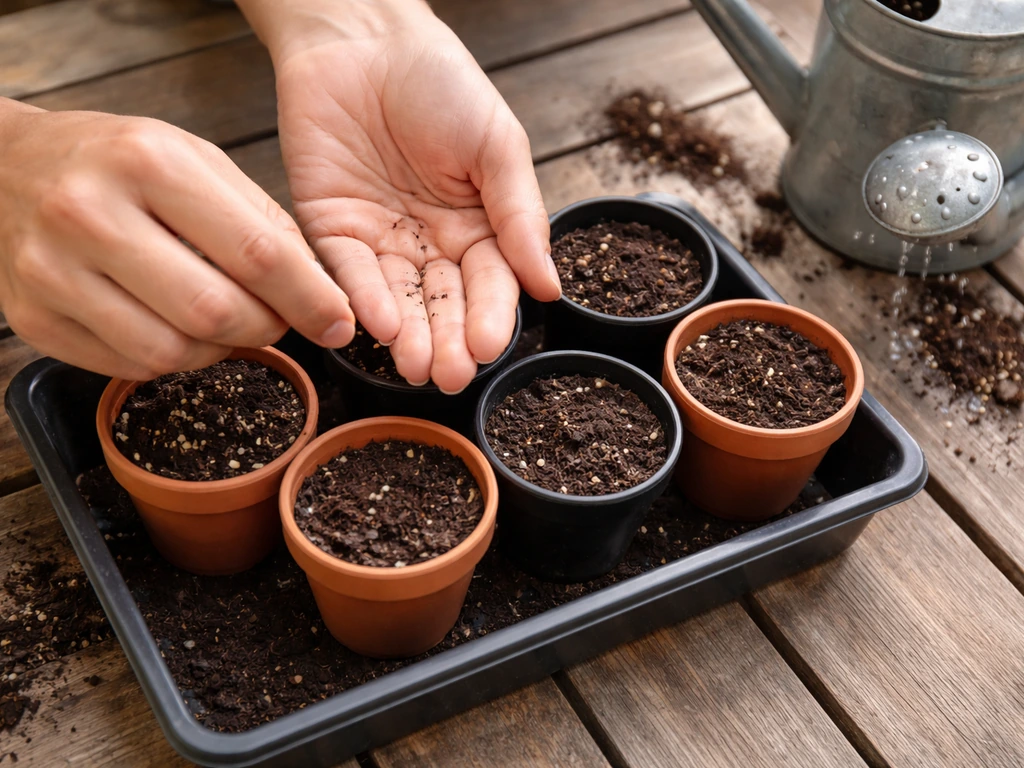
- Plant your carnations: If using nursery transplants, set them at the same depth they were growing in their nursery pot. If planting seeds, sow on the surface and press lightly into the mix, then cover with a thin layer (about 1/8 inch) of mix. Keep seeds consistently moist until germination in 10 to 14 days.
- Place in full sun: At least 6 hours of direct sunlight daily. South- or west-facing spots are usually ideal for most climates in the Northern Hemisphere.
- Water in well: Water thoroughly after planting until it drains from the bottom. Let the top 1 to 2 inches dry slightly before the next watering.
- Start fertilizing at 3 to 4 weeks: Once the plant is established, begin feeding every 2 to 3 weeks with a balanced or bloom-booster liquid fertilizer.
- Deadhead regularly: As soon as blooms fade, snip them off. Make this a weekly habit during the blooming season.
- Prune after a main flush: After the first big round of flowers, cut stems back by a third to trigger reblooming.
Troubleshooting common problems
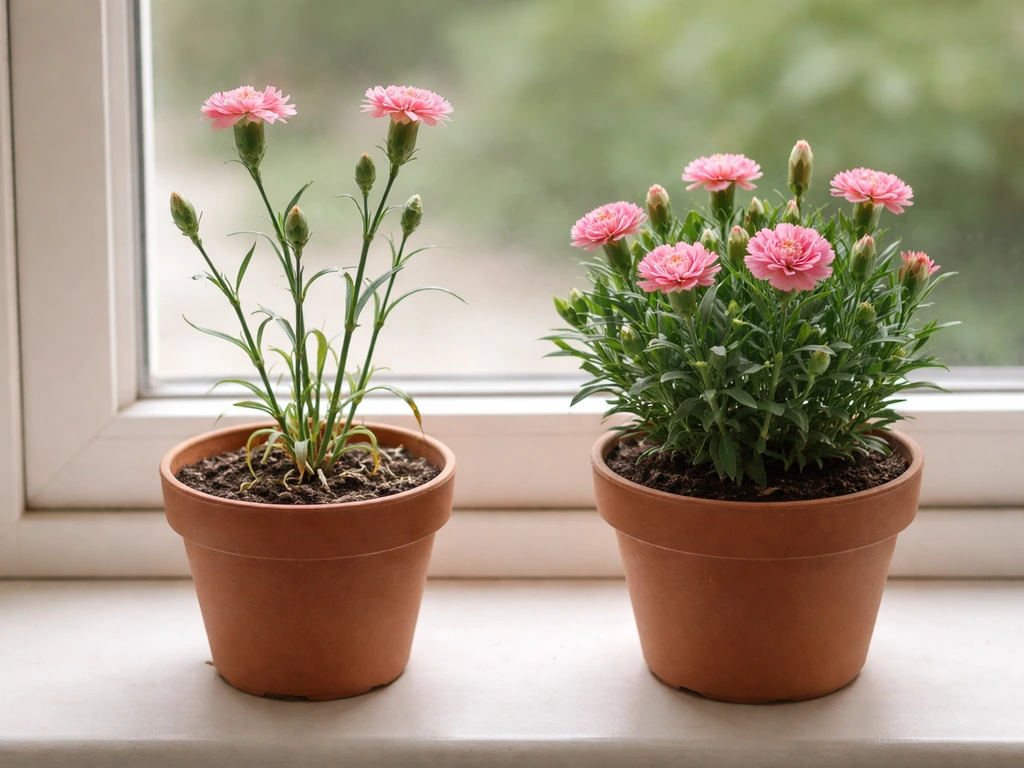
| Symptom | Likely cause | Fix |
|---|---|---|
| Leggy, stretched stems with few blooms | Not enough light | Move pot to a sunnier spot with at least 6 hours of direct sun daily |
| Yellowing lower leaves, soggy soil | Overwatering or poor drainage | Check drainage holes are clear, water less frequently, let top 2 inches dry between waterings |
| Wilting even after watering | Root rot from waterlogged soil, or complete dry-out | Check soil moisture; if soggy, repot into fresh mix; if bone dry, water slowly and deeply |
| No blooms despite healthy foliage | Over-fertilizing with nitrogen, or not deadheading | Switch to lower-nitrogen fertilizer, deadhead spent flowers consistently |
| White powder on leaves | Powdery mildew | Improve airflow, avoid overhead watering, apply systemic fungicide if spreading |
| Rotted stem at soil line | Crown rot from overwatering or splash-back | Reduce watering, improve drainage, water at base not overhead |
The most common mistakes are too little sun and too little drainage, and both are easy to correct once you know what you're looking at. Don't get discouraged if your first pot doesn't go perfectly. Even experienced gardeners lose carnations to a soggy week or a shady corner. The good news is that compact carnations are inexpensive, widely available, and fast-growing enough that you can course-correct and see results within a single season.
Once you nail the sun and drainage combination, growing carnations in pots starts to feel very manageable. Once you nail the sun and drainage combination, growing carnations in pots starts to feel very manageable, and it's the same mindset you can use for how to grow a flower in a pot in general.
Once you’ve dialed in sun and drainage, you can apply the same container seed-starting logic to other blooms too, including the best flowers to grow from seed in pots. If you want the same container-style approach for autoflower seeds, focus on consistent light, drainage, and outdoor pot placement throughout the growing cycle how to grow autoflower seeds outside in pots.
With the right setup, you can use the same pot-size and drainage principles to figure out how to get a large pot to grow fluxweed. If you want a broader walkthrough, you can follow this guide on how to grow flower plants in pots growing carnations in pots.
FAQ
Can I grow carnations in a pot that has no drainage holes?
It is strongly discouraged. Carnations rot quickly at the crown when water collects. If your decorative pot lacks holes, use it as a cachepot by placing a nursery pot with drainage inside it, and never let the inner pot sit in collected water.
What’s the best way to tell if my potting mix is staying too wet or too dry?
Check moisture at the root zone, not the surface. Push a finger 1 to 2 inches down, if it feels dry at that depth water thoroughly, if it still feels moist wait, also lift the pot after watering to learn its weight when dry versus fully watered.
How do I prevent crown rot if I’m overwatering or the weather is rainy?
Improve drainage first, then adjust your watering rhythm. Move the pot to full sun for faster drying, water only after the top 1 to 2 inches are dry, and always water at the base instead of wetting foliage. If you see blackened or soft stems at the soil line, remove affected plants to avoid spreading rot.
Should I deadhead flowers as soon as I see them fading, or only after the whole bloom is done?
Do it as soon as petals start to fade. Snip spent blooms down to the nearest leaf set or side shoot to stop seed formation immediately, which helps maintain ongoing flowering rather than waiting for the entire bloom to fully finish.
Do carnations need fertilizer year-round in a pot?
No. Stop or greatly reduce feeding when growth slows in winter. During active growth, feed every 2 to 3 weeks with a balanced or bloom-leaning liquid, but avoid high-nitrogen formulas because they can boost leaves while reducing blooms.
Why are my carnations leggy and not blooming even though I water correctly?
Low light is usually the cause. Leggy growth and thin stems indicate the plant is reaching, move the pot to the brightest spot you have (aim for at least six hours of direct sun) and improve airflow so foliage dries faster.
What pot size should I use if I’m starting from a single small plant versus several divisions?
For one plant, use about 8 to 10 inches across. For two or three plants that will fill out, use 12 to 14 inches. Going smaller often leads to daily drying and makes it harder to keep moisture consistent without stress.
Can I grow florist carnations in a patio pot?
You can, but they are harder. Tall florist types often flop without support and can get floppy in limited root space. If you try them, use a larger pot, plan to stake early, and keep them in the sunniest location you can, compact dwarf and border types are the safer choice for most balconies.
How often should I water potted carnations in hot summer weather?
Expect frequent watering, sometimes daily, depending on heat, wind, and pot color. Dark pots dry faster than light ones. Keep the mix evenly moist but never waterlogged, water at the base, and let drainage work by ensuring multiple holes and a fast-draining mix.
What should I do if I see powdery mildew on my carnation leaves?
First, improve conditions: increase airflow, move the pot to a sunnier and breezier spot, and stop overhead watering so foliage stays dry. If it is spreading, treat promptly with an appropriate fungicide and remove heavily affected leaves to reduce spore load.
Is it better to plant carnations directly in the pot, or transplant them from seedling trays?
Both can work, but avoid disturbing roots once established. If transplanting, pot up carefully, keep the crown at the correct height, and give a bright, sheltered start so seedlings do not stretch. If starting from seed, thin to the strongest plants so they do not crowd and compete for light.
How do I handle watering when I’m away for a few days?
Plan for consistency. Before you leave, water deeply until it drains freely, then move the pot to the brightest spot with some protection from harsh afternoon wind and heat. Consider a moisture-monitoring method like checking with a finger or using a simple soil moisture gauge, and avoid leaving pots to dry completely.
When should I move my potted carnations for winter?
If winters include prolonged freezing, move the pot to a protected area like a cool, bright location sheltered from wind. Light frost is usually tolerable, but extended freezing can damage plants. Stop heavy feeding in winter and keep watering minimal but not bone-dry.