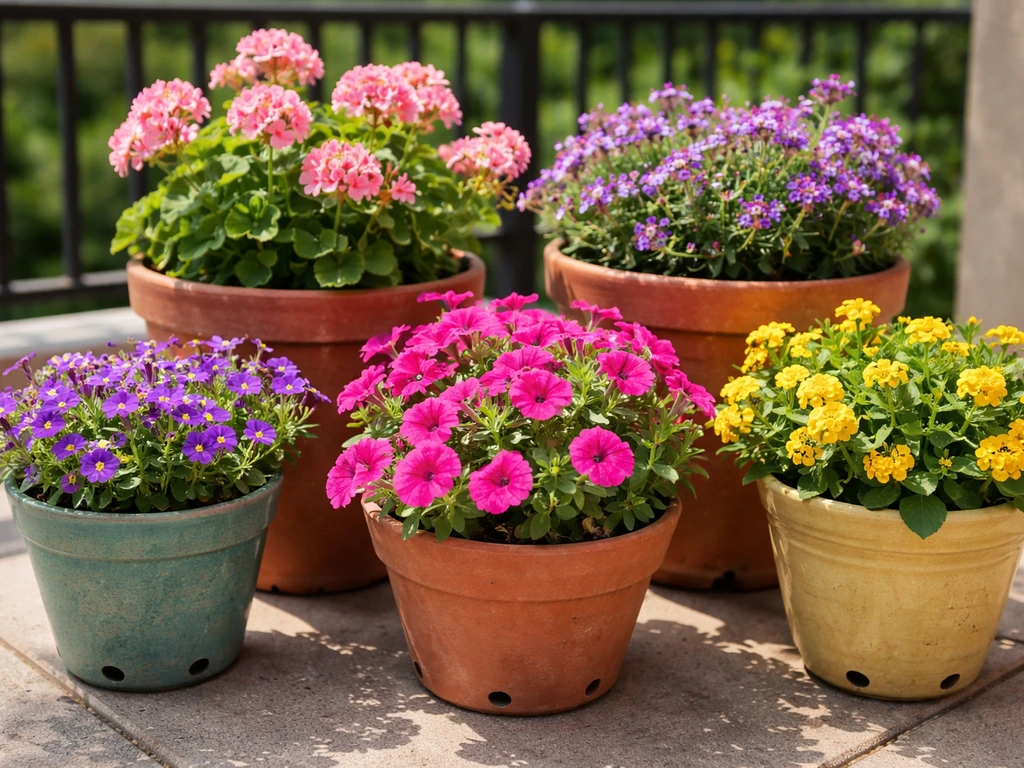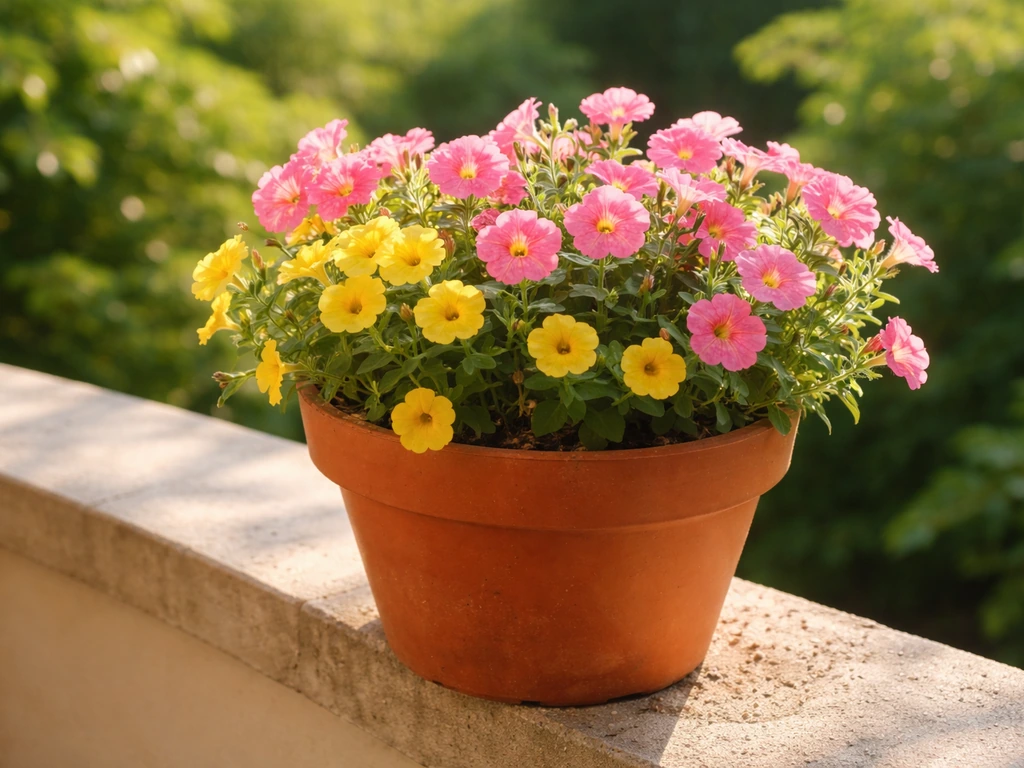
Yes, you can absolutely grow flowers from seed directly in pots, and it's one of the most satisfying things you can do on a balcony, patio, or windowsill. The process is straightforward: pick the right seeds, use a decent pot with drainage, fill it with a sterile potting mix, sow at the correct depth, keep things moist and warm, and then stay consistent with care once the seedlings take off. If you want a step-by-step overview of the whole process from choosing seeds to caring for seedlings, follow this guide on how to grow seeds in a pot. That's the whole game. The sections below walk you through each step in the exact order you'll need it.
How to Grow Flower Seeds in Pots: A Step-by-Step Guide
Marcus Whitley
20 Apr 2026
Picking the right flowers and seeds for pots
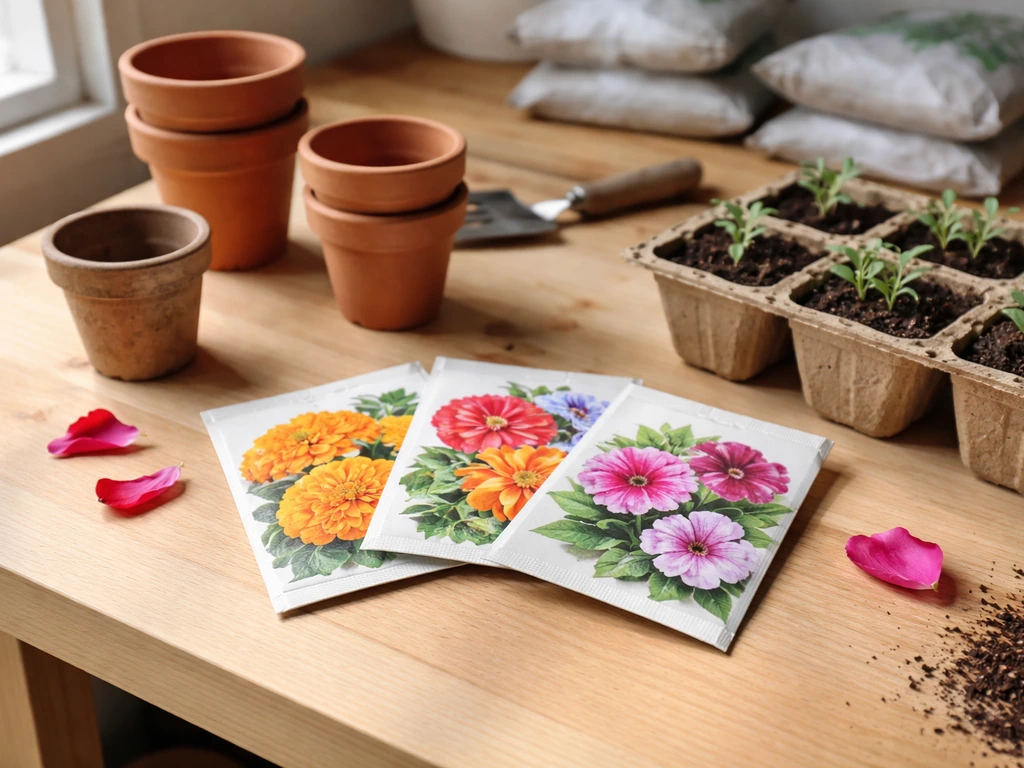
Not every flower is a great candidate for starting from seed in a pot, especially if you're a beginner. If you want the full end-to-end details, see how to grow a flower in a pot as a related option for container success. The best ones to start with are annuals that germinate quickly, grow at a manageable size, and either thrive in containers or can be direct-seeded into their final pot without any transplanting fuss. Zinnias are probably the single best beginner flower for this: they germinate in as little as 5 to 7 days at around 60°F, they love full sun (and most patios and balconies have plenty), and you can sow them right into the container where they'll live and bloom. No shuffling around required.
Marigolds are another excellent choice, widely recommended for direct sowing at home with minimal fuss. Calendula (sometimes called pot marigold, which is fitting) is also great for direct sowing once soil temperature hits about 60°F. Petunias are popular for containers too, though they're a bit more finicky to start from seed because their seeds are tiny and need light to germinate, which I'll explain in the sowing section. If you want a fuller list of flower varieties specifically suited to container growing, the best flowers to grow from seed in pots is a topic worth exploring on its own, but for now, start with zinnias, marigolds, or calendula and you'll be in good shape.
Choosing pot size, drainage, and placement
Pot size matters more than most beginners expect. Once you have the right pot size, you can follow a complete guide for how to grow flower plants in pots from seed through flowering. For seed starting specifically, your container needs to be at least 2 inches deep to give roots somewhere to go, but for most flowering annuals that you plan to grow to full size in the same pot, you'll want something bigger. A general guideline: compact annuals like marigolds and petunias do well in pots 8 to 12 inches in diameter, while fuller plants like zinnias prefer 12 inches or more. Going too small means the plant runs out of root space and dries out constantly. Going too large isn't a real problem except that oversized containers can hold excess moisture around young roots, which increases rot risk.
Drainage is non-negotiable. Whatever pot you use, it must have holes in the bottom. If water sits in the bottom of a sealed pot, roots suffocate and rot, and your seedlings will die before they ever flower. If you fall in love with a decorative pot that has no drainage hole, use it as a cachepot (an outer sleeve) and keep your actual plant in a plain nursery pot with holes inside it. When placing your pot, think about light first. Zinnias need 8 or more hours of direct sun per day, and most annual flowers do best in full sun. A south- or west-facing balcony, windowsill, or patio ledge is ideal. If you're working with lower light, lean toward shade-tolerant annuals like impatiens or begonias rather than fighting the conditions.
Soil and pot preparation for seed starting
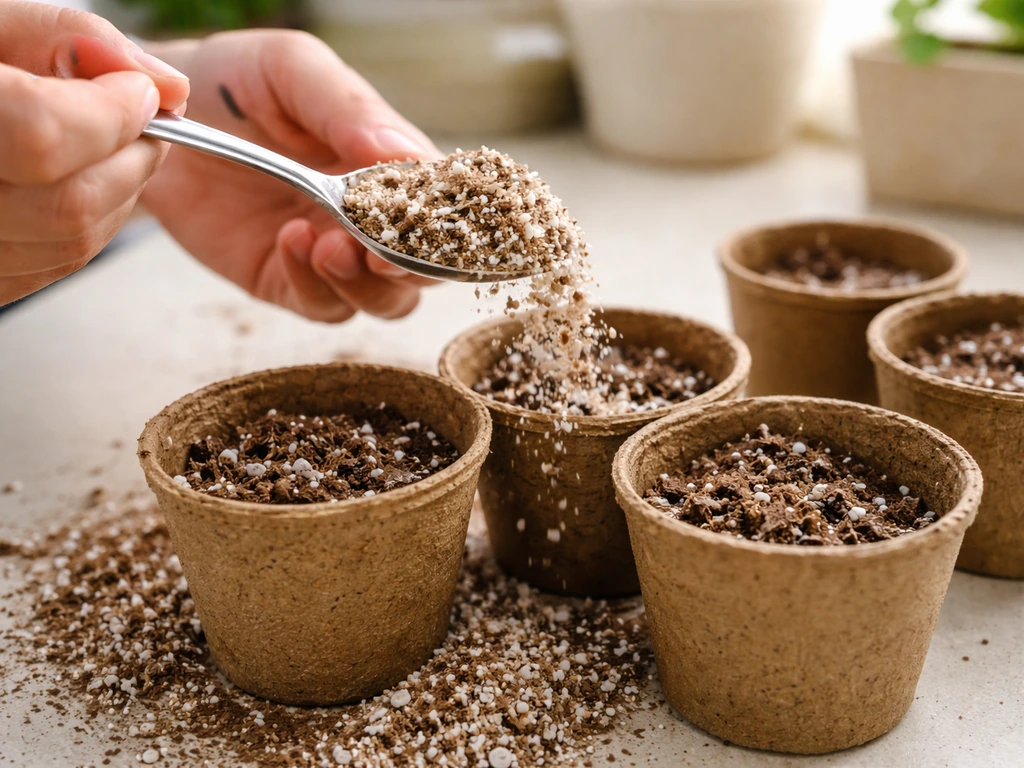
This is where a lot of beginners go wrong: using regular garden soil or low-quality potting mix in a container. Garden soil is too dense, doesn't drain well in pots, and is full of pathogens that cause a nasty problem called damping off, where seedlings sprout and then suddenly collapse at the soil line. The fix is simple: use a sterile seed-starting mix or a quality soilless potting mix. Penn State Extension advises starting seeds in pasteurized or sterile media, and notes that most commercially available soilless mixes are generally free of damping-off fungi and often do not require treatment. Sterile means it's been heat-treated to kill off the fungi and bacteria that cause damping off. Soilless mixes (usually peat or coir with perlite) are also much lighter than soil, which helps with drainage in containers.
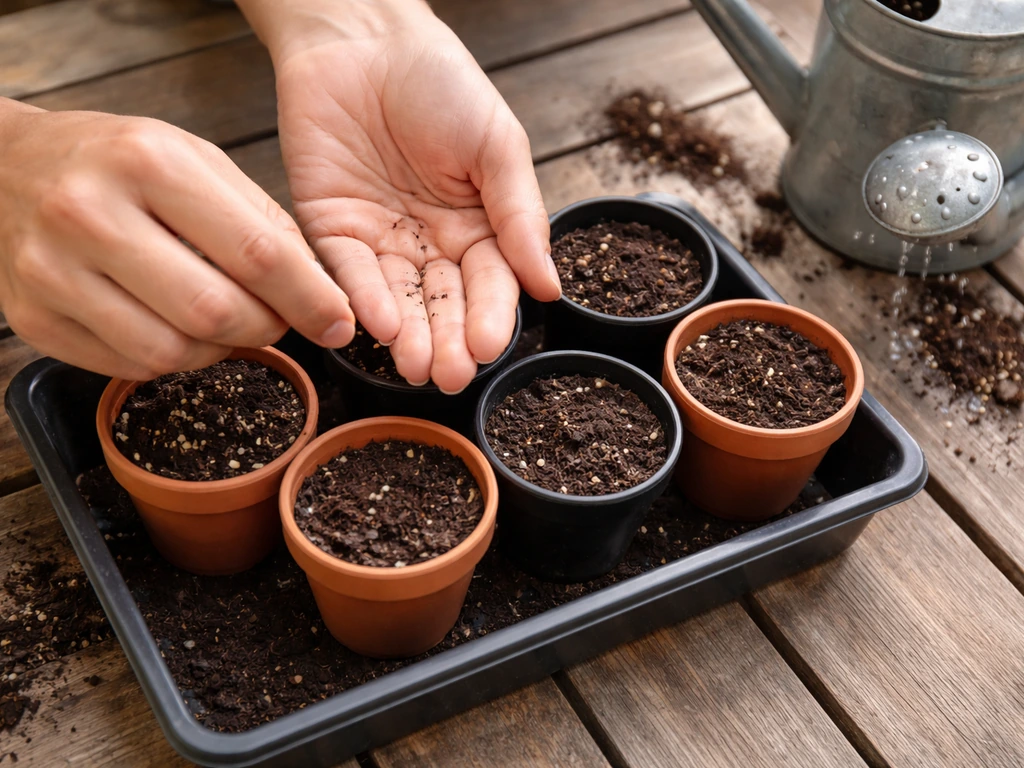
On pH: soilless mixes work best in the 5.5 to 6.0 range, while mixes that contain some actual soil are better around 6.0 to 6.5. Most quality commercial seed-starting and potting mixes are already in the right range, so unless you're mixing your own, you don't need to test or adjust. Before filling your pot, rinse it out if it's been used before, and make sure the drainage holes are clear. Fill to about an inch below the rim, press the mix down lightly (not hard, just enough to eliminate big air pockets), and water it until it's evenly moist but not dripping. You want it to feel like a wrung-out sponge before you sow a single seed.
Sowing flower seeds in pots
How deep to plant
The standard rule is to plant a seed about twice as deep as its width. So a zinnia seed that's roughly 4mm wide gets planted about 8mm (just under half an inch) deep. Tiny seeds like petunias are the exception: they need light to germinate, so you press them onto the surface of the mix and don't cover them at all. When in doubt, check your seed packet, but the 2x-width rule is a reliable default for most medium and large flower seeds.
Spacing seeds in a pot
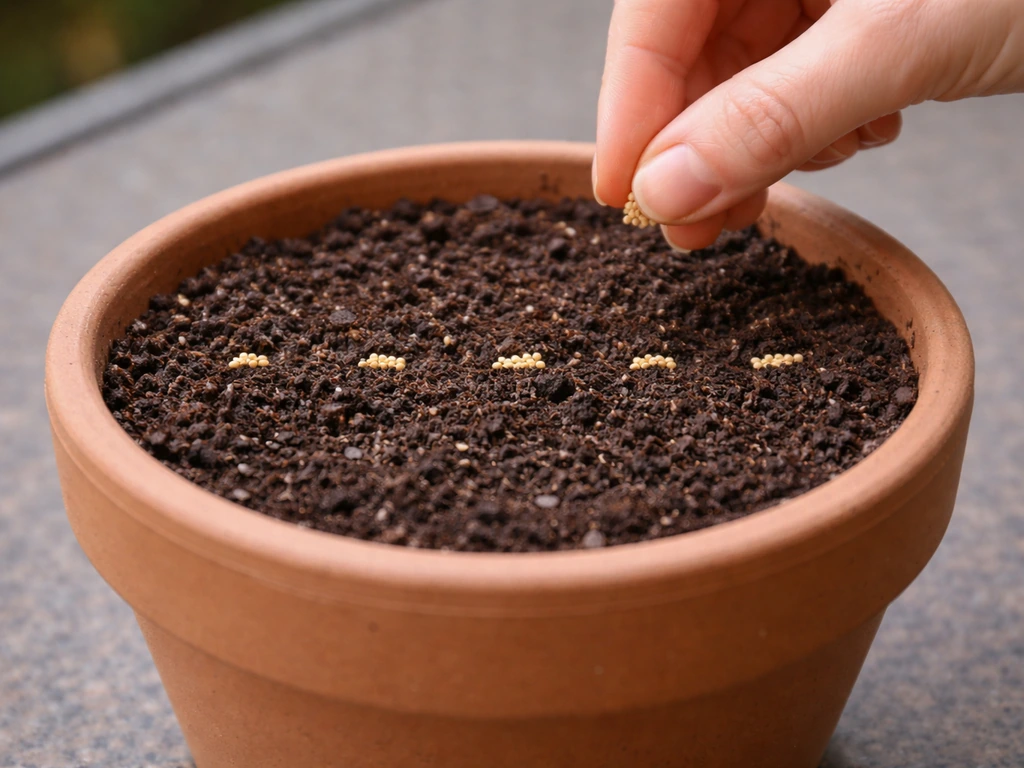
For direct sowing into a final container, don't crowd. Sow two or three seeds per intended planting spot and plan to thin down to one. For a 12-inch pot, you might sow three small clusters, each a few inches apart, then thin to the strongest seedling per spot. Overcrowding causes competition, poor airflow, and disease problems later. It's tempting to scatter a whole packet in one pot, but resist.
Light requirements and darkness during germination
Most flower seeds either need darkness or are indifferent to light during germination. Seeds that need darkness should be covered with potting mix as normal and can be placed in a dark spot or loosely covered with newspaper or a dark plastic bag until they sprout. Light-requiring seeds like petunias must be pressed onto the surface and left uncovered, placed somewhere with good ambient light. Again, the seed packet will tell you, and it's worth reading before you sow.
Labeling your pots
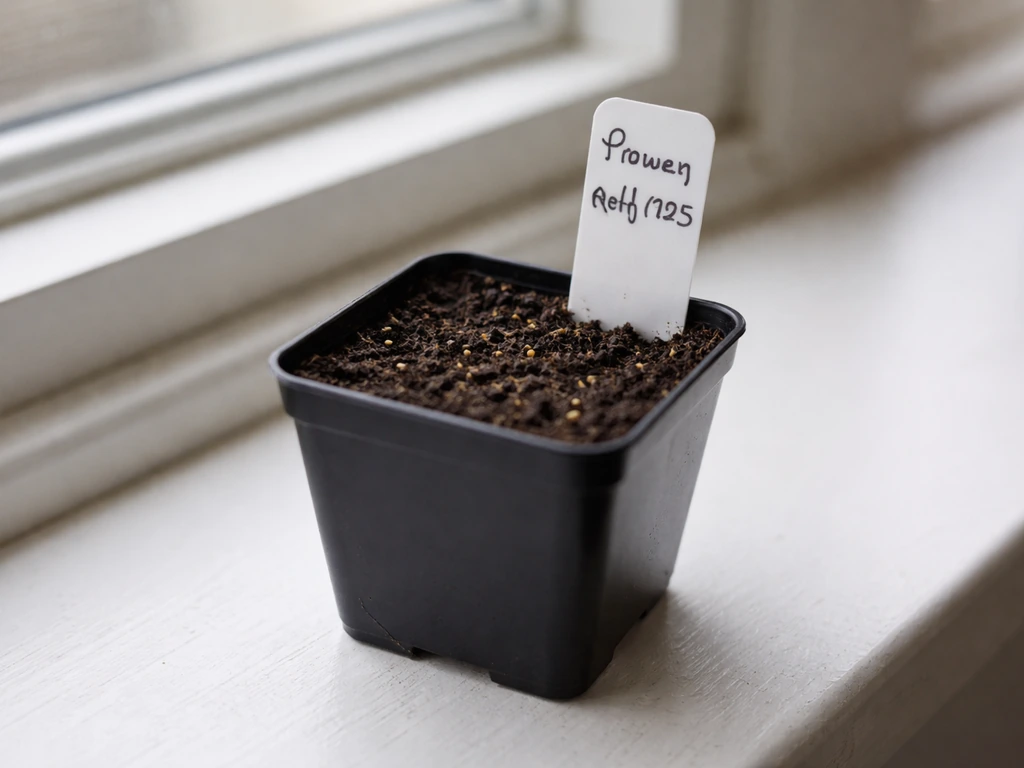
Label everything the moment you sow. I've skipped this step and ended up with mystery pots more times than I'd like to admit. A simple plastic tag or a piece of tape on the pot with the flower name and sow date is all you need. The sow date is useful for tracking germination time and for troubleshooting if nothing comes up.
Watering, temperature, and germination care
Consistency is the key to good germination. The mix needs to stay evenly moist from the moment you sow until the seedlings emerge. If it dries out completely even once, you can lose germination entirely. If it's waterlogged, seeds rot. The trick is to water gently and evenly, and one of the best ways to do that is bottom watering: set your pot in a shallow tray of water and let the mix absorb moisture from below for about 20 to 30 minutes, then remove it. This keeps the surface from getting battered and over-wet, which reduces the risk of surface mold and damping off.
Temperature plays a huge role. Most annual flower seeds germinate best between 65°F and 75°F. Zinnias and marigolds can start germinating around 60°F, but they'll be faster and more reliable closer to 70°F. A warm windowsill, a sunny countertop, or an indoor spot away from cold drafts usually works well. If you're sowing outdoors in spring, wait until nighttime temperatures are consistently above 50°F and soil temperatures are at or above 60°F for warm-season flowers. Calendula, being a cooler-season flower, handles lower temperatures better and can be direct-sown earlier.
If germination is poor or nothing has appeared after two to three weeks, check a few things: Was the mix allowed to dry out at any point? Was it too cold? Were seeds sown too deep? Try pressing a finger gently into the mix to see if there are any seeds near the surface that rotted. If so, the issue was likely overwatering or poor drainage. If seeds look intact but unhatched, temperature is usually the culprit. Don't give up immediately: re-wet the mix gently, move the pot somewhere warmer, and give it another week. If you're still getting nothing, re-sowing is the practical call.
Thinning and transplanting seedlings in containers
Once seedlings are up, thinning is the step most beginners feel guilty about but absolutely must do. Leaving too many seedlings crowded together means none of them will grow well. Once seedlings have their first set of true leaves (the second set of leaves that appears, which look more like the adult plant), thin down to the strongest one per planting spot. The right way to do this is to snip the extra seedlings at the soil line with small scissors rather than pulling them out. Pulling risks disturbing the roots of the seedling you're keeping, which can set it back or kill it.
For direct-seeded flowers like zinnias and marigolds, you often don't need to transplant at all: they stay in the same pot from sowing to flowering. Transplanting only becomes relevant if you started seeds in small trays or cell packs and need to move them into larger containers. If that's the case, do it gently and disturb roots as little as possible. Water the seedlings well before you move them, use a spoon or dibber to lift the root ball intact, and settle them into a pre-moistened pot at the same depth they were growing before. Water in gently after transplanting and keep them out of harsh direct sun for a day or two while they adjust.
Ongoing care to get healthy blooms
Watering once plants are established
Container plants dry out much faster than in-ground plants, especially in summer heat. Check your pots daily by pushing a finger an inch into the soil: if it's dry at that depth, water thoroughly until it drains from the bottom. Don't just wet the surface. In hot weather, you may need to water every day. Inconsistent watering stresses plants, leads to poor flowering, and makes them more vulnerable to pests and disease.
Feeding your flowers
Container plants need regular feeding because nutrients wash out through the drainage holes every time you water. For petunias, a diluted liquid fertilizer every two weeks works well, and spreader types benefit from weekly feeding. For zinnias, fertilize monthly and use a fertilizer where phosphorus is higher than nitrogen, since phosphorus supports flower development. Avoid going heavy on nitrogen for flowering plants in general: too much nitrogen pushes leafy green growth at the expense of blooms. A balanced liquid fertilizer or one labeled for flowering plants is a safe default for most annuals.
Deadheading and pruning
Deadheading means removing spent (dead or fading) flowers before they set seed. This is one of the highest-impact things you can do for container annuals. When a plant sets seed, it thinks its job is done and slows down flower production. Remove those old blooms and the plant redirects energy into producing more flowers. It also prevents disease: old rotting flowers are a prime breeding ground for fungal problems like Botrytis (gray mold). Deadhead by pinching or snipping just below the spent flower head, ideally every few days once your plants are in full bloom.
Pest and disease prevention
The most common container flower problems are Botrytis (gray fuzzy mold on stems or flowers), powdery mildew (white dusty coating on leaves), aphids, and spider mites. Good airflow around your pots goes a long way toward preventing fungal disease, so avoid crowding multiple pots tightly together. Water at the base of the plant rather than over the foliage. Scout your plants weekly by turning over a few leaves and checking stems: catching problems early makes them much easier to manage. Aphids can often be knocked off with a strong stream of water. Powdery mildew is harder to reverse once established, so prevention through spacing and avoiding overhead watering is the better strategy.
| Flower | Direct Sow in Final Pot? | Germination Temp | Germination Time | Sun Needs | Fertilizer Tip |
|---|---|---|---|---|---|
| Zinnia | Yes | ~60–70°F | 5–7 days | Full sun, 8+ hours | Monthly, phosphorus-heavy |
| Marigold | Yes | 65–75°F | 5–7 days | Full sun | Balanced liquid, every 2 weeks |
| Calendula | Yes (at 60°F soil temp) | 50–65°F | 7–14 days | Full sun to part shade | Balanced liquid, every 2 weeks |
| Petunia | Yes (surface sow, needs light) | 70–75°F | 7–10 days | Full sun | Every 1–2 weeks, diluted liquid |
What a simple weekly routine looks like
- Check soil moisture daily and water thoroughly when the top inch is dry
- Deadhead spent blooms every two to three days once flowering starts
- Do a quick pest check weekly: look under leaves, check stems for stickiness or spots
- Feed with liquid fertilizer on your chosen schedule (every one to four weeks depending on the flower)
- Move pots into better light or shelter from extreme heat or cold snaps as needed
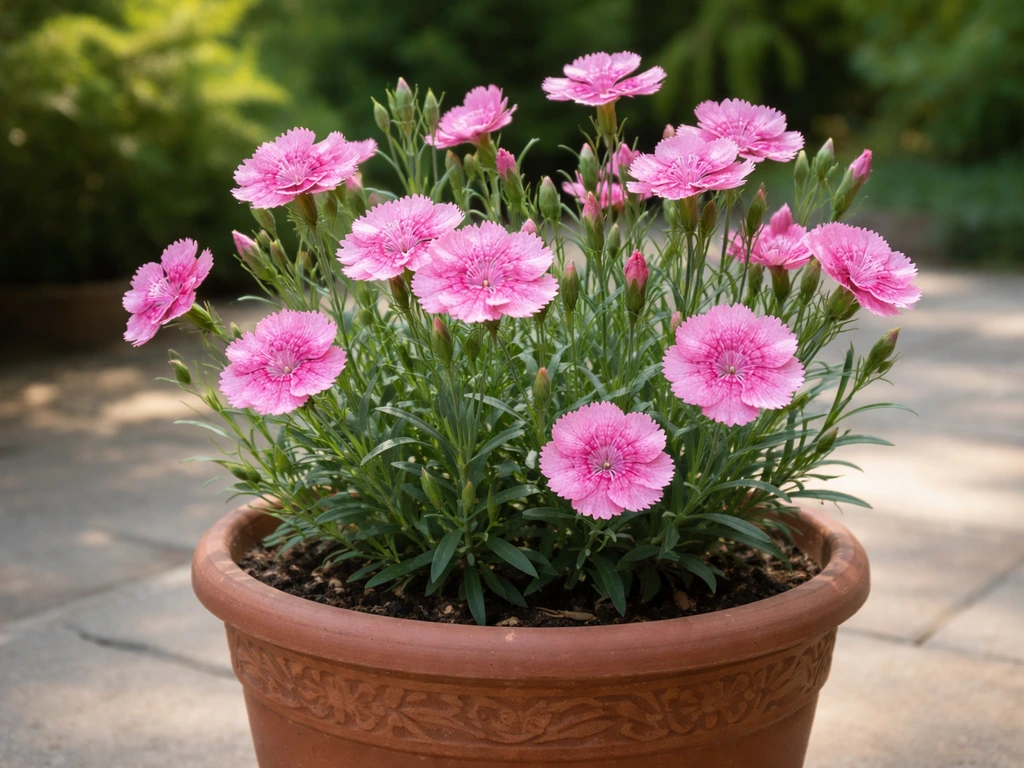
Growing flower seeds in pots has a real learning curve the first season, but the fundamentals stay the same no matter what you're growing: good drainage, sterile mix, correct sowing depth, consistent moisture during germination, and attentive care once they're up. Get those basics right and most annual flowers will reward you generously. If you're specifically trying to grow fluxweed in a large pot, you'll want to dial in the pot size, drainage, light, and watering schedule for that plant. Carnations can also be grown in pots with the right light, soil, and consistent watering. Start with zinnias or marigolds this week, and by midsummer you'll have a pot of blooms you grew entirely from seed.
FAQ
Do I need to soak flower seeds before planting in pots?
Usually no. Most annual seeds can go straight into moist seed-starting mix. Soaking can help some older or very dry seeds, but it also increases the risk of rot if the mix stays cold or waterlogged. If you do soak, keep it short (a few hours to overnight, not days) and sow immediately into evenly moist (not dripping) mix.
How do I know the potting mix is moist enough for germination without overwatering?
Use the “wrung-out sponge” test: after filling, water until excess drains, then check that the mix feels damp throughout but doesn’t ooze when you squeeze a handful. During germination, keep the surface lightly moist, and use bottom watering if the top keeps staying wet or getting crusty.
What should I do if my seeds germinate but seedlings suddenly collapse?
That pattern often points to damping off, commonly caused by overly wet soil, low airflow, or starting in dense garden soil. The practical move is to improve drainage and reduce surface wetness, then remove dead seedlings and avoid watering overhead. If you’re starting new pots, switch to sterile seed-starting mix and keep temperatures in the recommended range.
Can I grow flower seeds in pots in shade or indoors with a window only?
It depends on the flower. Many container annuals need full sun (8 or more hours) to bloom well, and window light can be too weak or uneven. If you’re limited to light, choose shade-tolerant types mentioned for lower light, or supplement with a grow light to keep seedlings from stretching and failing to set buds.
Why are my seedlings tall, thin, and leaning?
That’s typically “leggy” growth from insufficient light. Move the pot to the brightest spot you have, rotate it regularly, and consider adding a grow light. Thin only after you see true leaves, since overcrowding also worsens airflow and encourages stretching.
Do I have to thin seedlings, and what happens if I leave them crowded?
You usually should thin. Leaving multiple seedlings in one spot forces competition for water and nutrients, reduces airflow, and makes fungal problems more likely. Thin to one strong seedling per spot once you have the first true leaves, and snip extras at the soil line rather than pulling them.
Should I cover pots with plastic or a dome while seeds sprout?
For many seeds, gentle humidity can speed germination, but it’s not required if your mix stays evenly moist. If you do cover, ventilate daily to prevent condensation and mold, remove the cover as soon as seedlings emerge, and keep the pot out of direct hot sun to avoid overheating.
How long should I wait before giving up on a pot that isn’t germinating?
A good rule is to check after the typical germination window for that seed (often 1 to 3 weeks for many annuals). If nothing appears, review depth, temperature, and whether the mix ever dried out or stayed waterlogged. If seeds look intact but unhatched and temperatures were off, warming and gentle re-wetting can be worthwhile before re-sowing.
Can I reuse potting mix from last season for new flower seeds?
It’s risky. Used mix can compact, hold excess moisture, and may contain organisms that contribute to damping off. For seed-starting, the safer choice is fresh sterile or soilless mix. If you reuse, discard the most degraded top layer, refresh with new sterile mix, and ensure the pot has excellent drainage.
Do I need fertilizer while seeds are germinating?
Generally no. Seed-starting mix is usually formulated to be low in nutrients, and fertilizing too early can stress seedlings. Wait until after seedlings establish and you can see healthy growth, then follow the timing suggested for your flower type (monthly or more frequent feeding for bloomers in containers).
How do I prevent pests like aphids in container pots?
Start with early scouting (at least weekly) and check the undersides of leaves. For small aphid outbreaks, a strong water spray can knock them off. Also avoid crowding and keep watering consistent, since stressed plants attract pests more easily.
When should I move seedlings outdoors, and how do I avoid shock?
Harden them off gradually. Start with short outdoor periods in mild conditions, then increase time and exposure over several days. Avoid moving them into harsh sun or cold nights abruptly, and keep them out of strong weather until they can handle it.