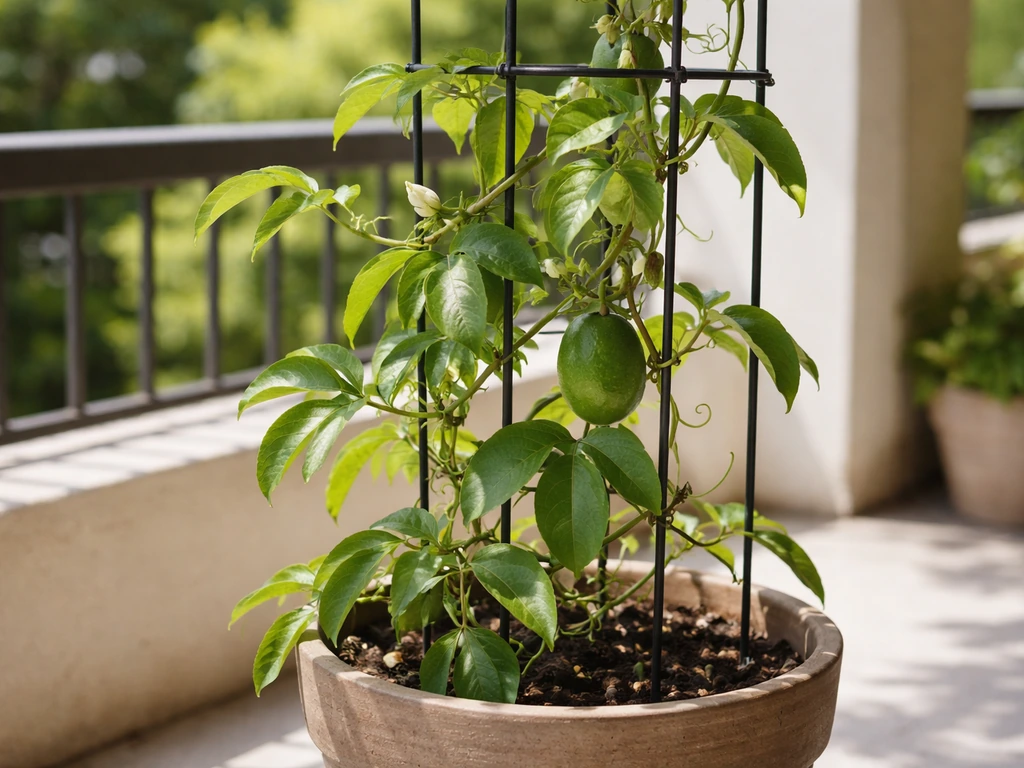
Yes, you can absolutely grow passion flower in a pot, and it works really well once you get the setup right. Passiflora caerulea is described as a twining vine that can grow to about 30 feet, will flower even in a small pot, and prefers plenty of root space grow passion flower in a pot. Passiflora caerulea (blue passionflower) is the most popular choice for container growing, and it thrives in a pot as long as you give it enough light, decent drainage, something to climb, and a warm spot to overwinter. It won't get as enormous as an in-ground plant, but you will get those spectacular alien-looking flowers, especially from late summer into autumn. I've seen it done successfully on balconies, patios, and even indoors near a bright window, so don't let limited space put you off.
Can You Grow Passion Flower in a Pot? Container Guide
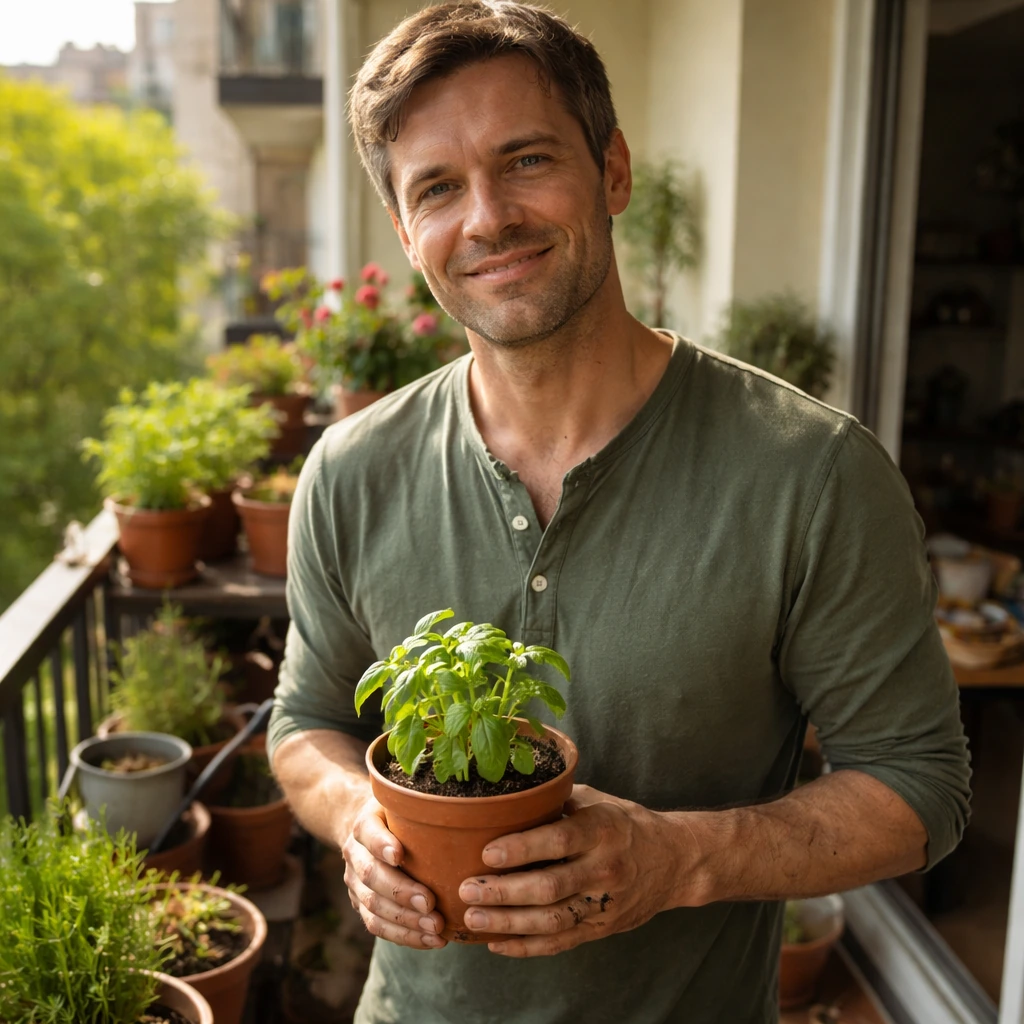

What to expect from a passion flower grown in a pot
Container-grown passion flower behaves a little differently from its in-ground cousins. In the wild, Passiflora caerulea can scramble up to around 25 metres when it has enough support, so growing it in a pot is essentially a managed version of that energy. The good news is that containers naturally limit rampant growth, which actually makes passion flower much easier to handle in a small garden or on a balcony. The trade-off is that growth is a little less vigorous and flowering can be slightly reduced compared to a plant in open ground. That said, blue passionflower flowers sporadically through summer and then picks up significantly in late summer and into autumn, so you do get a real show. If you choose Passiflora incarnata (maypop), which is another great container option, individual flowers only last about two days but the plant keeps producing them from late June all the way through to mid-September. Realistic expectation: your first season may be mostly leafy growth while the plant establishes. Flowers tend to come more freely once the plant is settled and slightly root-bound in its pot.
Choosing the right pot, soil, and variety

Pick the right variety first
Not all passion flowers are equally suited to container life, so choosing the right species makes a big difference. Here are the best options for pot growing.
| Variety | Hardy to | Best for | Notes |
|---|---|---|---|
| Passiflora caerulea (Blue passionflower) | Around 10°F (-12°C) with some protection | Temperate climates, patios, balconies | Most popular container variety; iconic blue-white flowers; move indoors to overwinter in cold areas |
| Passiflora incarnata (Maypop) | Much hardier than caerulea; roots survive hard frosts | Gardeners who want edible fruit; US native | Long flowering season; good 5-gallon pot candidate; dies back but often regrows from roots |
| Passiflora edulis (Passion fruit) | Frost-tender | Gardeners who want fruit as a priority | Needs more heat; closely related to growing passion fruit in pots |
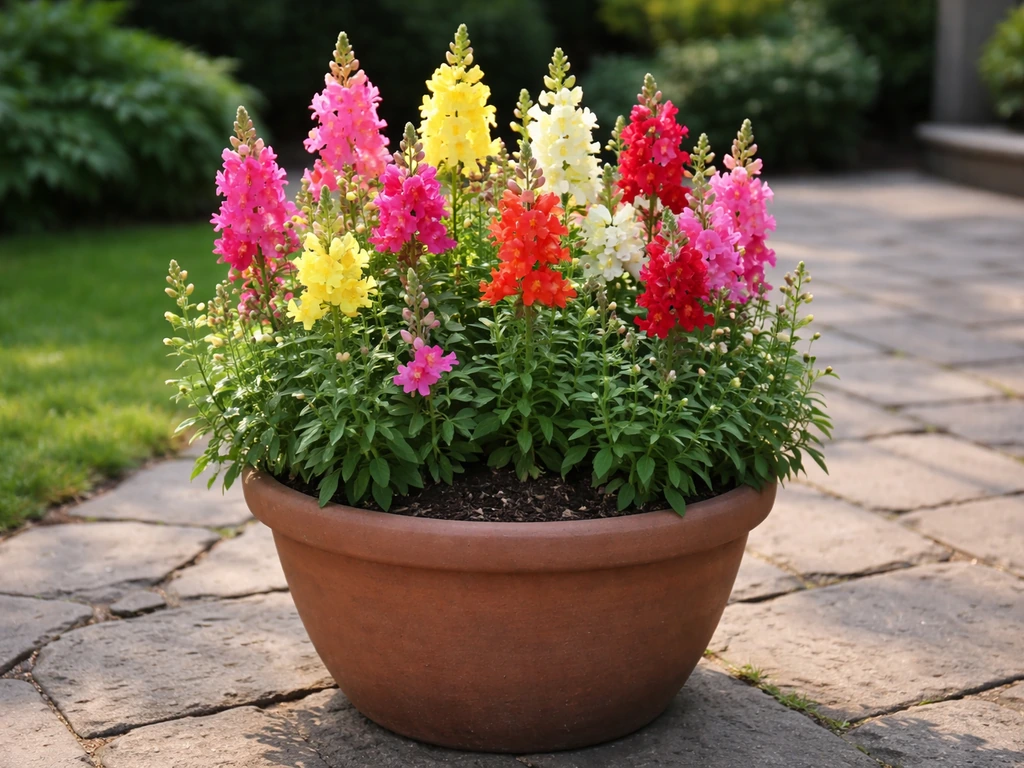
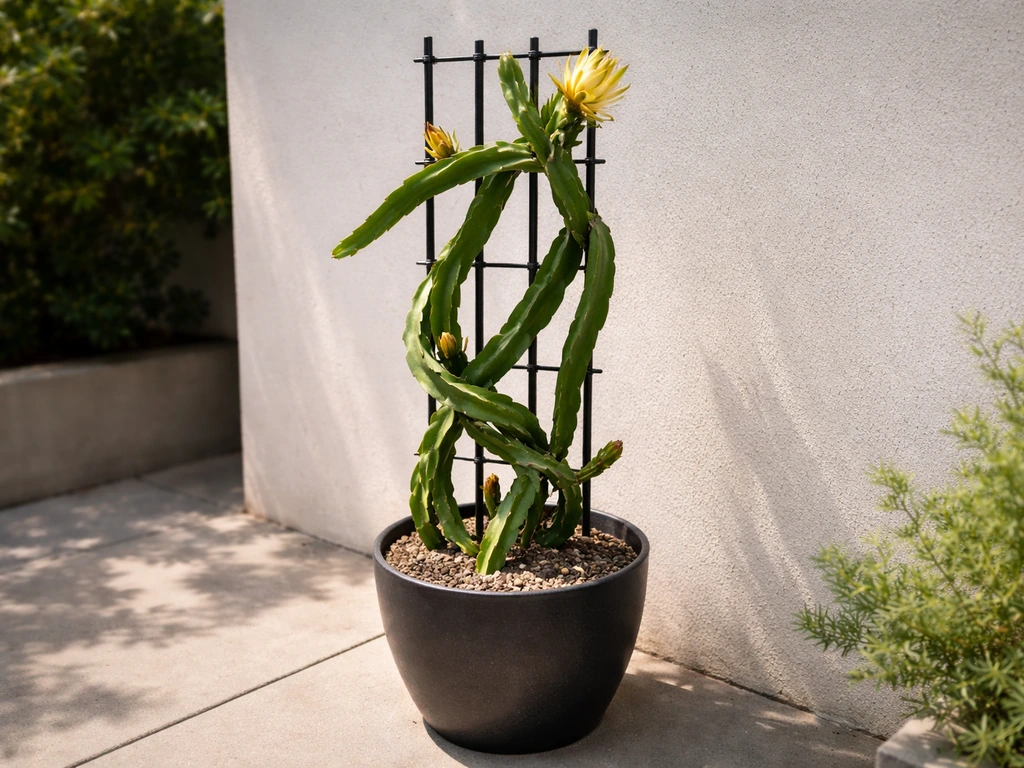
If you're in a temperate climate and this is your first go, I'd start with Passiflora caerulea. It's the most forgiving, widely available, and reliably beautiful. If fruit is your goal, you're really looking at Passiflora edulis, which is a slightly different project (growing passion fruit in pots has its own considerations around pollination and heat). If you want a similar container setup for other vining flowers, learn how to grow snapdragons in pots and keep them blooming growing passion fruit in pots. If you want fruit as well as flowers, you will need a few extra steps for how to grow passion fruit in pots, especially around pollination and warmth growing passion fruit in pots. And if vines excite you in general, you might also find growing kiwifruit in pots or dragon fruit in pots worth exploring, since the container-vine approach shares some of the same logic. If you want more detail, the same container-vine setup can help you figure out how to grow kiwifruit in pots, including support and watering needs growing kiwifruit in pots. If you want to try a similar container-vine setup with a different plant, our guide on how to grow dragon fruit in pots covers light, cacti-friendly soil, and watering.
Pot size and drainage

Start with a pot that's at least 12 to 15 inches (30 to 38 cm) in diameter, and make sure it has drainage holes, plural if possible. For Passiflora incarnata specifically, a 5-gallon pot is a well-tested starting size. Don't go too big too soon: passion flower actually flowers better when its roots are a little snug, so a massive pot from day one tends to produce a lot of foliage and few flowers. Terra cotta is a good choice because it breathes and dries out faster, which helps avoid the overwatering problems passion flower is prone to. If you're in a hot, dry climate, glazed ceramic or plastic retains moisture longer and may suit you better. Whatever pot you choose, drainage is non-negotiable. Place it on pot feet or a stand so water can flow freely from the base.
Soil mix
Use a good quality general-purpose potting mix as your base. Don't use garden soil, it compacts in pots and causes drainage problems. To improve drainage further, mix in about 20 to 30 percent perlite or coarse grit. Passion flower tolerates a fairly wide pH range from acidic to slightly alkaline, but the sweet spot for container growing is pH 6.0 to 7.2. You don't need to test obsessively, just avoid very acidic ericaceous mixes (those are for blueberries, not passion flowers) and you'll be fine. A multi-purpose compost-based potting mix from any garden centre is a solid starting point.
Light, location, and watering basics
Sun and placement

Passion flower wants full sun to partial shade, but flowering is always better with more sun. Aim for at least 4 to 6 hours of direct sunlight per day, and 6 to 8 hours if you can manage it. A south or west-facing wall, fence, or balcony railing is ideal in the northern hemisphere. If you're growing it outdoors in a temperate climate, wait until nighttime temperatures are consistently above 60°F (15°C) before putting the pot outside, which is typically late spring. Moving it out too early can stunt growth. If growing indoors, place it in your brightest spot, ideally a south-facing window. It will grow less vigorously indoors, but it can still flower if the light is good enough.
Watering: the number one thing to get right
Passion flower is genuinely susceptible to overwatering, and root rot is the most common way people accidentally kill a potted passion flower. The rule I follow is simple: stick your finger about an inch into the soil. If it feels dry at that depth, water thoroughly until it drains freely from the bottom. Then let it dry out again before watering. In summer, that might mean watering every 2 to 3 days in a warm, sunny spot. In winter or when the plant is resting, it might be once a week or less. Never let the pot sit in a saucer of standing water. If you see leaves yellowing and stems going soft, overwatering is the first thing to suspect. One tip from the Passiflora Society: if your plant is wilting or dying back, stop watering and let it dry out. Counterintuitively, dry stress can sometimes trigger flowering (more on that below).
Feeding and encouraging flowers
This is where a lot of people go wrong: they feed their passion flower a nitrogen-heavy fertilizer and end up with a very leafy, very green, very flowerless plant. Nitrogen pushes leafy growth; what you want is phosphorus to encourage blooms. During the growing season, feed every two weeks with a phosphorus-rich fertilizer (look for the middle number in the NPK ratio to be the highest, something like 7-9-5 or similar). Another approach that works well is a balanced fertilizer like 15-15-15 applied at half strength (roughly half a teaspoon per gallon of water) once a month if you prefer simplicity. Stop feeding in autumn when growth slows, and don't feed at all during winter. Resuming feeding in spring as new shoots appear is your cue to kick off the season. Slight root restriction in the pot also helps trigger flowering, so don't be in a rush to repot into a bigger container unless the plant is visibly struggling.
Support, pruning, and training your vine
Give it something to climb

Passion flower is a vine. It climbs using tendrils that grab onto whatever is nearby, so you need to give it a structure from day one. In a pot, a bamboo hoop, a small obelisk trellis, or a wire frame pushed into the soil all work well. If the pot is near a fence or wall, you can train the stems outward using wire or ties. For indoor plants, a hoop trellis inserted into the pot keeps things tidy and gives the tendrils something to grip. As the plant grows, gently guide new shoots around the structure rather than letting them sprawl. This keeps things manageable and also improves air circulation, which reduces disease risk.
Pruning for flowers and shape
Passion flower blooms on new growth, so your pruning strategy should always be about creating fresh shoots. The main prune happens in late winter or very early spring before growth really gets going. At this point, cut back last year's growth quite hard, reducing side shoots to within 2 to 3 buds of the main framework. This sounds brutal but it's exactly what the plant needs to produce a flush of flowering shoots. You can also do a lighter tidy-up after flowering at the end of summer, cutting back the shoots that have already flowered to 2 to 3 buds of the framework. If frost has hit and damaged growth, wait until spring, remove the frost-damaged stems, then cut back new growth to within about 15 cm (6 inches) of the main framework. Don't prune in autumn if you're overwintering outdoors because the stems provide some insulation to the roots.
Common problems in pots and how to fix them
- No flowers: Almost always caused by too much nitrogen (switch to a phosphorus-rich feed), too much shade (move to a sunnier spot), or a pot that's too large (slightly root-bound plants flower better). Also check that you're not pruning in summer, which removes the new growth that would have flowered.
- Yellow leaves: Usually overwatering or waterlogged soil. Check drainage holes aren't blocked, let the soil dry out, and cut back on watering frequency. If leaves are yellow with green veins, it could be iron deficiency from alkaline soil; try a specialist ericaceous feed or adjust soil pH toward 6.0.
- Leaf drop in winter: Normal. Passion flower can be semi-evergreen or fully deciduous depending on temperatures. If the plant is dormant, reduce watering significantly and don't feed. It should reshoot in spring.
- Slow or no growth in spring: Be patient — passion flower can be slow to wake up after winter. Make sure it's in a warm enough spot (above 60°F/15°C at night), and give it a diluted balanced feed to encourage new shoots.
- Pests (aphids, spider mites, whitefly): These are the most common pests on container passion flowers, especially indoors or in sheltered spots. Aphids and whitefly respond well to a spray of insecticidal soap or neem oil solution. Spider mites thrive in hot, dry conditions — increase humidity around the plant or move it to a less arid spot. Check the undersides of leaves regularly.
- Root rot: Caused by overwatering or poor drainage. If the stem base feels soft and mushy, remove the plant from its pot, trim off any black or mushy roots with clean scissors, let the roots air for an hour, then repot into fresh, well-draining mix. Make sure drainage holes are clear.
Planting timeline, maintenance checklist, and overwintering
Seasonal timeline
| Season / Month | What to do |
|---|---|
| Early spring (Feb–Mar) | Hard prune back to framework. Resume feeding with balanced fertilizer. Keep indoors until nights are above 60°F. |
| Late spring (Apr–May) | Move pot outside once nighttime temps are reliably above 60°F. Place in full sun. Switch to phosphorus-rich feed every 2 weeks. |
| Summer (Jun–Aug) | Water regularly (every 2–3 days in heat). Continue fortnightly feeding. Train new growth onto trellis. Flowers begin appearing. |
| Late summer–autumn (Sep–Oct) | Peak flowering period. Light prune after flowering. Reduce feeding. Prepare to move indoors before first frost. |
| Winter (Nov–Feb) | Move pot to a cool, bright, frost-free location (around 59–60°F / 15°C). Water sparingly. Do not feed. Protect roots from freezing air temperatures. |
Overwintering your potted passion flower

If you're in a climate that gets hard frosts, you'll need to move your pot indoors before the first frost hits. Passiflora caerulea can survive down to around 10°F (-12°C) in the ground with root protection, but in a pot the roots are fully exposed to air temperature with no insulating soil mass around them, which makes them much more vulnerable. Move the pot to a cool but bright indoor location, ideally around 59 to 60°F (15°C). An unheated conservatory, greenhouse, or even a cool spare room with a bright window works well. The plant will likely lose some or all of its leaves over winter, which is fine. Keep watering to a minimum (just enough that the soil doesn't completely dry out), and don't feed at all until you see new growth in spring. If you can't bring the pot inside, group it together with other containers against a sheltered wall, wrap the pot in fleece or bubble wrap, and mulch the top of the soil with straw or bark to insulate the roots. This is a backup plan rather than ideal, and it only works in mild winters.
Your quick-start checklist
- Choose Passiflora caerulea or P. incarnata as your container variety.
- Select a pot at least 12–15 inches (30–38 cm) wide with multiple drainage holes.
- Fill with multi-purpose potting mix blended with 20–30% perlite or grit.
- Set up a trellis, hoop, or obelisk in the pot before planting.
- Place in the sunniest spot you have; wait until nights are above 60°F to put it outside.
- Water when the top inch of soil is dry; never leave the pot sitting in water.
- Feed every 2 weeks during the growing season with a phosphorus-rich fertilizer.
- Hard prune in late winter before growth resumes; light tidy-up after late-summer flowering.
- Move the pot indoors before the first frost to a cool, bright location around 60°F.
- In spring, prune, resume feeding, and move back outside when temperatures allow.
That's genuinely all it takes. Passion flower has a reputation for being exotic and difficult, but in a pot it's actually pretty straightforward once you nail the watering and light. Give it a season to settle in, feed it for flowers rather than foliage, and prune it back hard in spring without guilt. Most people who struggle with it in containers are either overwatering it or feeding it too much nitrogen. Get those two things right and you'll have a plant that flowers reliably and looks genuinely spectacular on a patio, balcony, or sunny wall.
FAQ
Can I grow passion flower in a pot indoors, and will it actually bloom?
Yes, but expect smaller results than outdoors. Give it the brightest window you have (typically south-facing in the north hemisphere), rotate the pot every week or so for even growth, and keep the trellis close so the vine does not waste energy reaching for light. If airflow is poor indoors, prioritize air circulation around the trellis, since trapped humidity can increase fungal issues.
Will a potted passion flower produce fruit, and do I need to pollinate it?
Passion flowers can self-pollinate only rarely, and container plants often attract fewer pollinators. If you want reliable fruit, hand-pollinate by transferring pollen from a flower’s anther to the stigma within the same day, ideally in the morning when flowers are most active. For Passiflora edulis (passion fruit), heat and pollination both matter, so be prepared for fewer fruiting weeks if your indoor temperatures are cool.
My passion flower has tons of leaves but no flowers, what should I change first?
If the plant stays leaf-heavy and never flowers, the most common causes are too much nitrogen, too little sun, and overly large root space. Check that it gets at least 4 to 6 hours of direct sun (6 to 8 if possible), switch to a fertilizer where phosphorus is higher (or use a balanced feed at half strength), and avoid repotting into a much bigger container unless the plant is clearly struggling.
Should I repot my potted passion flower, and when is the best time?
You can repot, but do it with care. Since pot-root restriction helps flowering, upgrade only one size at a time and repot when growth is starting in spring. Water lightly before and after repotting so the root ball does not dry out, and avoid disturbing the roots more than necessary. After repotting, give a little extra light to help it recover.
How do I tell if my potted passion flower is being overwatered or underwatered?
If you see drooping or yellow leaves, first suspect overwatering before anything else. Do the finger test again, and if the soil is wet, stop watering until it dries at least about an inch down. Make sure the pot drains freely (no saucer standing water, drainage holes not blocked). If stems are soft and smelly, the plant may already be in root rot, and you may need to trim damaged roots and repot into fresh mix.
Can I propagate passion flower from cuttings in a pot?
Yes, you can, but success depends on timing and humidity. For quickest results, take cuttings in late spring or early summer when new growth is active, use a sharp sterile tool, keep the cutting warm, and maintain gentle moisture without soaking. Cuttings may take weeks to root, and indoor air can be too dry, so a clear humidity cover can help (vent it occasionally to prevent mold).
What should I do if my passion flower seems stressed even though I water and feed correctly?
Most container-growing failures come from drainage and feeding mistakes, but nutrient lockout can also happen if the mix is too acidic or too salty. Stick to pH roughly 6.0 to 7.2, use fresh potting mix (not old compost), and avoid overfeeding. If growth suddenly stalls, flush the pot with clean water until excess drains out, then resume feeding at a reduced rate once you see new shoots.
Should I prune my passion flower in fall to keep it tidy on a balcony?
Yes, but do not prune lightly in autumn if you plan to overwinter outside. The vine can provide insulation to the crown, and removing too much late in the season can increase winter dieback. Save the hard prune for late winter or very early spring, then do only a small tidy-up after flowering at the end of summer.
Is it okay to use a saucer or self-watering pot with passion flower?
Choose pot feet or a stand so the base can drain, and consider using a self-watering planter only if you can prevent a constant wet reservoir. If a reservoir stays full, roots can sit in damp conditions and rot. A simple way to manage this is to ensure the bottom freely drains, and empty any caught water after watering.