Yes, you can absolutely grow dragon fruit in a pot, and it works better than most people expect. Dragon fruit is a climbing cactus (Selenicereus sp.), not a tree, and its roots are surprisingly compact for such a dramatic-looking plant. That makes it a genuinely good candidate for container growing, even on a balcony or a small patio. I've seen people get fruit from a pot-grown plant within two to three years of planting a cutting, which is honestly not bad for a tropical cactus. The key is giving it the right container, a solid support structure, fast-draining soil, and enough sun. Get those four things right and you're most of the way there.
How to Grow Dragon Fruit in Pots: Step-by-Step Guide
Marcus Whitley
20 Apr 2026
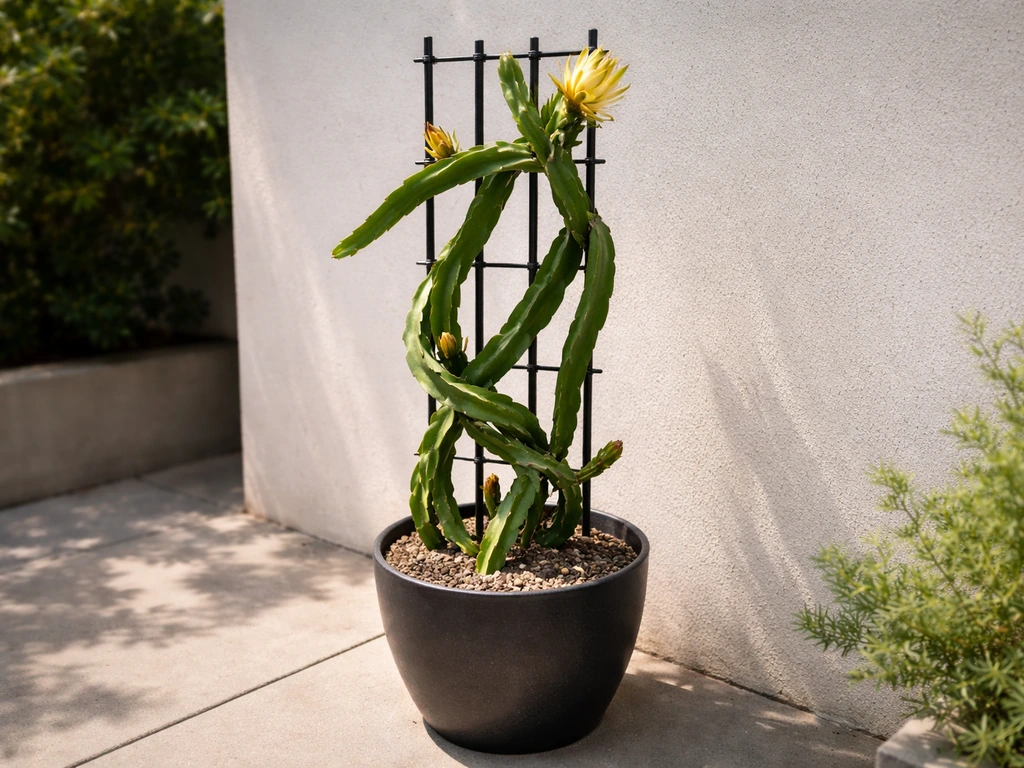
Can you grow dragon fruit in a pot (and why it actually works)
Dragon fruit is epiphytic in the wild, meaning it grows on trees and rocks with very little soil around its roots. That's actually great news for container gardeners. It doesn't need a huge root run to be happy, and it actively prefers conditions where its roots get air and dry out between waterings. Waterlogged soil is the biggest enemy of this plant, and a container with a drainage hole naturally helps you control that. The fact that it's a cactus also means it handles heat and dry spells well, which is a practical advantage if you sometimes forget to water or travel for a few days.
The climbing habit is the main thing to plan for. Dragon fruit sends out long, ribbed stems that want to grab onto something and grow upward. In a pot, you manage this with a central post or trellis, which we'll cover in the next section. Once trained correctly, a potted dragon fruit stays tidy, looks dramatic, and can produce full-sized fruit. Another bonus of growing in a container: you can move the pot to chase the best sun, which is a real advantage in climates where summers are warm but winters are cold.
Choosing the right pot, location, and support structure
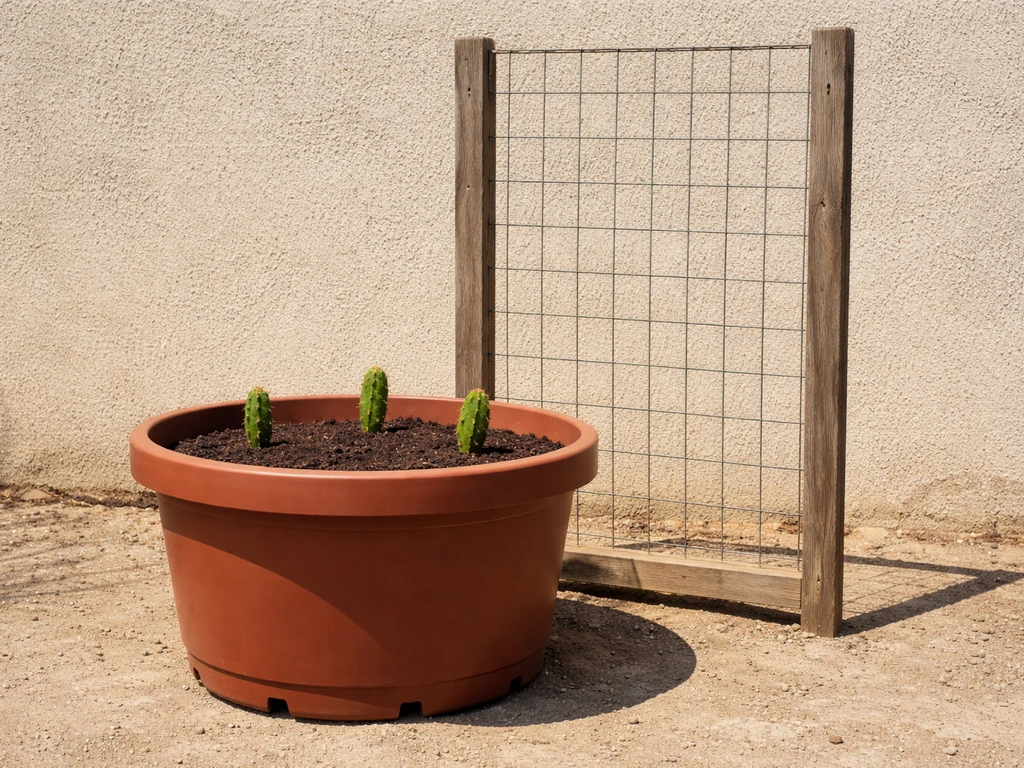
Start with a pot that's at least 14 to 16 inches in diameter and 14 inches deep. A mature dragon fruit plant will be happiest in something closer to 24 to 26 inches wide, so if you want to skip repotting in a couple of years, go big from the start. The container absolutely must have drainage holes. Terracotta works well because it breathes, but a large plastic or resin pot is fine too, especially if you're on a balcony where weight matters. Avoid glazed ceramic pots without drainage or anything that traps moisture.
For location, dragon fruit wants full sun: a minimum of six hours a day, and more is better. A south- or west-facing spot outdoors is ideal. In cooler climates, put it against a wall that absorbs heat during the day. The ability to move your pot is one of the biggest advantages of container growing, so position it somewhere you can actually shift it if needed. Dragon fruit handles temperatures up to around 100°F and prefers nights above 50°F. If temps drop below that regularly, bring it inside or into a greenhouse.
The support structure is non-negotiable. Dragon fruit is a climber, and without something to grab, it flops over, breaks stems, and won't fruit well. The simplest and most effective approach is a single, sturdy central post, at least 5 to 6 feet tall, anchored firmly into or through the center of the pot. A wooden post, metal conduit pipe, or a thick bamboo stake all work. Install the post at planting time so you're not disturbing roots later. You can add a small circular hoop at the top of the post so stems can cascade over it as the plant matures, which is the classic "telephone pole" look you'll see in commercial dragon fruit farms.
Getting the soil and pot setup right
Standard potting mix is too heavy and retains too much moisture for dragon fruit. You want a mix that drains fast and dries out between waterings. The simplest recipe that works: combine two parts cactus and succulent potting mix with one part coarse perlite. Some growers add a small amount of coarse sand or fine orchid bark for extra aeration. Avoid peat-heavy mixes and anything marketed as "moisture control" because that's the opposite of what you need.
Before filling the pot, cover the drainage holes with a small piece of mesh or a coffee filter so soil doesn't wash straight out. Add a layer of gravel or broken pot shards at the bottom if you want, though honestly this is optional as long as your mix is fast-draining. Fill the pot with your mix and leave about two inches of space from the rim so water doesn't just run off the surface when you irrigate. Don't compact the soil. Dragon fruit roots want loose, airy growing medium.
How to plant dragon fruit: seeds vs cuttings step by step
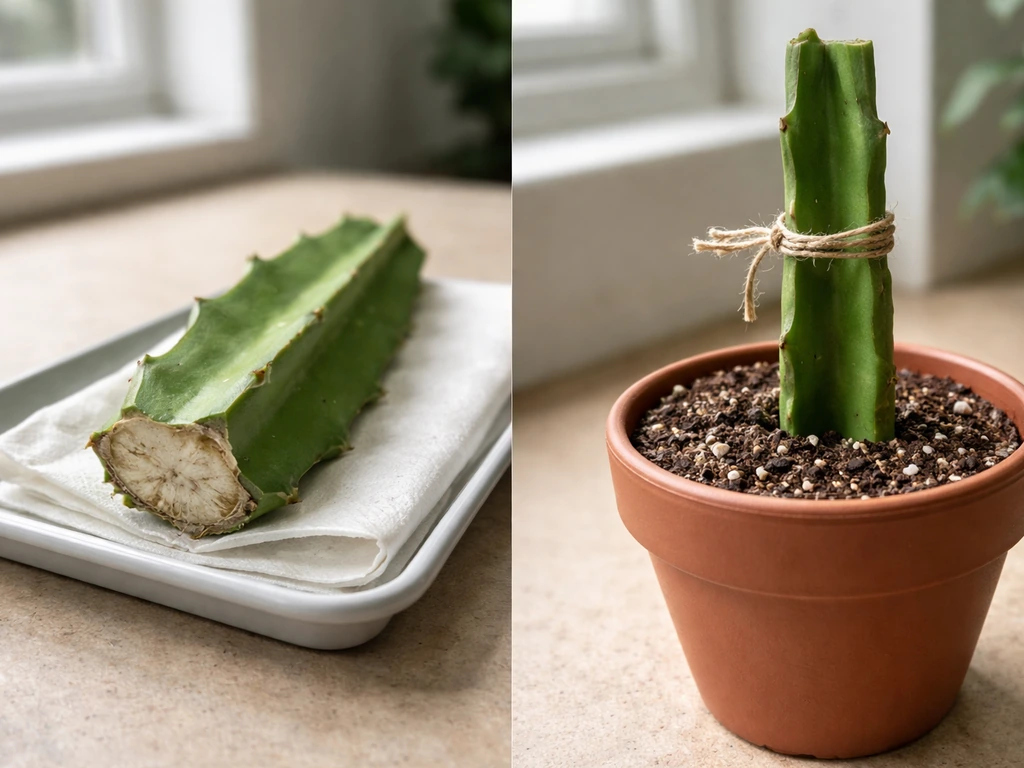
Starting from a cutting (the faster, better option)
Cuttings are the recommended way to start dragon fruit if you want fruit in a reasonable time. A cutting from a healthy, mature plant can be producing fruit within one to two years. Source a cutting from a friend, a reputable online seller, or a local nursery. You want a cutting that's at least 12 inches long and cut cleanly from a healthy stem.
- Let the cut end of the cutting sit out in a dry, shaded spot for three to seven days until the cut face calluses over (forms a dry, slightly hardened layer). This prevents rot.
- Fill your prepared pot with the fast-draining mix and insert your central post.
- Make a small hole in the center of the soil, about three to four inches deep.
- Set the callused end of the cutting into the hole and firm the soil gently around it. The cutting should stand upright on its own or be loosely tied to the post.
- Water lightly once at planting, then hold off watering for about a week to encourage the roots to search for moisture.
- Place the pot in a warm, bright spot out of direct harsh midday sun for the first two to three weeks while it establishes.
- Once you see new growth appearing (usually within four to six weeks), your cutting has rooted. Gradually move it into full sun and begin normal watering.
Growing from seed (slower, but totally doable)
Growing dragon fruit from seed takes patience. You're looking at three to five years to get fruit, and germination itself can be uneven. That said, it's a fun project and seeds are cheap and easy to get from a store-bought dragon fruit. Scoop out a small amount of the pulp, rinse the tiny black seeds in a fine sieve, and spread them on a paper towel to dry for a day or two.
- Fill a small seed tray or shallow pot with moist cactus mix or a 50/50 blend of seed-raising mix and perlite.
- Scatter seeds on the surface and press them lightly into the mix. Don't bury them deep, just barely covered with a thin dusting of mix.
- Dragon fruit seeds need light to germinate, so don't cover the tray with anything opaque. A clear plastic dome or plastic wrap works well to keep humidity up while letting light through.
- Keep the temperature around 25°C (77°F). A warm windowsill, a heat mat, or a spot near a heat source all work. Consistent warmth is more important than anything else at this stage.
- Expect germination in roughly 7 to 21 days, though it can be erratic. Some seeds will pop in a week, others take longer.
- Once seedlings are a few centimeters tall, remove the cover and give them bright indirect light. Avoid direct harsh sun until they're at least a few inches tall.
- Gradually introduce more direct sun over two to three weeks, then transplant seedlings into individual small pots (around 4 inches) once they're sturdy enough to handle.
Light, temperature, and watering once it's growing
Once established, dragon fruit wants as much direct sun as you can give it. Six hours is the minimum, eight or more is better. Plants grown in too much shade produce leggy stems and rarely flower. If you're in a climate with mild winters, the pot can stay outside year-round. If winters dip below 50°F regularly, plan to bring it inside or into a heated garage or greenhouse until spring. The portability of a container is a genuine asset here.
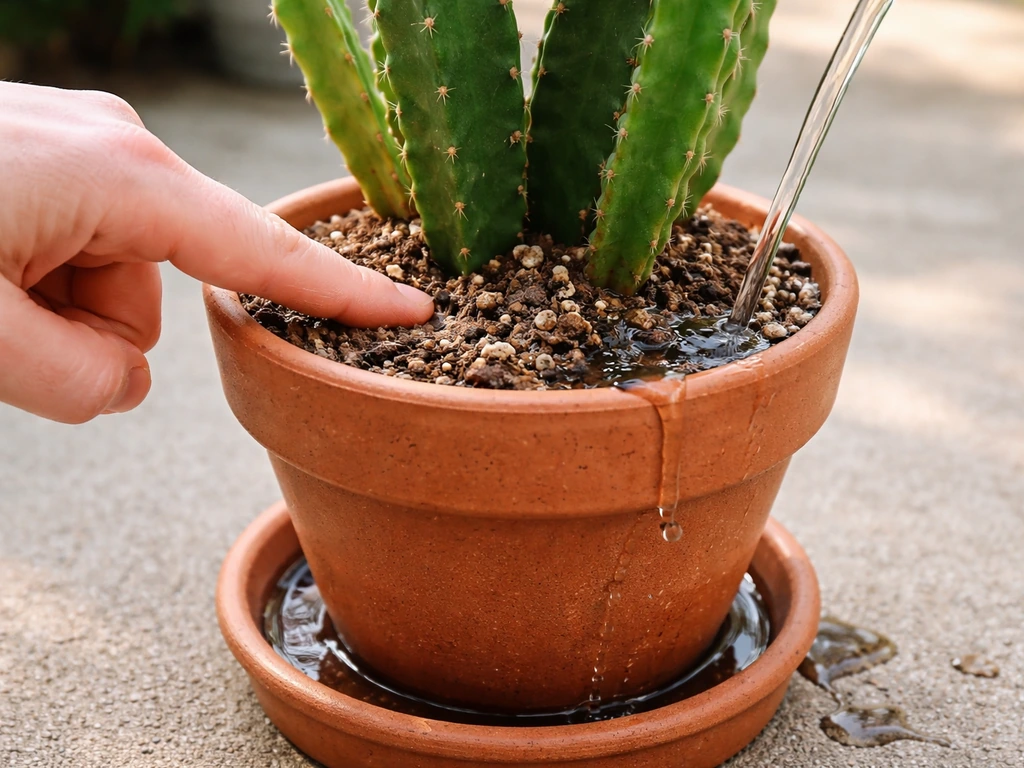
Watering is where most people go wrong with potted dragon fruit. The rule is simple: let the soil dry out between waterings, then water thoroughly. During the active growing season (spring and summer), this might mean watering every one to two weeks depending on your climate, pot size, and how hot it is. During cooler months, back off significantly, sometimes watering only once every three to four weeks. The exception is when the plant is flowering or you're in an extended dry spell: at those times, keep moisture a bit more consistent to support flower and fruit development. Always check the soil with your finger a couple of inches down before watering. If it's still damp, wait.
Fertilizing, pruning, and training your plant
Dragon fruit in a pot benefits from regular feeding during the growing season. Use a balanced fertilizer or one slightly higher in potassium (the third number on the label, like an 8-3-9 ratio) to support flowering and fruiting. In a 2025 study in Frontiers in Plant Science, potassium (K) fertilization was linked to dragon fruit yield outcomes using response surface methodology and a Box-Behnken design. Apply a diluted liquid fertilizer every four to six weeks from spring through late summer. Lay off fertilizing in autumn and winter when the plant is resting. Slow-release granular fertilizer worked into the top inch of soil at the start of the season is also a practical option if you don't want to keep track of liquid feeding schedules.
Training is ongoing work, and it directly affects how much fruit you get. As new stems grow, tie them loosely to your central post with soft plant ties or strips of cloth. The goal is to guide them upward until they reach the top of the post, then let them cascade over. Avoid bending stems sharply as they can snap. Remove any dead, damaged, or crossing stems as you go.
Prune one to three times per year to keep the plant productive and manageable. Dragon fruit produces fruit on newer growth, so removing old, unproductive stems encourages the plant to put energy into fresh branches that will flower. When pruning, use clean, sharp secateurs and cut at a natural joint. Remove stems that are growing downward into the pot, any that look shriveled or discolored, and any that are creating a tangled mess around the base. A well-pruned, well-trained plant in a pot looks great and outperforms a neglected one every time.
Pollination and actually getting fruit from your pot
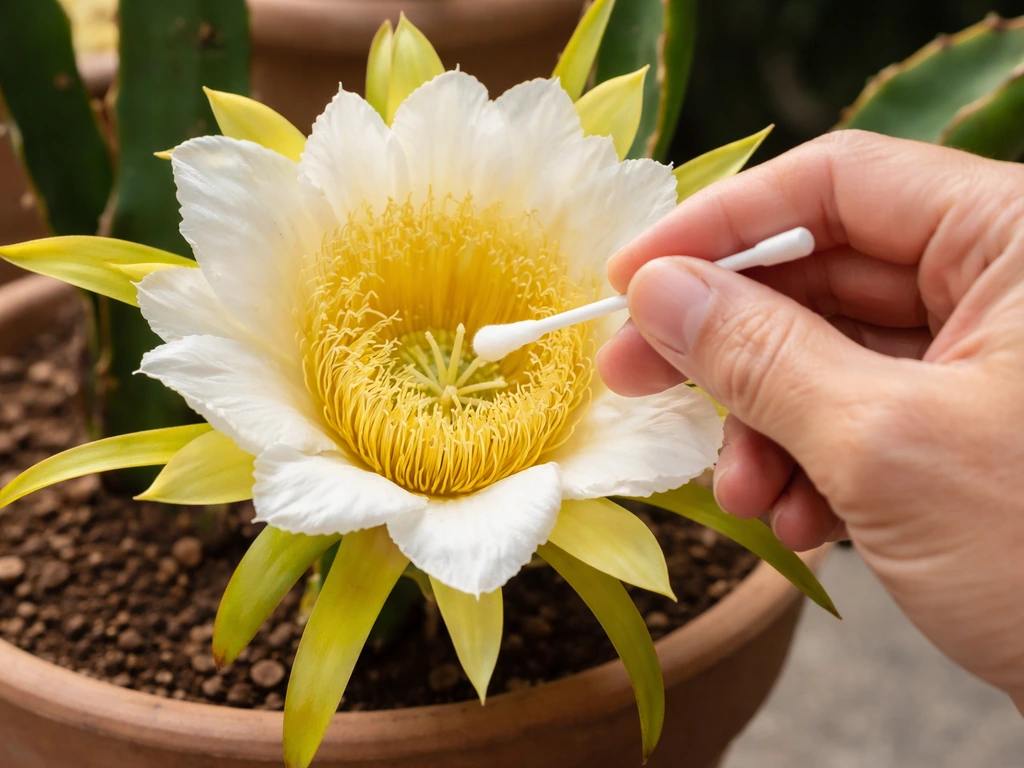
This is the part where a lot of container growers get confused when their plant flowers beautifully but produces no fruit. Dragon fruit flowers are huge, white, and spectacular, and they open at night and close by early morning. Many varieties are self-sterile, meaning a single plant won't set fruit on its own. Some varieties are self-fertile, which is worth checking when you buy your plant or cutting. If you can only keep one pot, look specifically for a self-fertile variety.
Even if your variety is technically self-fertile, hand pollination almost always produces better results: larger fruit, higher success rate, and more predictable harvests. The process is straightforward. When a flower opens at night (usually around 8 to 10 PM), take a small clean paintbrush or even a cotton swab, collect pollen from the stamens (the cluster of yellow-tipped structures inside the flower), and dab it directly onto the stigma (the single sticky-tipped structure in the center). Do this two to three hours after the flower opens, or early in the morning before it closes. If you have two plants with flowers open at the same time, transferring pollen between them dramatically improves fruit set.
After successful pollination, the flower base swells into a fruit. Be patient: depending on the variety, fruit can take anywhere from 30 days to six months to ripen fully after pollination. A ripe dragon fruit will have bright, even skin color with slightly softened skin that gives a little when pressed, similar to a ripe avocado. Don't rush picking it.
Common problems and how to fix them quickly
| Problem | Likely Cause | Quick Fix |
|---|---|---|
| Stems turning yellow or mushy | Overwatering or waterlogged soil | Let the soil dry completely, check drainage holes are clear, reduce watering frequency |
| Plant flowering but no fruit forming | Lack of pollination or self-sterile variety | Hand pollinate at night using a paintbrush, or add a second variety nearby |
| Leggy, thin, pale stems | Not enough sunlight | Move the pot to a sunnier spot, aim for 6 to 8+ hours of direct sun |
| Shriveled or wrinkled stems | Underwatering or extreme heat stress | Water thoroughly, check the root system isn't potbound, consider a larger pot |
| White cottony patches on stems | Mealybugs | Wipe off with a cotton swab dipped in rubbing alcohol, treat with neem oil spray |
| Brown, soft patches on stems | Fungal rot | Cut away affected tissue with clean scissors, improve airflow, reduce watering |
| Fruit developing but falling off early | Irregular watering during fruiting or pollination was incomplete | Keep moisture more consistent when fruit is developing, hand pollinate more thoroughly next time |
| No flowers at all after several years | Insufficient light, overfertilizing with nitrogen, or plant too young | Maximize sun exposure, switch to a lower-nitrogen fertilizer, be patient with seedling-grown plants |
Most problems with potted dragon fruit come back to two things: too much water or not enough sun. Snapdragons in pots have similar needs, so dial in watering and drainage to keep them blooming too much water. If something looks off, check those two factors first before assuming a more complicated issue. Dragon fruit is genuinely forgiving once it's established, and a neglected but well-drained plant will bounce back faster than you'd expect.
Your next steps right now
If you're ready to get started today, here's what to do first. Source a cutting from a reputable seller or local grower and let it callus while you gather your supplies. Pick up a large pot (aim for 24 inches wide if budget allows), a bag of cactus mix, a bag of perlite, and a sturdy central post. Mix your soil, set up the pot, plant the cutting, and get the post in before the roots establish. Put it in the sunniest spot you have. Then, honestly, don't overthink the watering. Let it dry out and check with your finger before every watering.
If you enjoy the challenge of exotic container fruits, dragon fruit pairs well with other adventurous growing projects. Growing passion fruit in pots follows a similar logic with climbing growth and pollination considerations worth knowing about. Yes, you can also grow passion flower in a pot, as long as you give it strong sun, a reliable trellis, and well-draining soil. Kiwifruit in containers is another high-reward option for gardeners who like a climber with a support structure. If you want the details, see how to grow kiwifruit in pots, including what it needs for soil, watering, and a trellis. Dragon fruit is genuinely one of the more rewarding things you can grow in a container: it's beautiful, tough, and when that first huge white flower opens on a warm night and you go out with your paintbrush, it feels like a proper gardening achievement.
FAQ
Should I harden off a dragon fruit cutting before putting it in full sun?
Most potted dragon fruit cuttings will be fine with direct sun from day one, but the first 1 to 2 weeks are the safest window for partial sun (morning sun, afternoon shade) to prevent stem scorch. Once you see steady upright growth, move it to full sun where it can get at least 6 hours daily.
Can I keep a saucer under the pot or will it cause root problems?
Yes. If your pot sits in a saucer or the ground under the pot stays wet, roots can stay damp longer than you think. Either avoid saucers, or empty any runoff after watering. Also make sure the pot does not wobble, because cracked stems can become entry points for rot.
What should I do if my dragon fruit stays soggy even though I use cactus soil?
Use a potting mix that drains quickly and dries down between waterings, a cactus and succulent blend plus perlite. If you still get problems, the next place to look is potting depth and watering method, for example watering only the surface instead of soaking all the way through.
How do I treat root or stem rot in potted dragon fruit?
If the stems turn soft, translucent, or black near the base, stop watering immediately and improve drainage, do not fertilize. For active rot, you typically need to remove the affected section, let the cut end callus, then re-root the healthy piece rather than trying to save the wet base.
My dragon fruit grows fast but rarely flowers, what fertilizer approach should I use?
Over-fertilizing or using a fertilizer high in nitrogen can lead to lots of green growth but fewer flowers. During spring through late summer, switch to a fertilizer with relatively higher potassium, and keep application at diluted liquid strength every 4 to 6 weeks or use a light slow-release dose at the season start.
What’s the best winter plan for dragon fruit in pots in colder climates?
When temperatures drop, focus on the night lows. If nights regularly fall below about 50°F, bring the pot indoors or protect it in a greenhouse, keep it near bright light, and water much less because cool, wet conditions invite rot.
Can I repot my dragon fruit while it is flowering or about to flower?
Ideally do not repot while it is actively growing and especially not right before or during flowering. If you must, handle the roots minimally, use the same fast-draining mix, and keep it slightly less stressed (more indirect light for about a week) so it can recover without dropping buds.
If my plant is self-fertile, is hand pollination still worth doing?
Most varieties benefit from hand pollination even if they can set fruit on their own. If you have only one plant, hand pollination can still help because it bypasses issues like low pollen viability or imperfect selfing.
How can I tell when potted dragon fruit is truly ripe?
Look for an even, mature skin color and slight give when gently pressed, avoid picking based on size alone because some fruit stay green or firm longer than expected. If the fruit feels hard, leave it longer, and if it gets wrinkly and mushy quickly, that is usually a sign it is past its prime.
What pruning habits prevent damage and disease in containers?
A simple sanitation rule helps. Use clean secateurs, remove dead or diseased stems promptly, and avoid pruning during wet stretches because open cuts can stay damp. Also remove crossing stems that rub, since abrasion can create wounds that rot.