You can absolutely grow kiwifruit in a pot, and it can fruit too, but you need to pick the right type and set things up properly from the start. The best choice for containers is hardy kiwi (Actinidia arguta), specifically the self-fertile variety 'Issai', which skips the whole male/female pollination headache and stays compact enough to manage in a large pot on a balcony, patio, or small garden. Get a 15–20 gallon container, a decent trellis, free-draining soil, and a spot with at least 6 hours of sun, and you have a realistic shot at harvesting smooth-skinned, grape-sized kiwiberries in 2–4 years.
How to Grow Kiwifruit in Pots: Container Setup to Harvest
Marcus Whitley
30 May 2026
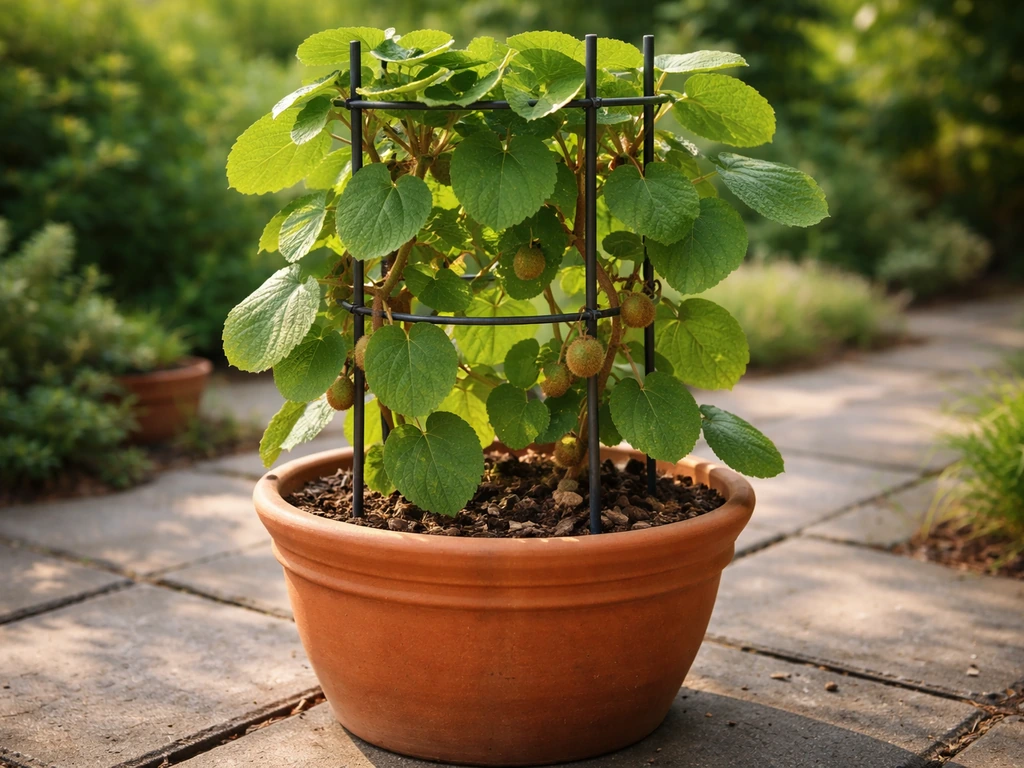
Which kiwifruit to grow in a pot (and pollination basics)
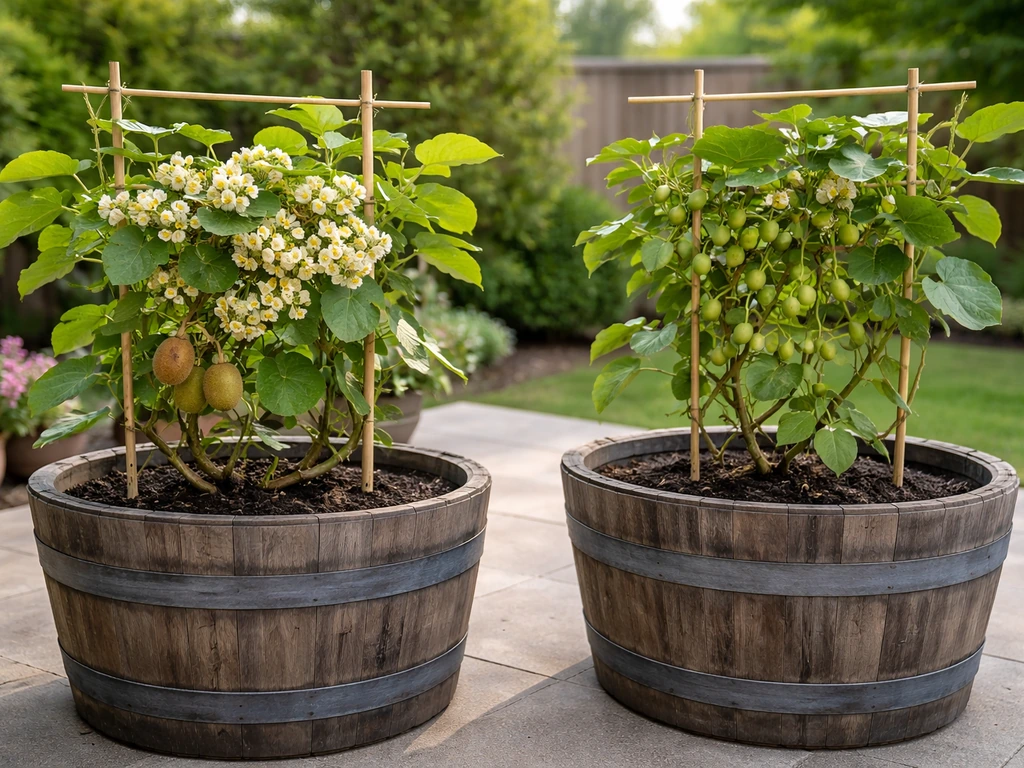
There are two main types worth knowing about: fuzzy kiwi (Actinidia deliciosa, the big brown ones from the supermarket) and hardy kiwi (Actinidia arguta, small smooth-skinned fruit you eat whole). For containers, hardy kiwi wins every time. It tolerates cold much better, grows more manageable in a pot, and the fruit is honestly just as delicious. Fuzzy kiwi is a vigorous subtropical vine that really wants to sprawl across a large permanent structure, making it a frustrating pot plant for most beginners.
The pollination situation with hardy kiwi is worth understanding before you buy. Most Actinidia arguta varieties are dioecious, meaning you need a separate male plant and a female plant. If you go that route, one male can handle 6 to 8 female vines, and the male should ideally be positioned upwind so pollen drifts across to the females. Critically, the male and female plants must flower at the same time, so when buying, check that your male cultivar's flowering window overlaps with your female. This is a common mistake and one of the main reasons people end up with vigorous vines that never fruit.
The much easier path in a container is to grow 'Issai', a self-fertile Actinidia arguta variety that doesn't need a separate pollinator at all. It also tends to fruit a little earlier than most cultivars, which is a bonus when you're waiting 2–4 years for your first harvest. If you only have room for one pot or one vine, 'Issai' is the one to buy. If you have space for two pots and want maximum fruit production, plant a female cultivar like 'Anna' or 'Geneva' alongside a compatible male.
Best pot size, container choice, and trellis setup
Kiwifruit vines are vigorous, and the pot has to match that energy. A minimum of 15 gallons is where I'd start, but a 20-gallon container is better for long-term growth without constant repotting. Anything smaller and the roots get restricted too quickly, the plant dries out constantly, and you'll spend more time firefighting than gardening. Half-barrel planters, large terracotta pots, and heavy-duty plastic or fabric grow bags all work well. Fabric bags are particularly good because they air-prune the roots, which discourages the circling root problems that plague long-term container plants.
Whatever container you pick, drainage holes are non-negotiable. Kiwifruit vines are sensitive to waterlogging, and sitting in boggy soil even briefly during the growing season can cause root damage. If your pot only has one small hole at the bottom, drill more. I'd aim for at least three good-sized drainage holes in any large container.
The trellis is just as important as the pot itself. Kiwi vines are climbers and they will look for something to grab within days of putting on new growth. In a container, a simple fan trellis attached to a wall or fence works beautifully, or you can build a freestanding T-bar or A-frame support that sits directly in the pot. Bamboo canes tied into a fan shape and pushed into the pot give you a cheap starting structure. Plan for the vine to eventually reach 10–15 feet even when pot-grown, so the support needs to be sturdy enough to hold mature wood in wind.
Soil mix and drainage: what to plant in
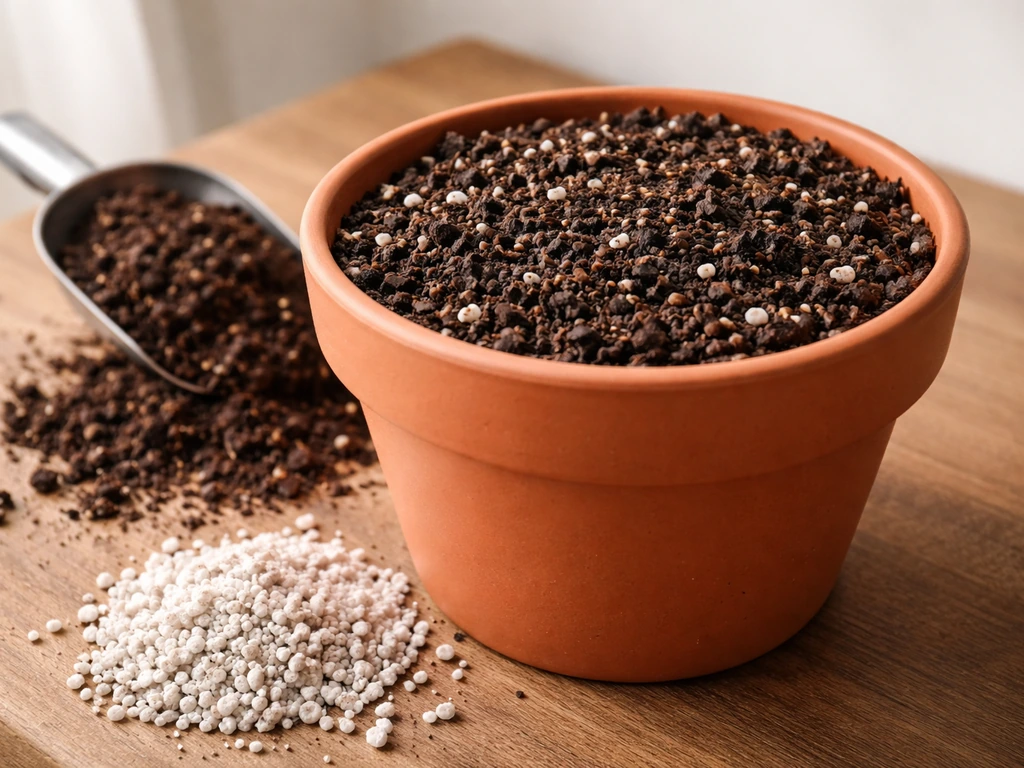
Kiwifruit wants moist, well-draining soil with a slightly acidic pH between 5.5 and 6.5. For containers specifically, I'd aim for around 6.0 as a middle ground. The other thing kiwi genuinely benefits from is good organic matter content, ideally above 4%, which a good homemade mix will naturally provide. Organic matter helps the soil hold moisture without becoming waterlogged, which is exactly the balance you're chasing in a pot.
A reliable container mix for kiwifruit is two parts quality loam-based compost (like a John Innes No. 3 or equivalent), one part perlite or coarse grit for drainage, and one part well-rotted garden compost or homemade compost for organic matter. Avoid peat-heavy multipurpose compost as your main ingredient: it compacts over time, drains poorly when wet, and dries out like concrete when it gets too dry. If you're in the US and buying bagged mix, a premium potting mix blended with 20–25% perlite is a reasonable starting point.
Add a layer of coarse gravel or broken crockery at the bottom of the pot over the drainage holes before filling with soil. This isn't strictly necessary with a good mix, but it prevents the drainage holes from getting plugged with roots or soil over time. Raise the pot slightly off the ground on pot feet or bricks so water can escape freely underneath.
How to plant kiwifruit in a container, step by step
Grafted plant vs. seed: which to choose
Buy a grafted or well-rooted container plant rather than starting from seed. This is one of those areas where experience is pretty clear: seed-grown kiwifruit takes much longer to fruit, you won't know the sex of the plant until it flowers (which can take 5–7 years), and you lose the predictable performance of named cultivars. A grafted plant from a reputable nursery will typically fruit in 2–4 years. 'Issai' is sometimes sold as a cutting-grown (own-rooted) plant rather than grafted, which is fine; the key is buying from a trusted source that labels the variety correctly.
When and how to plant
- Plant in spring, after the last frost date for your area. Containerized hardy kiwi plants go in once the danger of frost has passed, usually from late April through May in most temperate regions.
- Fill your pot about two-thirds full with your prepared soil mix before planting.
- Water the nursery plant thoroughly before removing it from its original pot, so the rootball holds together.
- Dig a planting hole in the centre of your pot that's roughly the same depth and twice the width of the rootball.
- Set the plant so the top of the rootball sits about an inch below the rim of the pot. If the plant is grafted, keep the graft union (the slight bump or scar near the base of the stem) above the soil surface.
- Backfill with your soil mix, firming gently around the roots to eliminate air pockets.
- Water in thoroughly until water drains freely from the bottom.
- Attach the main stem loosely to your trellis or support with a soft tie, and position the pot in its intended spot before it gets too heavy to move.
Positioning matters more than people realise at planting time. Kiwifruit needs a minimum of 6 hours of direct sun daily, and ideally a south or west-facing wall or fence behind the trellis. A sheltered spot that blocks cold wind will also pay dividends later, especially in the first couple of years while the vine is establishing.
Watering and fertilizing for potted kiwifruit
Watering
Kiwifruit in containers needs consistent moisture but hates sitting in water. During the growing season (spring through early autumn), check the soil every 2–3 days. Water when the top inch of soil feels dry, and water deeply so moisture reaches the whole rootball and drains out of the bottom. In hot summer weather, you may need to water daily, especially in smaller pots or fabric bags that dry out faster. In autumn and winter, reduce watering significantly but don't let the roots dry out completely.
A useful trick is to lift the pot after watering and again a day later. You'll quickly learn what a well-watered pot feels like versus a dry one, which is genuinely one of the most practical skills in container gardening. Yellowing leaves are often the first sign of either overwatering or underwatering, so if your plant looks unhappy, check the soil moisture before assuming anything else.
Fertilizing
Kiwifruit is a hungry plant. In containers, nutrients get flushed out with every watering, so you need to feed regularly. Start feeding in early spring when new growth appears and continue through late summer. A balanced slow-release granular fertilizer applied at the start of the season gives a good base, topped up every 2–3 weeks with a liquid high-potassium feed (like a tomato fertilizer) during the growing season to support flowering and fruiting. Potassium is particularly important for fruit development. Avoid high-nitrogen feeds in mid to late summer: they push leafy growth at the expense of the flower buds forming for next year.
If your leaves look pale or yellowing between the veins (a symptom called chlorosis), the soil pH may have drifted too high, locking out iron and manganese. A foliar feed of chelated iron or an ericaceous (acid-loving plant) liquid feed can help, and it's worth testing your soil pH annually with a cheap kit from a garden centre.
Pruning and training vines for fruiting in limited space
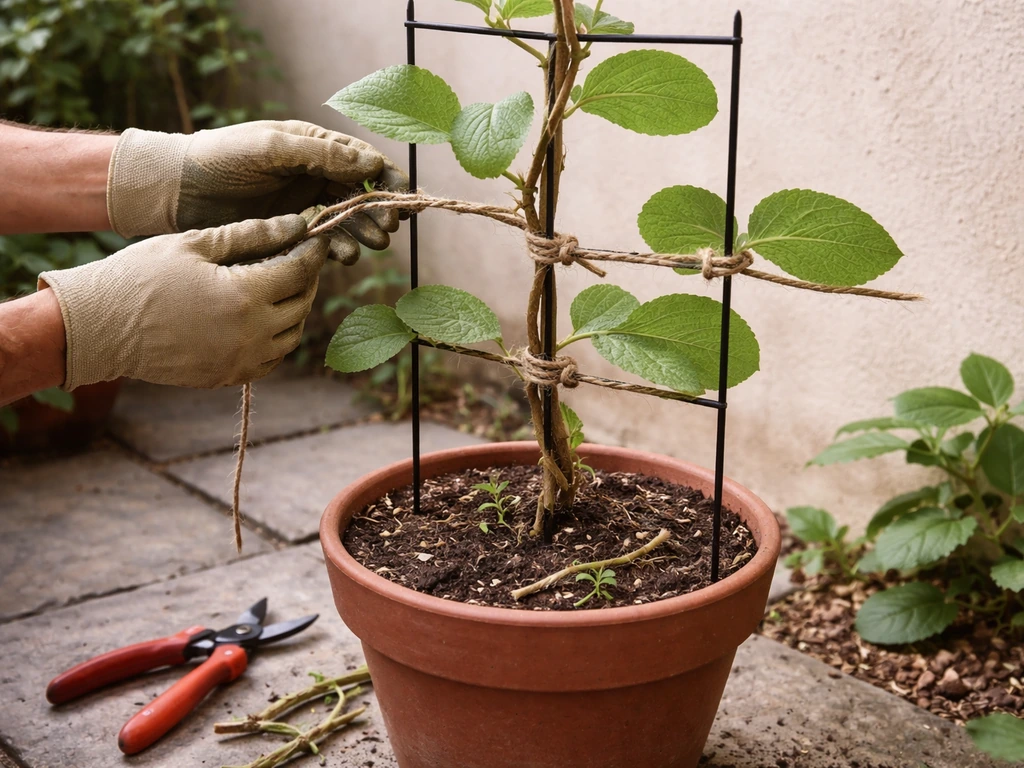
Pruning is probably the single most important skill for getting a potted kiwifruit to actually fruit, and also the thing most beginners skip or do wrong. Here's the key fact to anchor everything: kiwifruit flowers and fruits on shoots that grow from one-year-old canes, meaning wood that grew last year. Old wood from two or more years ago rarely produces flowers. Shoots from current-season growth won't flower either. This means your pruning job is to always have a supply of healthy one-year-old canes available, and to remove the oldest wood to make room.
In the first year, focus entirely on training one or two strong main stems (called the framework or leaders) up and along your trellis. Don't worry about fruit yet. Pinch out any side shoots that grow longer than about 6 leaves to keep energy in the leaders. In the second year, begin training side shoots (laterals) along horizontal wires or canes from the main stems. These laterals will become your fruiting wood.
Winter pruning (when the vine is dormant, usually December through February in the northern hemisphere) is the main structural prune. Cut back laterals that fruited the previous year to 2–3 buds from the main stem, which will push new fruiting shoots the following spring. Remove any dead, crossing, or congested wood. Summer pruning involves pinching back the tips of new shoots to 4–6 leaves beyond the last flower cluster, which stops the plant wasting energy on leafy growth and keeps the trellis manageable. In a pot, you really want to keep the whole plant to a size you can handle, so don't feel shy about cutting back hard.
Seasonal care: sun, heat, and winter protection
Kiwifruit vines are genuinely sun-hungry. Place your pot where it gets 6–8 hours of direct sun per day. A south or southwest-facing wall that reflects warmth back onto the plant is ideal, especially in cooler climates. Wind is the other big concern: kiwifruit leaves are large and brittle, and strong winds can shred them and dry out the pot rapidly. A sheltered corner or a spot near a fence or wall provides good protection without sacrificing light.
Hardy kiwi (Actinidia arguta) tolerates cold much better than fuzzy kiwi, with established plants surviving temperatures down to around -25°C (-13°F) in the ground. In a pot, however, the roots are more exposed to freezing temperatures because there's no surrounding soil insulating them. Cold damage is one of the main limiting factors for container kiwifruit in temperate and cold climates. Once temperatures are consistently dropping below freezing overnight, move the pot to an unheated shed, garage, or cold greenhouse if possible. Alternatively, wrap the pot in horticultural fleece or bubble wrap and move it to the most sheltered spot you have. The vine itself can handle the cold, but frozen roots in a thin-walled pot can kill the plant.
One seasonal quirk to be aware of: new spring growth on kiwifruit is tender and very vulnerable to late frosts. The vine may push growth early in a warm spring, and a sudden frost in April or May can burn off all the new shoots. If your area gets late frosts, keep some horticultural fleece handy to drape over the plant on cold nights in spring.
Repotting and managing root-bound growth
Expect to repot into a larger container every 2–3 years, or when you notice the plant drying out very rapidly after watering, roots circling visibly at the drainage holes, or noticeably reduced growth despite good feeding. Move up one pot size at a time rather than jumping to a much larger container, which can cause waterlogging issues in the extra soil volume. Once you reach the largest practical container size, annual top-dressing (scraping away the top 5cm of old compost and replacing it with fresh) combined with a hard root prune every few years keeps the plant going in the same container.
Harvest timing and troubleshooting common problems
When to expect fruit and how to harvest
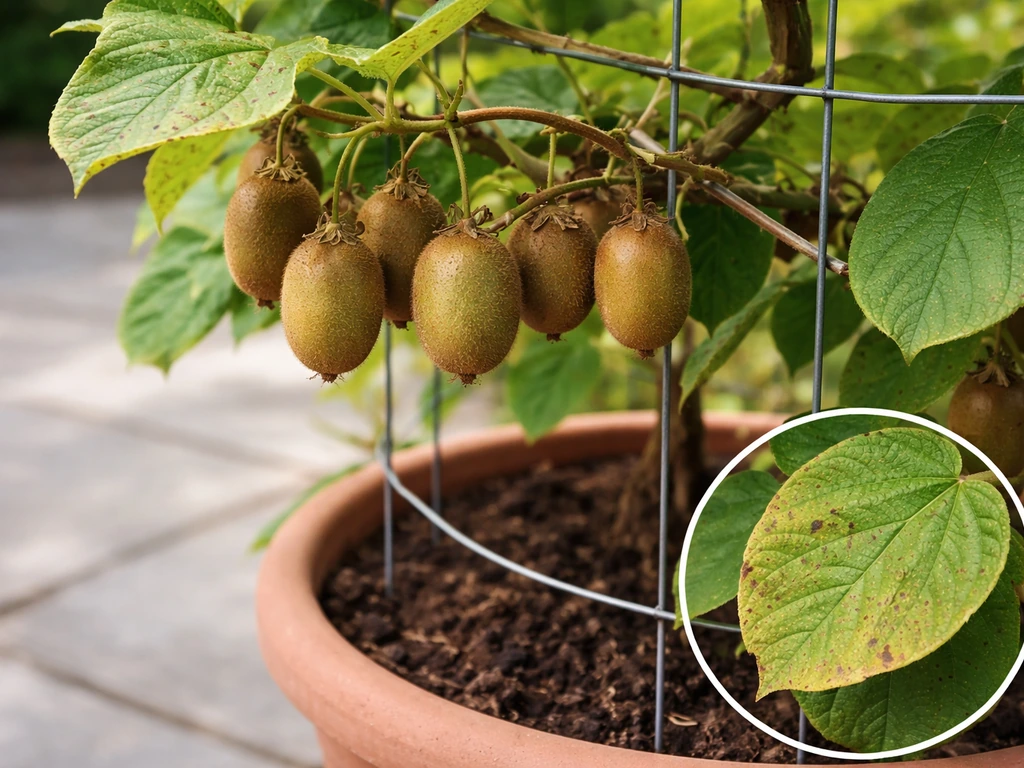
Realistic expectations: a grafted or well-grown container plant of 'Issai' or another hardy kiwi may give you a small crop in 2–3 years, with fuller crops from year 4 onwards. Seed-grown plants take considerably longer. In temperate climates, hardy kiwi fruits are ready to harvest roughly from mid-August through mid-September, though this shifts depending on your location and the specific cultivar. The fruit is ready when it softens slightly to gentle pressure, similar to testing a ripe peach. You can also pick them a little firm and let them ripen indoors on the counter for a few days, which gives you more flexibility. The smooth skin means you eat them whole, no peeling required.
Troubleshooting the most common problems
| Problem | Likely Cause | What to Do |
|---|---|---|
| No fruit after several years | Wrong pruning (fruiting on old wood), poor pollination, or no male plant present | Check you're leaving one-year-old wood when pruning; confirm variety is self-fertile or male/female flowering times overlap |
| Yellow leaves | Overwatering, waterlogging, or high soil pH causing nutrient lockout | Check drainage, adjust watering, test pH and apply chelated iron feed if needed |
| Leggy vines with little fruiting | Insufficient sun or all energy going into leafy growth from excess nitrogen | Move to a sunnier spot, cut back nitrogen fertilizer in summer, prune hard to redirect energy |
| Root rot / sudden collapse | Waterlogged soil from poor drainage or overwatering | Improve drainage holes, raise pot off ground, reduce watering frequency |
| Cold/frost damage to shoots | Late frost or frozen roots in pot | Protect new spring growth with fleece, insulate pot in winter or move to shelter |
| Slow or no growth in spring | Plant still dormant, or root-bound and pot-bound | Be patient until temperatures warm; check for circling roots and repot if needed |
| Vine produces flowers but no fruit | Pollination failure, male and female not flowering simultaneously, or frosts killing flowers | Confirm cultivar is 'Issai' (self-fertile), or check male/female flowering timing; protect flowers from late frost |
One last thing worth saying: kiwifruit in pots is genuinely a longer-term project than growing tomatoes or herbs, and the first couple of years can feel like nothing much is happening. That's normal. The vine is building roots and establishing its framework, and the patience you put in early pays off when the fruiting starts.
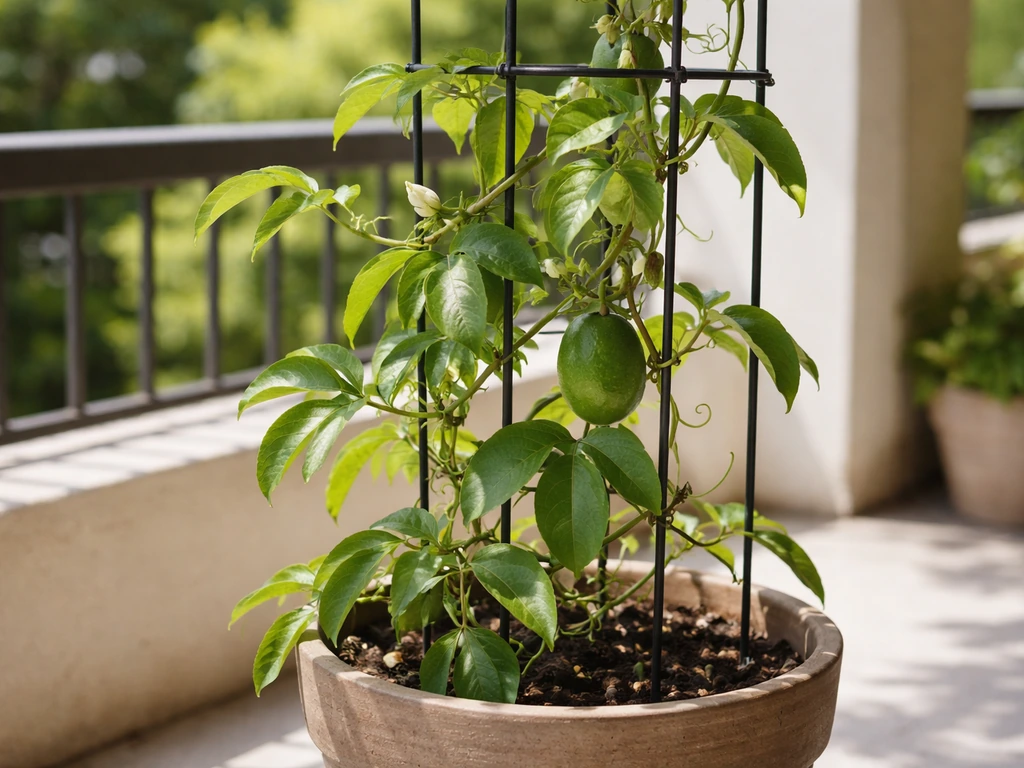
If you enjoy growing other exotic climbers in containers, the same patient approach applies to things like passion fruit and dragon fruit, which have similarly rewarding but unhurried timelines in pots. If you also want a different flowering climber, you can grow passion flower in a pot, and it helps to plan your trellis and sun exposure the same way you would for kiwifruit.
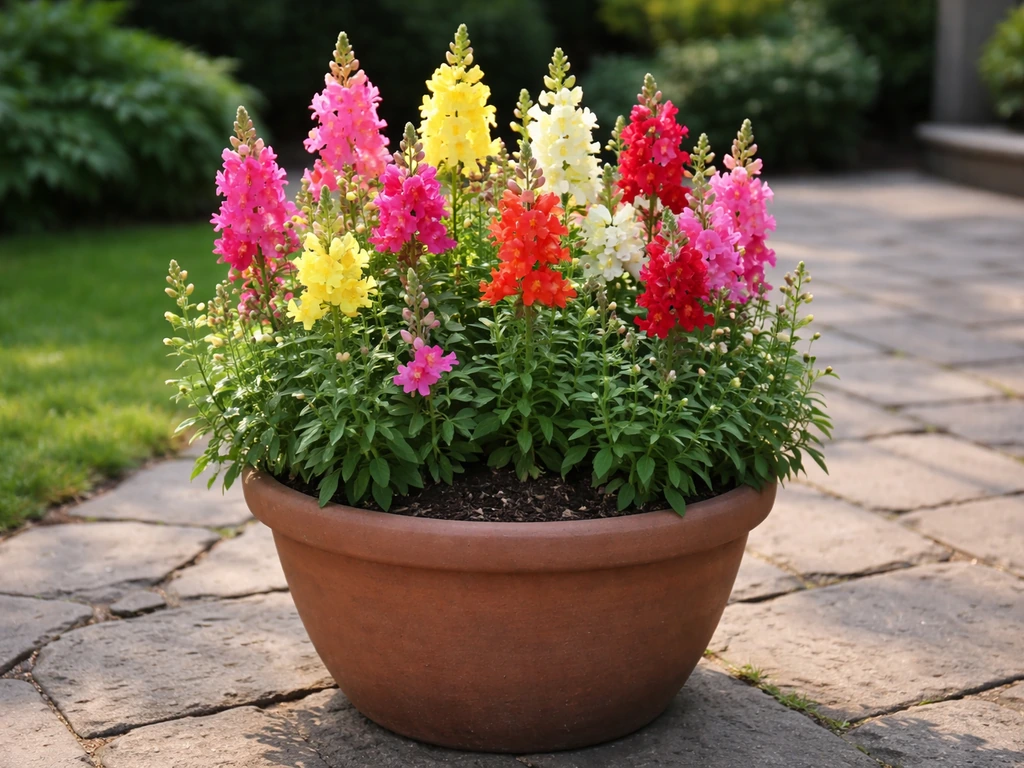
If you're also interested in flowers, learning how to grow snapdragons in pots can help you get long-lasting color in a container setup. Passion fruit is another excellent container vine, and the main ideas are similar: provide a sturdy trellis, consistent watering, and regular feeding. If you want a similar potted-climber option, learn how to grow dragon fruit in pots by matching the right light, support, and cactus-style watering routine.
FAQ
Can I grow kiwifruit in a pot without a trellis, like letting it trail over the rim?
You can grow it to some extent, but fruiting and plant health suffer. Kiwifruit training determines which one-year-old canes you keep, and fruiting wood needs to be spread out so it flowers well and can be managed. If you do not have a trellis, the vines get tangled, pruning becomes inconsistent, and airflow drops, increasing leaf issues. Use at least a simple fan structure or an A-frame that sits directly in the container so you can keep laterals where you can prune them each winter.
What if my hardy kiwi flowers but never fruits in the pot?
First confirm you planted the right pollination setup. If you are not growing a self-fertile type, you must have overlapping flowering times between male and female cultivars, and pollen needs a pathway from male to female (upwind placement helps). If you are growing 'Issai', then the issue is more often pruning or cane age. If you prune too hard in summer or remove all one-year-old canes, you can end up with flowering that never develops into fruit. A quick check is whether you have horizontal laterals and whether winter pruning is leaving 1-year fruiting wood rather than mostly new vertical shoots.
How do I choose a container size if I’m stuck between 15 and 20 gallons?
Go larger if you are in a hot, sunny spot, you use fabric grow bags, or you tend to forget watering. The bigger the root volume, the more stable the moisture and nutrient supply. With kiwifruit, pot instability often shows up as leaf yellowing, rapid dry-down, and poor fruit set. If 20 gallons is unrealistic, you can still succeed with 15 gallons, but plan to check moisture more frequently and consider mulching the top with a thin layer of compost to reduce evaporation.
Is it normal for leaves to yellow in my container kiwifruit?
Yellowing can be from too much water, inconsistent watering, or nutrient availability. A common container-specific cause not to ignore is pH drift leading to iron or manganese lockout, which shows up as chlorosis between veins. Before changing fertilizer, test soil pH if you can, and check drainage by confirming water runs out quickly from the bottom after watering. If pH is fine, then look at watering timing and whether your mix compacts or stays soggy after heavy watering.
How do I protect kiwifruit roots in freezing winters if I can’t move the pot indoors?
Frozen roots are the main pot risk because the container lacks ground insulation. If you cannot move it, insulate aggressively: wrap the pot with horticultural fleece plus a secondary insulation layer (like bubble wrap), and elevate it on pot feet so cold, wet ground does not wick into the base. Also keep it in the most sheltered microclimate you have (against a wall, behind a windbreak). Avoid leaving the plant in a cold, drafty open area where the pot freezes and thaws repeatedly.
Should I let the pot dry out between waterings to prevent disease?
No, drying out too far is usually worse for container kiwifruit than keeping it evenly moist. The vine needs consistent moisture during active growth, while also requiring excellent drainage. Use the “top inch” rule as your baseline, water deeply until it drains from the bottom, and then stop. In hot weather you might need daily watering, while in autumn you should reduce frequency but never let the rootball fully desiccate.
When should I start feeding, and what fertilizer ratio matters most for fruit?
Start feeding when new growth appears in spring, then continue through late summer. For fruiting, potassium is the key nutrient to emphasize, while high nitrogen late in the season can delay flower bud formation for next year. A practical approach is to use a slow-release balanced product at the start, then switch to a higher-potassium liquid (applied every couple of weeks) during active flowering and fruit development. Stop heavy feeding after late summer and focus on maintaining moisture and pruning.
How do I prevent root problems like circling in a container?
Most long-term container root issues come from a pot that stays in the same spot for years and roots growing around the container wall. To reduce this, choose a container or grow bag that encourages air pruning, fabric bags can help. Also avoid leaping to a much larger pot size, repot every 2 to 3 years, and consider top-dressing plus a periodic root prune once you reach the largest practical container.
Can I grow hardy kiwi from seed in a pot, and will it fruit?
You can, but it is usually a slow and unpredictable route. Seed-grown plants can take many years longer to fruit, and you cannot know the plant’s sex until it flowers, which can be 5 to 7 years or more. For a container setup where you want a reliable outcome and earlier harvest timing, grafted or correctly labeled plants are the better choice.
What size trellis should I plan for, given a pot-grown vine?
Plan for eventual height and wind strength, not just what the vine looks like now. Even in pots, mature hardy kiwi can reach roughly 10 to 15 feet, so build a support that is stable enough to hold older wood and resist movement in gusts. A fan trellis against a wall, or a freestanding T or A-frame that anchors in the pot, is typically easier to manage for pruning and airflow.
How do I know when my kiwifruit is ripe enough to harvest from the pot?
Watch for a slight softening under gentle pressure, fruit that yields a little like a ripe peach is usually ready. If you harvest slightly firm, you can ripen them indoors for a few days, which is helpful if your weather turns or birds start probing. Also harvest on a dry day when possible to reduce mold risk on smooth-skinned fruit.