Cannas are one of the best plants you can grow in a pot. Give them a big enough container, decent soil, full sun, and regular water, and they'll reward you with bold tropical leaves and vivid flowers all summer long. I've grown them on small balconies, rooftop terraces, and cramped patios, and they perform better in pots than most people expect. The key is getting a few basics right from the start: container size, planting depth, and not letting the pot sit in standing water.
How to Grow Cannas in Pots: Step-by-Step Container Care
Marcus Whitley
23 May 2026
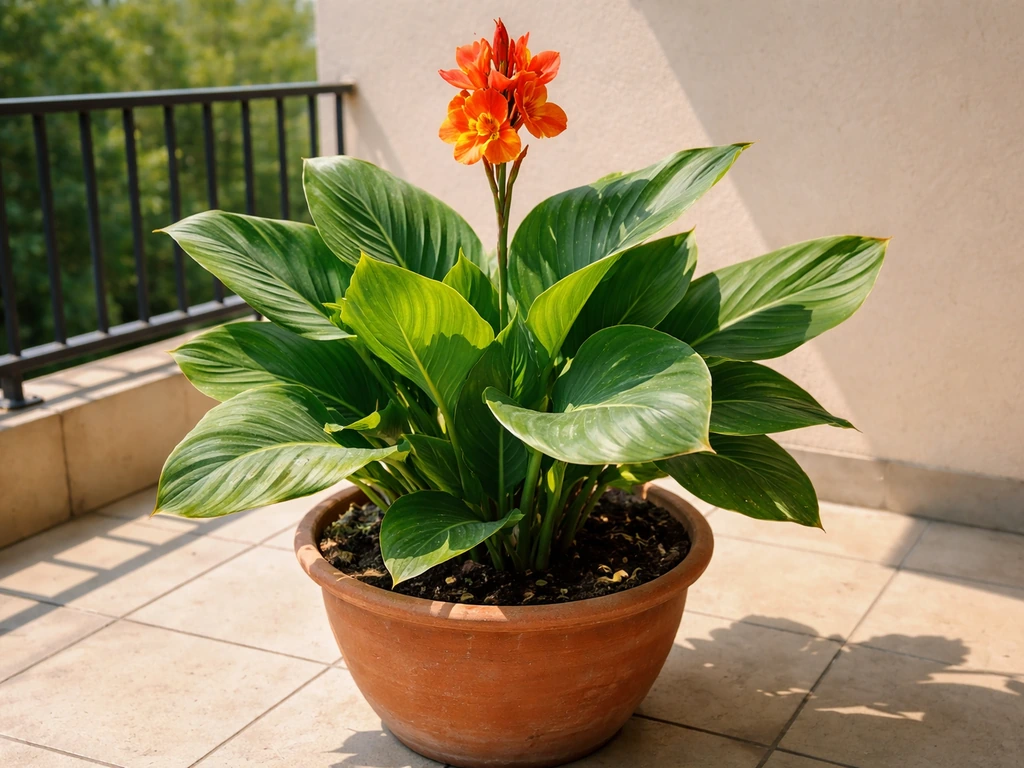
Choosing the right pot, drainage, and location
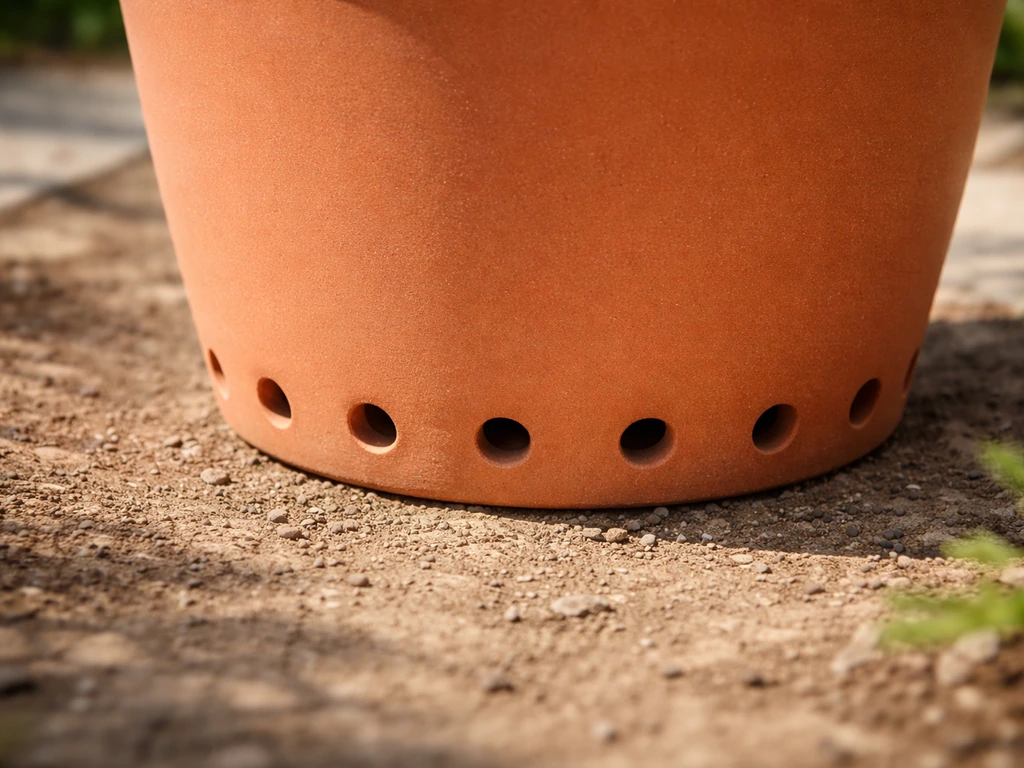
Go big. A pot that's too small is the single most common reason cannas underperform in containers. You want a minimum of 5 gallons (about 20 liters), and honestly, a 10–15 gallon pot will give you noticeably better results, especially for taller varieties. Cannas develop chunky rhizomes (underground storage stems) and need room to spread. A cramped pot means stunted growth, sparse flowering, and a plant that dries out every time you blink.
Drainage holes are non-negotiable. If your pot doesn't have them, drill some or choose a different pot. I prefer pots with a detachable saucer rather than a fixed base, because a fixed saucer that fills up after rain just wicks water back into the pot. That standing water is a direct route to root rot. Empty the saucer within an hour of watering if it fills up, especially in wet weather. Terracotta and fabric pots drain and breathe better than sealed glazed pots or solid plastic ones, which can trap moisture longer than you want.
For location, cannas want full sun, meaning at least six hours of direct sunlight per day. The more the better. A south-facing or west-facing spot on a balcony or patio is ideal. One of the advantages of growing in pots is that you can move them to wherever the sun is best. Cannas love heat, so a warm wall or paved area that radiates warmth is a bonus, not a problem.
Picking cannas and getting them started (indoors vs outdoors)
Cannas come in a huge range of sizes and colours, from compact dwarf types (around 18 inches tall) that suit smaller pots perfectly, to dramatic 6-foot giants. If you're working with a balcony or limited space, look for compact or medium varieties like the Cannova series, Tropicanna Compact, or Pretoria. Taller varieties like Wyoming or Phasion look stunning but need heavier, more stable pots to avoid tipping over in wind. For flower colour, you've got everything from bright red and orange to yellow, pink, and bicolours. Leaf colour is part of the show too: some have bronze or burgundy foliage, others have striped or variegated leaves.
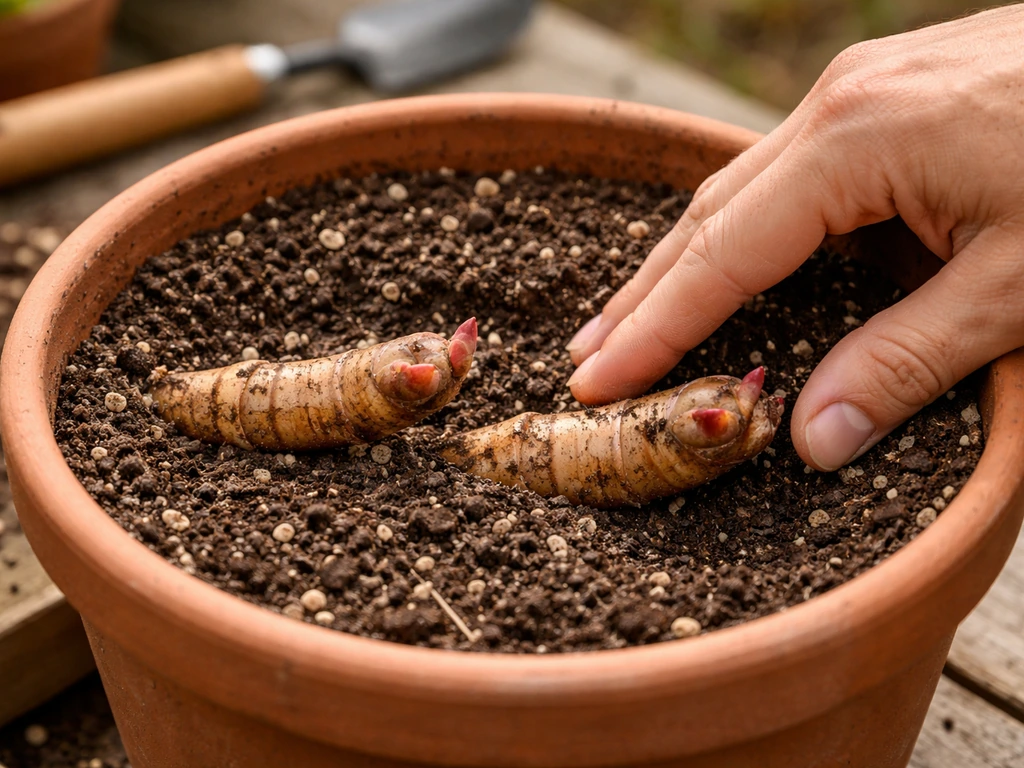
You'll typically buy cannas as bare rhizomes (sometimes called bulbs, though they're technically not). They look like a lumpy, beige-brown root with small bumps called "eyes" on them. Those eyes are where the shoots emerge, so don't bury them facing down.
Starting indoors for an earlier start
If you want flowers earlier in the season, plant your rhizomes in pots indoors about 4 to 6 weeks before your last expected frost date. In a warm indoor spot (ideally with soil temperatures above 65°F/18°C), the rhizomes will start to sprout and you'll have established plants ready to move outside once the weather warms. Today is May 23, 2026, so if you're in a colder climate you may have already missed the indoor head-start window, but you can still plant directly outdoors now in most temperate zones.
Planting outdoors
Plant canna rhizomes outdoors after the last frost has passed and the soil has warmed. In central Iowa, for example, that's typically mid-May. Since we're already at late May, now is a great time to plant in most of the continental US and similar climates. The key trigger is soil temperature: cannas won't sprout until it consistently hits around 65°F (18°C). If your soil is still cold, the rhizome will just sit there doing nothing, which is why impatient gardeners sometimes think theirs are dead when they're just waiting.
Potting mix, planting depth, and fertilizer plan
Don't use garden soil in your pot. If you are wondering how to grow marjoram in a pot, use the same idea of a light, well-draining mix and avoid soggy conditions don't use garden soil in your pot. For a guide specific to cardamom, see how to grow cardamom in pot. It compacts, drains badly, and brings in pests and disease. Use a rich, well-draining potting mix, either a quality general-purpose mix or one specifically labelled for containers. I usually mix in a bit of perlite (about one part perlite to four parts potting mix) to improve drainage, especially in larger pots that tend to stay wetter longer.
Fill the pot about halfway, then place the rhizome horizontally with the eye (the bumpy growth point) facing upward. Cover with potting mix so the top of the rhizome sits about 4 inches below the surface. If you have a large pot and multiple rhizomes, space them at least 12 inches apart. Water thoroughly right after planting, then hold back until you see signs of growth, checking that the top inch of soil is dry before watering again. Overwatering a newly planted, unsprouted rhizome is one of the most reliable ways to rot it.
Feeding your cannas
Cannas are hungry plants. Before planting, mix a balanced slow-release fertilizer (something like a 10-10-10 granular) into the potting mix. A 10-20-10 fertilizer, for example, corresponds to an N:P:K ratio of 1:2:1 that can help you translate label numbers into nutrient proportions for a feeding plan 10-10-10 granular. Once the plants are growing actively, feed them monthly with a balanced liquid fertilizer or apply a controlled-release fertilizer two or three times through the season. One thing worth noting: stop fertilizing once you see flower buds forming. Extra nitrogen at that stage pushes leafy growth at the expense of the blooms you've been waiting for. A fertilizer with slightly higher phosphorus (the middle number on the label) helps support flowering.
Watering schedule and sunlight/temperature requirements
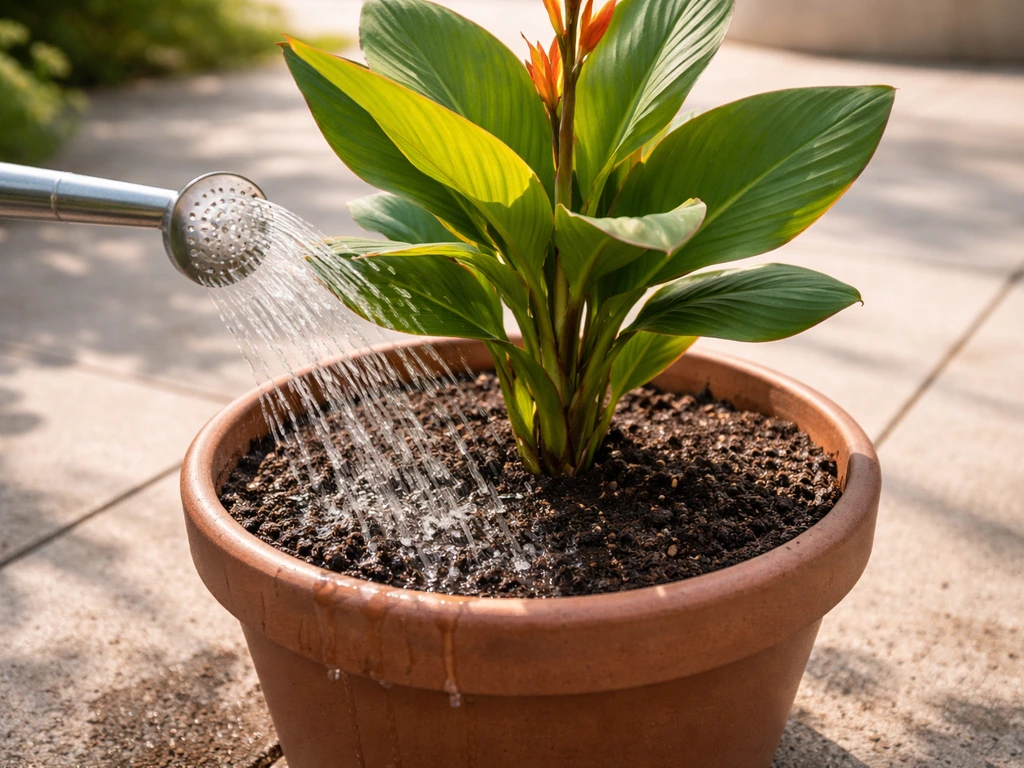
Once cannas are actively growing, they're thirsty plants. In warm summer weather, a container canna may need watering every one to two days, sometimes daily in a heatwave. The goal is to keep the potting mix consistently moist but never waterlogged. Push your finger an inch into the soil: if it feels dry at that depth, water thoroughly until it drains from the bottom. If it still feels moist, wait.
In cooler or cloudy stretches, ease off significantly. More container cannas die from overwatering than underwatering, especially early in the season before the plant is actively growing. Once it's in full growth with several large leaves, it will consume water much faster and you'll naturally water more.
For sunlight, full sun (6 or more hours) is where cannas thrive. They'll manage in partial sun but will grow slower and flower less. They love heat, so don't worry about a hot patio or a spot that gets reflected heat from a wall. What they don't like is cold: once temperatures drop below 50°F (10°C) regularly, growth slows dramatically. A hard frost will kill the foliage outright.
Ongoing container care through the season
Deadheading and pruning
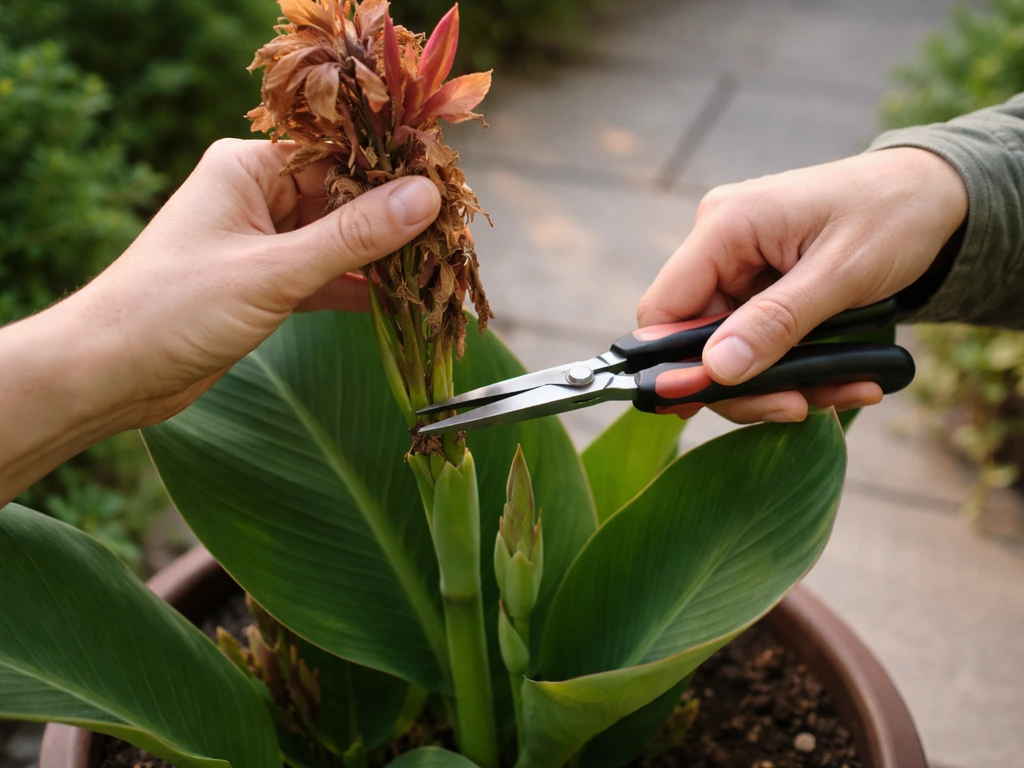
Cannas don't need much pruning during the season, but deadheading (removing spent flower spikes) keeps them tidy and encourages new flower stalks to develop. Once a flower spike finishes blooming, cut it back to the next side shoot or leaf junction. You'll usually see a new bud or shoot forming just below. Over the season, if lower leaves turn yellow or brown, simply pull or snip them off. It's normal for older lower leaves to die back as the plant grows taller; this isn't a sign of a problem.
Supporting tall growth
Compact varieties generally don't need staking, but taller cannas in pots can become top-heavy and tip over in wind. If you've got a large variety, a bamboo cane and a loose tie around the main stem is all you need. Positioning the pot in a sheltered spot also helps.
Keeping up with feeding
Container plants need more regular feeding than in-ground plants because nutrients wash out every time you water. Stick to your monthly liquid feed schedule from late spring through mid-summer. If you notice the leaves looking a bit pale or yellowish-green in the middle of summer despite adequate watering, that's often a sign the plant needs feeding rather than a disease issue.
Pests and diseases in pots, plus troubleshooting
Container cannas are generally tough, but there are a handful of problems worth knowing about. Canna rust symptoms include rusty-brown pustules that leave a rusty-brown stain when wiped on a finger.
Common pests
- Spider mites: These thrive in hot, dry conditions and cause a speckled, faded look to the leaves. You might see fine webbing on the undersides. Fix: increase humidity around the pot (group plants together or mist), and treat with insecticidal soap.
- Caterpillars (canna leafroller): Rolled or chewed leaves are a sign. Pick off by hand or use a Bt (Bacillus thuringiensis) spray, which targets caterpillars without harming other insects.
- Aphids: Clusters of small soft insects on new growth. A strong blast of water or insecticidal soap handles them quickly.
Common diseases
- Canna rust: Rusty-brown pustules on the leaves that leave a brownish stain on your finger when you touch them. Remove affected leaves immediately, avoid wetting the foliage when watering, and improve air circulation around the pot.
- Fungal leaf spot: Dark lesions that spread across the foliage in wet conditions. Same fixes: remove affected leaves, avoid overhead watering, and space pots to allow airflow.
- Root/rhizome rot: The base of the stem turns black or mushy, lower leaves yellow and drop. This is almost always caused by overwatering or poor drainage. If caught early, remove the plant, trim away rotted parts of the rhizome with a clean knife, dust with sulphur powder or cinnamon, and repot in fresh mix with better drainage.
Troubleshooting common problems
| Problem | Likely Cause | Fix |
|---|---|---|
| No shoots after 3+ weeks | Cold soil below 65°F, or rhizome rot | Check soil temp; dig up and inspect rhizome for rot |
| Yellowing lower leaves | Normal ageing, overwatering, or nutrient deficiency | Check watering frequency and feeding schedule |
| Pale, washed-out leaf colour | Too much shade or needs feeding | Move to sunnier spot; apply balanced fertilizer |
| Weak, leggy growth | Insufficient light | Relocate pot to full sun |
| No flowers despite healthy leaves | Too much nitrogen, not enough sun, or young plant | Stop nitrogen-heavy feeds; ensure 6+ hours of sun |
| Mushy stem base | Root rot from overwatering or poor drainage | Reduce watering; improve drainage; inspect rhizome |
Winter care and how to re-grow cannas next spring
What you do at the end of the season depends almost entirely on your climate. In Zone 8 and warmer (mild winters with no hard freezes), you can often leave cannas in their pots outdoors, cut the foliage back after frost kills it, and let the rhizomes go dormant in place. They'll re-sprout in spring. In Zone 7 and colder, the rhizomes will freeze and die if left outside. You need to bring them in.
When to stop watering and cut back
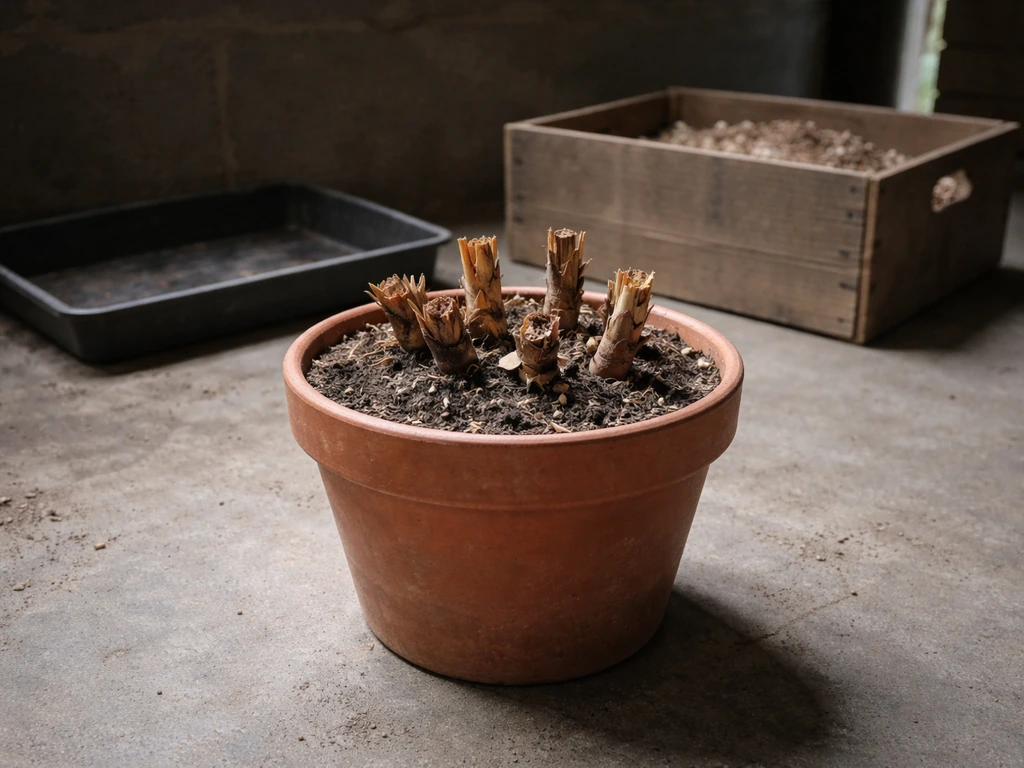
Once the first frost kills the foliage, cut the stems back to about 6 inches above the soil. Stop watering at this point. The rhizomes need a dry dormancy period, and continuing to water them through winter is a reliable way to rot them. Let the potting mix dry out almost completely.
Two overwintering options
If you have enough indoor space, the easiest method is to simply move the whole pot indoors. Find a cool, dark spot like a basement, garage, or spare room that stays consistently above freezing, ideally around 40 to 50°F (4 to 10°C). Do not water through winter. The rhizomes go completely dormant and need no attention until spring. This approach means you don't have to unpot anything, which I find a big practical advantage.
If space is tight (and this is a real issue in small apartments), unpot the rhizomes, shake off the soil, let them dry for a few days, then store them in a paper bag or cardboard box filled with barely-damp peat or coir. Keep them in the same cool, dark spot at 40 to 50°F. Check them once a month and discard any that show signs of rot.
Restarting in spring
In spring, when nighttime temperatures are reliably above 50°F and you're a few weeks out from your last frost date, bring the pot back out or repot the stored rhizomes into fresh potting mix. Give them a thorough watering, place them in a warm spot, and wait. Once soil temperature climbs back above 65°F, you'll see new shoots within a week or two. If you started them indoors 4 to 6 weeks before your last frost date, you'll have a head start on the season and earlier flowers. Each year the rhizomes multiply, so you'll likely have more than you started with and can divide them to fill additional pots or share with other gardeners.
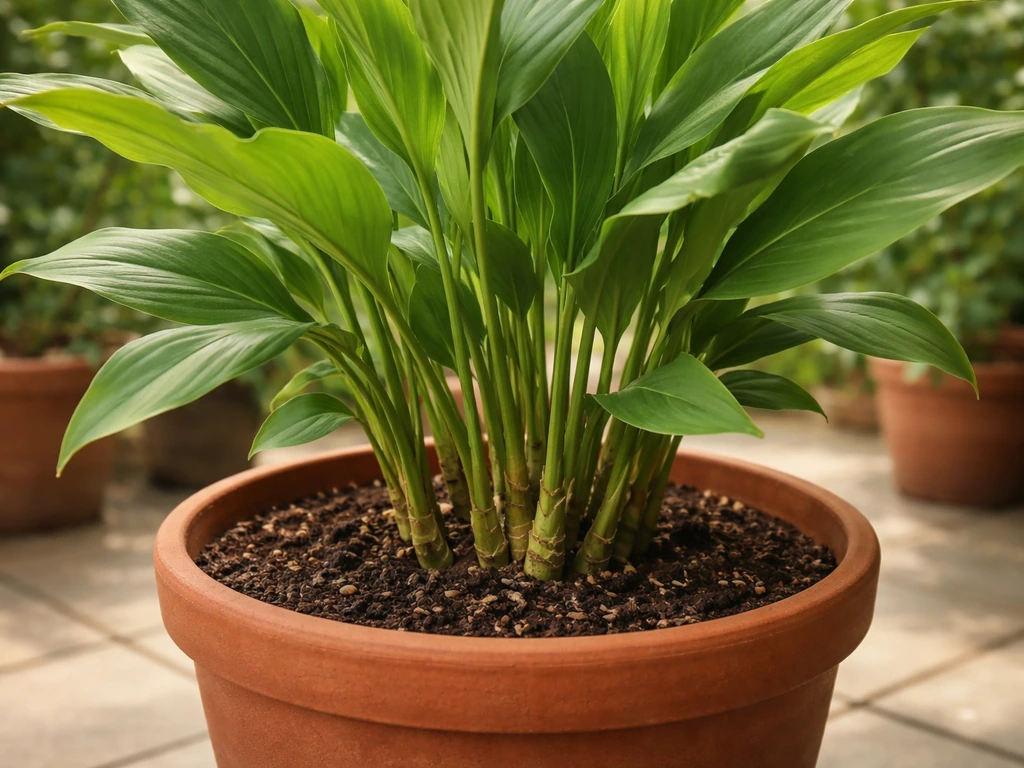
Container cannas are genuinely rewarding, and once you've done a full cycle with them, the second year feels easy. The same approach to big pots, good drainage, and a warm sunny position applies to other tropical-style container plants too. If you’re wondering how to grow cinnamon in a pot, focus on choosing the right pot size, using a well-draining mix, and keeping conditions warm and humid.
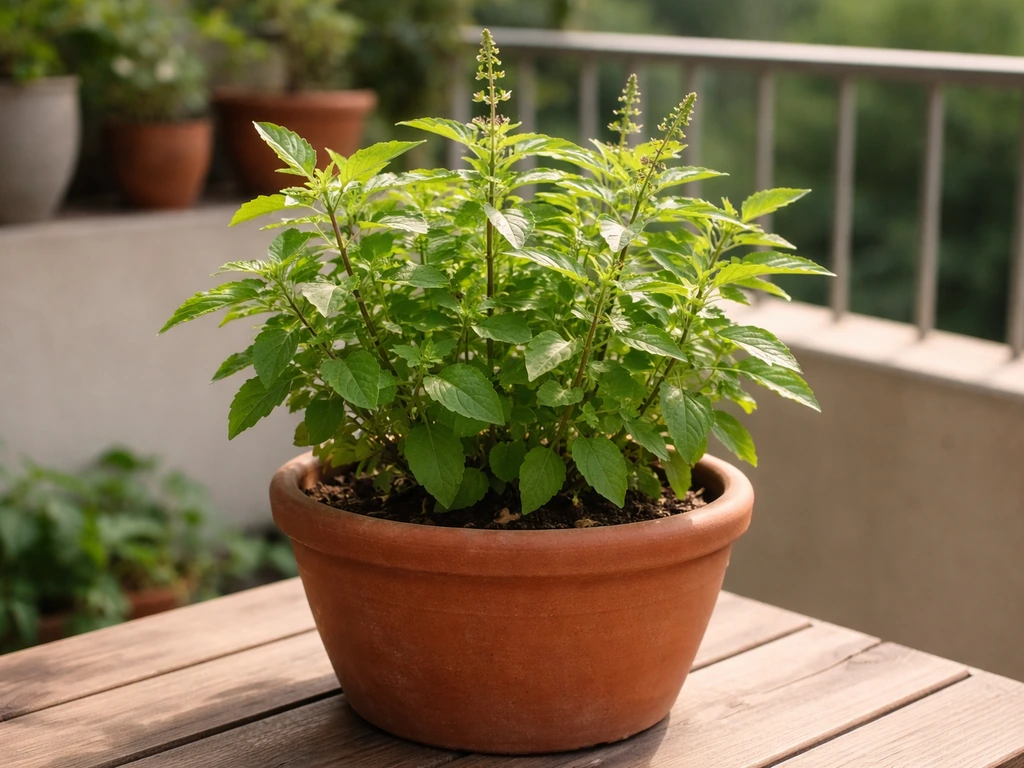
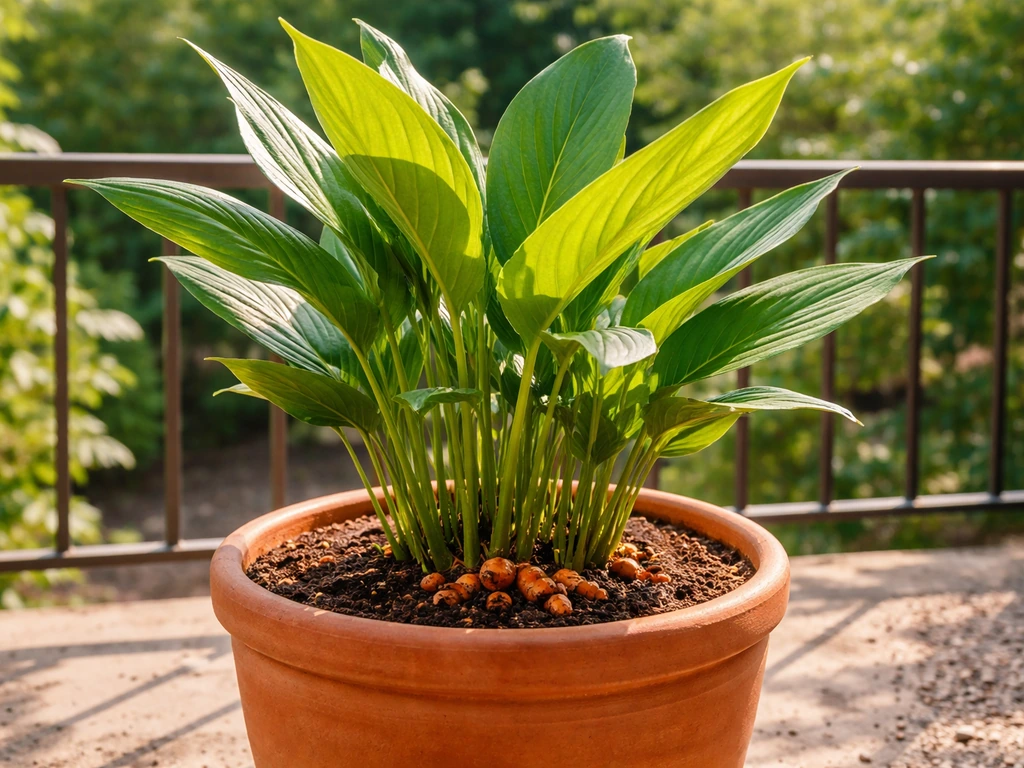
If you want something similar but with a fragrant leaf, you can also learn how to grow tulsi plant in pot using a sunny spot, well-draining soil, and consistent watering other tropical-style container plants. If you enjoy growing bold, exotic-looking plants in pots, it's worth exploring other large-leaf and flowering container plants like turmeric, which also grows from rhizomes and thrives in containers with similar care requirements.
Marigolds are another great pot choice, and you can learn the details like soil, sunlight, and watering in our guide on how to grow marigolds in pots.
FAQ
Can I grow cannas in a 5-gallon pot, or will they always need 10 to 15 gallons?
A minimum 5 gallons can work for compact dwarf types, as long as you keep up with watering and feeding, 10 to 15 gallons is much more forgiving in hot weather and wind. If your pot dries out in a day, downsize the plant variety or upgrade the pot size rather than trying to compensate with extra fertilizer.
How deep should the rhizome be in the pot for best results?
Aim to place the top of the rhizome about 4 inches below the soil surface. Planting too shallow can expose eyes to drying, planting too deep can delay sprouting and lead to uneven growth.
What’s the best way to tell if my canna rhizome is rotting versus just not sprouting yet?
If the soil stays wet and you see a foul smell or the rhizome turns mushy, it’s likely rot. If the potting mix is just slightly moist, with no sour odor, and temperatures are still under about 65°F (18°C), it may simply be waiting and sprouting can take longer than expected.
Should I water on a schedule after planting, or only when the soil is dry?
After planting, water thoroughly once, then wait until the top inch of mix is dry before watering again. Once shoots are actively growing and the plant has several large leaves, switch to frequent checking (often every 1 to 2 days in heat) because container cannas dry out fast.
Can I use a saucer under the pot as long as I empty it later?
Yes, a detachable saucer is useful if you empty it promptly. If water collects and sits for long periods, even briefly during cool evenings, it increases rot risk. In rainy weather or cooler climates, consider placing the pot on pot feet or a stand to improve airflow beneath.
Why are my canna leaves turning yellow or looking washed out in mid-summer?
Pale or yellowish-green leaves in the middle of the growing season usually point to nutrient shortage, especially in containers where watering leaches minerals. Adjust your feeding (monthly or controlled-release as planned) rather than assuming it is a disease.
Do cannas need to be deadheaded to keep flowering?
Deadheading helps, but the timing matters. Cut spent flower spikes back to the next side shoot or leaf junction so the plant can redirect energy into new stalks. If you only remove the top of the spike, you may slow repeat flowering.
How do I prevent taller cannas from tipping over in a windy balcony?
Use a larger, heavier pot and add simple support early (bamboo cane plus a loose tie to the main stem). Placing the pot in a sheltered corner reduces leverage from wind, which is often what causes tipping even when the plant is healthy.
When should I stop fertilizing, and what mistake causes fewer flowers?
Stop feeding once you see flower buds forming. Continuing nitrogen-heavy feeding encourages more foliage at the expense of blooms, resulting in lots of leaves and fewer or delayed flowers.
Can I keep cannas outdoors through winter in containers in colder zones?
In zones around 7 and colder, rhizomes often freeze and die in outdoor pots, even if the plant looks dormant. The safer approach is cutting back after frost, then moving the pot indoors to stay above freezing, or unpotting and storing rhizomes at about 40 to 50°F (4 to 10°C).
Is it okay to leave the pot in a cool garage and water it occasionally?
Generally no. During dormancy, you should not water, the goal is a dry dormancy period. Occasional watering is a common cause of rot because rhizomes are not actively using moisture in winter.
What should I do in spring if the pot still shows no shoots after repotting or bringing it out?
First confirm the temperature. Cannas generally do not sprout reliably until soil temperatures are around 65°F (18°C). If nights are still cool, move the pot to a warmer spot or protect it briefly, and keep watering conservative until you see growth.