You can absolutely grow a money plant (pothos) in a pot, and honestly, it's one of the best plants to start with container gardening. Pothos thrives in pots, tolerates a bit of neglect, and looks great trailing from a shelf or cascading off a windowsill.. Pothos thrives in pots, tolerates a bit of neglect, and looks great trailing from a shelf or cascading off a windowsill. The main things you need to get right are drainage, watering frequency, and pot size, and this guide walks you through all of it, start to finish. how to grow a pot plant Pothos thriving in pots, tolerates a bit of neglect, and looks great trailing from a shelf or cascading off a windowsill.. Pothos thrives in pots, tolerates a bit of neglect, and looks great trailing from a shelf or cascading off a windowsill. The main things you need to get right are drainage, watering frequency, and pot size, and this guide walks you through all of it, start to finish.
How to Grow Money Plant in a Pot: Small Pot Tips
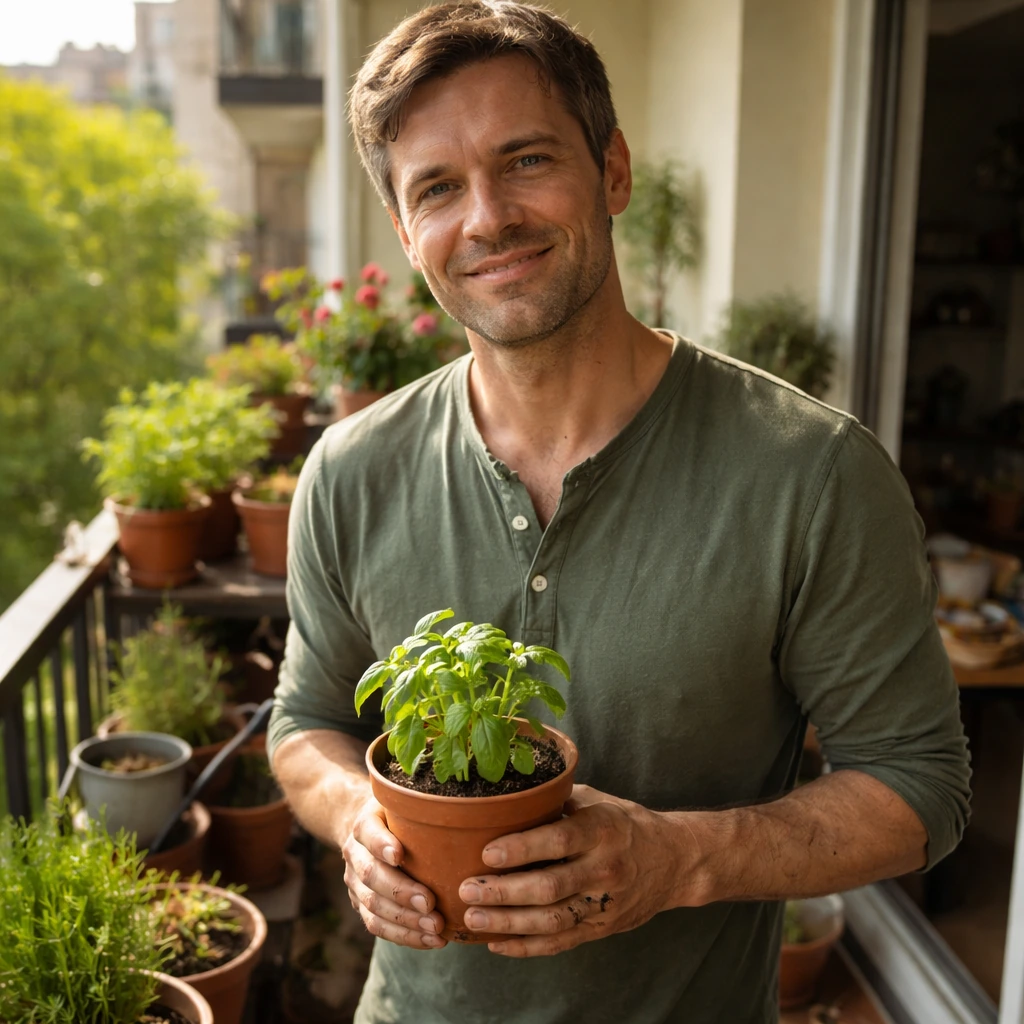
Picking the right variety and pot size
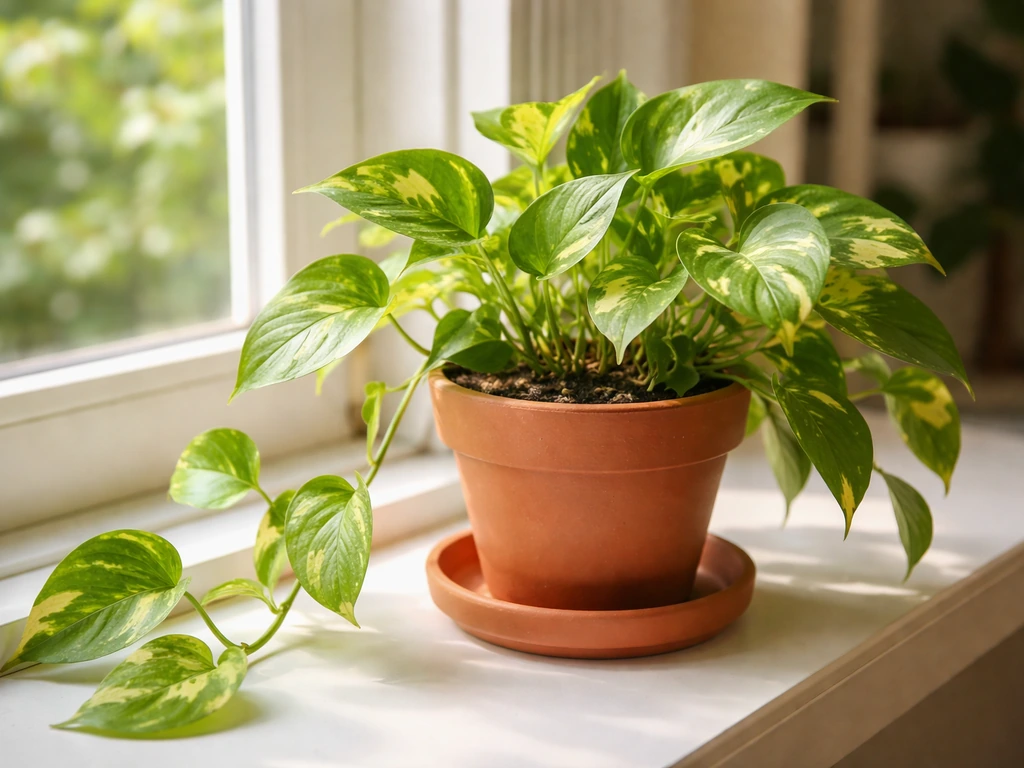
Money plant is a common name used for a few different plants, but if you're searching 'how to grow money plant in pot,' you're most likely talking about pothos (Epipremnum aureum), the glossy-leafed trailing vine sold in nearly every garden center and hardware store. That's what this guide covers.
There are a few varieties worth knowing about before you buy. Golden Pothos is the classic, with golden-yellow variegated leaves on a green background. Marble Queen has cream-streaked leaves and is a bit slower-growing but looks stunning. Jade Pothos is solid dark green and is your best bet if your space is low on light, since it handles shade better than the variegated types. All three grow well in pots, so pick whichever appeals to you visually.
For pot size, start with a container that's about 10 to 15 cm (4 to 6 inches) in diameter if you're planting a single cutting or a small nursery plant. Going too big too soon is actually a common mistake: a large pot holds more soil, that soil stays wet longer, and wet soil around small roots is a fast track to rot. A snug pot that fits the root ball with just a couple of centimeters of space around it is ideal. Once the plant fills out and you see roots poking from the drainage holes, you size up by about 5 cm (2 inches) at a time.
Getting the pot set up properly before you plant
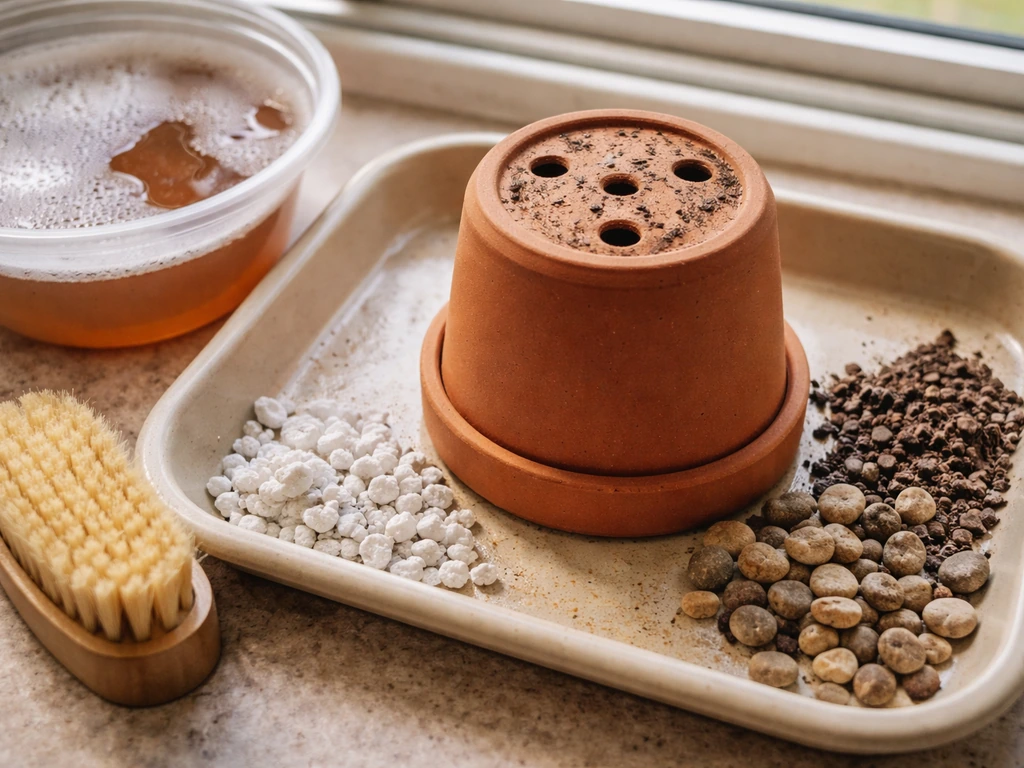
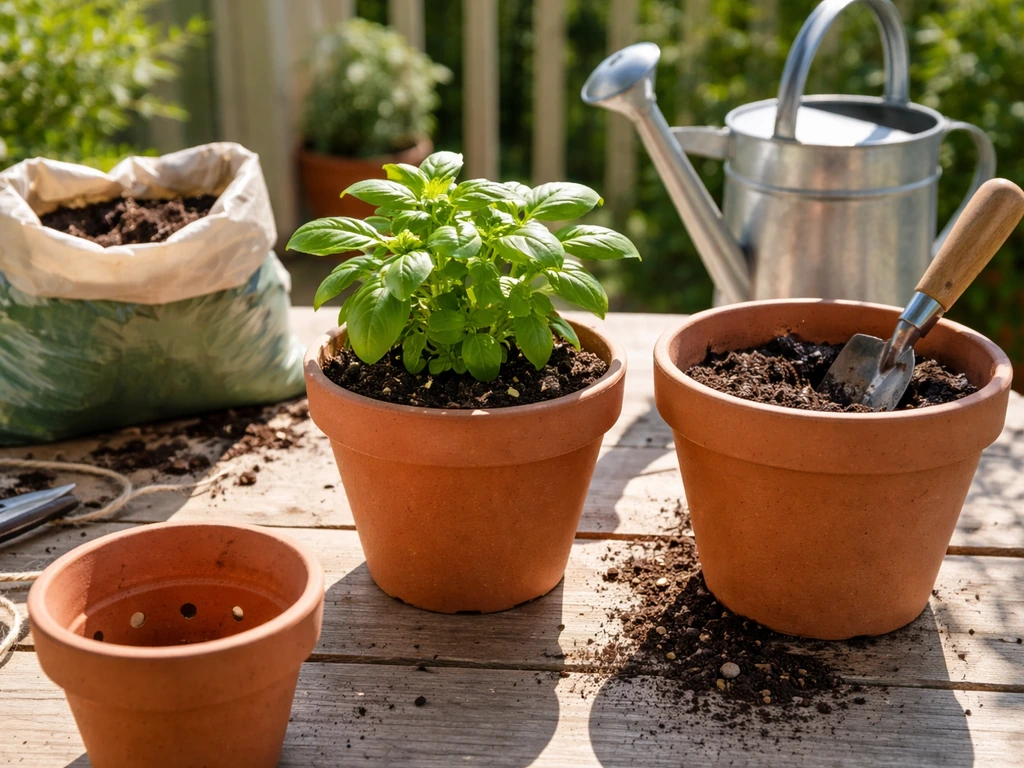
Drainage is non-negotiable. Every pot you use for a money plant needs at least one drainage hole at the bottom. Without it, water pools at the roots, oxygen gets cut off, and root rot sets in quickly. If you fall in love with a decorative pot that has no hole, use it as a cachepot (a decorative outer sleeve) and keep your plant in a plain plastic grower's pot inside it. Just remember to tip out any water that collects in the bottom after watering.
If you're reusing a pot from a previous plant, wash it thoroughly in warm soapy water and then rinse it with a diluted bleach solution (about 1 part bleach to 9 parts water) before using it again. This kills off any lingering disease or fungal spores that could harm your new plant.
For the soil mix, pothos wants something that drains well but holds just enough moisture. A standard houseplant potting mix works, but I like to improve it slightly by mixing in about 20 to 30 percent perlite (those small white granules you'll see in bagged mixes or buy separately). Perlite keeps the mix airy and stops it from compacting into a soggy block. Avoid garden soil entirely, it's too dense for containers and will cause more problems than it solves.
How to actually plant it: cuttings vs. seeds
The vast majority of people grow money plant from cuttings, and for good reason: it works quickly, it's free if you have a friend with a plant, and pothos cuttings root almost embarrassingly easily. Seeds are technically possible but rarely used because the plants don't come true to type and the process takes much longer. Stick with cuttings.
Taking and planting a cutting
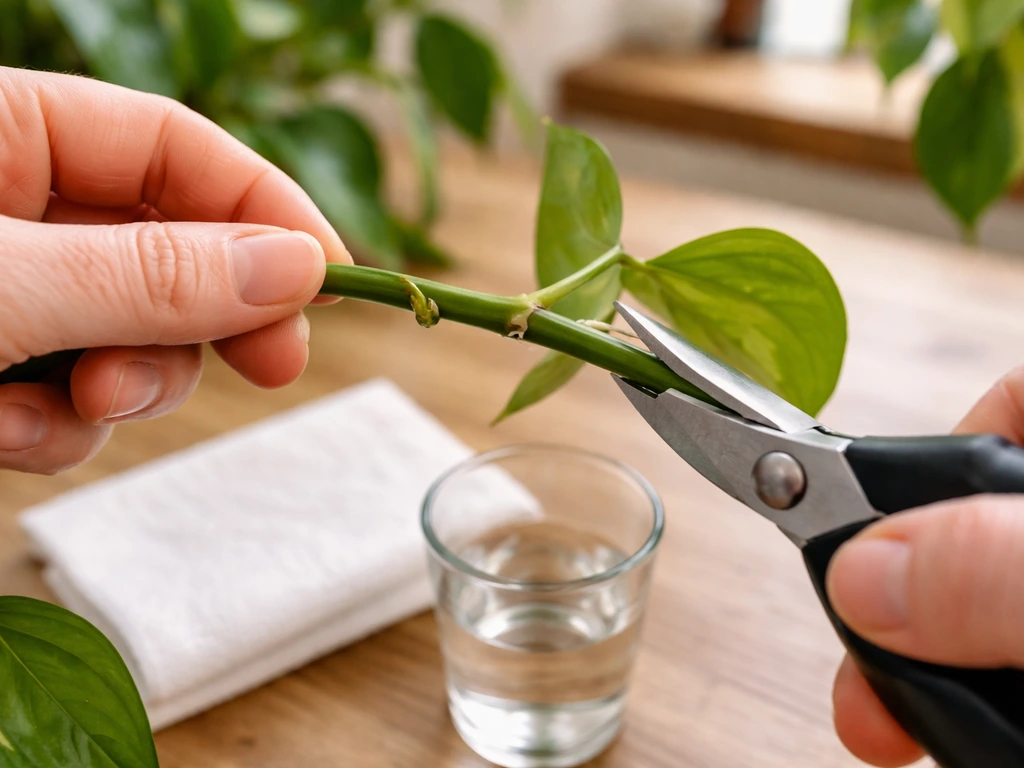
- Choose a healthy stem from an existing plant and cut it just below a node (the small brown bump or joint on the stem where a leaf attaches). Your cutting should be about 10 to 15 cm (4 to 6 inches) long and have at least two or three leaves.
- Remove the lowest leaf so the node and a short length of bare stem will be buried in the soil.
- Optional but helpful: dip the cut end in rooting hormone powder (available at any garden center) to speed up root development.
- Fill your prepared pot with the perlite-amended potting mix, leaving about 2 cm of space below the rim.
- Make a small hole with a pencil or finger, insert the cutting so at least one node is covered with soil, and gently firm the mix around it.
- Water it in lightly so the mix is just damp, not soaking wet.
- Place the pot in a warm spot with bright indirect light and leave it alone for a week or two while roots develop.
You can also root the cutting in a glass of water first, which lets you watch the roots develop (great for kids or if you just like to see proof before committing to soil). Change the water every couple of days to keep it fresh. Once the roots are about 2 to 3 cm long, pot it up into soil as described above.
Light, water, and humidity: the day-to-day care routine
Light
Pothos does best in bright, indirect light, meaning near a window where it gets good light but not direct sun blasting on the leaves. A spot a meter or two back from a south or east-facing window is ideal. It will grow in shadier spots too, just more slowly, which is actually fine if you just want a low-maintenance trailing plant on a bookshelf. If you have a variegated variety like Golden Pothos or Marble Queen, it does need more light to keep its color vivid. Jade Pothos, being solid green, handles lower light the best.
Watering
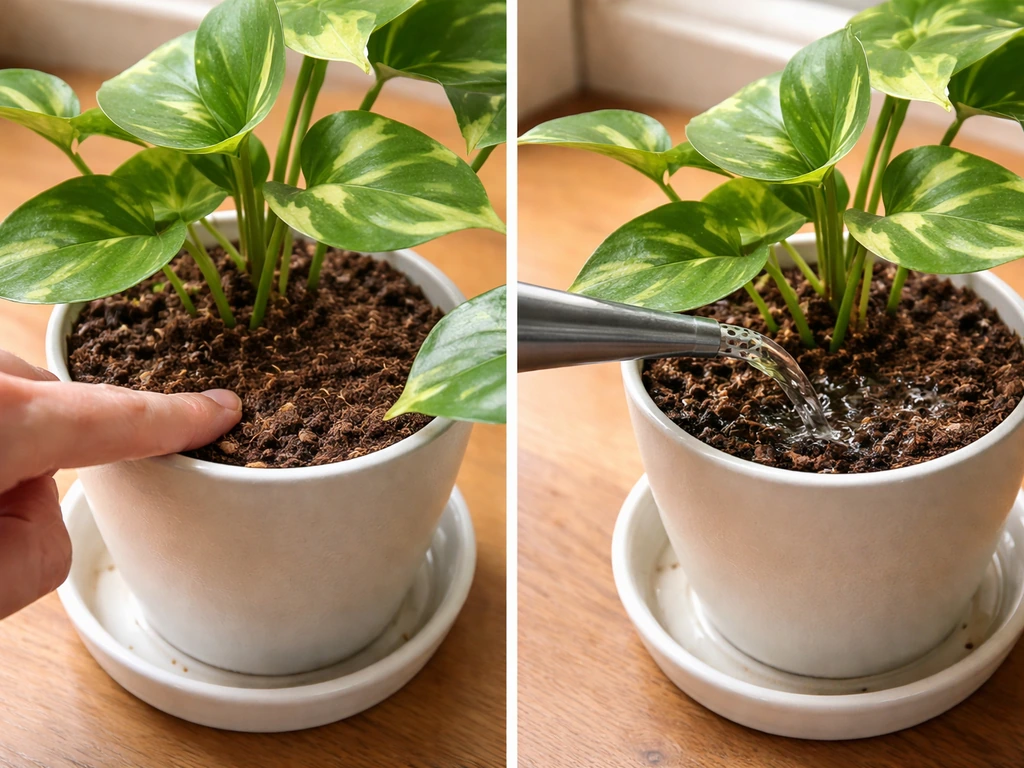
This is where most people go wrong with potted money plants: overwatering. In a small pot especially, the soil stays wet longer than you'd expect, and pothos roots sitting in soggy mix will rot. The rule I follow is simple: stick your finger about 2 cm (roughly an inch) into the soil. If it feels dry at that depth, water thoroughly until water runs freely from the drainage hole. If it still feels damp, leave it another day or two and check again. In most indoor conditions during spring and summer, that works out to watering roughly once a week. In winter, when growth slows, you might only water every 10 to 14 days.
Never leave your pot sitting in a saucer full of water. After watering, give it 30 minutes and then tip out whatever has drained through. Letting the roots sit in standing water is one of the quickest ways to cause rot.
Humidity
Pothos is pretty easygoing about humidity and handles typical indoor air well. If you notice the leaf tips going brown and crispy, that's often a sign the air is very dry (common in centrally heated homes in winter). A simple fix is to mist the leaves lightly every few days or place the pot on a tray filled with pebbles and a little water, making sure the pot base sits above the waterline rather than in it. That creates a small zone of humidity around the plant without wetting the roots.
Feeding your money plant and knowing when to repot
Fertilizing
Pothos isn't a heavy feeder, which is part of what makes it so forgiving. A balanced liquid houseplant fertilizer applied every four to six months is genuinely enough for most home setups. If you want to be more precise, look for a fertilizer with an N:P:K ratio roughly in the 3:1:2 range (nitrogen:phosphorus:potassium), which suits pothos well. Feed during the active growing season, spring through summer, and skip feeding in winter when the plant is resting. More fertilizer does not mean faster growth, and over-fertilizing in a small pot can burn the roots and cause leaf discoloration.
When and how to repot
Spring is the best time to repot, when the plant is about to enter its active growing period and can recover quickly. The signs that your money plant needs a bigger home: roots are circling the bottom of the pot or poking out of the drainage holes, growth has slowed noticeably even though light and watering are good, or the plant is drying out within a day or two of watering (a root-bound plant uses water faster). When those signs show up, go up one pot size (about 5 cm larger in diameter) and use fresh potting mix. Don't be tempted to jump to a much larger pot all at once, the same soggy-soil-around-small-roots problem applies.
Troubleshooting: what's going wrong and how to fix it
| Problem | Likely Cause | Fix |
|---|---|---|
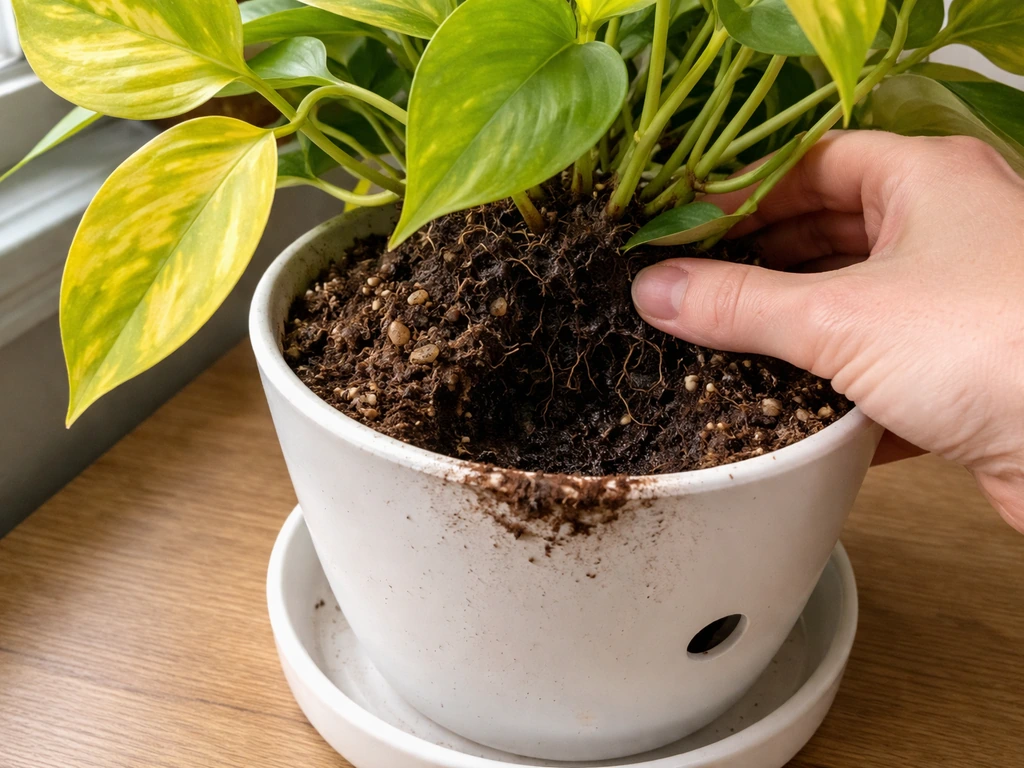
| Yellow leaves | Overwatering or waterlogged soil | Let the soil dry out more between waterings; check that drainage holes aren't blocked |
| Brown, mushy stems near soil | Root rot from sitting in wet soil | Unpot the plant, trim rotten roots with clean scissors, repot in fresh dry mix, water sparingly |
| Pale or washed-out leaf color | Too much direct sun, or low light for variegated types | Move to bright indirect light; avoid direct sun on leaves |
| Slow or stopped growth | Low light, underwatering, root-bound pot, or winter dormancy | Assess light first, then check if it needs repotting; reduce expectations in winter |
| Wilting even after watering | Root rot (roots can't take up water) or severely root-bound | Check roots; if rotted, treat as above; if root-bound, repot immediately |
| Leggy, sparse stems | Insufficient light | Move closer to a window; trim leggy stems to encourage bushier growth |
Root rot is the single most common and serious issue with potted money plants, and it almost always comes down to too much water or poor drainage. If you catch it early (a few mushy roots, slight yellowing), you can usually save the plant by trimming the bad roots back to healthy white tissue, letting them air-dry for an hour, and repotting in fresh, well-draining mix. If the whole root ball is brown and mushy with a bad smell, Root rot is the single most common and serious issue with potted money plants, and it almost always comes down to too much water or poor drainage. If you catch it early (a few mushy roots, slight yellowing), you can usually save the plant by trimming the bad roots back to healthy white tissue, letting them air-dry for an hour, and repotting in fresh, well-draining mix. If the whole root ball is brown and mushy with a bad smell, take cuttings from any healthy stems and start fresh. and start fresh.
Propagating more plants from cuttings
Once your money plant is established and growing well, propagating more from it is genuinely one of the most satisfying parts of growing pothos. The method is exactly the same as described in the planting section: take a stem cutting just below a node, remove the lower leaf, and either root it in water or plant it directly into a small pot of damp, well-draining mix. Each cutting you take also helps the mother plant by encouraging it to branch out rather than growing long and sparse.
A single healthy pothos can produce dozens of cuttings over a season. This makes it great for filling out multiple pots around your home, gifting to friends, or experimenting with different varieties side by side. If you're interested in expanding into other container plants and want to understand more about general potting principles, the broader guides on how to grow potted plants on this site are worth a read once your money plant is settled, especially if you're learning how to grow shrubs in pots, too.
Your first week: what to do today
If you're starting today, here's exactly what to do. Get a pot with drainage holes (10 to 15 cm is fine for a starter cutting or small plant). Mix standard houseplant potting mix with about 20 to 30 percent perlite. Take or source a cutting with at least one node, or pick up a small nursery plant. Plant it, water it in lightly, and put it somewhere with bright indirect light. Then leave it alone for a week. Seriously, don't keep checking and poking the soil. After that first week, use the finger-test watering method and just keep an eye on the leaves. If they're glossy and upright, you're doing great.
Money plants are forgiving, and if something goes wrong in the first few weeks, it's almost always fixable. The main thing is starting with good drainage and not overwatering, an approach that also applies when you’re learning how to grow organic potted plants. Get those two things right and your pothos will take care of the rest.
FAQ
How much sun does a money plant in a pot actually need, and what if my window is only one side?
Aim for bright, indirect light, a spot within about 1 to 2 meters of a window usually works. If growth becomes thin or leaves turn smaller, rotate the pot every 1 to 2 weeks to keep the vine from leaning toward the light. Variegated types need more light than solid green to maintain color, so place them closer to the window than Jade Pothos.
Can I use tap water for watering pothos, and what about softened water or fluoride?
Tap water is fine for most homes. If your leaves develop brown spots or crusty residue on the soil surface, let water sit overnight to let chlorine dissipate, and flush the pot occasionally by running water through until some drains out. If you use a water softener, consider monitoring for salt buildup, it can affect root health over time.
What should I do if my decorative pot has a drainage hole, but water still pools inside?
Check that the drainage hole is not blocked by roots, potting mix, or a stuck saucer. Use a thin layer of potting mix and ensure the potting mix is not compacted. If water still takes a long time to drain, repot into a mix with added perlite so excess water can move through quickly.
My pothos leaves are yellow. Is it always overwatering?
Yellowing is often related to overwatering, especially if the lower leaves turn yellow and the soil stays damp. However, it can also indicate low light, nutrient deficiency, or cold drafts. Before adjusting fertilizer, do a finger-test at the 2 cm depth, if it is still damp, hold watering and improve light instead of feeding.
How do I make my money plant bushier instead of one long trailing vine?
Pinch or prune the tips just above a node, then remove the top growth to encourage branching. If your plant has long bare stems, you can cut healthy sections and root them as new plants in the same pot to create a fuller, more compact look.
Is it better to plant multiple cuttings in one pot or keep them separate?
Multiple cuttings in one pot create a fuller appearance faster, but keep pot size proportional to the number of stems and do not overcrowd. As a rule of thumb, maintain the same snug fit, you should still be able to water and see drainage clearly without leaving the mix soggy for long.
When should I repot, and what size increase is safest?
Repot when roots are circling the pot or you see roots coming from the drainage holes, or when the plant dries out within a day or two despite proper light. Increase the diameter by about 5 cm, going bigger can keep soil wet too long and raise the risk of root rot.
What are early signs of root rot, and how can I prevent it?
Early signs include yellowing leaves, soft stems near the soil line, and a musty smell when you check the pot. Prevent it by using a pot with drainage holes, keeping the mix airy with perlite, and waiting until the top couple of centimeters feel dry before watering.
How can I tell if my potting mix is draining poorly before I damage the plant?
Do a quick test: water the dry mix thoroughly, then observe how long it takes to drain. If water sits on the surface or drains very slowly, the mix may be too dense or compacted, replace it with a houseplant mix plus perlite (about 20 to 30%).
Can I grow money plant in water only, and will it eventually need potting soil?
You can root cuttings in water for a while, but long term the plant still does better in potting mix because it is built for soil-based nutrients and oxygen exchange. If you keep it in water, change it regularly and use a clean container, then move to soil once roots are a few centimeters long.
Should I rotate the plant for even growth, and will pruning affect the watering schedule?
Yes, rotate every 1 to 2 weeks so the vine grows evenly. After pruning, the plant may temporarily grow more slowly, so recheck soil dryness before watering rather than sticking to a rigid weekly schedule.