Yes, you can absolutely grow gherkins in pots, and they produce surprisingly well in containers as long as you get a few basics right: a large enough pot (at least 5 gallons, ideally 10), a compact or bush variety, consistent watering, and something to climb. Get those four things sorted and you will be pulling pickling-sized cucumbers off your balcony or patio from midsummer onward.
How to Grow Gherkins in Pots: Step by Step Guide
Marcus Whitley
17 Jun 2026
Best gherkin varieties for containers

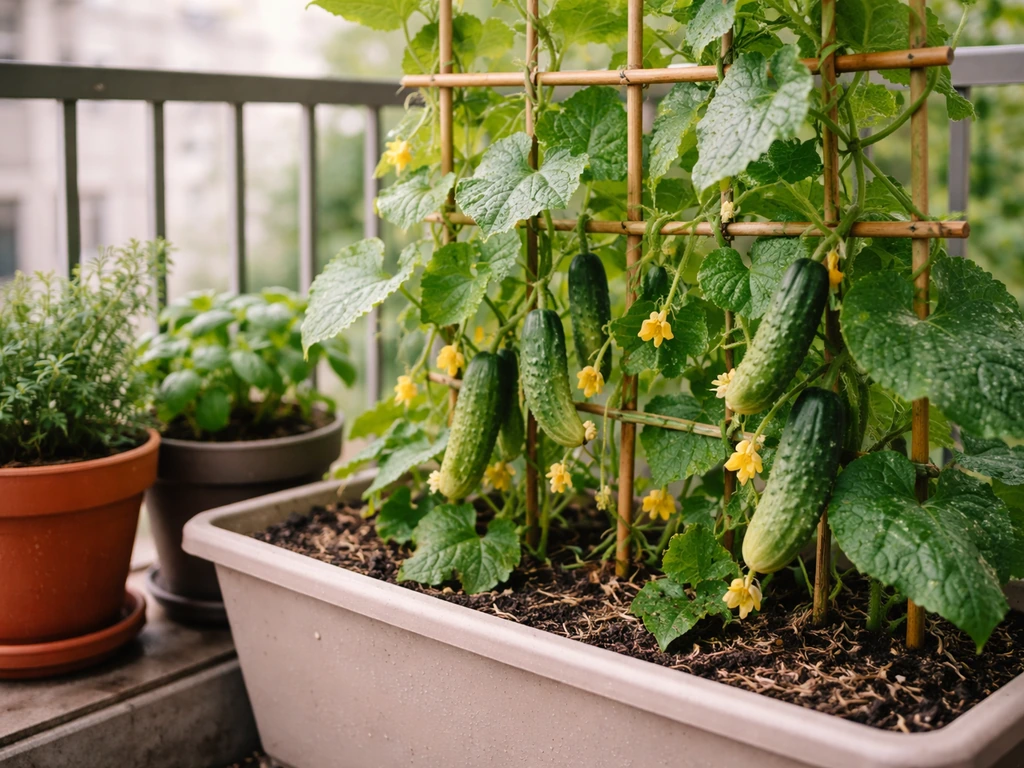
Not every cucumber variety is happy in a pot. Vining types that sprawl across a garden bed will struggle to thrive in confined soil, so you want to look for words like 'Bush,' 'Compact,' or 'Patio' on the seed packet. These varieties have been bred to stay manageable and still put out plenty of fruit.
The best performers I have seen for container gherkin growing are Parisian Gherkin, which produces small 2 to 4 inch fruits that are classic pickling size, Picklebush, which gives you slightly larger 4 to 5 inch fruits and is very well suited to pots, Bush Pickle, and Patio Snacker. Any of these will give you a productive plant without the vine going completely wild on you. If you are browsing a garden center and cannot find a named gherkin variety, just pick the most compact pickling cucumber you can find and you will be fine.
Choosing the right pot, soil, and support
Pot size and drainage

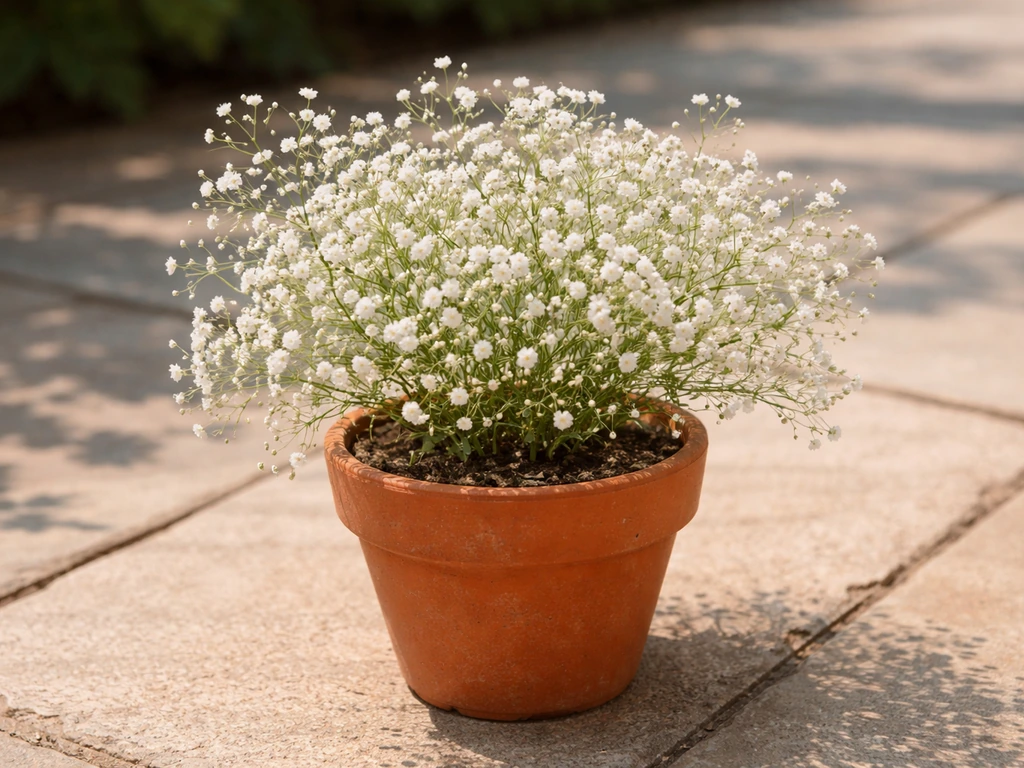
This is where most beginners go wrong by going too small. For a single gherkin plant, you need a container that holds at least 5 gallons, and honestly a 10-gallon pot is better, especially if you are growing a vining type. More soil volume means more moisture reserve, more nutrients, and a bigger root system, all of which translate directly into more fruit. Whatever pot you choose, it must have drainage holes in the bottom. To apply the same container principles to gypsophila, you will want to start with a suitable pot size, fast-draining potting mix, and a consistent watering routine. No holes means waterlogged roots and a dead plant, so if you have a decorative pot without holes, either drill some or use it as an outer sleeve around a plain plastic pot that does drain.
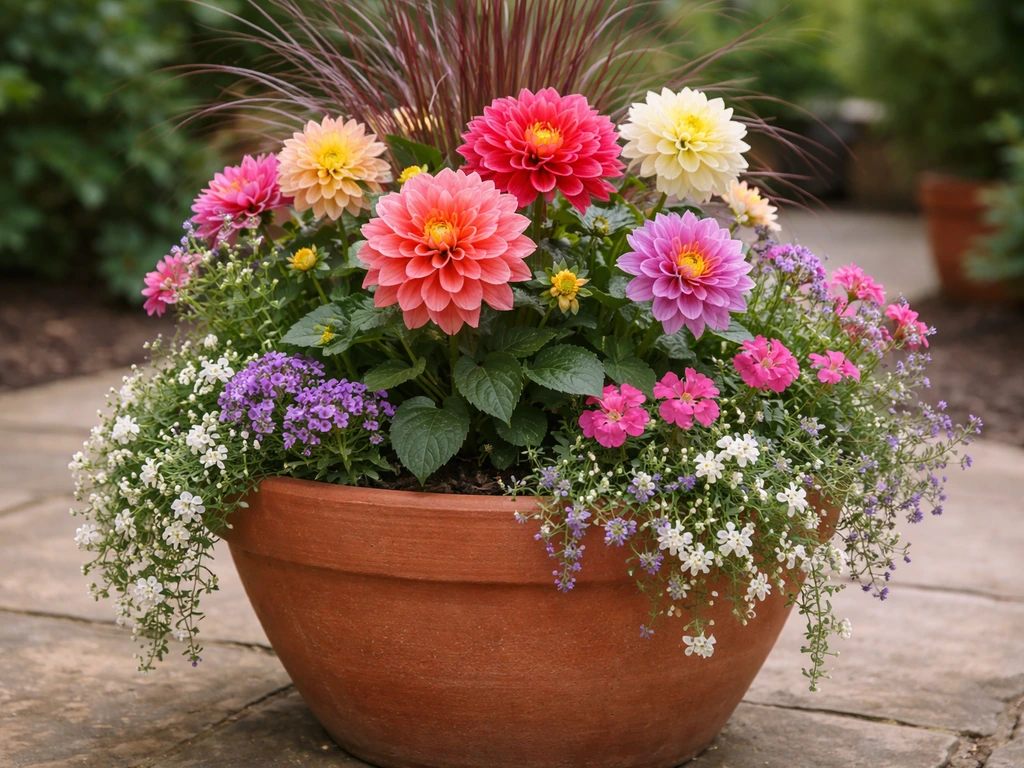
Material-wise, terracotta is beautiful but dries out fast in summer heat, which means more watering. Dark plastic or fabric grow bags retain moisture better and are lighter to move around. If you are on a hot balcony, a light-coloured or fabric pot will keep roots cooler. Dahlias also do well in containers, but you will need the right pot size, drainage, and feeding schedule dahlias in pots.
The right potting mix
Do not use garden soil straight from the ground in a pot. It compacts, drains poorly, and can introduce pests and diseases. Use a good quality potting mix and aim for a slightly acidic pH between 6.0 and 6.5, which is the sweet spot for cucumbers. Most bagged potting mixes fall roughly in this range. You can improve a basic potting mix by blending in up to 50 percent good garden compost, which adds early nutrition and helps retain moisture without waterlogging. A handful of perlite or horticultural grit also helps drainage if you are using a heavier mix.
Support structures
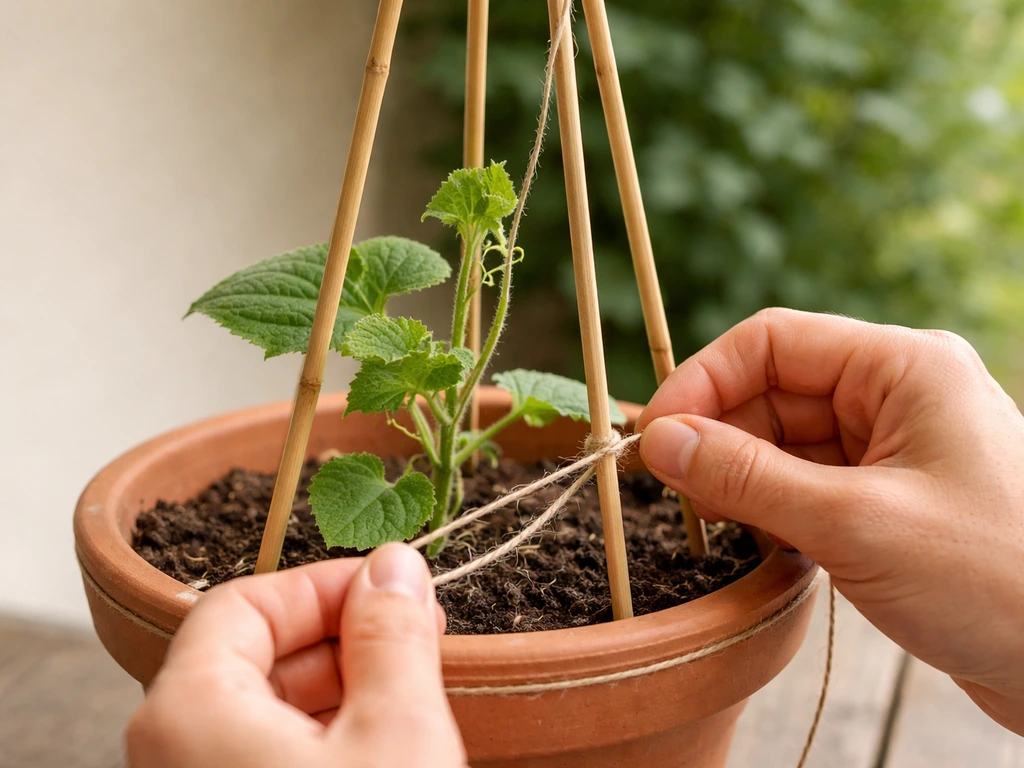
Even compact gherkin varieties produce tendrils and want to climb something. A simple bamboo cane wigwam pushed into the pot works well, or you can run twine from the pot up to a railing, fence, or hook on a wall. Vining types especially benefit from a trellis anchored to a wall behind the pot. Training the plant upward rather than letting it sprawl keeps the leaves off the soil, improves airflow, and makes it much easier to spot fruits when they are ready.
Sowing seeds and getting your timing right
Gherkins are warm-season crops and they are genuinely fussy about cold. Sow seeds outdoors directly into the pot only once soil temperature has reached at least 60°F at a depth of about 2 inches, and ideally wait until it is closer to 70°F. Cold soil below 55°F will either prevent germination altogether or produce weak, slow seedlings. If you are in the UK or northern Europe, this typically means waiting until late May or early June unless you have a sheltered, sunny spot.
If you want to get a head start, sow seeds indoors 3 to 4 weeks before your last expected frost date. Use small individual pots or module trays because cucumber roots do not like being disturbed. Sow one seed per pot at about half an inch deep, keep them somewhere warm (around 70 to 75°F), and they should germinate within 5 to 10 days. Transplant the seedlings outside once nights are reliably above 50°F and the soil in your container has warmed up. Do it gently, disturbing the rootball as little as possible.
Plant one gherkin plant per 5-gallon pot, or two plants per 10-gallon container if you are prepared to water frequently. Crowding more plants in than that is not worth it because you end up with competition for nutrients and water, which reduces overall yield.
Light, temperature, and watering
Sun and temperature
Gherkins need a lot of sun: aim for at least 6 to 8 hours of direct sunlight per day. A south or west-facing patio, balcony, or windowsill is ideal. One of the best things about growing in containers is that you can move the pot to chase the sun if needed, or shift it to a more sheltered spot during an unexpected cold snap.
Watch out during heatwaves though. When temperatures push above 95°F (35°C), cucumber flowers can abort before they are pollinated, which means no fruit. If you hit an extreme heat spell, moving the pot to somewhere that gets afternoon shade can protect the flowers. Equally, do not rush to put plants out in spring if nights are still cold. Gherkins hate cold roots almost as much as they hate frost.
Watering routine
Consistent moisture is probably the single most important factor in container gherkin success. The rule I follow is simple: push your finger about an inch into the soil, and if it feels dry at that depth, water thoroughly until it drains out the bottom. In hot summer weather that might mean watering every day, sometimes twice a day for a pot in full sun. If you go through a hot week and forget a couple of days, the plant will wilt and fruit development will stall or produce bitter cucumbers.
Always water at the base of the plant rather than overhead. Wet leaves are an open invitation to powdery mildew and downy mildew, both of which are common and annoying in container cucumbers. If you are going away or cannot water daily, a self-watering container or a simple drip irrigation system is genuinely worth it.
Feeding schedule for pots
Potting mix does not hold nutrients the way garden soil does, and every time you water you are slowly flushing those nutrients out of the container. This means container-grown gherkins need regular feeding much more than in-ground plants.
For the first 3 to 4 weeks after planting, most good quality potting mixes have enough nutrition built in, especially if you added compost at planting time. After that, start feeding regularly. A balanced liquid fertilizer (something around a 20-20-20 NPK ratio) applied every one to two weeks works well early on while the plant is building leaves and stems. Once you see flowers forming, switch to a fertilizer that is higher in potassium (the third number on the label), like a tomato feed, which encourages flowering and fruit development rather than leafy growth. Mix roughly 1 ounce of a balanced granular fertilizer per 4 gallons of water as a rough guide for liquid feeding, and adjust based on how the plant looks. Pale, yellowing leaves usually mean it needs more feed; deep green leaves with slow fruiting often means too much nitrogen.
Pollination and fruit set in small spaces
Gherkins produce separate male and female flowers on the same plant. Male flowers appear first, usually in clusters and with shorter stems, and they exist purely to supply pollen. Female flowers come a week or two later, they bloom singly, and if you look closely at the base of the flower you can see a tiny immature cucumber already forming. That miniature fruit only develops into a full gherkin if the flower gets pollinated.
In a garden, bees do this work for you. On a high balcony, inside a greenhouse, or on a covered patio, you may not get enough bee visits for reliable fruit set. The fix is easy: hand pollinate. Use a small, dry paintbrush or simply pull off a male flower, peel back the petals, and dab the pollen-covered centre directly onto the stigma (the sticky central part) of an open female flower. Do this in the morning when flowers are freshest. You should see the tiny base of the female flower start to swell within a few days if it worked. If the flower shrivels and drops off without the base swelling, pollination did not take and you try again with the next set of flowers.
Some modern gherkin varieties are parthenocarpic, meaning they can set fruit without pollination at all. If reliable fruit set is a priority for you, look for this on the seed packet as it takes the guesswork out of the whole process.
Training the vines and preventing disease
Managing the vines
As your gherkin grows, guide the main stem upward along your support structure and loosely tie it in with soft twine or plant clips. Pinch out any side shoots that develop below the first few leaves on the main stem to keep energy focused upward. Once the main vine reaches the top of your support, you can pinch out the growing tip to encourage the plant to put its energy into ripening the fruit it already has rather than producing more foliage.
Remove any leaves that are yellowing, diseased, or touching the soil or the pot rim. This sounds fiddly but it genuinely makes a difference to airflow and disease pressure. A crowded, tangled plant with leaves sitting in moisture is exactly the environment that mildew loves.
Keeping disease at bay
The two most common problems on container gherkins are powdery mildew (a white, dusty coating on leaves) and downy mildew (yellow patches on top of leaves, greyish fuzz underneath). Both are made worse by overhead watering, poor airflow, and humidity. Watering at the base, spacing the pot away from walls, and training vines upward to open the canopy are your best defenses. If you spot early signs of either, remove affected leaves promptly, improve airflow, and avoid wetting the foliage. Choosing mildew-resistant varieties from the start is the most effective prevention of all, so check the seed description before you buy.
Harvesting, storing, and keeping the picks coming
When and how to harvest

This is the part people most often get wrong by waiting too long. For pickling-sized gherkins, you want to harvest when fruits are 2 to 4 inches long. At this size the skin is thin, the seeds are tiny, and the flavour is at its best. After successful pollination, gherkins typically reach harvestable size in around 4 to 5 days depending on the temperature, so you need to check the plant frequently once it starts producing.
Pick every 2 to 3 days at minimum, and every day in warm weather. If you miss one and it grows large and yellow, it signals to the plant that its job is done and it will slow down or stop producing new flowers. The more you pick, the more the plant produces. Harvest in the morning when the fruits are cool and crisp for the best texture, especially if you are pickling them straight away.
Use scissors or a sharp knife to cut the stem just above the fruit rather than pulling, which can damage the vine and set the plant back.
Storage and keeping the harvest going
Freshly picked gherkins will keep in the fridge for up to a week. If you have a glut, get them into brine or pickling vinegar as soon as possible because they lose crispness quickly once picked. For a continuous harvest, keep the feeding and watering consistent and keep picking regularly. One healthy container plant in a 10-gallon pot can produce fruit for 6 to 8 weeks in a good summer.
Once the plant slows right down in late summer, usually when nights get cooler and the vine starts to yellow from the base up, that is a natural end to the season. Clear the pot, refresh or replace the potting mix, and you are set up for next year. Gherkins are annuals so you start fresh from seed each spring, which also means you can try a different variety each season and see what works best in your specific spot.
Quick reference: container gherkin at a glance
| What | What to aim for |
|---|---|
| Pot size | Minimum 5 gallons per plant, 10 gallons is better |
| Soil pH | 6.0 to 6.5 (slightly acidic) |
| Sunlight | 6 to 8 hours of direct sun per day |
| Sow outdoors | Soil temperature at least 60°F (ideally 70°F) |
| Watering | When top 1 inch of soil is dry — water thoroughly |
| Feeding | Start at 3 to 4 weeks; switch to high-potassium feed at flowering |
| Harvest size | 2 to 4 inches long for pickling |
| Harvest frequency | Every 2 to 3 days (daily in hot weather) |
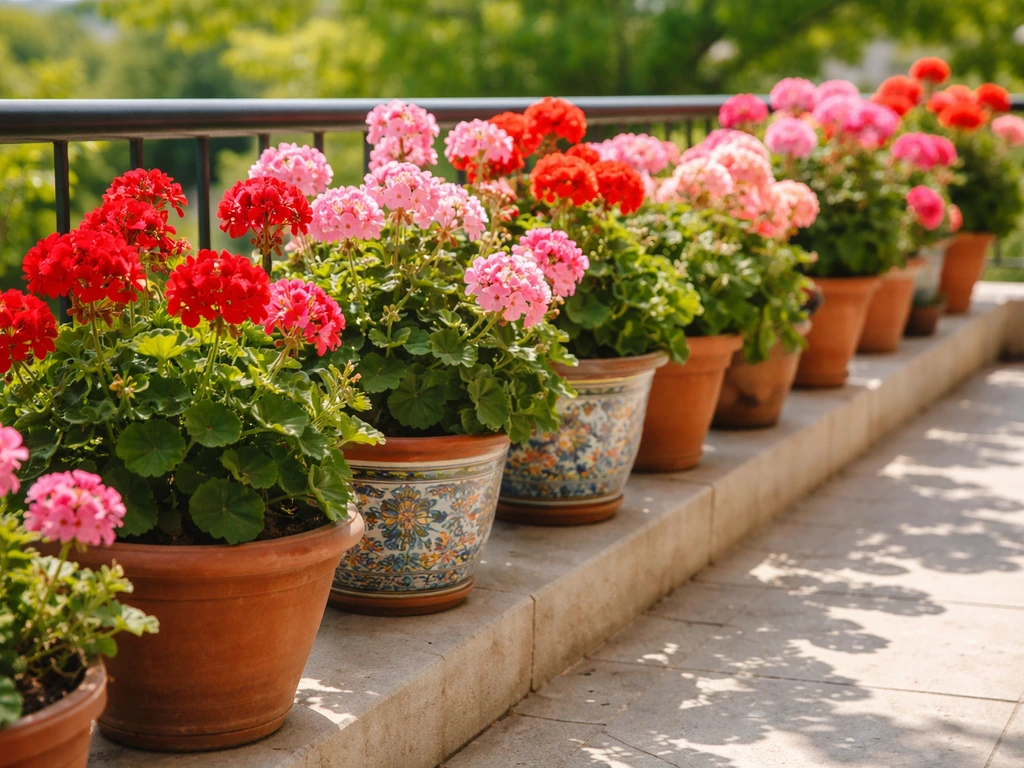
Container growing has a bit of a learning curve with anything in the cucumber family, but gherkins are genuinely one of the more rewarding crops to grow in pots once you get the watering rhythm sorted. If you enjoy growing edibles in containers, the same patient attention to pot size, drainage, and feeding applies just as well to other plants, from flowers like gypsophila to fruiting crops. If you are also interested in other balcony-friendly plants, learn how to grow pelargoniums in pots for reliable blooms all season. Start with a single 10-gallon pot, pick a compact variety, and you will almost certainly have more gherkins than you know what to do with by August.
FAQ
My decorative pot has no drainage holes, can I still use it to grow gherkins?
If the potting mix stays wet, roots can suffocate and plants stall. Use a well-draining mix, ensure the pot has drainage holes, and empty any saucer after watering. A quick check is to lift the pot, it should feel lighter after drainage rather than remain heavy for days.
Can I mulch the soil surface in my gherkin pot to reduce watering?
Yes, but do not rely on the mix staying evenly moist through the full container depth. When you see wilting or the top inch drying, water thoroughly until it drains, then reassess how far down moisture has reached. Mulch can help reduce surface evaporation, but it does not replace a consistent watering rhythm.
Why are my gherkins growing slowly or only making leaves in containers?
Gherkins are heavy feeders, so slow growth after the first month often means nutrients are being flushed out too quickly. Increase feeding frequency (or switch to a potassium-forward tomato-style feed once flowers appear), and confirm you are not under-planting too many fruits on too little soil volume.
What should I do if spring nights are still cold but I want to plant outdoors?
If nighttime temperatures dip below about 50°F, growth can be delayed even if daytime looks warm. Use a movable cloche, fleece, or temporarily bring the container closer to a warm wall at night, and wait to move outdoors permanently until both soil and nights are reliably warm.
My flowers appear but the cucumbers drop, how can I fix fruit set?
Not always. Many gherkin varieties require pollination, so if you do not see fruit swelling a few days after flowers open, pollination may be poor. Hand pollinate in the morning using a fresh open male flower, or look for parthenocarpic varieties if pollination is unreliable where you live.
Can I start gherkin seedlings in small pots and then transplant them into the final container?
Yes, but cucumbers in containers dislike root disturbance. Transplant only once the rootball has formed and nights stay warm, keep the root mass intact, and avoid lifting and refitting the plant multiple times. Starting in the pot you plan to use later is often easiest.
My gherkins stopped producing during a heatwave, is it just too hot or is something else wrong?
Container plants can handle heat better with shade timing, but fruit set may still fail during extreme spikes. Move the pot to afternoon shade, keep watering consistent, and avoid overhead misting. Also watch for yellowing blooms that do not develop, that is often a heat-stress symptom.
Why are my gherkins bitter even though they seem to grow normally?
If you get bitter cucumbers, it is usually linked to uneven watering, stress from being too dry, or harvesting too late. Keep moisture steady, harvest at the 2 to 4 inch stage, and do not let fruits grow yellow and enlarge before picking.
How do I reduce powdery mildew or downy mildew on a balcony grown gherkin?
You may have a canopy that is too dense or leaves staying wet. Remove yellow or soil-touching leaves, improve airflow by training upward, and avoid overhead watering. If disease is already present, remove affected leaves promptly and do not compost them.
What pests are most likely on potted gherkins, and how do I prevent them?
Snails and slugs often target tender seedlings and young leaves, especially in damp areas near walls. Use a physical barrier or traps around the pot, reduce leaf contact with the ground, and check at dusk and early morning.
Is it better to pick gherkins daily or wait and harvest a little less often?
Frequent picking is a yield booster, it also prevents the plant from shifting into a “seed saving” mode. Start harvesting once fruits reach 2 to 4 inches, then pick every 2 to 3 days, in warm weather daily, cutting the stem rather than pulling.
How can I keep container-grown gherkins crisp for pickling?
Yes, especially for pickling. After harvest, store promptly in a breathable container in the fridge, and if you need extra crispness, rinse then soak briefly before brining. The key is processing in brine or vinegar quickly because texture declines fast over several days.
Can I extend my container gherkin season into late summer or early autumn?
A common misconception is that the season ends only because of plant age. If nights cool and the plant yellows from the base, it is normal, but you can extend harvest by keeping it warm, protecting against cold nights, and refreshing feeding if the plant still has active growth.