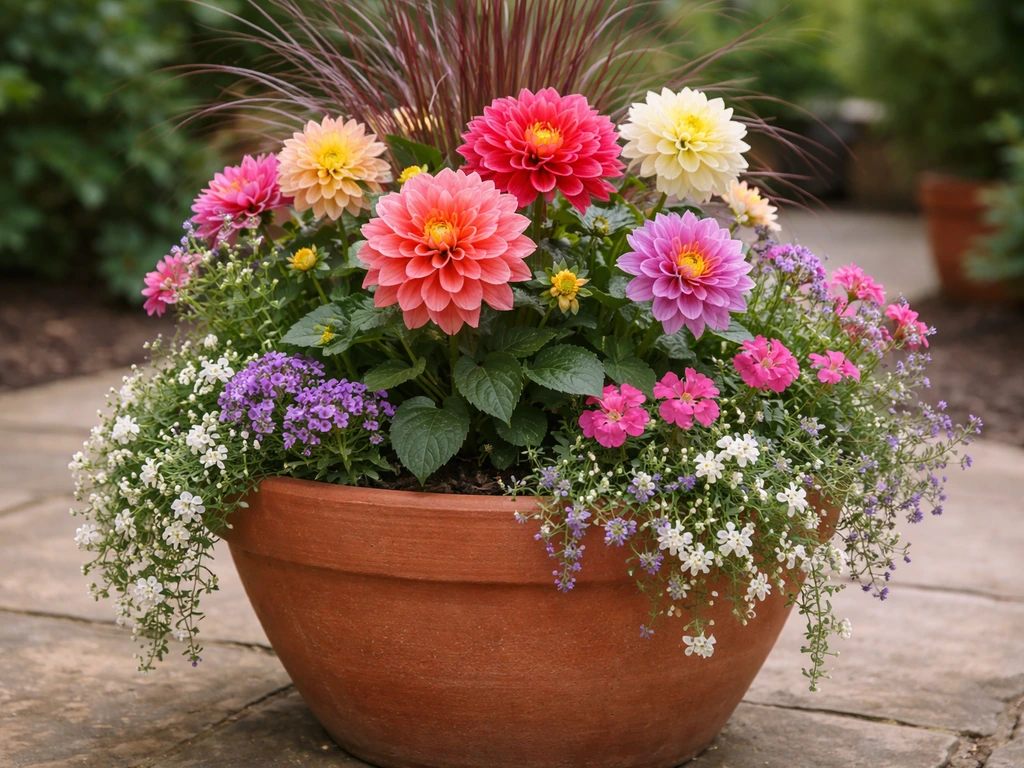
The best plants to grow with dahlias in pots are low-growing companions that love full sun, drain well, and don't muscle in on root space. If you want to grow a small, container-friendly cucurbit instead, learn how to grow gherkins in pots for tips on choosing the right container and keeping them productive. Think French marigolds, sweet alyssum, lobelia, zinnias, and trailing verbena. These plants match dahlias' appetite for sun and regular feeding, look great spilling over pot edges, and won't turn your container into a root battle. The trick is picking the right variety sizes and sticking to a pot that's big enough to give everyone room, which I'll walk you through below.
What to Grow With Dahlias in Pots: Easy Companion Pairings
Marcus Whitley
13 Jun 2026
Dahlia container basics first
Before you start tucking companion plants around your dahlias, you need to know what conditions the dahlia itself demands, because every plant you add has to be happy in those exact same conditions.
Sun
Dahlias want full sun, ideally six to eight hours a day. Partial shade is tolerable, but you'll get fewer blooms and leggier growth. Any companion you add needs to handle that same sunny exposure, so shade-lovers are immediately off the list.
Pot size
The minimum workable pot for a single dahlia tuber is 12 inches wide and 12 inches deep, which gives you roughly five to seven gallons of soil. That's the absolute floor for smaller border or patio varieties, which typically grow 12 to 20 inches tall and usually need little to no staking. If you're tempted to grow a dinnerplate dahlia (the giant-flowered type), plant just one tuber per 12-inch pot and don't try to squeeze companions in alongside it. There isn't enough root room. For companion planting to work well, aim for a pot that's at least 16 to 18 inches wide, or go bigger if you can.
Soil
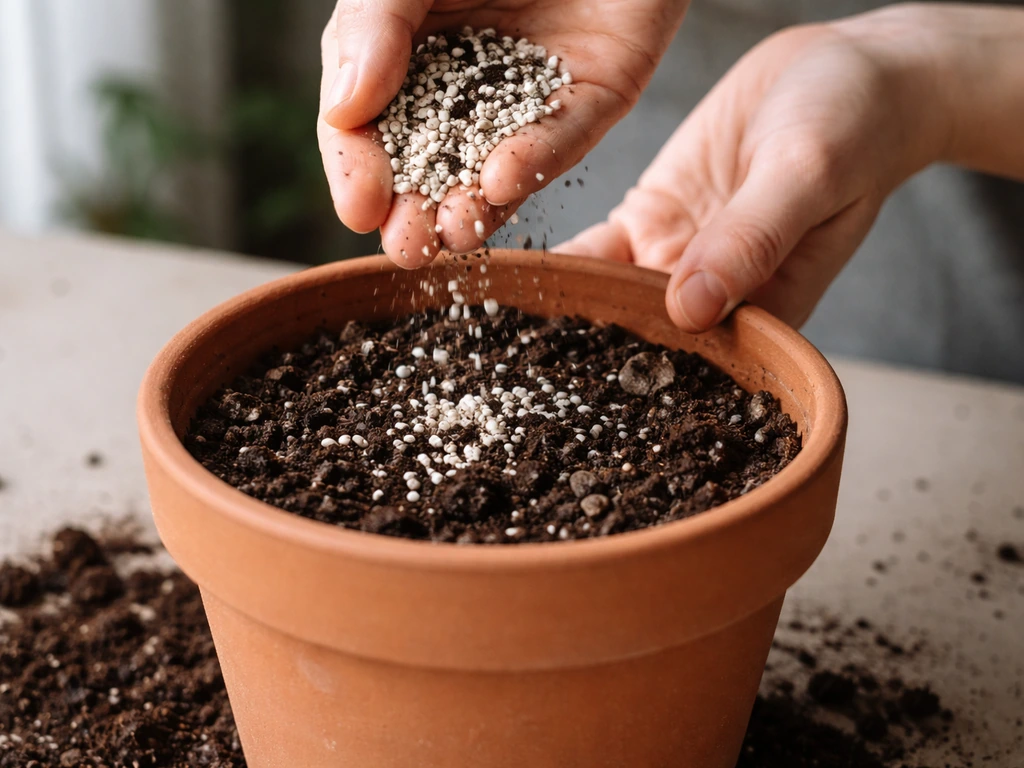
Use a good-quality potting mix, not garden soil. Garden soil compacts in containers and drainage suffers fast. You want something that holds enough moisture to keep roots happy but drains freely so the tuber never sits wet. If your mix feels heavy or dense, work in some perlite to open it up. Speaking of drainage, check your pot has multiple drainage holes before you plant. If it only has one small hole, drill extra ones. Dahlias rot embarrassingly fast in waterlogged soil, and no amount of careful watering will save a tuber sitting in a puddle.
Watering
This is where a lot of beginners get into trouble. Before the dahlia sprouts, keep the soil just barely moist, because the tuber sitting in wet soil is the number one cause of rot. Once the plant is actively growing and you're in warm summer conditions, containers dry out fast, and you may need to water once or even twice a day. Stick your finger into the soil about an inch deep. If it feels dry, water. If it's still damp, leave it. That simple check will keep you on track better than any fixed schedule.
Feeding
Dahlias in pots are heavy feeders and they need regular fertilizing because nutrients flush out every time you water. A liquid fertilizer applied every seven to ten days during the growing season works well. Choose a low-nitrogen formula once the plant is established and budding, because too much nitrogen pushes leafy growth at the expense of flowers. If you prefer a slower pace, a half-strength dose every two weeks is a reasonable minimum, but don't stretch it much longer than that or blooms will suffer.
How to choose a good companion for your dahlia pot
Not every pretty plant makes a good pot-mate for dahlias. Before you grab whatever looks nice at the garden centre, run any candidate through these criteria.
- Full sun tolerance: the companion must handle the same six-plus hours of direct sun that dahlias need.
- Well-drained soil preference: anything that likes consistently moist or wet conditions will either rot alongside the tuber or push you to overwater, which harms the dahlia.
- Modest root system: dahlias already need significant root space in a limited container. Choose plants with compact, shallow roots rather than aggressive spreaders or deep-rooted perennials.
- Similar feeding requirements: if your companion is a nutrient-light plant that burns easily with fertilizer, it won't cope with the heavy feeding schedule dahlias need.
- Proportional size: a companion that grows as tall or taller than your dahlia will shade it out. Stick to plants that stay lower than the dahlia, or use genuinely airy tall companions like verbena bonariensis that don't block light.
- Pest and disease neutrality: avoid plants known to share diseases or pests with dahlias, which I'll cover in the plants-to-avoid section below.
The best companion plants for dahlia pots
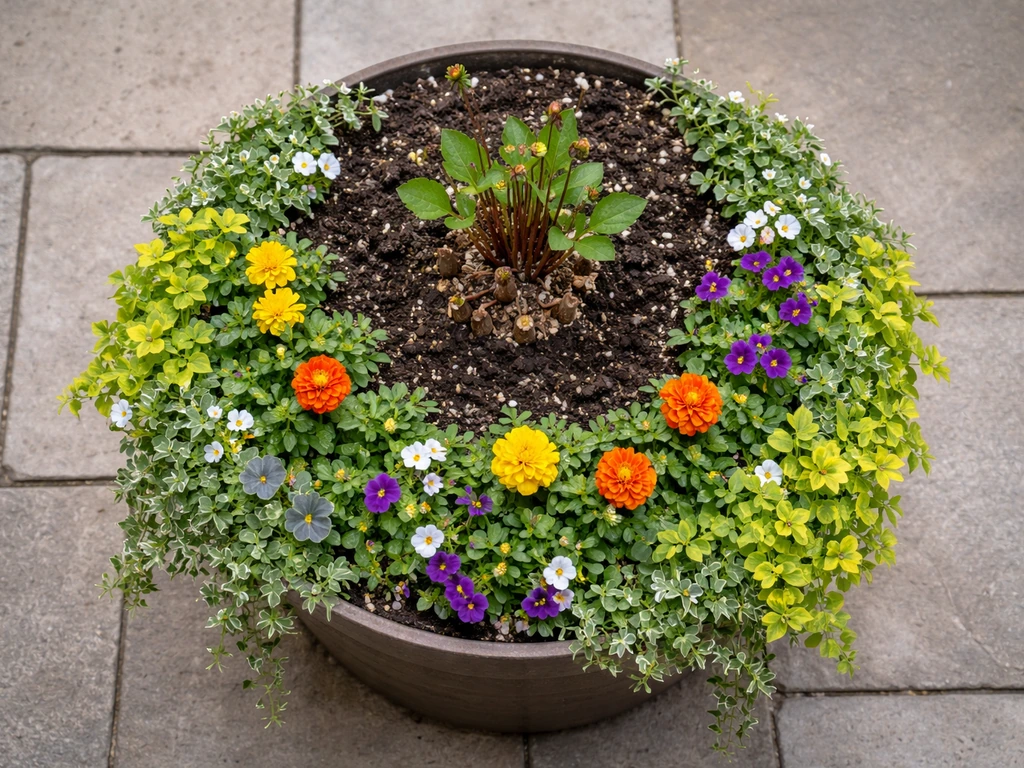
The thriller/filler/spiller framework is genuinely useful here. The dahlia is almost always your thriller, meaning the tall, dramatic centrepiece. You then add fillers to fill the mid-level space and spillers to cascade over the pot edges. Here are the companions I'd reach for first.
Fillers
French marigolds are my first pick. They're compact (usually 6 to 12 inches tall), thrive in full sun, tolerate the same feeding regimen, and there's some evidence their scent deters aphids. They come in warm golds and oranges that look genuinely stunning against dahlia blooms. Compact zinnias are another excellent choice. Look for dwarf varieties that stay around 12 to 18 inches tall rather than the taller cutting types, which can hit 60 to 75 cm and would compete for light. Zinnias love heat, handle frequent watering in pots, and keep blooming all summer if you deadhead them. Petunias work too, especially spreading varieties that bridge the gap between filler and spiller.
Spillers
Sweet alyssum is probably the most forgiving spiller you can use. It stays low, spreads gently, produces masses of tiny honey-scented flowers that attract beneficial insects, and won't compete aggressively with dahlia roots. Trailing lobelia is another classic, spreading around 6 to 12 inches. It comes in deep blues and purples that contrast beautifully with warm-toned dahlias. Trailing verbena works well too, cascading over pot edges with clusters of small flowers in a range of colours. All three of these want good drainage and sun, which makes them naturally compatible with dahlias.
Edible and herb companions
If you like the idea of mixing edible plants with your dahlias, there are a few that genuinely work. Compact basil varieties can share a sunny pot and their strong scent may help deter aphids. Nasturtiums are edible, trail nicely, and attract aphids away from your dahlias (acting as a sacrificial decoy), although they can spread if you're not watchful. Both dahlias and nasturtiums prefer lean to moderate feeding, so hold back slightly on nitrogen if you're growing them together. Avoid herbs that prefer dry, poor soil like rosemary or lavender, as they'll struggle with the regular watering dahlias need.
When you want a taller accent
Verbena bonariensis can reach 18 to 36 inches or more depending on conditions, but its stems are so slender and airy that it doesn't block light the way a bushy plant would. In a large pot (20 inches or more), it can work as a secondary thriller alongside a patio dahlia, creating a relaxed, cottage-garden feel. Use it sparingly in smaller pots where it might overcrowd.
How to actually lay out a mixed dahlia pot
Layout matters more than most people think. Get this wrong and you'll end up with a crowded mess where nothing thrives.
How many plants per pot
For a 16-inch wide pot, a sensible layout is one dahlia tuber in the centre, two to three filler plants in the middle ring, and two to three spillers at the outer edges. Don't be tempted to cram in more. Crowded pots create poor airflow, which encourages fungal disease, and root competition means everything performs below its potential. If your pot is only 12 inches wide, skip companions entirely for larger dahlia varieties, or use a single compact spiller like sweet alyssum at the very edge. To make sure your dahlia tubers thrive, focus on pot size, drainage, sun, and a consistent watering and feeding routine throughout the season dahlias in pots.
Depth and planting order
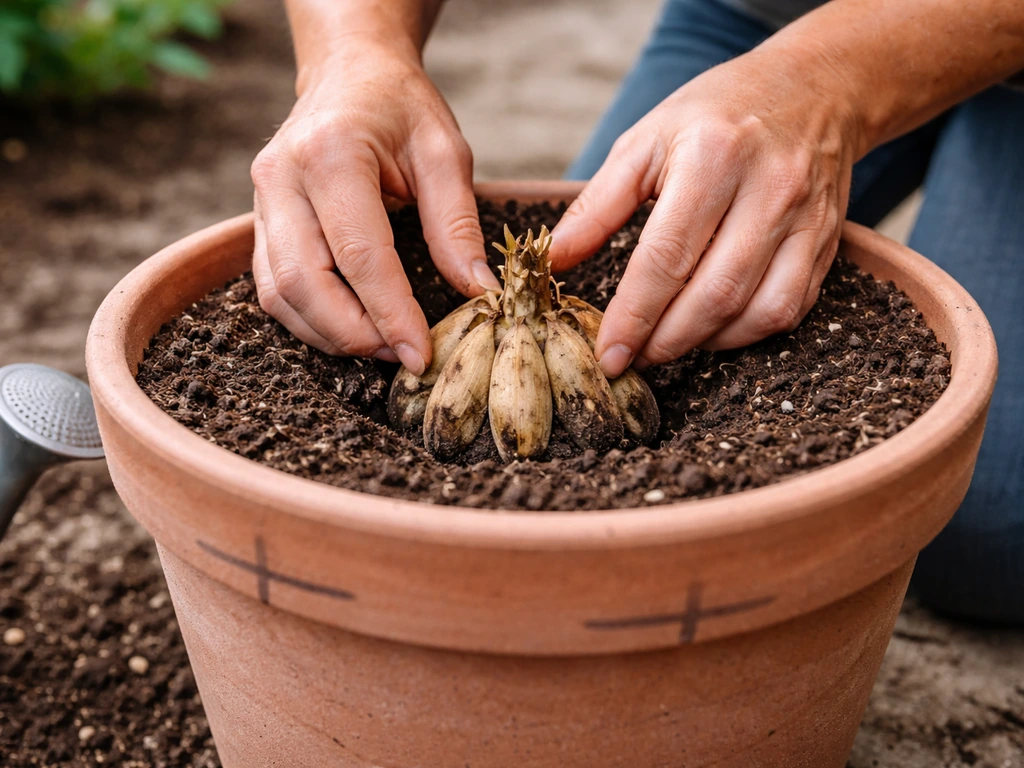
Plant the dahlia tuber first, placing it 4 to 6 inches deep with the eye (the little growing tip) facing upward. Don't fill the pot to the brim at this stage, partly because you'll be placing companions on top, and partly because a tuber buried in wet, fully packed soil before it's sprouted is at higher rot risk. Once your filler and spiller transplants are going in, they'll sit much higher, with their root balls at or near the soil surface. So the order is: dahlia tuber deep in the centre, then companions planted shallower around the outside once you've filled the pot to an appropriate level.
A simple layout by pot size
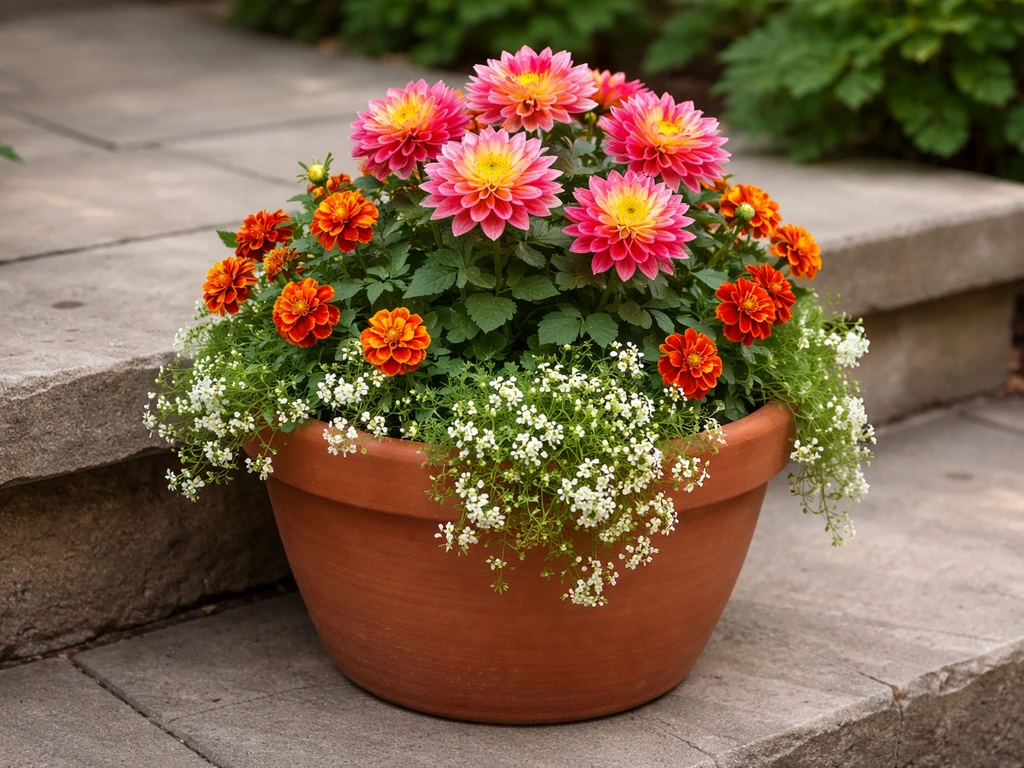
| Pot size | Dahlia variety | Filler | Spiller |
|---|---|---|---|
| 12 inches wide | 1 compact border/patio variety | 1 French marigold (or none) | 1 sweet alyssum at edge |
| 16 inches wide | 1 patio or medium variety | 2 French marigolds or compact zinnias | 2 trailing lobelias or sweet alyssum |
| 20+ inches wide | 1 medium or larger variety | 2–3 marigolds or petunias | 2–3 trailing verbena or lobelia |
Caring for a mixed dahlia pot all season
The maintenance rhythm for a mixed pot is essentially the same as for dahlias alone, just applied consistently enough that the companions don't get neglected.
Watering
Check daily once your dahlias are actively growing. In hot weather, you may water once in the morning and again in the afternoon. The companions you've chosen (marigolds, alyssum, lobelia, zinnias) all tolerate this kind of regular watering as long as your drainage is solid. The key is never letting the pot sit in a saucer of standing water. Empty saucers after every watering session.
Fertilizing
Feed the whole pot every seven to ten days with a liquid fertilizer. Use a balanced feed early in the season when all plants are establishing, then switch to a lower-nitrogen, higher-potassium formula (like a tomato feed) once the dahlia starts budding. The companion plants will benefit from this too. If you notice any companion plant looking scorched or bleached at the leaf edges, dial back the fertilizer concentration slightly, since some spillers like lobelia are a little more sensitive than dahlias.
Deadheading and pinching
Remove spent dahlia blooms as soon as they fade, cutting back to the next set of leaves. This keeps the plant producing new buds rather than going to seed. Do the same for your marigolds and zinnias, since all of these reward regular deadheading with dramatically more flowers. Sweet alyssum and lobelia tend to self-manage, but if they get straggly mid-summer, cut them back by about a third and they'll bounce back quickly with fresh growth.
Staking
Border and patio dahlias (the compact types ideal for containers) usually don't need staking. If you're growing a taller variety and a stake is needed, put it in at planting time so you don't skewer roots later. Bamboo canes work well and take up minimal space, which matters when you've got companion plants sharing the pot.
Keeping disease and pests in check
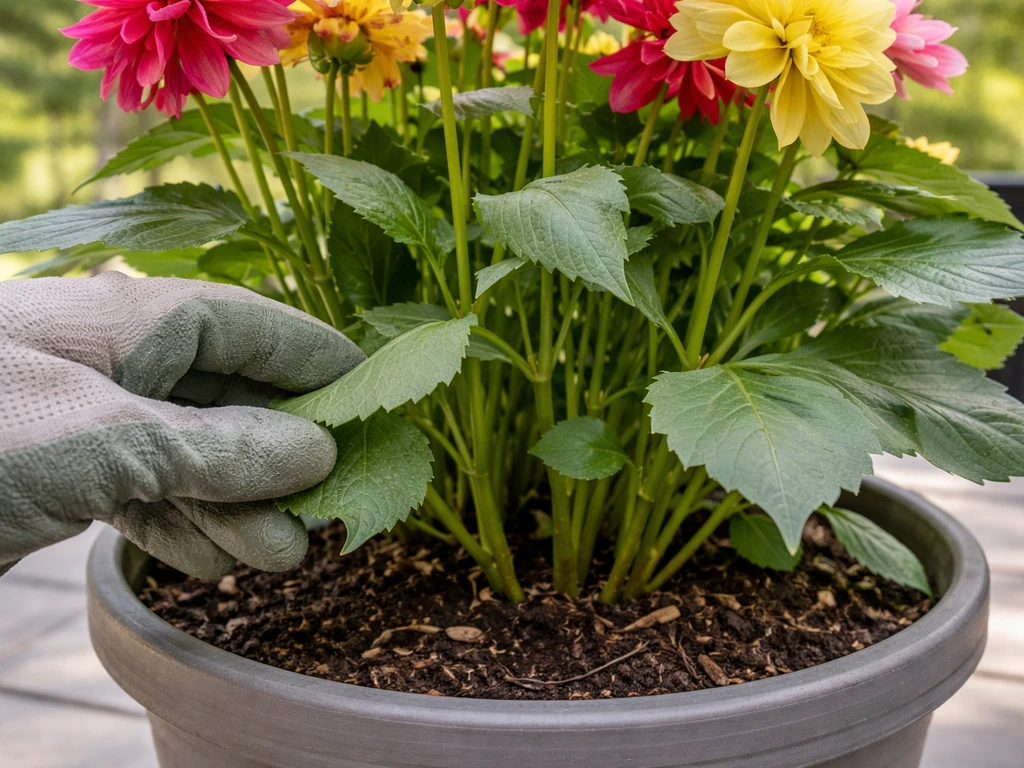
Good airflow is your best defence. Don't overplant and don't let foliage become a dense, damp mass. Water at soil level rather than over the top of leaves. Check under leaves for aphids regularly, especially on dahlia stems and on nasturtiums if you've added those as companion plants. If aphids appear, a strong blast of water or an insecticidal soap spray usually handles them before they become a problem.
Plants to avoid putting in a dahlia pot
Some pairings sound appealing but create real problems in practice. Here's what to keep out of your dahlia container.
- Moisture-loving plants: anything that thrives in consistently wet soil, like flag iris, marsh marigolds, or bog-style perennials, will push you to keep the pot too wet. That's a fast route to rotting tubers.
- Potatoes and other Solanaceae relatives: potatoes can carry viruses that spread to dahlias through shared pests and disease pathways. Keeping them out of the same pot (and honestly, the same area) is wise.
- Tall, bushy annuals: plants like tall African marigolds (which can hit 20 to 36 inches) or large rudbeckias will shade out your dahlia rather than complementing it.
- Aggressive root spreaders: plants like creeping jenny, while pretty, can spread energetically and take over limited container soil, crowding out the dahlia's root system.
- Drought-tolerant herbs: lavender, rosemary, and similar Mediterranean herbs prefer dry, nutrient-poor soil and infrequent watering. Paired with a dahlia's needs, one of them will always be unhappy, and it's usually the herb that suffers or pushes you to underwater the dahlia.
- Shade-preferring plants: ferns, hostas, impatiens, and other shade lovers will simply struggle and decline in the full sun that dahlias need.
The common thread in all of these is conflicting care needs. When plants in the same pot want very different conditions, you can't meet both sets of requirements without compromising one. Dahlias are particular enough that it's always the dahlia's needs you should prioritise, then find companions that fit around those needs, not the other way around.
Ready-to-follow pot combinations and planting timeline
Here are three specific combinations you can put together right now, depending on your pot size and what you're going for.
Combination 1: Warm summer colour in a 16-inch pot
- 1 patio dahlia tuber (any warm-toned variety, orange or deep red works beautifully)
- 2 compact French marigolds in gold or yellow
- 2 trailing lobelias in deep blue or purple at the pot edge
Use a free-draining potting mix with added perlite. Plant the tuber 4 to 6 inches deep in the centre in late spring after your last frost date. Add the marigold and lobelia transplants once the tuber has sprouted and nights are reliably warm (for most of the UK and much of northern Europe, that's from late May onward; in the US, from mid-May depending on your zone). Feed every seven to ten days with a liquid fertilizer and water daily once growth is established.
Combination 2: Cottage-garden feel in a 20-inch pot
- 1 medium patio or border dahlia tuber in pink or white
- 2 compact zinnias in coral or mixed colours
- 3 sweet alyssum plants around the outer edge
This combination leans into a relaxed, informal look. The alyssum will trail softly over the pot sides and its scent attracts beneficial insects. Same planting method: tuber deep in the centre first, companions added after sprouting. This one benefits from a larger pot because zinnias, even compact varieties, have a decent root system.
Combination 3: Edible-ornamental mix in a 16-inch pot
- 1 compact border dahlia (dahlias' petals are edible and make a nice garnish)
- 2 compact basil plants (Thai or Genovese)
- 2 nasturtiums at the pot edge (both edible and cheerful)
This one is fun for anyone who likes the idea of a productive, beautiful pot. Go easy on high-nitrogen feeds since nasturtiums grow even more lushly without heavy feeding, which can tip them toward all leaves and no flowers. A balanced liquid fertilizer every two weeks rather than every seven to ten days is a good compromise here.
Planting timeline at a glance
- Early spring (March to April in most temperate climates): start dahlia tubers indoors if your season is short, or source companion plant seeds and start those under cover.
- Late spring (May): pot up the dahlia tuber into its final container once frost risk has passed. Keep indoors or in a sheltered spot until nighttime temperatures are consistently above 10°C (50°F).
- Once dahlias have sprouted (typically 2 to 4 weeks after potting): add companion plant transplants around the outside of the pot.
- Early summer onward: begin regular feeding every seven to ten days. Water daily in warm conditions. Start deadheading as soon as first blooms fade.
- Mid to late summer: peak performance. Keep up the watering, feeding, and deadheading routine.
- Autumn (after first frost): dahlias will be killed back by frost. Lift tubers to store for next year if you want to reuse them. Companions like lobelia and alyssum are annuals and can be composted.
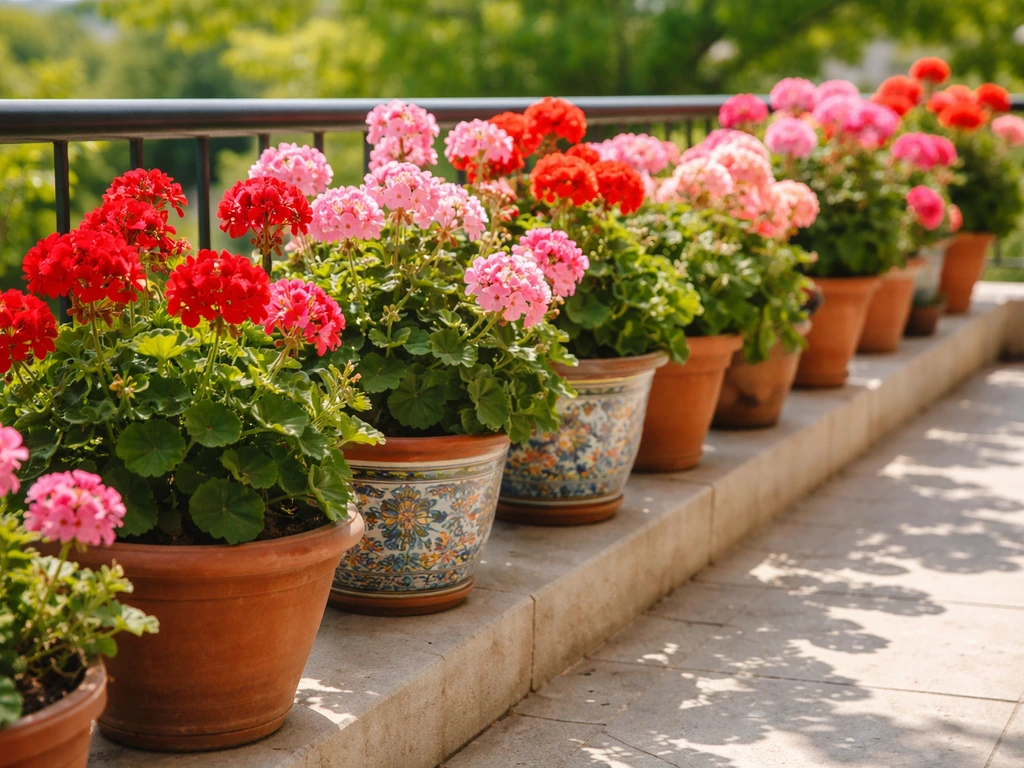
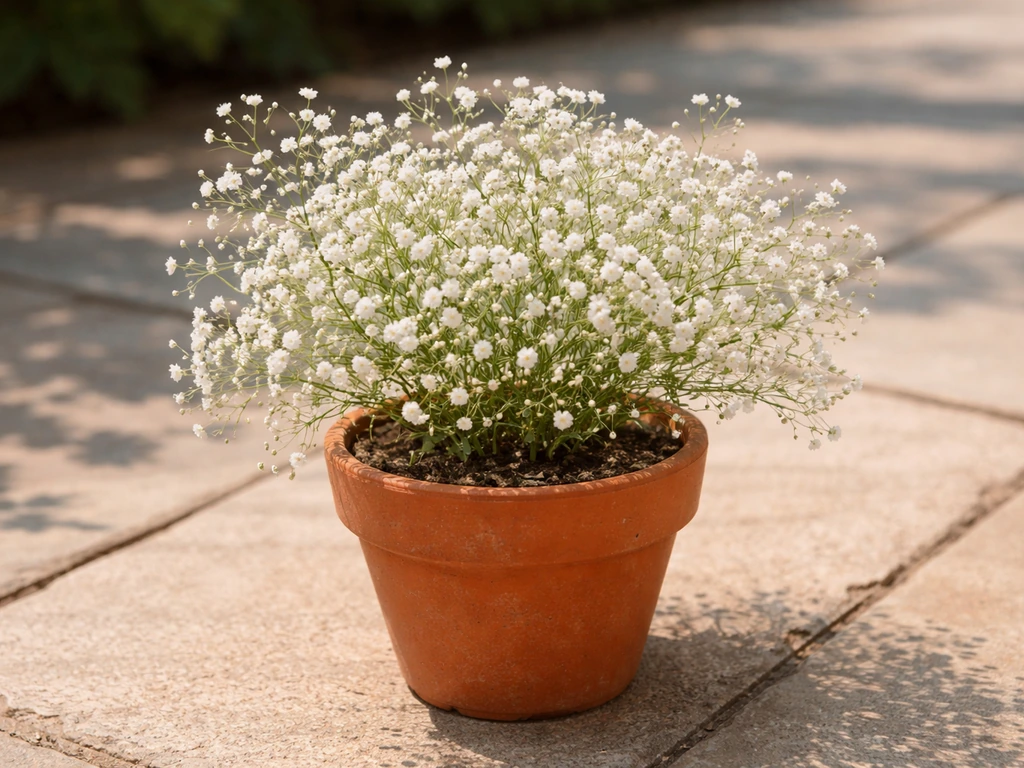
If you enjoy combining plants in containers more broadly, the same thriller/filler/spiller thinking applies beautifully to other pot-grown flowers like pelargoniums and gypsophila, which are also worth exploring as standalone container subjects or as companions in larger mixed planters. If you want a similar container success, check out how to grow pelargoniums in pots for the right light, soil, and watering routine. The main lesson that transfers across all container gardening is this: match the care needs first, and the aesthetics almost always take care of themselves. If you want a step-by-step guide specifically for container-grown gherkins, follow the advice in our article on how to grow gherkins in pots container gardening.
FAQ
Can I grow dahlias with companions if my pot only has one drainage hole?
Better not. Add drainage holes before planting, and consider raising the pot slightly on pot feet so any water can fully clear. Even a brief puddle can trigger tuber rot, and companions will not “fix” poor drainage.
How many companion plants should I add per pot without crowding?
Stay with the layout range, for example in a 16-inch pot use one dahlia, two to three fillers, and two to three spillers. If you want more color, increase the pot size rather than adding extra stems, because crowded foliage reduces airflow and increases fungal risk.
Do I need to plant companions at the same time as the dahlia tuber?
No. Plant the tuber first, then add fillers and spillers after sprouting, once nights are reliably warm. This reduces rot risk from digging around a wet, newly planted tuber and helps companions establish quickly.
What if my dahlias are getting lots of leaves but not many flowers when grown with companions?
Dial back nitrogen and tighten the timing of your switch to a lower-nitrogen, higher-potassium feed once buds form. Heavy feeding plus shade from taller companions can also delay flowering, so keep companions low and the dahlia in full sun.
Can I mix tall dahlias with other tall plants in the same pot?
Usually only if the tall partner is airy and not shading, like verbena bonariensis in a large pot. For most dense tall plants, the dahlia will compete for light and the pot will get too crowded, making airflow and watering harder.
Will sweet alyssum or lobelia steal water from my dahlia?
If drainage is good and the pot is large enough, they generally coexist well. If the pot dries out too fast, check the soil depth and water based on whether the top inch is dry, not on a calendar, since containers can swing from damp to bone-dry quickly in hot weather.
Are there any plants I should avoid because they want different soil or watering?
Yes. Avoid drought-loving herbs like rosemary or lavender and any plant that prefers dry, poor conditions. Dahlias need consistently moist (not wet) soil during active growth, so mismatched needs force one plant to suffer.
How do I prevent aphids when I also have nasturtiums or marigolds?
Inspect dahlia stems and leaf undersides frequently, especially after warm spells. If aphids show up, blast with water or use insecticidal soap early, and keep nasturtiums from taking over by removing heavily infested growth so they stay a manageable sacrificial decoy.
What should I do if a companion looks scorched or bleached at the leaf edges?
Reduce fertilizer concentration slightly and double-check that the pot is draining properly. Leaf edge symptoms can come from nutrient burn as well as uneven watering, so also recheck soil moisture 1 inch down before your next feeding.
Do dahlias in pots need staking when grown with companions?
Compact patio and border dahlias often do not. If staking is needed for a taller type, install the stake at planting time and keep it away from companion root balls, so you do not disturb roots later and create rot-prone wounds.
Is it okay to use garden soil instead of potting mix?
Generally no. Garden soil compacts in containers, reducing oxygen around the tuber and increasing waterlogging risk. Stick with potting mix, and if it feels dense, mix in perlite to improve airflow through the root zone.
How should I water a mixed dahlia pot during heat waves?
Use the finger test at least early in the day. In extreme heat, you may need morning and afternoon water, but always empty saucers after each watering so the pot never sits in standing water, which is the fastest path to tuber rot.