Yes, you can absolutely grow gypsophila (baby's breath) in pots, and it does surprisingly well in containers as long as you get two things right from the start: a light, fast-draining potting mix and a spot with full sun all day. Get those two things sorted and you are most of the way there. Miss either one and the plant will sulk, go leggy, or quietly rot at the roots without much warning.
How to Grow Gypsophila in Pots: Step-by-Step Care
Marcus Whitley
29 May 2026
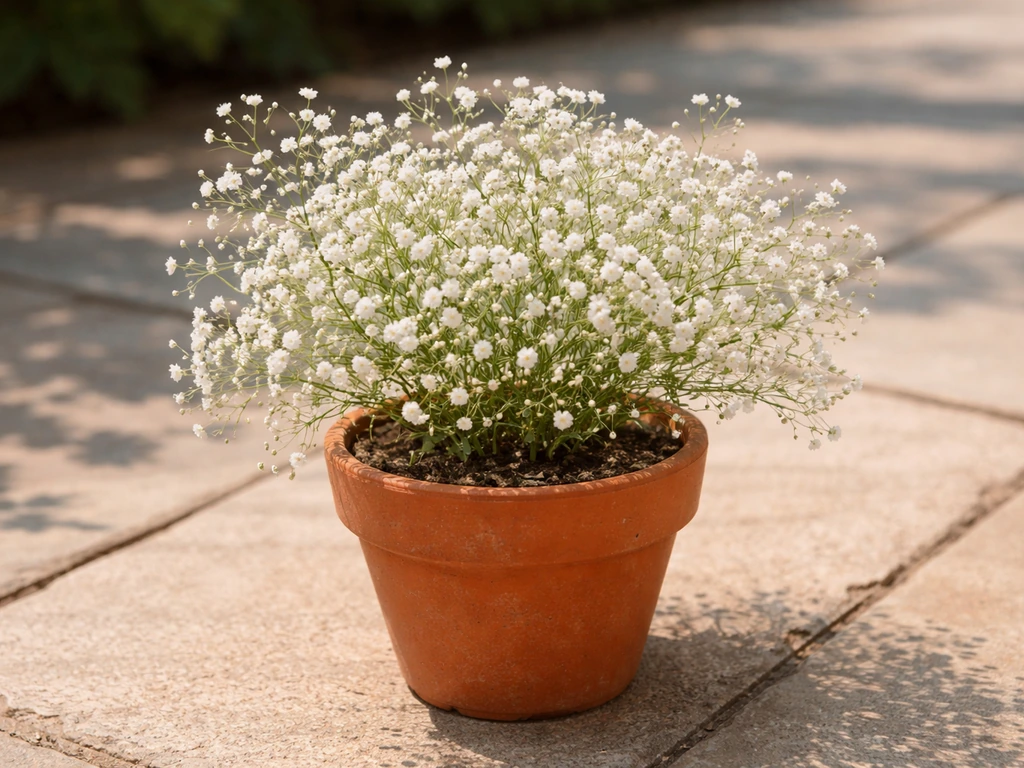
Can you actually grow gypsophila in pots? (A quick reality check)
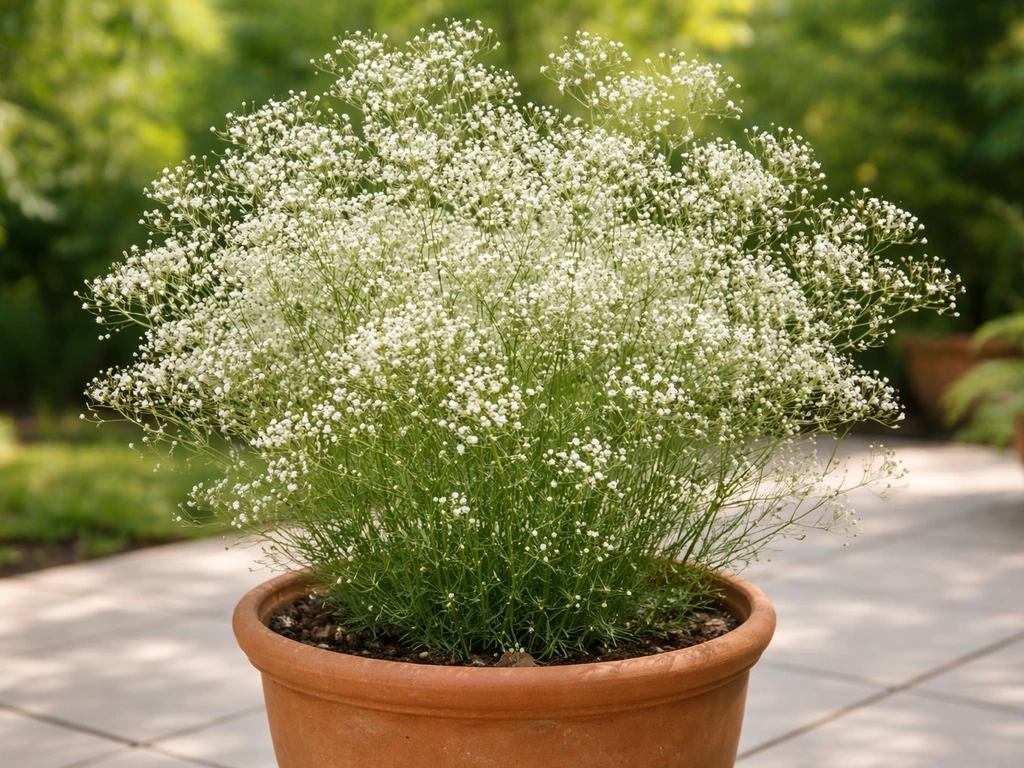
Gypsophila paniculata (the classic baby's breath) grows 18 to 36 inches tall and is hardy in USDA Zones 3 through 8. That size sounds big for a pot, but the plant's naturally airy, branching habit means it does not dominate a container the way a dense shrub would. In the ground, it naturally colonises dry, sharply drained soils, which is actually great news for pot growers. A container with the right gritty mix mimics that habitat almost perfectly. The one honest caveat: gypsophila does not thrive in shade, cramped roots without drainage holes, or constantly damp soil. If your outdoor space only gets a few hours of sun, pick a different plant.
Choosing the right pot, container type, and location
Go for a pot that is at least 30 cm (12 inches) wide and the same depth, ideally larger. A standard mature gypsophila plant spreads wide and the root system needs room. I would personally use a 35 to 40 cm terracotta pot for a single plant. Terracotta is a good choice here because it breathes through the sides, helping the soil dry out between waterings, which is exactly what this plant wants. Plastic pots work too but you need to be more careful about overwatering since they retain moisture longer.
Non-negotiable: the pot must have drainage holes. Multiple holes are even better. If you fall in love with a decorative pot that has no drainage, either drill holes in it or use it as a sleeve and sit a drained pot inside. Standing water in the base is the number one reason gypsophila dies in containers.
As for location, put it somewhere that gets at least six hours of direct sun daily, and more is better. A south or west-facing balcony, patio, or windowsill ledge is ideal. Avoid tucking it against a wall where airflow is poor. Good air circulation around the foliage reduces the risk of gray mold (Botrytis), which gypsophila can be prone to in damp, still conditions.
Soil mix and drainage for container gypsophila
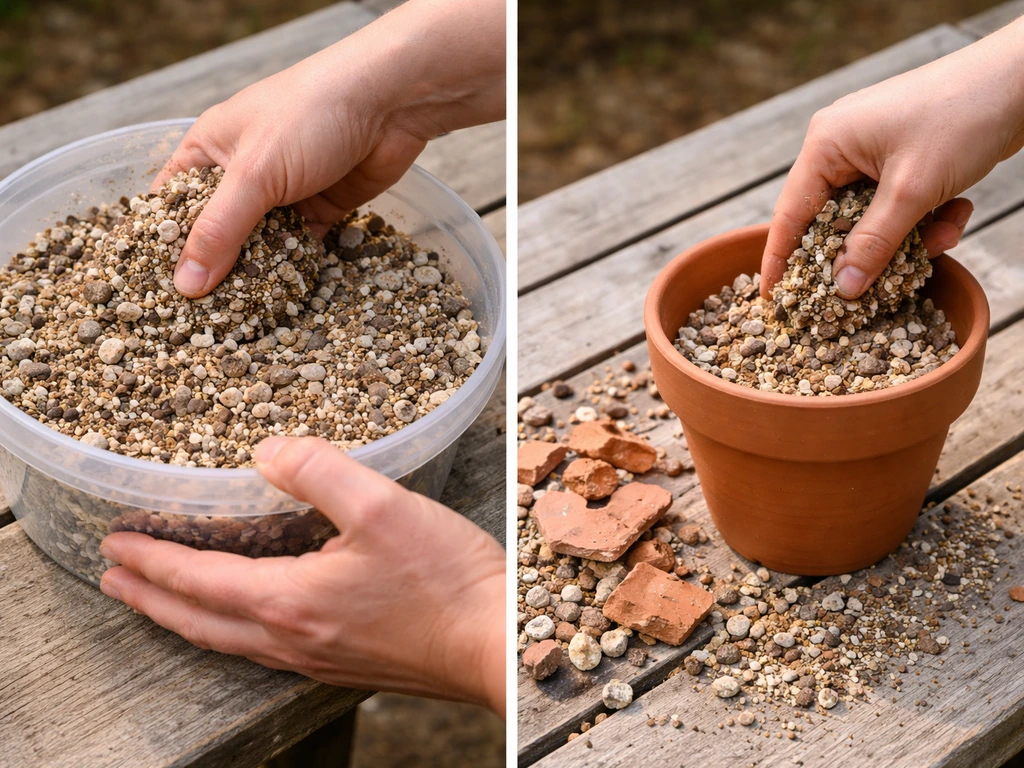
Standard potting compost on its own is too dense and holds too much moisture for gypsophila. You want a mix that drains fast and leans slightly alkaline to neutral in pH. Desert-Tropicals notes that baby’s breath prefers well-drained, rather alkaline soil, and tall flower stems may need staking blank" rel="noopener noreferrer">leans slightly alkaline to neutral in pH. My go-to combination is roughly two parts peat-free multipurpose compost, one part perlite or horticultural grit, and a small handful of garden lime worked through the mix. The lime nudges the pH up slightly toward what this plant prefers. If you have access to a pH testing kit, aim for somewhere between 6.5 and 7.5.
Add a layer of crocks (broken pot pieces) or a few centimetres of coarse gravel at the bottom of the pot before filling. This stops the drainage holes from getting blocked with wet compost. Then fill to about 5 cm below the rim so water does not flood over the top when you irrigate. Unlike garden soil, potting mix cannot spread out and self-correct, so building drainage right into the structure of the container from the beginning matters a lot.
Sowing vs transplanting: when and how to start
Starting from seed
Gypsophila germinates naturally in spring, so aim to sow seeds from late March through to May for best results. Surface sow the seeds onto a moist, fine seed compost and do not cover them. This is important: the Ball Seed guidance is clear that you should not bury or cover the seed, as burying them is one of the most common reasons germination fails. Just press them gently into the surface so they make contact with the mix, then place the tray or pot in a warm, bright spot. Germination usually happens within one to two weeks at around 18 to 21°C.
Once seedlings have two or three true leaves, thin them or pot them on into individual containers. Handle the roots gently because gypsophila does not love being disturbed once established.
Starting from a nursery transplant
If you are buying a young plant from a nursery or garden centre, spring is still the best time to pot it on. Choose a plant that looks compact and healthy rather than one that is already stretching or flowering in a small pot. Ease it gently out of its nursery container, loosen any circling roots, and plant it at the same depth it was growing before. Firm the gritty potting mix around it and water in well, then let the container drain completely before moving it to its final sunny spot.
Watering routine and feeding schedule
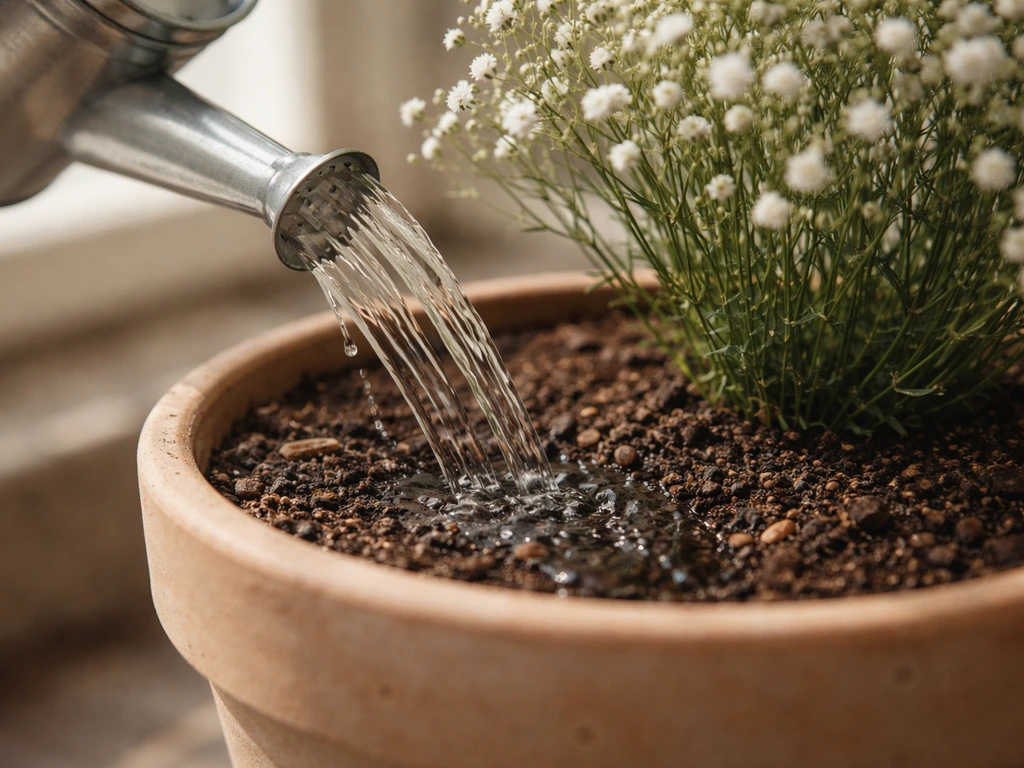
Gypsophila is fairly drought-tolerant once established, which means the biggest watering mistake is doing it too often. Let the top few centimetres of the potting mix dry out before watering again. Stick your finger into the compost: if it feels damp, leave it. If it feels dry to about the first knuckle, water thoroughly and let it drain. In hot summer weather you might be watering every two to three days; in a cool spell, maybe once a week. The key is to water deeply and then allow the container to dry out, never letting it sit in a wet saucer.
For feeding, start applying a liquid fertiliser about four to six weeks after potting, once the plant has used up whatever nutrients came with the compost. Gypsophila does not want heavy feeding. Aim for a balanced liquid feed at roughly 200 ppm nitrogen, which in practical terms means a dilute, balanced fertiliser (something like a tomato feed or a multipurpose liquid feed at half the recommended strength) applied every two weeks through the growing season. Too much nitrogen pushes the plant into leafy green growth at the expense of the flowers, so resist the urge to overfeed.
Light, temperature, and airflow requirements
Full sun is non-negotiable. Gypsophila paniculata needs direct sunlight for most of the day to flower well. In partial shade, stems become weak and floppy, flowering is sparse, and the plant gets more susceptible to disease. If your space only gets partial sun, you will see the difference quickly: stems stretch toward the light, the plant looks dishevelled, and blooms are disappointing. Position is everything.
Temperature-wise, gypsophila is quite tough (hardy to Zone 3, remember) so outdoor temperatures in spring and summer in temperate climates are generally fine. What it does not enjoy is high humidity combined with poor airflow. Keep pots positioned so air can move freely around the plant, and avoid overcrowding it between other large containers or against solid walls. This is especially relevant if you are on a sheltered balcony where air can stagnate.
Pruning, staking, and keeping plants looking good
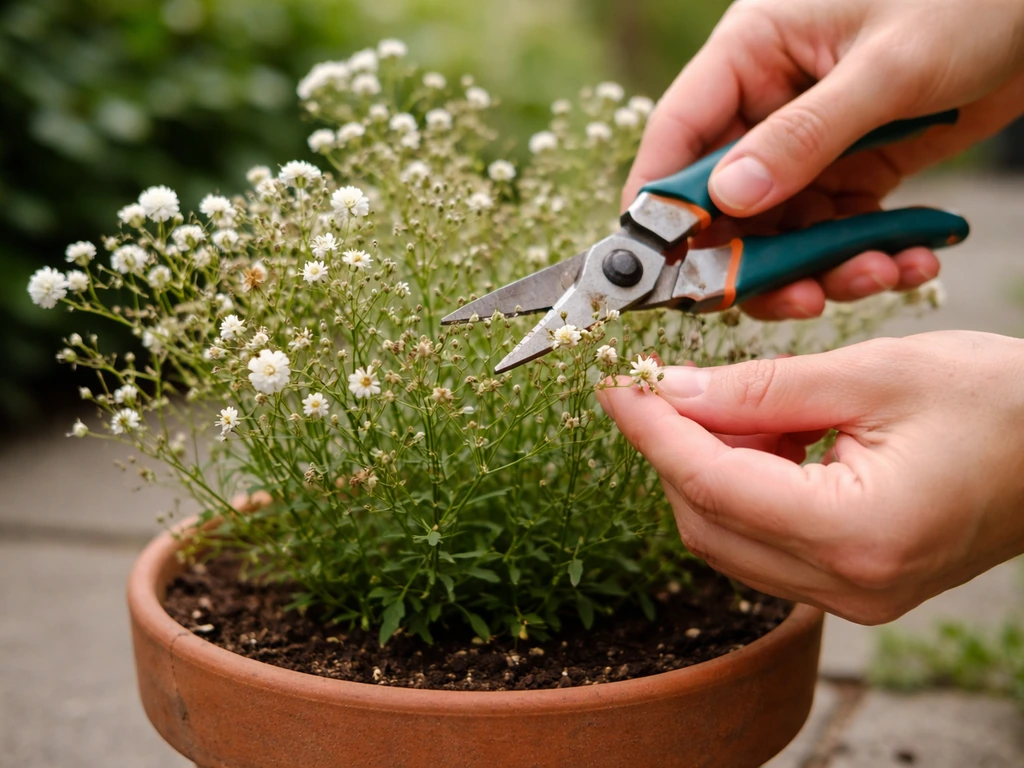
Cutting back after the first flush of flowers is one of the most useful things you can do for pot-grown gypsophila. Once the initial cloud of flowers starts to fade, shear the plant back by roughly a third to a half. This sounds drastic but it triggers a second flush of blooms. Both the North Carolina Extension and the Missouri Botanical Garden recommend this approach for reblooming, and it really does work. You will typically get a second (sometimes even a third) wave of flowers later in the season as a reward.
Staking is worth doing early rather than waiting until stems flop. Because gypsophila grows as a cloud of thin, branching stems, a circular grow-through support (the kind you push into the soil before the plant fills out) works much better than individual canes. Put the support in place when the plant is about 20 to 25 cm tall, then let the stems grow up through it naturally. By the time the plant is in full flower, the support will be hidden and the whole thing will look effortless. If you leave it too late and the plant has already sprawled, try gathering stems gently and tying them loosely to a few bamboo canes instead.
Common problems in pots and simple fixes
| Problem | Likely cause | Fix |
|---|---|---|
| Yellowing leaves, mushy base | Overwatering or poor drainage | Check drainage holes are clear. Let the mix dry out completely before watering again. Repot into gritty mix if needed. |
| Leggy, sparse stems with few flowers | Not enough sun | Move the pot to a sunnier spot. Full sun (6+ hours) is essential. |
| Seeds didn't germinate | Seed was buried too deeply or mix stayed too wet | Surface sow without covering seeds. Keep the mix just moist, not waterlogged. |
| Gray fuzzy patches on stems or leaves | Gray mold (Botrytis) from high humidity or poor airflow | Remove affected parts, improve airflow around the pot, avoid wetting foliage when watering. |
| Pale, washed-out leaves, slow growth | Nutrient deficiency from underfeeding or nutrients leaching out | Start a regular balanced liquid feed (half-strength every two weeks). |
| Flowers stop and plant looks tired mid-season | First flowering finished, no pruning done | Shear back by a third to a half after flowering to trigger a second bloom flush. |
| Stems flopping outward | Lack of support or too much soft growth from excess nitrogen | Add a grow-through support early. Reduce feeding strength if growth is lush but weak. |
Your simple container gypsophila checklist
If you want a quick reference to come back to throughout the season, here is the practical summary of everything covered above.
- Use a pot at least 30 to 40 cm wide and deep with multiple drainage holes
- Fill with a gritty, fast-draining mix: two parts compost, one part perlite or grit, a handful of lime
- Place in full sun, at least six hours of direct light daily
- Surface sow seeds in spring (March to May) without covering them, or transplant nursery plants in spring
- Water deeply, then let the top few centimetres dry out before watering again
- Start feeding four to six weeks after planting with a balanced liquid feed at half strength every two weeks
- Install a grow-through support when plants reach about 20 cm tall
- Shear back by a third to a half after the first bloom flush to encourage reblooming
- Ensure good airflow around the pot to reduce disease risk
Gypsophila is genuinely one of the more rewarding flowers to grow in a container once you understand its preferences. If you are wondering how to grow them in pots, focus on full sun, a gritty fast-draining mix, and letting the container dry out between waterings grow in a container. It is not fussy about much beyond sun and drainage, and once those are sorted it pretty much gets on with it. If you enjoy mixing different container plants and flowers together, gypsophila's cloud-like white blooms pair beautifully alongside containers of dahlias or pelargoniums, softening bolder colours with a light, airy texture. Dahlias in pots do best with a sunny spot, a well-draining container, and consistent watering without letting them sit in standing water. If you also want to grow pelargoniums in containers, check out this guide on how to grow pelargoniums in pots for practical tips on light, watering, and soil. Start simple, get the drainage right, give it a sunny home, and this plant will reward you with waves of those delicate white flowers right through summer. If you want the same kind of container success with a different crop, you can also use similar pot and drainage thinking for how to grow gherkins in pots.
FAQ
How do I know when it is time to water gypsophila in a pot? (I do not want to overwater.)
In pots, gypsophila usually needs a deeper “dry out” cycle than many other ornamentals. Water only after the top few centimeters have dried, then water thoroughly until excess drains out. If you see moisture lingering in the saucer, empty it every time, since even short periods of standing water can trigger root rot.
Can I grow gypsophila in pots if my balcony gets less than full sun? What should I watch for?
Yes, but expect slower growth and fewer blooms if the light is weak. If you try it in partial sun, use the brightest spot you can and rotate the pot weekly so the plant does not lean. If stems start stretching and the flower display thins out early, move it to a sunnier position rather than adding more fertilizer.
When should I fertilize pot-grown gypsophila, and how do I avoid lush leaves with poor flowers?
Start feeding only after the plant has settled, typically 4 to 6 weeks after potting. Use a diluted balanced liquid feed, and stop or reduce feeding once buds form. If you continue heavy nitrogen during flowering, the plant will push leafy growth and produce fewer, looser blooms.
What are the signs of root problems in container gypsophila, and what should I do first?
If you see browning at the base, sour smell, or seedlings collapsing, stop watering immediately and check drainage. Make sure the pot has real drainage holes and that you did not compact the mix. For established plants, improving drainage usually means repotting into the same gritty, lime-leaning mix rather than “hoping it dries out,” especially after persistent damp weather.
How can I prevent gray mold (Botrytis) on gypsophila when humidity is high?
Better drainage and airflow reduce the risk, but disease control also depends on timing. Remove spent flower heads and any badly affected foliage, then avoid overhead watering. If gray mold appears in humid, still conditions, increase airflow around the pot and remove the worst material promptly so it does not spread through the cloud of stems.
What is the smallest pot size that still works for gypsophila in containers, and what mistakes happen if the pot is too small?
For pot size, err on the larger end because gypsophila spreads and its root system needs room to stay airy. A common mistake is using a small decorative pot or frequently moving into tighter containers after planting, which can stunt growth and encourage damp mix around the roots.
When I sow seeds in pots, how should I thin or pot on without damaging the roots?
Seedlings are the most sensitive stage for disturbance. If you must thin or pot on, do it when they have 2 to 3 true leaves and handle them by the leaves or seedling base, not by tugging the stem. Water after transplanting, then keep to the same “dry between waterings” rhythm to avoid encouraging rot.
What is the best way to stake gypsophila in a pot, and when is too late to add support?
The easiest way to support without ugly ties is to use a circular support early, as stems are thin and floppier as they lengthen. Avoid staking too late, and avoid tight tying that can cut stems. If you missed the early stage, gather stems gently and loosely secure them to a few supports until the plant repositions upright.
How do I get a second flush of flowers in a pot, and how aggressive should I cut back?
Yes. The classic approach is to cut back after the first main bloom begins to fade (not when the plant is fully finished). A hard shear by roughly a third to a half often triggers a second flush, and you should keep watering based on dryness so new buds form without staying wet.
When should I repot container-grown gypsophila, and what is the safest time to do it?
Repot in spring if the plant is crowded, the pot mix is breaking down fast, or roots are circling heavily. Choose a container only slightly larger than the current one, and transplant at the same depth. Because gypsophila dislikes disturbance once established, avoid repotting mid-season unless drainage is clearly failing.