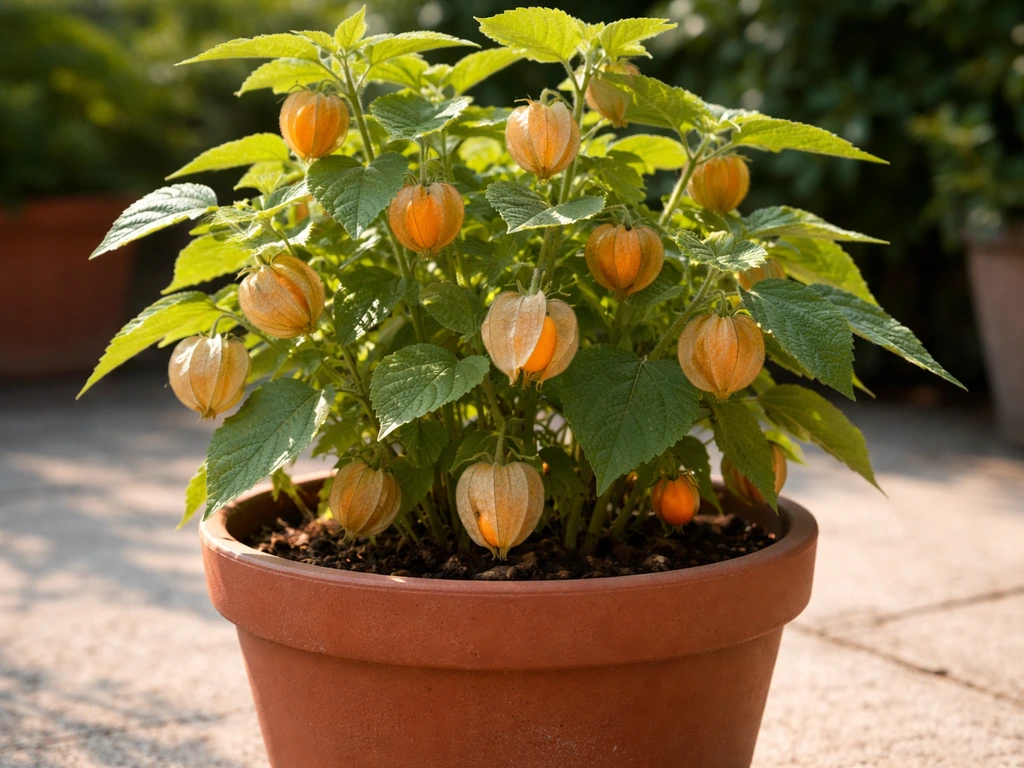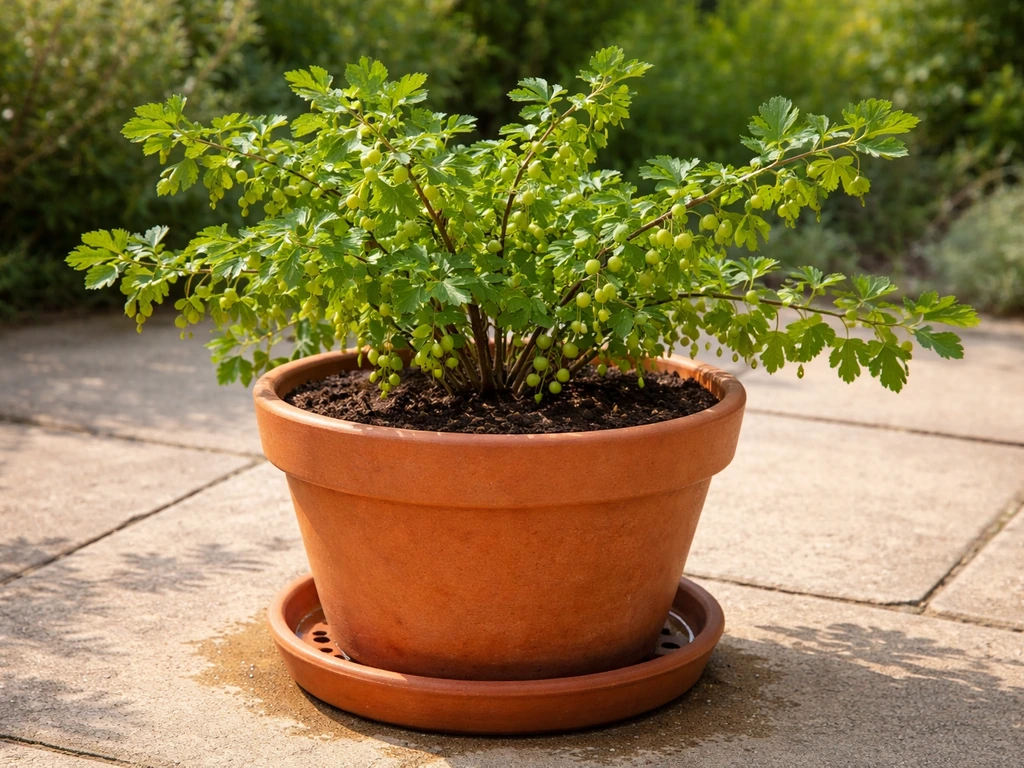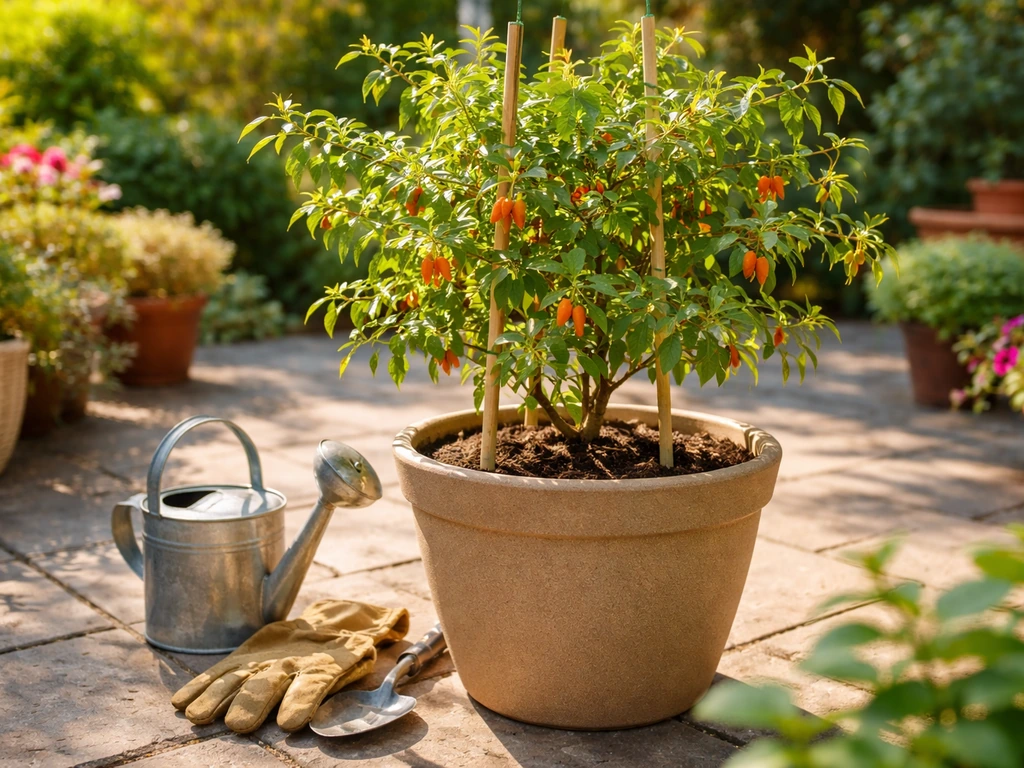
Yes, you can absolutely grow fruit in pots in India, and plenty of varieties do better in containers than most people expect. Roses can be grown successfully in pots in India too, as long as you choose a compact variety and get the sunlight, soil mix, and drainage right how to grow roses in pots in india. Mangoes, pomegranates, guavas, lemons, figs, papayas, and strawberries all work well in pots on a balcony, terrace, or courtyard. The key is picking the right variety (dwarf or compact), using a pot that is large enough, and not skipping drainage. Get those three things right and you are already most of the way there.
How to Grow Fruits in Pots in India: Step-by-Step Guide
Marcus Whitley
19 May 2026
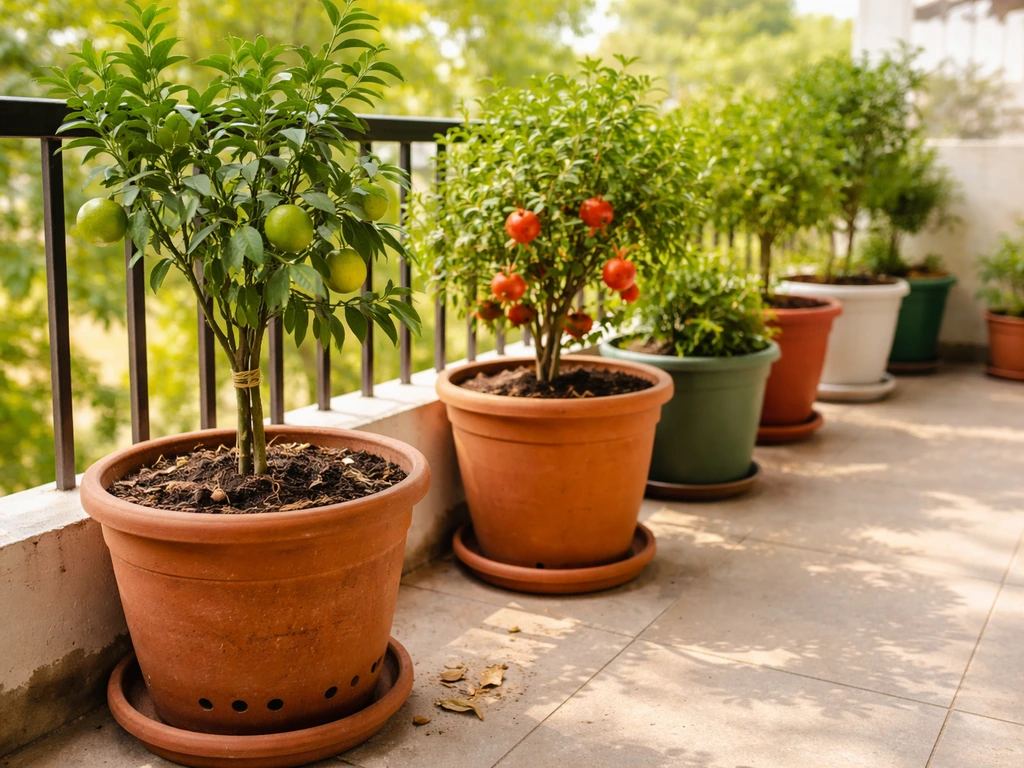
Best fruit varieties for pots in India
Not every fruit tree that grows in the ground will thrive in a container, so start with varieties that are naturally compact or have dwarf forms bred for exactly this purpose. Here are the ones I have seen succeed most reliably across India's varied climates. You can also grow goji berries in a pot if you choose a compact variety, use a large container with excellent drainage, and provide plenty of sun can you grow goji berries in a pot.
| Fruit | Best variety/type for pots | Min. pot size | Sun needed | Realistic fruiting timeline |
|---|---|---|---|---|
| Pomegranate | Dwarf Anar / Punica granatum 'Nana' | 12–15 inch / 5–10 gallon | 4–6 hours full sun | 1–2 years from grafted plant |
| Guava | Dwarf Thai / L-49 | 16–18 inch | 5–6 hours full sun | 1–2 years from grafted plant |
| Lemon / Lime | Kagzi Lime, Eureka Lemon | 14–16 inch | 6+ hours full sun | 1–2 years from grafted plant |
| Fig | Poona Fig, Brown Turkey | 16–18 inch | 5–6 hours full sun | 1–2 years from grafted plant |
| Papaya | Dwarf / Red Lady hybrid | 14–16 inch | 6+ hours full sun | 8–12 months from seedling |
| Strawberry | Sweet Charlie, Chandler | 10–12 inch deep pot or hanging basket | 5–6 hours sun | 3–5 months from runner/plant |
| Dwarf Mango | Amrapali, Mallika, Irwin | 18–24 inch (large pot/half-barrel) | 6+ hours full sun | 2–3 years from grafted plant |
| Banana (dwarf) | Dwarf Cavendish | 16–20 inch | 6+ hours full sun | 12–18 months from sucker |
If you are a beginner and just want something that fruits fast with very little fuss, start with Kagzi Lime or strawberries. Both are forgiving, widely available in Indian nurseries, and give you visible results within a season. Once you have a feel for container care, graduate to guava or pomegranate.
Choosing the right pot and setting it up properly
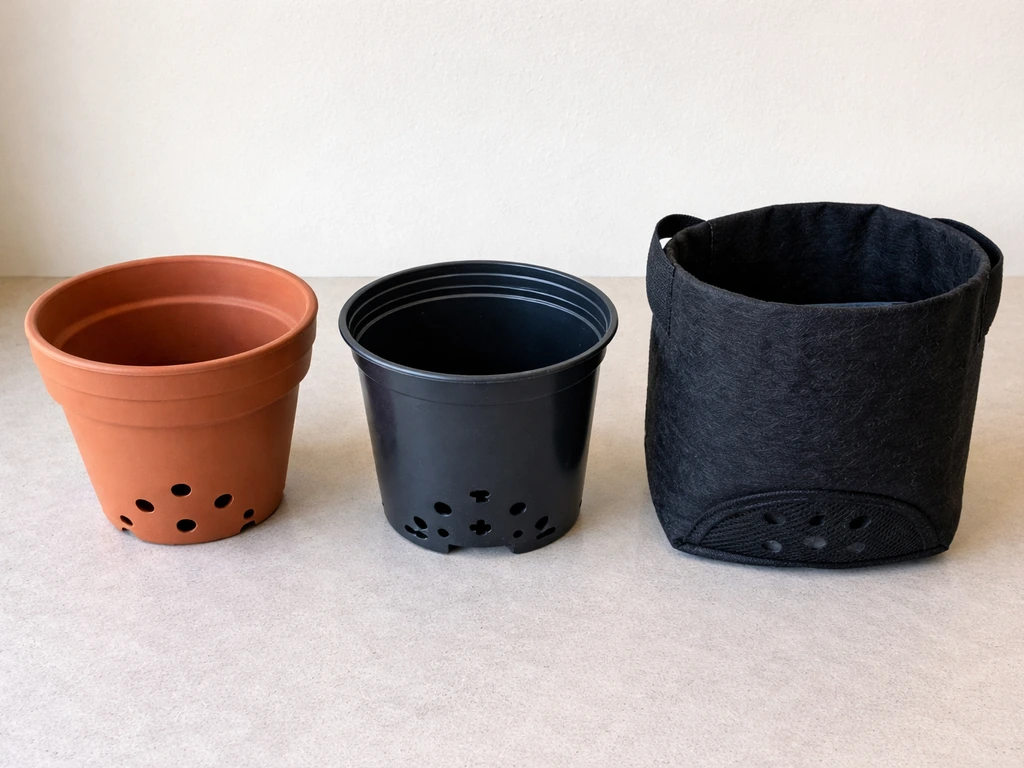
Size matters more than material
The single most common mistake I see is using a pot that is too small. Fruit plants need room for roots to expand and find water between your watering sessions. As a rough guide: strawberries need a pot at least 10–12 inches deep; citrus, guava, pomegranate, and fig want a 14–18 inch pot to start; dwarf mangoes and bananas need something in the 18–24 inch range or a half-barrel planter. An India-based balcony growing guide like the Times of India photostory on balcony strawberries also recommends using a pot around 10, 12 inches deep with drainage holes to prevent water accumulation blank" rel="noopener noreferrer">strawberries need a pot at least 10–12 inches deep. Some dwarf blank" rel="noopener noreferrer">pomegranate varieties are frequently described as being usable in smaller, gallon-scale pots, with one press claim citing as little as 5 gallons thanks to a relatively shallow root system. When a plant becomes rootbound (you will see roots poking out of drainage holes and the plant drying out too quickly after watering), move it up to a pot roughly 2–3 inches larger, not dramatically bigger or the excess wet soil can cause root rot.
Material: clay vs plastic vs grow bags
Clay or terracotta pots breathe well, which helps prevent overwatering in India's humid monsoon months, but they dry out faster in summer heat and are heavy on balconies. Plastic pots retain moisture longer, are lightweight, and are cheap. Fabric grow bags have become very popular in Indian urban gardens because they air-prune roots (stopping them from circling) and drain exceptionally well. I personally prefer fabric grow bags for mango and guava and terracotta for citrus and pomegranate. Pick whatever suits your balcony weight limit and budget.
Drainage and location
Every pot must have at least two or three drainage holes in the base. No exceptions. If your decorative pot has no holes, either drill some or use it as an outer sleeve and place a proper pot with holes inside it. Raise pots off the floor using pot feet or bricks so water drains freely and air circulates underneath. For location, most fruiting plants need at least 5–6 hours of direct sun per day. South-facing and west-facing balconies and terraces in India are usually the best spots. East-facing works for strawberries and citrus; north-facing is really too shaded for most fruit.
Potting mix and fertiliser plan
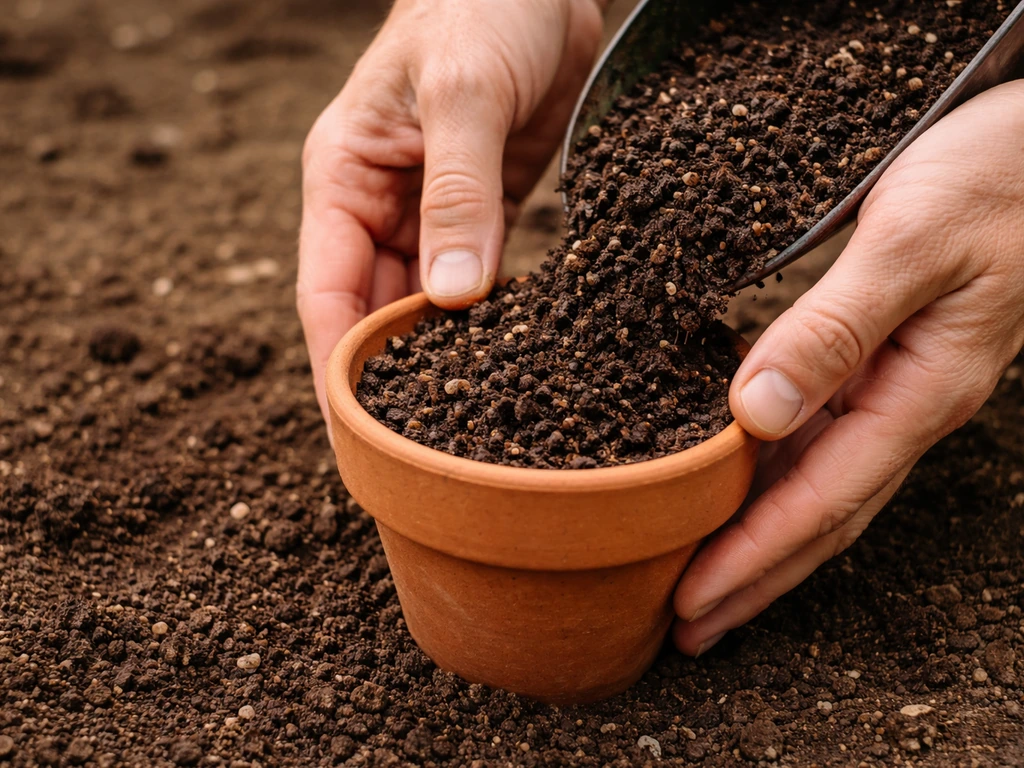
Getting the soil right
Never use plain garden soil in a pot. It compacts, drains poorly, and will suffocate your fruit plant's roots within a season. The ideal mix for fruiting plants in India is one that drains fast but holds some moisture and nutrients. A reliable recipe is 40% cocopeat, 30% compost (vermicompost or well-rotted cow dung compost), 20% garden soil or red soil, and 10% perlite or coarse river sand. This gives you good drainage, good aeration, and decent fertility to get the plant started. You can buy ready-made potting mix from nurseries, but check that it does not feel heavy and muddy when wet.
Fertiliser schedule for fruiting
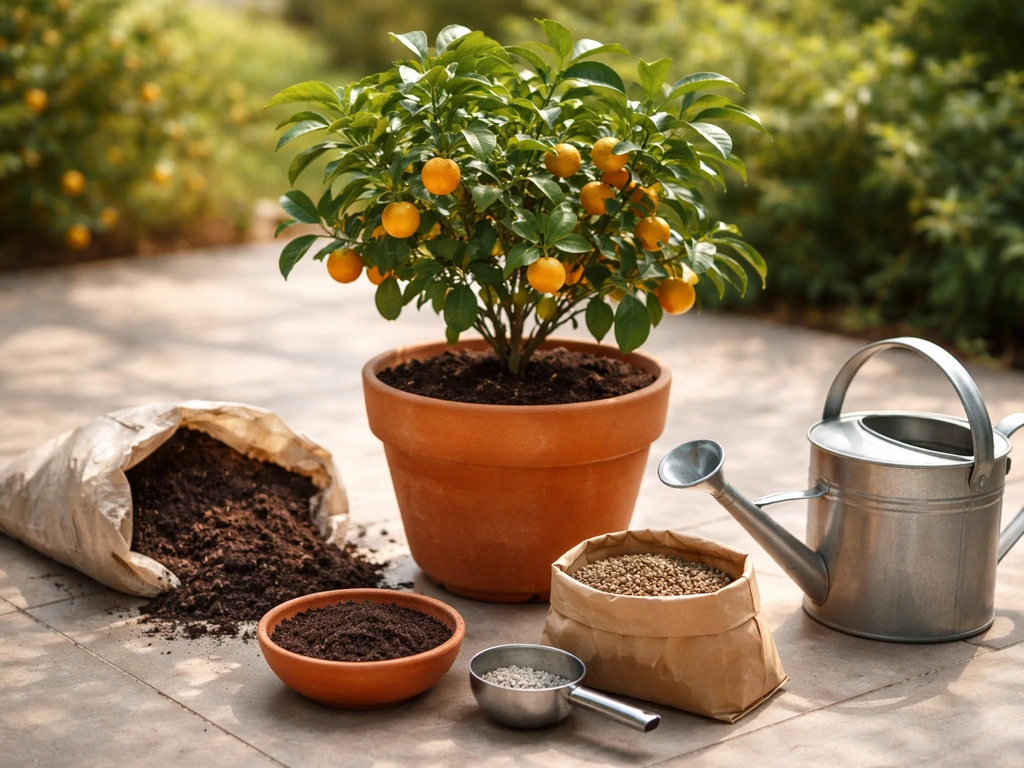
Fruiting plants are hungry, especially once they start flowering. A practical three-phase schedule works well for most Indian conditions.
- First 4–6 weeks after planting: no extra fertiliser. The compost in the mix is enough. Let the plant settle and establish roots.
- Vegetative growth phase: apply a balanced fertiliser (NPK 19-19-19 or similar) at half the recommended dose every 3–4 weeks, or use a handful of vermicompost worked into the top soil layer monthly.
- Pre-flowering and fruiting phase: switch to a low-nitrogen, higher phosphorus and potassium feed (something like NPK 0-52-34 or a banana-peel liquid feed) every 2–3 weeks. This encourages flowers and fruit rather than leafy growth.
- After harvest: rest the plant for 4–6 weeks with just compost, then resume the vegetative-phase schedule to rebuild the plant.
Bone meal or rock phosphate mixed into the potting medium at planting time is a great slow-release boost for flowering. Neem cake (about a handful per large pot) dug into the soil every 2 months also acts as a mild fertiliser and keeps soil pests down. Liquid seaweed extract applied as a foliar spray once a month is one of the best things you can do for fruit set, and it is cheap and widely available in India.
Planting and the first few weeks
Seedling vs grafted plant: always choose grafted
If you grow mango, guava, or pomegranate from seed, you may wait 5–7 years for fruit and the quality is unpredictable. Buy grafted plants from a reputable nursery instead. Grafted plants fruit in 1–2 years and reproduce the exact characteristics of the parent variety. For citrus, grafted is also strongly preferred. Strawberries are grown from runners or plugs, not seeds. Papaya is usually grown from seed or hybrid seedling. When buying a grafted plant, look for a clear graft union (a slight bump or scar on the lower stem), a plant that looks healthy and is not root-bound in its nursery bag, and ideally one that is already 1–1.5 feet tall.
Planting step by step
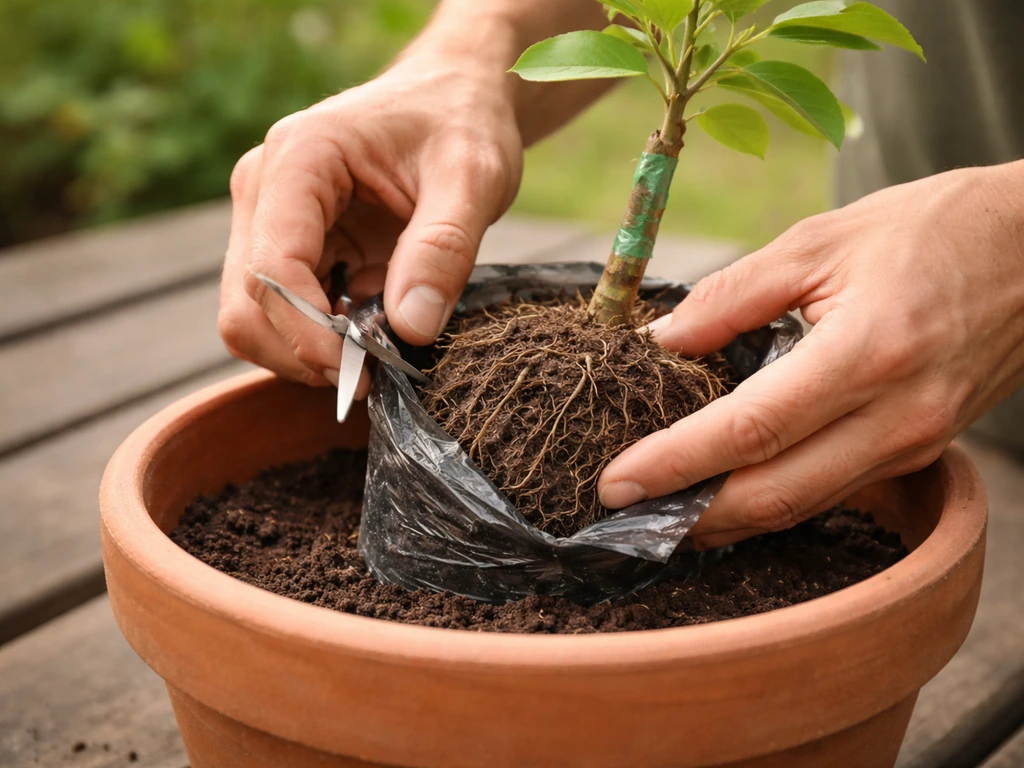
- Fill the pot one-third full with your potting mix.
- If the plant is in a plastic nursery bag, cut the bag carefully and tease the roots loose gently without breaking the root ball.
- Place the plant so the graft union sits about 2–3 inches above the final soil level. Never bury the graft union.
- Fill in around the roots with more potting mix and firm it lightly. Leave a 1–2 inch gap at the top of the pot to make watering easier.
- Water thoroughly until water runs from the drainage holes.
- Place the pot in a semi-shaded spot for the first week to reduce transplant stress, then gradually move it to its permanent sunny spot.
Watering in the early weeks
For the first two weeks, water every day or every other day depending on how fast the soil dries. Stick your finger 2 inches into the soil: if it feels dry at that depth, water deeply. If it still feels moist, wait a day. This finger-test habit will save you from both overwatering and underwatering. Never let potted fruit plants sit in a saucer full of water, as the roots will rot within days in India's heat.
Training, pruning, and getting the plant to fruit
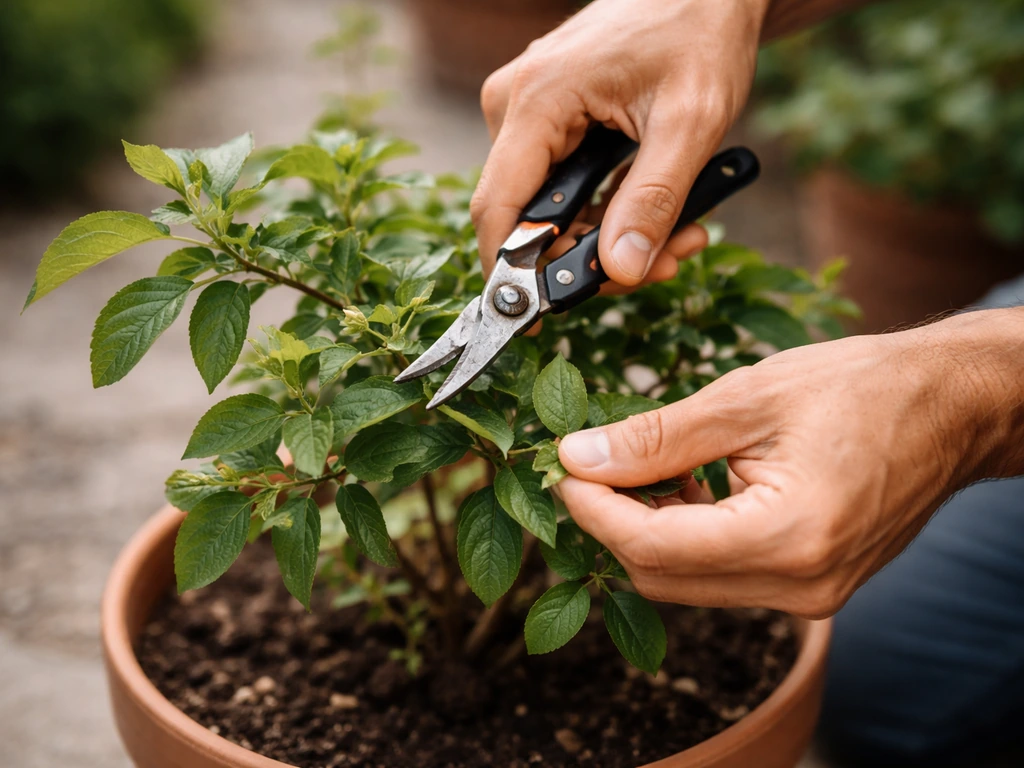
Pruning in a container is not just about looks. It is how you keep the plant a manageable size, let sunlight reach all parts of the canopy, and force energy into fruiting rather than endless leafy growth. The general rule is to prune after each fruiting cycle and to pinch out the growing tips of young plants 3–4 times in the first year to encourage a bushy, branching shape rather than a single upright stem.
Fruit-specific training tips
- Pomegranate: Prune hard after fruiting, removing dead wood and crossing branches. Keep the plant to 2–4 feet in a pot by cutting back long shoots by one-third each year. The dwarf 'Nana' variety stays naturally compact.
- Guava: Pinch growing tips when branches reach 12–15 inches to encourage lateral branching. Guava fruits on new growth, so light pruning after each harvest encourages the next flush.
- Citrus (lemon/lime): Remove suckers (shoots below the graft union) immediately. Thin out dense interior growth to allow airflow. Avoid heavy pruning; citrus fruits on current-year growth.
- Fig: Prune in January when the plant is dormant. Remove dead wood and thin the canopy by up to one-third. Figs fruit on the previous year's wood, so do not cut back all old branches.
- Dwarf mango: Train to an open-vase shape with 3–5 main branches. Clip the leader (the main upright shoot) once the plant reaches 3–4 feet to encourage outward spread. Prune after fruit is harvested.
- Strawberry: Remove old runners and leaves after each fruiting flush to keep energy in the crown. Allow two or three runners per plant to develop for next season's replacements.
- Papaya: No real training needed. Remove lower leaves as the plant grows to improve air circulation and expose fruit.
Hand pollination is worth doing for mango and guava in pots, especially on balconies where pollinators are limited. Use a small soft paintbrush to transfer pollen from one flower to another in the morning when flowers are freshest. This one habit can dramatically improve fruit set and fix the frustrating problem of flowers dropping without forming fruit.
Seasonal care across India's climate
Summer (March to June): the toughest stretch
Indian summers are brutal for potted plants. Pots heat up fast, roots cook, and moisture disappears within hours on a sunny terrace. Water once in the morning and once in the evening on extremely hot days (above 40°C). Move pots away from reflective walls if you can. Mulch the top of the pot with dry leaves, hay, or cocopeat to slow moisture loss. Avoid fertilising with concentrated synthetic feeds during peak summer heat as the salts can burn stressed roots. A diluted liquid fertiliser or compost tea is gentler.
Monsoon (July to September): manage the excess
The monsoon brings the opposite problem: too much water. If your pots sit on a balcony that gets heavy rain, make sure drainage holes are clear and unblocked. Raise pots on bricks or pot feet. Cut back on watering entirely when rain is consistent. Watch for fungal issues (yellowing leaves, white powder, dark spots on fruit) which explode in humid monsoon conditions. Move pots under a roof or overhang if you are getting more than two or three days of continuous heavy rain. Also hold back on high-nitrogen fertilisers during monsoon to prevent excessive leafy growth at the expense of flowers.
Post-monsoon and winter (October to February): the sweet spot
October to February is generally the best growing and fruiting period for many pot fruits in India, especially in the south, west, and central regions. Temperatures are mild, humidity drops, and many plants set their best fruit during this window. Resume a regular fertilising schedule and step up to a potassium-rich feed as flower buds appear. In northern India where temperatures drop below 10°C, move cold-sensitive plants like papaya and banana indoors or against a south-facing wall. Citrus and pomegranate can tolerate light cold but protect them from frost.
Keeping pests and disease under control
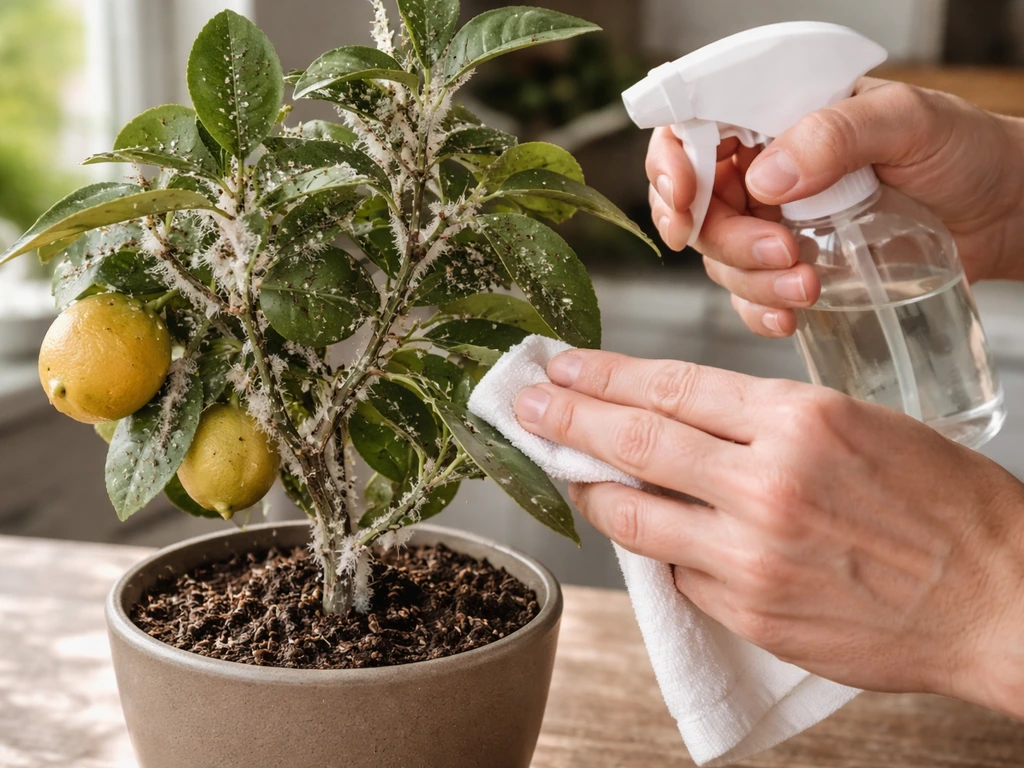
Potted fruit plants are not immune to pests, but good basic hygiene prevents most problems before they start. The most common issues in Indian conditions are mealybugs, scale insects, aphids, fruit flies, and fungal leaf spots. Here is a practical control plan.
| Problem | What it looks like | Organic fix | Chemical fix (last resort) |
|---|---|---|---|
| Mealybugs | White cottony masses at leaf joints | Dab with cotton wool dipped in rubbing alcohol; neem oil spray (5ml per litre) | Imidacloprid systemic (follow label) |
| Aphids | Clusters of tiny green/black insects on new shoots | Strong water spray to knock off; neem oil spray weekly | Dimethoate or malathion spray |
| Scale insects | Brown or white crusty bumps on stems and leaves | Scrape off manually; neem oil + soap spray | Systemic insecticide |
| Fruit flies | Larvae inside fruit, small punctures on skin | Yellow sticky traps; bag individual fruits with paper/newspaper; neem spray on young fruit | Protein-bait traps with malathion |
| Powdery mildew | White powder on leaves, common in high humidity | Spray baking soda solution (5g per litre); improve airflow | Fungicide like mancozeb |
| Root rot | Yellowing, wilting despite wet soil | Improve drainage; drench with Trichoderma solution | Copper-based fungicide drench |
The single most effective prevention is a monthly neem oil spray (mixed with a few drops of dish soap as an emulsifier) applied to the whole plant including the undersides of leaves. Do this in the evening to avoid leaf burn. Neem cake in the soil also discourages soil-borne pests like fungus gnats and nematodes. Check your plants every week, since catching a pest problem early means you can fix it with a simple spray rather than having to remove the plant entirely.
Harvesting, storing, and fixing low yield
Knowing when to harvest
Most pot fruits give clear signals when they are ready. Limes change from dark to light green and feel slightly soft when gently squeezed. Pomegranates develop a deep colour and a metallic tap-sound when you knock them with a fingernail. Guavas turn from green to yellow-green and begin to smell sweet. Figs soften and droop slightly on the branch. Mangoes should be harvested by colour change and a slight give when pressed, not rock hardness. Do not wait too long: overripe fruit on the plant attracts pests and can cause disease to spread.
Storage basics
Most pot-grown fruit in India is consumed fresh, which is the best option anyway. If you have a glut, citrus keeps well at room temperature for 1–2 weeks or in the fridge for up to a month. Guavas last 3–5 days at room temperature and up to 2 weeks refrigerated. Pomegranate arils can be refrigerated for up to 2 weeks or frozen. Figs are delicate and best eaten within 2–3 days of picking. Strawberries should be consumed within 2–3 days and not washed until just before eating.
Troubleshooting low yield
If your plant is flowering but not fruiting, or barely producing anything, run through this checklist before assuming something is fundamentally wrong.
- Not enough sun: fruiting plants need a minimum of 5–6 hours of direct sun. Move the pot to a sunnier spot and wait one season.
- Too much nitrogen: if you are giving a balanced or high-nitrogen fertiliser and the plant is producing lots of lush green leaves but few flowers, switch to a low-nitrogen, high-phosphorus and potassium feed immediately.
- Poor pollination: on balconies with limited insect access, hand pollinate with a small brush, especially for mango and guava.
- Pot too small or rootbound: a severely rootbound plant puts all its energy into root survival, not flowering. Repot into the next size up.
- Watering problems: inconsistent watering (waterlogged then bone dry) causes flower and fruit drop. Aim for steady, even moisture, particularly during flowering and fruit development.
- Wrong season: some fruit plants need a cool or dry period to trigger flowering. Pomegranate and mango often flower after a dry spell followed by watering. Research your specific variety's natural trigger.
- Grafted plant too young: if your grafted plant is less than a year old, it may simply not be mature enough yet. Give it another season.
Growing fruit in pots in India is genuinely satisfying once you get the basics right, and you do not need a garden or even a large balcony. Start with one or two easy varieties like Kagzi Lime or strawberries, nail the drainage and sunlight requirements, and build from there. Once you have the basics down, follow a step-by-step approach for how to grow fruits in pots to keep your plants thriving year-round. Blackcurrants can also be grown in pots if you choose a suitable variety and provide enough sun and consistent moisture. Cape gooseberry (physalis) can also be grown in pots, but it needs a bright, sunny spot, a well-draining potting mix, and consistent watering for best fruiting. If you also want to try gooseberries in pots, choose a dwarf or compact variety and follow the same container basics for size, drainage, and sun Kagzi Lime or strawberries. Each season you will learn something new about your specific space, your specific climate zone, and what your plants are telling you. That learning process is honestly half the fun.
FAQ
Can I grow fruit in pots year-round in northern India where winter is cold?
Yes, but only if the fruiting plant is either moved inside or protected from prolonged cold. In northern India, bring cold-sensitive pots (banana, papaya) indoors when nights approach 10°C, keep them near the brightest window or a grow light, and reduce watering slightly so the mix does not stay wet. Citrus and pomegranate can handle light cold, but cover them during frost hours and avoid fertilising during that slow growth period.
How do I know when to water, since Indian weather swings between monsoon and summer?
For most potted fruit in India, use a watering schedule based on soil moisture, not a fixed calendar. If the top 1 inch looks dry but the finger test at 2 inches still feels moist, wait. Also water slowly until a little drains from the holes, then empty the saucer immediately (do not let the pot sit in runoff). This prevents both root rot in monsoon and dehydration on hot terraces.
Should I repot my potted fruit plants every year, or only sometimes?
It is better to repot only when the roots are clearly outgrowing the container. A safe rule is to shift up one pot size when roots show at drainage holes, growth stalls despite feeding, or the soil dries within a day after watering. For many fruiting pots, repotting during mild months (often Oct to Feb) reduces stress and helps plants establish before heat or heavy rains.
My pot fruit plant flowers a lot but rarely fruits. What should I troubleshoot first?
If your plant blooms but drops flowers, first check pollination, pot size, and excess nitrogen. Hand-pollinate mango and guava in the morning, ensure the pot is not too small (root stress causes poor fruit set), and reduce high-nitrogen feeds once flowering starts. Also avoid letting the pot dry out completely during bloom, that sudden dryness triggers flower drop.
Which pot type is best for fruit in pots in India: clay, plastic, or fabric grow bags?
Choose a container material based on where the pot sits. Terracotta helps in humid monsoon because it breathes, but in peak summer it dries quickly, so you may need morning and evening watering. Plastic is lightweight and retains moisture longer, while fabric grow bags air-prune roots but dry faster than plastic, so they need closer monitoring in heat.
Can I use decorative planters without holes for my fruit pots?
Yes, you can use an outer decorative pot, as long as the inner planting container has drainage holes. The key is that water must fully drain out of the inner pot, and the outer cover should not hold that water. If you cannot drill holes in the decorative pot, place the actual draining pot inside and empty any collected water after every watering or rainfall.
I have garden soil from my yard. Can I just use it in pots for fruit?
For potted fruit, plain garden soil is usually a problem because it compacts and stays waterlogged. If you already have garden soil, do not put it alone in the pot. Instead, mix it with cocopeat and compost for better aeration and drainage, and add perlite or coarse sand to prevent waterlogging. If the soil smells sour, turns muddy, or stays wet for many days, replace it rather than trying to “fix” it.
What fertiliser mistakes are most common for container fruit plants in India?
General feeding is fine, but avoid sudden heavy fertilising right after flowering begins, especially in hot weather. When buds appear, increase potassium-rich feeding gradually and keep nitrogen moderate, so the plant does not push leaves at the expense of flowers. During monsoon, hold back high-nitrogen fertilisers and focus on maintaining drainage and a balanced, gentler feed.
How do I choose the right fruit variety and buying quality, especially for mango and pomegranate?
Pick the variety first, not just the fruit name. Look for dwarf or compact forms, confirm the mature size so you can match pot depth and width, and prefer grafted plants for mango, guava, pomegranate, and citrus because seed-grown plants may take much longer and vary in quality. When buying, check the graft union is healthy, and ensure the plant is not already root-bound in the nursery bag.
What is a practical pest and disease plan for potted fruit during India’s monsoon?
A simple integrated approach works best. Start with weekly inspection for early pests, use monthly neem oil spray on the whole plant including leaf undersides (evening application reduces leaf stress), and keep soil surface management clean. For fungal leaf spots in humid monsoon, improve air flow (spacing and pruning), remove heavily affected leaves, and reduce watering frequency rather than adding more fungicide without diagnosis.