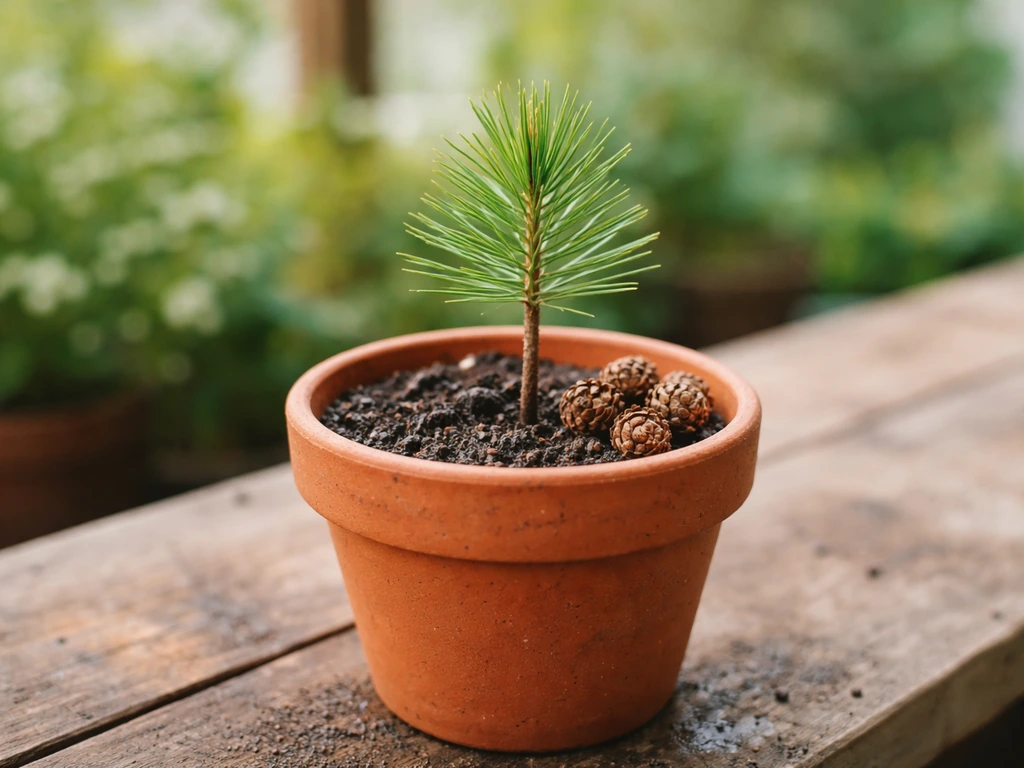
You can absolutely grow penstemon in pots, and it actually works really well as long as you nail two things: good drainage and enough sun. If you are wondering how to grow pine cones in pots, the same focus on container drainage and plenty of light will help you get better results grow penstemon in pots. Pick a compact variety, use a gritty free-draining mix, give it at least 6 hours of direct sun, and resist the urge to overwater. Do those things and you'll get long, colorful spikes of tubular flowers from late spring right through summer with minimal fuss.
How to Grow Penstemon in Pots: Full Container Guide
Marcus Whitley
17 Jun 2026
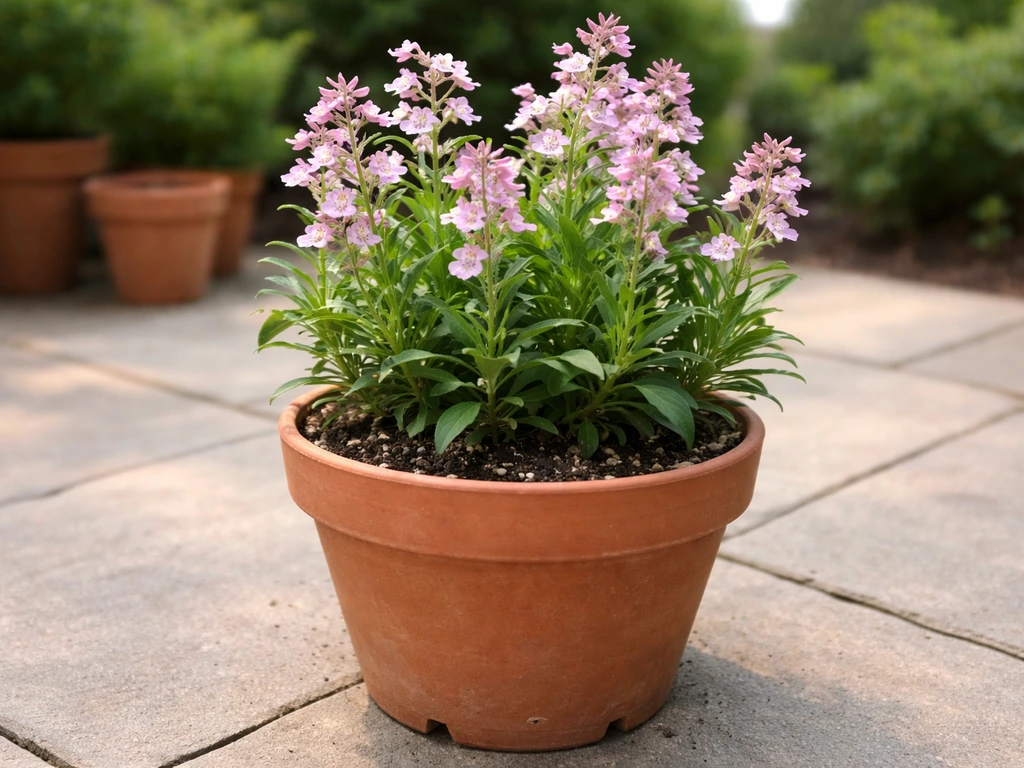
Best penstemon varieties for containers
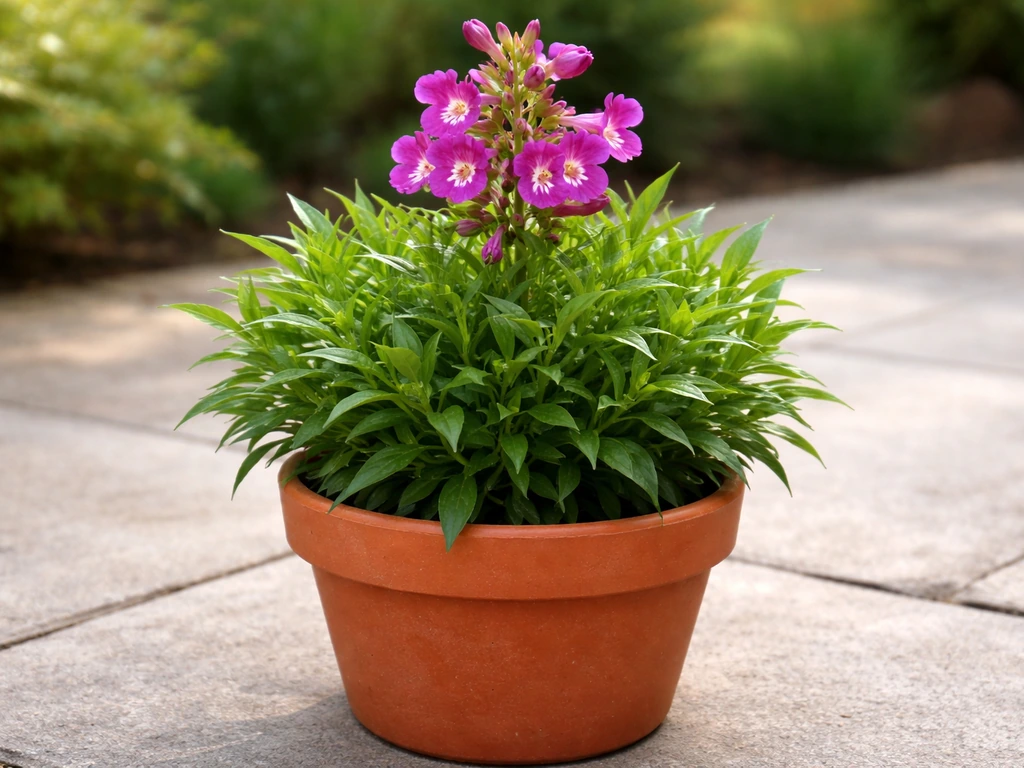
Not every penstemon is going to feel at home in a pot. The species can get quite large and rangy, so for containers you really want to lean toward compact, long-flowering hybrids. The rule of thumb from Colorado State University Extension is simple: compact size and long flowering are the two most important traits for container-grown penstemons. Keep that in mind when you're browsing at the nursery.
That said, a few of the larger-flowering varieties are absolutely worth growing in bigger pots if you have the space. Here are some reliable picks across different sizes:
| Variety | Height | Spread | Bloom Time | Best For |
|---|---|---|---|---|
| Penstemon 'Dark Towers' | 60–90 cm (24–36 in) | 40–60 cm (16–24 in) | Early summer | Tall statement pot, bronze foliage accent |
| Penstemon digitalis 'Husker Red' | 60–75 cm (24–30 in) | 30–45 cm (12–18 in) | June–August | Mid-size containers, strong upright form |
| Penstemon 'Prairie Dusk' | Up to 75 cm (30 in) | 30–45 cm (12–18 in) | Summer | Tall spike form, cottage-style containers |
| Compact hybrid varieties (e.g. 'Heavenly Blue', 'Garnet') | 30–45 cm (12–18 in) | 25–35 cm (10–14 in) | Early–late summer | Smaller pots, balconies, tight spaces |
If you're working with a small balcony or limited floor space, go straight for the compact hybrid types. They tend to flower for longer than the straight species and are more forgiving in containers. 'Dark Towers' and 'Husker Red' are my personal favorites for larger pots because they're genuinely striking and reliably perennial in most climates.
Choosing the right pot size and drainage
This is where a lot of people go wrong. Penstemons hate sitting in wet soil, so the pot you choose needs to support fast drainage above everything else. A pot with only one small drainage hole at the bottom is not going to cut it.
For compact varieties, aim for a pot that's at least 30 cm (12 inches) in diameter and 30 cm deep. For larger varieties like 'Dark Towers' or 'Husker Red', go up to 40–50 cm (16–20 inches) in diameter. BBC Gardeners World Magazine also lists mature dimensions for Penstemon 'Dark Towers' at around 75 cm (30 in) tall and 40 cm (16 in) spread 'Dark Towers' or 'Husker Red'. The extra depth matters because penstemon develops a reasonably deep root system and needs room to anchor itself properly.
Material matters too. Terracotta is genuinely one of the best choices for penstemon because it's porous, which means the soil dries out more evenly and you're less likely to end up with soggy pockets at the bottom. Glazed ceramic and plastic pots hold moisture longer, so if that's what you have, you'll just need to be a bit more careful with watering. Whatever you use, make sure there are multiple drainage holes, not just one. I usually add a layer of broken crocks or small stones over the holes before filling with compost, just to stop them blocking up.
- Minimum pot diameter: 30 cm (12 in) for compact varieties, 40–50 cm (16–20 in) for larger types
- Minimum pot depth: 30 cm (12 in) to support root development
- Multiple drainage holes are essential, not optional
- Terracotta is the best material for drainage; plastic retains more moisture so water less frequently
- Never leave a saucer full of standing water under the pot — empty it after watering
Potting mix and fertilizing schedule
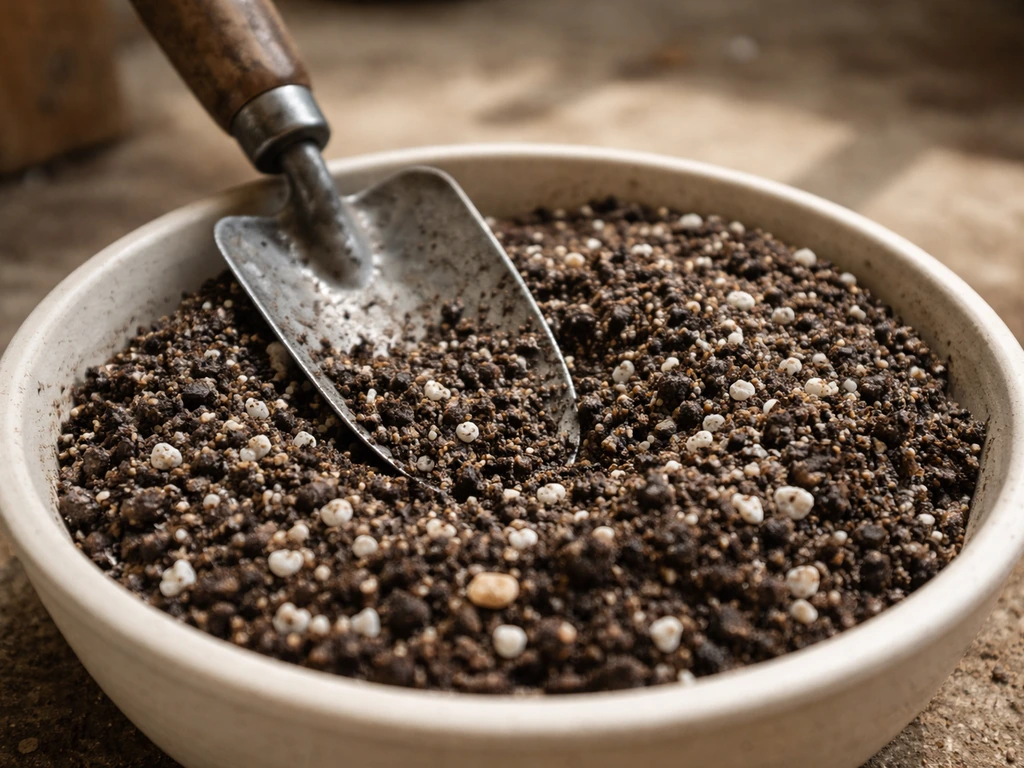
Standard all-purpose potting compost straight from the bag is too moisture-retentive for penstemon. You need to open it up with a gritty amendment. The American Penstemon Society recommends a mix that includes roughly one third compost and one third small gravel or grit for drainage, with other material making up the remainder. I use a simple blend of two parts multipurpose compost, one part perlite or horticultural grit, and a small handful of fine gravel. The result is a mix that drains freely but still holds enough nutrients and structure for the roots to get established.
One thing worth noting: penstemons don't like overly rich soil. The American Penstemon Society is clear that compost should only make up a small percentage of the mix for species types, though hybrid varieties are more tolerant of richer conditions. Adding too much compost encourages lush leafy growth at the expense of flowers, so resist the urge to go heavy on the organic matter.
For feeding, the RHS describes penstemons as 'not very hungry plants,' and that's a good mindset to bring to container growing too. Start the season in spring with a balanced general-purpose granular fertilizer (something like Growmore) worked lightly into the top of the compost. After that, a monthly liquid feed during the main growing season (May through August) is plenty. Switch to a low-nitrogen, high-potassium feed (like a tomato fertilizer) in mid-summer to encourage flowers rather than foliage. Stop feeding entirely by late summer so the plant can start to harden off for winter.
Planting tips: seed vs nursery plants, timing, and spacing
Starting from seed
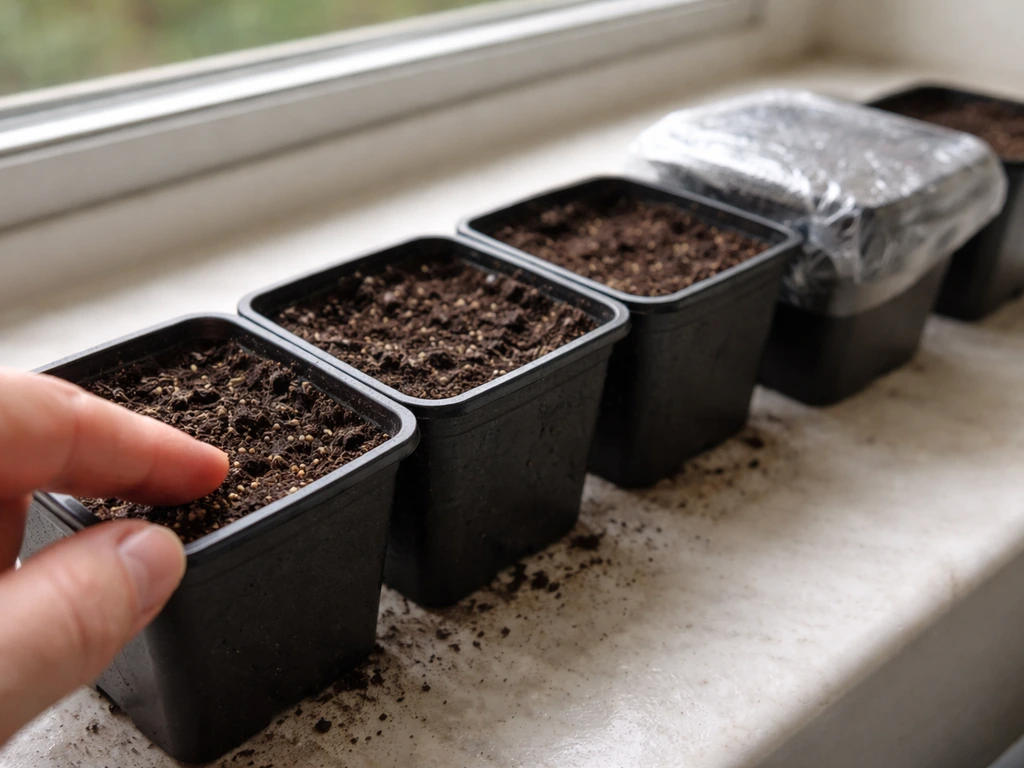
Growing penstemon from seed is completely doable but requires patience and a cold stratification step, which is basically tricking the seeds into thinking they've been through winter before asking them to germinate. The American Penstemon Society’s seed-propagation guidance describes cold stratification by sowing into a moist medium just above freezing, covering lightly, and then placing the pots outside in winter cold stratification step. The seed naturally lies dormant through cold weather and then germinates in spring, which is how it works in the wild.
The practical method: sow seeds on the surface of a moist seed compost in small pots, press them in lightly (don't cover deeply), and then give them a cold period of two to four weeks just above freezing. You can do this by placing the pots in an unheated shed, garage, or outside in a sheltered spot during late autumn or winter. After the cold period, bring them somewhere warm (around 15–18°C / 60–65°F) and germination should follow within a few weeks. Time your indoor sowing so seeds are started about 6 to 8 weeks before your last expected frost date. Be aware that you won't get flowers in the first year from seed, so this approach suits patient growers.
Using nursery plants
Honestly, for most home gardeners, buying young nursery plants is the better route. You skip the stratification step, you know exactly what variety you're getting, and you'll likely see flowers in the first season. Plant into containers in spring after the last frost date for your area, or in autumn (in milder climates) to allow roots to establish before winter.
When planting into a container, set the crown of the plant at the same depth it was growing in its nursery pot. Planting too deep can cause crown rot, which is one of the more frustrating ways to lose a penstemon. If you're planting more than one in a larger container, space compact varieties about 25–30 cm (10–12 inches) apart, and larger varieties at 35–45 cm (14–18 inches). Water in gently after planting and then hold back until the top inch or so of compost feels dry.
Sunlight, watering, and temperature needs in pots
Sunlight
Penstemons need proper sun, not just bright indirect light. Colorado State University Extension recommends at least 6 hours of full sun per day for healthy upright growth with strong flower stems. Less than that and the plants tend to get leggy, the stems flop over, and flowering is noticeably reduced. If you're on a balcony or patio where direct sun is limited, track the hours of sun your space actually gets before you commit to penstemons. South or west-facing spots are typically ideal.
Watering
Overwatering is the number one killer of penstemon in containers. They are drought-tolerant plants by nature and will quickly develop root rot if kept too wet. The Almanac is explicit about this: penstemons 'quickly develop root rot in poorly draining or clay-heavy soils,' and that risk is amplified in pots where water has fewer places to escape.
The right approach is to water thoroughly when you do water, but then let the top 2–3 cm (around 1 inch) of compost dry out before watering again. In warm summer weather, that might mean every 3–4 days for terracotta pots, or every 5–7 days for plastic. In cool or cloudy periods, stretch it out even further. Always check before you water rather than following a rigid schedule. And always empty the saucer under the pot after watering so roots aren't sitting in pooled water.
Temperature and heat stress
Most penstemon varieties are reasonably hardy (typically down to around -10°C / 14°F for hardy hybrids), but containers make them more vulnerable to temperature extremes because the roots are above ground rather than insulated by the soil. In high summer heat above 35°C (95°F), container-grown penstemons can stress quickly. Move pots to a spot with some afternoon shade during heat waves, increase watering frequency slightly, and avoid feeding during the hottest spells since fertilizer can burn stressed roots.
Ongoing care: deadheading, pruning, and keeping pests away
Deadheading and pruning for more flowers
Deadheading spent flower spikes is one of the best things you can do to extend the flowering season. Once a spike has finished, cut it back to just above a set of leaves or a side shoot lower on the stem. This encourages new basal shoots to develop and, in areas with a long summer, can trigger a genuine second flush of flowers. The American Penstemon Society confirms that removing flowering stems after they're done helps encourage those new basal shoots and can genuinely prolong the plant's life.
In terms of harder pruning, don't cut penstemon back too hard in late summer or early autumn because it can remove the growth the plant needs for protection heading into winter. Leave the main structure largely intact until spring, when you can cut old stems back to where you can see fresh green growth emerging from the base. That spring tidy-up, around March or April in most climates, is all the hard pruning it really needs.
Pests and disease
Penstemons are fairly tough, but a few problems are worth watching for in containers. Aphids and spider mites are the most common pests. Spider mites in particular tend to appear in dry, hot conditions, so if you notice fine webbing on leaves and the foliage looks dusty or stippled, check the undersides of leaves closely. A strong spray of water usually knocks mites back; for aphids, insecticidal soap spray works well.
Powdery mildew is the main disease risk, especially in humid conditions with poor air circulation. In containers this is often made worse by crowding plants together. If you see a white powdery coating developing on leaves, improve air circulation by spacing pots further apart, avoid wetting the foliage when watering, and remove affected leaves promptly. Crown rot is the other serious issue, typically showing as a white cottony mass around the base of the plant, this is almost always a sign of overwatering or a pot sitting in standing water, so drainage is your best prevention.
Seasonal care and overwintering in containers
Spring and summer
Spring is when penstemon really gets going. As temperatures climb and days lengthen, you'll see new growth pushing up from the base. This is the time to apply your spring fertilizer, tidy up any dead stems from the previous year, and move pots back to their sunniest position if you shifted them for winter. Water starts to increase as the plant grows but always keep that 'dry out between waterings' principle in mind.
Overwintering in containers

This is where container growing gets genuinely trickier compared to growing penstemon in open ground. When penstemon is planted in the garden, the surrounding soil insulates the roots from extreme cold. In a container, the roots are fully exposed above ground and can freeze solid during hard frosts, which is often fatal. Freeze-thaw cycles are particularly damaging because the soil repeatedly expands and contracts, stressing both the roots and the pot walls.
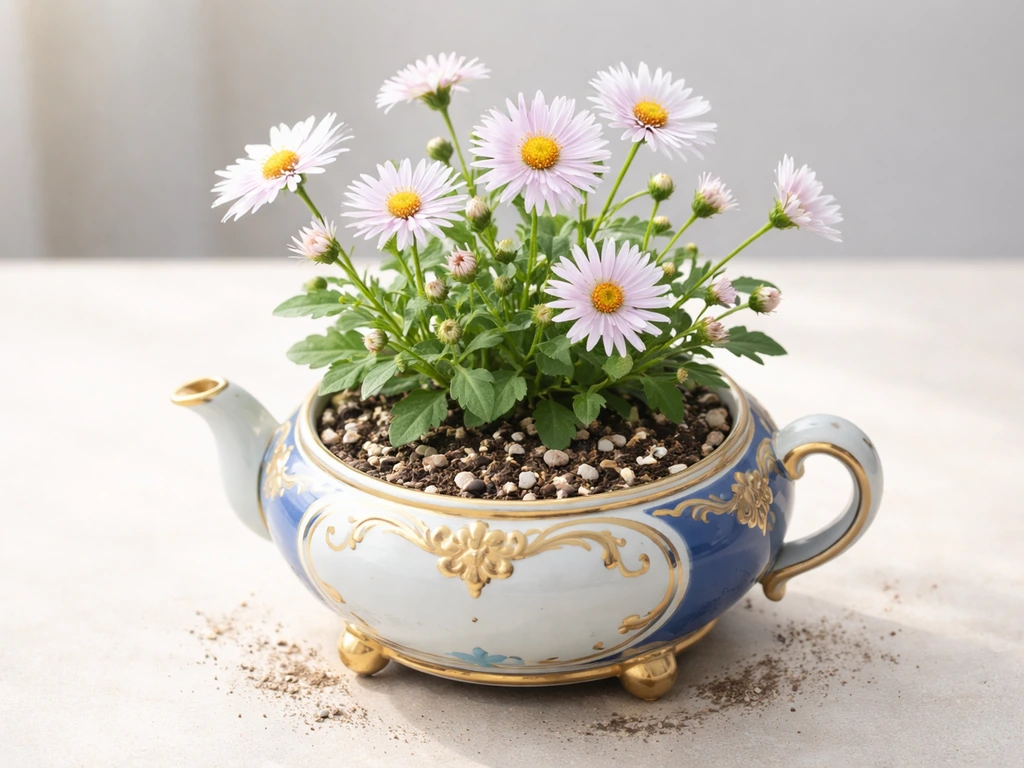
Here's what actually works for overwintering container penstemons in colder climates (zones 5–7 and similar): In warmer climates, you can treat windwheel aster more like other container perennials, but follow specific Serenitea pot steps for its setup and care how to grow windwheel aster in serenitea pot.
- Stop feeding by late August to allow the plant to harden off naturally going into autumn
- Reduce watering significantly once temperatures drop and growth slows in autumn — penstemon in a cold, wet pot is at high risk of crown rot
- Leave the old stems in place through autumn and winter; they provide some insulation to the crown and a visual cue that the plant is still there
- Move pots to a sheltered spot (against a wall, in an unheated greenhouse, cold frame, or garage) before the first hard frost — somewhere that stays above about -5°C (23°F) is ideal
- Wrap the pot itself in horticultural fleece, bubble wrap, or hessian to insulate the root zone from freeze-thaw cycles; this is especially important for terracotta pots which can crack under repeated freezing
- Check pots occasionally through winter and water very sparingly just to prevent complete desiccation — the compost should be barely damp, not wet
- In spring, when you see green shoots pushing up from the base (usually late February to April depending on your climate), bring pots back to their sunny position and resume normal care
In milder climates (zones 8 and above), overwintering is much simpler, just move pots to a sheltered spot, reduce watering, and they'll generally come through fine without any wrapping. The main thing is to make sure they don't sit in wet compost over winter, because cold and wet together is far more damaging than cold alone.
If you enjoy growing other sun-loving perennials and ornamentals in containers, the same drainage-first, well-drained-mix approach applies to plants like kangaroo paw in pots, which shares penstemon's intolerance for soggy roots and need for a bright, sunny position.
A quick recap before you get started
Growing penstemon in pots is genuinely rewarding once you've got the basics right. Choose a compact or mid-size variety, use a deep pot with excellent drainage, build a gritty compost mix, give it full sun, and water carefully rather than generously. Deadhead through summer to keep flowers coming, protect the pot and roots from hard frosts over winter, and you'll have a plant that comes back reliably year after year. Don't overthink it, penstemon is tough, and as long as it's not sitting in wet compost, it'll reward you with color for months.
FAQ
Can I use a self-watering pot or add a water reservoir for penstemon?
Avoid it. Penstemon needs the compost to dry back between waterings, and reservoirs often keep the lower section too wet. If you only have self-watering pots, use them without the reservoir or block the wick system so the bottom stays truly dry.
How do I tell if my potting mix is draining fast enough before planting?
Do a simple bucket test: fill the empty pot with your mix, water thoroughly, then watch how quickly it drains. If water sits or drains extremely slowly (for example, staying visible at the bottom for a long time), the mix or container drainage is not suitable for penstemon.
Is it okay to grow penstemon in a pot that’s smaller than recommended, like under 30 cm?
Smaller pots increase the chance of heat stress and over-drying or, worse, uneven wet patches that lead to root rot. If you must go smaller, use the best terracotta pot you can find, increase sun exposure carefully, and water more frequently but only after the top layer dries (you cannot follow a fixed schedule).
What should I do if my penstemon looks leggy and flops over in a container?
Legginess usually points to too little direct sun or overly rich soil. Move the pot to the sunniest spot you can (aim for that full-sun window), reduce feeding, and consider pinching back the tips early in the season to encourage sturdier shoots.
How often should I repot penstemon in pots, and when is the best time?
Repot when the plant becomes root-bound or the mix stops drying at a reasonable pace, which is often every 2 to 3 years. Do it in spring, right as growth resumes, so roots can recover quickly before summer heat and flowering demand.
Should I fertilize penstemon right after planting, or wait?
Wait. After planting, hold off on additional feeding for a few weeks because new roots are still settling in the potting mix. Start with the light spring feeding once you see active growth, then follow the low-nitrogen, higher-potassium approach later for flowers.
Why did my penstemon get lots of leaves but few flowers?
This commonly happens when the mix is too rich, or fertilizer is too nitrogen-heavy. Use a gritty, drainage-focused mix with compost kept relatively low, and switch to a high-potassium feed in mid-summer (or reduce feeding if you used an all-purpose fertilizer at planting time).
Can I grow penstemon from seed in pots without stratification?
In most cases, skip stratification and germination will be inconsistent. Penstemon seeds often need a cold period to break dormancy. If you want to try an easier route, buy nursery plants for faster, more reliable flowering.
What’s the safest way to water a newly planted container penstemon?
Water in gently right after planting to settle the roots, then pause and let the top 2–3 cm dry before the next watering. Newly planted pots can stay damp longer because roots are not yet drinking, so the “dry between waterings” rule is even more important early on.
How can I prevent crown rot, especially if I accidentally planted too deep?
Do not bury the crown. If you suspect it’s too deep, correct it sooner rather than later by raising the plant to match its original nursery depth. Also ensure multiple drainage holes are open, since standing water at the base accelerates rot.
What’s the best way to overwinter penstemon pots in colder climates to avoid freeze-thaw damage?
Prioritize keeping the compost on the dry side, not just warm enough. Move pots to a sheltered location, water sparingly before deep cold sets in, and avoid letting them sit in wet conditions. In severe winters, insulating the pot helps, but dryness matters most to prevent rot.
My penstemon has powdery mildew in the pot. Should I treat it or remove the plant?
Start by removing affected leaves and improving airflow (avoid crowding and keep the foliage as dry as possible during watering). If it keeps spreading despite better conditions, treat early with an appropriate fungicidal approach, but prevention is key since repeated leaf wetting and poor circulation usually drive future outbreaks.
How do I handle pests like spider mites if my penstemon is already stressed from heat?
First, address the stress by moving the pot to some afternoon shade during heat waves and ensure you are watering correctly (dry top layer, then thorough watering). For control, rinse undersides of leaves with water to knock mites back, then monitor closely because mites rebound quickly in hot, dry spells.