Yes, you can grow kaddu in pots, and it actually works better than most people expect, as long as you give the vines something to climb, use a big enough container, and stay on top of watering. Whether you're growing lauki (bottle gourd) or a pumpkin-type kaddu, the approach is similar: large pot, rich soil, full sun, a sturdy trellis, and consistent care. Get those basics right and you'll be pulling gourds off the vine in about 55 to 75 days from sowing.
How to Grow Kaddu in Pots: Step-by-Step Container Guide
Marcus Whitley
6 Jun 2026
Lauki or pumpkin-type kaddu? Pick the right one first
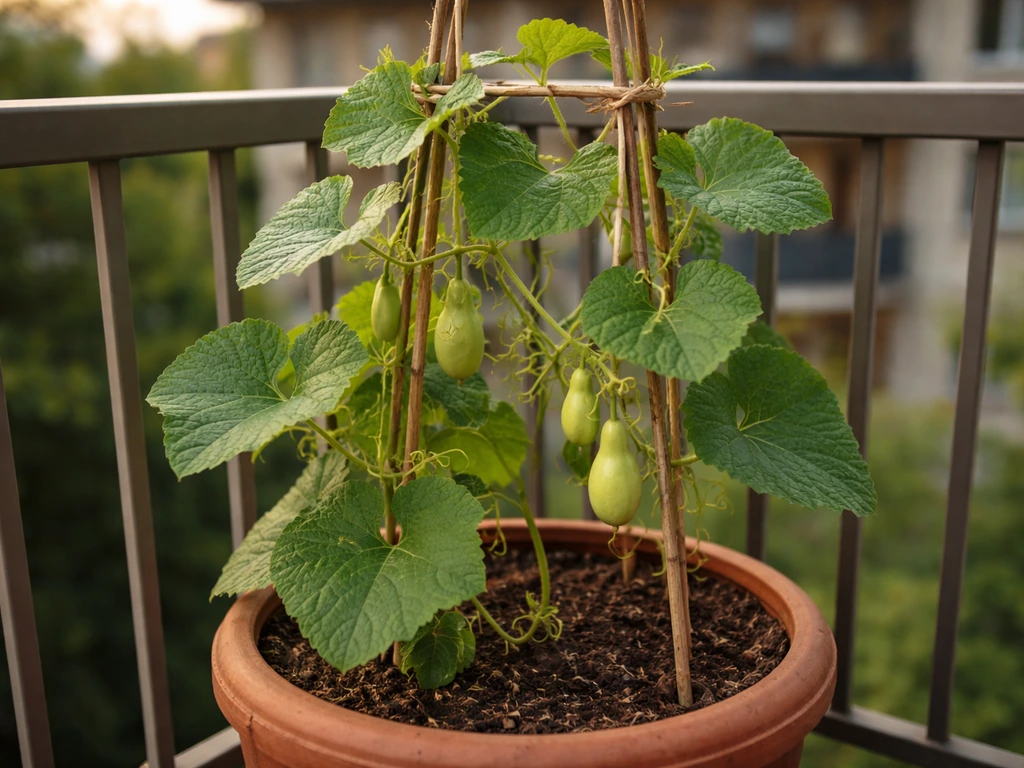
The word 'kaddu' gets used for a few different vegetables depending on where you're from. In most of North India, kaddu refers to lauki, also called bottle gourd or lauki (Lagenaria siceraria). In some regions, especially in the South and East, kaddu means a pumpkin or pumpkin-type gourd (Cucurbita moschata or Cucurbita maxima). They're related, they grow similarly, but they're not the same plant. This guide focuses primarily on lauki (bottle gourd) for containers, because it's the most common meaning and it's actually a slightly better candidate for pot growing due to its manageable fruit weight when harvested young.
If you want to grow a pumpkin-type kaddu in a pot, most of the advice here still applies, with one key difference: pumpkins produce heavier fruits that can stress vines and trellises. For balcony or small-space container gardening, lauki is the smarter bet. If you're determined to grow a pumpkin-type, choose a compact or 'bush' variety like Sugar Pie or a small hybrid, and plan for extra structural support when the fruits start to size up.
Pot size, container type, and trellis setup
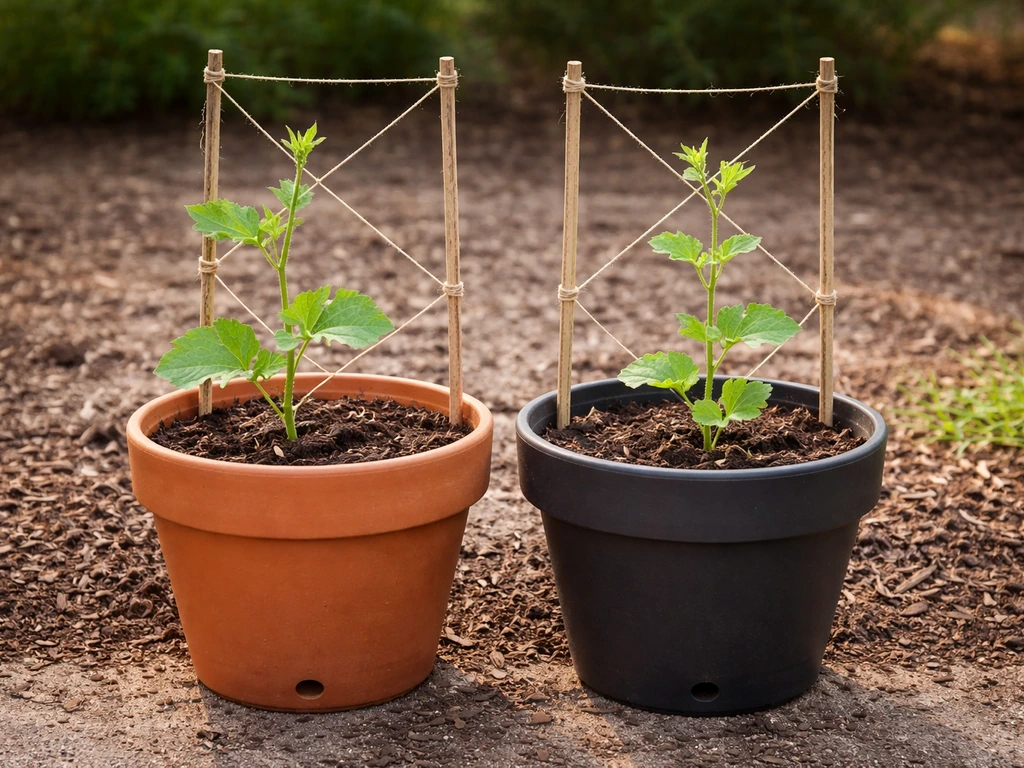
This is where most beginners go wrong. They grab whatever pot is sitting around and wonder why the plant struggles. Bottle gourd is a vigorous vine with a deep, thirsty root system. You need a minimum of 20 liters (about 5 gallons) per plant, but honestly, bigger is better. A 10 to 15 gallon container gives the roots more room to breathe and reduces how often you need to water. Go for 15 to 20 gallons if you have the space and the budget.
For material, unglazed terracotta looks beautiful but dries out fast in summer heat, which means more watering. A heavy-duty plastic grow bag or a fabric pot in the 15 to 20 gallon range is what I'd recommend for most urban gardeners. Fabric pots especially encourage good root health and drain well. Whatever you use, drainage holes at the bottom are non-negotiable. Bottle gourd hates sitting in waterlogged soil and will rot fast if drainage is poor.
For the trellis, plan for this before you sow. A simple A-frame trellis made from bamboo stakes, a wall-mounted wire grid, or even a repurposed tomato cage works well for one plant on a balcony. The vine needs something to grip with its tendrils. If you're growing on a terrace, a rope trellis stretched between two points works great and lets the gourds hang freely. Hanging gourds grow straighter and are easier to harvest too.
The right soil mix and a fertilizing plan that actually works
Do not use garden soil straight from the ground in a container. It compacts, drains poorly, and chokes roots. What bottle gourd roots need is a mix that holds some moisture but also lets air in. A good container mix combines three parts quality potting mix, one part compost or well-rotted manure, and one part coarse perlite or coarse sand. The perlite or sand keeps things loose so roots don't suffocate. If you can add a handful of neem cake powder to the mix, even better. It deters pests and adds slow nutrition.
For fertilizing, think in three phases. In the first three to four weeks, the plant mostly needs nitrogen to build leaves and vines. A balanced liquid fertilizer (like a 10-10-10 or a fish emulsion) every ten days works well. Once the plant starts flowering, which usually happens around week four to six, switch to a phosphorus and potassium-rich feed. This is what drives flower and fruit development. Avoid heavy nitrogen at this stage or you'll get lush vines and no fruits. Once fruits are actively swelling, a weekly dose of potassium-rich fertilizer like potassium sulphate solution keeps production going. Container soil runs out of nutrients faster than garden beds, so consistent feeding is not optional here.
Sowing seeds or transplanting: step by step
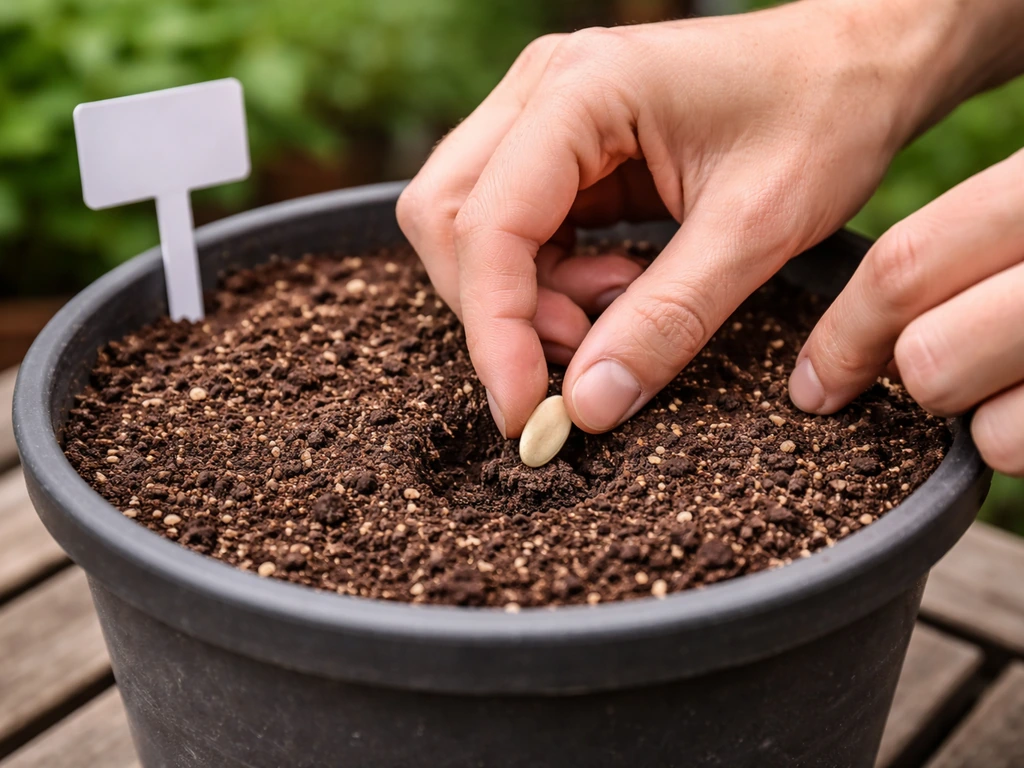
Bottle gourd doesn't love having its roots disturbed, so direct sowing into the final container is usually the better option. If you want to start indoors first (useful if your outdoor temps are still cool), use biodegradable peat pots so you can transplant the whole thing without disturbing the roots. Move seedlings outdoors only when soil temperatures are consistently above 65°F (18°C), and ideally around 70°F (21°C) for best results. Seed germination references from the American Gourd Society indicate viable gourd seeds can germinate in about 3, 5 days and recommend 14, 16 hours of light per day during germination blank" rel="noopener noreferrer">viable gourd seeds can germinate in about 3–5 days and recommend 14–16 hours of light per day during germination.
- Fill your container with the prepared soil mix, leaving about 2 inches of space at the top for watering.
- Soak the seeds in lukewarm water for 12 to 24 hours before planting. This softens the seed coat and speeds germination noticeably.
- Make holes about 1 to 1.5 inches deep in the center of the pot.
- Place 2 to 3 seeds per container, spaced a couple of inches apart.
- Cover lightly with soil, water gently, and keep the container in a warm spot. Soil temperature above 65°F is the key trigger.
- Germination typically takes 7 to 14 days, though with warm soil (around 85°F) and pre-soaked seeds, you might see sprouts in as little as 3 to 5 days.
- Once seedlings have two to three true leaves and you can clearly see which one is strongest, thin down to one seedling per container. Snip the weaker ones at soil level rather than pulling them out, so you don't disturb the winner's roots.
If you're transplanting seedlings from a nursery or from indoor-started pots, handle the rootball gently, plant at the same depth it was growing before, water in well, and give it a few days of partial shade before moving to full sun. This hardening-off period matters.
Sunlight, watering, and temperature: what the plant actually needs
Bottle gourd is a full-sun crop. It needs at least 6 to 8 hours of direct sunlight per day to grow well and set fruits. A south-facing balcony or rooftop in summer is perfect. If your space only gets 4 to 5 hours of direct sun, the plant will grow but flowering will be sparse and fruit set will be disappointing. There's no workaround here: sun is the main driver.
For temperature, bottle gourd loves heat. It thrives between 25°C and 35°C (77°F to 95°F) and slows down or stalls below 15°C (59°F). In India, the best sowing windows are February to March in most regions, or June to July in areas with moderate monsoon conditions. Avoid sowing in the dead of winter or during peak cold snaps.
Watering is where container growers make the most mistakes, usually in one of two directions: too much or too little. Bottle gourd needs consistent moisture but absolutely cannot tolerate soggy soil. A good rule of thumb: water deeply every day or every other day in peak summer, making sure water drains freely from the bottom. Stick your finger an inch into the soil. If it feels dry at that depth, water. If it still feels damp, wait another day. The research backs this up: bottle gourd actually needs significantly less irrigation than crops like cucumber, so don't overcompensate. Water deeply, then let the top inch of soil dry out slightly before the next watering.
Pruning and training vines to fit your space
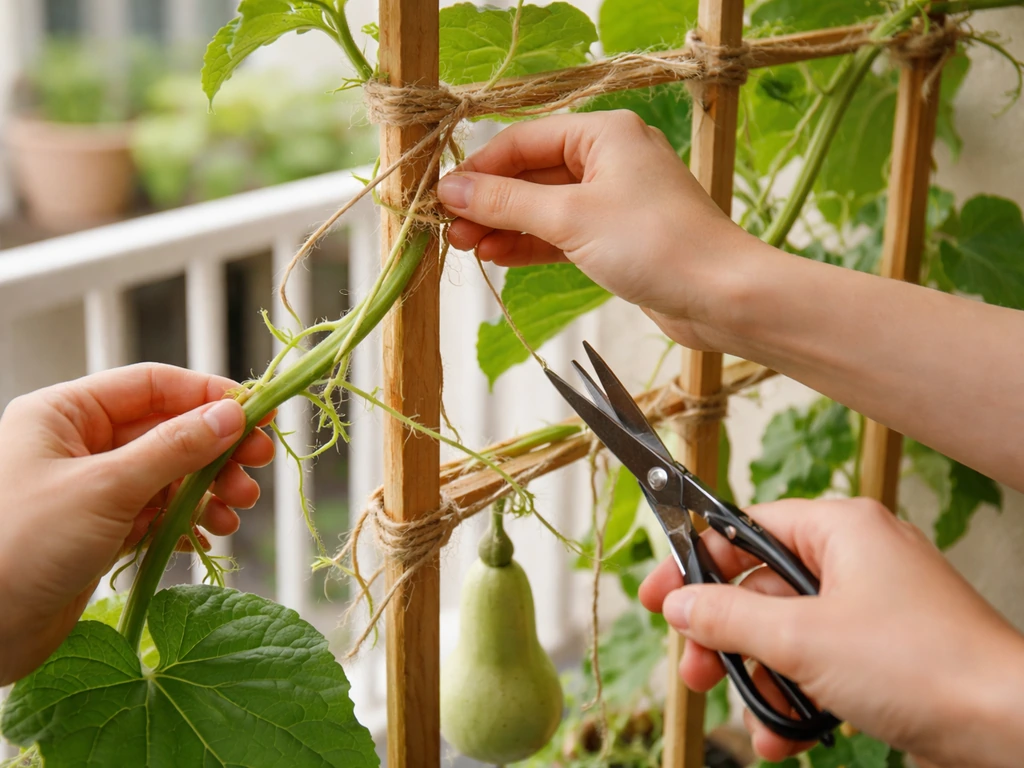
Left alone, a bottle gourd vine will run 3 to 5 meters or more. On a balcony, that's not practical. The good news is that you can manage the vine aggressively without hurting production, and in fact, strategic pruning often improves it.
The main vine (primary vine) produces mostly male flowers early on. Female flowers, which become your gourds, typically appear on secondary and tertiary side shoots. So here's the strategy: let the main vine grow until it reaches the top of your trellis, then pinch out the growing tip. This forces the plant to push energy into side shoots, which is where the fruit action happens. As side shoots grow, train them horizontally along wires or rope to spread them out without taking up more vertical space.
Remove any dead, damaged, or crowded leaves to keep air circulating through the plant. Dense foliage invites fungal problems. In a container, you're better off with a slightly open, well-trained plant than a wild tangled mess, even if the wild vine looks impressive. Tie shoots loosely to the trellis with soft garden ties or strips of fabric, never wire, which can cut into stems.
Troubleshooting pests and diseases in containers
Container plants on balconies get fewer soil-borne pest problems than garden beds, but they're not immune. Here are the main issues to watch for with kaddu and how to handle each one.
Powdery mildew (white dusty patches on leaves)
Powdery mildew is the most common fungal problem for bottle gourd, especially when humidity is high and airflow is poor. You'll see a white or grey powdery coating on the upper surface of leaves. Treat early, because it spreads fast. A neem oil spray (5 ml neem oil plus a few drops of dish soap in 1 liter of water) applied in the evening works well as both a preventive and early-stage treatment. Sulphur-based fungicides are another effective option. The key is catching it early and not letting it establish.
Downy mildew (yellow patches, fuzzy underside)
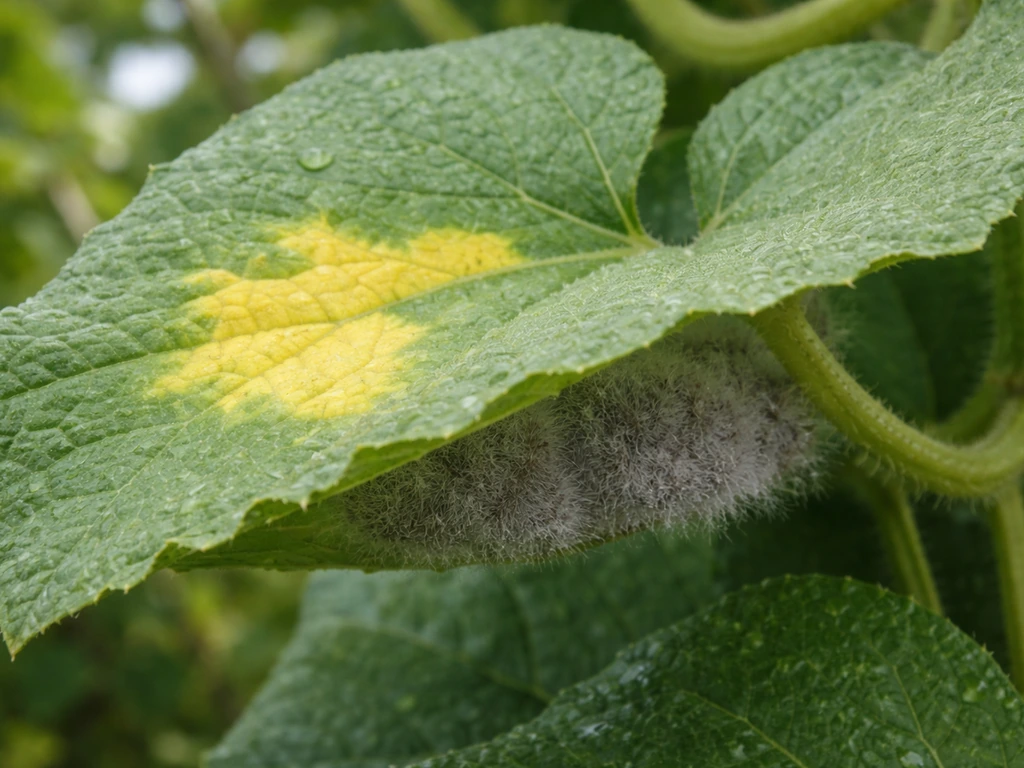
Downy mildew looks different: you'll see irregular yellow patches on the top of leaves and a greyish-purple fuzz on the underside. It thrives in cool, wet conditions. Preventive sprays with copper-based fungicides or products containing mancozeb or chlorothalonil can help manage it. Remove and dispose of badly infected leaves immediately. Don't compost them.
Aphids and whiteflies
Aphids cluster on tender new shoots and the undersides of young leaves, sucking sap and weakening growth. Whiteflies do similar damage and also spread viruses. A strong spray of water knocks them off. For persistent infestations, neem oil spray works well. Check plants every couple of days during warm weather because populations build fast.
Squash vine borer
If you see the base of your vine suddenly wilting and find a sawdust-like substance near the stem, you may have a vine borer. These are larvae that bore into the stem. Start watching for adult moths as soon as plants are established, and if you spot them, neem oil, spinosad, or pyrethrin-based sprays are your best tools. Treat early, because once the larvae are inside the stem, options narrow significantly.
Poor fruit set (flowers dropping, no gourds forming)
This is frustrating but common. Bottle gourd flowers need to be pollinated to set fruit. If you're on a high-rise balcony where bees don't visit much, you may need to hand-pollinate. In the morning, take a small soft paintbrush or even a cotton swab, collect pollen from a male flower (the one with a simple straight stem), and transfer it to the center of a female flower (the one with a tiny gourd shape at its base). Do this on multiple mornings for best results. Also check that the plant is getting enough sun and that you've switched to a lower-nitrogen fertilizer once flowering begins.
When and how to harvest to keep the plant going
For eating, bottle gourd is harvested young and tender. This is roughly 7 to 14 days after the female flower opens and the fruit begins swelling. At this stage, the skin is still soft, the flesh is mild and watery, and the seeds are undeveloped. From the date of sowing, you're typically looking at 55 to 75 days to first harvest. That's a useful benchmark to set expectations: don't panic if nothing's ready in week four.
To check if a lauki is ready for eating, press the skin lightly with your thumbnail. If it pierces easily, the gourd is tender and ready. If the skin is hard and resists, it's passed the edible stage and is maturing toward a dried gourd. For cooking purposes, harvest on the younger side.
Use a sharp knife or garden scissors to cut the gourd from the vine. Don't pull or twist, because that can damage the vine or nearby developing fruits. Leave a short stub of stem on the fruit. Harvest regularly, ideally every two to three days once production starts. This is really important: leaving mature fruits on the vine signals the plant to stop producing. The more you harvest young gourds, the more fruits the plant sets. Think of it as the plant being on a constant mission to set seed, and your job is to keep interrupting it productively.
A simple container kaddu schedule to keep you on track
| Week / Stage | What to Do |
|---|---|
| Week 1: Sowing | Soak seeds 12-24 hrs, sow 1-1.5 inches deep in filled container, keep warm (65°F+ soil temp), water gently |
| Weeks 1-2: Germination | Keep soil consistently moist, expect sprouts in 7-14 days (sooner with warm soil), place in sunny spot |
| Weeks 2-3: Seedling stage | Thin to one plant, begin liquid fertilizer (balanced), tie main vine to trellis as it climbs |
| Weeks 3-5: Vine growth | Water daily in hot weather, feed every 10 days, train side shoots horizontally, pinch main vine tip at trellis top |
| Weeks 4-6: Flowering | Switch to low-nitrogen, high-P/K fertilizer, hand-pollinate if needed, watch for pests daily |
| Weeks 6-10: Fruiting | Harvest young gourds every 2-3 days, keep feeding weekly with potassium-rich fertilizer, remove yellowing leaves |
| Ongoing | Continue pruning, harvesting, feeding, and monitoring for pests to keep plant productive for the season |
Growing kaddu in a pot is genuinely doable, even on a small balcony. For a similar pot setup, you can also follow this guidance when growing rajnigandha in containers how to grow rajnigandha in pots.
अगर आप जानना चाहते हैं कि how to grow vegetables in pots in hindi के हिसाब से टविस्ट-बाय-टविस्ट प्लान कैसे बनाएं, तो इस शेड्यूल को फॉलो करें और अपने कंटेनर, धूप, पानी, और खाद को उसी अनुसार सेट करें। Growing kaddu in a pot. Manathakkali keerai also grows well in pots if you use a roomy container, well-draining soil, and keep it evenly moist manathakkali keerai in pots.
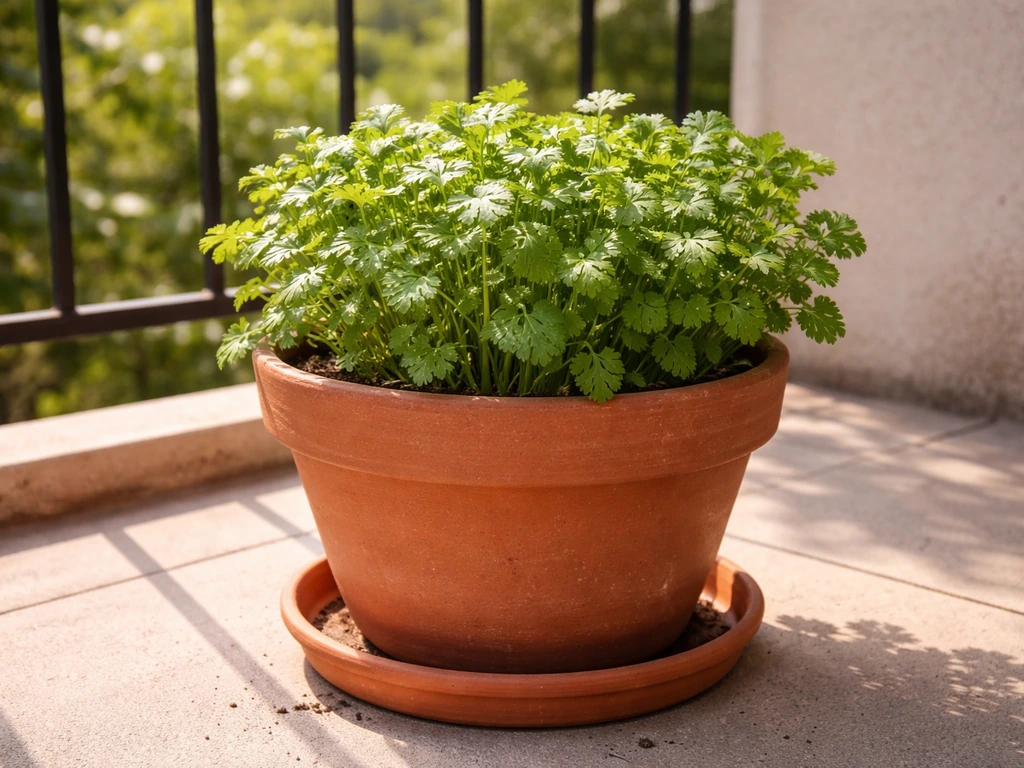
You can apply the same pot-size, trellis, soil mix, and watering principles when learning how to grow alugbati in pots. It takes some setup at the start, mostly around getting the pot size and trellis right, but once the vine gets going in warm weather, it moves fast and rewards consistent attention. For dhaniya (coriander) in pots, focus on a shallow container with well-draining soil, keep it evenly moist, and harvest leaves regularly to slow bolting grow dhaniya in pots.
If you enjoy growing climbing vegetables in containers, bottle gourd pairs well with other vigorous growers like karela (bitter gourd) or bhindi, and many of the same care principles apply. If you are specifically wondering how to grow palak in pots, focus on light shade, frequent but gentle watering, and nutrient-rich soil to keep leaves tender.
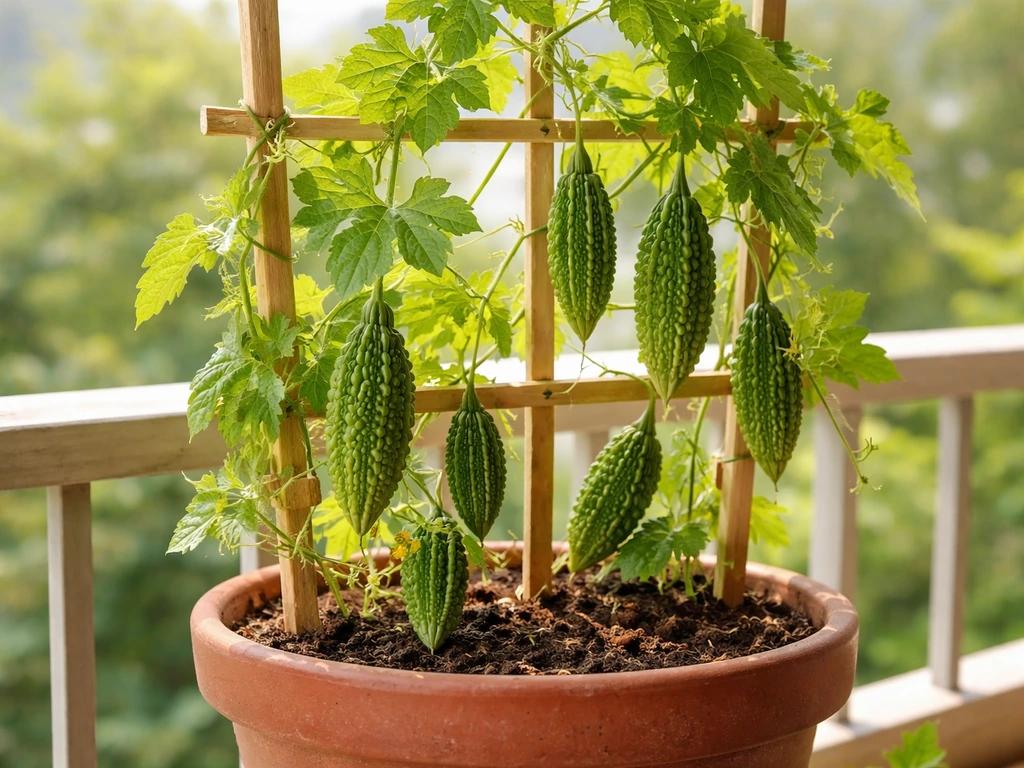
You can use the same container sizing, trellis support, and consistent watering habits to figure out how to grow karela in a pot karela (bitter gourd). If you want, you can also follow the same pot-gardening thinking to learn how to grow bhindi in pots. Start with one plant, get comfortable with the rhythm, and you'll likely want to grow it every season.
FAQ
What pot size should I choose if I want to grow more than one kaddu plant on a balcony?
For bottle gourd, plan on at least one large pot per plant. If you must place two plants close together, use separate containers that are still 15 to 20 gallons each, and give the trellis enough width so the vines do not tangle. Crowding reduces airflow and makes mildew more likely.
Can I grow kaddu in a smaller pot than 20 liters if I want just a few gourds?
You can try, but expect weaker growth and more frequent watering. If you go smaller than about 10 to 15 gallons, drought stress and nutrient depletion usually show up fast, and fruit set becomes inconsistent, especially in hot weather.
How do I prevent root rot in pots, especially during monsoon or rainy weeks?
Use a container mix that drains well (potting mix plus perlite or coarse sand) and ensure the pot has drainage holes. After heavy rain, check that excess water is not pooling in the saucer, and consider raising the pot slightly so water can drain freely away from the base.
When should I stop watering so much, and how can I tell the difference between under and overwatering?
Underwatering often shows as wilting with dry soil around the 1 inch level. Overwatering leads to persistently damp soil and may cause yellowing or a sour smell from the mix. Keep watering deep, then wait until the top inch dries slightly before the next session.
Why does my kaddu flower but no gourds form?
Most often it is pollination plus timing. If you are not seeing bees or you are growing in very windy or enclosed spaces, hand-pollinate in the morning for multiple days. Also confirm you shifted away from high nitrogen once flowering began, because excess nitrogen commonly delays fruiting.
How often should I prune, and what exactly should I pinch out?
Prune once the main vine reaches your trellis top. Pinch out only the growing tip (do not cut major secondary stems), then train side shoots horizontally. Remove dead or crowded leaves as needed, aim for light airflow through the canopy, not a fully bare plant.
My trellis is breaking under the vine, what support setup works better for heavier fruits?
For pumpkin-type kaddu, add extra reinforcement before fruit starts swelling, use sturdy stakes or a wire grid that is anchored, and create slings (soft cloth or net) to support developing fruits. For bottle gourd, proper training and harvesting young usually reduces stress, but still avoid tying too tightly.
Do I need to repot or add more soil during the season in a pot?
Generally no, but you should top up if the mix compacts or sinks over time. If the plant’s crown starts sitting too low, add a small amount of fresh mix around the base without burying the stem too deeply, and keep an eye on drainage after top-ups.
What is the safest way to start seeds when I cannot sow in warm weather right away?
Direct sowing is easiest, but if nights are cool, start in biodegradable peat pots so you can transplant without disturbing roots. Harden off with a few days of partial shade before full sun, and transplant only when soil temperatures are reliably warm (around 18°C or higher).
How can I tell when to harvest, and should I harvest every day?
Harvest when the skin is tender enough to pierce easily with a thumbnail. Once you start seeing good production, harvest every two to three days, not weekly, because leaving mature fruits signals the plant to slow down and will reduce the next flush.
What should I do with diseased leaves, especially if mildew shows up early?
Remove infected leaves promptly and dispose of them in the trash, do not compost. In container gardens, catching powdery mildew early with neem oil or an appropriate fungicide works best, because established infections spread quickly within dense foliage.
Are neem oil sprays safe for pollinators and edible vines?
Apply in the evening as you already would for fungal control, and avoid spraying during active pollination hours (early morning). Use the recommended dilution and keep spray off flowers when possible, then wash edible gourds before eating.
Why do pests keep returning even when I treat once?
Most container pest outbreaks build quickly on tender new growth. Check plants every couple of days during warm weather, treat early, and continue monitoring after the first application, because eggs and later hatchings can re-establish infestations.