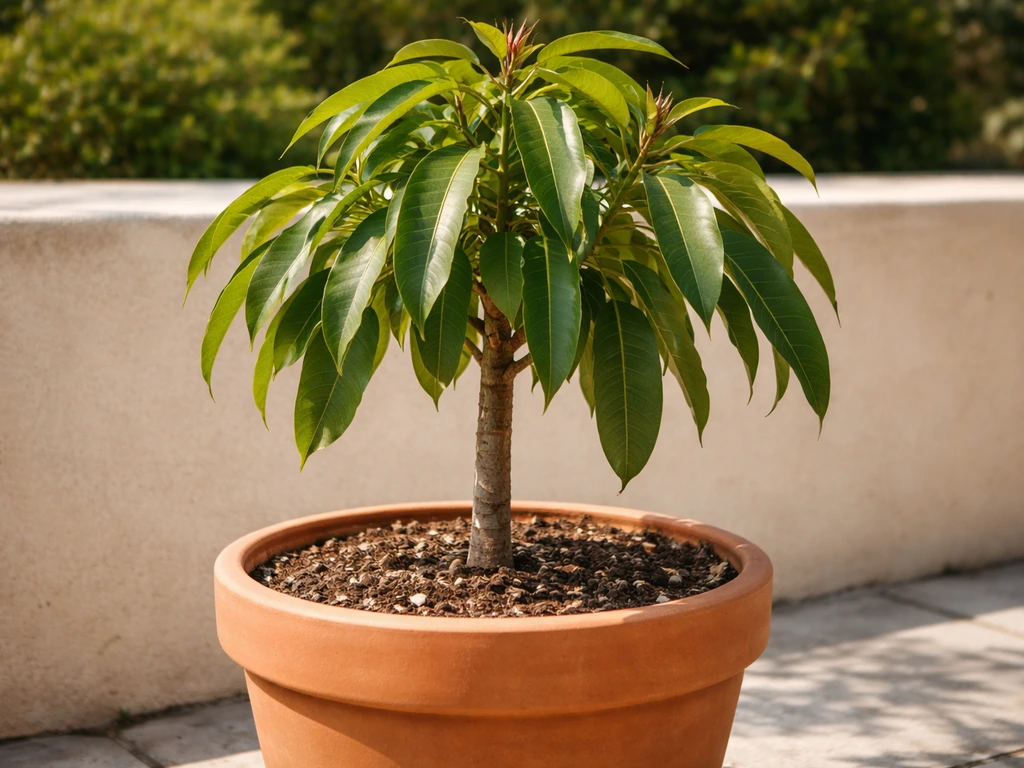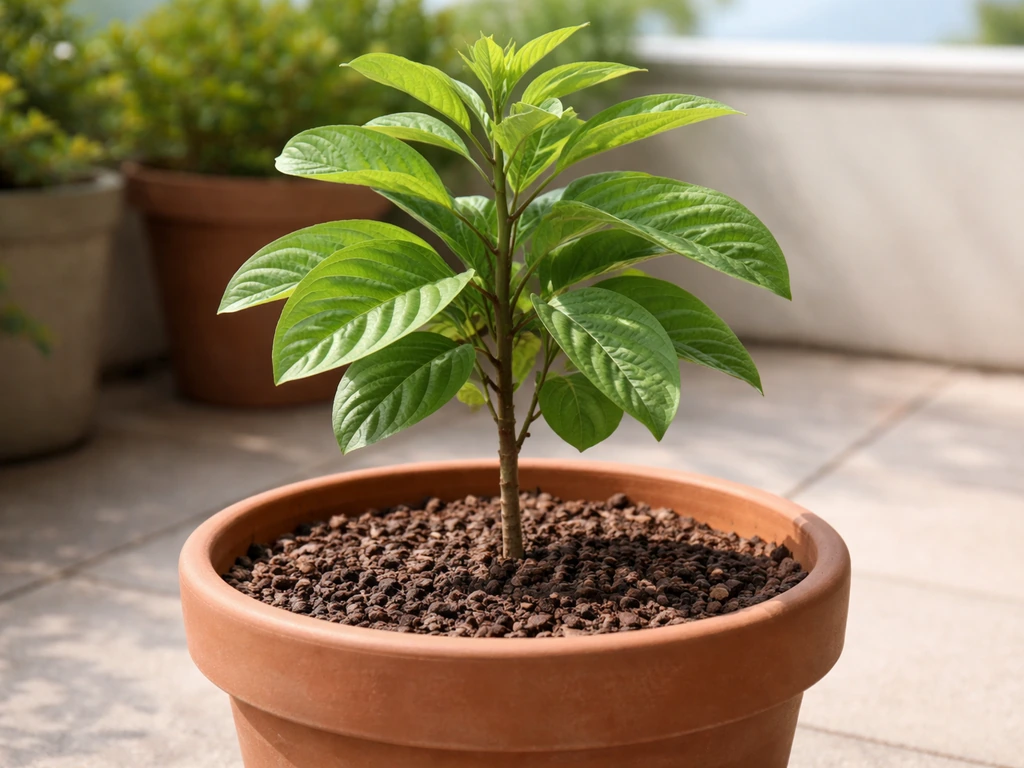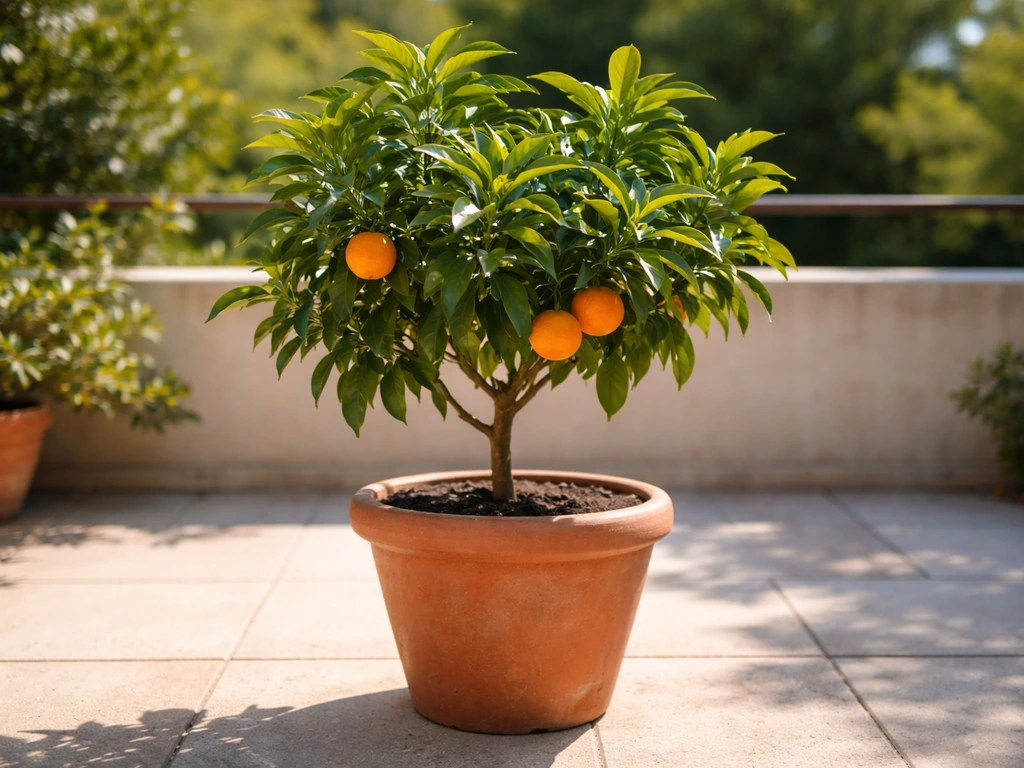
Yes, you can grow sapota (also called sapodilla or chiku) in a pot, and it can actually fruit in a container if you give it the right conditions. Start with a grafted sapling in a 15–20 gallon pot, use a well-draining mix of loam, coarse sand, and compost, place it in full sun for at least 6–8 hours a day, and water deeply but only when the top 2 inches of soil feel dry. If you want the citrus version, learn how to grow mandarin oranges in a pot using similar container basics like drainage, sun, and careful watering. That's the core of it. The rest of this guide fills in every detail so you can go from empty pot to your first chiku harvest.
How to Grow Sapota in a Pot: Step by Step Care Guide
Marcus Whitley
12 Jun 2026
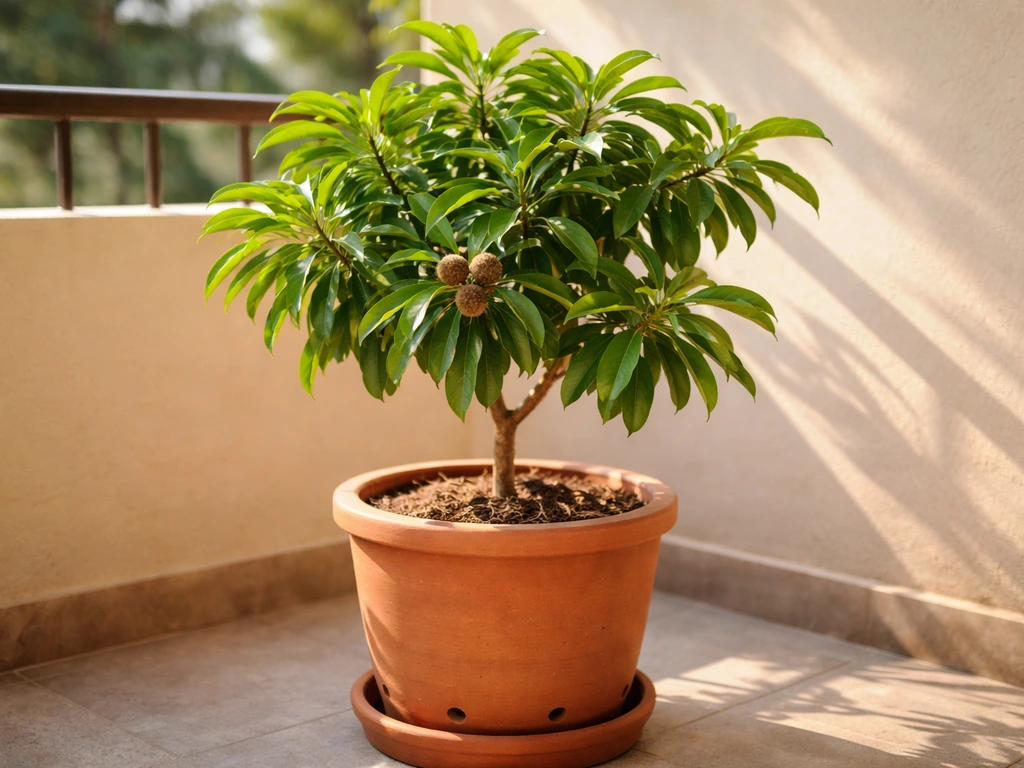
Best sapota varieties for containers
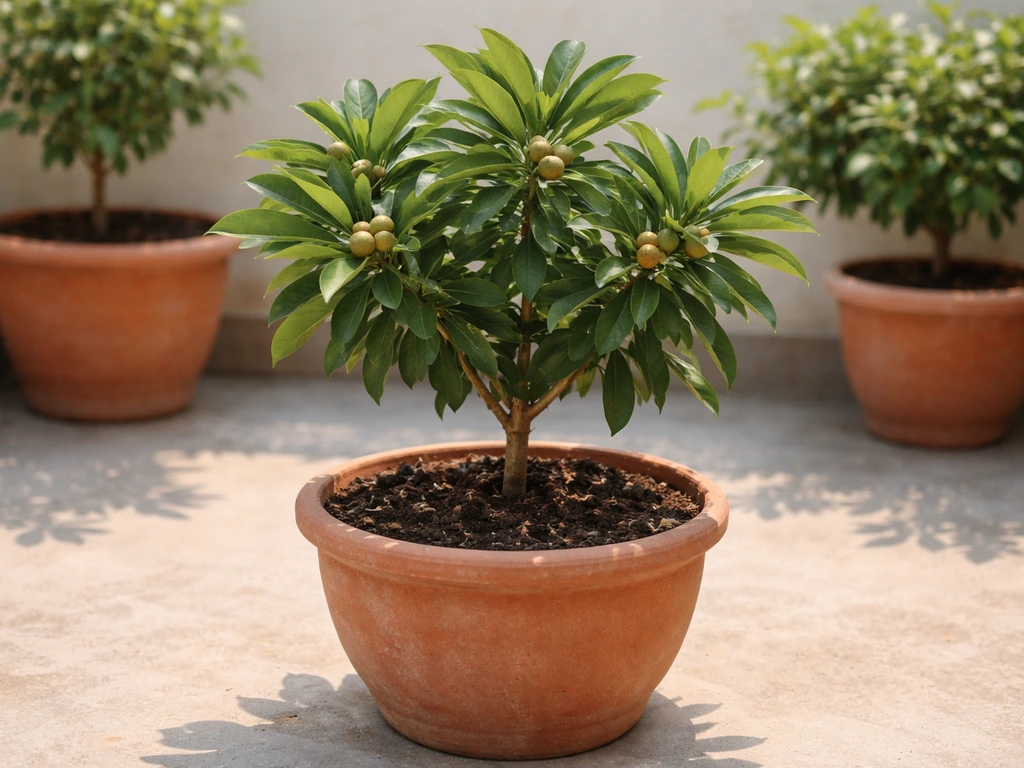
Not every sapota variety suits container life equally. The ones that work best in pots tend to stay more compact, fruit earlier, and tolerate the stress of restricted roots without throwing a tantrum. Here are the varieties worth considering:
- Kalipatti: The most popular chiku in South Asian home gardens. Medium-sized tree, prolific fruiter, adapts reasonably well to pots with regular pruning. This is my go-to recommendation for beginners.
- Cricket Ball: Produces large, round fruit. Grows vigorously, so you'll need to prune more actively to keep it pot-sized, but the fruit quality makes it worth the effort.
- Baramasi: A heavy, near-continuous bearer that flowers across multiple seasons. Excellent for pots because consistent fruiting means you're always motivated to care for it properly.
- PKM 1 and PKM 2: Bred in India specifically for improved yields and earlier bearing. Compact habit makes them naturally suited to containers.
- Oval (Pilipili): Slightly smaller fruit, but the tree itself is more restrained in size, which is genuinely useful when you're working with limited balcony or patio space.
If you're in Florida or a similar subtropical climate, varieties like Prolific, Alano, and Brown Sugar are well-adapted local options. Brown Sugar in particular has a rich, sweet flavour and performs well in containers with proper care. Avoid planting unnamed seedling trees in pots, you won't know the growth habit or fruit quality, and you'll wait a very long time to find out.
Choosing the right pot, spacing, and supports
Pot size is the single decision that affects everything downstream. Too small and roots get cramped, the tree stresses, and you'll see poor growth and no fruit. Too large and the excess soil stays wet, which invites root rot. Here's the progression I recommend:
| Tree Stage | Recommended Pot Size | Notes |
|---|---|---|
| Freshly purchased sapling (under 1 ft) | 5–7 gallon (approx. 30 cm diameter) | Just enough room to establish without drowning roots in wet soil |
| Young tree, 1–2 years in container | 15–20 gallon (approx. 45–50 cm diameter) | This is the real workhorse pot — where most of its productive life happens |
| Mature fruiting tree | 25–30 gallon (approx. 55–60 cm diameter) | Upsize only when roots are visibly circling or escaping drainage holes |
Material matters too. Terracotta pots breathe well and help prevent waterlogging, which is great for sapota, but they're heavy and dry out faster in summer heat. Thick plastic or fabric grow bags are lighter and more forgiving, fabric bags in particular air-prune the roots naturally, which prevents the root circling that eventually kills container trees. I've had great results with 20-gallon fabric grow bags for established sapota trees.
Drainage holes are non-negotiable. Your pot needs at least 3–4 holes at the base, each at least 1.5 cm wide. If your favourite decorative pot only has one small hole, either drill more or use it as a cachepot with a proper nursery container inside. Elevating the pot on pot feet or bricks also helps water escape freely and stops the holes from getting blocked.
Spacing and supports: if you're growing on a balcony or patio, position the pot where it won't block airflow for neighbouring plants, and where you can actually reach all sides for pruning. Sapota doesn't need a stake once established, but a young sapling in a windy spot benefits from a bamboo stake for the first year while the trunk firms up. Space containers at least 1.5–2 metres apart if growing multiple trees.
Soil mix and potting setup for strong growth
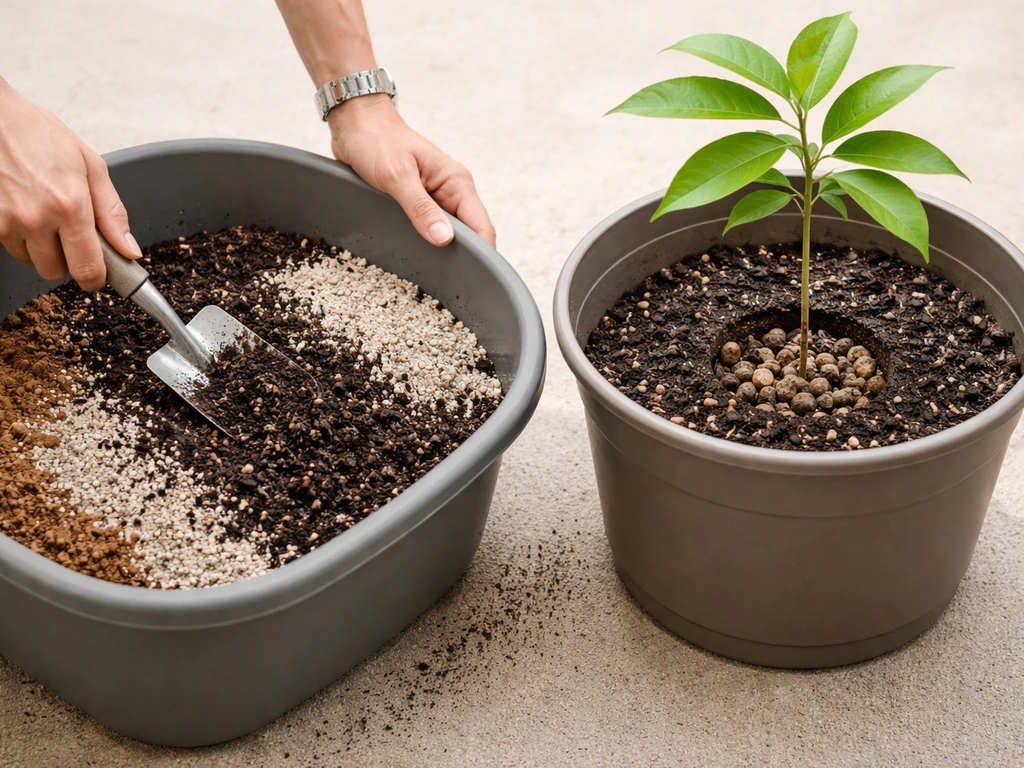
Sapota needs soil that drains fast but still holds enough moisture and nutrients to feed a fruit tree. Standard potting mix straight from the bag is usually too light and breaks down quickly in containers. Here's a mix that actually works:
- 40% garden loam or good quality topsoil — provides weight, structure, and mineral content
- 30% coarse river sand or perlite — ensures drainage and prevents compaction
- 20% well-rotted compost or vermicompost — feeds the tree and improves moisture retention without waterlogging
- 10% coco peat — adds lightness and helps buffer moisture levels
Before filling the pot, add a 3–4 cm layer of coarse gravel or broken terracotta shards at the bottom over the drainage holes. This stops the holes from clogging with fine soil without blocking water flow. Then fill with your mix to about 5 cm below the rim, you need that gap so water doesn't run off before it soaks in.
When potting up the sapling, position it so the graft union (the small bump or scar near the base of the stem) sits above the soil level, not buried in it. Burying the graft union causes rotting and defeats the purpose of buying a grafted tree in the first place. Firm the soil gently around the roots, water thoroughly, and place the pot in a bright, sheltered spot for the first week before moving it to full sun.
Top-dress the soil every 6 months with a 2–3 cm layer of compost. This replaces nutrients that leach out with watering and keeps the soil structure from degrading over time. You don't need to repot frequently, repot only when roots are crowding out the drainage holes or the tree looks severely root-bound despite normal watering.
Starting from seed vs buying a grafted sapota sapling
This decision has a bigger impact than most beginners realise. Both methods work, but they lead to very different timelines and outcomes. Here's an honest breakdown: PROSEA reports that sapodilla seedling trees can take about 6, 10+ years to start flowering, while grafted trees begin in roughly 4, 6 years and marcotted (air-layered) trees can start in about 3, 4 years different timelines.
| Factor | Seed-Grown | Grafted Sapling |
|---|---|---|
| Time to first fruit | 6–10+ years (sometimes longer) | 2–4 years in a container with good care |
| Fruit quality | Unpredictable — may not match the parent fruit | True to the parent variety, consistent quality |
| Cost | Essentially free if you save seeds | Higher upfront cost (usually a few hundred rupees or a few dollars) |
| Tree size/habit | Often more vigorous, harder to keep compact | More predictable, easier to manage in a pot |
| Disease resistance | Variable | Grafted onto rootstock selected for vigour and resistance |
| Fun factor | High — great learning experience | Lower, but you get fruit much sooner |
My recommendation: buy a grafted sapling from a reputable nursery. The time difference is enormous. Waiting 6–10 years for a seed-grown tree to fruit in a pot, where it's also under more stress than a ground-planted tree, is a long commitment with no guaranteed payoff. Grafted trees from IFAS-recommended Florida sources or from certified nurseries in India start bearing in about 2–4 years, and you know exactly what fruit you're getting.
If you want to try seeds anyway (it's a genuinely satisfying project), fresh seeds germinate well. Clean the seed, soak it for 24 hours, then plant it about 2 cm deep in moist seed-starting mix. Germination takes 2–4 weeks in warm conditions. Grow the seedling in a small pot for the first year before moving to a larger container. Just go in knowing you're playing the long game.
Air layering (marcotting) is a third option worth knowing about. Marcotted trees can begin fruiting in as little as 3–4 years and are genetically identical to the parent tree. If you have access to a mature sapota tree and want to propagate your own, marcotting is faster than seeds and cheaper than buying a grafted sapling.
Light, watering schedule, and drainage essentials
Sunlight
Sapota is a full-sun tree. It wants a minimum of 6 hours of direct sunlight daily, and 8–10 hours is better if you want fruit. On a balcony or patio, position the pot on the sunniest side of the building. South-facing or west-facing spots in the northern hemisphere are usually your best options. If the tree sits in partial shade, it'll survive but grow slowly and likely won't fruit in a pot, the energy requirements for flowering and fruiting simply aren't met. Indoor growing is not practical for fruiting unless you have a very bright greenhouse setup.
Watering
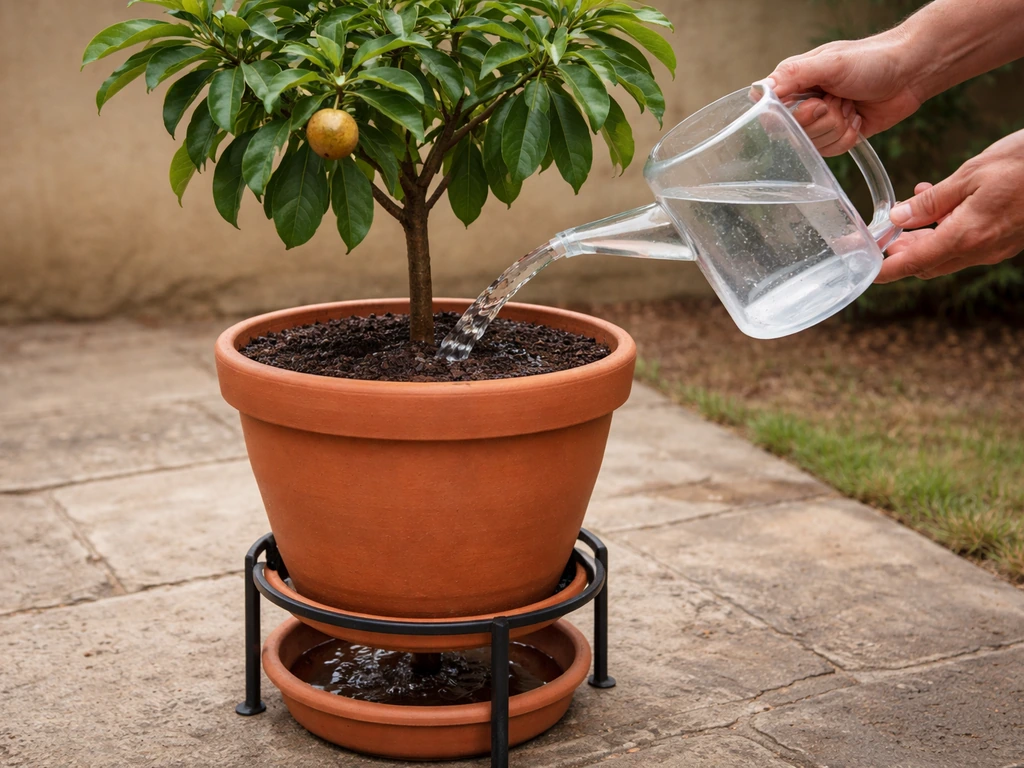
Container-grown sapota dries out faster than ground-planted trees, especially in summer, but it also drowns faster in a pot with poor drainage. The rule I follow: water deeply when the top 2 inches (about 5 cm) of soil feel dry to the touch. Push your finger into the soil, if it's still moist below the surface, hold off. When you do water, pour slowly until water runs freely from the drainage holes, then stop. Don't water again until that top layer dries out.
- Summer (hot, dry weather): likely every 2–3 days for a mature container tree
- Monsoon or rainy season: reduce watering significantly; the pot may need none between rain events
- Winter or cooler months: once a week or less; sapota slows down and uses far less water
- Young saplings: more frequent light watering until established, then shift to the deep-and-dry method
Root rot is the most common killer of container sapota. It shows up as yellowing leaves, sudden wilting despite moist soil, and a musty smell from the potting mix. If you catch it early, let the soil dry out completely before watering again and improve drainage. If the root ball is already brown and mushy when you check, the tree may be beyond saving. Prevention is much easier than cure: never let the pot sit in a tray of standing water, and make sure those drainage holes stay clear.
Fertilizing plan and nutrient needs in pots
Container soil loses nutrients faster than garden soil because every watering flushes some out through the drainage holes. Sapota is a relatively slow-growing fruit tree, so it doesn't need heavy feeding, but it does need consistent, balanced nutrition. Here's a practical schedule:
| Timing | Fertilizer Type | How to Apply |
|---|---|---|
| Early spring (start of growing season) | Balanced granular fertilizer (NPK 10-10-10 or similar) | Sprinkle around the base, water in well. About 100–150g for a 20-gallon pot. |
| Every 4–6 weeks through summer | Liquid balanced fertilizer or fish emulsion | Dilute to half the recommended strength, apply as a drench after watering |
| Before and during flowering/fruiting | Low-nitrogen, higher potassium and phosphorus feed (e.g. NPK 5-10-15) | Switch to this ratio to support flower set and fruit development |
| Mid-autumn | Potassium sulphate or wood ash tea | Boosts fruit quality and hardens the tree before cooler months |
| Winter | No fertilizer | Tree is resting; feeding now pushes soft growth that can be damaged by cold |
Organic options work very well for container sapota. A mix of vermicompost, neem cake, and bone meal applied every two months gives steady, slow-release nutrition without the risk of over-fertilising. Over-fertilising with nitrogen causes lush leafy growth at the expense of flowers, if your tree is growing enthusiastically but not flowering, cut back on nitrogen and boost potassium instead.
Micronutrient deficiencies are common in container trees because trace minerals leach out over time. If you see yellowing between the leaf veins (while the veins stay green), that's usually iron or manganese deficiency. A foliar spray of chelated micronutrients or a dose of seaweed extract every 6–8 weeks helps prevent this. Sapota also appreciates a light dusting of garden lime or dolomite every year to maintain slightly acidic to neutral pH (around 6.0–7.5 is ideal).
Pruning, training, and managing height and fruiting
Left alone, a sapota tree can grow 12–18 metres tall in the ground. In a pot, you're not going to hit those numbers, but without pruning you'll still end up with a lanky, unproductive tree that's impossible to manage on a balcony. The goal is to keep it at 1.5–2 metres, with a bushy, open canopy that gets plenty of light and air in the centre.
Initial shaping (first two years)
When your sapling reaches about 60–75 cm tall, pinch or cut the growing tip. This forces the tree to branch out laterally rather than shooting straight up. From those branches, select 3–4 strong ones that spread outward at roughly equal angles, these become your main scaffold branches. Remove anything that's growing inward toward the centre of the canopy or crossing other branches. Do this shaping in early spring before the main growing season.
Annual maintenance pruning
Once the framework is established, prune lightly every year after harvest (or in early spring if the tree didn't fruit yet). Remove dead or diseased wood first, then any branches that cross or rub against each other. Shorten long, whippy shoots by about a third to encourage bushier growth. Keep the centre open so light reaches the inner branches, this is where fruiting spurs develop. Heavy pruning all at once stresses the tree and can set back fruiting, so trim a little each year rather than doing a major chop every few years.
Sapota flowers and fruits on relatively new wood, so some tip pruning also encourages fresh productive growth. If your tree is healthy and growing well but not flowering, check that it's getting enough light and potassium, those are usually the two factors holding it back in container culture, more often than pruning.
Height control over time
For longer-term height management, train the tree to a modified central leader or an open-vase shape with no single dominant upright trunk above 1.5 metres. Any time a vertical shoot tries to race upward and dominate, cut it back to a lateral branch. This keeps the tree wide and compact rather than tall and narrow. Think of it less like pruning a hedge and more like steering the tree's energy where you want it.
Common pest and disease issues in containers (and how to fix them)
Container-grown trees are actually somewhat less exposed to soil-borne pests than ground-planted ones, but they face their own set of problems, mostly from stress, overcrowding, or inconsistent care. Here are the issues I see most often with potted sapota:
Leaf and fruit problems
| Symptom | Likely Cause | What to Do |
|---|---|---|
| Yellow leaves overall, slow growth | Overwatering or waterlogged roots | Let soil dry out, check drainage holes, reduce watering frequency |
| Yellow leaves with green veins | Iron or micronutrient deficiency | Spray chelated iron or seaweed extract; check soil pH isn't too alkaline |
| Leaves curling inward, dry edges | Underwatering or heat stress | Water deeply; move pot out of direct afternoon sun temporarily |
| Sticky leaves, visible small insects | Mealybugs or aphids | Spray with neem oil solution (5ml neem oil + 1ml dish soap per litre of water); repeat weekly for 3 weeks |
| Brown, scabby patches on fruit skin | Fungal infection or sapota fruit borer | Remove affected fruit; spray copper-based fungicide; improve air circulation |
| Fruit dropping before ripe | Irregular watering or sudden temperature change | Maintain consistent watering; mulch the top of the pot to buffer temperature swings |
| Roots visible at surface, slow growth despite feeding | Root-bound — time to upsize the pot | Move to the next pot size up using fresh soil mix |
Pests to watch for
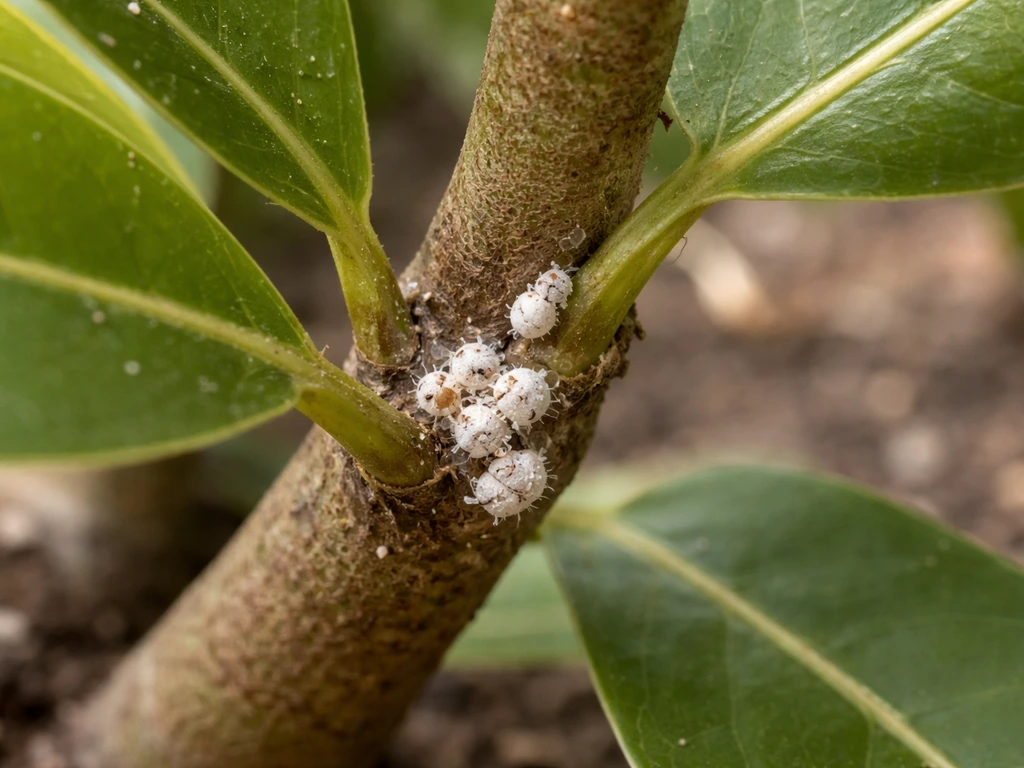
Mealybugs are the number one pest on container sapota. They hide in leaf axils and along stems, look like white cottony fluff, and suck sap from the plant. Catch them early and a neem oil spray handles them easily. Catch them late and they'll weaken the tree significantly. Check the undersides of leaves and the joints where leaves meet stems every time you water. Scale insects show up as brown or white bumps on stems, scrape them off manually and follow up with neem oil. Aphids tend to target new soft growth in spring; a strong jet of water knocks most of them off.
Cold and heat stress
Sapota is a tropical tree and doesn't tolerate frost. If temperatures drop below 2–4°C (35–40°F), move the pot indoors or into a sheltered space. The advantage of container growing here compared to ground planting, something you won't have with a mango tree or most other tropical fruit trees, is that you can actually move it when weather turns bad. If you want a citrus instead, the same container principles can guide you on how to grow tangerines in a pot. Remember that mangoes also benefit from heat and cold protection in containers, so you can keep adjusting the pot’s location to match the weather mango tree. In intense summer heat above 42–44°C (108–111°F), afternoon shade and extra watering help; mulching the top of the pot with a 3–4 cm layer of straw or wood chips reduces soil temperature and moisture loss significantly.
Your go-forward checklist
If you're starting today, here's what your first month looks like: buy a grafted sapling of Kalipatti, Baramasi, or a locally recommended variety; pot it in a 15-gallon container with the loam-sand-compost mix described above; place it in full sun; water when the top 2 inches of soil dry out; and don't fertilise for the first 4 weeks while it establishes. After that, begin a regular feed every 4–6 weeks through the growing season, watch the leaves for any early pest signs, and start thinking about your first light tip prune once the tree puts on 20–30 cm of new growth. Growing sapota in a pot is a multi-year project, but with a grafted sapling and consistent care, you can realistically expect your first fruits within 2–4 years. If you want the same container-friendly approach, you can apply these general container techniques when learning how to grow custard apple in pot Growing sapota in a pot.
FAQ
Can I grow sapota from a store-bought sapodilla seed in a pot, or will it fruit properly?
You can, but expect unpredictable fruit quality, and it may take much longer than grafted trees. If you try seeds, use fresh seed from a ripe fruit, plant promptly, and plan for at least 6 to 10 years in a pot before fruiting (often longer). If you want reliable fruit, start with a grafted or marcotted plant rather than seed-grown.
What pot size should I choose if 15 to 20 gallons feels too big for my space?
For fruiting, smaller containers usually trade speed and yield for stress, unless you are very consistent with watering and nutrition. If you must go smaller, choose the largest you can manage and expect slower growth and a longer time to flowers. Also use fabric pots or very fast-draining mix so excess moisture does not pool around the roots.
How do I prevent root rot if my potting mix always seems to stay damp?
First, confirm your drainage holes are not blocked, and elevate the pot so water can escape freely. Second, add more coarse material to the mix (coarse sand, gravel, or crushed terracotta) so water drains faster while still holding some moisture. Finally, use the “top 2 inches dry” rule and never keep the pot sitting in a saucer or cache container with trapped water.
Should I fertilize right away after potting, or wait?
Wait about 4 weeks after potting so the tree can settle without pushing weak, fertilizer-sensitive growth. After that, start a light, regular feeding schedule during active growth, and avoid heavy nitrogen early. If you see lots of leaf growth but no flowering, reduce nitrogen and emphasize potassium.
My sapota is growing but not flowering, what should I check first?
Start with sunlight, then nutrition balance. Sapota needs enough direct light to trigger flowering, and in containers lack of potassium or inconsistent watering can also suppress blooms. Use a potassium-forward feeding approach rather than increasing nitrogen, and make sure the tree is not being repeatedly over-watered or allowed to fully dry out.
How can I tell whether my graft union is planted correctly?
The graft union should sit above the soil line. If you accidentally bury it, the scion can rot and the tree may lose the benefits of grafting. If you realize it after planting, you may be able to carefully raise the soil level down from the union (without disturbing fine feeder roots too much), otherwise repotting is safer than burying further.
Do I need to repot every year to help sapota in a pot fruit?
Usually no. Repotting too often disturbs roots and can delay growth. Repot only when roots are crowding the drainage holes, the tree dries out immediately after watering, or you see severe root circling. A good interval is every few years, depending on how fast roots fill the container.
When should I prune my container sapota, and how hard can I prune?
Prune lightly after harvest, or in early spring if it did not fruit. Keep the canopy open by removing inward-growing and crossing branches, shorten long shoots by about a third, and avoid a major one-time chop. Heavy pruning at once can cause stress and can set back flowering, since sapota flowers on relatively new growth.
What are the most common container pest issues, and when should I act?
Mealybugs are the big one, especially in leaf axils and on stems where cottony patches appear. Check under leaves and at joints every time you water, and treat early with neem oil or similar controls. Late infestations weaken the tree quickly, and you may need repeated treatments over multiple weeks.
Can I move my sapota indoors during winter, and will it still fruit?
Yes, when temperatures drop near freezing, move the pot to a sheltered bright spot indoors or under cover. Fruit depends on strong sun, so indoor winter conditions can limit flowering, but the goal is survival, not production. In spring, transition gradually back to outdoor full sun to avoid leaf burn.
How do I manage extreme summer heat for sapota in pots?
During very hot weather, add afternoon shade to reduce leaf stress, and water based on soil dryness rather than a fixed schedule. Mulch the top of the pot with straw or wood chips to reduce heat and slow moisture loss. Also watch for sudden wilting, which can be heat stress even if the top layer looks only slightly dry.