You can absolutely grow flame vine in a pot, and it can look spectacular doing it. The key is pairing a large, sturdy container with a solid trellis, a free-draining potting mix, and a sunny spot. Flame vine (Pyrostegia venusta) is a fast, vigorous climber, so it does need more room and more feeding than most container plants, but get those basics right and you'll be rewarded with cascading clusters of bright orange-red tubular flowers, usually peaking in winter and early spring.
How to Grow Flame Vine in Pots: Beginner Guide
Marcus Whitley
1 Jun 2026
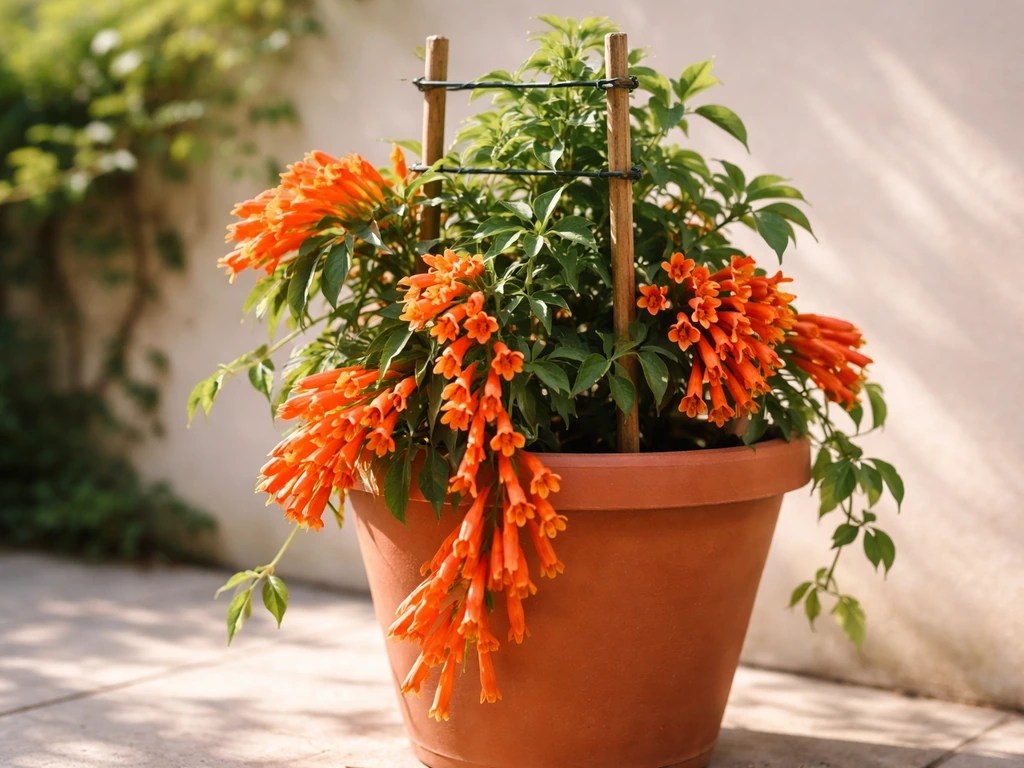
Make sure you have the right plant
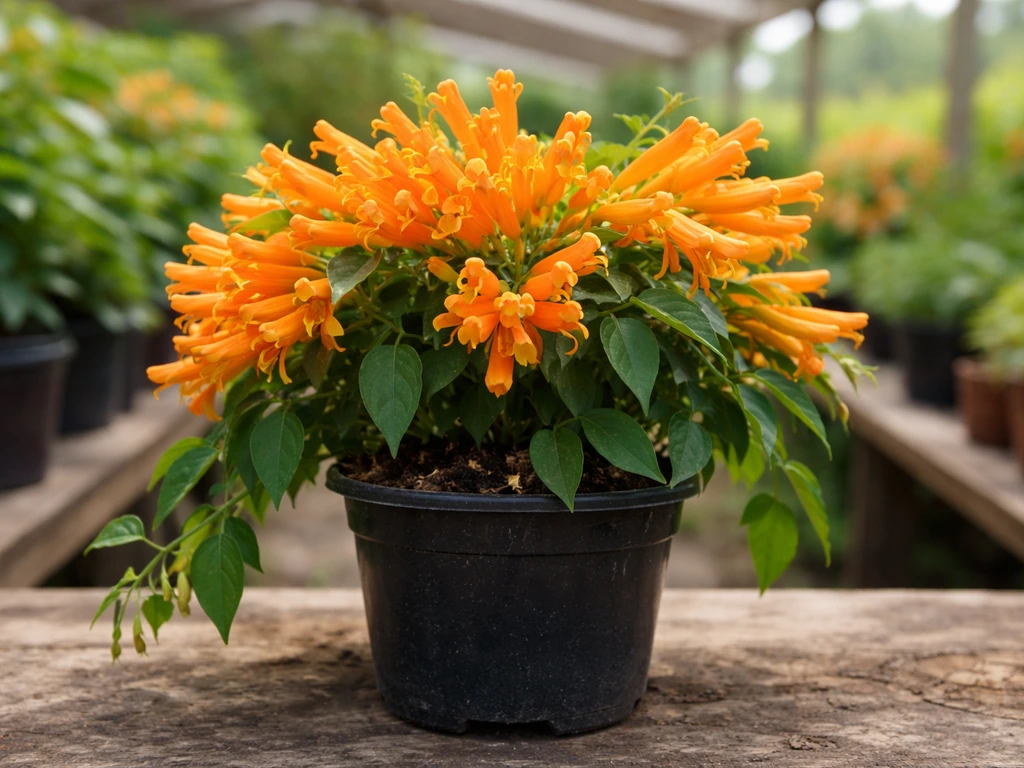
Before you do anything else, check what you actually bought. The common name 'flame vine' is used fairly loosely at garden centres, but the plant you almost certainly have is Pyrostegia venusta (family Bignoniaceae). It's also sold under the names flame flower and flamingo trumpet, which doesn't help the confusion. The easiest way to confirm it is to look at the label for the Latin name, or to check the flowers: Pyrostegia venusta produces long, slender, tubular flowers in dense hanging clusters of vivid orange, almost flame-coloured, at the tips of its stems. The leaves are glossy, mid-green, and come in pairs with a tendril at the tip of each leaf set, which is how the plant grabs onto supports. If your vine matches that description, you're in the right place. If the tag just says 'fire vine' or 'flame vine' with no Latin name, look closely at the foliage and flower shape to confirm before following any specific care advice.
Picking the right pot and setting up your support
Pot size is the single biggest mistake people make with this plant. Pyrostegia venusta is a genuinely vigorous climber that blank" rel="noopener noreferrer">can reach 80 feet in the ground under ideal conditions. In a pot it won't get anywhere near that, but it still wants room to grow a substantial root system. Start with a container that's at least 40–50 cm (16–20 inches) in diameter and at least 40 cm deep. Anything smaller and you'll be fighting drought stress and stunted growth all season. Go bigger if you can. Heavy terracotta or thick-walled resin pots are better than thin plastic here because the vine will become genuinely top-heavy once it establishes, and a light pot will tip over.
Drainage is non-negotiable. Make sure your pot has at least two or three working drainage holes at the base. If you're worried about potting mix washing out, cover the holes with a small piece of mesh or a coffee filter before filling. Don't sit the pot in a saucer that holds water permanently, as this is a fast track to root rot.
For the trellis or support, think bigger than you think you need. A small bamboo teepee will be overwhelmed within one growing season. A heavy-duty obelisk at least 120–150 cm (4–5 feet) tall, pushed firmly into the pot and ideally tied to a wall or fence for stability, is a much better starting point. The plant climbs by tendrils so it will grab onto mesh, wire, or the rungs of a trellis naturally, but in the early weeks you'll need to guide shoots and loosely tie them to get growth going in the right direction. Never rely on the vine's own stems to hold the weight of the structure; fix the trellis so it's stable on its own.
Sun, warmth, and where to put your pot
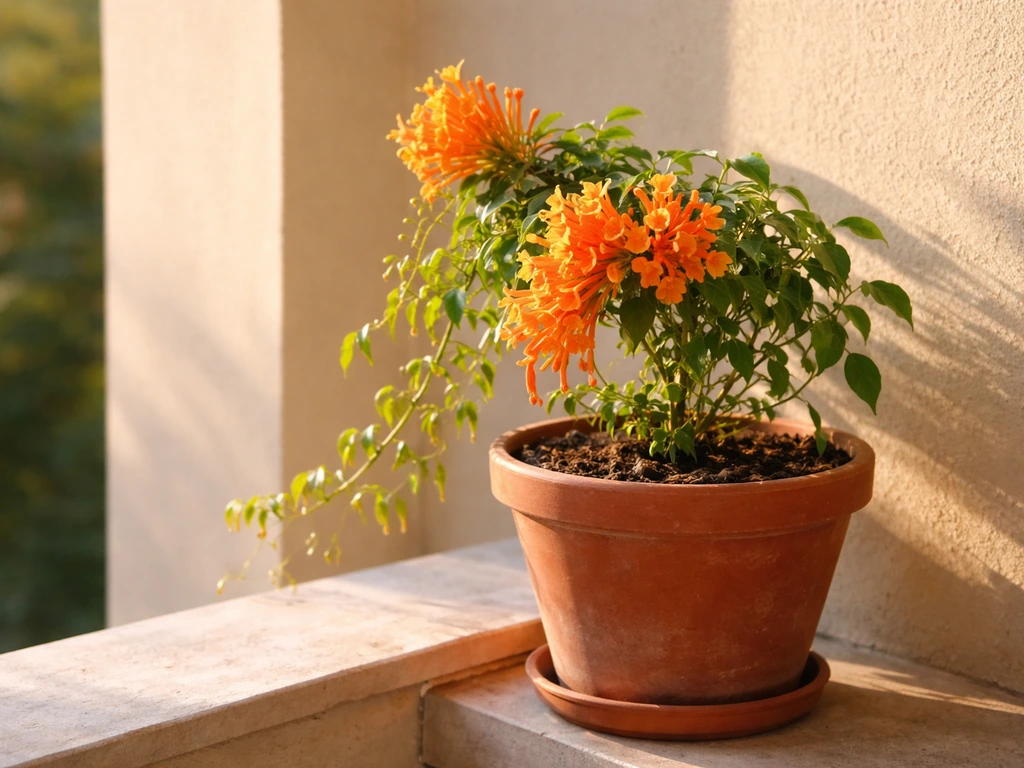
Flame vine is a sun lover. Give it the sunniest spot you have: a south or west-facing wall, balcony, or patio that gets at least six hours of direct sun per day is ideal. It can cope with part shade and still survive, but you'll get noticeably fewer flowers if light is limited. In my experience, the vines grown against a light-coloured wall that bounces heat back onto the plant bloom the most freely.
Temperature matters a lot. Pyrostegia venusta is rated for USDA hardiness zones 9 to 11, which means it's frost-tender. Blossoms will freeze if temperatures dip below about 30°F (-1°C), and a hard freeze can damage stems too. If you're in a reliably warm climate with mild winters, the plant can live outdoors year-round in its pot. If you get cold winters, the container approach is actually your best asset because you can move it. This is the same general approach you can use when figuring out how to grow flowers in pots at home container approach. Position the pot where it gets warmth and shelter from cold winds, and be ready to bring it inside or under cover before the first frost.
The right potting mix, how to plant, and feeding
Potting mix
Pyrostegia venusta is quite tolerant of different soil types in the ground, handling acidic, alkaline, sandy, and clay soils. In a container, though, free drainage is the priority. Use a high-quality, fertile potting mix and improve it by mixing in about 20–25% perlite or coarse grit by volume. This keeps the mix open enough that water drains quickly but also holds enough nutrients to feed a hungry climber. A pH anywhere from around 5.6 to 8.5 is acceptable, so you don't need to obsess over pH adjustment. If you want to add a slow-release fertiliser granule to the base layer at planting time, that's a good move.
Planting
Plant in spring once the risk of frost has passed and temperatures are consistently above 10°C (50°F). Plant at the same depth the vine was growing in its nursery container. Water in well straight after planting and set your support in place immediately. Don't wait until the vine is already tangled and growing in the wrong direction before adding a trellis; do it on day one.
Feeding schedule
Flame vine is a hungry plant, and in a container it can only draw on whatever nutrients you give it. Feed every two weeks from spring through to late summer with a balanced liquid fertiliser (look for roughly equal NPK numbers, like a 10-10-10 or similar). As autumn approaches and the plant is setting buds for its winter flower display, switch to a fertiliser that's lower in nitrogen and higher in potassium, which encourages flowering rather than leafy growth. Stop feeding altogether once you're heading into the coldest months.
How to water flame vine in a pot
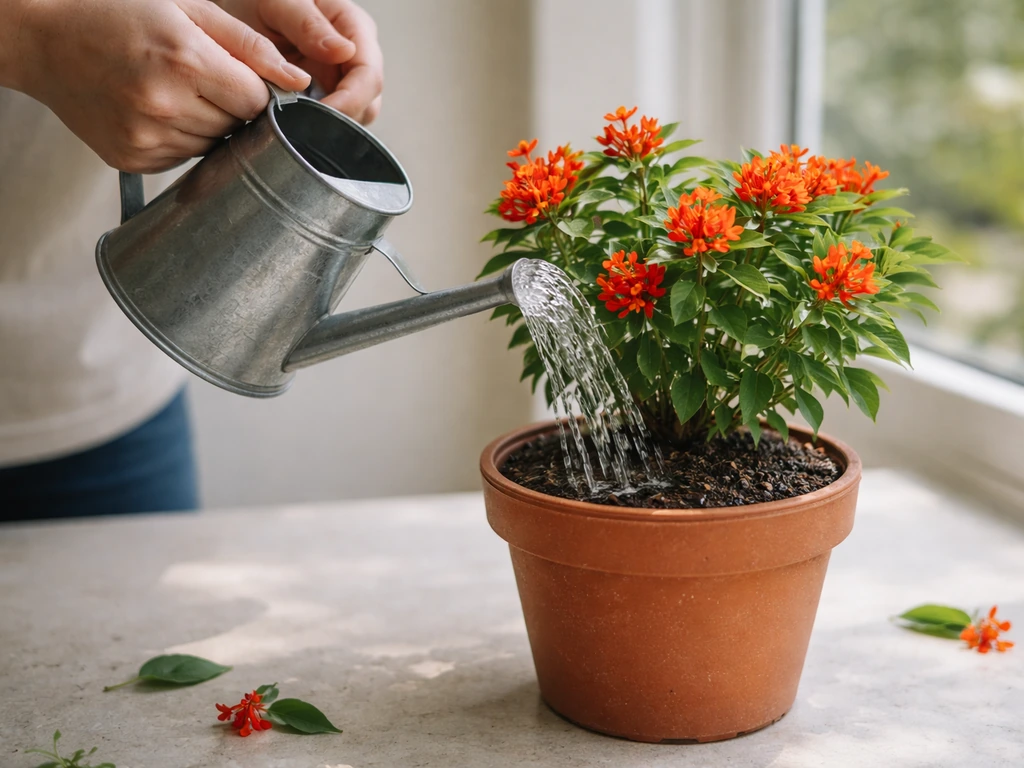
The golden rule for watering flame vine in a container is to water deeply but then let the top layer of soil partially dry out before watering again. A practical guideline: stick your finger about 2–3 cm (roughly an inch) into the potting mix. If it still feels damp, wait. If it's dry at that depth, water thoroughly until water runs freely out of the drainage holes. This approach keeps the roots consistently moist without sitting them in waterlogged mix, which is the main cause of root rot.
In summer heat, you may need to water every two to three days, or even daily if the pot is small or positioned in a very exposed spot. Fluxweed can also be grown in containers without needing an extra-large pot, as long as drainage is excellent and you keep feeding and watering on target how to grow fluxweed without a large pot. In cooler months, pull back significantly. Yellowing leaves with soggy soil usually means overwatering; wilting with bone-dry soil means you've let it go too long. Both are fixable once you spot them, so don't panic. Just adjust and keep going.
Pruning, training, and getting more blooms
Because flame vine flowers appear in clusters at the tips of its stems, how you prune and train it directly affects how many blooms you get. For woody ornamentals and climbers in containers, planning matters because the timing of maintenance pruning affects structure and branching, and training/structural pruning should be coordinated with your support strategy. The goal during the growing season is to spread stems out across your trellis so there are as many active stem tips as possible, each one a potential flower site. Tie new growth in regularly and don't let shoots bunch up in one place.
For structural pruning, wait until after the main flowering period (which is typically winter to early spring) is completely finished. Then, in early spring, cut back the side shoots to within about 2–3 buds of the main stems. This tidies the plant, encourages fresh new growth, and sets you up for a good display the following season. Avoid heavy pruning in autumn because you'd be removing exactly the stem tips that are about to flower. Light tidying and shaping is fine any time, but save hard cutting for after flowering.
If your plant is producing lots of leafy growth but very few flowers, the most common reasons in a container are insufficient light, too much nitrogen in the feed, or pruning at the wrong time. Check all three before assuming something is seriously wrong.
Pests, diseases, and other container problems
Flame vine is reasonably resilient, but containers can concentrate pest problems because the plant is confined and any stress (like drought or overwatering) lowers its defences. The main pests to watch for are scale insects, spider mites, and caterpillars. Scale insects are the sneakiest: look for small brown or tan bumps along stems and the undersides of leaves, plus sticky residue on surfaces below the plant. They suck sap and can cause a slow general decline. Treat by wiping accessible scales off with a damp cloth and following up with a horticultural oil or neem oil spray. Spider mites thrive in hot, dry conditions and show up as very fine webbing and stippled, pale leaves; improve air circulation and increase humidity around the pot. Caterpillars are easy to spot and can be removed by hand.
Whiteflies and mealybugs can also appear, especially if the pot is near other stressed plants. For mealybugs, a cotton bud dipped in rubbing alcohol is remarkably effective on small infestations. For whiteflies, sticky yellow traps catch adults while a systemic insecticide (used carefully and according to label directions) deals with nymphs.
Root rot from overwatering and powdery mildew from poor air circulation are the main disease issues. Both are largely preventable with good watering habits and by not crowding the plant against a wall with no air movement. If you do see white powdery patches on leaves, remove affected growth, improve airflow, and treat with a bicarbonate of soda spray or a fungicide if it's spreading.
Quick troubleshooting guide
| Problem | Most likely cause | Fix |
|---|---|---|
| Yellowing leaves, soggy soil | Overwatering or poor drainage | Reduce watering; check drainage holes are clear |
| Wilting, bone-dry soil | Underwatering or pot too small | Water deeply; consider upsizing the pot |
| Lots of leaves, no flowers | Too much nitrogen, low light, or wrong pruning time | Switch to low-N feed, move to sunnier spot, prune only after flowering |
| Leggy, sparse growth | Not enough light | Move to full sun position |
| Sticky residue on leaves/surfaces | Scale insects | Wipe off, treat with neem or horticultural oil |
| Fine webbing, pale stippled leaves | Spider mites | Increase humidity, apply neem oil or miticide |
Seasonal care and overwintering your pot
In warm climates (zones 9 to 11), seasonal care is fairly straightforward. Keep feeding and watering through the growing season, ease off in late autumn, enjoy the winter bloom, prune in early spring, and start the cycle again. The plant can stay outdoors year-round in its container.
In cooler climates, the container is your best tool. Before the first frost, move the pot to a bright, frost-free space: a heated greenhouse, a conservatory with good light, or even a bright indoor room will do. The plant is evergreen so it won't go fully dormant, but it will slow down noticeably. Reduce watering significantly in winter but don't let the roots dry out completely. Stop feeding until growth picks up again in spring. Don't be surprised if the plant looks a bit unhappy during this indoor period; it's just waiting for warmth and proper light to return.
One important overwintering tip: make sure your plant is healthy and well-established before cold weather hits. Root-bound or stressed plants struggle most during overwintering. If the roots are visibly circling the base of the pot or poking out of the drainage holes, repot into a slightly larger container before autumn. A healthy root system going into winter makes a huge difference to how well the plant bounces back in spring.
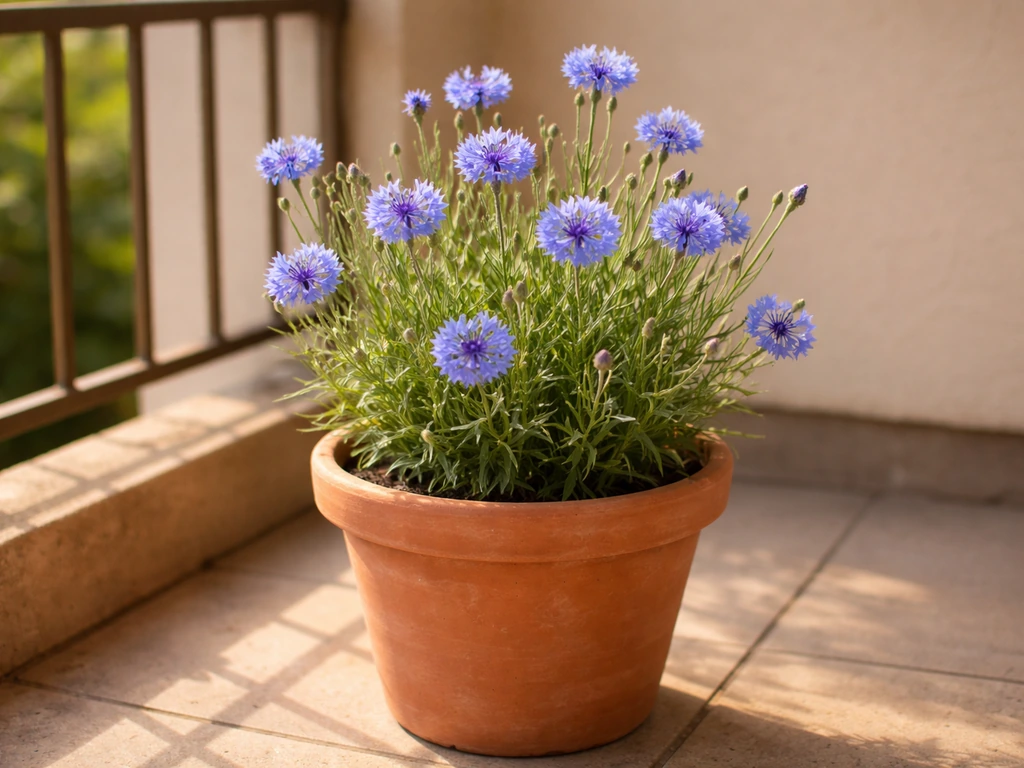
If you enjoy growing other climbers and flowering plants in containers, the principles here around drainage, sun exposure, and seasonal feeding apply broadly. Cornflowers do best in a deep pot with free-draining compost, regular watering, and plenty of sun how to grow cornflowers in pots. Getting these fundamentals right opens up a lot of possibilities for container growing, whether you're working with a balcony, a small patio, or just a sunny windowsill.
FAQ
My flame vine isn’t flowering. What should I check first?
Confirm you are giving at least six hours of direct sun, and that you switched to a lower nitrogen, higher potassium fertilizer in autumn. Also make sure you are not doing major pruning in fall, since flower clusters form on tips that you would otherwise cut off.
Can I grow flame vine from seed or cuttings in a pot?
It is usually easiest to grow from a nursery plant, because seed-grown plants can be slower to establish and may vary. If you take cuttings, root them in a warm, bright setup with bottom heat, and expect the first season to focus on building stems rather than flowers.
How do I stop the trellis from wobbling in a heavy pot?
Use a tall support that can stabilize itself, push it firmly into the potting mix, and if possible tie it to a fence or wall. Check ties every couple of weeks, because vigorous growth can loosen early knots quickly.
Should I prune flame vine in the first year to control size?
Avoid hard structural pruning in the first year if your goal is flowers, since you are still building the stem tips that carry blooms. Instead, do light training, redirect shoots across the trellis, and only tidy or remove clearly weak growth.
What’s the right watering schedule if it’s hot and windy on my balcony?
Base watering on the finger test (about 2 to 3 cm down), not the calendar. In exposed locations, pots dry unevenly, so water thoroughly until it runs from the drainage holes, then wait for that top layer to dry before watering again.
Can I use a saucer under the pot for flame vine?
You can use a saucer only if you empty it after watering every time. Permanent water in the saucer increases the chance of root rot, especially because this plant is vigorous and can quickly take up water unevenly.
How can I tell whether yellow leaves are from overwatering or low nutrition?
If leaves turn yellow and the mix stays damp, it points to overwatering or poor drainage. If the mix dries but growth looks weak and leaves pale progressively, it can be underfeeding (containers lose nutrients faster), so resume feeding in spring and keep the fertilizer schedule consistent.
My flame vine is growing fast but looks sparse on flowers. Is it too big a pot or not enough fertilizer?
A pot that is much larger can delay flowering by encouraging extra root and vegetative growth, but for this plant pot size mainly affects stability and drought tolerance. The bigger driver is usually light and fertilizer timing, so prioritize full sun and the autumn shift away from high nitrogen.
Do I need to repot flame vine every year?
Not necessarily, but do check root crowding before winter. If roots are circling or coming out of drainage holes, move up one pot size before cold weather so the plant is established and less stressed during overwintering.
How should I overwinter flame vine in a cold area where I can’t keep it outside?
Move it to a bright, frost-free spot before the first frost, reduce watering significantly, and do not feed until spring growth resumes. Keep an eye on pests indoors, since dry indoor air can encourage spider mites.
What are quick pest signs that mean I should act immediately?
Look for sticky residue and raised bumps (scale), fine stippling and tiny webbing (spider mites), and leaf damage that escalates quickly (caterpillars). Treat early, because small infestations can multiply fast in a confined pot setup.
Is powdery mildew common on flame vine, and how do I prevent it in pots?
It is more likely when airflow is limited and leaves stay damp. Improve spacing from walls and trellis surfaces, water at the soil line rather than overhead, and remove heavily affected growth promptly to reduce spread.