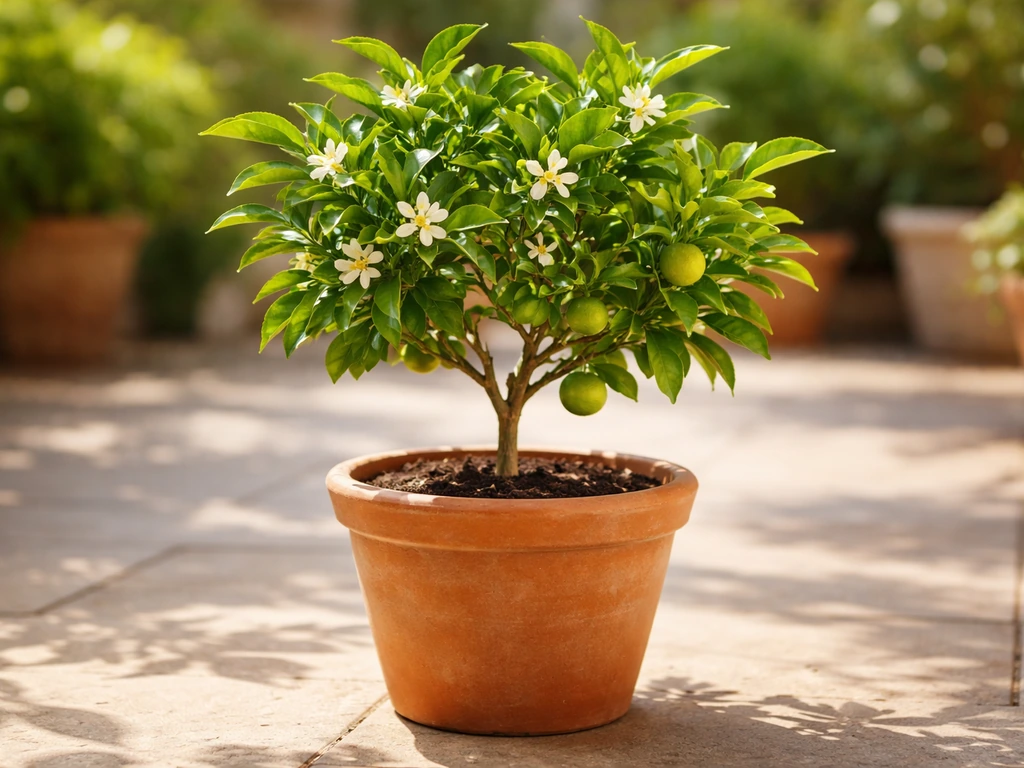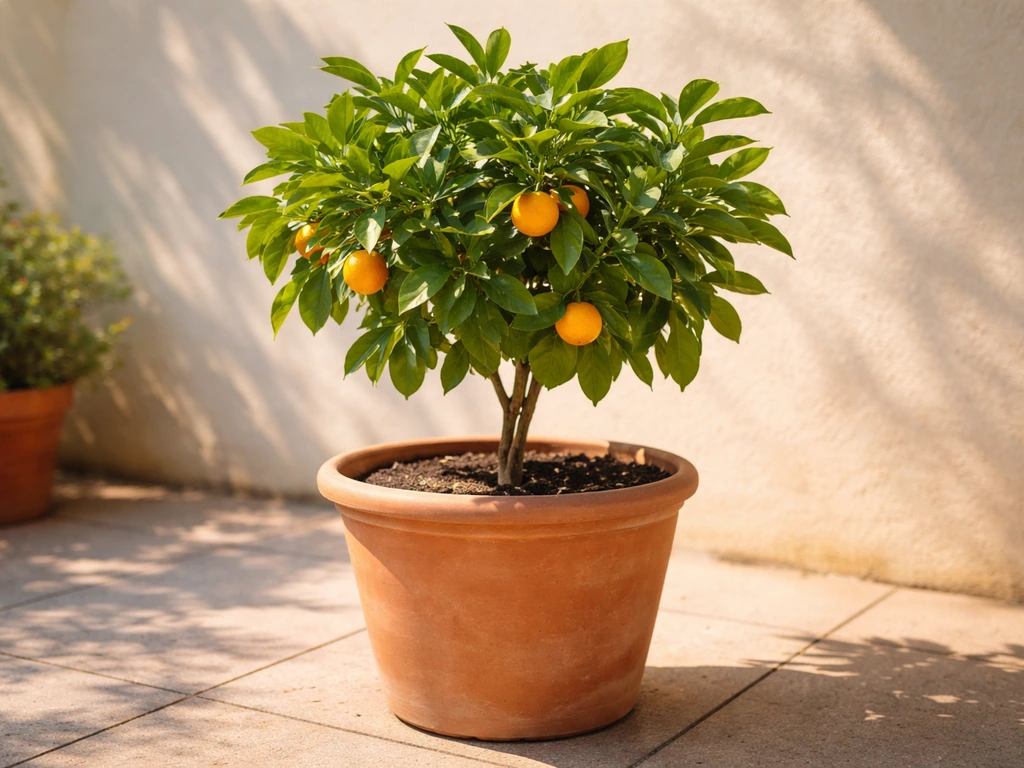
Yes, kumquat trees grow really well in pots, and they're honestly one of the best citrus trees you can grow in a container. If you want to grow papaya in pots instead, the key is choosing a warm, sunny spot and using a fast-draining potting mix so the roots do not stay wet. They stay naturally compact, tolerate a bit of cold better than most citrus, produce real fruit without needing a second tree for pollination, and look great on a patio or balcony. If you've ever wanted to grow a citrus tree but felt like you didn't have the space or the right climate, a potted kumquat is the place to start.
How to Grow Kumquat Trees in Pots: Step-by-Step Guide

Marcus Whitley
12 May 2026
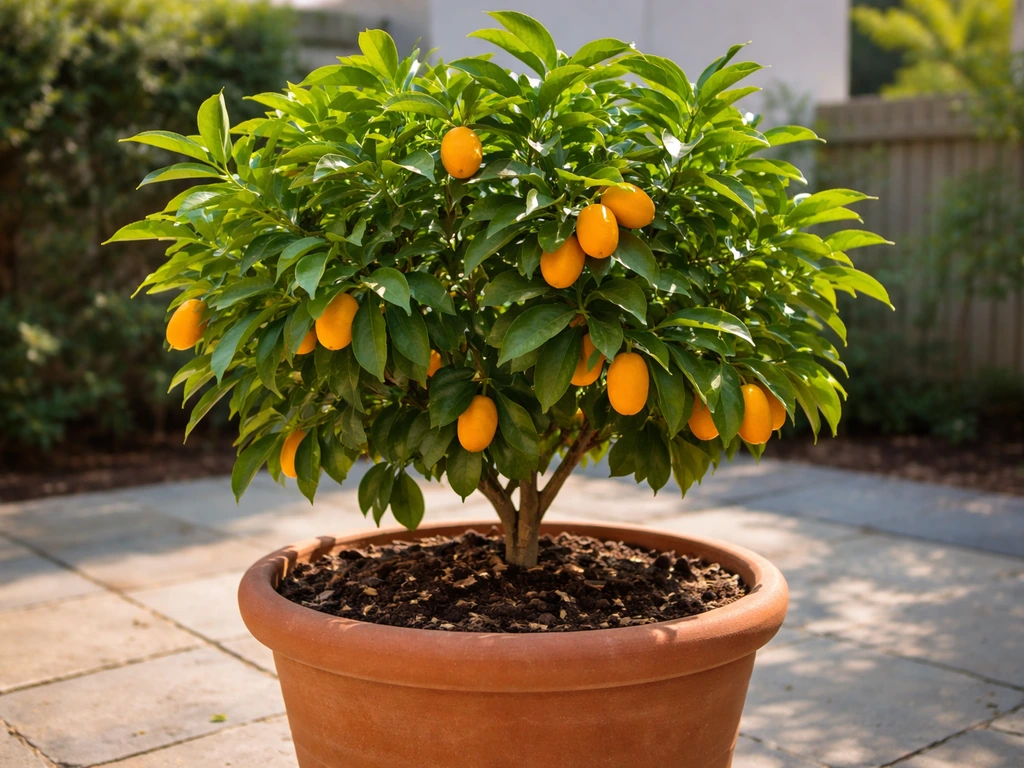
Can kumquats actually thrive in pots (and is this right for you)?
Kumquats are one of the most cold-hardy citrus types you can grow, which matters a lot in containers. Citronella can also be grown in a pot, as long as you give it plenty of sun and bring it inside when temperatures drop kinds of citrus, which matters a lot in containers.. Unlike in-ground trees where roots are insulated by the earth, roots in pots are exposed to ambient air temperatures on all sides. Nagami and Meiwa kumquats can handle temperatures down to around 20°F (-7°C), and the fruit itself survives down to about 26 to 28°F before it starts to freeze. That cold hardiness gives you a bigger window for outdoor growing compared to, say, a lemon or lime tree.
For beginners, the main thing to know is that a kumquat in a pot is not a set-it-and-forget-it plant. It needs consistent watering, regular feeding, enough sunlight, and a plan for winter. None of that is hard, but it does require attention. If you can commit to checking the soil every couple of days and feeding every few weeks during the growing season, you'll do fine. If you're also interested in growing other citrus in containers, the care principles here overlap a lot with growing oranges or other citrus trees in pots. If you want to grow a tropical fruit instead, check out how to grow papaya in a pot and match the temperature and watering needs growing other citrus in containers.
Picking the right variety and container
Which variety to choose
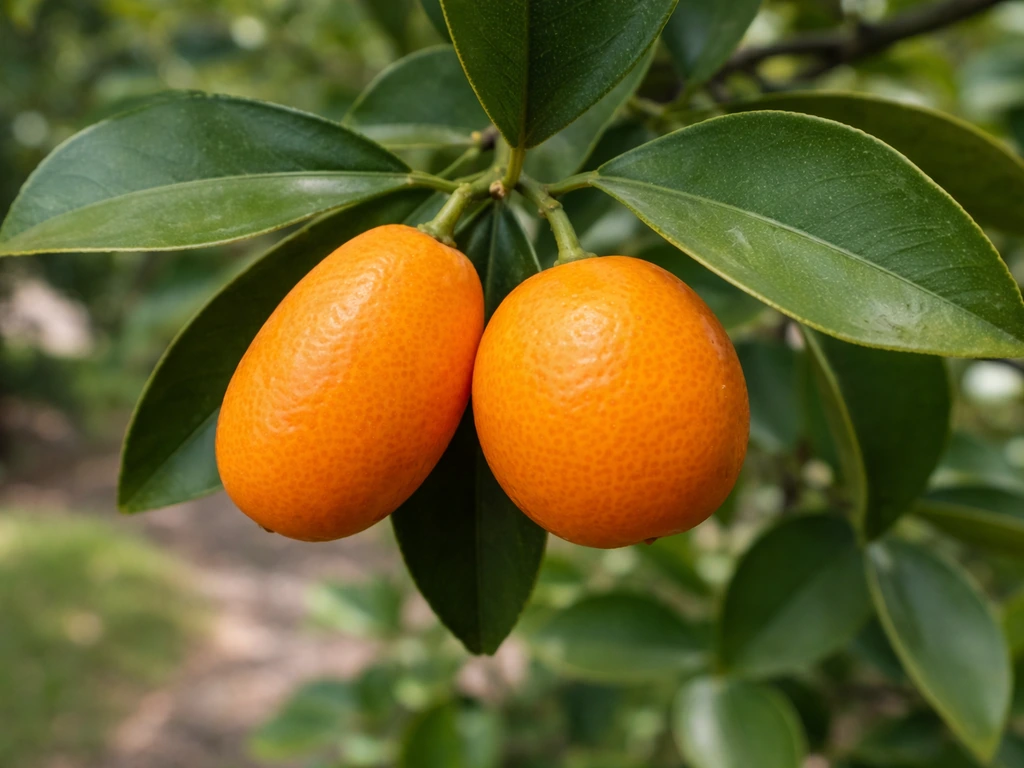
For pots, stick with Nagami or Meiwa. Nagami is the most commonly available kumquat, with oval fruit and a tart-sweet flavor. It's self-fertile, meaning it doesn't need another tree to produce fruit, which is a huge plus for container gardeners with limited space. Meiwa is rounder, sweeter, and also self-fertile. Both are well-suited to container life and widely available at garden centers and online nurseries. If you can only find one at your local nursery, just get it. Either will work.
Container size and material
When you first bring home a kumquat from a nursery (usually sold in a 3-gallon or 5-gallon pot), you don't want to jump straight to a giant container. Move it into a pot about 2 inches wider than the one it came in. So a 3-gallon nursery pot would go into roughly a 10- to 12-inch container to start. Going too large too fast tends to leave excess wet soil around the roots, which can cause root rot. Over time, you'll work up to a final container of around 15 to 20 gallons (roughly 18 to 24 inches in diameter), which is big enough to support a productive, mature tree.
For material, go with a lightweight plastic or resin pot if you plan to move the tree indoors for winter. Terra cotta looks beautiful but gets heavy fast and can crack in freezing temperatures. Whatever you choose, make sure there are multiple drainage holes at the bottom. This is non-negotiable. Kumquats will not tolerate sitting in waterlogged soil.
Potting mix, planting, and drainage
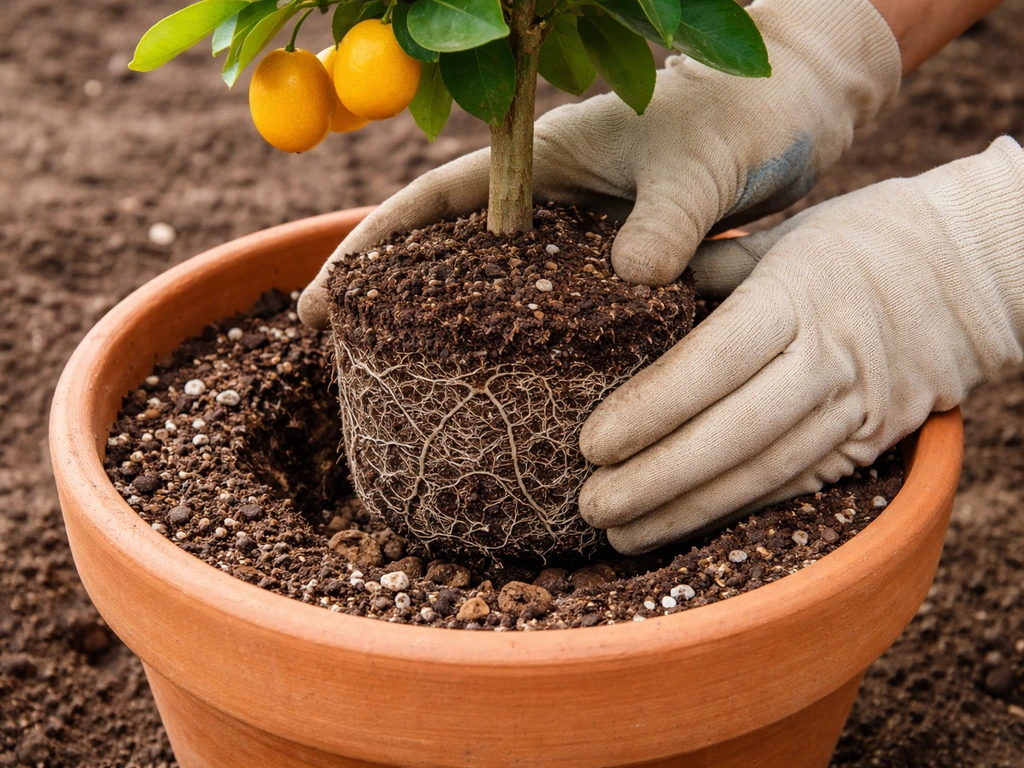
Don't use regular garden soil in a container. It compacts over time and suffocates roots. You want a high-quality potting mix specifically designed for citrus or a general-purpose potting mix blended with about 20 to 30 percent perlite to improve drainage and aeration. Some gardeners also mix in a small amount of coarse sand. The goal is a mix that drains fast but still holds enough moisture to keep the roots from drying out between waterings.
When planting, dig your hole to the same depth as the root ball, then widen it a bit. The key detail here is to make sure the root flare (the point where the trunk widens at the base) sits above the soil line, not buried under it. Burying the root flare is one of the most common planting mistakes and can cause the trunk to rot over time. After planting, water thoroughly until it drains from the bottom. If you want to improve drainage further, you can place a layer of gravel at the very bottom of the pot before adding soil, though good drainage holes matter more than anything else.
Light, temperature, and watering
Sunlight needs
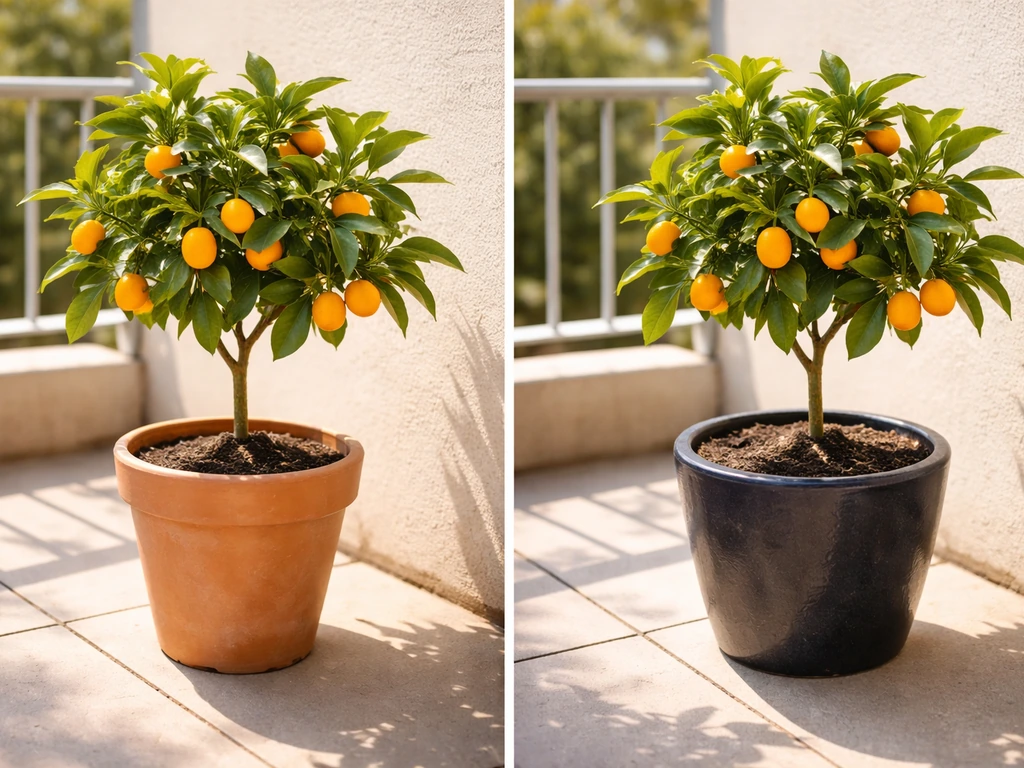
Kumquats want as much sun as you can give them. Aim for 8 to 12 hours of direct sunlight per day during the growing season. Put them on your sunniest patio, deck, or balcony spot from spring through fall. After the last frost passes in spring, move the pot outside. In fall, before your first frost date, bring it back in. Indoors, place it in front of the brightest window you have (south-facing is ideal in the Northern Hemisphere). If natural light is weak, add a grow light. LED or fluorescent grow lights work well and are affordable. At minimum, the tree needs 6 hours of bright light per day indoors, but more is better.
Temperature and cold protection
Nagami and Meiwa handle cold down to around 20°F, but your pot is the vulnerability. When temperatures drop into the mid-20s, get the tree inside or at minimum cover the pot with insulating material (old blankets, burlap, or foam) to protect the roots. The fruit will start to freeze and become damaged around 26 to 28°F, so if you have fruit hanging on the tree and a cold snap is coming, either harvest early or get the tree sheltered. Don't wait. The decision of exactly when to bring the tree in is less about hitting a single magic temperature and more about watching the forecast and acting before a hard freeze.
Watering schedule
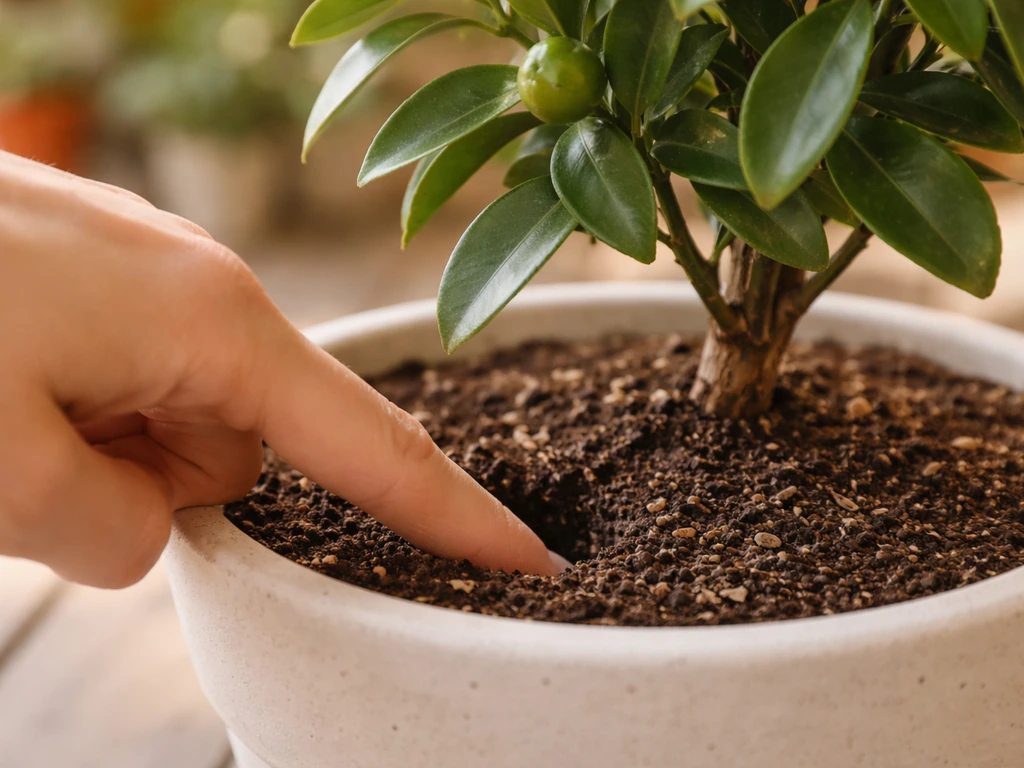
Watering is where most people either overdo it or underdo it. The rule I follow: before watering, push your finger 2 to 3 inches into the soil. If it feels dry at that depth, water thoroughly. If it still feels moist, wait another day and check again. During hot, dry summer weather, that often means watering daily. During cooler months indoors, it might be every 4 to 7 days. When you water, water until it runs freely out the drainage holes. That ensures the entire root zone gets moisture, not just the top layer.
Two things to avoid: letting the soil dry out completely (this causes flower and fruit drop) and letting the pot sit in a saucer of standing water (this leads to root rot). Both are real problems. Try watering at the base of the plant rather than overhead, because wetting the leaves repeatedly can increase the risk of fungal issues and salt-related leaf burn.
Feeding your potted kumquat
Container kumquats need regular feeding because nutrients flush out of the pot every time you water. A citrus-specific fertilizer is your best option. These are formulated with the right balance of nitrogen, phosphorus, potassium, and micronutrients (especially iron and magnesium) that citrus trees need. You have two main approaches.
| Fertilizer Type | How Often | Best For |
|---|---|---|
| Slow-release granular (citrus blend) | Every 3 to 4 months | Low-maintenance gardeners, consistent feeding |
| Liquid water-soluble citrus fertilizer | Every 2 to 4 weeks during growing season | More control, good for problem-solving |
| Controlled-release fertilizer (CRF) | Once per season | Efficient, reduces nutrient loss from watering |
During winter when the tree is indoors and growth slows, back off fertilizing. Feeding a dormant or semi-dormant tree in low light just pushes weak, leggy growth. Resume regular feeding in early spring when you're preparing to move the tree back outside. If your tree starts showing yellowing leaves with green veins (called chlorosis), that usually means it needs more iron or the soil pH has crept too high. Use a fertilizer with chelated iron and consider applying a sulfur-based acidifier to bring the pH back down toward the ideal range of 6.0 to 7.0 for citrus.
Pruning, shaping, pollination, and when to expect fruit
Pruning and shaping
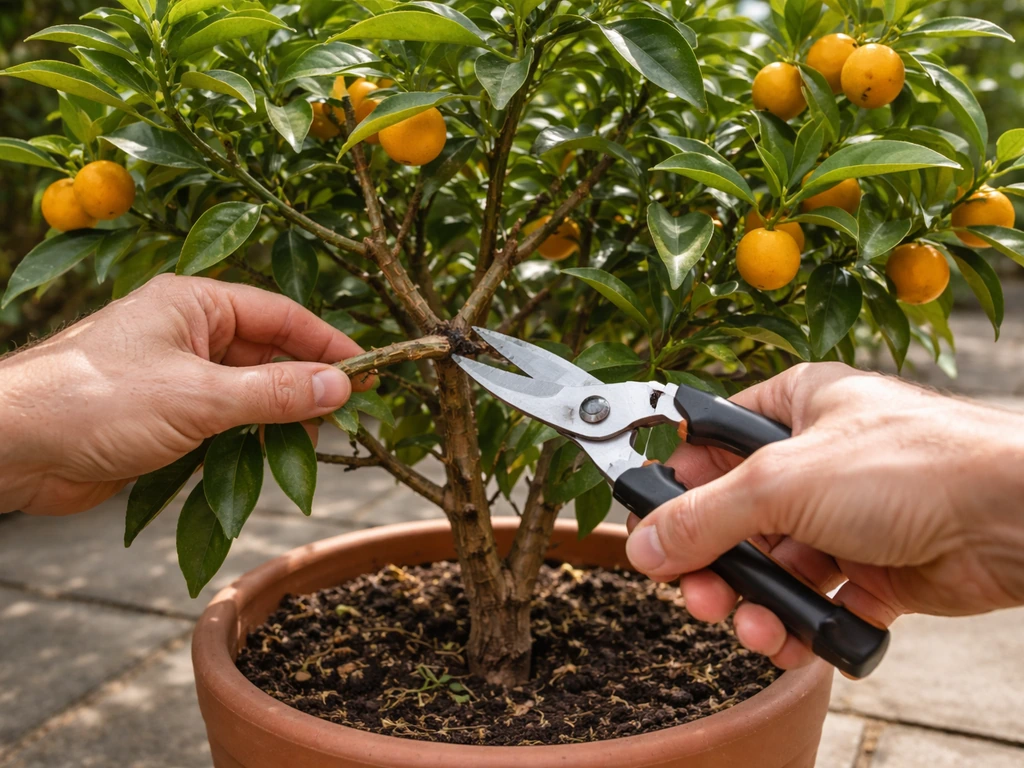
Kumquats don't need heavy pruning. The goal in a container is to keep the tree a manageable size and shape, not to dramatically cut it back every year. The best time to prune is just before bud break in late winter or very early spring, before the new flush of growth begins. This timing lets you shape the tree without cutting off developing flower buds that are forming in ways you can't always see yet.
Remove any dead, crossing, or inward-growing branches. You can tip-prune longer shoots to encourage bushy growth. But don't go overboard. Citrus flowers and fruits at the tips of new sideshoots, so over-pruning directly reduces your fruit production. If you notice dead or damaged wood after winter, wait until early summer when the damage is clearly defined, then cut back to healthy green wood. A light hand with the pruners is always the right call.
Pollination and fruiting timeline
The good news: both Nagami and Meiwa kumquats are self-fertile. You don't need a second tree. The white flowers that appear in mid to late spring (typically after a dormancy period) will pollinate themselves. If you're growing the tree outdoors during bloom, bees and other insects will help. If it's still indoors when it flowers, just give the flowers a gentle shake or use a small paintbrush to move pollen between flowers.
From flower to ripe fruit takes roughly 4 to 5 months. Fruit typically ripens from late fall through winter, which is a nice bonus when outdoor gardens are bare. Don't expect a massive harvest from a young tree. First-year container trees often produce just a few fruits, and that's fine. Production increases as the tree matures and the root system develops. By year three or four in a well-managed container, you can realistically expect several dozen fruits per season.
Repotting, pests, diseases, and seasonal transitions
When and how to repot
Plan to repot your kumquat every 2 to 3 years, or when you notice roots starting to circle the bottom of the pot or grow out of the drainage holes. The best time to repot is in early spring before active growth starts. Move up by about 2 inches in diameter each time. When you repot, gently loosen the outer roots if they've started circling, refresh the potting mix entirely, and check that the root flare stays above the soil line. Repotting is also a good time to inspect the roots for any rot (dark, mushy roots) and trim it away with clean scissors.
Common pests and how to deal with them
Container citrus moved indoors for winter is especially vulnerable to spider mites and mealybugs. Low humidity indoors is what spider mites love, and you'll often notice them before you see the bugs themselves (look for fine webbing or stippled, dull-looking leaves). Mealybugs show up as white cottony clusters at leaf joints and on stems. Both can be treated with insecticidal soap spray or neem oil. Spray thoroughly, including the undersides of leaves, and repeat every 7 to 10 days until the problem clears.
Outdoors, you may encounter citrus leafminer (which leaves squiggly trails inside leaves) or rust mites and spider mites during hot dry spells. Citrus leafminer damage looks alarming but rarely causes serious harm to an established tree. Good cultural practices (consistent watering, avoiding over-fertilizing with nitrogen) reduce pest pressure overall. Check your tree every week or two during the growing season so you catch problems early when they're easy to manage.
Moving through the seasons
Here's the basic seasonal rhythm for a potted kumquat in most temperate climates. In spring, after your last frost date, move the tree outside to the sunniest spot you have. Resume regular watering and feeding. The tree will push new growth and should bloom. In summer, water daily if it's hot and check soil moisture regularly. In fall, watch the forecast. Before your first frost, move the tree inside to a bright south-facing window. Reduce watering frequency but don't let the soil dry out completely. In winter, keep it cool but frost-free (a cool room around 50 to 60°F is actually ideal for dormancy), give it as much light as possible, and feed very lightly or not at all until late winter.
If your winters are mild and you're in a zone where outdoor temps stay above 20°F, you may be able to leave the tree outside year-round with just frost-cloth protection on the coldest nights. In colder climates, plan the indoor move as a non-negotiable part of your fall routine. Getting that timing right, moving it indoors before the first frost, is honestly the single most important seasonal decision you'll make for a container kumquat.
FAQ
Can I keep a kumquat tree indoors year-round in a pot?
Yes, but only if you can replicate “full sun” indoors. A kumquat indoors typically needs a very bright window or a grow light kept close enough to deliver strong intensity, aim for at least 8 to 10 hours under a grow light if natural light is limited. Also expect slower growth and less fruiting indoors, because bloom and fruit set are strongly tied to light levels.
What should I do if my potted kumquat drops leaves when I move it inside for winter?
If leaves drop or flowers abort after you bring it indoors, it’s usually a light or moisture swing, not a true winter disease. Keep watering based on soil depth, don’t switch from outdoor frequent watering to indoor light watering without checking moisture, and acclimate it by moving it in for shorter periods over 1 to 2 weeks.
How do I prevent salt buildup in the pot from fertilizer and hard water?
Most citrus pots should be rinsed and checked regularly for salt buildup. If you see crusty white residue on the soil surface or pot rim, flush the container with several minutes of water until it drains freely, then resume your normal watering schedule. Repeat flushing every few weeks in winter indoors, especially if you fertilize.
Is it enough to cover the kumquat tree with a blanket during a cold snap?
Don’t. When temps approach the mid-20s, protecting only the leaves or covering the trunk usually won’t save the roots. Insulate the pot itself (wrap the container, not just the plant), and if you keep fruit on the tree during a freeze threat, harvest first or move it to the brightest protected location you have.
My kumquat pot stays wet longer than expected, how often should I water?
If the soil is wet at 2 to 3 inches down, wait, even if the top looks dry. In pots, overwatering commonly happens when people water by surface dryness. Use the finger test, ensure water drains from all holes, and never let the pot sit in a saucer.
What pot size should I aim for long term when I’m growing kumquats in pots?
Start small and scale up slowly, but ensure you reach a productive final size. For established potted trees, a final container around 15 to 20 gallons is a common target. Going much larger early increases soggy root risk, which you’ll recognize by persistent dampness and a decline in vigor.
Can I prune my kumquat after it’s already starting to leaf out?
Yes, but only with clean, sharp tools and proper aftercare. Trim away dead or clearly diseased tissue, and do not prune heavily late in winter or during active bud swelling. After pruning, keep the tree stable (consistent light and watering), since wounds and new growth both stress the plant.
My kumquat leaves look yellow with green veins, what’s the fastest way to diagnose the cause?
Yellow leaves with green veins usually point to iron deficiency or elevated soil pH, often from using the wrong fertilizer or water. Chelated iron helps, but also consider that potting mixes can drift over time. After treatment, pause fertilizer for a couple of weeks if symptoms worsen, then resume with citrus feed once new growth steadies.
Can I use a saucer under my kumquat pot to catch runoff?
Saucers can work briefly if you empty them right after watering. If water collects and stays, roots sit in low-oxygen conditions and decline quickly. Use a saucer only as a temporary catch, then remove excess water so the bottom of the pot can fully drain.
Do I need to hand-pollinate my self-fertile kumquat flowers?
If you want consistent fruit, hand-pollination can help, but it’s usually most important when flowers open indoors or when insects are absent. Use a small soft brush and move pollen between flowers gently. Even self-fertile kumquats benefit from adequate light and stable temperatures during bloom.
How can I tell when my kumquat needs repotting, and is it okay to repot while it’s fruiting?
Repotting is recommended when you see circling roots or roots emerging from drainage holes, not on a fixed schedule alone. If your tree looks rootbound but is also producing, wait until early spring to minimize shock. When you repot, loosen circling roots slightly but avoid tearing healthy roots aggressively.
Is overhead watering bad for container kumquats, especially indoors?
Try to avoid overhead watering, especially indoors, because repeated wet leaves can encourage issues and also leaves mineral residue. Water at the base until it drains freely, then empty any catch area. If you must mist for humidity, mist lightly and only when airflow is good so foliage dries quickly.
Should I fertilize my kumquat during dormancy or just when it’s actively growing?
Yes, nutrient needs shift by season. In winter, light feeding or no feeding is often better if the tree is cool and growth slows, while indoors under low light can still lead to weak growth if you fertilize too much. Resume feeding as you approach the period of strong light outdoors.
What are the earliest signs of spider mites or mealybugs on a potted kumquat?
A common early sign is foliage turning dull and slightly stippled, often from mites, and the pattern tends to worsen on the underside of leaves. Use a quick check under leaves weekly, and if you see webbing or cottony clusters, treat immediately and repeat on a 7 to 10 day cycle to catch new hatchlings.