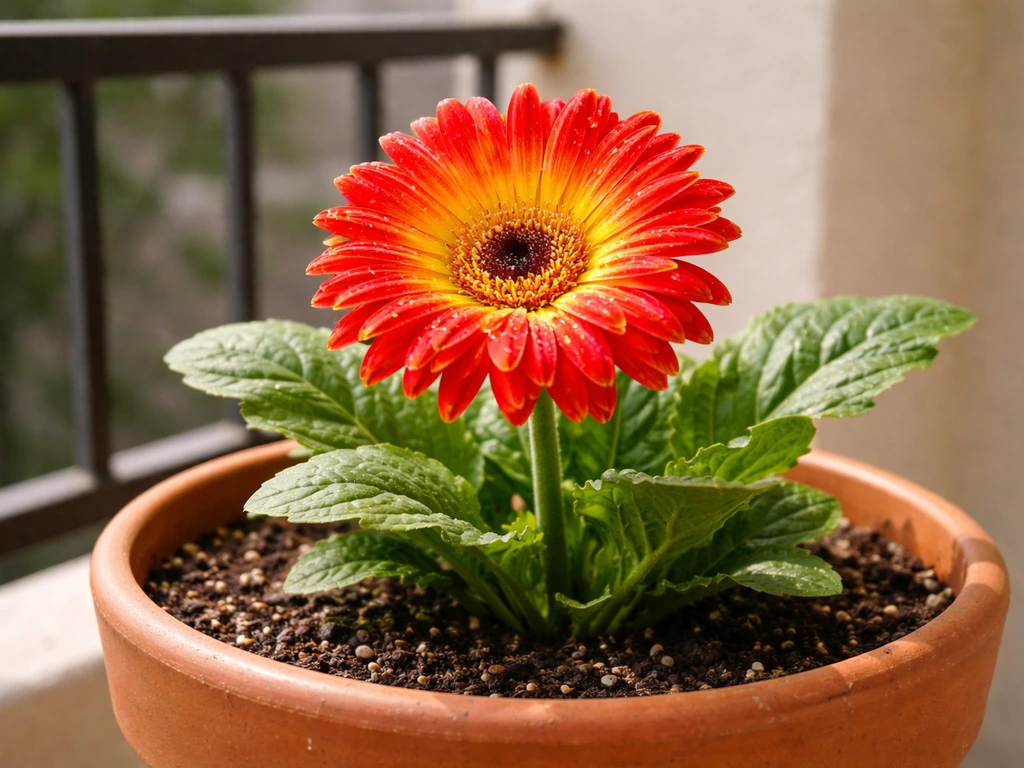
You absolutely can grow pickling cucumbers in a pot, and a single well-cared-for plant in a 7–10 gallon container can give you enough cucumbers to make a real batch of pickles. If you want a similar container setup for flowers, you can also learn how to grow gerbera daisy in pots by focusing on the right pot, drainage, and bright light grow pickling cucumbers in a pot. The key things to get right are container size, consistent watering, and picking the right variety. Get those three things sorted and you're most of the way there, even if you've never grown a vegetable before.
How to Grow Pickles in a Pot: Container Pickling Cucumbers Guide
Marcus Whitley
27 May 2026
Is growing pickles in a pot actually realistic?
Let's clear up the name first. You're not growing a pickle, you're growing a pickling cucumber, a specific type of cucumber bred to stay firm, have thin skin, and work well in brine. The 'pickle' is what happens after you harvest it. That's an important distinction because it means you need to look for seeds or transplants labeled as 'pickling cucumber' rather than regular slicing cucumbers.
One plant in a large enough pot is realistic for a small-batch pickler. You won't fill a pantry, but one healthy plant can produce 10–20 cucumbers across the season, which is more than enough for a few jars. Two plants will double that. The honest limitation is container size: too small a pot and the plant runs out of root space, water, and nutrients fast. Get the container right and the rest falls into place.
Choosing the right variety
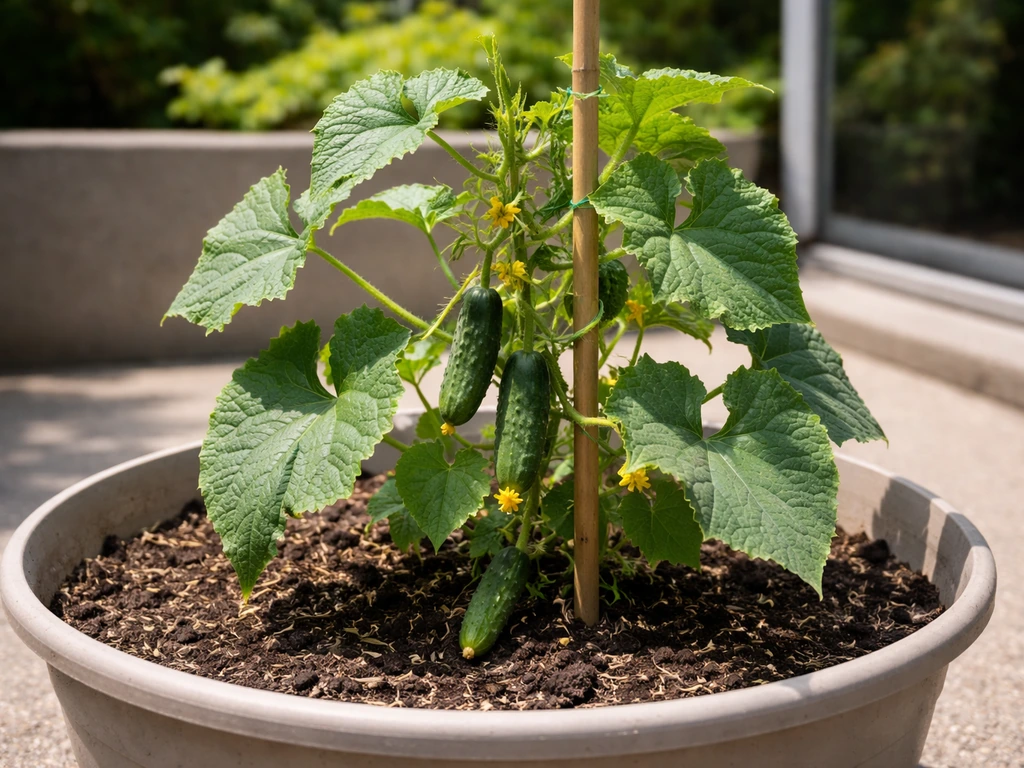
Not every cucumber is a good pickling cucumber, and not every pickling cucumber is well-suited to container life. You want a compact or bush-type variety if possible, since vining types can get huge. Here are four varieties worth looking for:
- Homemade Pickles (Burpee): One of the most commonly recommended home-garden pickling cucumbers. It matures in about 55 days and produces fruits in the 5–6 inch range with good disease resistance — a solid all-rounder for pots.
- Bush Pickle: A compact bush-type that stays manageable in containers. Less aggressive vining means it's easier to support.
- National Pickling: An old standard with reliable yields and good disease tolerance. Widely available and hard to go wrong with.
- Calypso: Disease-resistant and high-yielding. Works well in pots if you give it support.
For harvest timing, pickling cucumbers are typically picked very young, around 2 inches long for small gherkin-style pickles, or 4–6 inches for dill pickles. The plant produces more cucumbers the more you pick, so frequent harvesting is part of the strategy, not just a nice-to-have.
Pot size, container type, and drainage setup
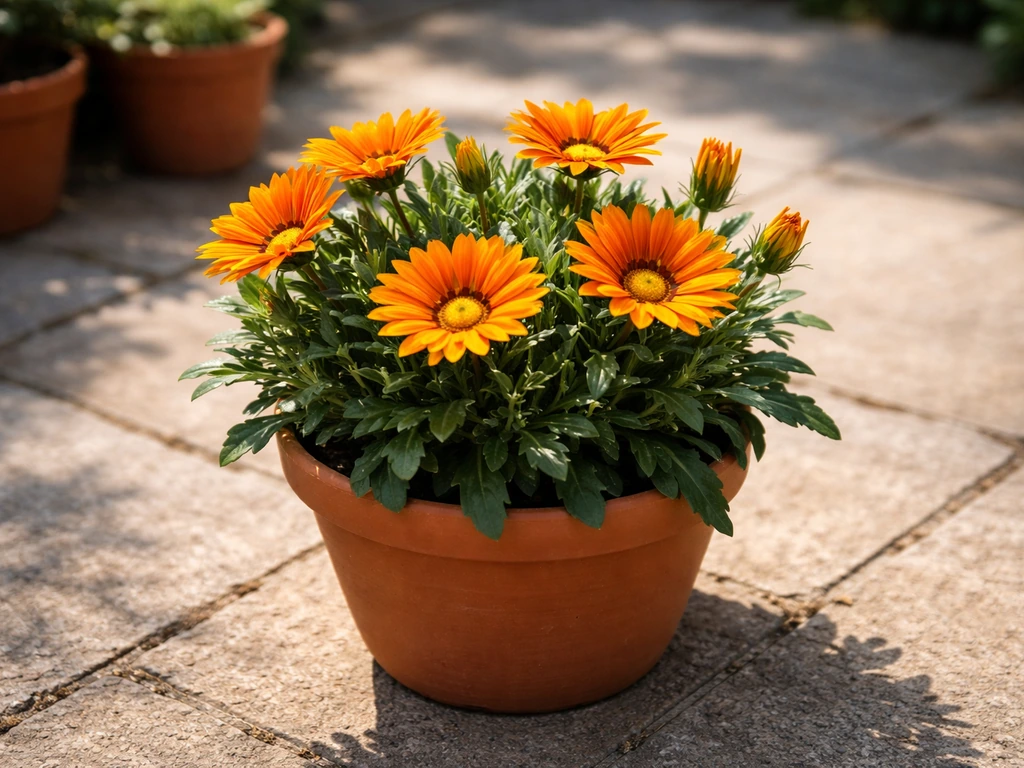
The minimum you can get away with is 5 gallons per plant, but I'd push you toward 7–10 gallons if you can manage it. The difference in yield between a 5-gallon and a 10-gallon container is noticeable, larger pots hold more moisture, more nutrients, and give roots the room to actually feed the plant through the whole season. If you are also wondering how to grow gazania in pots, focus on bright light, well-draining soil, and watering only when the mix dries out.
For container type, fabric grow bags, plastic nursery pots, and glazed ceramic pots all work. Fabric bags breathe well and prevent roots from circling, which is a nice bonus. Dark plastic pots absorb more heat, which can be helpful early in the season but punishing in mid-summer heat. If you're in a hot climate and growing in direct sun, light-colored containers or insulated pots will keep roots from cooking.
Drainage is non-negotiable. Your container needs multiple drainage holes in the bottom, and the pot should never sit in standing water in a saucer for more than an hour or two. Here's something worth knowing: adding a layer of gravel to the bottom of the pot is a widely repeated tip that actually doesn't improve drainage. It creates a zone where water collects above the gravel layer, not below it. Skip the gravel and just use a good potting mix with proper holes.
Soil mix and feeding through the season
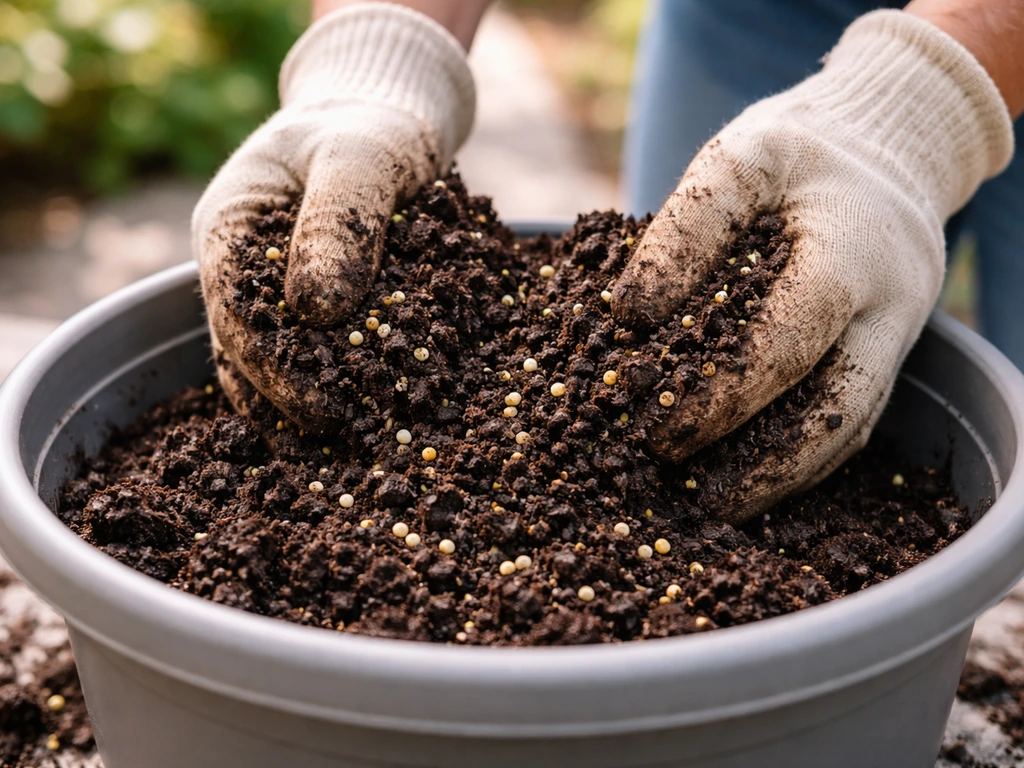
Garden soil from the ground is too dense for containers, it compacts, drains poorly, and suffocates roots. Use a quality potting mix designed for containers. Look for something that contains perlite or coarse material that keeps air pockets in the mix even after watering. If you want to mix your own, combine two parts potting mix with one part perlite or coarse vermiculite.
For feeding, cucumbers are hungry plants and containers leach nutrients faster than garden beds. Start with a potting mix that includes some slow-release fertilizer, then supplement through the season. A balanced all-purpose fertilizer like 8-8-8 or 10-10-10 applied according to label directions works well when you don't have a soil test. Once the plant starts flowering and setting fruit, switch to a fertilizer with slightly higher potassium (the third number) to support fruit development. Feed every two to three weeks during the active growing season.
Seeds vs. seedlings and how to space them
Cucumbers actually do better when direct-seeded rather than transplanted, because they're sensitive to root disturbance. If you're starting from seed, wait until your soil temperature is at least 60°F (ideally 70–80°F) and nighttime air temperatures are reliably above 50°F. Cold soil means seeds just sit there and rot. If you want to start indoors, do it no more than four weeks before your last frost date, any earlier and you'll end up with a leggy, stressed seedling that struggles after transplanting.
If you're buying transplants from a nursery (totally fine for beginners), handle the rootball gently and disturb the roots as little as possible when moving the plant into your pot. Plant at the same depth it was growing in its original container.
For spacing in a pot, plan for one plant per 5-gallon container, or two plants in a 10-gallon container placed about 12 inches apart. More than that and you're competing for water and nutrients in a way that hurts both plants. In a large planter of 15 gallons or more, three plants can work if you're diligent with watering and feeding.
Watering schedule and keeping moisture consistent
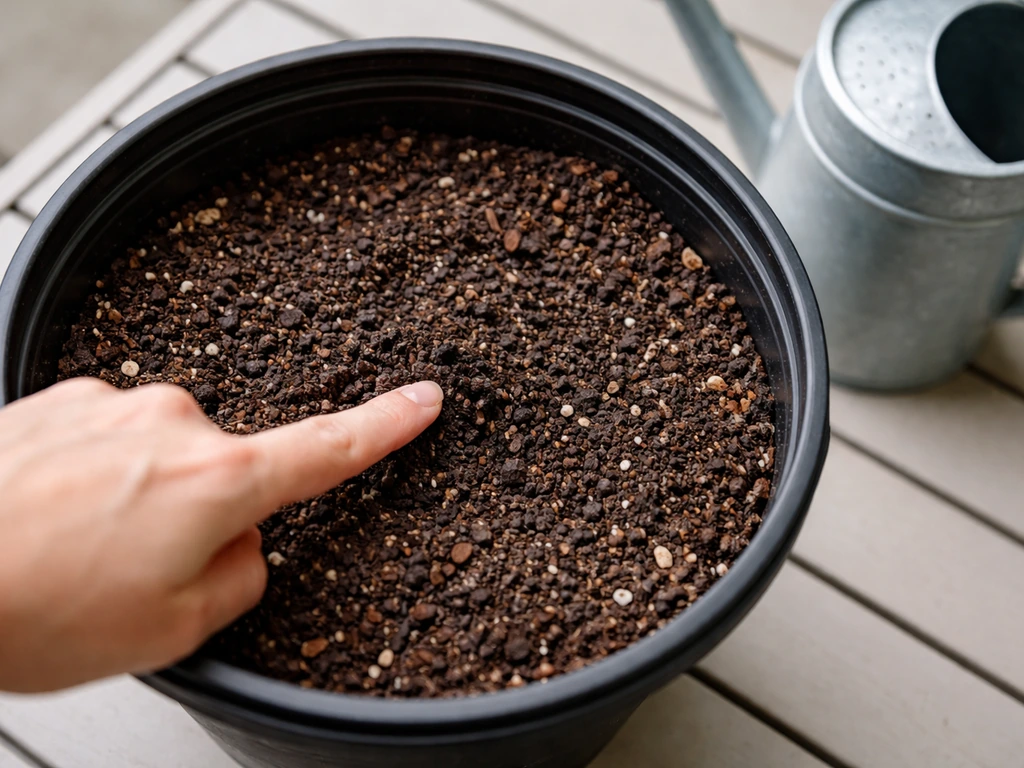
Inconsistent watering is the number one reason container cucumbers fail, taste bitter, or produce misshapen fruit. Water stress, letting the plant dry out and then drowning it, directly causes bitterness and crooked cucumbers. The goal is steady, even moisture throughout the season.
Check the top 1–2 inches of potting mix with your finger. If it's dry, water thoroughly until it drains from the bottom. In hot or windy weather with a small pot, that might mean watering every day. In a larger container during mild weather, every two to three days may be enough. There's no universal schedule, you're responding to the plant's environment. The depth test with your finger is more reliable than any calendar.
When you water, aim for the soil rather than the leaves, and water slowly and deeply rather than with a fast blast that runs off the surface without soaking in. Aim to deliver the equivalent of about 1–1.5 inches of water per week across applications, more during heat waves. Do not let water sit in saucers under the pot, as this causes root rot faster than you'd expect.
Light, heat, and temperature targets
Cucumbers want full sun, at least 6 hours per day, with 8 hours being better. In a container, you have the advantage of being able to move the pot to chase sunlight, which is one of the best things about container gardening. If you want to try a different plant, the same container gardening mindset applies when learning how to grow begonias in pots. Place your pot where it gets morning and afternoon sun, and avoid spots that are shaded by walls or fences for most of the day.
Temperature-wise, cucumbers are warm-season plants that will sulk or stall below 50°F and actively suffer in cold soil. Optimal growing conditions are air temperatures in the 70–85°F range. They can handle hotter days as long as watering is consistent, but sustained heat above 95°F combined with dry soil will stress the plant quickly. If a late cold snap hits after you've planted out, bring the pot inside or cover it with frost cloth overnight.
Trellising, training, and keeping pests under control
Setting up a trellis in a pot
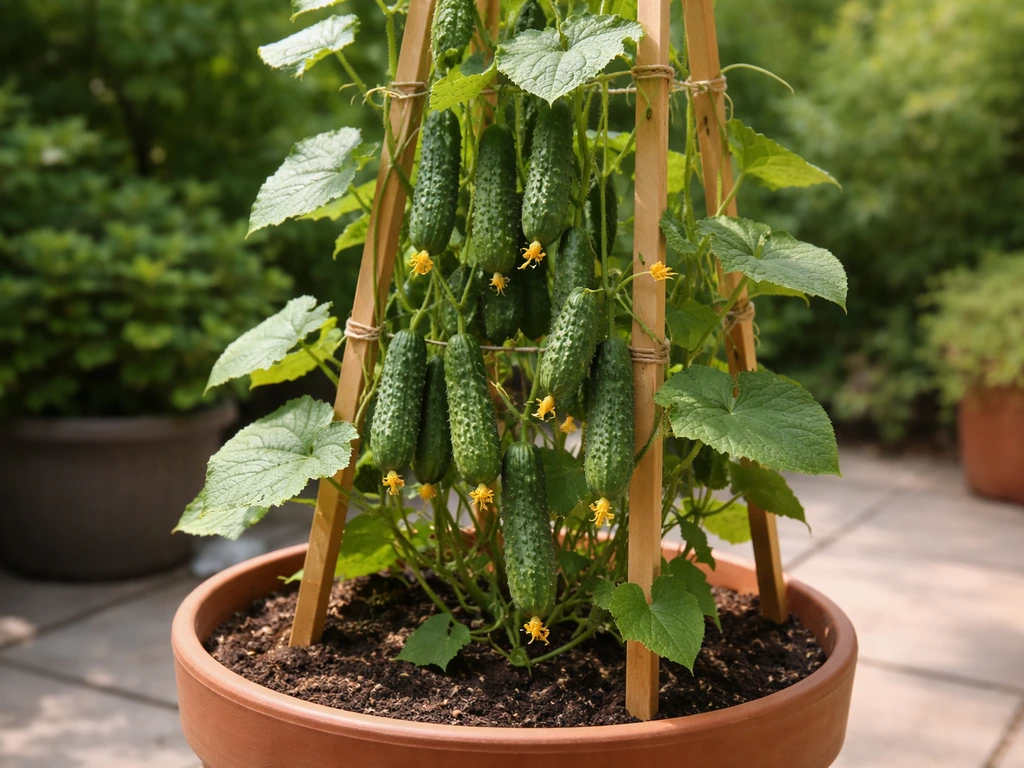
Even bush-type pickling cucumbers benefit from some vertical support. A trellis keeps vines off the soil (which reduces disease), improves airflow around the plant, and makes harvesting much easier. In a container, a simple bamboo A-frame, a small tomato cage, or a few bamboo stakes with horizontal twine works well. Push stakes into the potting mix and tie loosely as the plant grows. Guide the main vine upward and tie every 6–8 inches of new growth.
Some gardeners train cucumber plants to a single main stem by pinching off side shoots, which keeps the plant tidy and focuses energy into fruit. Others let two stems develop. Both approaches work in a pot, single stem is easier to manage if you're a beginner.
Pests: aphids and cucumber beetles
Aphids are the most common pest you'll deal with in a container cucumber. They cluster on the undersides of leaves and new growth, and left unchecked they weaken the plant and spread disease. The easiest control is insecticidal soap spray, available at any garden center or easy to make with a few drops of dish soap in water. Spray directly on the aphids, covering the undersides of leaves. Repeat every few days until populations drop. You can also knock them off with a strong spray of water if the infestation is light.
Cucumber beetles (yellow with black stripes or spots) are another common problem. They chew leaves and can spread bacterial wilt. Hand-picking is effective at small scale, and row cover fabric over the plant early in the season keeps them off while the plant is young. Remove the cover once flowers appear so pollinators can do their job.
Disease: powdery mildew and downy mildew
Powdery mildew looks like white or gray powder on the surface of leaves and is almost inevitable late in the season. Good airflow (which a trellis helps with), avoiding wetting the leaves when you water, and spacing plants appropriately all reduce the risk. If it shows up, copper-based fungicide or chlorothalonil-based products are commonly used home-garden options for controlling powdery mildew on cucumbers.
Downy mildew is different and more aggressive, look for angular yellow patches on the upper leaf surface with grayish-purple spore growth on the underside. It spreads fast once present. Choosing disease-resistant varieties is your best prevention. If you see signs of it, remove affected leaves immediately, improve airflow, and apply appropriate fungicide quickly. Downy mildew won't wait around while you decide what to do.
Harvesting at the right size, storing cucumbers, and fixing common failures
When and how to harvest
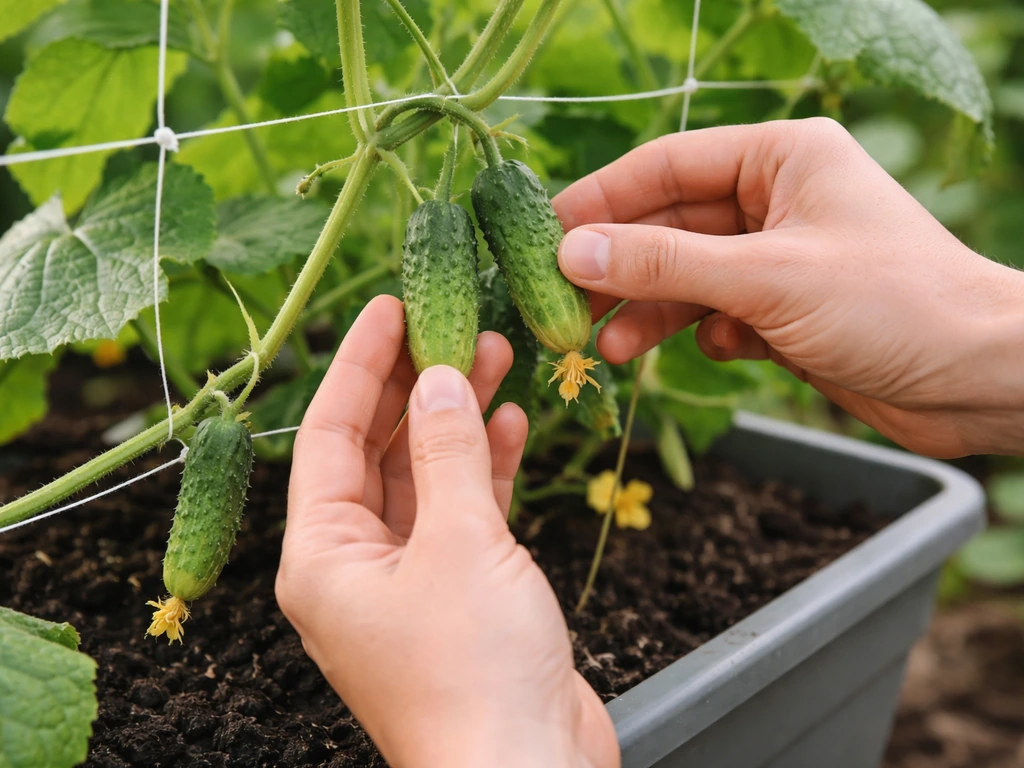
This is where a lot of first-timers go wrong, they wait too long. For pickling cucumbers, you want to harvest small. blank" rel="noopener noreferrer">For gherkin-style pickles, pick them at about 2 inches long. For dill pickles, 4–6 inches is the target. At those sizes the skin is thin, the seeds are immature, and the flesh is firm, all exactly what you want for pickling. If you let them go longer, they get seedy, the skin toughens, and they lose the crunch that makes a good pickle.
Check the plant every day or two once fruits start forming, they grow faster than you'd expect. Use scissors or snip them off rather than pulling, which can damage the vine. Harvesting frequently signals the plant to keep producing, so don't let cucumbers linger on the vine.
Storing your harvest before pickling
Cucumber quality drops quickly after picking. If you're not pickling immediately, store them in the refrigerator and use them within a few days. Cucumber quality deteriorates faster than most people expect, especially at room temperature. For best pickling results, try to process them the same day you pick or the next day at the latest.
Troubleshooting the most common container failures
| Problem | Most likely cause | Fix it by doing this |
|---|---|---|
| Bitter cucumbers | Water stress — letting the soil dry out between waterings | Water more consistently; keep the top 2 inches of soil from drying completely; harvest from the middle of the fruit and avoid the ends where bitterness concentrates |
| Misshapen or knobby fruit | Irregular watering, poor pollination, or heat stress | Even out your watering schedule; check that pollinators are reaching the flowers; shade the pot during extreme heat |
| Yellow leaves (lower) | Normal aging or nitrogen deficiency | Feed with a balanced fertilizer; lower leaves yellowing first is often normal as the plant ages |
| Plant wilting despite wet soil | Root rot from overwatering or poor drainage | Check drainage holes aren't blocked; avoid letting the pot sit in water; ease off watering until the soil dries slightly |
| No female flowers (no fruit forming) | Plant is too young, or temperatures are off | Be patient — male flowers appear first; females follow after a week or two; ensure temperatures are in the 70–85°F range |
| Slow germination or seeds not sprouting | Soil too cold | Wait for soil temps above 60°F; use a heat mat indoors if starting seeds before the season warms up |
| White powder on leaves | Powdery mildew | Improve airflow with a trellis; apply copper-based fungicide; water at the base of the plant, not the leaves |
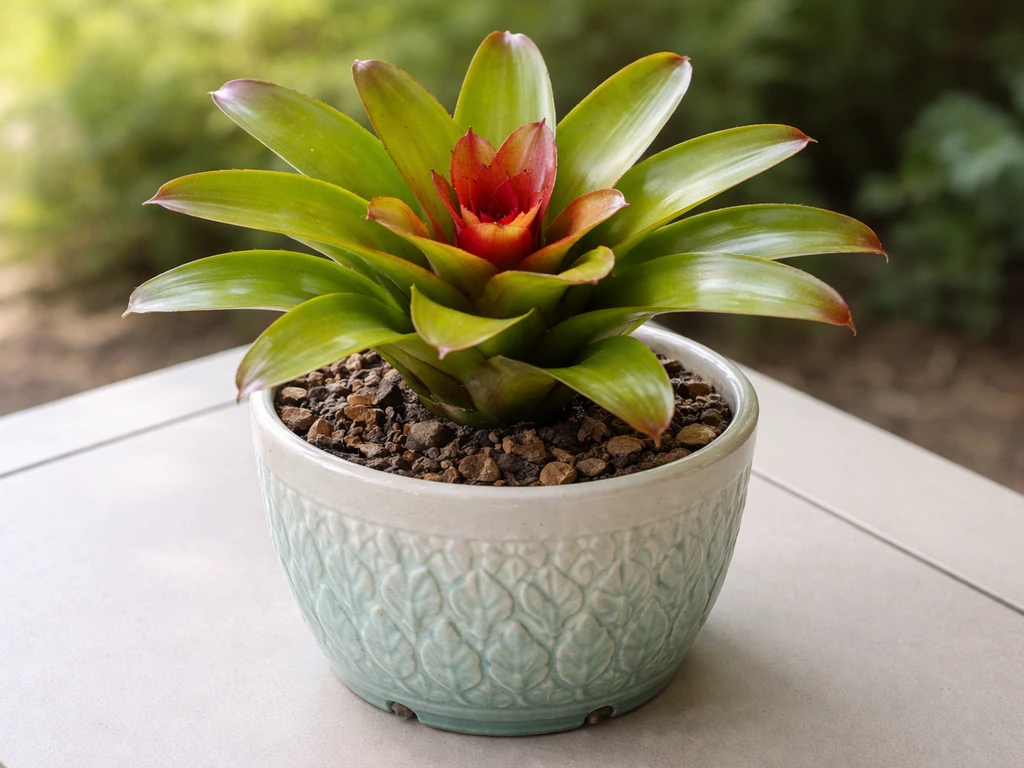
The most encouraging thing about growing pickling cucumbers in a pot is that failures are fixable and the learning curve is genuinely short. If you want to try something besides cucumbers, our guide on how to grow geraniums in pots covers container setup, light needs, and watering tips for healthy blooms. Most problems come back to watering and container size, get those right, add some trellis support and consistent feeding, and you'll be picking cucumbers and filling jars before the summer is over. If you're also looking for a different container plant, learning how to grow bromeliads in pots can help you compare soil, light, and watering needs for another low-maintenance option growing bromeliads in pots.
FAQ
How can I tell whether my cucumber variety is actually good for pickling in brine?
If you want true pickling cucumbers, verify the label or seed packet says “pickling,” “gherkin,” or “for brining,” and check the expected size range. Even within pickling types, some are better for small gherkins while others are bred for longer dill-style fruits, so matching the variety to your target jar size prevents tough or seedy pickles.
Can I grow more than one cucumber plant in a single pot to increase my pickle yield?
You can, but use a single, larger pot rather than multiple small ones. A 10-gallon container that’s well-fed and watered can support two plants, while trying to crowd in a 5-gallon pot usually causes uneven moisture and bitter or misshapen fruit.
What’s the best way to avoid overwatering or underwatering in containers?
Aim for a mostly dry day-to-day surface, but never let the root zone fully swing from very dry to very wet. A practical approach is to check the top 1 to 2 inches, then water slowly until drainage begins at the bottom, and repeat when that top layer dries again (often daily in heat, less often in mild weather).
What type of potting mix works best for cucumbers in pots, and what should I avoid?
Avoid composty or heavy mixes, since they hold water inconsistently and can compact. Use a container potting mix with perlite or other coarse material, and if you mix your own, keep the perlite ratio as directed to maintain air pockets after repeated watering.
What happens if my pot is smaller than the recommended 7 to 10 gallons?
If you have to use a smaller pot, compensate by feeding more consistently and checking moisture more often, but expect a shorter harvest window and lower yield. The most common mistake with undersized containers is letting the mix dry out between waterings, which directly leads to bitterness and rough texture.
Do bush-type pickling cucumbers still need support in a pot, and how should I train them?
Use trellis even for bush types, because airflow and easy harvesting reduce disease and keep fruit from staying too long on the vine. For training, don’t tie tightly, and re-tie every 6 to 8 inches as the plant grows so the vine doesn’t girdle.
My pot cucumber isn’t thriving, what should I troubleshoot first?
If growth stalls or leaves look dull, check sun first (containers often get less than they seem). Then confirm temperatures, since cucumbers suffer in cold soil and below about 50°F, and finally review feeding and watering consistency, since nutrient availability in pots can drop quickly after leaching rains or heavy watering.
Can I start pickling cucumber seeds indoors for earlier harvest, and what timing mistakes should I avoid?
Yes, but be strict about timing. Seeds won’t reliably sprout in cold soil, so wait until soil is at least 60°F (ideally 70 to 80°F) and nights stay above 50°F, or cover the pot during cool periods. Indoors, start no more than four weeks before the last frost to reduce transplant stress and leggy seedlings.
How do I manage powdery mildew on container cucumbers without losing the crop?
Powdery mildew often appears later, but in containers it can spread quickly if leaves stay wet or airflow is blocked. Improve airflow with a trellis, water at soil level, remove severely affected leaves early, and consider disease-resistant varieties next season to reduce recurrence.
When is it safe to use row cover for cucumber beetles, and when should I remove it?
For cucumber beetles, row cover works best early, before flowering starts, because you must remove it when blooms open for pollination. If you cover too long, you can block pollinators and reduce fruit set, even if pests are controlled.
How often should I harvest, and what’s the correct fruit size for good crunch?
Harvest timing affects pickle quality more than almost anything. Pick around 2 inches for small gherkins or 4 to 6 inches for dill-style pickles, and snip with scissors instead of pulling to avoid damaging the vine. Also, don’t let fruits sit longer after the plant starts producing, because quality drops rapidly on the vine.
What should I do with cucumbers after harvesting if I can’t pickle them immediately?
After picking, quality declines fast at room temperature. Refrigerate promptly and aim to process the same day or within a day, since older cucumbers soften and ferment unpredictably in brine.