You can absolutely grow a date palm (Phoenix dactylifera) in a pot, and it makes a genuinely stunning container plant. Just go in with clear eyes: this is a tree that wants to be 60 feet tall, so a pot will keep it manageable for years, but it won't stay small forever. Done right, you get a dramatic, architectural palm on a patio, rooftop, or balcony for a decade or more. Getting fruit in a pot is possible but genuinely difficult, and I'll walk you through the honest truth on that too. Here's exactly what to do. If you are also planning container growing with flowering plants, learn how to grow osteospermum in pots for bright, long-lasting blooms.
How to Grow a Date Palm in a Pot: Full Guide
Marcus Whitley
16 Jun 2026
Picking the right date palm for container life
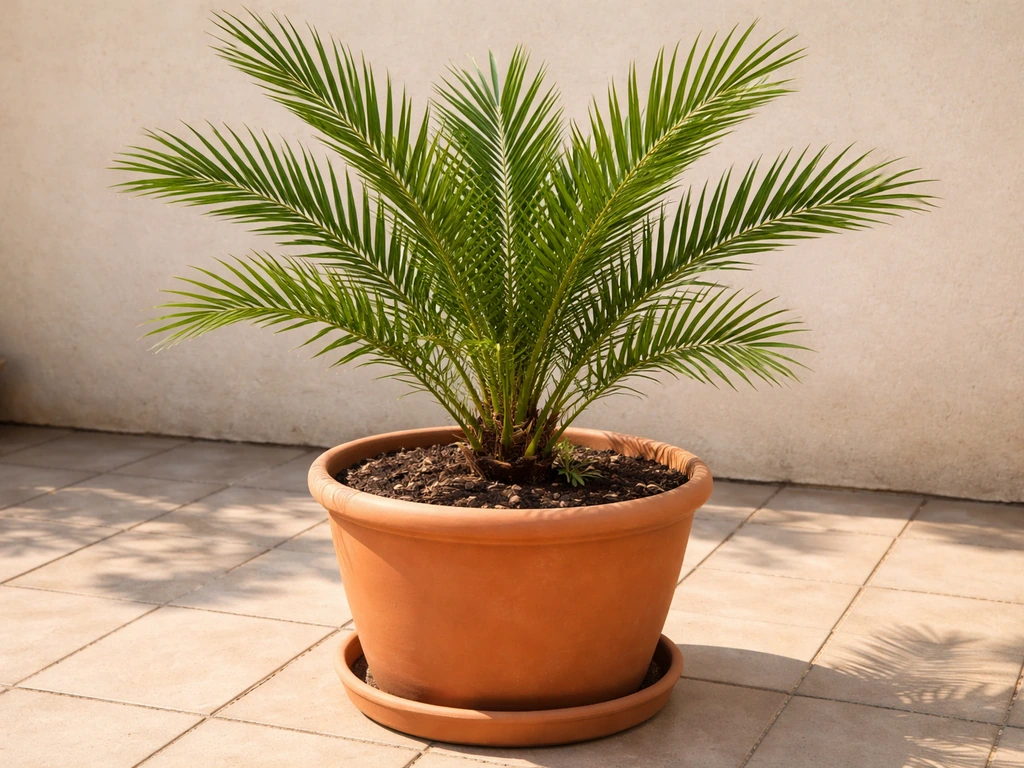
Phoenix dactylifera comes in several cultivars, and the one you choose matters. If you want the best shot at fruit, 'Medjool', 'Barhi', 'Deglet Noor', and 'Zahidi' are the most commonly sold named varieties and they're your best bets because you know what you're getting. 'Barhi' tends to be compact enough to work in a large container for many years and is known for sweet, soft fruit. 'Medjool' is more vigorous and will eventually push hard against any container, but it's widely available at nurseries.
A quick note on a common source of confusion: you'll see pygmy date palms (Phoenix roebelenii) sold alongside regular date palms, and they look similar when young. Phoenix roebelenii is a completely different species. It stays genuinely small (around 6 to 10 feet), makes a great long-term container plant, but doesn't produce edible dates. If your goal is edible fruit, make sure the label says Phoenix dactylifera specifically.
Here's the critical factor most people miss: date palms are dioecious, meaning there are separate male and female trees. Only females produce fruit. If you're buying a young nursery palm, there's almost no way to tell the sex until it flowers, which can take several years. For fruit production, you ideally want a confirmed female plus access to pollen from a male. If you're growing purely for the look of the palm, sex doesn't matter at all, so just pick a healthy plant.
Pot size, container material, and getting drainage right
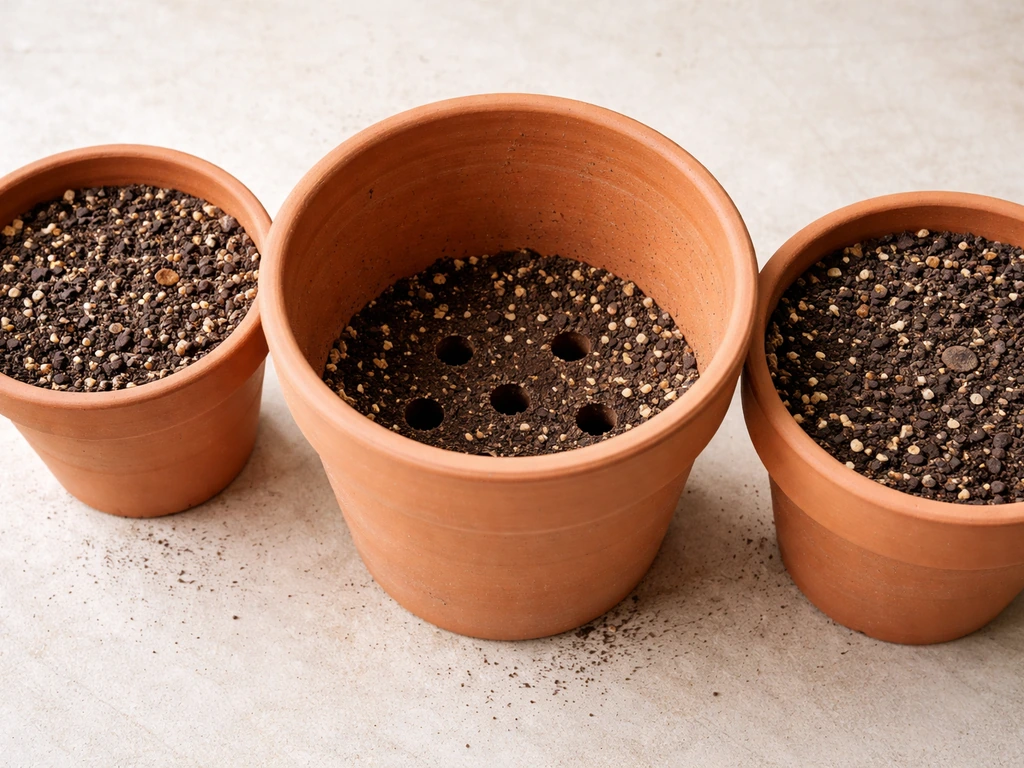
Start with a pot that's about 2 to 4 inches wider in diameter than the palm's root ball. Going much larger is tempting, but oversized containers hold excess moisture around the roots for too long, which is one of the fastest ways to kill a date palm. A young palm from a nursery typically comes in a 3-gallon pot, so stepping up to a 5- or 7-gallon container is the right first move. EcoCrop (FAO) notes that Phoenix dactylifera can reach about 15, 40 m in height, which explains why it is especially important to plan for container limits when growing it in pots Date Palm. As the palm grows, you'll repot incrementally, and I'll cover that timing below.
For a mature container date palm, you're looking at a 25- to 30-gallon pot minimum to give the root system room. At that size, weight becomes a real consideration, so think about whether you need wheels or casters under the pot before you fill it with soil.
Material matters less than drainage, but here's a practical breakdown. Terracotta breathes well and helps prevent overwatering, which makes it a great choice for date palms. The downside is it's heavy and can crack in freezing temperatures. Plastic pots are light and retain moisture longer, which can be a problem in cool or cloudy climates. Glazed ceramic is a reasonable middle ground. Whatever you choose, the pot absolutely must have multiple drainage holes at the bottom. If your pot only has one small hole, drill more or choose a different container.
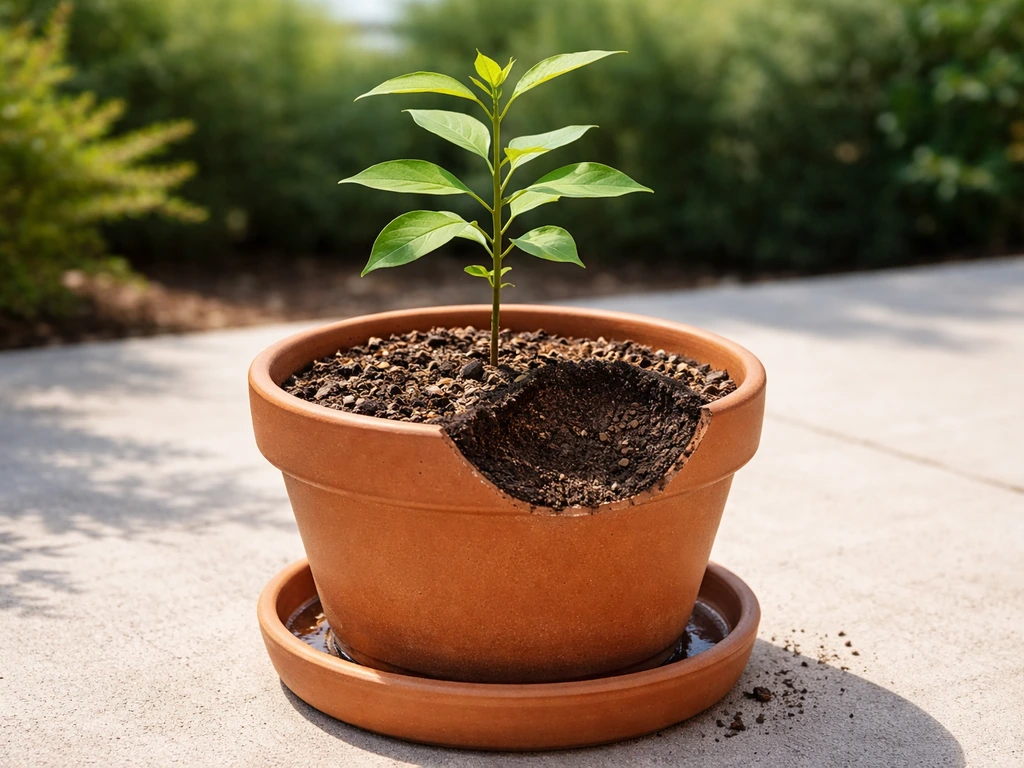
Elevate your pot slightly off the ground using pot feet or a few bricks. This prevents the drainage holes from sitting in standing water and also improves airflow under the container. Date palms are extremely intolerant of waterlogged roots, and even a few days of sitting in a puddle can start root rot.
Building the right soil mix and setting up a fertilizing schedule
Date palms need fast-draining soil above everything else. Standard potting mix straight from the bag holds too much moisture. I mix roughly 60% high-quality potting mix with 20% coarse perlite and 20% coarse sand or fine pine bark. This combination drains quickly, doesn't compact easily, and gives the roots the air exchange they need. Avoid peat-heavy mixes that hold water like a sponge.
Fertilizing a container date palm is one of the areas where people under-do it. Containers leach nutrients with every watering, so the palm depends on you to keep feeding it. Use a slow-release palm-specific fertilizer with an N-P-K ratio close to 3-1-3 or 8-2-12. UF IFAS also recommends using slow-release forms for nitrogen, potassium, and magnesium in palm fertilizers to support adequate nutrition without stressing the palm slow-release palm-specific fertilizer. The high nitrogen and potassium relative to phosphorus matters because palms are heavy potassium feeders. Equally important: the fertilizer should contain magnesium and micronutrients including iron and manganese. Magnesium deficiency is extremely common in potted palms and shows up as yellowing on the older (lower) fronds.
Apply slow-release fertilizer at the start of the growing season (spring) and again in midsummer. In between, you can supplement with a liquid palm fertilizer every 4 to 6 weeks during active growth. In fall and winter, stop fertilizing entirely. The palm slows down and feeding it in cold weather encourages soft new growth that's vulnerable to cold damage.
One thing to watch for over time: salt buildup in the soil from fertilizers and tap water. You'll see a white crust forming on the soil surface or around the pot rim. Flush the pot thoroughly with water every few months, letting it drain completely two or three times in a row, to wash out excess salts. Ignoring salt buildup leads to leaf tip burn and slowed growth.
Seed vs. nursery palm: which path makes sense for you
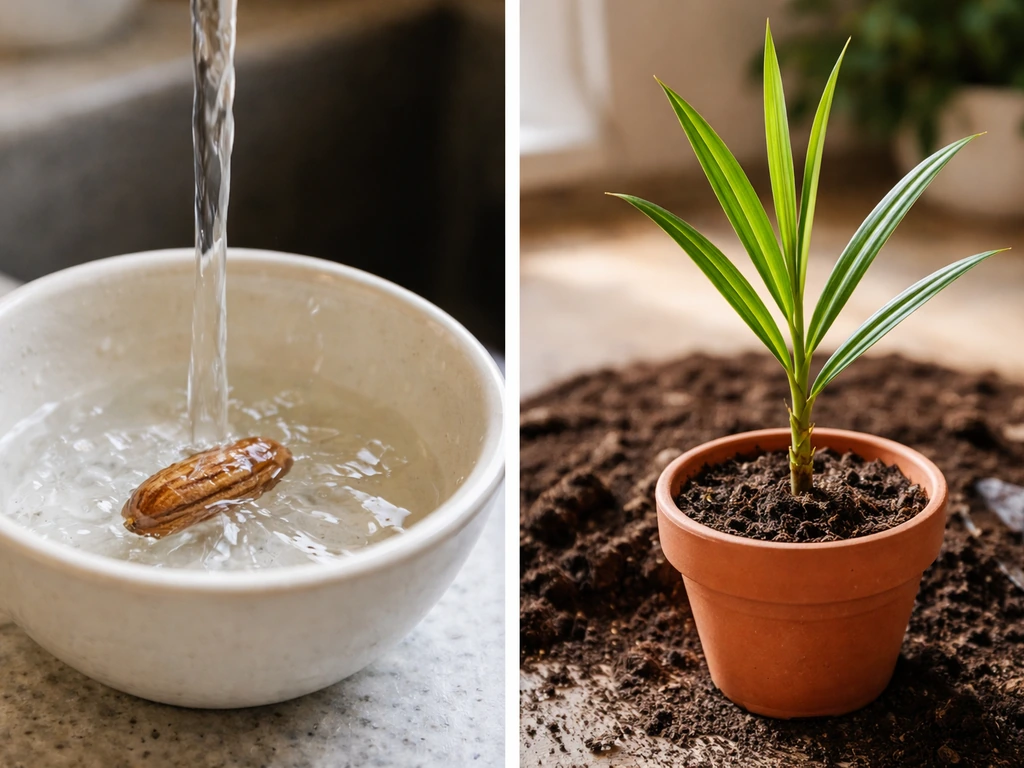
Growing a date palm from a date pit you bought at the grocery store is genuinely fun as a project, but you need to know what you're signing up for. First, the seedling you grow won't necessarily be the same variety as the fruit you ate because date palms are propagated commercially through offshoots, not seeds. Seed-grown plants show a lot of genetic variability. Second, you won't know whether your seedling is male or female for potentially 5 to 7 years. Third, seed-grown palms take significantly longer to fruit than palms started from offshoots.
That said, here's how to do it if you want to try. Rinse a fresh date pit, soak it in warm water for 24 to 48 hours, then plant it about an inch deep in a small pot with the soil mix described above. Keep it warm (ideally above 70°F, closer to 85°F speeds germination) and be patient. Germination can take anywhere from 3 to 8 weeks. Once the seedling has a few leaves, treat it like a young nursery palm.
Buying a nursery palm is the smarter path if you want results faster. A 3- to 5-gallon nursery palm gives you a head start of several years compared to starting from seed. You'll still wait years before fruiting is possible, but you shorten the timeline considerably. If you can find a palm sold as a confirmed female offshoot, that's the gold standard for anyone serious about growing dates.
| Factor | Seed-grown | Nursery palm (offshoot) |
|---|---|---|
| Cost to start | Almost free (use a date pit) | Moderate to high |
| Known variety | No (genetic variability) | Yes if labeled |
| Known sex | No (unknown for years) | Sometimes confirmed |
| Time to first flower | 7+ years | 3 to 5 years |
| Time to first fruit | 10+ years | 5 to 8 years in a pot |
| Difficulty | Low to start, very slow | Moderate, faster results |
Light, temperature, and watering routines
Date palms are desert plants, and they want as much sun as you can give them. Full sun, meaning at least 8 hours of direct sunlight per day, is the minimum for healthy growth. Six hours will keep the plant alive but it'll grow slowly and won't fruit. If you're growing on a south- or west-facing balcony or patio, you're in good shape. A shaded courtyard is not the right home for this palm.
Temperature-wise, date palms are more cold-tolerant than people expect. They can handle brief dips down to around -11°C (about 12°F) when established and when the roots are protected. But in a container, the roots are exposed on all sides and cool down much faster than roots in the ground. First frond damage tends to show up around -10°C, and I'd start protecting or moving the plant anytime temperatures drop below freezing consistently. More on that in the seasonal care section below.
Watering a container date palm takes some judgment. During hot, sunny summer months, a large potted palm may need watering every 2 to 3 days. Stick your finger 2 inches into the soil: if it feels dry at that depth, water thoroughly until it drains freely from the bottom. Never let it sit in a saucer full of water. In spring and fall, back off to once a week or so. In winter, especially if the palm is indoors or in a cool location, water very sparingly, maybe once every 2 to 3 weeks, just enough to keep the soil from going completely bone dry.
One practical tip for urban gardeners with tap water that's heavily chlorinated or has high mineral content: let your water sit in an open container overnight before using it, or collect rainwater when you can. High-mineral tap water contributes to that salt buildup problem over time.
Getting fruit from a potted date palm (and why it might not happen)
Let's be straight with each other here: getting edible dates from a potted Phoenix dactylifera is genuinely challenging. It requires patience, the right conditions, and a bit of luck. But it's not impossible, and understanding the obstacles helps you either work around them or accept that you're growing this palm for its beauty rather than its fruit.
The biggest hurdle is the dioecious nature of the plant. You need a female palm to produce fruit, and you need pollen from a male palm to fertilize the flowers. In a commercial date farm, one male can pollinate 40 to 50 female trees. In your backyard or on your balcony, you need to either have both a male and female plant, hand-pollinate with purchased pollen (which you can sometimes buy from specialty suppliers), or hope there's a male palm nearby in your neighborhood during the flowering window.
Flowering in date palms is triggered seasonally. In warm climates like the Coachella Valley in California, inflorescence development begins within the bud as early as November, with flowers emerging in late winter to early spring. In a container, if the palm hasn't received enough heat and light through the growing season, it may not initiate flowering at all. Young palms simply won't flower until they're mature enough, which takes years.
Hand pollination works like this: when the female palm's flower spathe (the protective sheath around the flower cluster) opens, you have a short window of a few days to apply pollen. Collect pollen from an open male flower cluster, or use dried purchased pollen, and dust it directly onto the female flowers using a small brush or by tying a small male flower cluster directly into the female flower cluster. This is the traditional method used by date farmers for centuries.
If your palm isn't fruiting, work through this checklist before giving up:
- Is the palm old enough to flower? Most need at least 5 to 7 years from an offshoot, longer from seed.
- Do you know if your palm is female? If the sex is unknown, it may be male (and males never produce fruit).
- Was pollination carried out during the correct window when flowers were receptive?
- Did the palm get enough heat and sun through the growing season to trigger flower initiation?
- Are there any nutrient deficiencies (especially potassium or magnesium) that might be suppressing flowering?
Pruning, pests to watch for, and seasonal care
Pruning basics
Date palms are pretty low maintenance when it comes to pruning. The main job is removing dead or dying fronds, which are the lower ones that turn brown over time. Cut them as close to the trunk as possible using clean, sharp pruning shears or a saw, leaving a small stub. Never remove green fronds unless they're damaged or diseased. Over-pruning, especially cutting into the green canopy, stresses the palm and can slow growth significantly. A healthy date palm naturally sheds its lower fronds over time, so your job is mostly cleanup.
Pests and diseases to watch for
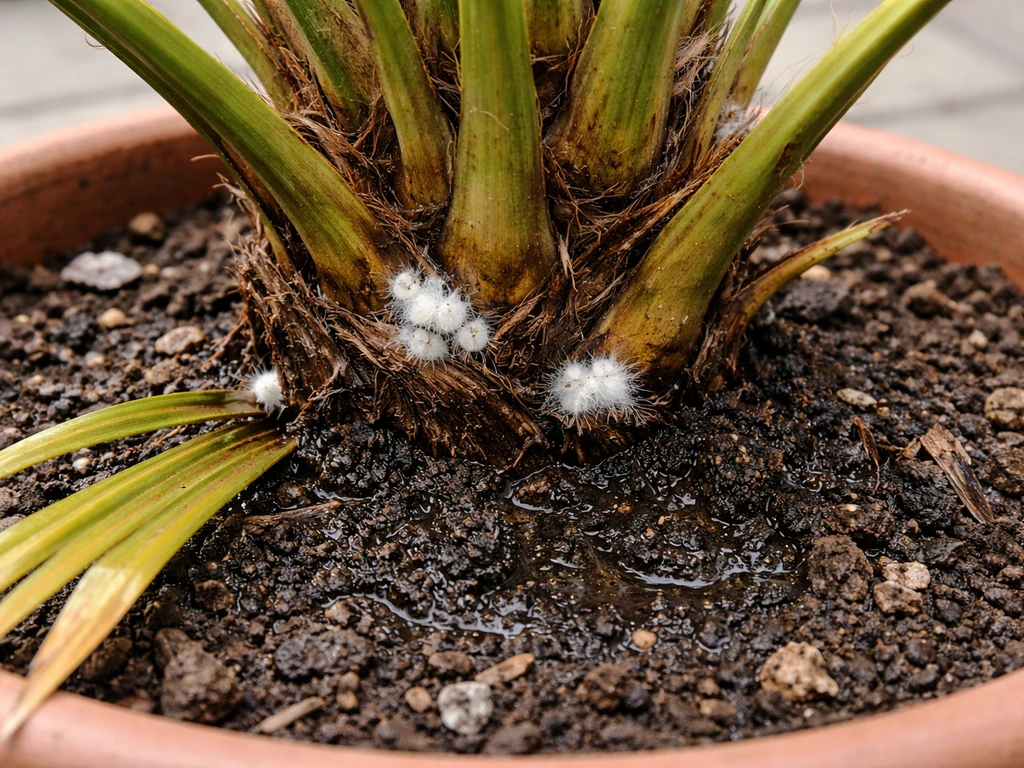
Container date palms are relatively pest-resistant, but a few problems come up regularly. Mealybugs are the most common nuisance: look for white, cottony clusters at the base of fronds or in leaf axils. Catch them early and treat with insecticidal soap or neem oil applied directly to the affected areas. Spider mites can show up in hot, dry indoor conditions (especially if you're overwintering inside). A strong blast of water to knock them off, followed by neem oil, usually handles them.
On the disease side, root rot is the main killer, and it's almost always caused by overwatering or poor drainage. If the palm looks generally limp and the new growth (the center spear) goes mushy or dark, suspect root rot. There's often no saving a severely affected palm, which is why preventing it through proper drainage is so important.
Nutrient deficiency yellowing is not a disease but it's very common and worth flagging here. Yellowing on older (lower) fronds that spreads inward toward the midrib usually means magnesium deficiency. Treat it with magnesium sulfate (Epsom salt) applied as a soil drench. Yellowing on new (upper) fronds, especially between the veins while the veins stay green, usually means iron or manganese deficiency. Use a chelated iron/manganese foliar spray or a water-soluble micronutrient supplement.
Repotting timing
Repot your date palm when roots start circling the bottom of the pot, growing out of the drainage holes, or the palm becomes visibly top-heavy and unstable. This typically happens every 2 to 3 years for young palms, and less frequently as the palm matures. Spring is the best time to repot, just as the growing season starts. Move up by only one pot size at a time, such as from a 7-gallon to a 10-gallon container. Jumping to a much larger pot risks waterlogging issues in the unused soil space around the roots. After repotting, water well and keep the palm in partial shade for a week or two to reduce transplant stress before returning it to full sun.
Overwintering your potted date palm
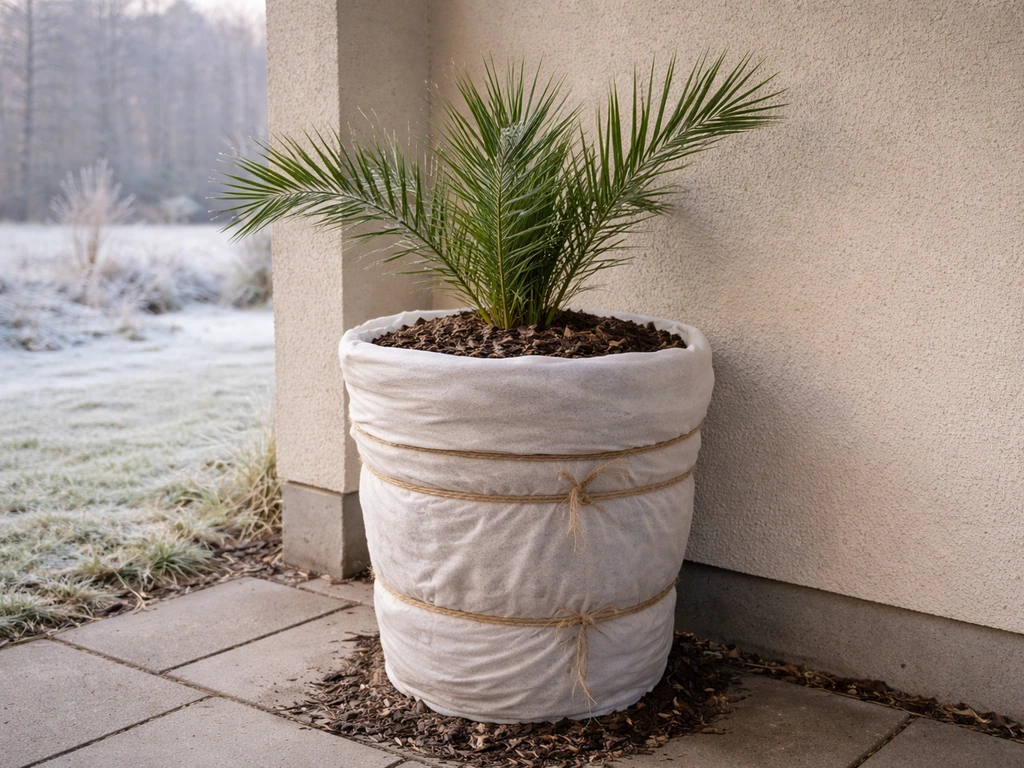
If you live somewhere that gets consistent freezing temperatures in winter, you'll need a plan. The roots in a container are the most vulnerable part because the pot walls provide no insulation the way ground soil does. Once nighttime temperatures are consistently dropping below freezing (0°C / 32°F), move the palm to a frost-free location. A bright, unheated greenhouse, a sheltered garage with a south-facing window, or a cool sunroom all work. The palm doesn't need warmth, just frost protection and as much light as possible.
If moving the palm isn't possible because it's too large and heavy, wrap the pot in horticultural fleece or bubble wrap to insulate the roots, and wrap the crown (the growing tip at the top of the trunk) with fleece too. This buys you a few extra degrees of cold protection. Uncover the palm on mild days to let it breathe and get light.
In warmer climates where frost is light or rare (USDA zones 9 and above), you can leave the palm outdoors year-round. Just reduce watering significantly in winter and stop fertilizing from late fall until early spring.
Your next steps right now
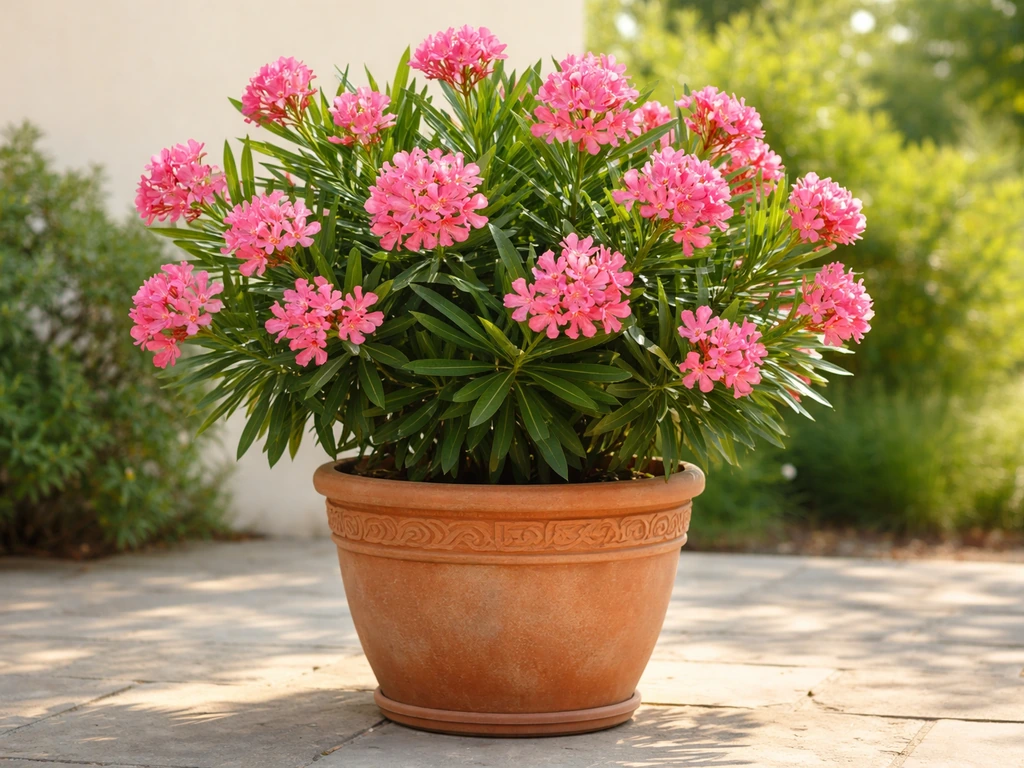
If you're starting today, here's the order of operations. First, decide whether you're growing for the look of the palm or genuinely aiming for fruit. That decision shapes everything, especially whether you need to hunt down a confirmed female offshoot or whether any healthy nursery plant will do. Second, source your palm or your date pit and get a suitable pot with good drainage holes ready. p46s3 referencesentence goes here how to grow oleanders in pots. Third, build or buy a fast-draining soil mix. Get the palm in the pot, put it in the sunniest spot you have, and start a simple watering routine based on the finger-test method.
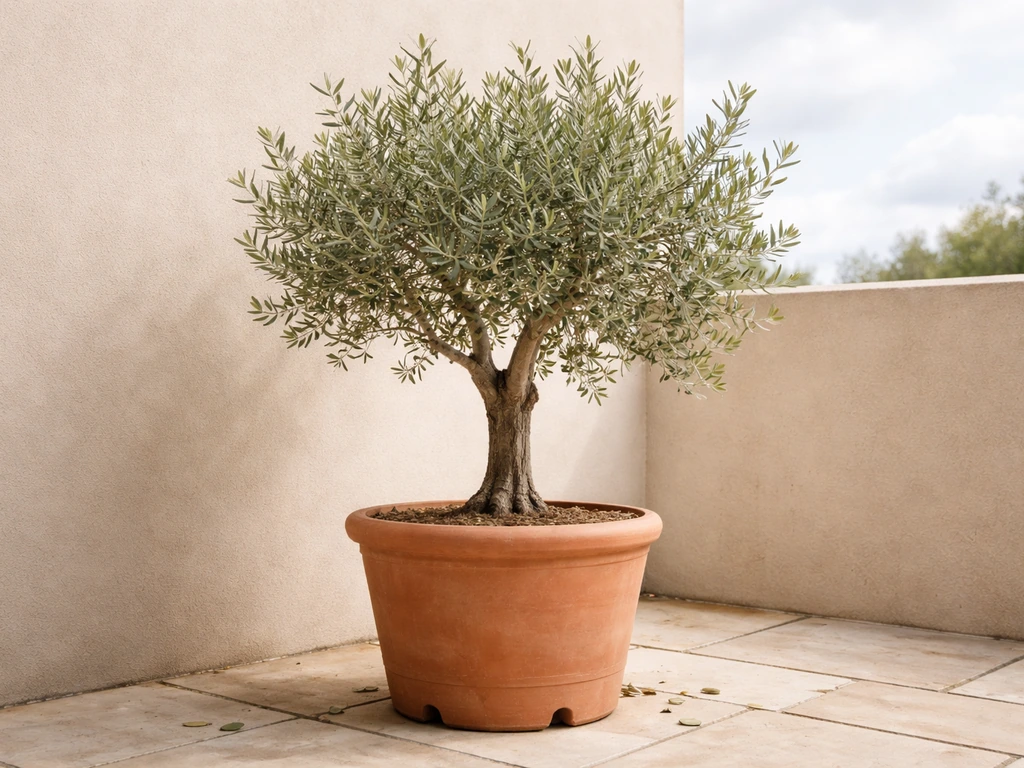
From there, your weekly job is simple: check soil moisture, check for pests, and make sure the plant is getting full sun. Your seasonal jobs are: fertilize in spring and summer, flush salts every few months, repot when root-bound, and protect from frost. Growing a date palm in a pot is a long game, but it's a rewarding one. There's something genuinely satisfying about a palm you've raised from a pit or a tiny nursery start, even years before a single date appears. If you enjoy growing other dramatic potted trees, you'll find the same rhythm applies whether you're working with palms, olive trees, or other statement container plants.
FAQ
How can I tell if my potted date palm is getting too much water?
Look for soggy soil that stays wet 3 to 4 days after watering, a limp look even when the soil is not dry, and a mushy or dark center spear. If that happens, stop routine watering and confirm drainage, because in containers root rot can start before symptoms spread to older fronds.
What size pot should I use if I want my date palm to stay manageable the longest?
Use a series of gradual increases, typically one pot size up every repot cycle rather than jumping. If you want the longest “manageable” period, start around the 5 to 7 gallon range for a young palm and plan for repotting to only one additional size at a time, because oversized pots stay wet and slow or damage roots.
Is it okay to grow a date palm in an indoor pot near a sunny window?
It can survive, but “window sun” often does not provide the 8 hours of direct light it prefers, so growth can stall and spider mites become more likely. If you must keep it indoors part of the year, rotate the pot and use a brighter supplemental light if your window hours are limited.
Can I fertilize year-round to speed up growth and fruiting?
No, feeding in cold or low-light months often encourages soft new growth that is vulnerable to cold and pest pressure. Keep fertilizer to spring and midsummer, and only consider light liquid feeding during active growth, then pause in fall and winter.
How do I manage salt buildup if I use well water or hard tap water?
Do more frequent flushing than the “every few months” rule of thumb, and flush until water runs out freely from the bottom. Using water that has minerals can increase crusting, and consistent leaching is the practical way to prevent leaf tip burn.
Should I mist a date palm to increase humidity, especially indoors?
Generally no, misting does not fix the main risk factors (low light, dry root zone, salt buildup). If spider mites are an issue indoors, focus on a strong water rinse and improve airflow, then only consider humidity support indirectly, such as grouping plants or using a fan, not frequent soaking.
My date palm looks healthy but won’t flower. What else can I check besides maturity?
Check whether it actually received enough heat and light during the growing season. In containers, limited sun or extended cool periods can prevent inflorescence development entirely, even if the tree is several years old. Also confirm you have a Phoenix dactylifera (not a different species) and, for fruit, you likely need both sexes.
If I want dates, what is the minimum pollination setup in a container garden?
In a small space, plan for either a confirmed female with access to pollen from a male plant at the right flowering window, or hand pollination using stored pollen. You cannot rely on casual neighborhood wind because the timing window is short and you still need compatible pollen.
When should I repot, and how do I avoid stressing the palm?
Repot in spring when growth resumes, and only move up about one pot size at a time. After repotting, water thoroughly, keep it in partial shade for one to two weeks, and avoid cutting any green fronds during that recovery period.
What pests are most likely on a potted date palm, and how can I stop them early?
Mealybugs often appear as cottony clusters in leaf axils, and spider mites show up in hot, dry indoor conditions. The most effective early control is inspecting the base of fronds and the undersides of leaves weekly, then treating directly on affected areas before populations explode.
Can I use cactus mix or “succulent soil” for my date palm?
Not always. Date palms need drainage and air, but many succulent mixes are too fast-drying and can under-hydrate the root ball, leading to stress. A better approach is the fast-draining, palm-friendly mix style (potting mix plus perlite and coarse sand or bark) so it drains quickly but still holds usable moisture.