Yes, you can grow a sandalwood tree in a pot, but there are two things you need to know upfront: it is slow (we are talking years, not months) and it needs a host plant growing alongside it to survive. Once you understand those two realities, everything else becomes manageable, even in a container on a balcony or patio. You can get similar reliable results with osteospermum in pots by focusing on bright light, fast-draining soil, and regular deadheading to keep blooms coming.
How to Grow a Sandalwood Tree in a Pot Step by Step
Marcus Whitley
31 May 2026
Choosing the right sandalwood for pot growing
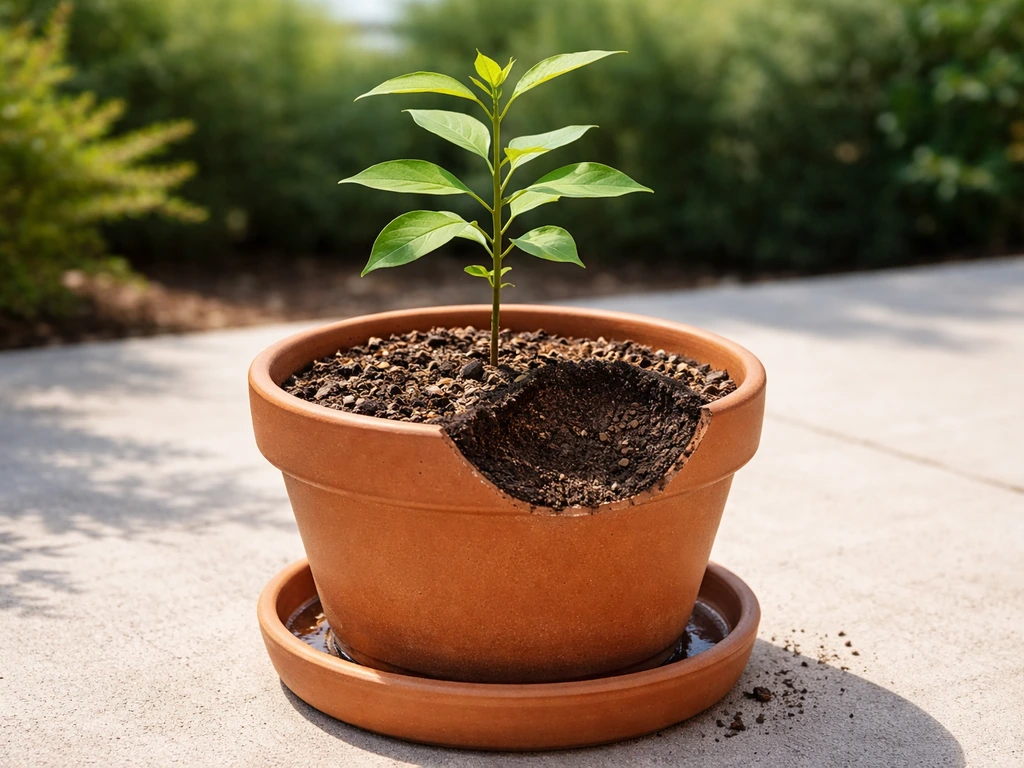
The species most people are after is Santalum album, commonly called Indian sandalwood or East Indian sandalwood. This is the one with the prized fragrant heartwood, and it is the most studied and widely available sandalwood for home cultivation. Other species exist, like Hawaiian sandalwood (Santalum paniculatum) or Australian sandalwood (Santalum spicatum), but Santalum album is the best starting point if you want the classic fragrance and can find seed or seedlings.
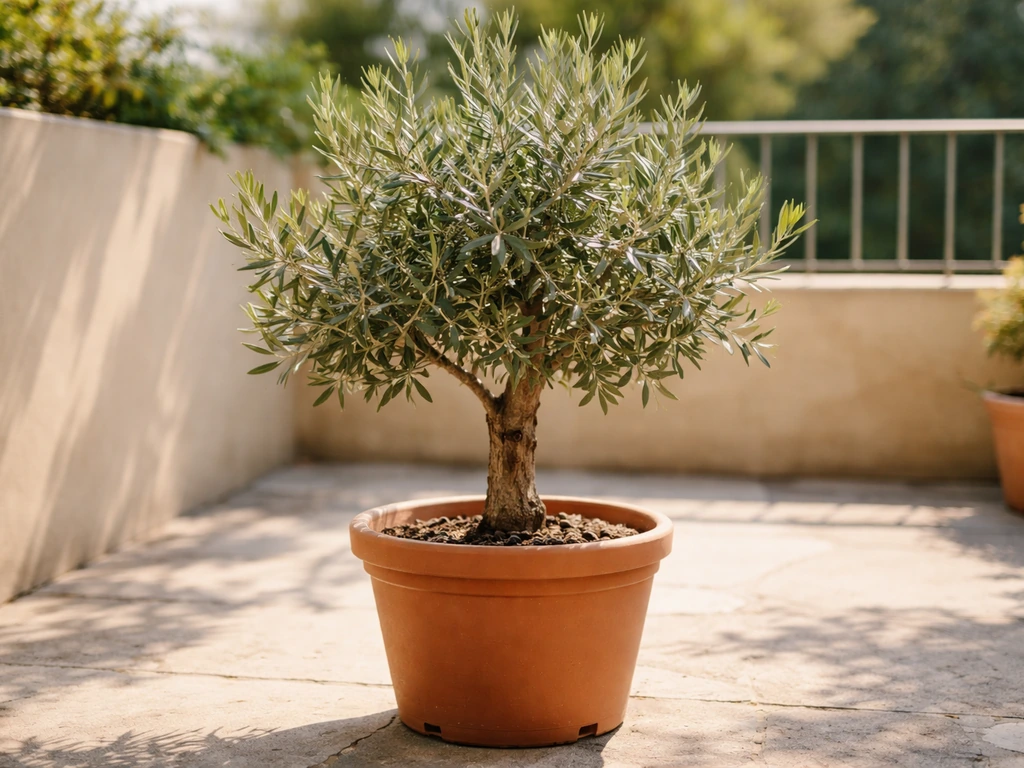
Is Santalum album genuinely pot-viable? Yes, with caveats. In the ground, these trees can eventually reach 4 to 9 meters, but container growing naturally limits size. You will not get a towering specimen, and you will never produce commercial quantities of heartwood from a pot. What you will get is a living, fragrant, beautiful tree that you can actually manage in a small space. Think of it like growing an olive tree in a pot: it works, it is rewarding, but you are cultivating the tree rather than farming it. If you want to grow an olive tree in a pot for a similar experience, that comparison is a useful frame of reference.
Set your expectations now: this is a long-term project. Sandalwood is slow-growing by nature. You are signing up for at least several years before the tree looks truly established, and heartwood fragrance does not develop until the tree is 15 to 30 years old. Pot growing slows things further. If that timeline excites rather than deflates you, you are the right kind of sandalwood grower.
The big thing most guides skip: sandalwood needs a host
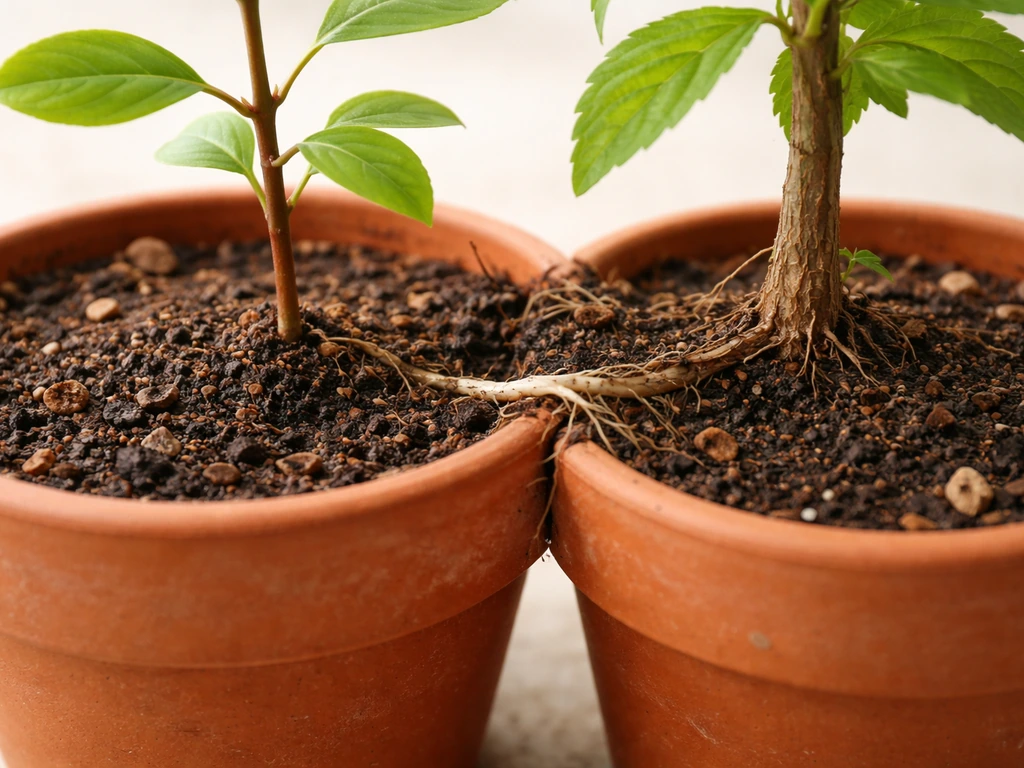
Santalum album is what botanists call a hemi-parasite or semi-parasite. That means it photosynthesizes like a normal plant but also taps into the roots of neighboring plants to steal water and nutrients. The mechanism is a specialized root structure called a haustorium, basically a root attachment point that drills into a host plant's root system. Without a host, young sandalwood seedlings struggle and eventually decline. Research shows haustorial attachment can begin as early as 30 to 40 days after planting, so the clock starts very quickly.
The good news is that sandalwood is not fussy about which host it uses. It can form relationships with hundreds of different plant species. For pot growing, you have practical options. Good host candidates that work well in containers include lemongrass, marigolds (Tagetes), Casuarina, and leguminous herbs or small shrubs like clover or pigeon pea. The key is that the host roots need to physically share the same soil as the sandalwood roots, so you grow them in the same pot or in immediately adjacent pots with roots that can intermingle through drainage holes.
One thing to watch: hosts grow faster than sandalwood and can crowd it out. Trim your host plant aggressively if it starts to dominate. The host is a support act, not the star. Over the years you may need to cycle through different hosts, replacing them as they get too large or die back.
Picking the right pot, soil, and drainage setup
Start with a pot that is at least 30 to 40 cm (12 to 16 inches) in diameter and at least 35 cm deep. Sandalwood roots need room to spread and find those host roots. A pot that is too small will stress the tree within the first year or two. Terracotta is a good material choice because it breathes and helps prevent waterlogging, but a large plastic or resin pot works fine as long as drainage is excellent.
Drainage is non-negotiable. Use a pot with multiple drainage holes and elevate it slightly on pot feet or bricks so water can exit freely. Do not use a saucer that holds standing water under a sandalwood pot.
For soil, aim for a mix that drains well but holds some moisture. A workable recipe is: 50% good quality potting mix, 30% coarse perlite or grit, and 20% fine sand or coco coir. This gives you aeration, drainage, and enough organic matter to hold nutrients. Santalum album grows best at a soil pH of 6.0 to 7.5. If you are unsure of your potting mix's pH, a cheap pH test kit from any garden center will tell you quickly. Avoid heavy, clay-based mixes and anything that stays wet for long periods.
When setting up the pot, some growers treat the potting medium with a dilute fungicide before planting. This is especially useful in humid climates where damping off (a fungal seedling killer) is a risk. It is an extra step but worth it given how long it takes to get a seedling to a viable size.
Starting your sandalwood today: seeds vs. nursery plant
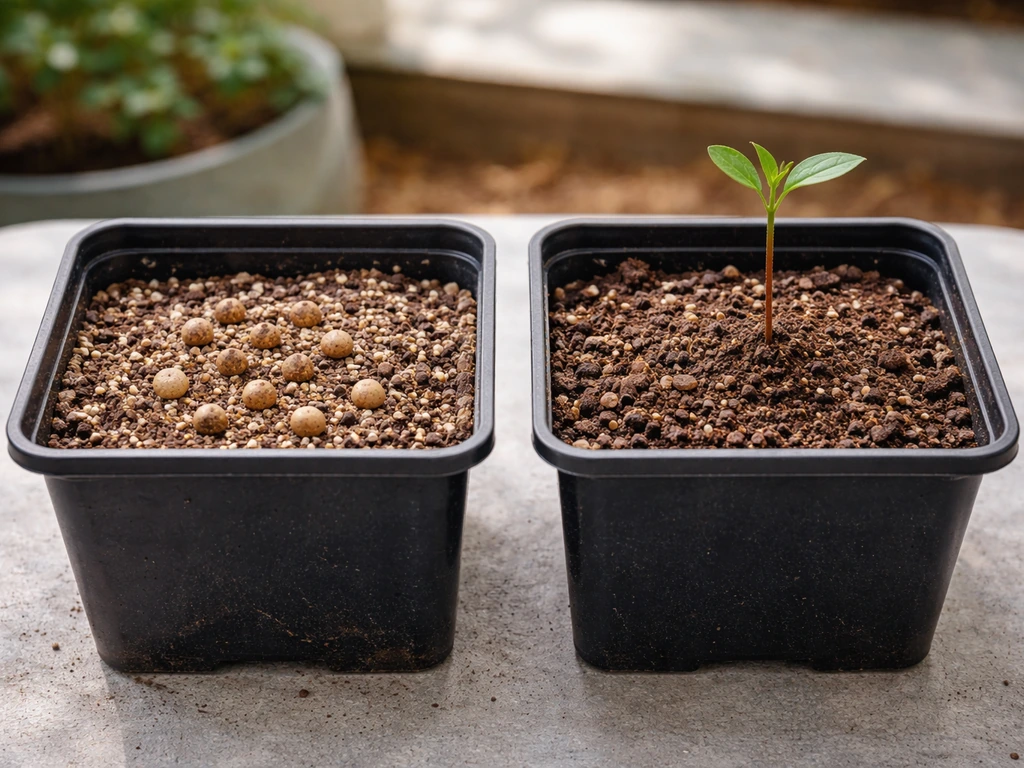
You have two realistic options: starting from seed or buying a young nursery-grown seedling. Each has trade-offs.
| Method | Pros | Cons | Best for |
|---|---|---|---|
| Seeds | Cheaper, widely available online, satisfying process | Very slow germination (4 to 22 weeks), requires dormancy breaking, higher failure rate | Patient gardeners who enjoy the full process |
| Nursery seedling | Saves 6 to 12 months, established root system, faster to host pairing | More expensive, harder to find, check it is Santalum album | Anyone who wants quicker results or has limited time |
Starting from seed
Santalum album seeds have a natural dormancy period of at least 50 to 60 days after they drop from the tree. If you buy fresh seeds, check how long they have been stored. Seeds stored for about 3 weeks show germination rates above 80% under good conditions, but germination success drops off with longer storage. Under normal conditions without any treatment, expect germination to take anywhere from 4 to 22 weeks. That is not a typo. Germination is genuinely unpredictable with untreated seed.
To speed things up, soak seeds in a dilute gibberellic acid (GA3) solution for 24 hours before sowing. GA3 is available from specialist seed suppliers and horticultural retailers. It measurably improves both germination speed and percentage. Alternatively, a simpler approach is to soak seeds in warm water for 24 to 48 hours before planting. Sow seeds about 1 cm deep in your prepared, moist (not wet) potting mix, in a warm spot with good indirect light. Maintain consistent moisture and warmth (ideally 25 to 30°C) throughout germination.
Once seedlings emerge and show their first true leaves (not just the seed leaves), introduce your host plant into the same pot. Remember, haustorial attachment can begin within 30 to 40 days of planting, so you want the host roots nearby from early on.
Starting from a nursery plant
If you buy a nursery-grown sandalwood seedling, ask whether it has already been grown with a host plant. Some specialist growers pre-pair them; others do not. Either way, pot it up into your prepared container and plant your host alongside it immediately. Do not let the roots settle into solo soil for long without a host present.
Light, temperature, and where to put your pot
Santalum album is a tropical to subtropical tree. It wants full sun for most of the day, at least 6 hours of direct sunlight. In warm climates (USDA zones 10 to 12, or equivalent), your pot can live outdoors year-round. In cooler climates, you will need to move it indoors or under cover once temperatures regularly drop below 10°C (50°F).
Outdoors, a south or west-facing spot with reflected warmth (like a wall or paving) is ideal. If you are growing indoors or on a covered balcony, place the pot in your brightest window, ideally south-facing in the northern hemisphere. Supplemental grow lights help if your indoor light is weak. Young sandalwood can handle light shade but will grow even more slowly without strong light, and slow growth is already its default setting.
If you are in a temperate climate, think of your sandalwood pot like you would a container palm or an olive tree in a pot: it goes outside in the warm months, comes inside or into a sheltered spot in winter. If you are specifically comparing container shrubs and how to grow oleanders in pots, the same idea applies: plan for consistent watering and protection when cold weather hits container palm or an olive tree in a pot. If you are specifically wondering how to grow olive trees in pots in the UK, focus on sunny placement and reliable drainage through the year olive tree in a pot. The difference is that sandalwood is less cold-tolerant than olives, so do not push it. One hard frost can set back years of growth.
Watering and feeding your potted sandalwood
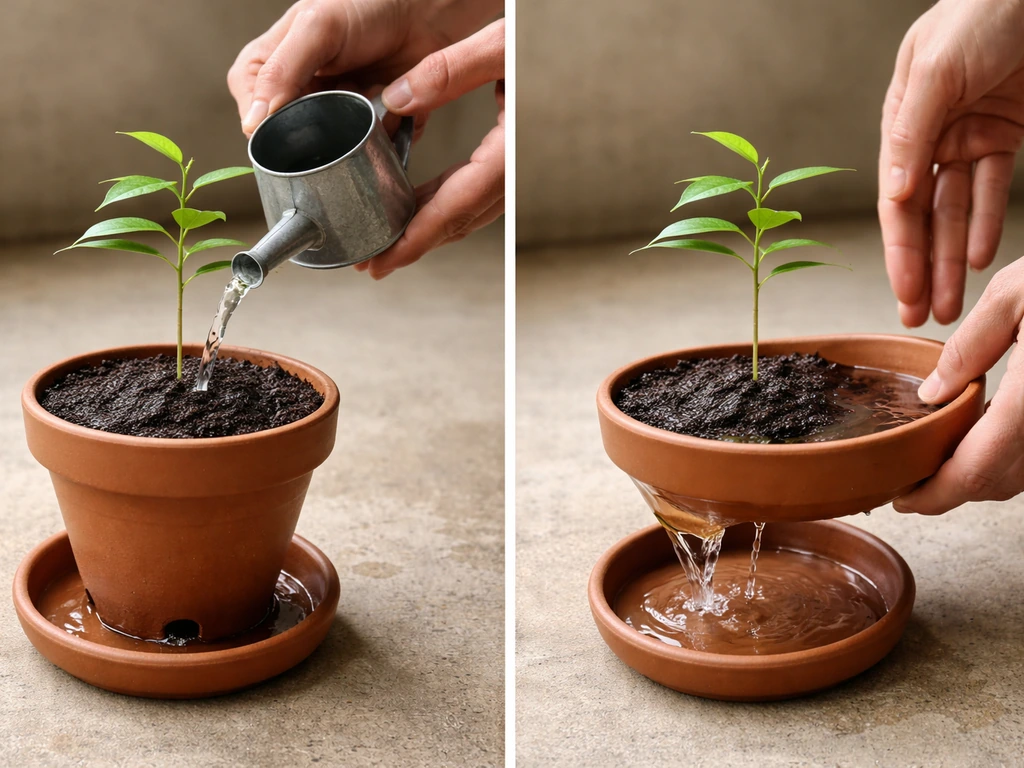
Overwatering is the most common way people kill potted plants, and sandalwood in a pot is no exception. Root rot from waterlogged soil will kill a sandalwood seedling faster than almost anything else. The rule is simple: water thoroughly, then let the top 2 to 3 cm of soil dry out before watering again. In warm, sunny conditions that might mean watering every 2 to 3 days. In cooler or lower-light conditions, once a week or even less. Stick your finger into the soil before reaching for the watering can. If it still feels damp below the surface, wait.
Always water until it drains freely from the bottom of the pot. Then empty any water that collects under the pot within 30 minutes. Never let the pot sit in standing water.
For feeding, sandalwood is naturally supported in part by its host plant relationship, which supplies macronutrients. Do not over-fertilize. A light, balanced liquid fertilizer at quarter-strength, applied once a month during the growing season (spring and summer), is enough. Avoid high-nitrogen feeds, which push leafy growth at the expense of root and wood development. In autumn and winter, stop feeding entirely. Potassium-rich feeds (like those used for flowering plants or tomatoes) are a better choice than high-nitrogen general fertilizers if you want to support the tree's long-term woody structure.
Ongoing maintenance: pruning, up-potting, and troubleshooting
Pruning and shaping
Sandalwood does not need heavy pruning. In a pot, light pruning helps you keep the shape manageable and encourages a bushier habit. Remove dead or crossing branches in early spring. Do not cut back more than 20 to 25% of the canopy at once. The goal is to maintain a tree that fits your space while keeping the root system undisturbed below.
When and how to up-pot
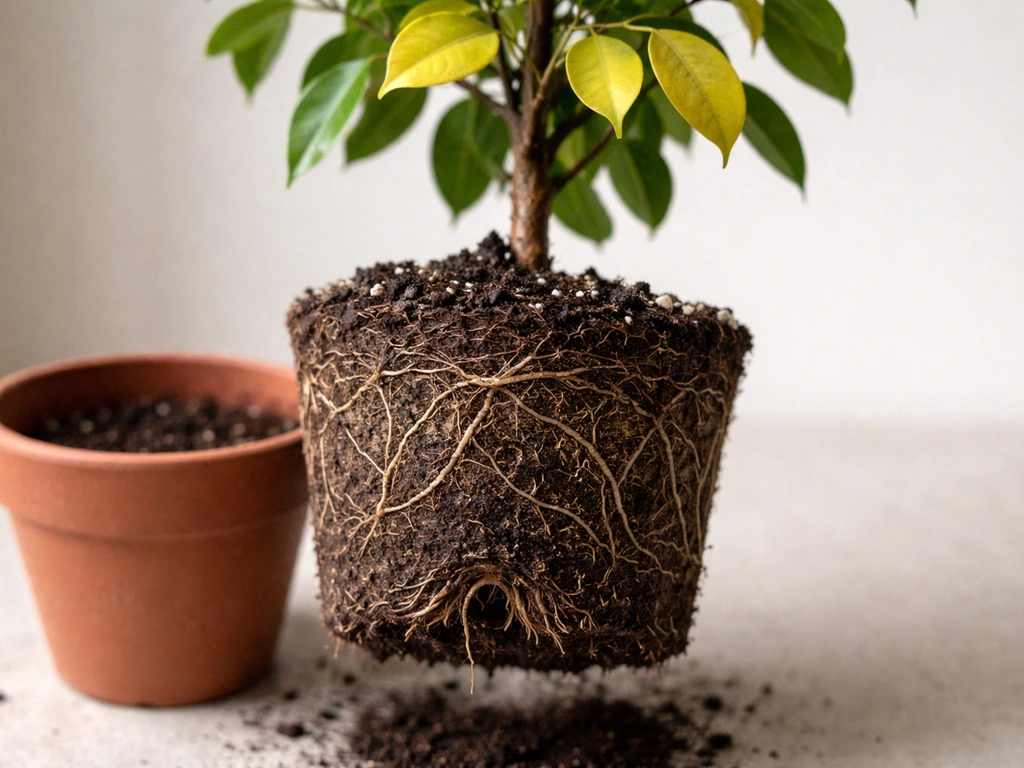
Watch for signs the tree is becoming root-bound: roots circling the inside of the pot, roots growing out of drainage holes, or soil drying out extremely fast despite regular watering. This typically happens every 2 to 4 years in a healthy container. When it does, move up to a pot that is 5 to 10 cm larger in diameter. Do not jump to a dramatically larger pot all at once, as excess soil volume holds moisture longer and increases rot risk. When repotting, be gentle with the root ball. Sandalwood haustoria that have attached to host roots can be easily damaged, so try to keep host and sandalwood roots intact together as much as possible.
Common problems and what to do about them
- Yellowing leaves: Usually overwatering or poor drainage. Check soil moisture, improve drainage, and cut back on watering frequency. Could also indicate a lack of host attachment, especially in young seedlings.
- No visible growth: Sandalwood is genuinely slow, but if there is absolutely no growth for more than a season, check for a functional host relationship. Replant with a fresh host if needed.
- Leggy, weak stems: Not enough light. Move to a brighter spot or add a grow light.
- Fungal issues or damping off: Usually caused by cool, wet, low-airflow conditions. Improve ventilation, reduce watering, and consider a dilute copper fungicide treatment.
- Tiny, stiff leaves with shortened stem segments: This could be sandal spike disease, a serious phytoplasma infection with no cure. Infected trees can die within 1 to 2 years of symptoms appearing. There is no treatment; prevent it by sourcing clean, disease-free plants and avoiding insect damage that can spread phytoplasmas.
- Pests: Scale insects and mealybugs are the most common on container-grown sandalwood. Treat with neem oil spray or insecticidal soap, applied in the early morning or evening to avoid leaf scorch.
Long-term care and what to expect over the years
In the first year, your main job is keeping the tree alive and getting the host relationship established. Do not expect dramatic above-ground growth. What is happening underground, those haustorial connections forming, is the real action. By year two or three, if the host pairing is working, you should see more confident leafy growth and a thickening stem.
In temperate climates, winter protection is essential. Move your pot to a frost-free greenhouse, conservatory, or warm indoor spot before the first frost. A minimum indoor temperature of 10 to 12°C (50 to 54°F) is workable, but warmer is better. Do not let it sit in cold drafts near windows. Reduce watering significantly in winter but do not let the soil dry out completely.
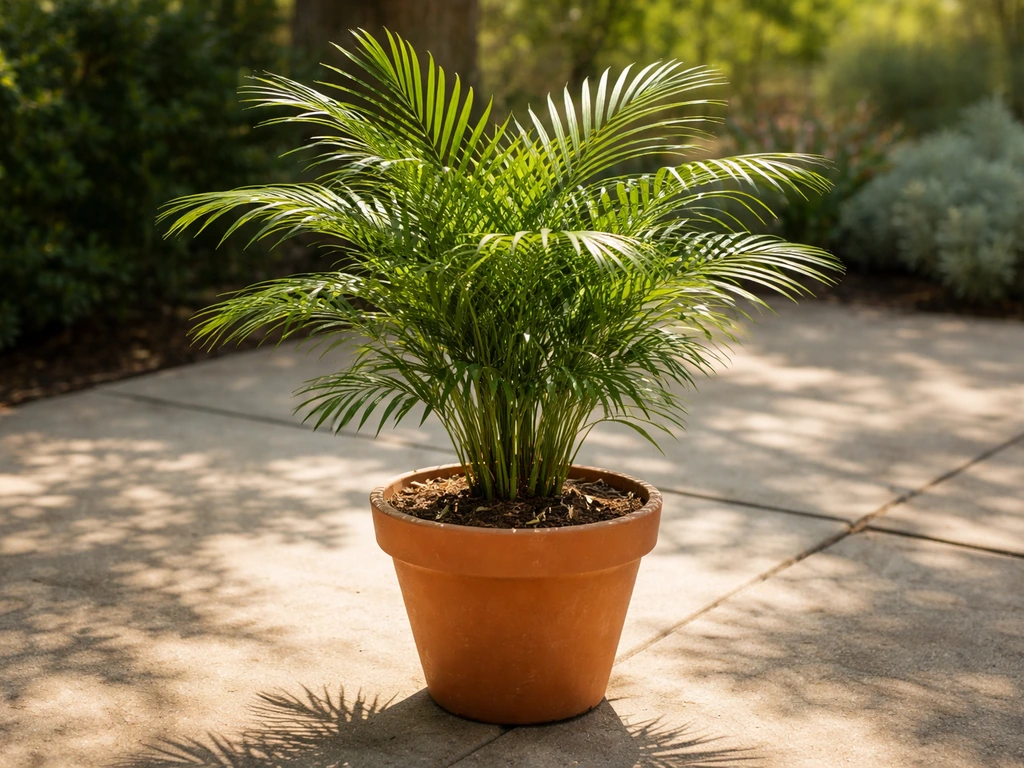
Manage your host plant relationship actively throughout the life of the tree. Replace host plants that die back or become too dominant. Some growers use two or three host plants in rotation around the sandalwood pot, keeping one or two going at all times. Lemongrass is a popular choice because it is easy to grow, cheap to replace, and its roots intermingle quickly. If you are also exploring container palms, you can learn how to grow a date palm in a pot by focusing on the right size container, light, and watering habits.
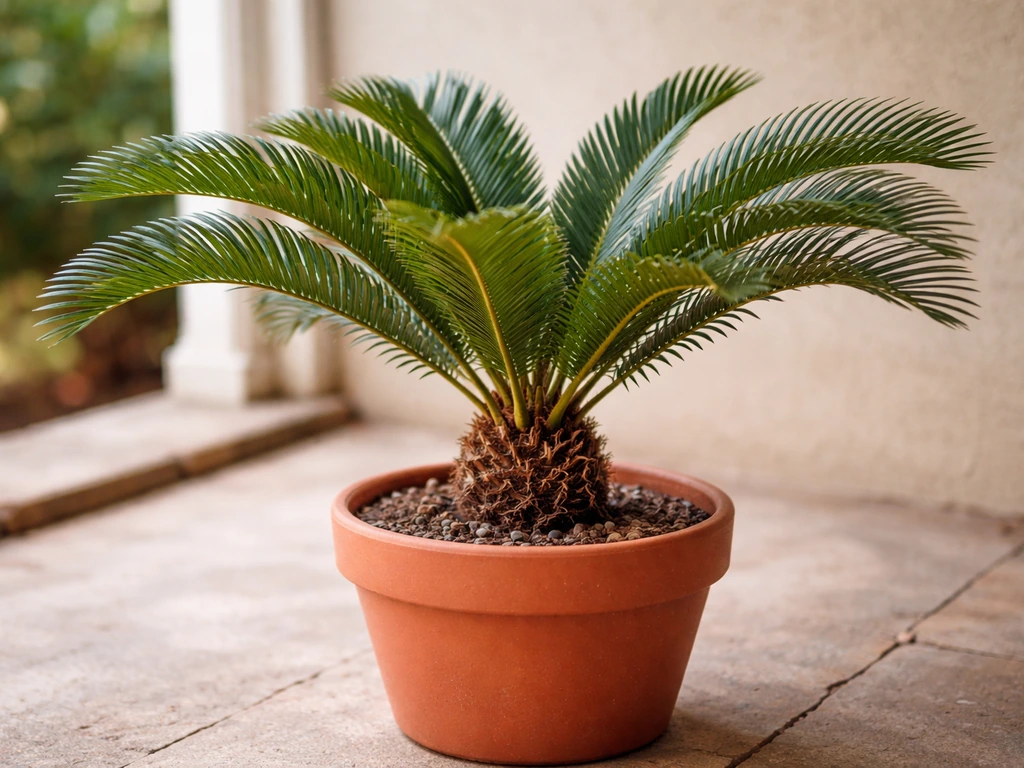
Be honest with yourself about the long haul. The fragrant heartwood that makes sandalwood famous does not develop until a tree is 15 years old or more, and pot culture will slow that timeline. What you have in the meantime is a genuinely beautiful, aromatic tree with silver-green foliage that is unusual enough to impress any visitor. That is worth something on its own. If you are already growing things like palms, sago palms, or date palms in containers, you already know the mindset: you are in it for the long game, and the growing itself is the reward. If you want a similar container setup for fronds and growth, learn how to grow palms in pots by matching light, pot size, and careful watering to your variety.
If after a few years you feel the pot truly cannot contain the tree, consider whether you have an outdoor garden space where it could eventually go in the ground in a warm, sheltered corner. A pot-started sandalwood that has a healthy host history makes a strong candidate for a permanent in-ground planting when the time is right. But for now, starting in a pot is not just a compromise; it is one of the most practical ways to get this remarkable tree going at home.
FAQ
Can I grow sandalwood in a pot without using a host plant? What happens if I forget to add one?
Yes, but it has to be handled carefully. Use the smallest host that will still establish fast in your container, and plant it as soon as the sandalwood has emerged or been potted. If the host is put in weeks later, the seedling may struggle before haustorial attachment begins, even if you keep watering correctly.
My sandalwood seeds did not sprout. How long should I wait, and what usually causes failure?
If your seeds fail to germinate, it is usually seed-age related and sometimes temperature related. Untreated sandalwood can take 4 to 22 weeks, so avoid digging them up early. If it has been beyond that window, recheck seed storage duration, then try GA3-soaked fresh seed or confirm your germination temperature is staying around 25 to 30°C consistently.
How much direct sunlight does sandalwood need in a pot, and should I acclimate it when moving it outside?
Aim for bright sun, but acclimate gradually when you first move the pot outdoors. Start with a few hours of morning or dappled sun for 3 to 7 days, then increase to full sun. Sudden exposure can scorch tender new growth, which can slow the host pairing even if your watering schedule is correct.
Is it okay to let water collect in a saucer under my sandalwood pot?
A saucer is not automatically bad, but standing water is. If you must use a saucer, empty it within about 30 minutes after watering, every time. Better yet, place the pot on pot feet or bricks so water exits freely, and avoid gravel layers inside the pot, since they can trap moisture around roots.
How often should I fertilize sandalwood in a pot, and what type should I avoid?
Yes, but use fertilizer as a tool, not as a crutch. In most cases, once a month at quarter-strength during spring and summer is enough, and in many homes you may do even less because the host supplies part of what the sandalwood needs. Avoid pushing nitrogen, especially in early growth, because excessive leafy growth can weaken the overall root and woody development.
When should I repot a sandalwood planted with a host, and how do I avoid damaging the haustoria?
Repotting is safe when done gently, but the timing matters. Do it in spring when growth is restarting, so the tree can recover quickly. Also, keep the host roots as intact as possible, since haustorial attachment can be easily damaged if you bare-root or aggressively tease roots apart.
What are the signs my sandalwood is root-bound in a pot, and how big should the next pot be?
Root-bound symptoms matter more in containers than many people realize. If you see roots circling inside the pot or roots exiting drainage holes, or if the soil dries unusually fast despite correct watering, size up only one step (about 5 to 10 cm wider). Jumping to a much larger pot increases the risk of rot because extra soil stays wet longer.
How can I tell if my sandalwood problem is overwatering versus underwatering?
Overwatering often looks like “droopy but damp,” and the fix is to change the watering rhythm before the plant collapses. Only water after the top 2 to 3 cm feels dry, water thoroughly until it drains, then do not water again until the surface dries. If you suspect rot, reduce watering immediately and improve ventilation and light, since low light slows water use.
What is the best way to overwinter a potted sandalwood in a temperate climate?
It depends on your winter setup. If nighttime temperatures regularly fall below 10°C, move it indoors or into a frost-free greenhouse before the first frost, and keep it away from cold window drafts. Water less in winter, but do not let the mix dry out completely, since a fully dried pot can break the host-root relationship.
Which host plants work best in pots, and how do I stop the host from taking over?
Start with host plants that are fast to establish and easy to replace, and keep them from taking over. Lemongrass can be effective for quick root mixing, but it can also become dominant, so trim aggressively if it crowds the sandalwood. If your host keeps dying back, it may indicate poor drainage or insufficient light, which then indirectly harms the sandalwood.