Oleanders grow beautifully in pots as long as you give them a big enough container, fast-draining soil, full sun, and a good drink whenever the top inch of soil dries out. Stick to one of the compact dwarf varieties, and you can keep a flowering oleander on a balcony, patio, or rooftop for years without it taking over. The main things that trip people up are using heavy, waterlogged potting mix, going too small on the pot, or putting it somewhere that gets less than six hours of direct sun. Get those three things right from the start and the rest is pretty forgiving.
How to Grow Oleanders in Pots: Full Container Guide
Marcus Whitley
1 Jun 2026
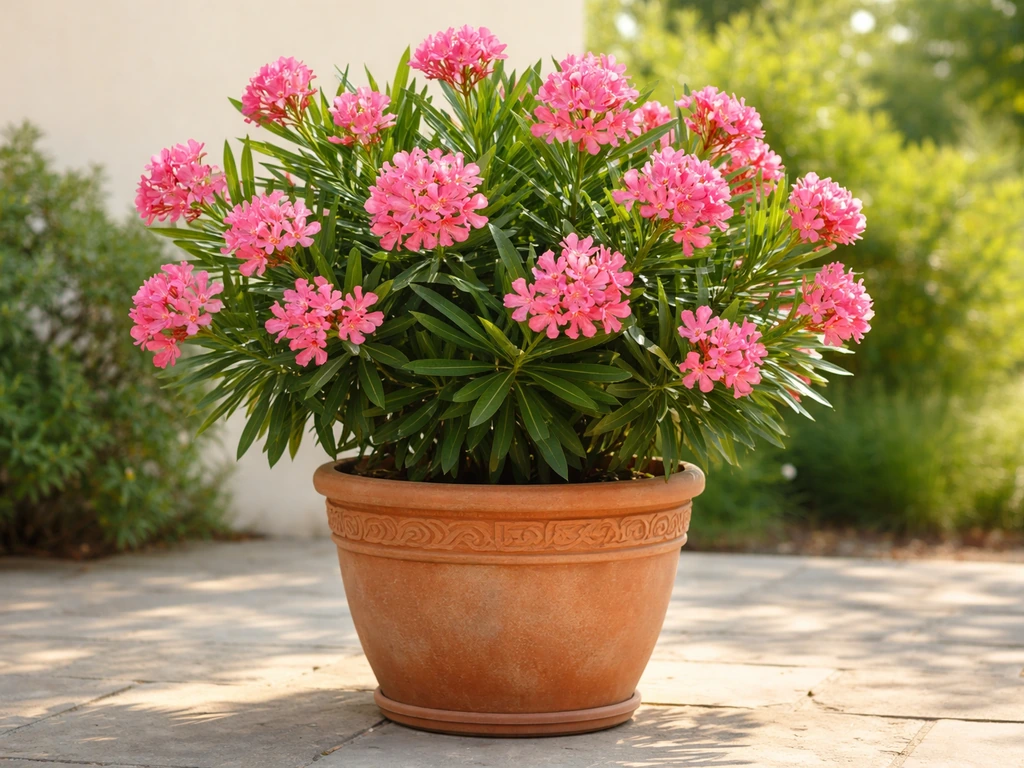
Best oleander varieties for container growing
Standard oleanders can hit 10 to 18 feet tall in the ground, which is obviously not what you want in a pot on your patio. The good news is that there are compact dwarf selections bred specifically for smaller spaces, and they perform brilliantly in containers. These are the ones worth tracking down.
| Variety | Mature Size | Flower Color | Why It Works in Pots |
|---|---|---|---|
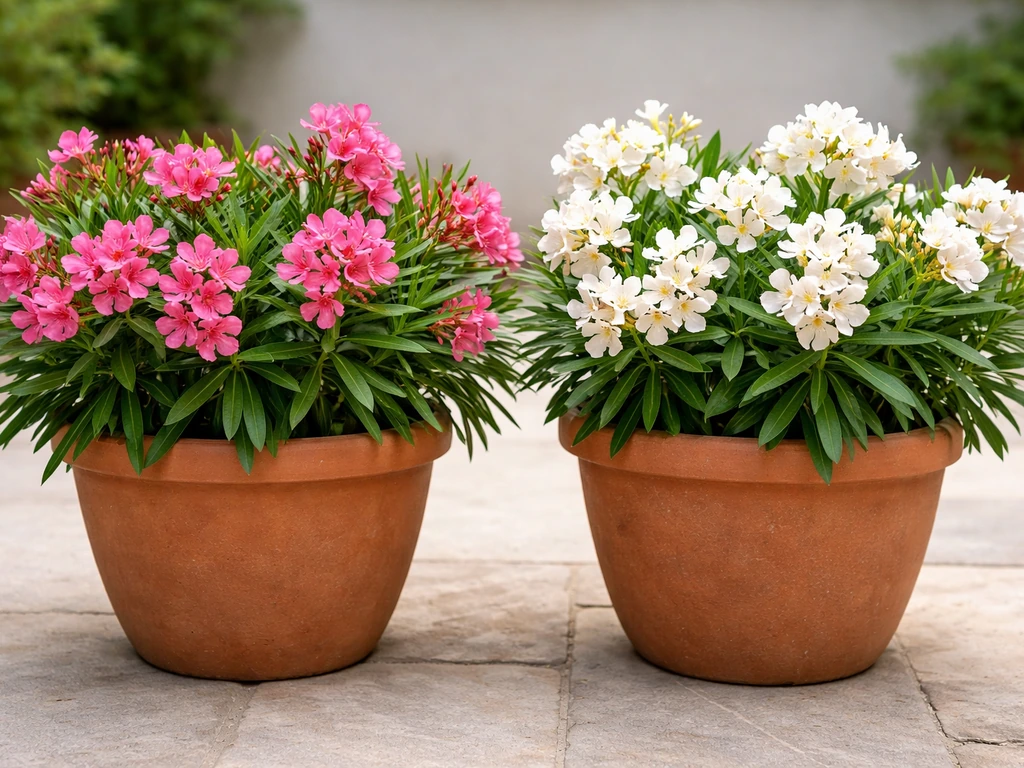
| Petite Pink | Up to 4 ft tall, 6 ft wide | Soft pink | Naturally compact, rarely outgrows a large container |
| Little Red / Petite Red | 3–6 ft tall | Cherry-red, double to semi-double | Long bloom season from late spring through fall, manageable size |
| Petite Salmon | 3–5 ft tall | Salmon-orange | Same dwarf habit as Petite Pink, great for warm-colored displays |
My personal go-to for beginners is 'Petite Pink.' It tends to stay on the shorter end of its range in a pot, blooms reliably through summer, and the flowers are lovely. "Petite Pink" is described as a compact grower that seldom exceeds about 4 ft in height, with up to around 6 ft of spread. 'Little Red' (also sold as 'Petite Red') is a close second if you prefer bolder color. Its cherry-red blooms start in late spring and just keep coming into fall, which is hard to beat for a container plant. Avoid buying unnamed oleanders from garden centers, since they're often standard-size plants that will fight you every time you try to keep them small.
Choosing the right pot, location, and season to start
Pot size and material
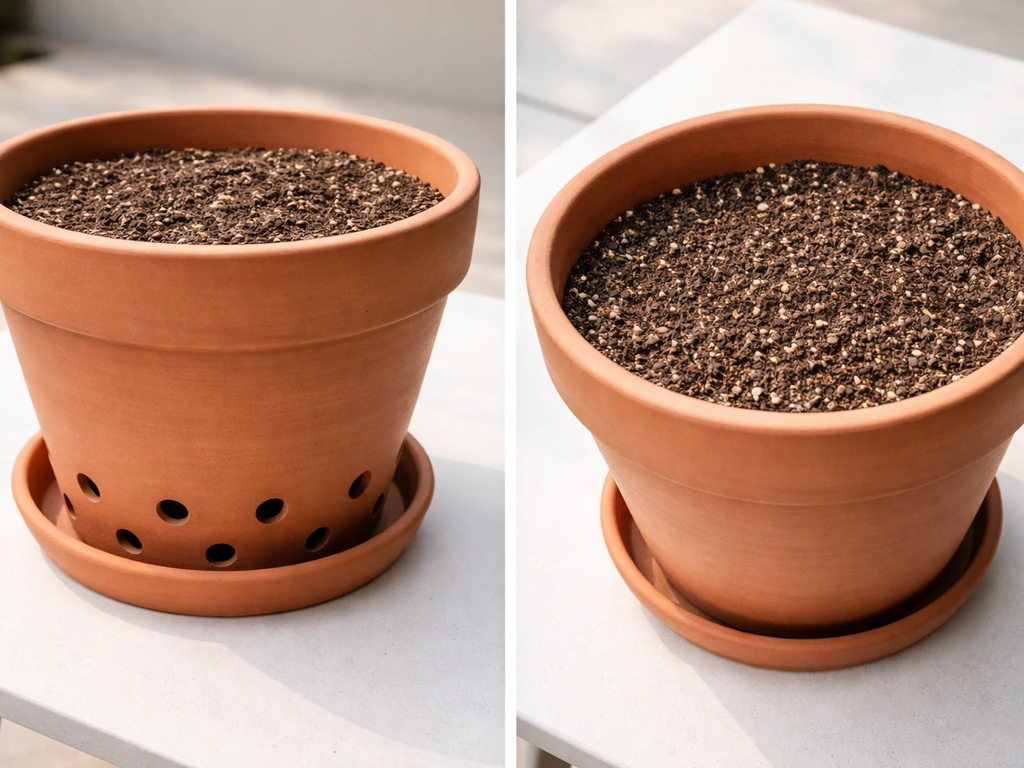
Start with a pot that's at least 15 to 20 inches in diameter and 18 inches deep. I know that sounds big for a young plant, but oleanders have aggressive root systems and will become rootbound surprisingly fast in anything smaller. Once they're rootbound, flowering drops off and the plant looks stressed no matter how much you water. A wide, heavy pot also helps with stability since oleanders get bushy and top-heavy once they're established. Terracotta and thick-walled ceramic pots work well because they breathe and help prevent the roots from getting too hot in summer. Plastic is fine budget-wise, but go for a light color to reflect heat. Avoid dark-colored pots in hot climates.
Drainage holes are non-negotiable. If the pot you love doesn't have them, drill some yourself with a masonry or tile drill bit. Aim for at least three holes in a 15-inch pot. Do not put a layer of gravel in the bottom of the pot hoping it will help with drainage. It doesn't. It actually raises the water table inside the pot and can make waterlogging worse.
Location and light
Oleanders need full sun. Not part sun, not bright indirect light. At least six hours of direct sun per day, and eight is better. A south- or west-facing spot is ideal. If you're on a balcony that gets morning sun only, you'll get some growth but flowering will be sparse and disappointing. Oleanders also love heat, so a spot near a warm wall or paving that reflects heat is genuinely a bonus rather than a problem. This is one Mediterranean shrub that thrives where other plants sulk in summer.
Best time to start
Spring is the ideal time to plant an oleander into its container. Aim for after your last frost date, when nighttime temperatures are consistently above 50°F (10°C). This gives the plant a full growing season to establish before you need to think about overwintering. If you're already in early summer, you can still start now. Just be ready to water more frequently while the roots settle in during hot weather.
Soil mix and pot-drainage setup for healthy roots
The single most important thing about soil for container oleanders is that it drains fast. Oleanders are Mediterranean plants adapted to dry, well-drained conditions. They will tolerate drought much better than they tolerate sitting in soggy soil. A standard all-purpose potting mix straight from the bag is usually too dense and moisture-retaining for oleanders in pots. Here's what I actually use and recommend:
- 60% good-quality potting mix (not garden soil, which compacts in pots)
- 30% coarse perlite or pumice to improve drainage and aeration
- 10% coarse horticultural grit or sharp sand for extra drainage
Mix these together before filling the pot. The finished mix should feel light and almost gritty, and water should run through it freely within a few seconds of pouring. If water sits on the surface for more than 10 seconds before sinking in, add more perlite. You can also use a cactus and succulent potting mix as your base instead of regular potting mix and get similar results with less adjusting.
When setting up the pot, cover the drainage holes with a small square of window screen mesh or a piece of coffee filter before adding soil. This lets water drain freely while stopping the mix from washing out. Then fill the pot about halfway, set the plant in to check the depth (the top of the root ball should sit about an inch below the pot rim), adjust, and fill in around the sides. Firm the soil gently but don't pack it hard.
Step-by-step planting and watering routine in pots
Planting your oleander
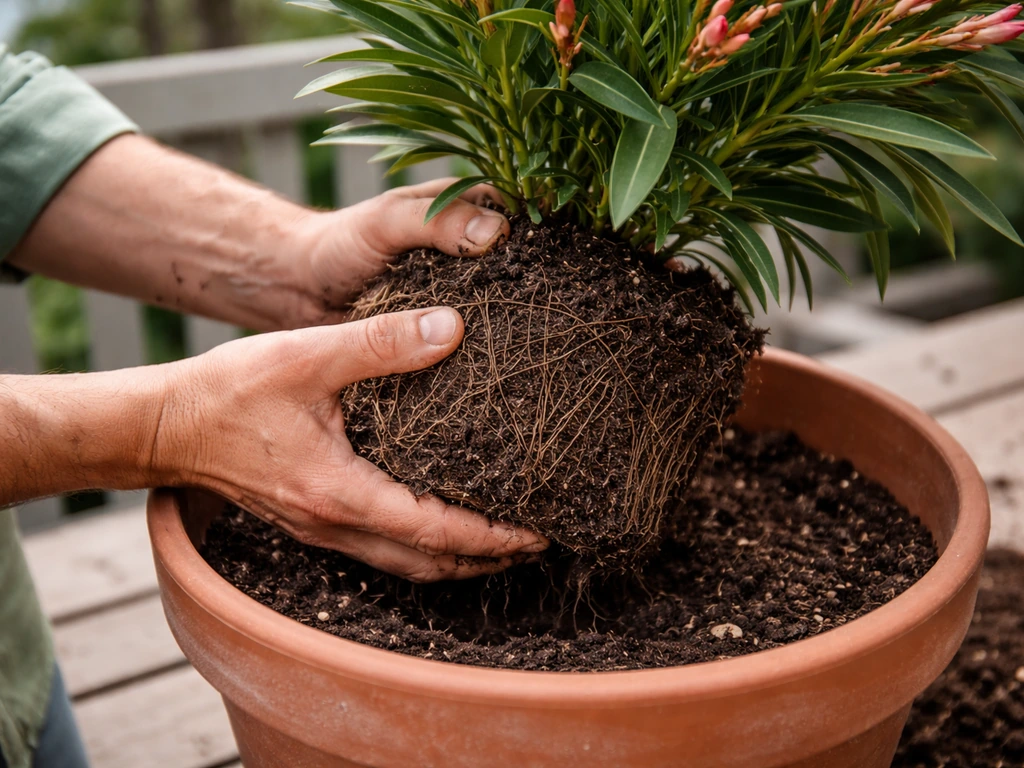
- Water the nursery pot thoroughly an hour before transplanting so the root ball holds together.
- Fill your container about halfway with your prepared soil mix.
- Slip the plant out of its nursery pot, gently loosen any circling roots with your fingers, and set it in the center of the container.
- Check that the top of the root ball sits about 1 inch below the pot rim (this leaves room for watering).
- Fill in around the sides with your soil mix, firming gently as you go.
- Water thoroughly until water runs freely from the drainage holes.
- Move the pot to its permanent sunny spot and leave it to settle for a few days before doing anything else.
Watering routine that actually works
The simplest watering rule for container oleanders: check the soil every two to three days in warm weather, and water when the top inch feels dry. Stick your finger in up to the first knuckle. If it comes out with dry soil, water deeply until it runs out the bottom. If it comes out damp, leave it another day. In the peak of summer on a hot patio, you might be watering every day or every other day. In cooler spring weather or autumn, every four to five days is more typical. In winter when the plant is dormant or nearly dormant, you might water as infrequently as once every two weeks.
The most common watering mistake is giving a little water every day rather than a deep watering less frequently. Shallow watering encourages roots to stay near the surface and makes the plant less drought-tolerant over time. When you water, really water. Let the whole root zone get wet, then let it dry out somewhat before watering again. This cycle of wet and dry is what oleanders love.
Fertilizing, pruning, and shaping for container size control
Feeding schedule
Oleanders in pots need feeding because watering gradually flushes nutrients out of the container over time. A balanced slow-release granular fertilizer applied in early spring (something like a 10-10-10 or similar) gives a steady baseline feed through the growing season. Then supplement with a liquid fertilizer every two to three weeks from late spring through midsummer to support flowering. A fertilizer with a slightly higher middle number (phosphorus, like 10-15-10) encourages blooms. Cut off all feeding by late August. Feeding too late in the season pushes soft new growth that won't harden before cold weather arrives.
Pruning and shaping
Pruning is how you keep a container oleander manageable and how you get more flowers. Oleanders bloom on new growth, so the more branching you encourage, the more flowering tips you create. The best time to prune is late winter or early spring, just before new growth starts. This timing lets you shape the plant and remove any dead or damaged stems without sacrificing the current year's flowers.
For size control, cut stems back by up to one-third of their length. Don't be timid about this. Oleanders are vigorous and handle hard pruning very well. If a stem is crossing another, growing inward, or just making the plant look lopsided, remove it at the base. Always cut just above a leaf node (the point where a leaf joins the stem) because that's where new branches will sprout. Avoid pruning in late summer or fall, as this can reduce next year's blooms. Throughout the growing season, deadheading spent flower clusters keeps the plant looking tidy but isn't strictly necessary for new blooms.
One quick note: always wear gloves when pruning. Every part of oleander is toxic and the sap can irritate skin. More on that in the safety section below.
Pest, disease, and common container problems (and quick fixes)
Common pests
The biggest pest threat to oleanders in containers is the oleander aphid, a bright yellow pest that clusters on new growth and flower buds. A heavy infestation will distort new shoots and reduce flowering. The fix is simple: knock them off with a strong jet of water, or spray with insecticidal soap or neem oil. Repeat every five to seven days until they're gone.
Whiteflies and spider mites can also appear, especially on plants kept in warm, sheltered spots or moved indoors for winter. Treat spider mites (which show up as fine webbing on leaves) with neem oil or a miticide. Scale insects look like small brown or white bumps on stems and are best removed by dabbing with rubbing alcohol on a cotton swab for small infestations, or spraying with horticultural oil for larger ones.
Disease and environmental problems
| Problem | Likely Cause | Quick Fix |
|---|---|---|
| Yellow leaves | Overwatering or nutrient deficiency (usually iron or nitrogen) | Check soil moisture first. If soggy, let it dry out. If drainage seems fine, apply a balanced liquid feed with micronutrients. |
| Drooping/wilting leaves | Underwatering or root rot from overwatering | Check the soil. If dry, water deeply. If wet and roots smell bad, repot into fresh soil and trim rotted roots. |
| Brown leaf tips | Salt buildup from fertilizer, low humidity, or fluoride in tap water | Flush the pot with lots of water to wash out salts. Switch to filtered or rainwater if possible. |
| No flowers | Too much shade, over-feeding with nitrogen, or rootbound | Move to a sunnier spot, switch to a bloom-boosting fertilizer, or repot into a larger container. |
| Sooty mold (black coating on leaves) | Aphids or whiteflies leaving sticky honeydew | Treat the pest first, then wipe leaves with a damp cloth to remove the mold. |
| Oleander leaf scorch | Bacterial disease causing browning and leaf die-off | No cure. Remove affected stems immediately, disinfect your pruning tools, and avoid overhead watering. |
Overwintering and getting oleander through cold weather safely
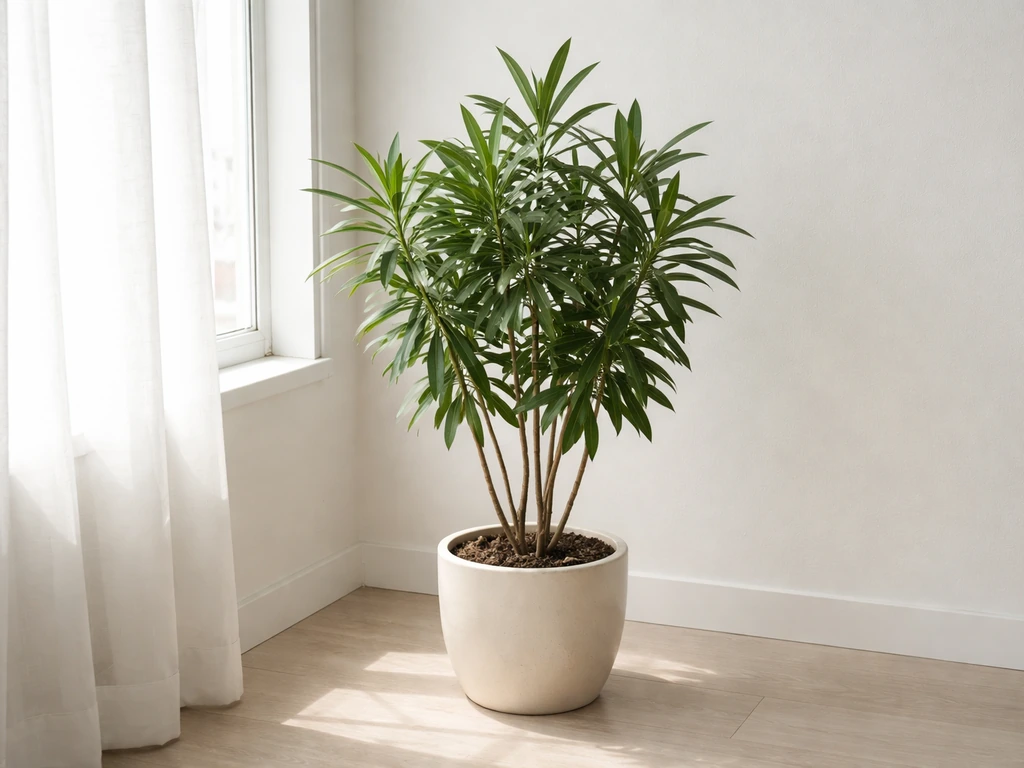
How you handle winter depends entirely on where you live. In USDA zones 8 to 11, where temperatures rarely or never dip below 20°F (-7°C), container oleanders can usually stay outside year-round. Just move them to a sheltered spot against a wall, reduce watering dramatically, and stop feeding from late summer. They may drop some leaves in a cold snap but will bounce back in spring.
In zones 7 and colder, you need to bring the pot inside before the first frost. A frost-free garage, unheated greenhouse, or cool basement with some light works well. The goal is to keep the plant dormant or semi-dormant, not to keep it actively growing. A temperature range of 40 to 55°F (4 to 13°C) is ideal for overwintering. Water very sparingly during this period, roughly once every two to three weeks, just enough to stop the roots drying out completely. Don't fertilize at all. Some leaf drop is normal and not a sign the plant is dying.
Bring the plant back outside in late spring once nighttime temperatures are reliably above 50°F (10°C). Acclimatize it gradually by putting it outside for a few hours a day over a week before leaving it out full time. This prevents sunscorch on leaves that have been indoors all winter. Oleanders are more cold-hardy than many people realize, but the roots in a pot are much more vulnerable to freezing than roots in the ground, so don't take chances with frost once the pot is outside.
If you're in a borderline climate and can't bring your pot inside, wrapping the pot in bubble wrap or burlap to insulate the root zone can buy you a few degrees of protection. You can also try moving the pot against a heated exterior wall. These are last-resort measures though. Bringing it indoors is always more reliable.
Safety notes and realistic expectations for flowering in containers
Oleander toxicity: what you need to know
Every part of oleander is toxic, including the leaves, stems, flowers, seeds, and even the water in a vase if you've cut stems for flowers indoors. This applies to humans, dogs, cats, horses, and most other animals. Ingesting any part of the plant can cause serious symptoms. This doesn't mean you can't grow it, but it does mean you need to take some sensible precautions, especially if you have young children or pets who access the patio or garden.
- Always wear gloves when pruning, handling, or repotting. The sap can irritate skin and eyes.
- Wash your hands thoroughly after any contact with the plant.
- Don't burn pruned stems or leaves. The smoke is also toxic.
- Never use oleander stems as skewers or sticks for cooking.
- Place the pot where children and pets can't easily access or chew on leaves.
- If a child or animal ingests any part of the plant, contact Poison Control or your vet immediately.
Realistic expectations for blooming in containers
Here's the honest truth: container oleanders can and do bloom beautifully, but they need the right conditions to do it well. A dwarf variety like 'Petite Pink' or 'Little Red' in a large pot, in full sun, fed and watered correctly, should start flowering in early to midsummer and keep blooming through fall. Don't expect much in the first season after planting. The first year is mostly about root establishment, and flowering will be light. By the second and third year, a well-cared-for plant will reward you with clusters of blooms for months.
If your oleander is getting full sun and still not flowering, the most common culprits are too much nitrogen fertilizer (which pushes leafy growth at the expense of flowers), being rootbound, or insufficient heat. Moving the pot to a warmer, more sun-exposed location is often the simplest fix. Container oleanders also seem to flower a little later than their in-ground counterparts, so give them until midsummer before worrying.
Growing oleanders in containers shares a lot of the same principles as growing other Mediterranean and drought-tolerant shrubs in pots. If you are interested in similar container care for other Mediterranean plants, you can also look at how to grow olive trees in pots UK for pot, light, and watering guidance.
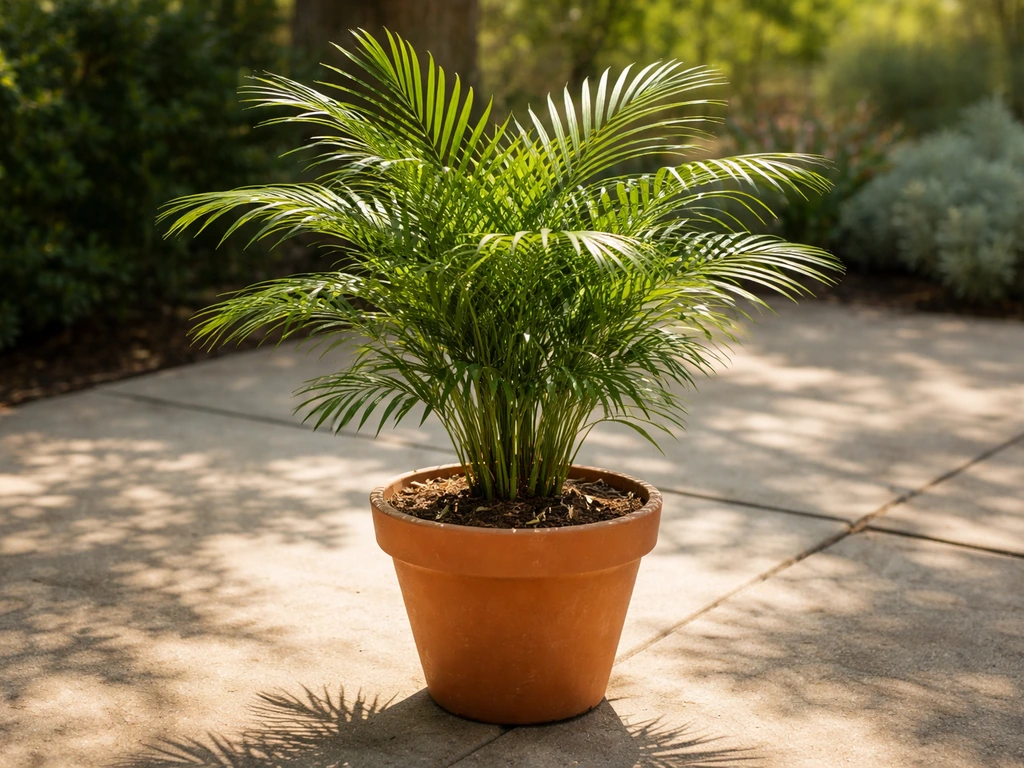
Growing a date palm in a pot works best when you also match the plant to the right container size, fast-draining soil, and lots of sun growing other Mediterranean and drought-tolerant shrubs in pots. These container-care tips also translate well if you're learning how to grow sandalwood tree in a pot, especially focusing on good drainage and the right light. These same container-friendly tips can also guide you on how to grow osteospermum in pots.
If you're interested in similar plants for a hot, sunny patio, you might also enjoy growing an olive tree or palm in a container, which have comparable sun and drainage needs and can create a beautiful Mediterranean-style grouping.
Your next steps
If you're ready to get started, here's exactly what to do this week. Head to a garden center and look for a dwarf variety like 'Petite Pink' or 'Little Red. ' Pick up a bag of cactus potting mix and a bag of perlite. Grab a pot at least 15 inches wide with drainage holes.
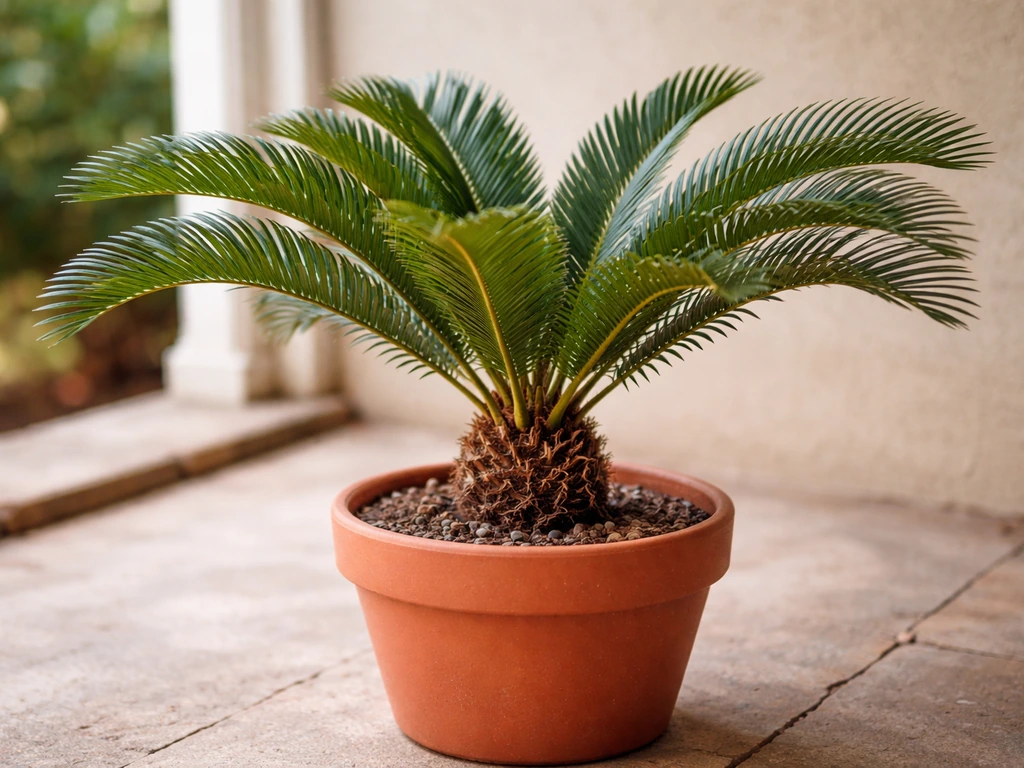
Mix your soil, plant it up, put it in the sunniest spot you have, water it well, and then leave it alone for a few days to settle. Sago palms have different light, soil, and watering needs than oleanders, so follow the dedicated pot-growing guide for best results how to grow sago palm in a pot. That's genuinely it. The main job from here is checking the soil moisture regularly, feeding from late spring, and enjoying the flowers.
If you also want to know how to grow palms in pots, focus on choosing the right container, providing plenty of sun, and using a well-draining potting mix.
FAQ
How do I know if my potting mix is draining fast enough for oleanders?
Do a simple pour test after filling the pot. Water should soak through quickly, within a few seconds, and not sit as a puddle. If it stays wet longer than about 10 seconds, your mix is probably too dense, add more perlite or switch to a cactus/succulent blend as the base.
Can I use a self-watering planter or add a gravel/stone layer in the bottom?
Avoid both. A self-watering system can keep the root zone too consistently wet, which oleanders dislike, and a gravel layer does not improve drainage in a pot, it can worsen waterlogging by trapping moisture below the soil.
What size pot should I move up to after the first year?
If your dwarf oleander starts showing roots circling the drainage holes or growth slows despite good sun and feeding, upgrade to a larger pot rather than “just watering more.” As a rule, step up by a few inches in diameter and keep the depth robust, since oleanders develop an aggressive root system.
My oleander blooms but flowers drop quickly. What causes that?
Flower drop often comes from stress cycles, commonly uneven watering (too shallow or letting the pot dry out completely for long periods) or sudden changes in sun, temperature, or pot position. Try keeping watering consistent (deep when the top inch dries), and avoid moving the pot during peak bud formation.
Should I deadhead my oleander in a pot, and does it increase flowering?
Deadheading is optional for container oleanders, but it can keep the plant looking tidy and may prevent the plant from putting energy into seed production. For maximum bloom, focus more on correct fertilizing timing and avoiding excess nitrogen than on deadheading alone.
How much fertilizer is too much for container oleanders?
More is not better. Excess nitrogen pushes leafy growth and reduces flowers, especially if you feed heavily late into the season. Use a slow-release balanced fertilizer in early spring, then supplement with a bloom-leaning liquid only through mid-summer, and stop by late August.
What if my oleander is leggy or not branching after pruning?
Leggy growth usually means it is reaching for light or not getting enough new shoot nodes during shaping. Make sure it gets at least six hours of direct sun, then prune late winter or early spring above leaf nodes to trigger new branching. Avoid pruning in late summer, it can reduce next year’s flowering.
Is it safe to bring my pot inside for winter, and should I keep it warm?
For best results in zones colder than 8 to 11, keep it cool and mostly dormant, not warm and actively growing. A temperature range around 40 to 55°F (4 to 13°C) with sparse watering helps it rest. If you must overwinter indoors warmer than that, expect more leaf drop and adjust to lighter watering because the soil will dry faster.
My oleander gets a lot of leaf drop. Is it dying?
Some leaf drop is normal during cool dormancy or after moving in or out of shelter, especially in the first winter in a new location. If stems stay firm and you see new growth when temperatures rise, it is usually just seasonal adjustment rather than failure.
How do I treat aphids without harming beneficial insects or stressing the plant?
Start by blasting the colonies off with a strong water jet, then spot-treat with insecticidal soap or neem oil. Recheck every few days and repeat on schedule, because eggs and new growth can hatch between treatments. If the plant is in full flower, avoid spraying directly at midday heat to reduce stress.
My plant is healthy but still has no flowers. What’s the fastest checklist to troubleshoot?
Run through three items in order: confirm full sun (not part sun), check for rootbound conditions (pot too small), and review fertilizer (too much nitrogen or feeding too late). If those are correct, also consider heat exposure, container oleanders may flower later and need warmer conditions to trigger buds.
Oleanders are in pots, can I repot whenever I want?
Best practice is to disturb roots as little as possible during hot weather. Aim for spring when new growth is about to start. If you must repot earlier, be extra careful with watering and avoid pruning at the same time, since the plant will already be stressed from root work.
How do I handle oleander sap and toxicity around pets and kids?
Treat all plant parts and sap as hazardous, and also remember that pruned stems in a vase are still dangerous. Wear gloves when pruning, keep cuttings and fallen leaves cleaned up promptly, and prevent pet access to outdoor containers and any plant material indoors.