Yes, you can grow an olive tree in a pot in the UK, and it can genuinely thrive on a sunny patio or balcony for years. The key things that make or break it are choosing a frost-tolerant variety, getting the drainage absolutely right, and knowing how to protect the roots over winter. Get those three things sorted and you have a genuinely low-maintenance, long-lived container plant that looks great even in the years it doesn't fruit. If you are wondering how to grow olive tree in pot successfully, focus on sun, drainage, and a gritty compost mix from the start.
How to Grow Olive Trees in Pots in the UK: Step-by-Step
Marcus Whitley
3 Jun 2026
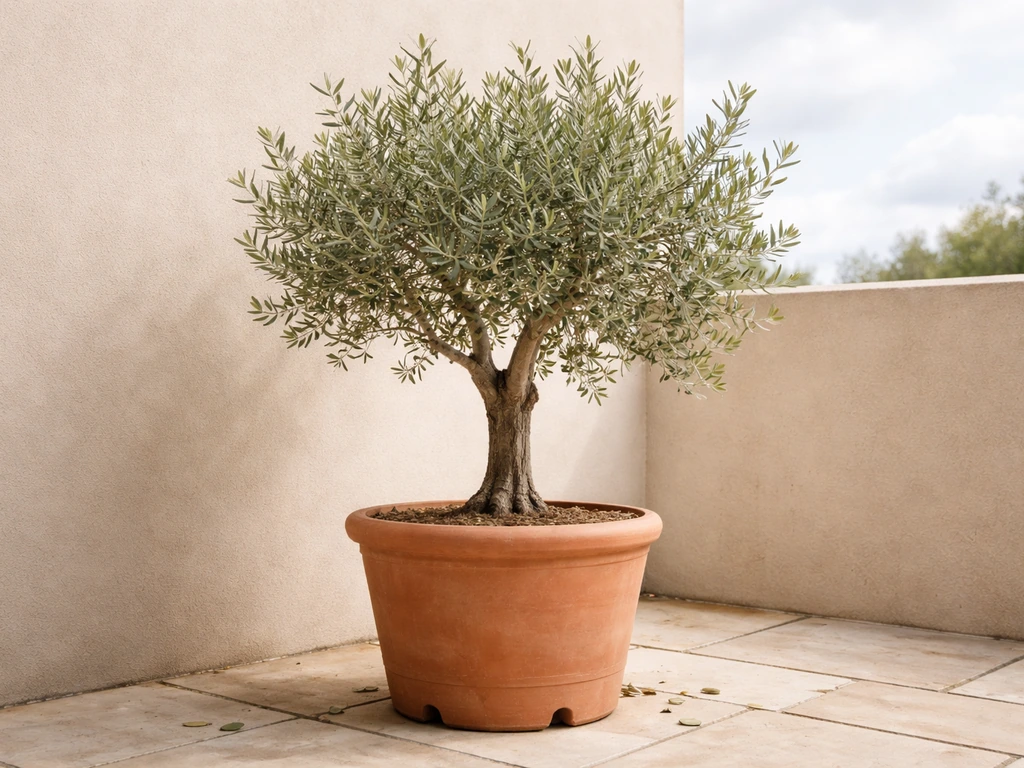
I'll be honest with you upfront: fruiting is possible in the UK, but it's not guaranteed, and you'll have a much better time if you approach it as a beautiful evergreen tree first and a fruit producer second. That said, a warm south-facing spot, the right variety, and a bit of patience can reward you with flowers and even fruit in a good summer.
Best olive varieties for UK pots
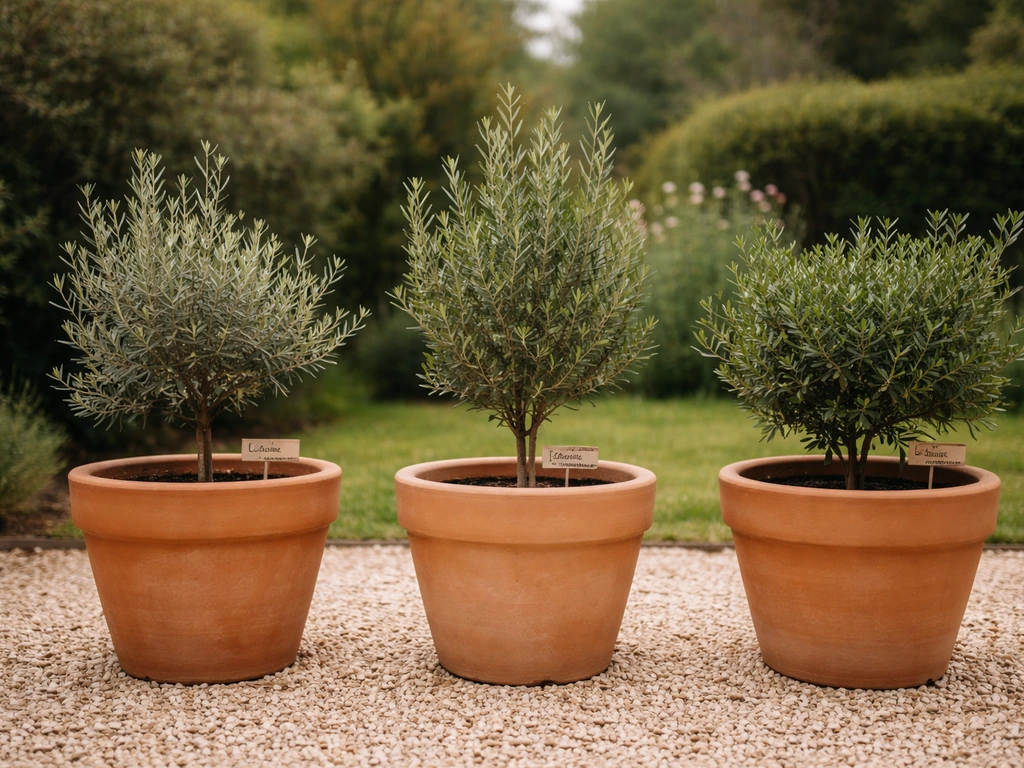
Not all olives cope equally well with the UK's damp winters and cool summers, so variety selection really does matter. The most reliable performers in containers are the ones that combine good frost tolerance with a compact enough growth habit to stay manageable in a pot for years.
- Olea europaea 'Arbequina': probably the most popular choice for UK containers, stays naturally compact, produces small fruiting clusters, and tolerates temperatures down to around -10°C once established. A great all-rounder.
- Olea europaea 'Picual': one of the most widely grown olives in the world, with good cold hardiness and reliable fruiting potential. Slightly more vigorous, so you'll prune it a bit more.
- Olea europaea 'Frantoio': an Italian variety prized for oil production, handles UK winters reasonably well and has a lovely weeping habit that looks beautiful in a large pot.
- Olea europaea 'Leccino': among the hardiest varieties available, rated to around -12°C, making it the go-to if you're in a colder part of the UK like the North of England or Scotland.
- Olea europaea 'Koroneiki': a small-leafed Greek variety, very ornamental, with good disease resistance and decent cold tolerance down to around -8°C.
- Dwarf or 'patio' olive cultivars sold in garden centres: often unnamed, bred specifically for compact container growth. Fine for ornamental use, though fruiting is usually minimal.
If you want any realistic chance of fruit, plant two different varieties close together. Olives are wind-pollinated and most varieties produce better when cross-pollinated. Having two pots side by side on a patio makes a real difference to fruit set.
Choosing the right pot, drainage, and location
Pot size and material
Go bigger than you think you need to, at least initially. Following the RHS guidance, start with a pot around 30 to 35cm in diameter so young roots have room to establish while avoiding a huge volume of wet compost [starting with a pot around 30 to 35cm in diameter](https://www. rhs. org.
uk/fruit/olives/grow-your-own/). The RHS recommends starting with a pot around 30 to 35cm in diameter, which gives young roots room to establish without sitting in a huge volume of wet compost that the roots can't use yet. Once the tree is established and you can see roots appearing at the drainage holes, you step up pot size by roughly 5 to 7cm each time you repot. For a mature specimen, you're eventually looking at a 50 to 60cm pot or larger.
Material matters more than most people think. Terracotta is beautiful and breathes well, allowing excess moisture to evaporate through the pot walls, which suits olives perfectly. The downside is weight and the risk of cracking in a hard frost, so if you go terracotta, bring it somewhere sheltered over winter or wrap it. Plastic pots retain moisture longer, which can cause root rot if your watering isn't disciplined. Fibreglass and resin are excellent compromises: lightweight, frost-resistant, and available in classic Mediterranean styles that suit the look of an olive beautifully.
Drainage is non-negotiable
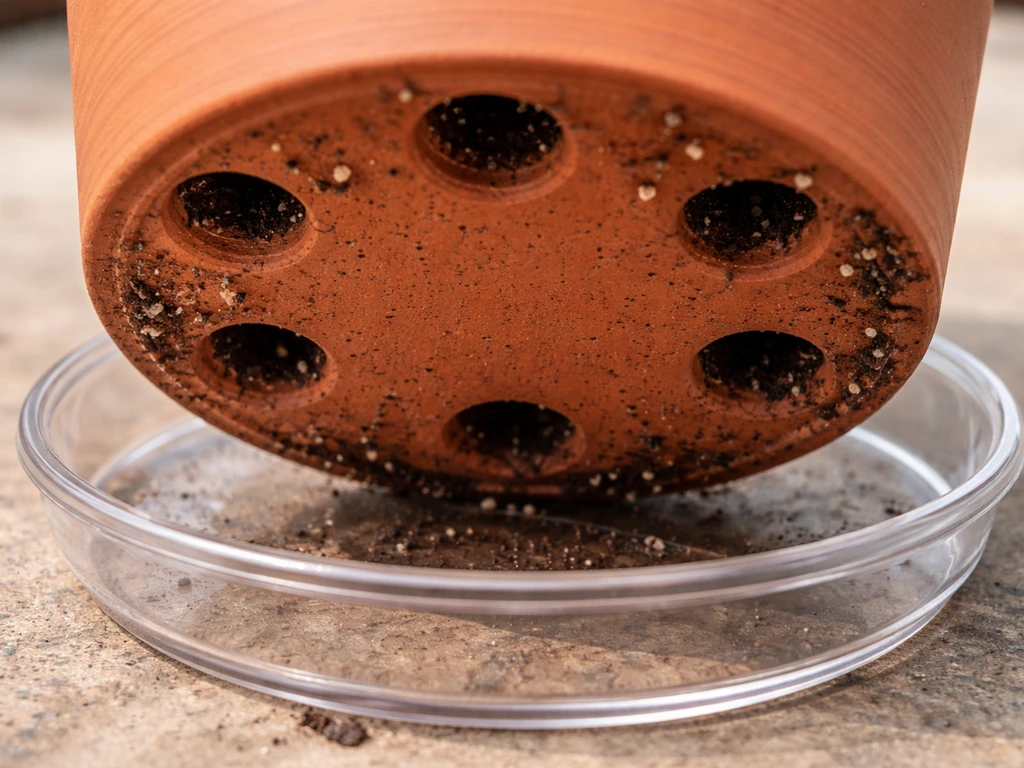
Olives are Mediterranean plants and their number one enemy in the UK is waterlogged roots. Make sure your pot has at least three or four large drainage holes, not just one small one. Before adding compost, place a 3 to 5cm layer of crocks (broken terracotta pieces), gravel, or coarse grit at the bottom. This stops the drainage holes getting plugged with compost over time. Never sit an olive pot in a saucer that collects water, and if your pot is sitting on a patio, raise it slightly on pot feet so water can run freely underneath.
Where to put it
Olives need at least six hours of direct sun daily to stay healthy, so a south or south-west facing wall, patio, or balcony is ideal. The reflected heat from a sunny wall genuinely helps in the UK, extending the growing season and improving any chances of fruiting. Avoid north-facing spots entirely, and be cautious with east-facing positions that only get morning sun.
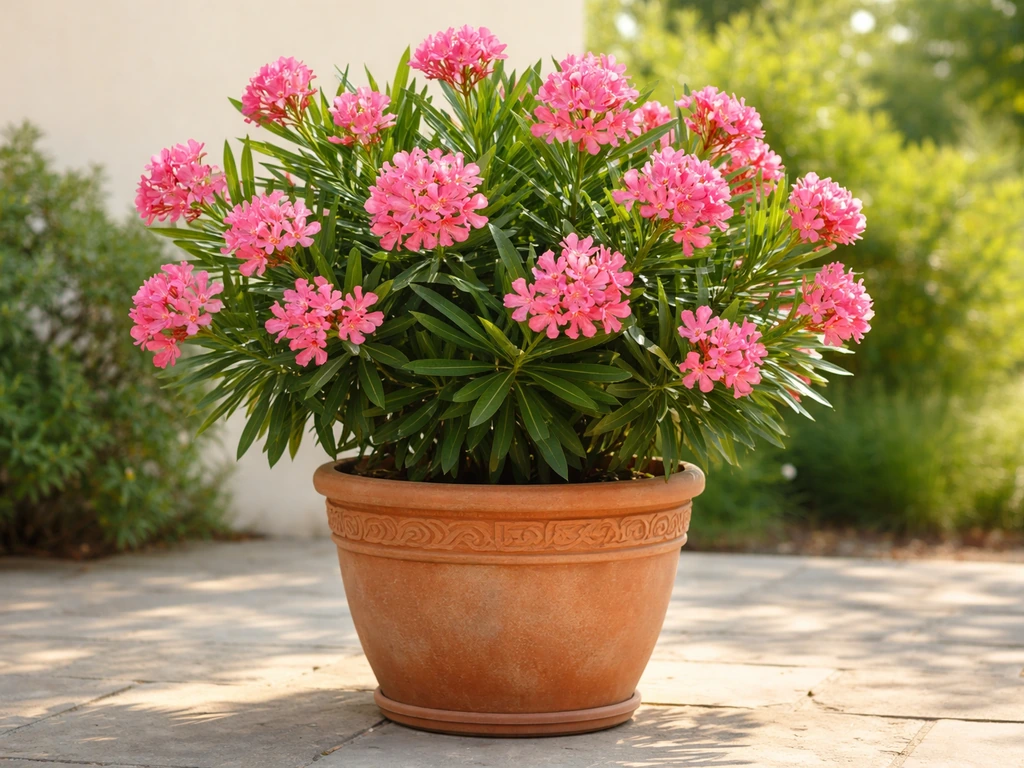
Wind is another factor: olives tolerate breeze well, but cold north or east winds in winter can desiccate the leaves and stress a container tree badly. A sheltered corner that gets sun without being a wind tunnel is the sweet spot. If you want to try a different container plant, you can also learn how to grow oleanders in pots by choosing the right container, drainage, and sun exposure.
Soil mix and fertiliser plan for container olives
The right compost mix
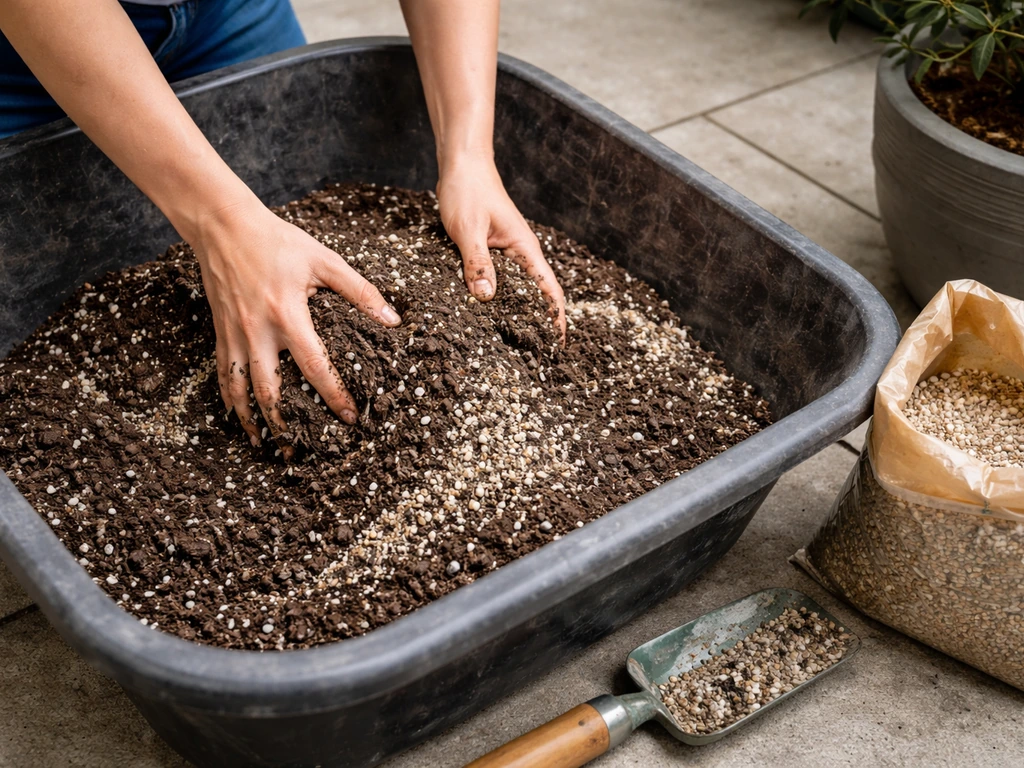
The RHS recommends a gritty, loam-based compost for olives, and this is exactly what I'd suggest too. Standard peat-free multi-purpose compost on its own holds too much moisture and breaks down too quickly, leaving the roots sitting in a dense, airless mix within a season or two. A good starting mix is two parts John Innes No. 3 (a loam-based compost designed for long-term container planting) to one part horticultural grit or perlite. This gives you the structure and nutrients of a quality compost with enough drainage to keep the roots happy.
If you can't get John Innes No. 3, a good quality peat-free loam-based compost works, but add extra grit generously, around 30% by volume. Avoid using topsoil from the garden, which compacts badly in pots and often carries disease.
Feeding through the seasons
Container olives need regular feeding because nutrients leach out every time you water. The routine I follow is straightforward: from March through to September, feed every two to three weeks with a balanced liquid fertiliser. A tomato feed (high in potassium) works well from June onwards as it encourages flowering and fruit development over leafy growth. Through October to February, stop feeding completely. The tree is slowing down and pushing growth at that point can leave it vulnerable to frost damage.
In spring, you can also top-dress the pot by removing the top 5cm of old compost and replacing it with fresh John Innes No. 3. This refreshes the nutrient supply without disturbing the roots, and it makes a noticeable difference to the vigour of growth through summer.
How to plant olive trees in pots
The most straightforward route for most UK gardeners is to buy a young tree from a garden centre or specialist nursery. You'll typically find them sold in 2-litre to 10-litre nursery pots. Late spring (May to early June) is the ideal time to plant up, once frosts are mostly done and the tree has a full growing season ahead to establish.
Planting a young tree from a nursery pot
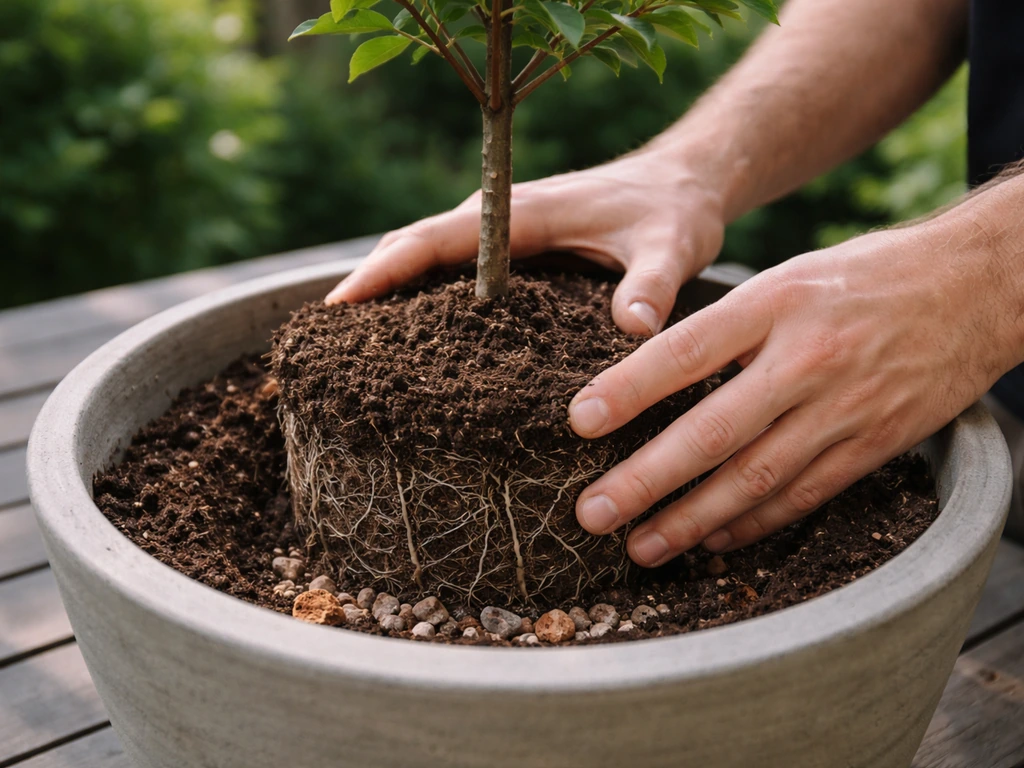
- Place your crocking layer (gravel or broken pots) at the bottom of the container, then add enough compost mix so that when the root ball sits on top, the top of the root ball sits about 2 to 3cm below the rim of the pot.
- Remove the tree from its nursery pot. If the roots are tightly wound around the outside of the root ball (called being pot-bound), gently tease the outer roots loose with your fingers so they spread into the new compost rather than continuing to circle.
- Position the tree in the centre, backfill around the root ball with your compost mix, and firm gently but not hard. You want contact between roots and compost, not compressed airless soil.
- Water thoroughly until it drains freely from the base. This settles the compost around the roots and removes air pockets.
- Top-dress with a thin layer of grit or gravel across the surface to reduce moisture evaporation and deter vine weevil from laying eggs in the compost.
Starting from a cutting
Growing from a cutting is slower but satisfying if you have a friend with an olive tree or want to try it. Take semi-ripe cuttings in late summer (July to August): a piece of stem about 10 to 15cm long, with leaves stripped from the lower two-thirds.
Dip the cut end in rooting hormone powder, push it into a small pot of gritty compost (50% compost, 50% perlite or sand), water it, and cover with a clear plastic bag to keep humidity up. Put it somewhere warm and bright but out of direct sun. Rooting takes 8 to 12 weeks, and patience is everything here. Once new leaf growth appears, the cutting has rooted.
Pot it up gradually into larger containers over the first year before treating it like a young tree.
Starting from seed
Growing from seed is possible but takes years to get to a productive size and the resulting tree won't necessarily share the parent's qualities. For most people, buying a young tree is far more practical and I'd only recommend the seed route if you enjoy the process for its own sake rather than wanting a useful plant any time soon.
Watering schedule and seasonal care in UK weather
Getting watering right is the single most important skill for a container olive in the UK. The RHS is clear that overwatering is the most common cause of loss in container plants, and with olives this is doubly true. RHS container guidance also warns that overwatering is the most common cause of loss, and that compost should be kept moist but never soggy Overwatering is the most common cause of loss in container plants, and with olives this is doubly true.. The aim is compost that stays moist, never soggy, and that dries out a little between waterings.
The best approach is to check the compost before you water rather than watering on a fixed schedule regardless. Push your finger 3 to 4cm into the compost. If it feels moist, leave it. If it feels dry at that depth, water thoroughly. In warm, windy weather, the RHS recommends checking daily, and in very hot weather possibly twice a day, because pots can dry out surprisingly fast. In a cool, wet UK autumn, you might barely need to water at all because rain does the job.
| Season | Watering frequency | Other care tasks |
|---|---|---|
| Spring (March–May) | Every 3–5 days, checking soil moisture first | Start feeding every 2–3 weeks, move outdoors from mid-April, top-dress with fresh compost |
| Summer (June–August) | Every 1–3 days depending on weather and heat | Switch to high-potash feed, monitor for pests, ensure shade from scorching midday sun if needed |
| Autumn (September–October) | Reduce as temperatures drop and rainfall increases | Stop feeding by October, move to sheltered spot, prepare for overwintering |
| Winter (November–February) | Monthly or less, just enough to prevent complete drying out | Protect from frost (see below), do not feed, keep in cool but frost-free conditions |
One thing that catches people out in the UK is the combination of a cold, damp autumn and a pot that doesn't drain well. The tree isn't using much water, you're not watering much, but rainfall keeps the compost saturated. This is when root rot strikes. Raising the pot on feet and ensuring excellent drainage before winter is genuinely important, not optional.
Winter protection and frost management in containers
This is where UK growing diverges most from what you'd do in the Mediterranean. Established olives can tolerate temperatures down to around -7°C to -10°C depending on variety, but the roots in a container are far more vulnerable than roots in the ground, because the pot gives them no soil mass to buffer temperature drops. A hard UK winter (which we do still get, despite climate trends) can kill a containerised olive if you do nothing.
Keeping it outdoors with protection
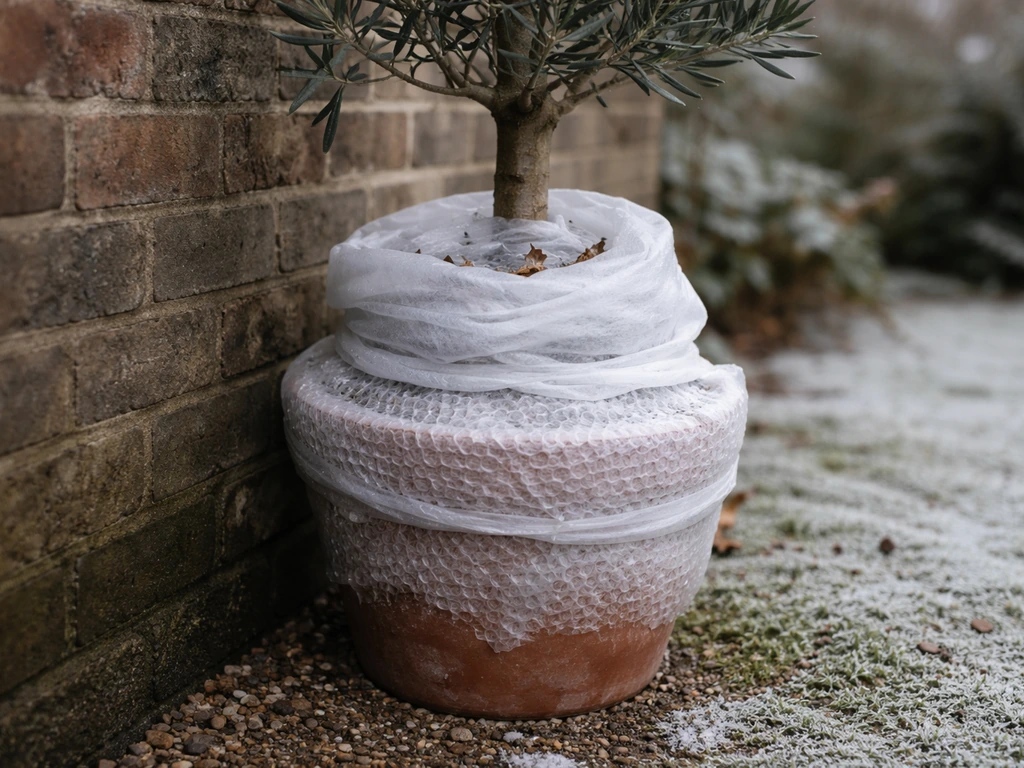
If you want to keep the tree outside over winter, move it to the most sheltered spot you have: against a south or west-facing wall, under an overhang if possible. Wrap the pot in bubble wrap or hessian to insulate the root ball, which is the most vulnerable part. Drape a double layer of horticultural fleece over the whole tree on nights when frost is forecast. The RHS notes that fleece gives around 2°C of protection, which is meaningful in a marginal winter but won't save the tree in a sustained hard freeze. For most of the UK south of the Midlands, this approach works in most years.
Moving it indoors
If you're in the north of England, Scotland, or you just want to be sure, bringing the pot into an unheated greenhouse, garage, or cool conservatory is the safest option. The key word is cool, not warm. Olives actually need a cold dormant period (ideally 7°C to 10°C nights) to flower well the following year. Bringing them into a warm heated living room stresses them badly and can cause leaf drop and weak growth in spring. An unheated greenhouse that stays above around -2°C overnight is close to ideal.
Bring the tree in from late October or early November, before the first hard frosts arrive. Move it back outside in mid-April to May, once the risk of frost has largely passed. When you move it back out, harden it off over a week or two by putting it outside during the day and bringing it back in at night, letting it gradually adjust to outdoor conditions.
Pruning, training, and keeping it productive
Olives are slow growers in the UK, which actually makes them easy to manage in a container. You won't need to do heavy pruning every year, but a little attention each spring keeps the tree shapely, healthy, and producing new fruiting wood.
The best time to prune is late spring, around May, once the risk of frost has passed but before the main flush of growth gets underway. At this point you can see clearly which branches have made it through winter and which are dead or damaged. Remove dead or crossing branches first, then step back and decide on the overall shape. Olives are traditionally grown as a standard (a clear stem with a rounded head) or as a multi-stemmed bush. Both work well in pots.
- Remove any shoots growing straight up through the centre of the canopy (called water shoots) as they crowd out light and rarely fruit well.
- Cut back any branches that are crossing or rubbing against each other, as these create wounds where disease can enter.
- Shorten long, whippy new growth by about a third to keep the tree compact and encourage branching.
- Never remove more than a third of the total canopy in one season, as this shocks the tree and suppresses fruiting.
- Olives fruit on wood that grew the previous year, so avoid cutting all the new growth off in autumn.
If you want a neat lollipop shape, remove all side shoots from the main stem up to the point where you want branching to start, and then lightly trim the head each spring to keep it round and open. This style shows off the gnarled trunk beautifully as the tree ages and looks genuinely Mediterranean even on a small UK patio.
Pests, diseases, and when to repot or troubleshoot
Common pests and diseases
Potted olives in the UK are generally pretty tough, but there are a few problems worth knowing about so you spot them early.
| Problem | What you'll see | What to do |
|---|---|---|
| Scale insects | Sticky honeydew on leaves, brown crusty bumps on stems | Wipe off with a cloth dipped in diluted washing-up liquid, or use a neem-based spray. Check regularly through summer. |
| Vine weevil | C-shaped white grubs in the compost eating roots; notched leaf edges | Use nematodes (biological control) watered into the compost in spring and autumn. Grit mulch on the surface deters egg-laying adults. |
| Olive moth (Prays oleae) | More common in warmer southern counties; larvae damage flowers and fruit | Sticky traps can monitor populations; rarely causes severe damage in the UK. |
| Root rot (Phytophthora) | Yellowing leaves, wilting despite moist compost, mushy roots | Improve drainage immediately, reduce watering, remove affected roots if repotting. Prevention is far easier than cure. |
| Peacock spot (Spilocaea oleagina) | Circular dark spots on leaves, yellowing and leaf drop in autumn | Remove affected leaves, improve air circulation, avoid wetting foliage when watering. Bordeaux mixture can help in severe cases. |
Yellowing leaves and leaf drop
This is the most common worry I hear about from people growing olives in pots. Some leaf drop is completely normal, especially in late winter and early spring when the tree sheds older leaves naturally. A big dump of yellow leaves all at once usually points to overwatering or waterlogged roots. If leaves are yellowing with green veins, the tree may need feeding, as this pattern (called chlorosis) indicates an iron or nitrogen deficiency. A balanced liquid feed or a specialist olive fertiliser usually resolves it within a few weeks.
Fruiting expectations and how to improve them
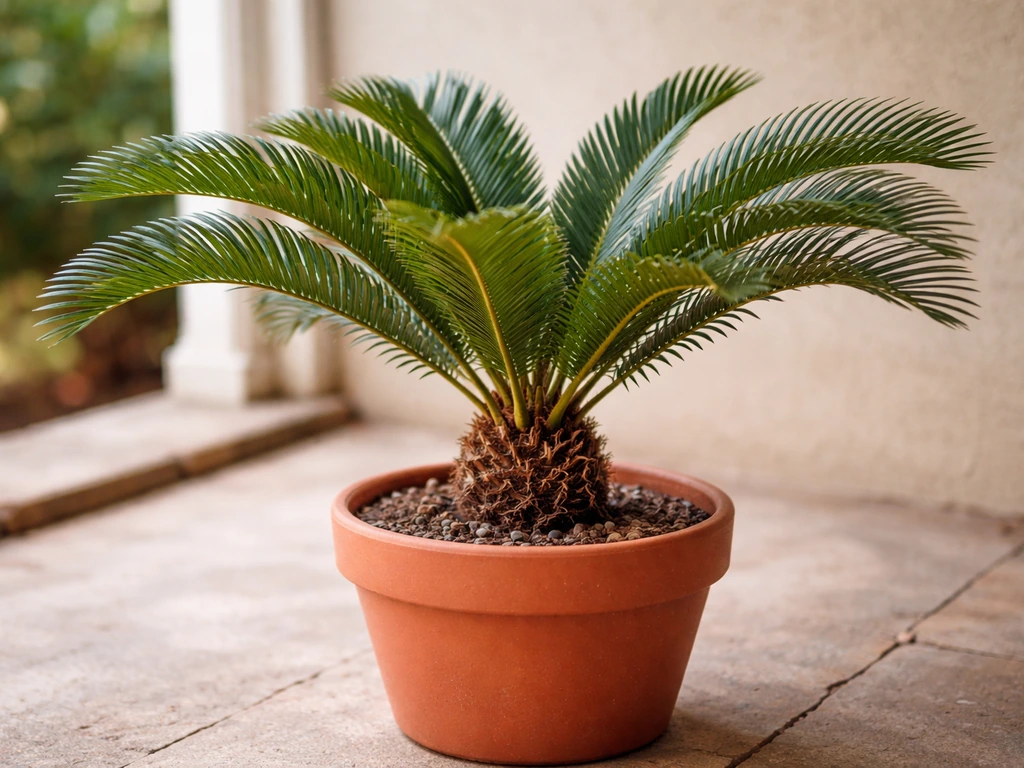
Be realistic: most UK container olives will flower occasionally but may not set consistent fruit every year. Fruiting requires a good cold spell over winter (around 7°C for at least two months, which triggers the flowering process), a warm spring for pollination, and a long warm summer for fruit development. In a warm, sheltered UK garden, with two compatible varieties side by side and a good summer, fruit is genuinely achievable. But if it doesn't happen, it doesn't mean you've done anything wrong. If you're wondering how to grow sago palm in a pot too, the key is matching the container size, drainage, and slow, careful feeding to its needs.
When and how to repot
Repot your olive every three to four years, or when you see roots pushing out of the drainage holes and the tree starts to look stressed or grow very slowly despite regular feeding. Spring (April to May) is the best time. Move up by one pot size (around 5 to 7cm larger in diameter) each time, rather than jumping to a much bigger pot. Too large a pot means too much compost around the roots that stays wet for too long, which is just as harmful as being pot-bound. When repotting, shake off some of the old compost and trim any dead, circling, or damaged roots before replanting in fresh John Innes No. 3 mix.
Once your olive is in the largest pot you can practically manage (often around 50 to 60cm), stop repotting and instead top-dress annually with fresh compost and feed regularly through the growing season. Olives actually tolerate being slightly root-bound better than most plants, and a slightly tight pot can encourage flowering.
If you enjoy growing other Mediterranean-style trees and shrubs in containers, similar principles around drainage, sunny positioning, and winter protection apply to plants like oleanders and palms, so the skills you build with your olive transfer well. For another plant with similar container care priorities, see how to grow sandalwood tree in a pot and what it needs for light, warmth, and drainage Mediterranean-style trees and shrubs in containers.
If you're interested in a different Mediterranean tree, you can apply similar container and watering principles when learning how to grow a date palm in a pot. Oleanders also do best in a container when you match their sun, drainage, and winter protection needs to your UK conditions oleanders and palms.
If you want a similar container plant, our guide on how to grow sago palm in a pot walks you through light, watering, and repotting basics for this slow-growing palm. If you are also learning how to grow palms in pots, the biggest priorities are choosing a well-draining mix, using an appropriately sized container, and giving them plenty of warmth in winter.
FAQ
How often should I water an olive tree in a pot in the UK? (Is there a schedule?)
For container olives in the UK, the most important “rule” is to keep the roots evenly moist but never waterlogged. If the compost feels moist 3 to 4cm down, wait, and only water thoroughly when that depth is dry. In winter, water much less, mainly when the pot feels light and the compost is dry below the surface (overcast cold weather often means rain is doing the work).
When is the best time to repot an olive in the UK, and is it okay to do it in autumn?
Repotting is best in spring (around April to May), when the tree is starting to come out of dormancy and can regrow roots. Avoid major pot changes in late autumn or winter because disturbed roots plus cold wet compost greatly increases rot risk in containers.
Can I leave my potted olive outside all winter in the UK?
Yes, but you must protect the root ball from saturation and frost. Do not put the pot in a water-filled tray, and if you wrap the pot, make sure excess moisture can still drain out. A practical approach is to move the pot to a sheltered spot, wrap the outside for insulation, and use fleece only on nights when frost is forecast.
Will one olive tree in a pot fruit in the UK, or do I need two?
If you are aiming for flowers and possible fruit, the most reliable strategy is to buy two compatible varieties and place the pots close together so pollinators and wind can move pollen between them. Even with two trees, you may still get “see some flowers but inconsistent fruit,” because UK winters are variable and fruiting depends on the combination of cold spell, warm spring, and a long warm summer.
My olive leaves are turning yellow. How do I tell if it is overwatering or a nutrient problem?
If your olive is yellowing in a way that looks like green veins with yellow leaf tissue, that can be chlorosis from nutrient uptake issues rather than normal seasonal shedding. Switch to a balanced liquid feed and consider an iron-based correction product if the pattern persists, but first check watering and drainage since waterlogged roots can also cause poor uptake.
How much should I prune my potted olive each year in the UK?
Pruning mainly targets shape and removing winter damage. In general, avoid hard pruning after late spring, because you reduce the amount of new fruiting wood and you can force tender growth that is vulnerable to cold. Stick to late spring cuts for structure, and only remove obvious dead or crossing branches as the priority.
What compost mix should I use if I cannot get John Innes No. 3?
Use a gritty, loam-based compost approach, not standard peat-free multi-purpose on its own. If you cannot get John Innes No. 3, choose a peat-free loam-based container compost and mix in extra grit so you reach roughly the same “open, draining” feel. A common mistake is using garden topsoil, which compacts and holds water in pots.
I bought a young olive in a nursery pot. Should I replant it straight away?
Yes, but avoid planting it out or into a larger, denser mix that holds moisture. Root health depends on consistent drainage, so when you pot it up, keep the same principle: a pot with multiple large drainage holes, a gritty mix, and no saucer holding water. If you move from a nursery pot, gently handle roots and do not remove all old compost aggressively.
Why is my olive suddenly struggling after I moved it into a bigger pot?
A pot too large can keep compost wet around the roots, which is as harmful as being root-bound. Start with around the size recommended for your tree, then step up gradually (roughly 5 to 7cm wider) when roots fill the pot. If your tree is suddenly struggling, it can be worth checking drainage and whether the pot is oversized for the plant’s current root system.
Is leaf drop in winter normal, and how do I know when it’s a problem?
It helps to clean up and manage leaf drop signals. Light leaf shedding after moving outdoors or after winter protection is usually normal. A sudden heavy drop with yellow leaves, or leaf drop alongside a wet compost smell, points more toward waterlogged roots, while a tree that is dry but not wilting usually needs a better sun and watering balance rather than more fertiliser.