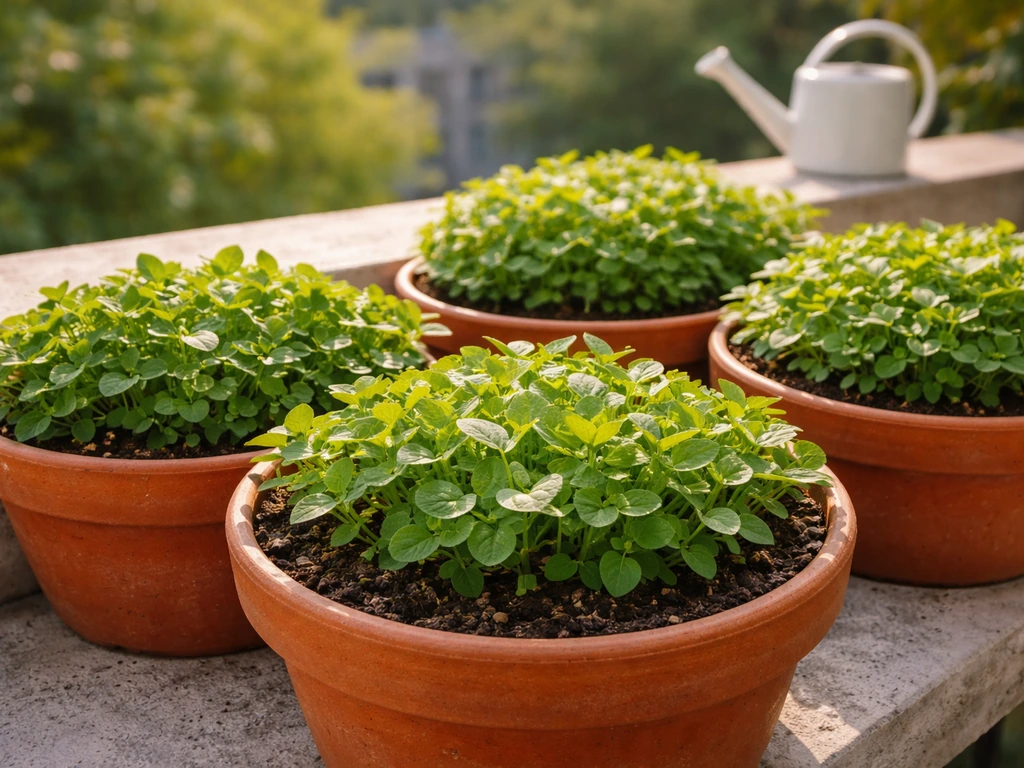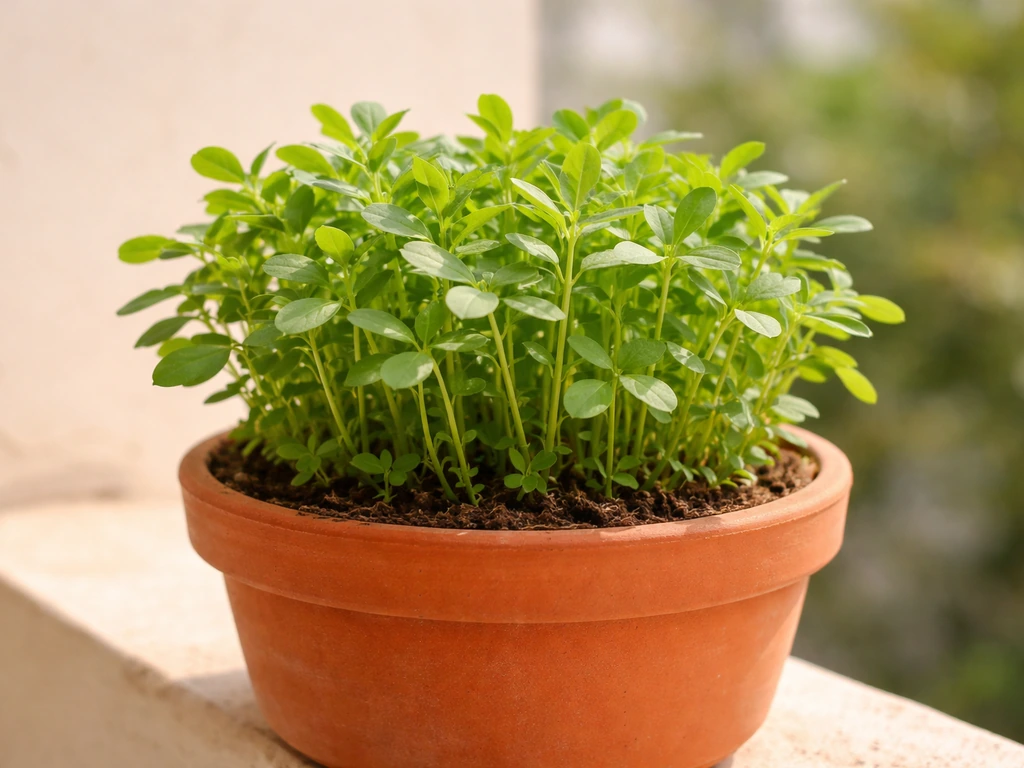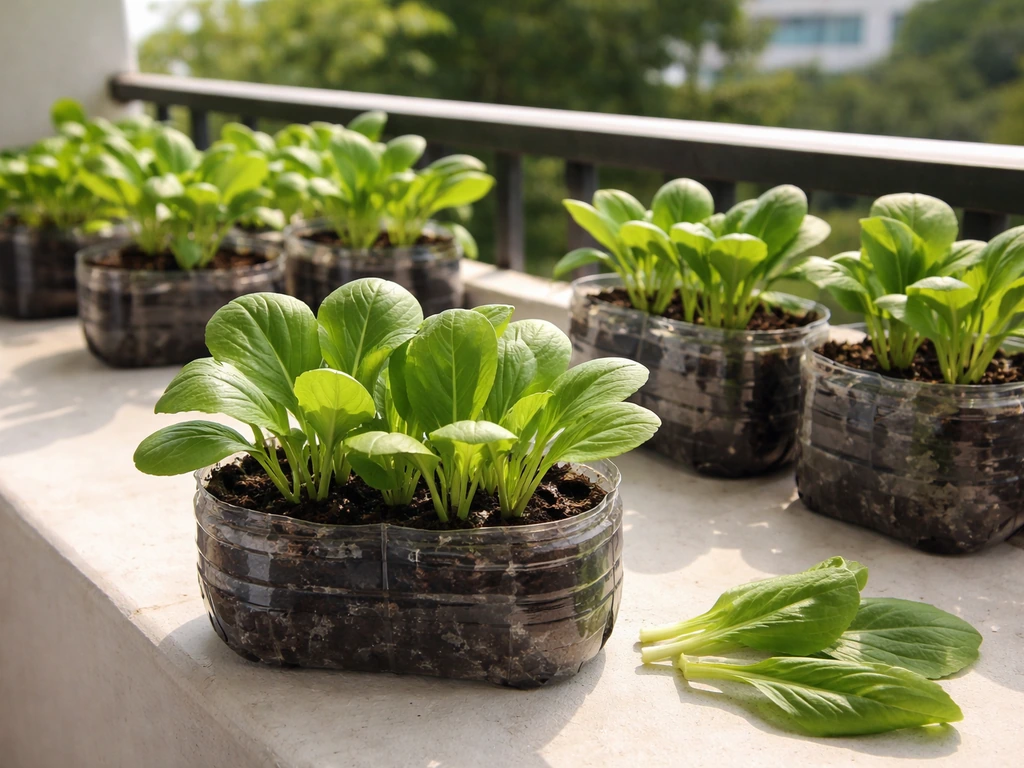
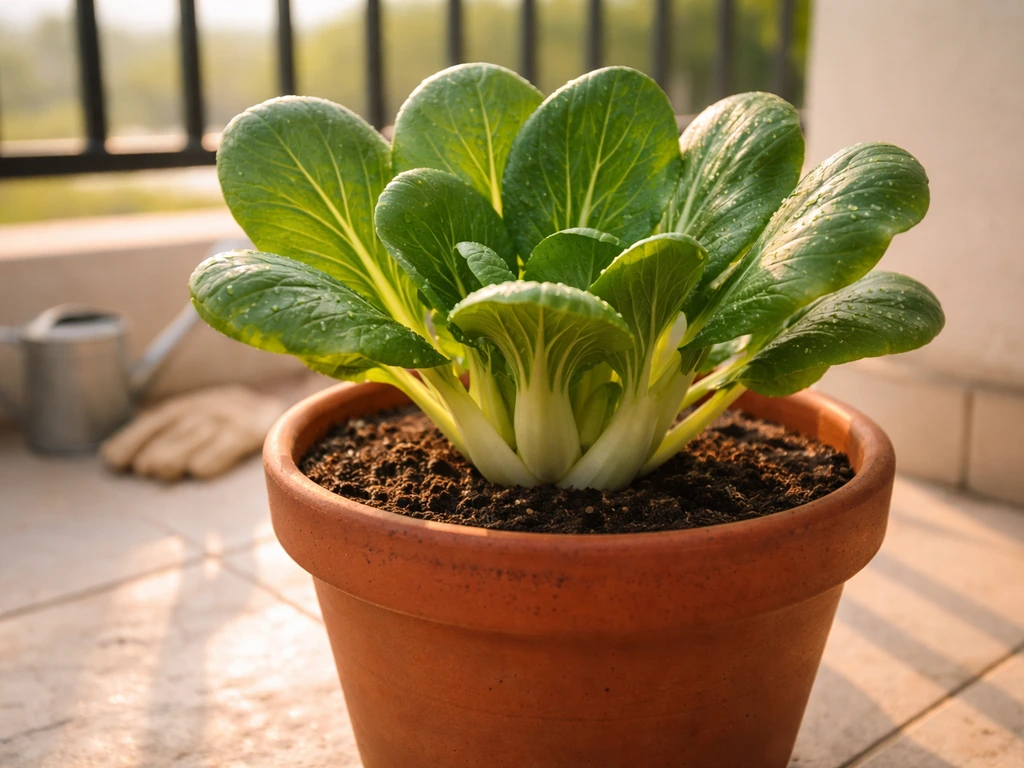
Pechay grows surprisingly well in pots, and you can go from seed to first harvest in as little as 40 days. You need a pot at least 6–8 inches deep with good drainage holes, a loose and fertile potting mix, a spot that gets 4–6 hours of sun, and consistent watering. That's really it. If you've got a balcony, a windowsill ledge, or even a small patch of ground, you have enough space to grow a steady supply of fresh pechay at home. If you don't have a traditional container, you can also learn how to grow pechay in plastic bottles to save space and keep costs low.
How to Grow Pechay in Pots: Step-by-Step Container Guide
Marcus Whitley
27 May 2026
Best pot and location for pechay
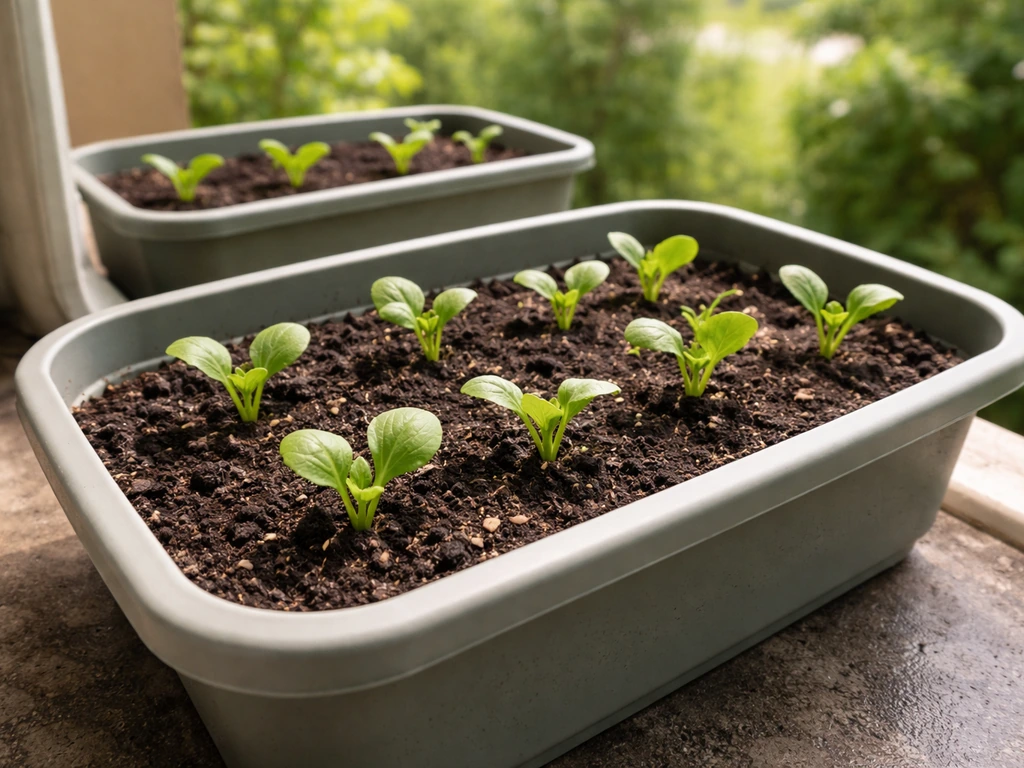
Pechay is a shallow-rooted leafy green, so it doesn't need a huge pot. A container that's 6–8 inches deep and at least 8–10 inches wide is plenty for a few plants. If you want to grow more at once, a wide rectangular planter, a repurposed plastic basin, or a styrofoam box (the kind used for shipping fish or produce) all work great. The key requirement is drainage: your pot absolutely needs at least one drainage hole at the bottom, and more is better. Without drainage, roots will sit in soggy soil and rot. If you're repurposing a container that doesn't have holes, drill or punch in a few holes about half an inch wide before you fill it with soil.
When it comes to pot material, plastic pots and styrofoam boxes hold moisture longer than unglazed clay or terracotta pots. Pechay likes consistently moist soil, so plastic is actually a good choice here, especially if you're in a hot climate or tend to forget to water. Clay pots are more breathable and dry out faster, which means you'd need to water more often. Either works, just be aware of the trade-off.
One thing to skip: don't bother layering rocks or gravel at the bottom of your pot thinking it will improve drainage. Research has shown it actually doesn't help and can even create a perched water table that keeps roots wetter. Just use good potting mix and let the holes do the work.
For location, pechay is a cool-season crop and does best in partial to full sun, roughly 4–6 hours of direct sunlight per day. A balcony, rooftop, or any outdoor spot that gets morning sun is ideal. Pechay can handle some shade, which is actually useful if you're growing it on a covered balcony or under taller plants. What it doesn't handle well is intense heat for extended periods, which will cause it to bolt (send up a flower stalk and turn bitter). If you're in a tropical or warm climate, try to position your pot where it gets morning sun but some afternoon shade to keep it cooler.
Choosing seeds or seedlings and preparing to plant
You can start pechay from seed or from seedlings bought at a nursery. Starting from seed is cheaper and very straightforward since pechay germinates fast, typically within 4–8 days under good conditions. Look for seeds labeled 'pechay', 'bok choy', or 'pak choi' at your local garden store or online. If you're in the Philippines, pechay seeds are widely available at agri-supply shops and even some supermarkets. The most important thing is to buy fresh seeds from a reputable source, old or improperly stored seeds have poor germination rates and will frustrate you.
If you're buying seedlings instead of starting from seed, look for short, stocky plants with dark green leaves and no yellowing. Avoid seedlings that look leggy (tall and thin) or have any spots or wilted leaves. Seedlings save you about a week compared to starting from seed, which is handy if you want to get growing quickly.
Timing matters a lot with pechay. It's a cool-season vegetable that prefers temperatures between 55–75°F (13–24°C). In the Philippines and other tropical regions, the best growing seasons are from October through February when temperatures are cooler. In temperate climates, plant in early spring or late summer to early fall. Planting in peak summer heat often leads to bolting and bitter leaves, so try to work with the cooler parts of your year. If you want a continuous supply, plant a new small batch every 2–3 weeks, a technique called succession planting.
Soil mix and fertilizer for container pechay
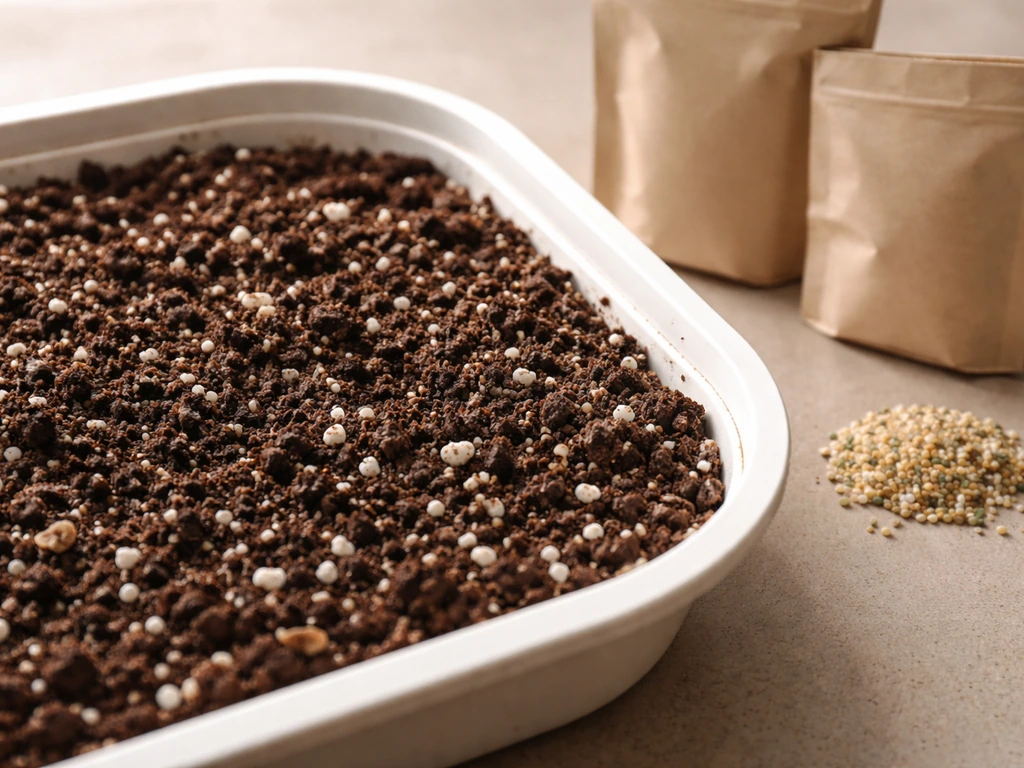
The goal with your potting mix is soil that holds moisture well but still drains freely, which means water flows through without staying waterlogged. A standard commercial potting mix works as a base, but straight potting mix alone can be a bit dense or fast-draining depending on the brand. A simple mix that works well for pechay in containers is: 60% potting mix, 30% compost or vermicast, and 10% perlite or coarse sand. The compost adds fertility and moisture retention while the perlite or sand keeps the mix from compacting. If you can't find perlite, just go heavier on compost and potting mix.
For soil pH, pechay does best in slightly acidic to neutral soil, around pH 5.5–6.5. Most commercial potting mixes fall in this range naturally, so you usually don't need to test or adjust unless you're mixing your own soil from scratch using garden soil or clay-heavy materials.
For fertilizer, pechay is a leafy green so it responds really well to nitrogen. When setting up your pot, mixing compost into the soil gives you a good nutritional head start. Once your plants are 2–3 weeks old and actively growing, you can supplement with a liquid fertilizer every 1–2 weeks. A balanced liquid fertilizer (like a 10-10-10) or one higher in nitrogen (the first number) will push leafy growth. Fish emulsion and diluted compost tea also work great. Don't over-fertilize though, more isn't better and can actually burn young roots.
Step-by-step planting in pots
Here's how to actually get your pechay into the pot from start to finish.
- Fill your pot with your prepared potting mix, leaving about an inch of space from the top of the pot. This prevents soil and water from spilling over when you water.
- If direct seeding, make shallow furrows or small holes about 1/4 to 1/2 inch deep (roughly 0.5–1.5 cm). Don't plant the seeds too deep as this stresses seedlings and slows emergence.
- Drop 2–3 seeds per planting spot, spacing your spots about 3–4 inches apart. In a standard 10-inch round pot, you can fit about 3–4 spots. In a larger rectangular planter, space rows about 4 inches apart.
- Cover the seeds lightly with a thin layer of soil, just enough to barely bury them. Gently press the surface to ensure good soil contact.
- Water gently right after planting using a watering can with a fine rose head or a spray bottle. You want to moisten the soil without washing the seeds sideways.
- Place the pot in your chosen sunny spot. Seeds should sprout within 4–8 days. If you're in a warm spot with good conditions, sometimes they'll pop up in as few as 4 days.
- If transplanting seedlings instead of seeding, dig small holes spaced 4–6 inches apart, set each seedling in gently without burying the lowest leaves, and firm the soil around the roots. Water immediately after.
For succession planting, the easiest approach is to start a new pot or a new section of a larger planter every 2–3 weeks. This staggers your harvest so you're not flooded with pechay all at once and then left with nothing. Pechay matures in roughly 40–55 days in warmer weather and 45–60 days in cooler conditions, so timing your batches means you always have something coming in.
Watering and light care to prevent common problems
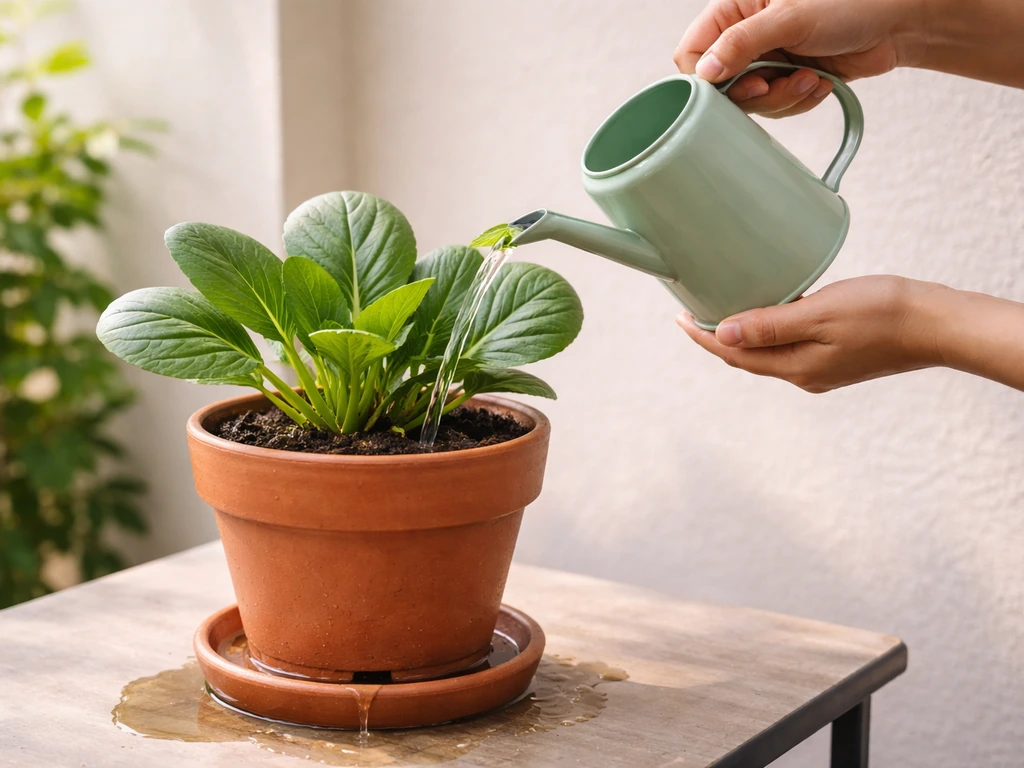
Consistent watering is probably the single most important care task for container pechay. Because roots are confined to the pot, they can't reach out for moisture the way in-ground plants can. A practical rule: water when the top inch of soil feels dry to the touch. In warm weather, this might mean watering once a day or even twice on very hot days. In cooler weather or during rainy periods, you might only need to water every 2–3 days. The goal is to keep soil consistently moist, not soggy and not bone dry.
When you water, water slowly and thoroughly until it drains out from the bottom holes. This ensures the entire root zone gets moisture, not just the top layer. Shallow watering (just wetting the surface) trains roots to stay near the top, which makes plants more vulnerable to drying out.
For light, pechay does well with 4–6 hours of sun daily. In very hot climates, morning sun with afternoon shade is ideal. If you notice the leaves are getting pale and yellow even with regular watering and fertilizing, the plant might not be getting enough light. If the plants are growing tall and spindly with small leaves, that's also a sign they're stretching for light.
Move the pot to a brighter spot. On the flip side, if leaves are wilting in the afternoon even though the soil is moist, the plant might just be experiencing heat stress. This usually resolves on its own once evening cools things down, but moving the pot to a spot with afternoon shade will help long-term.
One thing to watch out for is bolting. Pechay bolts (goes to flower and seed) when it experiences extended cool temperatures followed by longer days, or when it gets too hot. You'll notice a tall central stalk shooting up from the middle of the plant. Once a plant bolts, the leaves get tough and bitter. At that point, it's best to harvest everything you can use and replant a fresh batch. This is normal and not a failure on your part, it's just the plant's natural cycle.
Ongoing maintenance: thinning, harvesting, pests, and troubleshooting
Thinning your seedlings
If you planted multiple seeds per spot and they all sprouted, you'll need to thin them out. Overcrowded seedlings compete for nutrients and water, and they also create humid, stuffy conditions that invite disease. Once seedlings are about an inch tall, snip (don't pull) the extras at soil level, leaving the strongest one per spot. Pulling risks disturbing the roots of the one you're keeping. You can eat those tiny thinned seedlings as microgreens, nothing goes to waste.
Harvesting for continuous growth
You can start harvesting pechay as soon as the leaves are big enough to use, you don't have to wait for the plant to fully mature. For a continuous supply from the same plant, use the cut-and-come-again method: snip the outer, larger leaves about 1–2 inches up from the base of the plant, leaving the inner center leaves untouched. The plant will keep pushing out new leaves from the center.
For a full harvest, wait until the plant is about 10–12 inches tall, then cut the entire plant at the base. For bok choy, UC ANR’s harvesting guidance suggests cutting outer leaves when heads are about 10 to 12 inches tall as a benchmark for a first full harvest [cut the entire plant at the base](https://sonomamg. ucanr. edu/files/264626.
pdf). Either way, pechay is generally mature enough for a full harvest around 40–55 days from seed.
Common pests to watch for
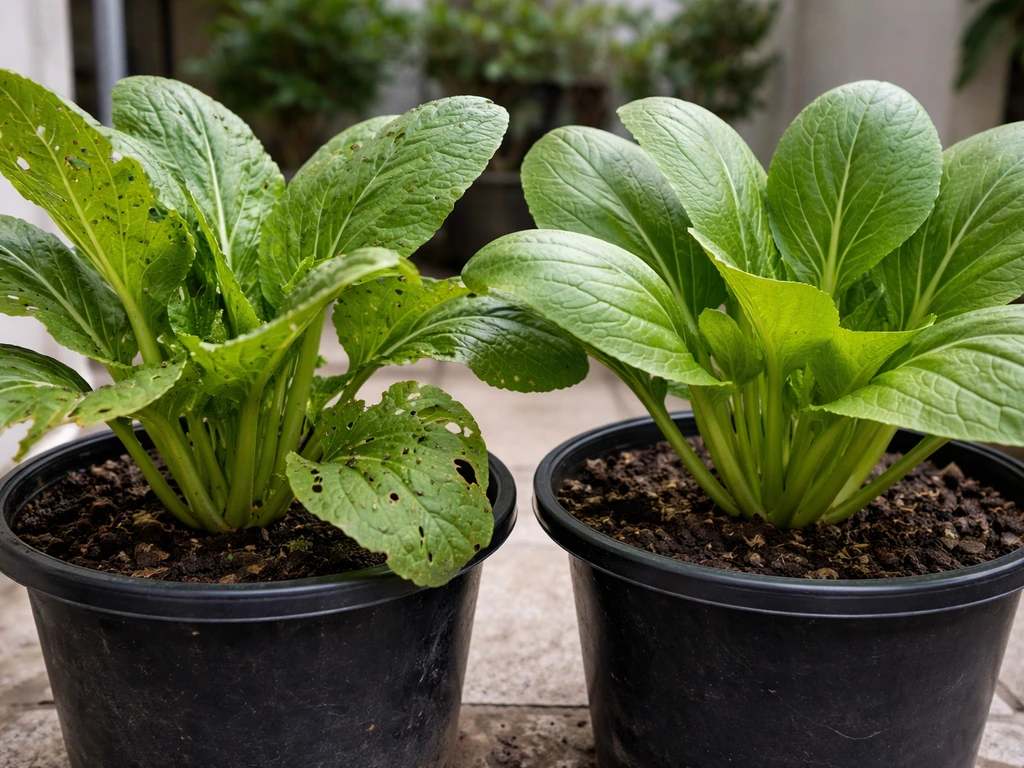
Container pechay is not pest-free, but pest pressure is usually lighter than in-ground growing. The most common issues you'll encounter are aphids, flea beetles, and caterpillars. Aphids are tiny soft-bodied insects (green, black, or white) that cluster on the undersides of leaves and stems. You can knock them off with a strong stream of water or use a diluted neem oil spray. Flea beetles make tiny round holes all over the leaves, they're small dark beetles that jump when disturbed. Caterpillars chew larger, irregular holes. For all of these, regular inspection and early action is the best approach. Check your plants every couple of days, especially the undersides of leaves.
Dealing with damping-off in seedlings
Damping-off is a fungal problem that kills young seedlings, and it's more common than people realize. The signs are unmistakable: seedlings develop a brown, water-soaked area at the base of the stem right at the soil line, then they collapse and die. It spreads fast when conditions are too wet, too humid, and overcrowded.
The best prevention is to not overwater, make sure your pot has good drainage, thin your seedlings so they're not crowded, and avoid wetting the leaves when you water. If you see it spreading, remove affected seedlings immediately and let the soil surface dry out a bit before watering again.
Planting seeds at the right shallow depth (no deeper than half an inch) also helps because it shortens the time seedlings spend pushing through the soil, which reduces their exposure to pathogens.
Downy mildew
Downy mildew shows up as yellow patches on the tops of leaves with a grayish-white fuzzy growth on the undersides. It's a fungal disease that thrives in cool, wet, humid conditions. Good air circulation around your plants helps prevent it, which is another reason thinning your seedlings matters. If you catch it early, remove affected leaves, improve airflow, and reduce overhead watering. In containers, downy mildew is less common than in dense ground-level plantings, but it's worth knowing about.
When growth stalls or leaves look off
| Symptom | Likely Cause | What to Do |
|---|---|---|
| Pale yellow leaves | Nitrogen deficiency or not enough light | Apply liquid nitrogen fertilizer; move pot to brighter spot |
| Tall, leggy growth with small leaves | Not enough light | Move pot to get more direct sun |
| Wilting in afternoon despite moist soil | Heat stress | Provide afternoon shade; water in the morning |
| Leaves with tiny round holes | Flea beetles | Inspect and remove beetles by hand; use neem oil spray |
| Seedlings collapsing at the base | Damping-off | Remove affected plants; reduce watering; improve drainage |
| Tall flower stalk from center | Bolting from heat or long days | Harvest what you can and replant a new batch |
| Yellow patches on leaf tops, fuzzy gray underneath | Downy mildew | Remove affected leaves; improve air circulation; reduce moisture |
Growing pechay in pots is one of the most rewarding entry points into container gardening because the turnaround is so fast and the results are genuinely useful in the kitchen. If something goes wrong on your first attempt, don't be discouraged. Maybe the seeds didn't germinate well because of old stock, or damping-off hit because of overwatering. These are common, fixable mistakes.
Replant, adjust one thing, and try again. Once you've got the rhythm of watering and light down, pechay becomes one of those plants you can grow almost on autopilot. If you enjoy growing leafy greens in containers, it's also worth trying other quick-growing herbs and vegetables in pots alongside your pechay for a more varied container garden.
If you want a similar fast and reliable container crop, learn how to grow methi in pots using a comparable pot size and watering routine leafy greens in containers. If you want another easy leafy crop, this guide on how to grow fenugreek in pots will walk you through the setup and care steps.
If you want an herb that’s just as easy, learn how to grow pudina in pots for fresh mint leaves right at home other quick-growing herbs and vegetables in pots. If you want the full pot-and-care basics for producing healthy results, follow our guide on how to grow ladies finger in pots.
FAQ
How many pechay plants should I grow per pot?
Yes, but do it carefully. If you want bigger leaves, start with one plant per 8 to 10 inch pot width area (or thin to the strongest seedling per spot), then feed nitrogen once plants are 2 to 3 weeks old. Avoid heavy watering spikes, since lush growth from too much water can increase disease and make leaves less crisp.
What’s the best way to avoid overwatering pechay in pots? (My leaves look limp.)
Aim for a steady but not waterlogged mix. Before watering, check the top inch and water only when it feels dry, then water slowly until it drains from the bottom. If saucers hold runoff, empty them after 10 to 20 minutes so the roots do not sit in reclaimed water.
My pechay leaves are turning pale or yellow even though I water and fertilize. What should I check first?
Chlorosis (pale, yellow leaves) can come from light, nutrient imbalance, or root issues. First confirm you have at least 4 to 6 hours of sun. If light is fine, switch to a liquid fertilizer with higher nitrogen at the labeled dilution, and check drainage by feeling whether the soil stays wet for more than a day.
Can I harvest pechay continuously from one pot without reducing yield?
You can harvest small leaves early, but don’t cut too much too often from very young plants. A good rule is to start cut-and-come-again when the plant has enough outer leaves to spare (about the time it reaches usable size), then never remove more than about half the leaf mass at once. Always leave the center growing point.
How do I keep pechay from bolting if I live in a very hot or very cool climate?
If you need to grow year-round, use microclimate tactics instead of fighting the temperature. In hot weather, move pots to morning sun with afternoon shade, use a larger container to slow drying, and consider shade cloth during peak midday. In cool weather, protect with a simple cover during cold nights to prevent bolting-like stress and slow growth.
What should I do when pechay bolts in a pot?
Bolting happens when conditions push the plant toward flowering. Once you see the central stalk, continuing to harvest leaves won’t restore quality. Cut and remove the bolting plant promptly, harvest what’s still usable, and replant a fresh batch with the next pot using a cooler planting window or more shade.
My pechay seeds didn’t sprout. How can I troubleshoot the most common reasons?
If seeds fail to germinate, check storage age and soil moisture, then adjust planting depth. Pechay seeds should be sown no deeper than half an inch, keep the top layer lightly moist (not soggy), and ensure they are in a warm-enough spot for germination. Old seed is the most common cause when everything else looks right.
How do I tell aphid, flea beetle, and caterpillar damage apart in pots?
Yes. If you see tiny holes from flea beetles, start by inspecting early morning and confirm leaf damage matches the pest type. For small container outbreaks, physically removing affected leaves and using a gentle neem oil or insecticidal soap spray can help, but apply in the evening so you do not stress the plants under sun.
What’s the quickest way to stop damping-off once I notice seedlings collapsing?
Damping-off is usually worse with crowded seedlings and water that stays too wet at the soil surface. Prevention is thinning early, improving airflow, watering at soil level, and letting the surface dry slightly between waterings. If you spot it, remove affected seedlings immediately and reduce watering frequency while keeping conditions dry and breathable.
I have downy mildew patches. Can I save the plant in a container?
Downy mildew can worsen quickly in humid, stagnant conditions. Remove infected leaves, improve airflow around the pot (more spacing if you have multiple), and avoid wetting foliage when watering. If it keeps spreading, replace the plant since containers often get a quick repeat outbreak without improving airflow.
Can I use compost instead of liquid fertilizer for container pechay?
You can mix and top-dress, but avoid disturbing roots too much. If your potting mix is already fertile, you can top-dress with a thin layer of compost after the first harvest cycle, then resume liquid fertilizer only every 1 to 2 weeks. Overdoing top-dress fertilizer can make soil stay wet longer than needed.
Do I need to measure soil pH for pechay in pots, and what if my home-mixed soil is off?
If you used a commercial mix you likely do not need to test pH, but if you mix your own soil with garden dirt, pH can swing. Aim for slightly acidic to neutral. If growth is weak despite correct light and watering, do a simple pH check and then adjust gradually rather than changing it drastically in one go.