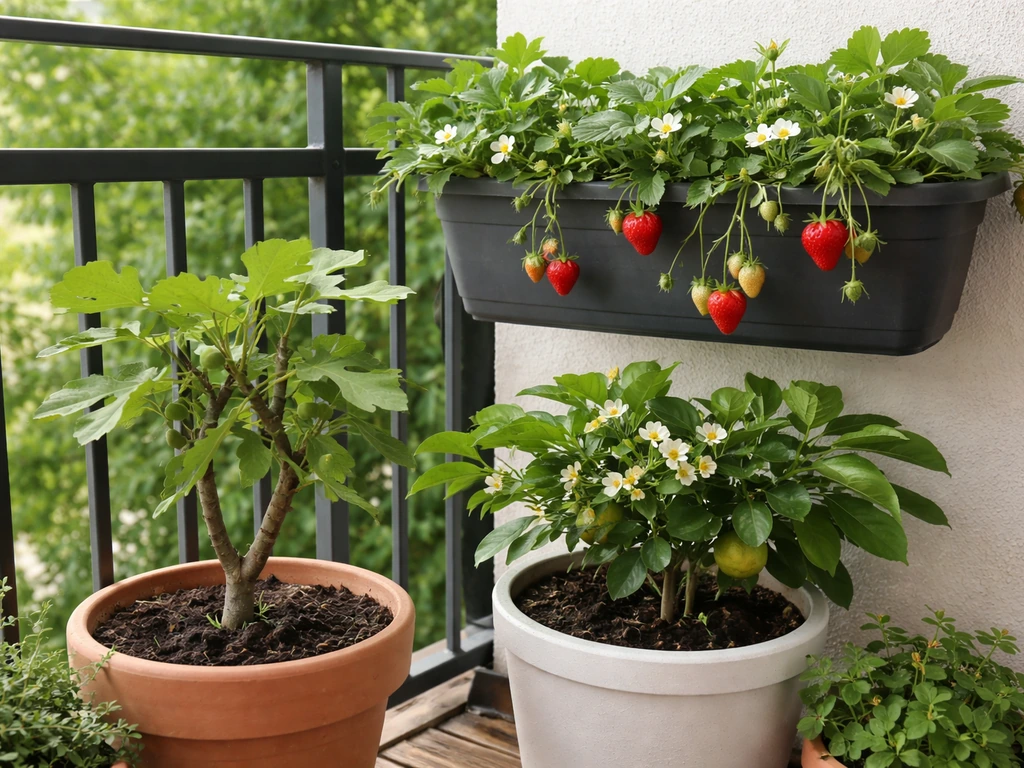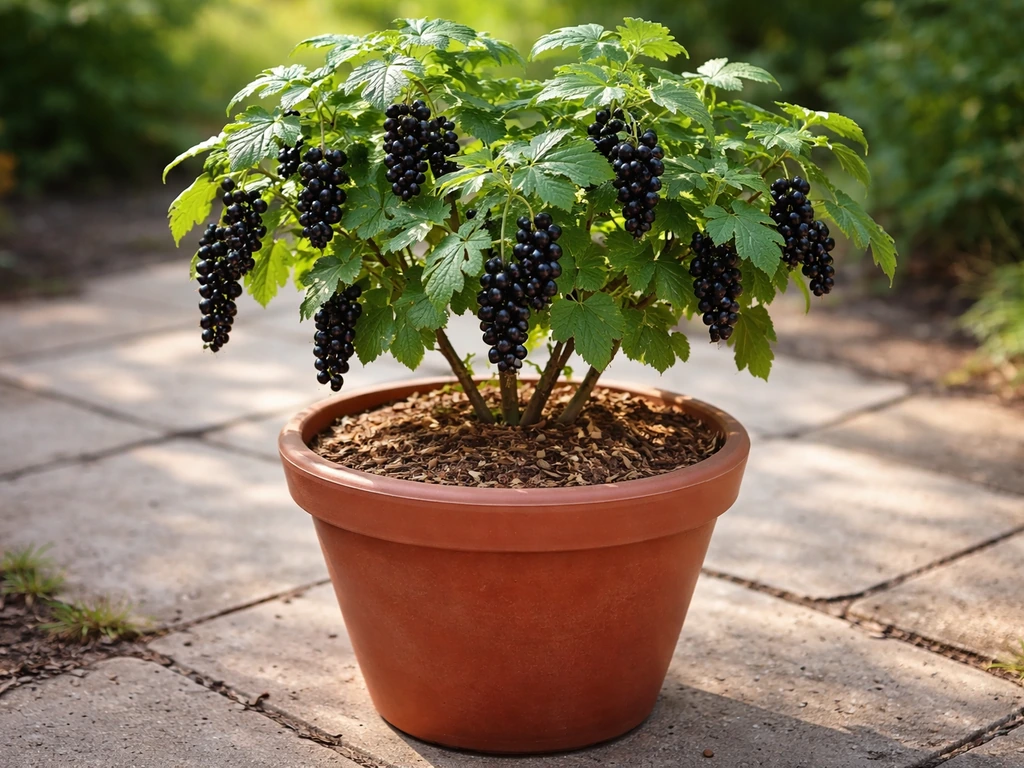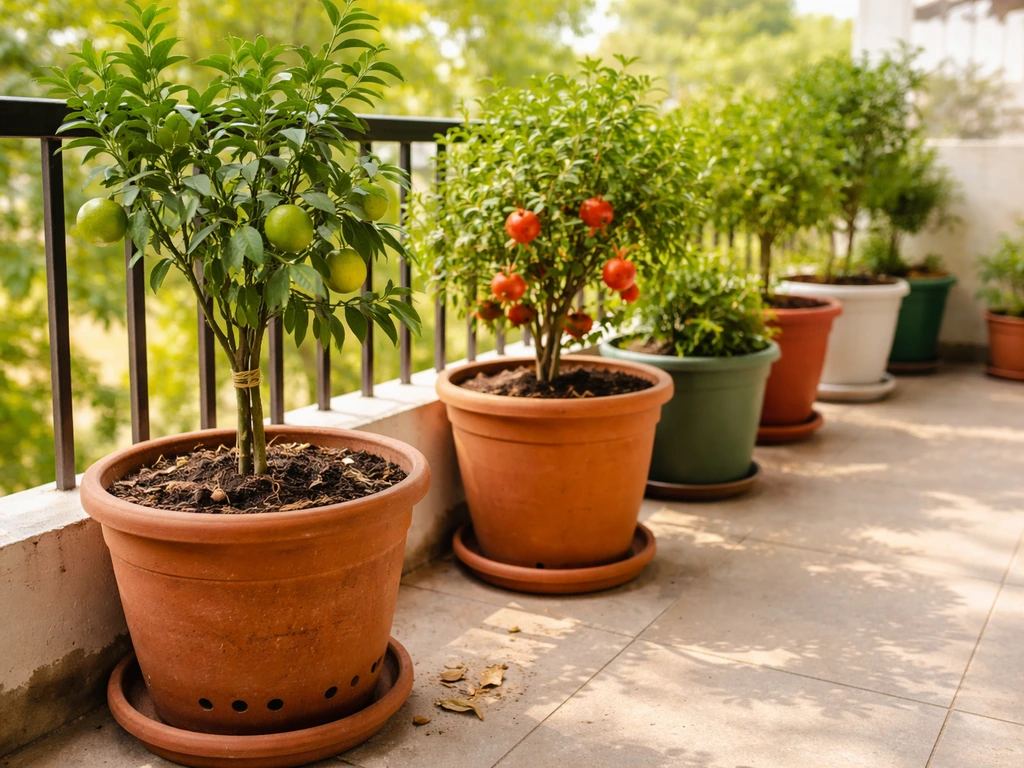
Yes, you can absolutely grow roses in pots in India, and they can flower beautifully on a balcony, terrace, or small courtyard. If you want fruits instead, use the same container logic but pick fruiting varieties that match your sunlight and climate, then plan for deeper pots and consistent feeding grow roses in pots in India. If you are also wondering can you grow blackcurrants in a pot, the key is choosing a large container, using rich, well-draining soil, and keeping the plants well-watered can i grow blackcurrants in a pot. If you are wondering can you grow goji berries in a pot, the pot size, drainage holes, and sun needs matter just as much as for roses. The key is picking the right compact variety, using a well-draining potting mix, and adjusting your watering and feeding routine to match India's intense summers and heavy monsoon season. Get those three things right and roses in containers are surprisingly beginner-friendly. { grow in pots.
How to Grow Roses in Pots in India: Step by Step
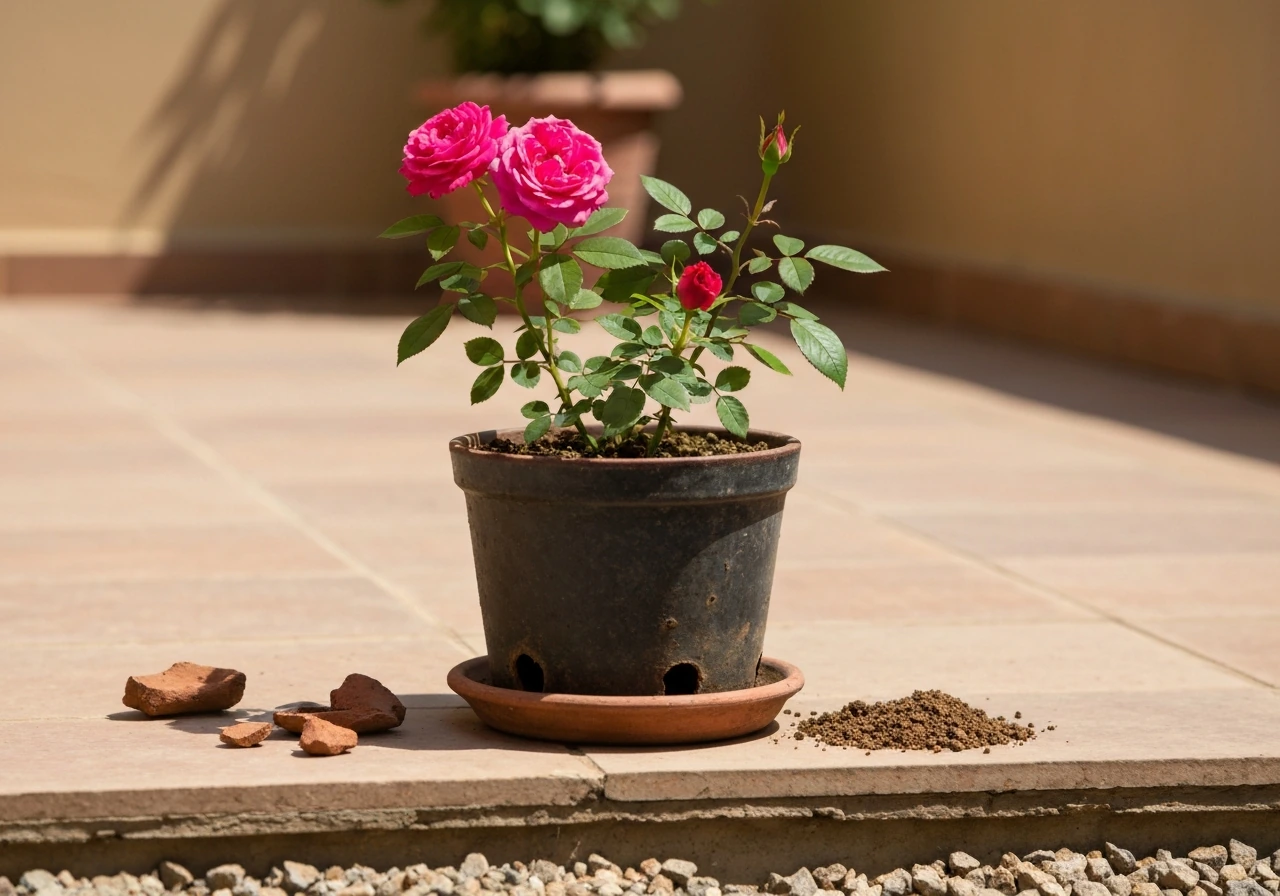
Best rose types for pots in Indian conditions
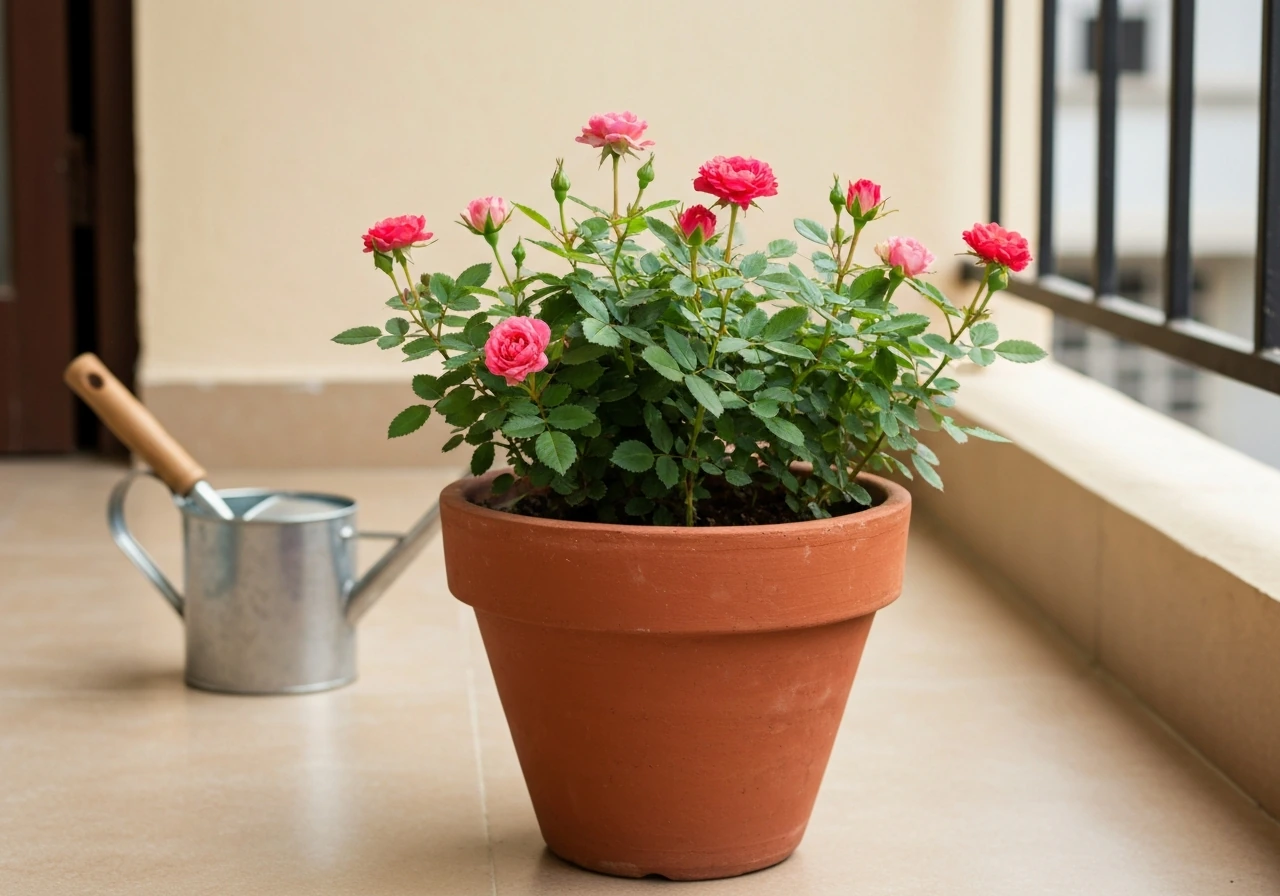
Not every rose is a good candidate for a pot. Large hybrid tea roses planted in the ground can grow 5–6 feet tall with deep root systems, and trying to squeeze one into a container in 40°C heat is a recipe for frustration. For Indian conditions, you want varieties that stay compact, rebloom frequently, and can handle heat and humidity without constantly sulking.
Mini roses are the easiest starting point. They stay under 1–2 feet, do perfectly well in a 6–10 inch pot each, and tend to flower in flushes throughout the growing season. Patio roses (sometimes called dwarf floribundas) are a step up in size and are also excellent: they're bushy, compact, and bred specifically for container and patio use. Many are available as grafted plants at Indian nurseries, which means faster establishment and stronger roots than bare-root cuttings.
For Indian gardens specifically, look for heat-tolerant varieties. The Bengal and China rose types (Rosa chinensis) are legendary performers in Indian heat, they have been grown in Indian gardens for generations and rebloom through most of the year. Polyantha roses are another excellent group: small, cluster-flowering, and relatively disease-resistant. Among modern varieties available at Indian nurseries, 'Button Rose' (a popular miniature), compact floribundas like 'Iceberg', and dwarf hybrid teas like 'Baby Love' all do well in containers.
| Rose Type | Pot Size Needed | Heat Tolerance | Rebloom | Best For |
|---|---|---|---|---|
| Miniature roses | 6–10 inch | Moderate–High | Continuous | Small balconies, beginners |
| Patio / Dwarf floribunda | 12–14 inch | High | Frequent flushes | Terrace gardens, balconies |
| China / Bengal rose | 12–16 inch | Very High | Nearly year-round | All Indian climates |
| Polyantha rose | 12–14 inch | High | Frequent flushes | Urban gardens, small spaces |
| Compact hybrid tea (grafted) | 16–18 inch | Moderate | Seasonal flushes | Experienced beginners with space |
A quick note on grafted vs. own-root plants: grafted saplings from a nursery generally establish faster and are more vigorous in their first year. If you're a beginner, buy a healthy grafted sapling rather than starting from a cutting, it saves a lot of waiting and guesswork.
Choosing the right pot, location, and sunlight
The single most important thing your pot must have is drainage holes. Not optional, non-negotiable. Roses sitting in waterlogged soil will develop root rot within days during the monsoon, and no variety, no matter how tough, will survive that. Before you buy any pot, flip it over and check the holes. If you love a decorative pot that lacks them, use it as a cover pot and keep your rose in a plain plastic nursery pot with good drainage inside it.
For pot size, bigger is generally better for roses. A mini rose can start in a 6–8 inch pot, but most other types need at least a 12–14 inch pot in diameter and depth. Compact hybrid teas and larger patio roses do best in 16–18 inch pots. Larger pots hold more soil, which means more buffering against heat and drought, important on a scorching Indian summer terrace.
On material: terracotta pots look beautiful but dry out very quickly in Indian summers, sometimes needing two waterings a day in May and June. Plastic or fiberglass containers retain moisture far better and are lighter to move around. If you love the look of terracotta, use it but be prepared to water more frequently or line the inner walls with a plastic sheet before planting. Glazed ceramic pots are a good middle ground, they hold moisture reasonably well and look great on a terrace.
For location, roses need a minimum of 5–6 hours of direct sunlight daily, and 6–8 hours is ideal. South or east-facing balconies and terraces work best in India. A spot with morning sun and some afternoon shade can actually be helpful in the hottest months (April to June), the shade protects against extreme heat stress while still giving enough light for good flowering. Avoid positions with poor air circulation, such as a corner hemmed in by walls on three sides, as stagnant humid air encourages fungal diseases like powdery mildew and black spot.
Potting mix and soil recipe for container roses
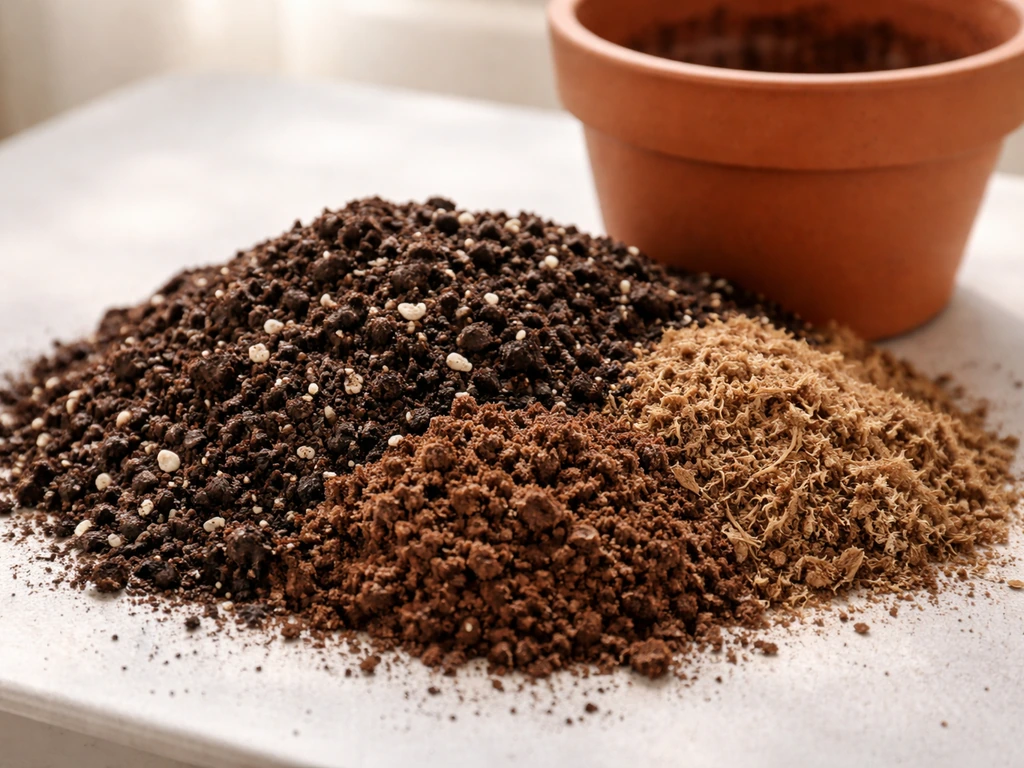
Do not use plain garden soil or field soil in your pot. This is a mistake almost every beginner makes. Garden soil compacts in containers, drains poorly, and becomes dense over time, essentially suffocating the roots. Roses need a mix that drains freely but also holds enough moisture and nutrients to keep the plant healthy.
Here is a reliable potting mix recipe you can put together from materials available at most Indian nurseries and garden supply shops:
- 40% cocopeat (for moisture retention and a light texture)
- 30% compost or well-rotted cow dung manure (for nutrition and organic matter)
- 20% garden soil or red soil (for some body and weight)
- 10% perlite or coarse river sand (for drainage and aeration)
Before filling the pot, place a 1–2 inch layer of broken pot shards (terracotta pieces), coarse gravel, or small stones at the bottom over the drainage holes. This prevents the holes from getting blocked by soil while still allowing water to flow out freely. Then fill with your potting mix, leaving about 2 inches from the top so water doesn't overflow when you irrigate.
You can also add a slow-release fertilizer granule (like Osmocote or any Indian rose fertilizer in granule form) mixed into the bottom third of the potting mix at planting time. This gives the plant a nutritional head start for the first few weeks without you having to feed it separately right away.
Planting roses in pots, step by step
The best time to plant roses in pots in India is October to February, when temperatures are cooler and the plant can establish roots without heat stress. That said, if you're buying a nursery plant in a pot, you can transplant it at any time of year as long as you manage water and shade carefully for the first two weeks.
- Choose a healthy plant: Look for a sapling with at least 3–4 healthy stems, dark green leaves, and no visible pests or yellowing. Avoid plants that are root-bound (roots circling densely around the outside of the root ball) if you can.
- Prepare your pot: Place gravel or pot shards over the drainage holes, then fill it about one-third full with your potting mix.
- Remove the plant from its nursery pot: Gently squeeze the sides of the nursery pot and tip it upside down, supporting the stem with your hand. Don't yank the stem.
- Check the root ball: If roots are circling tightly, gently loosen the outer roots with your fingers. This encourages them to spread outward into the new mix.
- Position the plant: Place the root ball in the center of your pot. The bud union (the swollen knobby point where the stems emerge from the rootstock, visible on grafted plants) should sit just at or slightly above the soil surface — not buried.
- Fill around the roots: Add potting mix around the root ball, pressing gently to remove air pockets. Don't compact it tightly.
- Leave a watering gap: The soil surface should be about 1.5–2 inches below the rim of the pot.
- Water thoroughly: Water slowly and deeply until water runs freely from the drainage holes. This settles the mix around the roots and confirms your drainage is working.
- Place in partial shade for one week: Even if your final spot is in full sun, give the newly transplanted rose a few days in gentler light to recover from transplant stress, then gradually move it to its permanent sunny location.
If you're starting from a stem cutting rather than a nursery plant, dip the cut end in rooting hormone powder (available at nurseries as 'Seradix' or similar), insert it into moist cocopeat in a small pot, and keep it warm and lightly shaded until new leaf growth appears, which usually takes 3–5 weeks. Once rooted and growing, move it to a larger pot using the method above.
Watering routine and fertilizer schedule
Watering
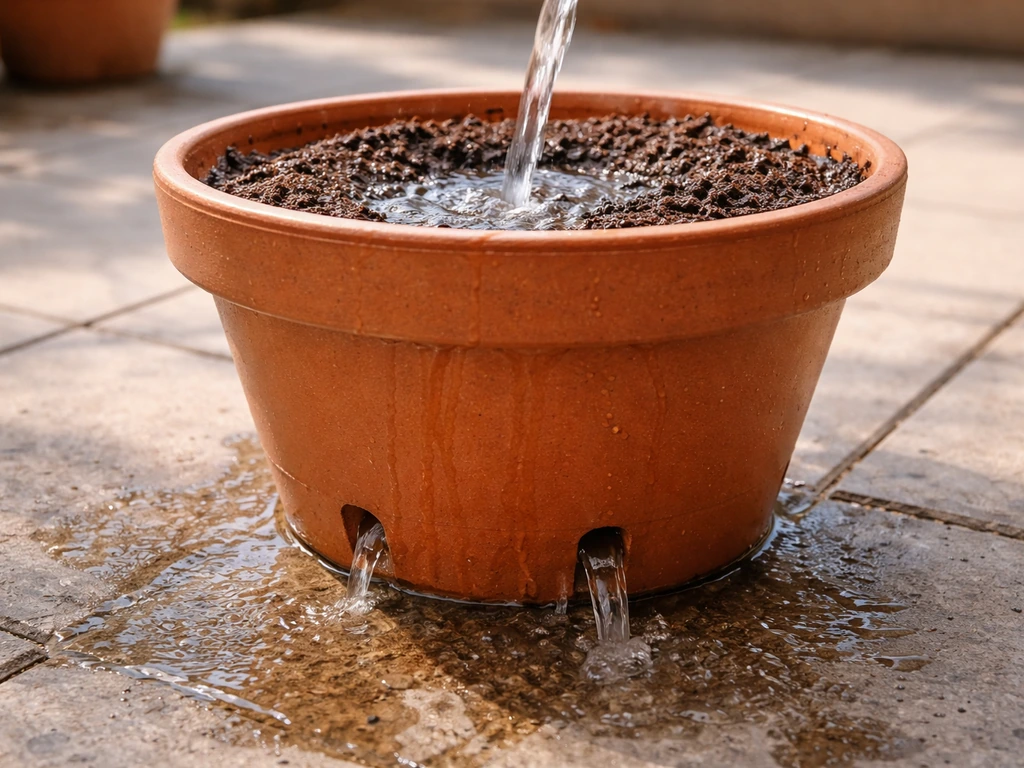
The golden rule for watering roses in pots is this: water deeply every time, and make sure water drains out of the bottom. A quick splash that only wets the top inch of soil is worse than not watering at all, because it encourages shallow roots and leaves the lower root zone dry. Water slowly at the base of the plant until you see it running freely from the holes underneath.
How often you water depends entirely on the season. In Indian summers (March to June), especially on exposed terraces, a rose in a pot can need watering once or even twice a day. Mid City Nursery notes that potted roses may need daily watering in spring, summer, and fall depending on container size, which helps explain why heat can drive such a high watering frequency. In the cooler months (November to February), once every 2–3 days is often enough. During the monsoon, the rain does most of the work, but check that your pot's drainage is not blocked and that the plant isn't sitting in a saucer full of water, which is a fast track to root rot.
| Season | Watering Frequency | Key Concern |
|---|---|---|
| Summer (Mar–Jun) | Once or twice daily | Heat stress, rapid drying |
| Monsoon (Jul–Sep) | Only if no rain for 2+ days | Overwatering, root rot, fungal disease |
| Post-monsoon (Oct–Nov) | Every 2–3 days | Balanced moisture as temperatures drop |
| Winter (Dec–Feb) | Every 2–3 days | Risk of underwatering in dry northern winters |
Always water at the base of the plant, not over the leaves. Wet foliage sitting in humid Indian air is the number one trigger for black spot and powdery mildew. Morning watering is best, any accidental leaf splash has time to dry before evening.
Feeding and fertilizer
Container roses need more frequent feeding than roses grown in the ground, because every time you water deeply (which you should), some nutrients leach out through the drainage holes. Don't let that put you off, it's easy to manage with a simple schedule.
At planting, mix compost or well-rotted manure into the potting mix as your base feed. After that, here is a practical feeding schedule for Indian conditions:
- Every 3–4 weeks during the growing season (October to May): Apply a balanced NPK fertilizer such as 10-10-10 or 12-12-12. A rough guide is about half a cup per plant, sprinkled in a ring around the base and watered in gently. Do not dump fertilizer right against the stem.
- Once a month: Add a handful of compost or well-rotted cow dung manure to the top of the pot as a mulch-like top-dressing. This improves soil structure over time and adds slow-release nutrients.
- When buds are forming: Switch to a potassium-rich fertilizer (look for rose-specific fertilizers at Indian nurseries, or use a formulation like 5-10-10) to support better flower quality and color.
- Monsoon pause: Reduce or stop synthetic fertilizer during the peak monsoon (July–August) as heavy rain leaches it fast and the plant is often stressed by humidity. Resume in September as the rains ease.
- Stop feeding 6–8 weeks before you plan a hard pruning (typically October in North India, March in South India). Feeding too close to pruning pushes soft new growth that is vulnerable to pests.
Sun, heat, humidity, and wind: managing India's climates
India is not one climate, and what works in Bengaluru doesn't automatically work in Delhi or Mumbai. The good news is that container roses are flexible, you can move them. That's one of the biggest advantages of pot growing.
North India (Delhi, UP, Punjab): extreme heat and dry summers
Summer temperatures above 45°C are common, and pots on concrete terraces can get even hotter as the surface radiates heat. In May and June, move pots to a spot with afternoon shade or use shade cloth (50% density works well). Grouping pots together also helps, plants create a slightly more humid microclimate for each other. Water twice daily, check for spider mites (they thrive in hot dry conditions), and don't be alarmed if the plant drops some leaves in peak heat. It often recovers once temperatures drop in July.
West India (Mumbai, Pune, Gujarat): humidity and monsoon stress
High humidity through most of the year means fungal diseases are a constant risk. Prioritize air circulation, don't crowd pots together, and avoid corners with stagnant air. During the monsoon, move pots under a roof overhang or covered section if possible to reduce waterlogging. Prune to open up the plant's center so air moves through the branches freely.
South India (Bengaluru, Chennai, Hyderabad): moderate heat with rain variability
Bengaluru's climate is actually one of the best in India for roses, mild temperatures and relatively low humidity outside the monsoon. Chennai and coastal areas have intense heat and humidity, so the same fungal disease management advice as for Mumbai applies. Roses can flower almost year-round in Bengaluru with good care, which makes it an excellent place to experiment with slightly larger varieties.
Wind on high-rise terraces
Strong wind on upper-floor balconies desiccates soil rapidly and can physically damage stems. Use heavier pots (ceramic or concrete) that won't tip, stake taller plants with a simple bamboo cane and soft tie, and consider a light windbreak made from fabric or a trellis if your balcony is very exposed.
Pruning, deadheading, and keeping your rose compact
Pruning sounds intimidating but it's genuinely one of the most satisfying parts of growing roses once you try it. Roses bloom on new growth, so the more you encourage fresh stems, the more flowers you get. In a pot, pruning also keeps the plant from getting too large and top-heavy for its container.
Deadheading: do this all the time
Deadheading means removing spent flowers before they form a seed pod (hip). Once a rose starts forming a hip, it puts energy into that instead of making more flowers. As soon as a flower fades, cut the stem back to just above a healthy leaf with 5 leaflets, at a slight outward-facing angle. Do this every few days during the flowering season and you'll be amazed how quickly new buds appear. This is basically your day-to-day rose maintenance, and it takes about two minutes.
Seasonal hard pruning
Once or twice a year, do a harder prune to reshape the plant and encourage strong new growth. In North India, the main pruning window is October (before the winter flush) and a lighter tidy-up in late January or February. In South India, October and February both work well. In Mumbai and the west coast, October pruning before the cooler dry months gives the best results.
For a hard prune on a container rose, cut the plant back to about one-third to half its current height. Remove any dead, damaged, or crossing branches first. Then cut remaining healthy stems to an outward-facing bud (a small bump on the stem pointing away from the center). This opens up the plant so air and light can reach the center, which directly reduces disease. Use clean, sharp secateurs and wipe the blades with alcohol between cuts if you notice any diseased tissue.
Training in a container
Container roses generally don't need much formal training, but if you have a climber or a tall variety in a large pot, a small bamboo trellis or a few stakes arranged in a fan shape work well. Tie stems loosely with soft jute twine, never wire, which cuts into stems. For compact varieties, just keep the center open and prune outward-facing so the plant stays bushy rather than leggy.
Common pests and diseases in Indian potted roses, and how to fix them fast
Here's the reality: every rose grower in India deals with pests and fungal issues at some point. Don't panic when you see a problem, most are fixable quickly if you catch them early. The key habit is checking your plants every 2–3 days, especially the undersides of leaves where most pests hide.
Aphids
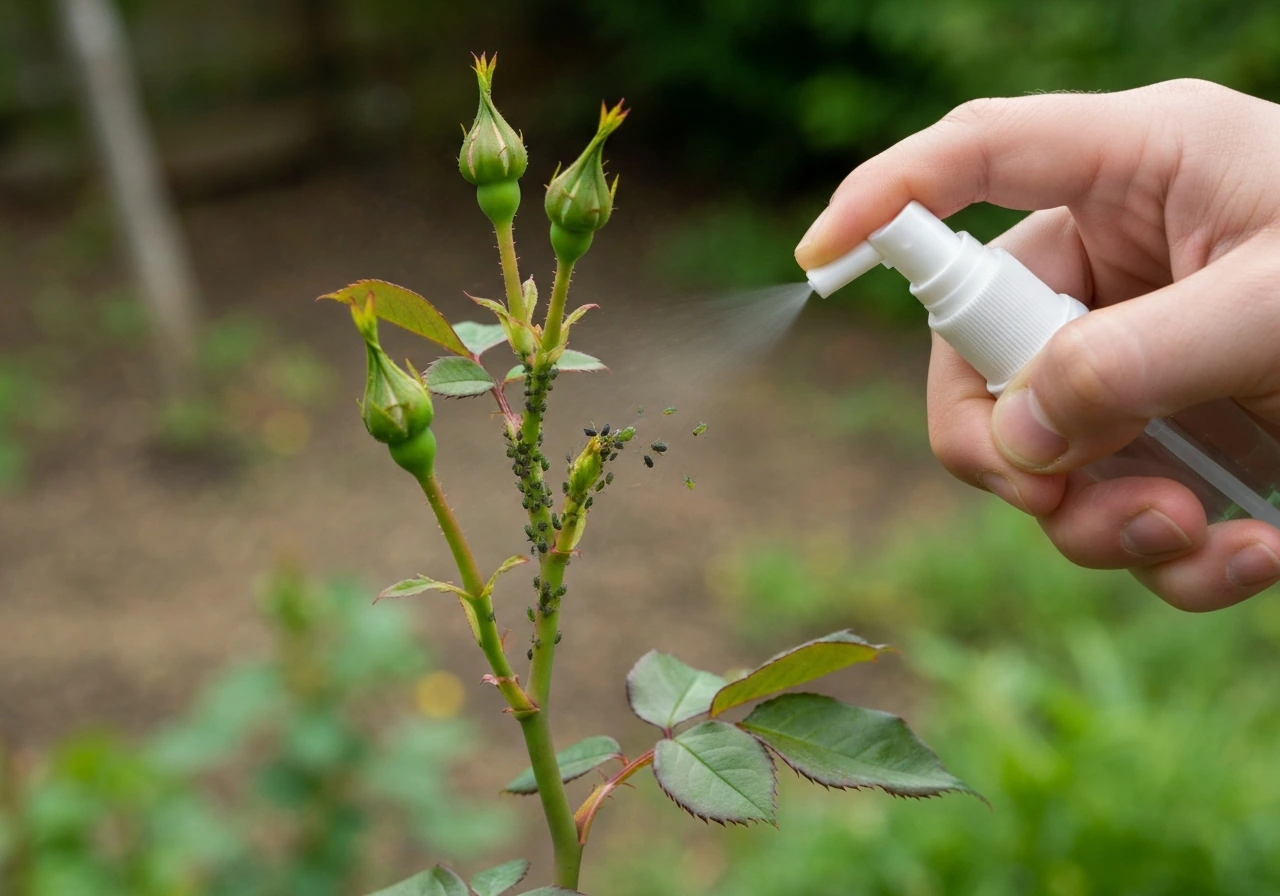
Tiny green, black, or pink soft-bodied insects clustered on new growth and bud stems. They suck sap, causing distorted growth and sticky residue. Fix: blast them off with a strong jet of water first, then spray with a diluted neem oil solution (5 ml neem oil plus 2 ml liquid soap in 1 liter of water) every 3–4 days for two weeks. Early morning sprays work best. Aphids tend to peak in winter and early spring in North India, and during cooler post-monsoon months elsewhere.
Whiteflies
Tiny white insects that fly up in a cloud when you brush the plant. They cluster on leaf undersides and weaken plants over time. Yellow sticky traps hung near the pots work well as both a monitor and a control. Neem oil spray (same recipe as above) applied to leaf undersides is effective. Ensure good air circulation, whiteflies thrive in stagnant, humid conditions.
Spider mites
Almost invisible individually, spider mites show up as a fine dusty stippling on leaves and, in severe cases, fine webbing on the undersides. They explode in hot, dry conditions, peak problem in Indian summers. Fix: increase humidity around the plant (mist the leaves in the evening during dry heat), spray with neem oil solution or a dedicated miticide from the nursery. Spider mites hate moisture, so improving your watering routine often solves a mild infestation.
Black spot
Circular black or dark brown spots on leaves, often with a yellow halo around them. Leaves drop prematurely. Black spot is a fungal disease and is one of the most common problems on Indian roses, especially during and after the monsoon. It spreads through water splashing on leaves, which is exactly why you water at the base, not overhead. Fix: remove all affected leaves and dispose of them (don't compost), then spray the whole plant with a neem oil solution or a copper-based fungicide (available at Indian agricultural supply shops as 'Bordeaux mixture' or copper oxychloride). Lowe’s also recommends using neem oil to treat black spot, and it emphasizes watering at the base to keep leaves from staying wet and spreading the disease neem oil solution. Repeat every 7–10 days. In dry weather, the disease often slows on its own, but in humid conditions you need to stay on top of it.
Powdery mildew
A white powdery coating on young leaves, stems, and buds. Unlike most fungal diseases, powdery mildew actually prefers dry conditions with high humidity at night, common in October and November across much of India. Fix: spray with a solution of baking soda (1 teaspoon baking soda plus a few drops of dish soap in 1 liter of water) or neem oil. Ensure good air circulation around and through the plant. Avoid excess nitrogen fertilizer, which pushes the soft new growth that mildew loves.
Rust
Orange or rust-colored powdery pustules on the undersides of leaves, often with yellow spots on the upper surface. More common in cooler, humid climates. Remove affected leaves immediately, improve air circulation, and treat with a sulfur-based fungicide or neem oil spray. Rust spreads fast if ignored, so act on day one.
General prevention approach
The best pest and disease control is cultural: good air circulation, base watering only, avoid excess nitrogen, prune to keep the plant open, and remove fallen leaves promptly. A preventive neem oil spray once every 2–3 weeks during the monsoon and post-monsoon months is a simple habit that keeps most problems from getting established. If you combine good cultural practices with early intervention when you do spot something, your potted roses will spend most of their time flowering rather than fighting disease.
Growing roses in pots in India takes a little learning in the first season, but once you understand how your particular climate, balcony, and variety behave together, it becomes genuinely enjoyable. Strawberry plants how to grow in pots follows a similar approach too, focusing on the right pot size, drainage, and consistent watering. Start with one or two pots of a compact China rose or a patio variety, get comfortable with the watering and feeding rhythm, and expand from there. The process of figuring out what your plants need is honestly one of the most satisfying parts of container gardening, and roses reward attentive growers quickly and visibly. If you also want to try this with cape gooseberry, learn how to grow cape gooseberry in pots so you can match the right container and care to its fruiting needs.
FAQ
Should I fertilize immediately after potting, or wait before feeding my potted rose?
Roses in containers should be fertilized lightly right after planting, then fed on schedule, but stop feeding about 4 to 6 weeks before your main hard prune. This helps the plant shift from producing tender growth to building sturdier stems, which reduces disease risk during humid monsoon months.
What should I do if my potted rose is growing leaves but not blooming?
If you see no flowers but lots of leaves, it is usually excess nitrogen or insufficient light. Check that the pot gets at least 5 to 6 hours of direct sun, then pause any high-nitrogen feed and switch to a rose-specific fertilizer with balanced NPK. Also verify the plant is not root-bound by trying a larger pot next season.
Do I need a saucer under the pot for potted roses in India, and can it cause problems?
Use a drainage saucer only if you never leave water standing. After watering, empty the saucer within 10 to 20 minutes. In monsoon, consider moving the pot under cover (roof overhang) to prevent continuous saturation even if the pot has drainage holes.
Can I reuse the potting mix from last year for my next rose, or should I replace it?
Yes, but not with the same rose soil. When temperatures rise, most rose mixes become “hydrophobic” (water runs off instead of soaking). Break this by thoroughly soaking and then lightly top-dressing with fresh potting mix, and ensure the potting mix stays airy (coir-based, not compacted garden soil).
How do I recognize root rot in potted roses, and what is the quickest recovery step?
Common signs of root rot are yellowing leaves that wilt despite wet soil, a foul smell from the pot, and black or mushy roots when you lift the plant. The fix is immediate unpotting, removing rotten roots, repotting into fresh well-draining mix, and improving drainage, then keep the plant in bright shade for a few days to recover.
My rose keeps getting aphids again and again, why does it keep happening and how can I stop it?
If aphids or other soft-bodied insects keep returning, don’t rely on one spray. Repeat neem oil applications on a consistent 3 to 4 day interval for at least two weeks, and remove heavily infested buds early. Also check nearby weeds and other plants because reinfestation often comes from outside the pot.
What is the best way to deal with whiteflies on balcony roses in humid Indian weather?
Whiteflies are easier to catch early. Hang yellow sticky traps near the plant, spray leaf undersides with neem oil, and avoid overwatering that creates a persistently humid microclimate. If infestations are heavy, separate the pot from other plants to slow spread.
Is it normal for my potted rose to stop flowering in certain months in India?
Dormancy is often the wrong expectation for container roses in India. Many varieties rebloom through much of the year, especially Bengal/China types. If your rose stops flowering, first check sun hours and watering consistency, then do deadheading, and inspect for black spot or nutrient deficiencies.
When is the best time to repot a rose in India, and what if I need to repot during summer?
Repot only when roots fill the container or after the first flush of growth. The safest time is October to February, but if you must repot in summer or monsoon, keep the plant under partial shade for 7 to 14 days and water carefully (deep watering, never waterlogged). Avoid disturbing roots more than necessary.
My potted rose is getting leggy or tipping over, what should I change?
If the plant leans or topples, it is usually a weight and stability issue. Choose a wider, deeper pot (especially for patio roses), use a heavier container material, and stake early before stems are long. Keep the pot on the ground-level side of the balcony if possible, and rotate the pot slightly every 1 to 2 weeks for even growth.