Cosmos Pinkie grows beautifully in pots as long as you give it a container at least 10–12 inches deep, a fast-draining potting mix, and a sunny spot that gets 6 or more hours of direct sun daily. Sow seeds about 1/4 inch deep, keep them moist, and expect sprouts in 7–14 days. Once it's flowering (usually 7–9 weeks after sowing), deadhead spent blooms every few days and go easy on fertilizer. Do those things consistently and you'll have a compact, floriferous plant that keeps going right through summer.
Cosmos Pinkie: How to Grow It in Pots Step by Step
Marcus Whitley
15 Jun 2026
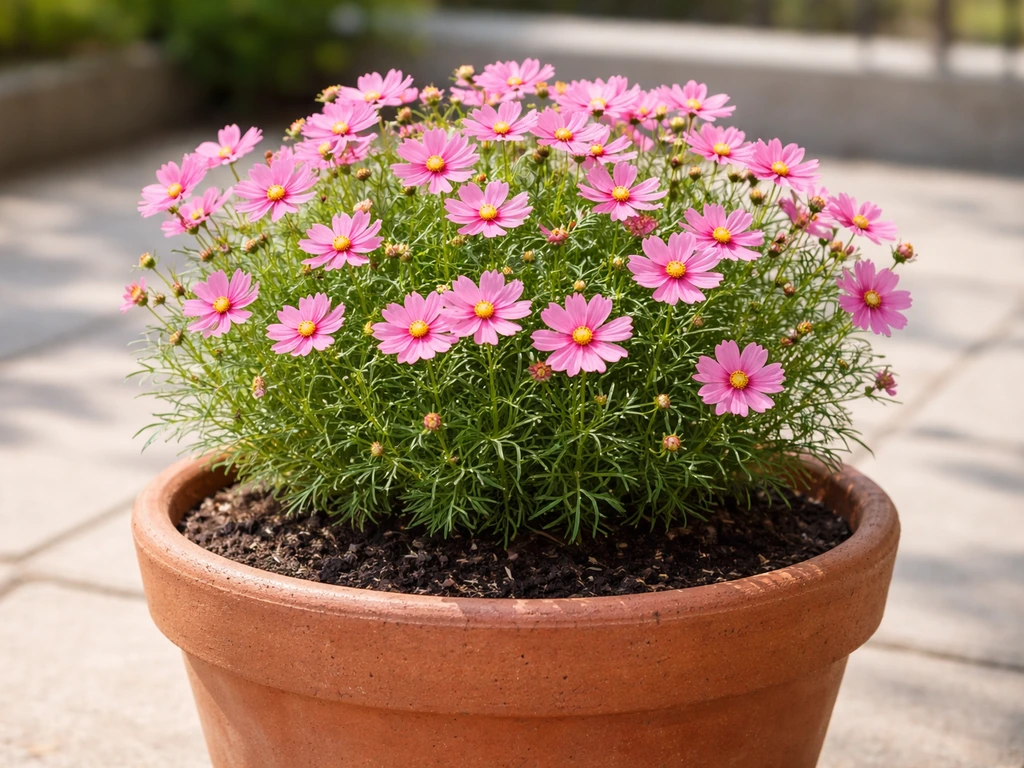
What Cosmos Pinkie Actually Is and What to Expect in a Pot
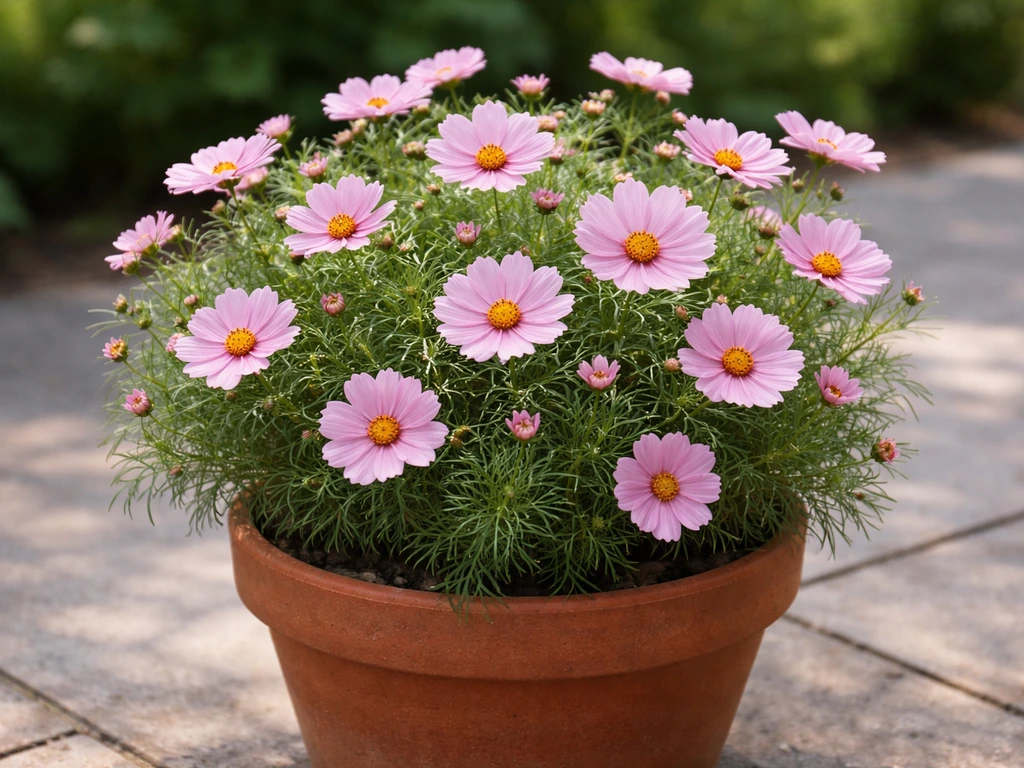
Cosmos Pinkie is a compact variety of Cosmos bipinnatus, producing soft pink, daisy-like flowers on a plant that stays shorter and denser than standard cosmos types. Where a typical tall cosmos can easily hit 4 feet or more, Pinkie has a tidier, bushier habit that makes it genuinely suited to container life rather than just technically possible in one. It's an annual, so you're working with one growing season per plant, but within that season it can flower for months if you keep up with deadheading.
In a pot, expect the plant to reach roughly 18–30 inches in height depending on light, pot size, and how much you feed it. A pot that's too small or soil that's too rich in nitrogen can push it to stretch upward and get leggy. A well-chosen container with lean-to-moderate soil and full sun keeps it in that sweet compact zone. Don't expect cosmos to be a wow plant in week one, it builds slowly, then suddenly you've got a cloud of pink flowers. The payoff is real, it just takes a bit of patience.
Choosing Your Pot, Drainage, and Potting Mix
The single biggest mistake people make with cosmos in pots is using a container that's too shallow or has no drainage hole. Cosmos hates sitting in wet soil. Go with a pot that's at least 10–12 inches deep and wide, with at least one drainage hole at the bottom. For more guidance on pots specifically, see how to grow ferns in pots, including ideal moisture and light levels for leafy containers. A pot in the 12–14 inch range gives the roots enough room to establish properly and buffers the soil against drying out too fast in summer heat. Terracotta is great because it breathes and helps prevent waterlogging, but any container with good drainage works fine.
If you're using a saucer underneath (which is fine for balconies and patios), empty it after heavy rain or watering. Cosmos sitting in a puddle will develop root rot faster than almost any other problem you'll face. It's worth the 30 seconds.
For the potting mix, use a standard multipurpose potting compost blended with about 20–30% perlite or coarse horticultural grit. This gives you the structure and drainage cosmos needs. Avoid mixes that are heavily enriched with slow-release fertilizer pellets, cosmos actually does better in moderately fertile soil. Too much nutrient richness (especially nitrogen) pushes the plant into leaf production rather than flowers. If your mix is very rich, dilute it with some plain compost or add extra grit.
Starting from Seed or Buying Seedlings
Timing and When to Start
Since today is mid-June 2026, you're actually in a good window to sow cosmos directly into your container outdoors if you're in USDA zones 5 and above and your nights are consistently above 50°F (10°C). Cosmos is heat-loving and performs best when temperatures are reliably above 60°F (16°C). A June sowing will give you flowers by late August or early September, and the plant will keep going until first frost. A 2026 Belgrade growing guide for “Sensation Mix” notes that cosmos maturity and flowering can take roughly 49, 63 days depending on conditions blank" rel="noopener noreferrer">cosmos matures in roughly 49–63 days, with the exact timeline varying by conditions. If you're already past midsummer or in a cooler climate, buying a seedling from a nursery is the smarter shortcut.
For anyone reading this earlier in the season: indoors, start seeds 4–6 weeks before your last frost date, then harden off and move outside once nights stay warm. Cosmos doesn't love being transplanted when it's too large, so don't start too early or you'll end up with rootbound seedlings that struggle to settle in.
Sowing Seeds in the Pot
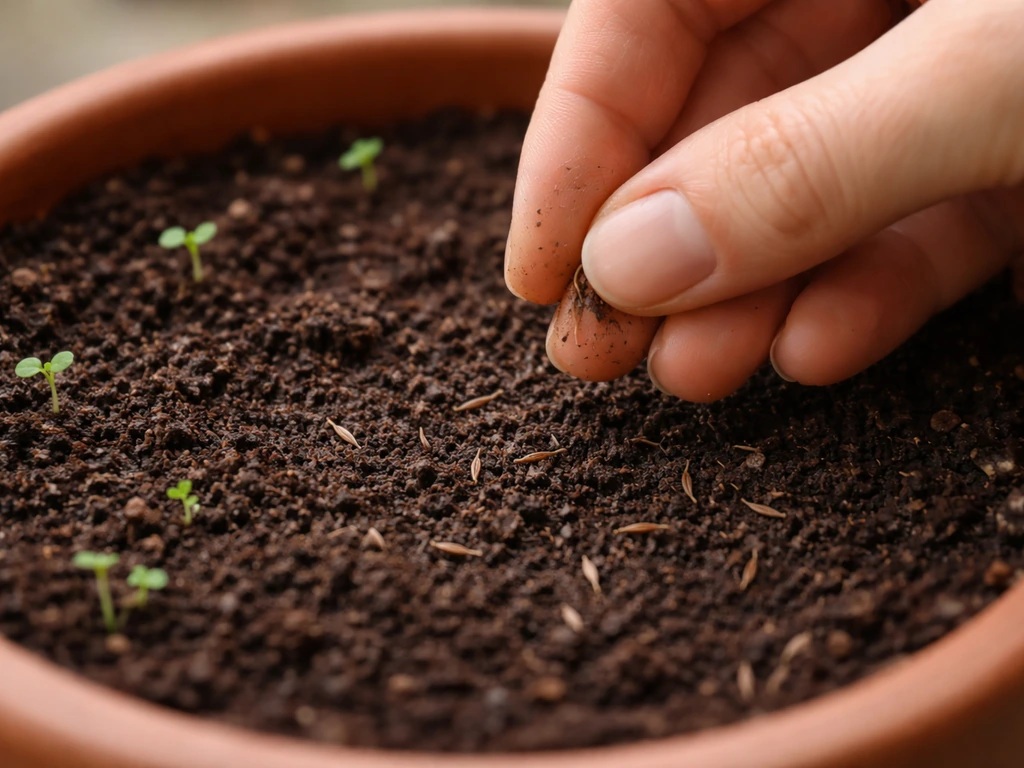
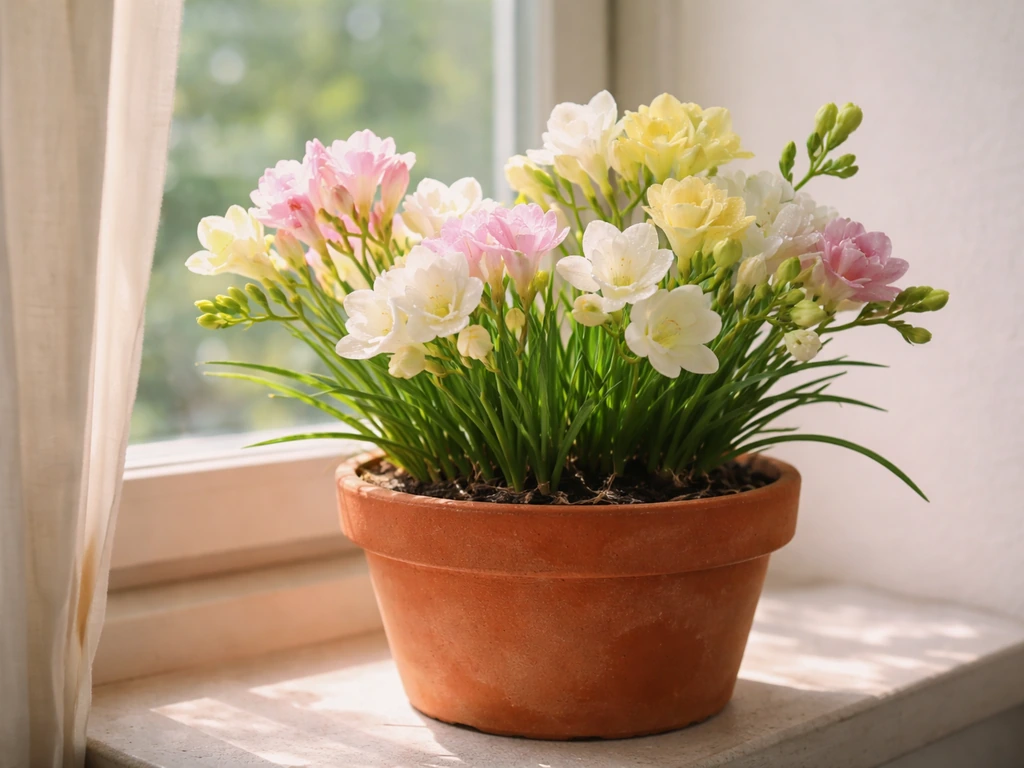
Sow seeds directly into your prepared container at about 1/4 inch deep, barely covered is the goal. If you are also curious about bulbs, this is similar to the approach used in how to grow freesias in a pot, where you set up the container correctly before worrying about bloom timing. Sowing too deeply is one of the main reasons cosmos seeds fail to germinate, so err on the side of shallow. Scatter 3–5 seeds across the surface of a 12-inch pot, then lightly press them in and cover with a thin layer of potting mix or vermiculite. Keep the soil evenly moist but not soggy. In warm soil (above 65°F), expect sprouts in 7–10 days. In cooler conditions it can take up to 21 days, so don't give up too quickly.
Once seedlings are about 2 inches tall, thin to 2–3 plants per 12-inch pot, keeping the strongest ones. Thinning feels wasteful but it makes a genuine difference to how the remaining plants develop. Crowded cosmos gets leggy and prone to mildew.
Planting Out Seedlings
If you're buying seedlings, plant them at the same depth they were in their nursery pot. Don't bury the stem. Water well immediately after planting and keep the container in a sheltered spot for a day or two if the weather is very hot before moving it to its permanent sunny position. Cosmos transplants settle in quickly as long as the roots aren't disturbed too much.
Getting the Light and Temperature Right
Cosmos Pinkie needs full sun, at least 6 hours of direct sunlight daily, and 8 hours is better. This is non-negotiable for compact, floriferous growth. When cosmos doesn't get enough sun, it gets leggy and stretches toward the light, which is the opposite of the compact habit you're aiming for. It also produces far fewer flowers. If you only have a partially shaded balcony, cosmos is probably not your best bet. A patio, south or west-facing windowsill, or a sunny rooftop are all ideal.
Temperature-wise, cosmos is happiest when daytime temperatures are between 65°F and 85°F (18–29°C). It will tolerate heat above that as long as it gets enough water, but prolonged cold snaps below 50°F (10°C) at night will stall it. Keep pots away from cold walls or frost pockets. Because you're growing in a container, you have the advantage of being able to move it, so use that: chase the sun if your space has variable light throughout the day.
One thing worth knowing: cosmos can flower very quickly under short day conditions, which sounds like a good thing but can mean the plant flowers before it's built up much size. If you want a bushier plant before flowers appear, giving it more hours of light in early growth (or simply not stressing it with heat or drought early on) helps it develop a stronger frame first.
Watering and Feeding Your Container Cosmos
How to Water
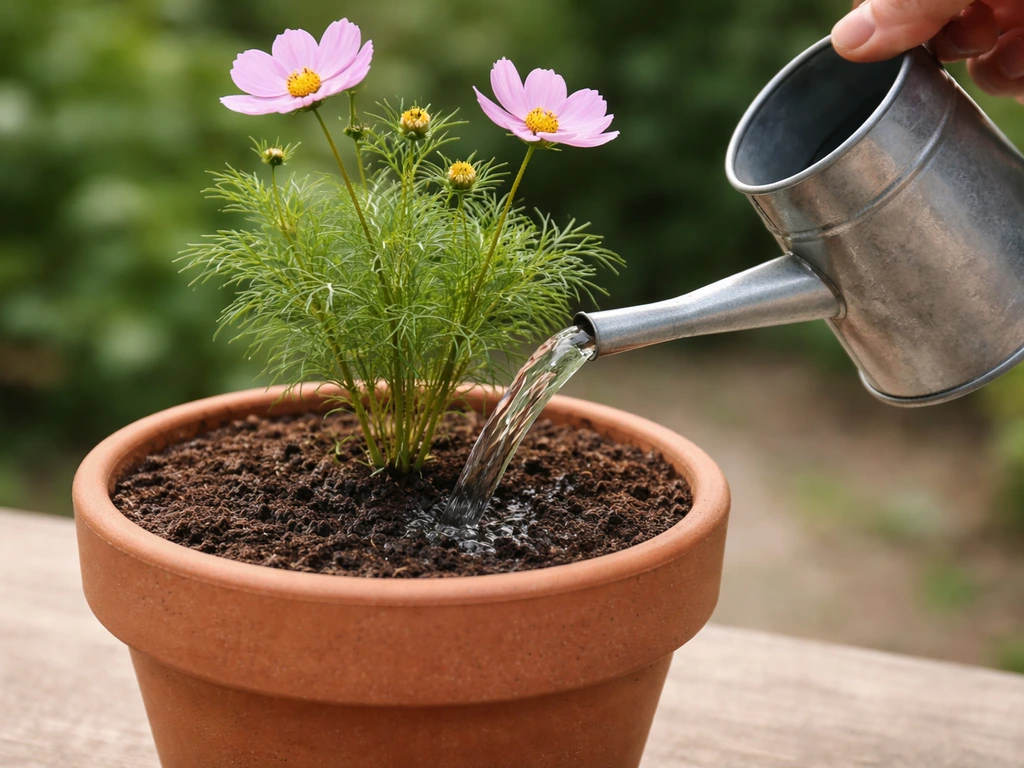
Cosmos has a reputation for being drought-tolerant, and in the ground that's mostly true. In a pot, the rules change. Container soil dries out much faster than garden soil, especially in summer heat. During warm weather, you may need to water every day or every other day. The easiest way to check: push your finger an inch into the soil. If it feels dry at that depth, water thoroughly until it drains out the bottom. If it still feels damp, wait another day.
Water at the base of the plant rather than overhead. Wetting the foliage encourages powdery mildew, which is one of the more annoying problems you can face with cosmos in containers. Morning watering is best so any splashed leaves dry off during the day. Newly planted seedlings or recently germinated seedlings need the most attention, don't let them dry out completely in their first few weeks.
Fertilizing: Less Is More
This is where a lot of container gardeners go wrong with cosmos. Because you naturally want to feed your plants, you apply a rich, high-nitrogen fertilizer and then wonder why you've got a beautiful, leafy plant with almost no flowers. Nitrogen drives leaf and stem growth. For flowers, you want a fertilizer with lower nitrogen and moderate phosphorus and potassium, look for an NPK ratio like 5-10-10 or a product labeled as a bloom booster.
In practice: if your potting mix was reasonably fertile to start with, you may not need to feed at all for the first 4–6 weeks. After that, a half-strength liquid bloom fertilizer every 2–3 weeks is plenty. If you see lots of lush green growth but few flower buds, stop feeding entirely for a few weeks and make sure the plant is getting maximum sun. Lean soil actually encourages cosmos to put energy into reproduction (flowers) rather than vegetation.
Deadheading, Pruning, and Keeping the Flowers Coming
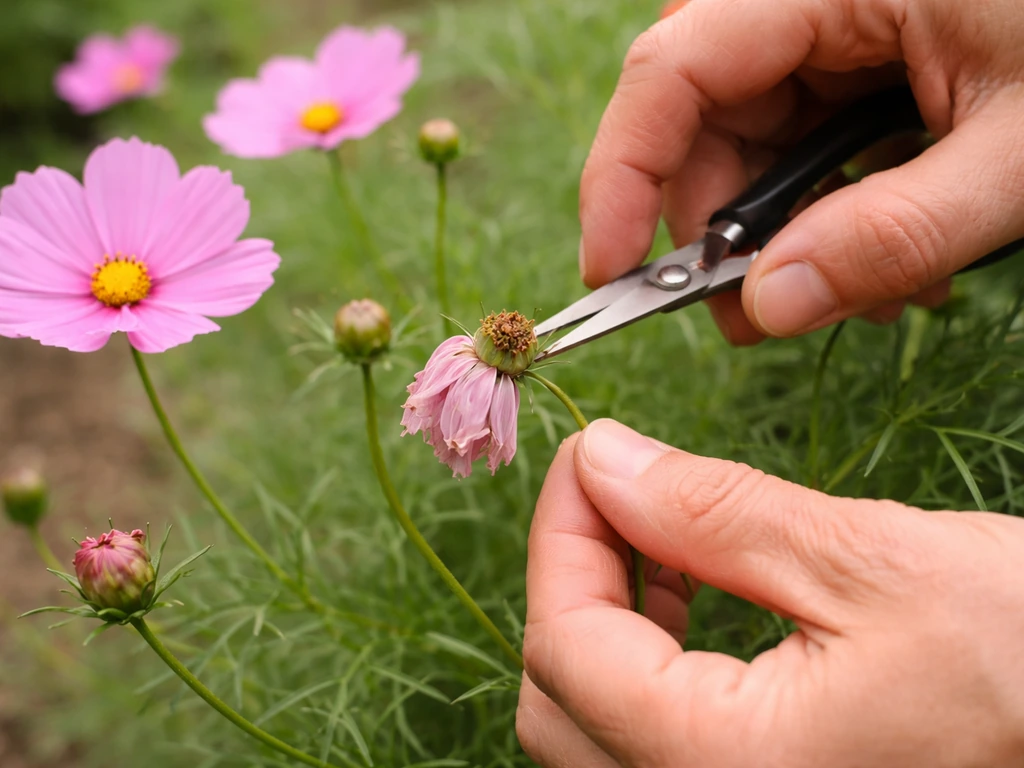
Deadheading is the single most important thing you can do to keep Cosmos Pinkie flowering. Once a flower fades, the plant's instinct is to set seed and call it a season. Remove the spent flower before that happens and the plant redirects its energy into producing the next bloom. In a container, this makes an even bigger difference than in the ground because the plant has fewer resources to draw on.
To deadhead properly, don't just snap off the faded flowerhead. Trace the stem down to the next set of leaves or to a visible side bud and snip there. This not only removes the spent bloom but encourages a branching, bushier shape. Do this every 2–3 days during peak flowering season and you'll be amazed at how continuously it produces. A plant that's regularly deadheaded can flower from midsummer right through to the first autumn frost.
If your plant is getting a bit leggy or lanky in midsummer, you can cut it back by about one-third. It will look alarming for a week or two, but it almost always bounces back with fresh growth and a new flush of flowers. This kind of light pruning also helps keep the compact habit that makes Pinkie suited to pots in the first place.
Troubleshooting Common Pot Problems
| Problem | Likely Cause | Fix |
|---|---|---|
| Leggy, stretched stems | Not enough sun | Move pot to a sunnier spot with at least 6 hours of direct light |
| Lots of leaves, no flowers | Too much nitrogen or too much shade | Stop feeding, ensure full sun, and check you're using a bloom-focused fertilizer |
| Yellowing lower leaves | Overwatering or nutrient deficiency | Check drainage, reduce watering, and give a half-strength balanced feed if soil is very depleted |
| No germination after 3 weeks | Seeds sown too deep, soil too cold, or soil dried out | Re-sow at 1/4 inch depth, keep soil moist and warm (above 65°F) |
| White powder on leaves | Powdery mildew from poor airflow or wet foliage | Improve airflow, water at base only, remove affected leaves, treat with diluted neem oil or insecticidal soap |
| Clusters of tiny insects on buds/stems | Aphids | Blast off with water, then treat with insecticidal soap spray; repeat every few days until clear |
| Wilting even after watering | Root rot from waterlogged soil | Check drainage holes are clear, empty saucer, repot into fresh mix if roots are brown and mushy |
Aphids are the most common pest you'll deal with on container cosmos. They tend to cluster on new growth and flower buds, and a bad infestation can distort the stems. An insecticidal soap spray is a targeted, gentle option that works well on soft-bodied insects like aphids without nuking every beneficial insect in the area. Spray in the evening to reduce the chance of leaf scorch, and repeat every 3–4 days for a couple of weeks.
Powdery mildew shows up as a whitish, dusty coating on the leaves and stems. It's more of a late-season problem when nights get cooler and airflow is restricted. Keeping pots spaced apart so air can circulate, watering at the base, and avoiding overhead watering all reduce the risk considerably. If it does show up, remove the worst-affected leaves and treat with neem oil or an appropriate fungicide spray.
Seasonal Care and What to Do as Summer Ends
Cosmos Pinkie is a half-hardy annual, which means it lives its entire life in one growing season and will be killed by frost. There's no overwintering the plant itself in a pot, it's not a perennial and won't come back next year. What you can do is collect seeds from any flowers you allow to go to seed at the end of the season. Let a few spent flowers dry fully on the plant, then collect the long, thin seeds and store them in a paper envelope somewhere cool and dry for next spring.
As temperatures start to drop in autumn and nights get consistently below 50°F, the plant will naturally slow down. Deadhead less aggressively in the last few weeks if you want to collect seeds. When the first frost hits, the plant will blacken and die. At that point, compost the plant, empty and clean the container, and store it away for winter. The following spring, you can start fresh with new seeds or seedlings.
If you're in a very mild climate (roughly zone 9 and above) where frosts are rare, you may see cosmos survive longer into autumn or even self-seed into the soil around the pot. But don't count on it in most temperate gardens.
Your Quick Container-Growing Checklist
- Choose a pot at least 10–12 inches deep with drainage holes; empty saucers after rain
- Use multipurpose potting mix blended with 20–30% perlite or grit for good drainage
- Sow seeds at 1/4 inch depth in warm soil (above 65°F); expect germination in 7–14 days
- Thin to 2–3 plants per 12-inch pot once seedlings are 2 inches tall
- Place in full sun: minimum 6 hours of direct light daily, 8 hours is ideal
- Water when the top inch of soil feels dry; in summer heat this may be daily
- Water at the base, not overhead, to reduce mildew risk
- Feed with a low-nitrogen, bloom-boosting fertilizer at half strength every 2–3 weeks after the first 6 weeks
- Deadhead every 2–3 days: cut stem back to the next leaf pair or side bud
- Cut back by one-third if the plant gets leggy in midsummer
- Treat aphids with insecticidal soap; treat powdery mildew by improving airflow and removing affected leaves
- Collect seeds before first frost if you want to replant next year
- Compost the plant after frost and clean the pot for next season
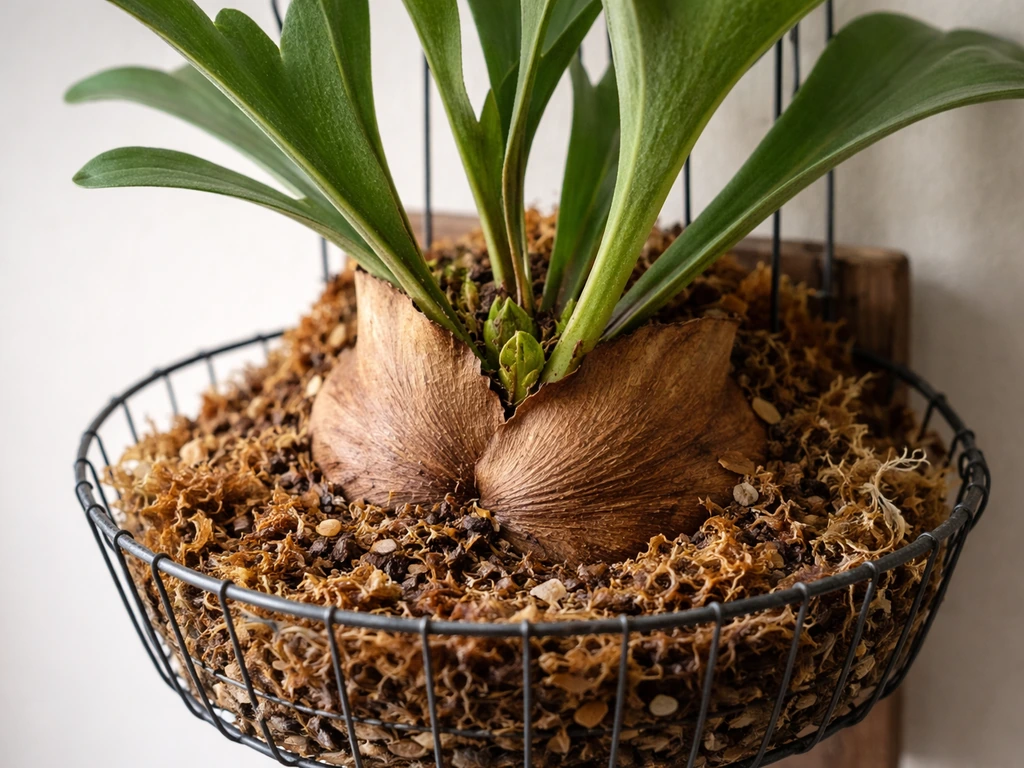
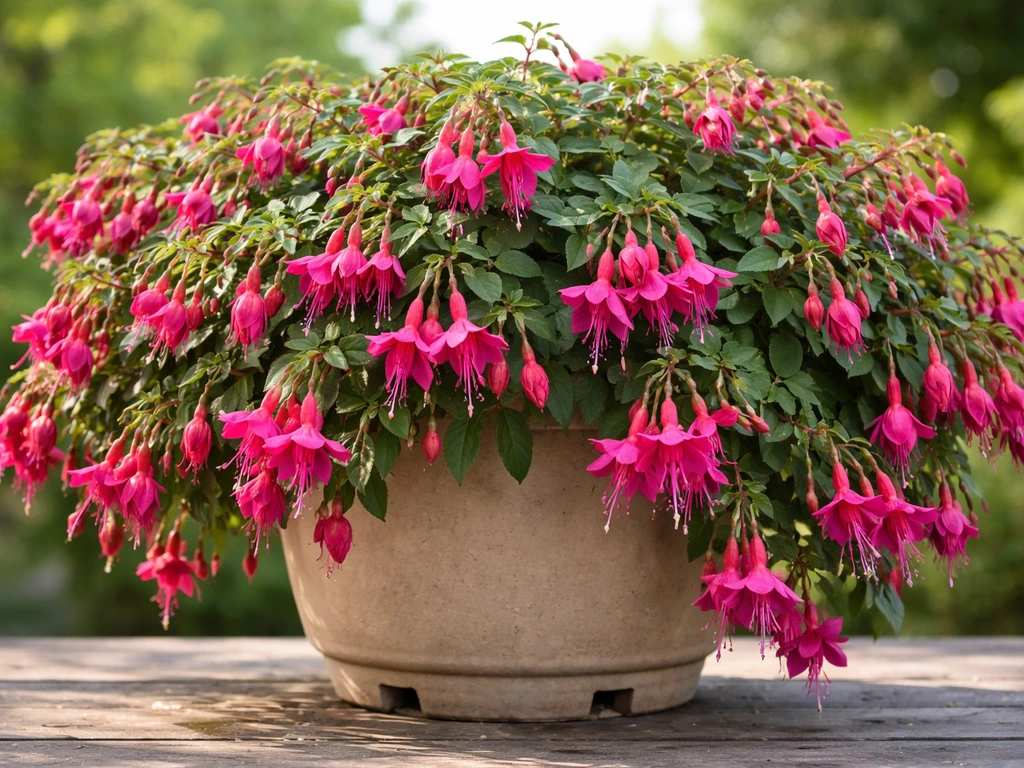
If you enjoy growing compact flowering annuals in pots, it's worth exploring other options that work on a similar principle. If you want to try a different container plant, learning how to grow staghorn fern in a pot is another rewarding option. To learn more, see our guide on how to grow fuchsia in pots. Fennel is also well-suited to container growing, as long as you provide a deep pot and steady sun other options that work on a similar principle. Fuchsia in pots follows a comparable care rhythm with regular deadheading and bloom feeding, and pinks (Dianthus) in pots are another great companion choice that shares cosmos's preference for good drainage and full sun. Growing any of these alongside your Cosmos Pinkie can turn a single container into a whole patio display that flowers continuously through the warmer months.
FAQ
How often should I water cosmos Pinkie in a pot during hot summer weather?
Check the soil daily in mid-summer. Push your finger about 1 inch down, water thoroughly only when that layer feels dry, and keep watering until excess drains from the bottom. After watering, empty any saucer so the roots do not sit in water.
Why are my Cosmos Pinkie plants getting tall and floppy even though they are in a pot?
Most often it is too little sun or too much nitrogen. Move to the brightest spot you have (aim for closer to 8 hours of direct sun), and switch to a low-nitrogen bloom fertilizer or stop feeding if growth is lush but buds are scarce.
Can I grow Cosmos Pinkie in a smaller pot than 10–12 inches deep?
You can try, but expect poorer performance. In shallower containers the soil dries out faster and roots have less room, which leads to leggy growth or reduced flowering. If you go smaller, compensate by increasing light and monitoring moisture more closely, and keep up with frequent deadheading.
What is the best way to deadhead to keep Cosmos Pinkie bushy, not just flowering?
Follow the faded flowerhead down the stem to the next set of leaves or a visible side bud, then cut there. This encourages branching at the cut point, which helps the plant stay compact while you extend the bloom cycle.
Should I pinch off the first buds to make it fuller before it starts flowering?
Only if the plant is still small and you want it to build a stronger framework. Removing very early buds can delay the first flowers, so do it briefly after germination or transplant while growth is compact, then stop pinching once you see the plant developing multiple flower-bearing stems.
Do cosmos seeds need light to germinate, and how deep should I sow them?
They do not require light, but they need shallow planting. Keep them around 1/4 inch deep (thinner is better than deeper), press them lightly into the mix, and keep moisture even until sprouts appear.
How do I prevent root rot if my pot drains but the soil stays wet?
Use a fast-draining mix with added perlite or grit, avoid slow-release pellet-heavy compost, and ensure the pot has at least one clear drainage hole. If the soil stays wet for more than a day after watering, move up to a larger pot or add more grit to improve aeration.
When should I thin seedlings, and how many plants should stay per pot?
Thin once seedlings are about 2 inches tall. For a 12-inch pot, keep the strongest 2–3 plants, and remove the rest promptly to reduce crowding that can lead to mildew and legginess.
Is it okay to use a fertilizer labeled “bloom booster” with Cosmos Pinkie?
Yes, if the nitrogen is low and the formula is meant for flowering. A bloom-leaning NPK (for example 5-10-10) is a good target. If your mix is already rich, wait 4–6 weeks before feeding so you do not encourage leaf-only growth.
What should I do if powdery mildew appears on container cosmos?
Improve airflow around the pot, water at the base, and remove the most affected leaves to slow spread. Treat early with neem oil or an appropriate fungicide, then keep an eye on new growth, since mildew worsens quickly when nights cool and leaves stay damp.
Will Cosmos Pinkie come back next year if I keep the pot over winter?
No. It is an annual that will die after frost, and it will not overwinter in a pot in most climates. Instead, let a few blooms fully dry for seed collection, then empty, clean, and store the container for spring.
How can I collect seeds from Cosmos Pinkie without reducing next season’s success?
Let a few spent flowers remain until the seed heads are fully dry on the plant. Collect the long thin seeds, store them in a paper envelope in a cool, dry place, and only keep seeds from fully mature heads to improve germination.