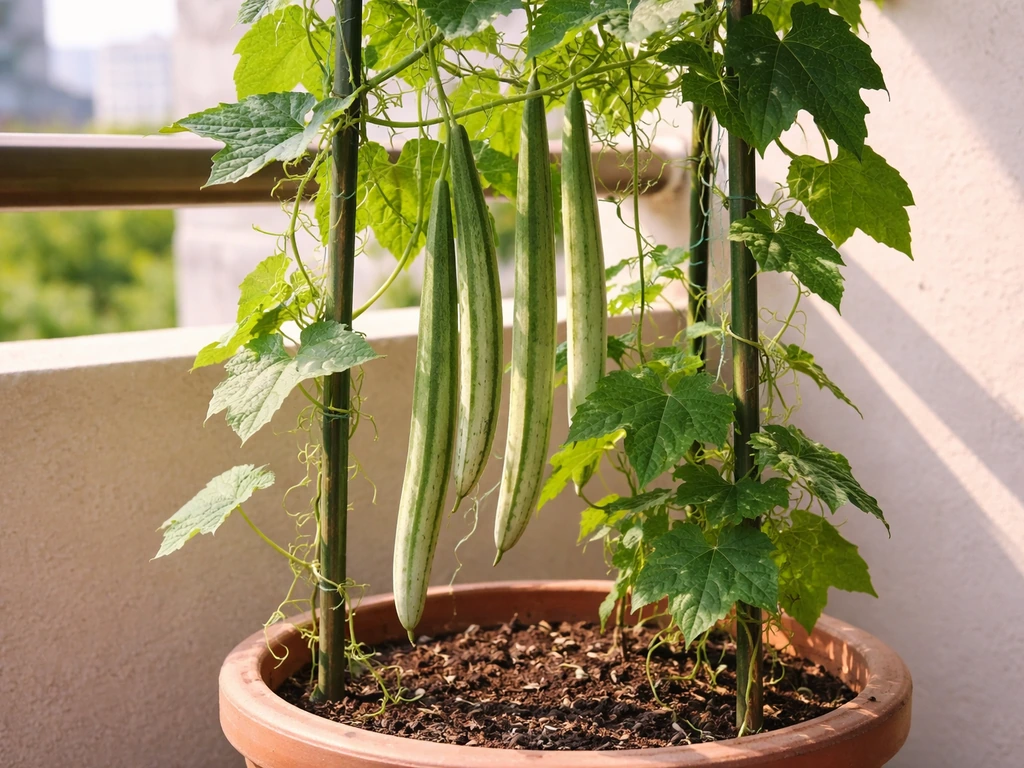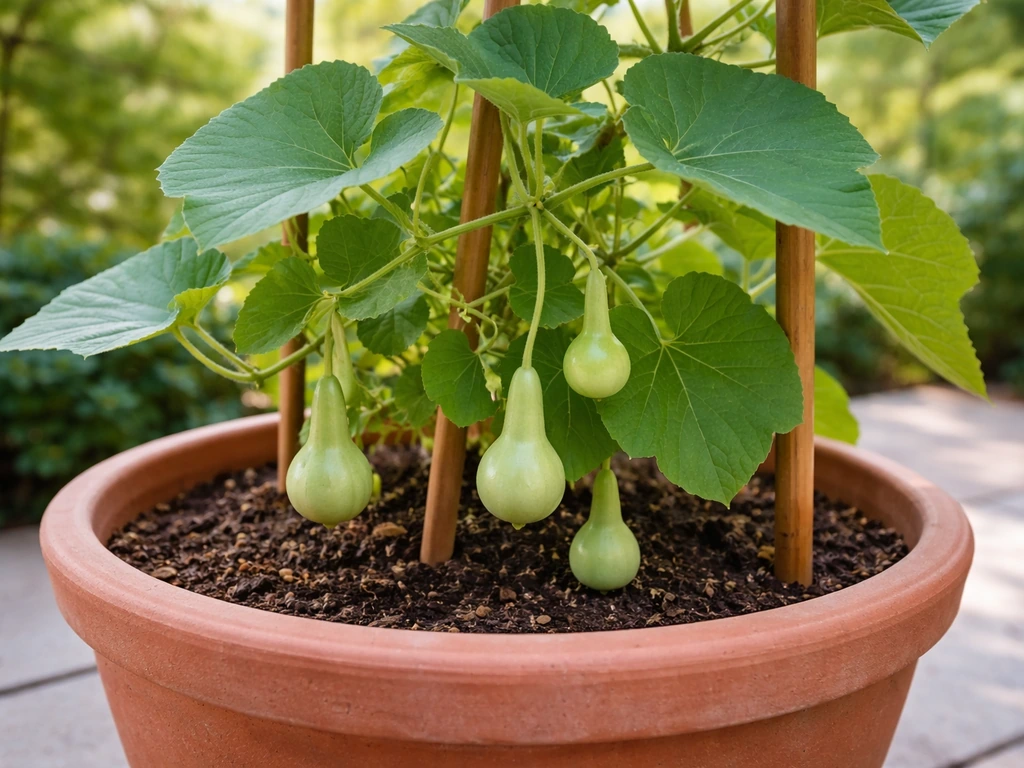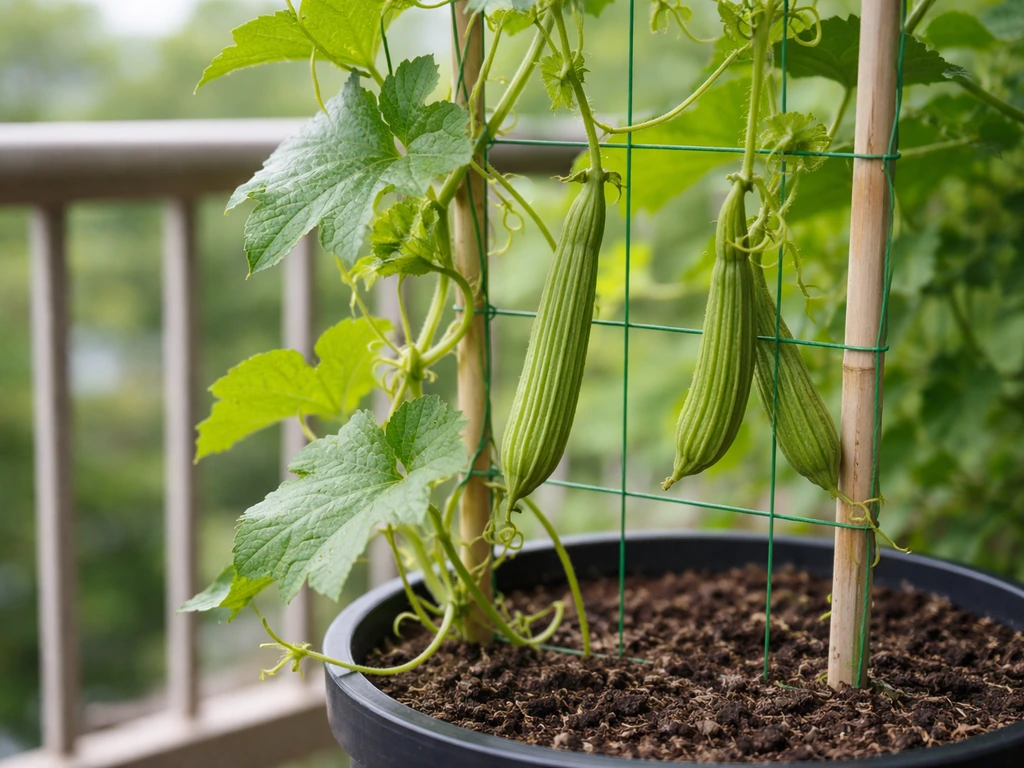
Yes, you can absolutely grow ash gourd in pots, and it produces real, full-sized fruit even on a balcony or patio. If you're looking specifically for how to grow snake gourd in pots, the biggest things to get right are container size, trellising, and consistent watering. The key is going big on the container, giving the vines something to climb, and keeping up with water and feeding once the plant kicks into gear.
How to Grow Ash Gourd in Pots: Step-by-Step Guide

Marcus Whitley
18 Jun 2026
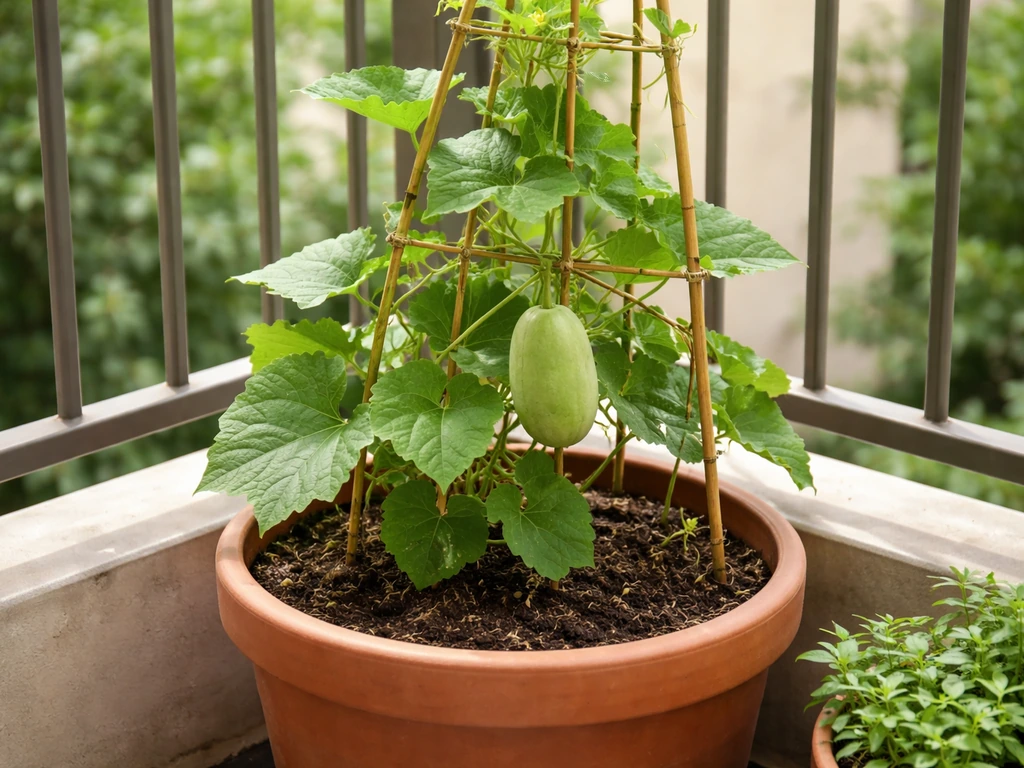
Ash gourd (blank" rel="noopener noreferrer">Benincasa hispida, also called wax gourd, white gourd, or winter melon) is a vigorous tropical vine that takes roughly 95 days from seed to harvest, so plan your timeline accordingly and set up your support structure before you plant rather than scrambling for it later.
Best pot size, type, and drainage for ash gourd
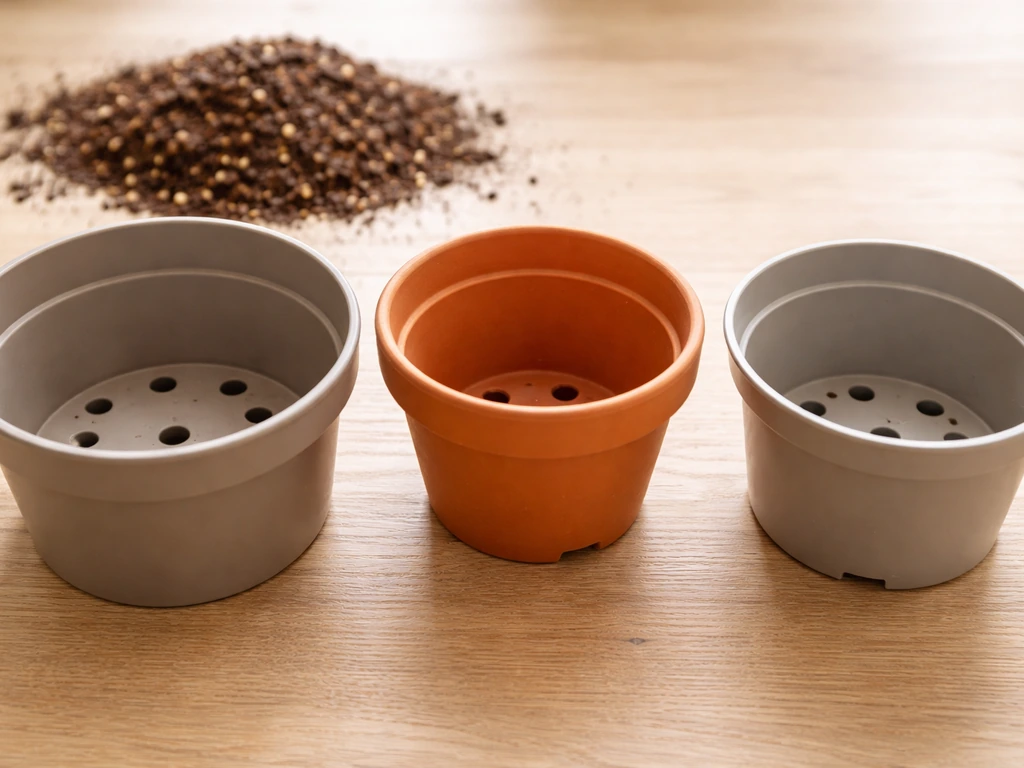
Ash gourd has a serious root system and produces large, heavy fruit, so skimping on pot size is the number one mistake beginners make. Go with a container that holds at least 20 to 25 gallons. That works out to roughly 18 to 24 inches in diameter and at least 18 inches deep. If you can source a 30-gallon pot, even better, especially if you want more than one or two fruits per plant.
Material matters more than people think. Terracotta looks great but dries out fast in summer heat, which is a real problem for a thirsty vine like ash gourd. Thick plastic or fabric grow bags are both solid choices. Fabric bags in particular allow air pruning of the roots, which keeps the plant from getting rootbound and stresses it in a productive way that encourages fruiting. Whatever container you choose, it absolutely must have drainage holes, and plenty of them. Ash gourd hates sitting in waterlogged soil. If your pot only has one or two small holes, drill more before you fill it.
Elevate your container slightly off the ground using pot feet or bricks. This keeps drainage holes from getting clogged and lets excess water escape freely. It also prevents rot at the base of the pot over time.
Choosing seeds or seedlings and timing your planting
Starting from seed is easy and much cheaper than tracking down seedlings, which are rarely stocked at garden centers anyway. Look for seeds labeled as ash gourd, wax gourd, or Benincasa hispida. Round varieties tend to be more compact at harvest and easier to support on a trellis. Long varieties can hit 12 to 18 inches in length and weigh several pounds, so factor that in if you have limited vertical space.
Timing depends on your climate. Ash gourd is a warm-season tropical crop that needs consistent heat to thrive. Soil temperature should be at least 60°F before you direct sow outdoors, but frankly, I prefer to start seeds indoors 3 to 4 weeks before the last frost date so I can get a head start on that 95-day growing window. If you're in a hot climate like southern Asia, Florida, or similar zones, you can plant almost year-round as long as you avoid the coldest months. In temperate climates, aim to have transplants going into outdoor pots in late spring once nighttime temperatures are consistently above 60°F.
Soak seeds overnight in warm water before planting to speed up germination. Sow them about half an inch deep. Germination usually happens within 7 to 10 days if the temperature is warm enough, closer to 10 to 14 days if it's on the cooler side. Don't panic if a few seeds don't sprout, just sow two or three per pot and thin to the strongest one once seedlings have their first true leaves.
Container soil mix and nutrition plan
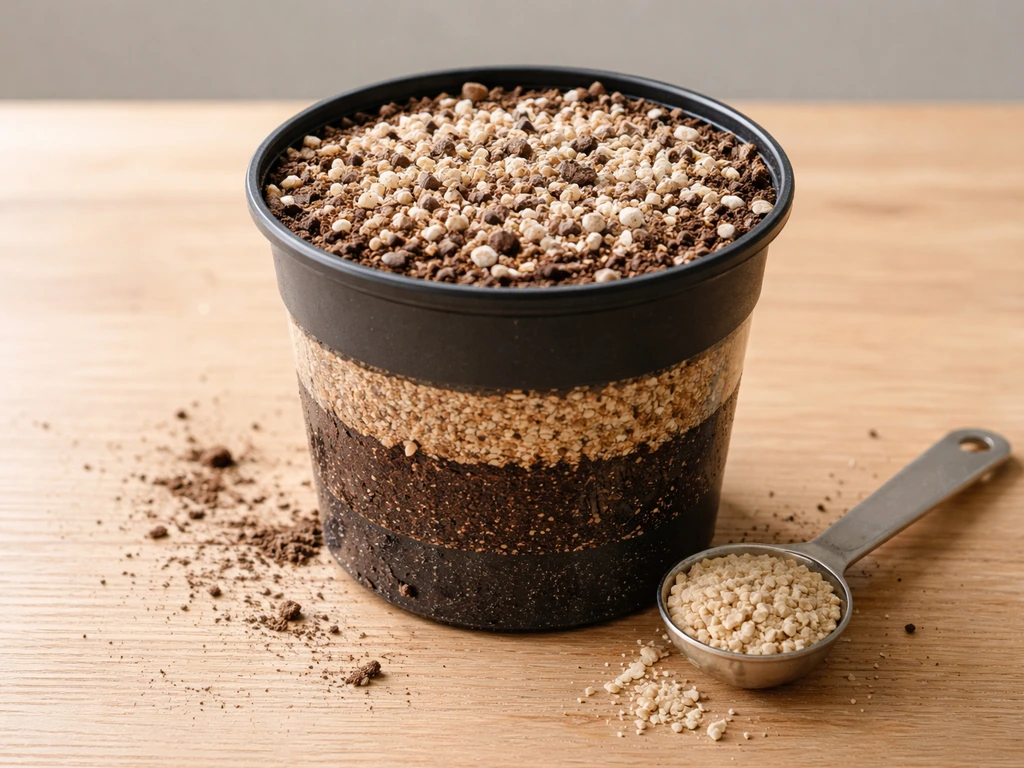
Ash gourd wants rich, well-draining soil that holds some moisture without going soggy. If you want the best results for container growing, follow the specific tips for how to grow ashwagandha in pots to match your plant’s needs rich, well-draining soil. A good all-purpose mix is two parts high-quality potting mix, one part compost or aged manure, and one part perlite or coarse sand. The compost feeds early growth and the perlite keeps things airy so roots get oxygen. Avoid using straight garden soil in a container as it compacts quickly and kills drainage.
Before filling your pot, mix in a handful of bone meal or a slow-release balanced fertilizer (something like 10-10-10) per cubic foot of mix. This gives the plant a nutritional foundation for the first 4 to 6 weeks without you having to feed constantly. Adding a couple of tablespoons of neem cake to the soil mix is also worth doing as it naturally deters soil-dwelling pests and suppresses fungal issues from the start.
Aim for a slightly acidic to neutral soil pH, somewhere between 6.0 and 7.0. Most bagged potting mixes fall in this range naturally, so you usually don't need to adjust unless you're seeing persistent nutrient problems.
Sunlight, watering, and temperature needs in pots
How much sun does ash gourd need?
Full sun is non-negotiable. Ash gourd needs at least 6 to 8 hours of direct sunlight daily to set fruit well. Less than that and you'll get plenty of leafy vine growth but disappointing fruit production. Position your container in the sunniest spot available, whether that's a south-facing balcony, a rooftop, or a sunny corner of a patio. If you're working with a spot that only gets 5 to 6 hours of sun, it's still worth trying, just manage expectations on fruit numbers.
Watering without drowning the plant
This is where most container gardeners either over- or under-water, and ash gourd punishes both. If you want the easiest routine, follow a simple pot-care rhythm for how to grow gourd in pots ash gourd punishes both. Water deeply and thoroughly every time, until water runs freely from the drainage holes. Then wait until the top 2 inches of soil feel dry before watering again. In hot summer weather, that might mean watering every day or every other day. In cooler or cloudy periods, every 2 to 3 days could be enough. The point is to check the soil, not follow a rigid schedule.
Root rot is the biggest container-specific risk. It happens when roots sit in wet, poorly draining soil for extended periods. If your plant suddenly looks wilted even though the soil is wet, root rot is the likely culprit. Prevention is much easier than cure: good drainage, the right soil mix, and not watering on a fixed schedule regardless of soil conditions.
Temperature range
Ash gourd thrives between 75°F and 95°F (24°C to 35°C). It slows down noticeably below 65°F and is damaged by frost. One advantage of container growing is that you can move the pot to shelter it during unexpected cold snaps, which is a genuine edge over in-ground planting in unpredictable climates.
Training, pruning, and trellising in limited space
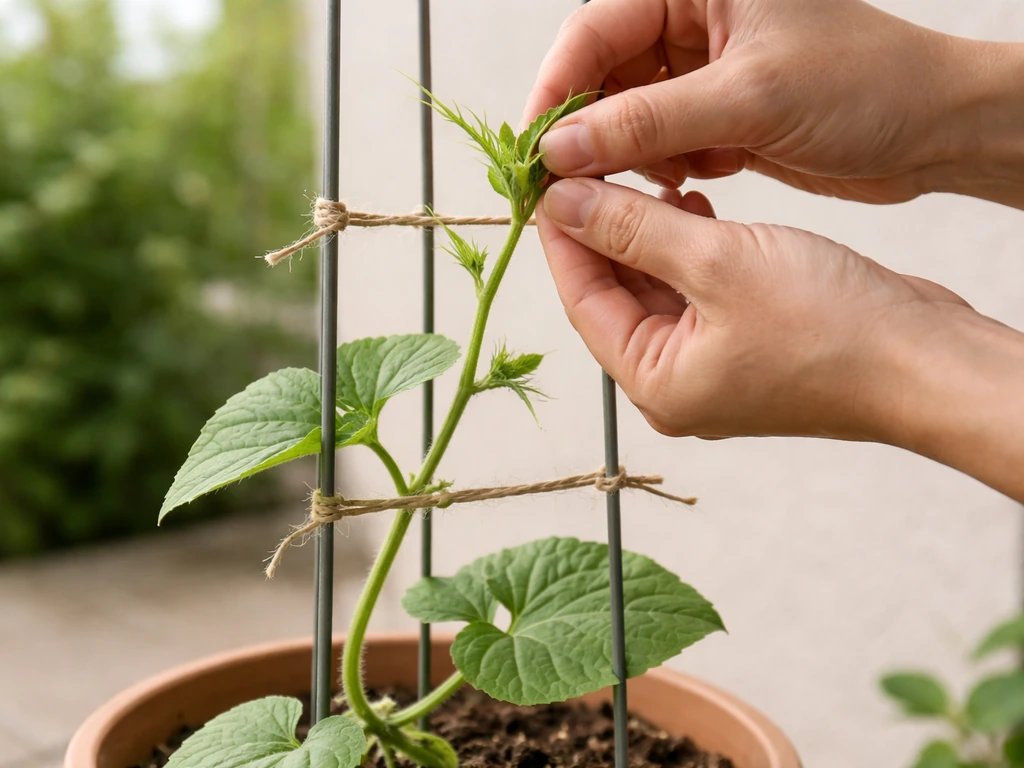
Ash gourd vines can easily reach 10 to 15 feet if left unchecked, so you need a plan for managing that growth in a container setup. Set up your trellis at planting time rather than after the vine gets going. A sturdy trellis, bamboo tepee, or fence panel secured to a wall works well. For balconies, a cattle panel or metal grid attached to the railing gives the tendrils plenty to grip.
Once the main vine reaches about 5 to 6 feet, pinch off the growing tip to encourage lateral branches. Female flowers, which develop into fruit, appear mostly on lateral branches rather than the main vine. So pinching the main stem is one of the best things you can do to improve your fruit count. You'll recognize female flowers by the tiny proto-fruit (a small swollen base) visible right behind the flower. Male flowers appear on a plain thin stem.
Keep removing any side shoots that are growing in the wrong direction, getting tangled, or not producing flowers. This improves air circulation and lets the plant put its energy into fruit rather than endless foliage. Once a fruit has set and started swelling, support it with a mesh net or old stocking tied to the trellis. Ash gourds can get heavy fast and the vine attachment point won't hold them without help.
Fertilizing schedule for strong vines and good fruit set
Think of the fertilizing schedule in two phases: the vegetative phase (weeks 1 through 5 or so) and the flowering and fruiting phase (week 6 onward). In the first phase, the plant is building roots and leaves. Nitrogen is the priority here. Use a balanced liquid fertilizer (like a 10-10-10 or similar) every 10 to 14 days, or a fish emulsion if you prefer organic options.
Once you see flower buds forming, shift to a lower-nitrogen, higher-phosphorus and potassium formula (something like 5-10-10 or a tomato-specific fertilizer works perfectly). Too much nitrogen at this stage pushes leaf growth at the expense of flowers and fruit. Continue feeding every 10 to 14 days through fruit development.
One thing that catches people off guard: ash gourd benefits from micronutrients too. A monthly dose of a diluted seaweed extract or a balanced micronutrient supplement helps prevent the yellowing and stunted growth that often get blamed on overwatering but are actually caused by deficiencies in magnesium, calcium, or trace minerals. This is especially important in containers, where nutrients leach out faster than they do in garden beds.
Common pests and diseases and how to deal with them
Pests to watch for
| Pest or Disease | What You'll See | Quick Fix |
|---|---|---|
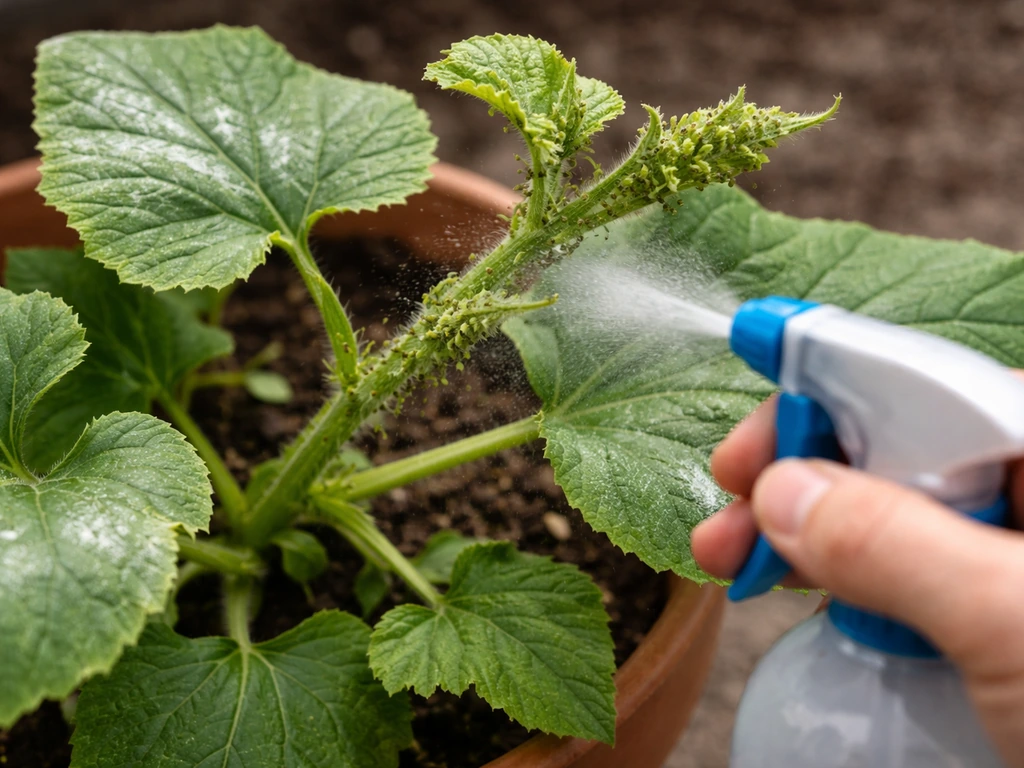
| Aphids | Sticky, distorted new growth; clusters of tiny insects under leaves | Blast off with water, follow up with diluted neem oil spray |
| Cucumber beetle | Yellow-green beetles with spots or stripes chewing leaves and flowers | Pick off by hand, use kaolin clay or neem oil as deterrent |
| Red spider mites | Fine webbing on undersides of leaves, pale stippled appearance | Increase humidity around leaves, apply neem oil or insecticidal soap |
| Powdery mildew | White powdery coating on leaf surfaces, especially in humid conditions | Improve air circulation, spray with diluted baking soda solution (1 tsp per litre water) |
| Root rot (Pythium) | Sudden wilting despite moist soil, blackened or mushy roots | Improve drainage immediately, let soil dry more between waterings, use hydrogen peroxide drench |
| Fruit fly | Holes in developing fruit, larvae inside | Use fruit fly traps, cover young fruits with paper bags or mesh bags |
The most common issue I see with ash gourd in pots is powdery mildew showing up in the later weeks of the growing season. It's almost inevitable in warm, humid weather, especially when air circulation is poor. Staying on top of pruning and not wetting the leaves when you water goes a long way toward prevention. If you see it early, act immediately because mildew spreads fast.
Solving common growing problems
- Poor germination: soil is too cold or seeds are old. Use fresh seeds, pre-soak them, and keep soil above 70°F during germination.
- Leggy, weak seedlings: not enough light. Move the pot to a sunnier spot as soon as possible.
- Yellowing leaves on older growth: usually a nitrogen deficiency or overwatering. Check drainage and soil moisture first, then feed with a balanced liquid fertilizer.
- Flowers dropping without fruit setting: likely a pollination issue. Hand-pollinate by transferring pollen from male flowers to female flowers using a small paintbrush in the morning.
- Fruit shriveling after setting: inconsistent watering or extreme heat. Mulch the top of the pot to retain moisture and water more regularly.
- No female flowers: the main vine is too dominant. Pinch the tip to force lateral growth where females appear.
Harvesting and storing your container-grown ash gourd
Ash gourd is typically ready to harvest around 90 to 95 days after sowing. Knowing exactly when to pick depends on what you want to use it for. For young, tender ash gourd used in stir-fries and soups, you can harvest as early as 60 to 70 days, when the fruit is still small and the skin is soft. For the mature fruit with the characteristic white waxy coating (which develops naturally as the gourd ages), wait until the skin feels firm, the surface has a noticeable powdery or waxy layer, and the stem starts to dry slightly.
To harvest, use a sharp knife or garden shears and cut the stem about 2 to 3 inches above the fruit. Don't try to snap or twist it off as that can damage the vine and the fruit's ability to store. Handle the harvested gourd gently even though it looks tough, surface bruising reduces its storage life.
Mature ash gourd with its wax coating intact is one of the best-storing vegetables you can grow. It keeps at room temperature for several months, sometimes up to a year in cool, dry, well-ventilated conditions. This is why it's sometimes called 'winter melon' despite being a warm-season crop: traditionally it was harvested in summer and stored through winter. Once you cut into it, store the unused portion wrapped in the fridge and use it within a week.
A few final thoughts for small-space growers
Growing ash gourd in a pot is genuinely achievable, and the first time you harvest a full-sized gourd from a balcony container it feels ridiculously satisfying. The main things to get right are pot size (go bigger than you think you need), a trellis set up before planting, consistent watering without waterlogging, and a fertilizer shift from nitrogen-heavy to phosphorus-heavy once flowering starts. Everything else, the pest management, the pruning, the pollination tricks, you can figure out as you go. If you're already growing other climbing gourds in containers like bitter gourd, snake gourd, sponge gourd, or ridge gourd, many of the same techniques carry over directly, so any experience you have there gives you a real head start with ash gourd.
FAQ
How many ash gourd plants can I grow in one pot?
With the container sizes recommended for ash gourd, plan for one plant per pot, especially if you want multiple fruits. Two vines in the same pot usually forces aggressive root competition and more pruning, which can reduce fruit size. If you must try two, use a very large container (30+ gallons) and strong trellising so both vines have space to climb.
What should I do if my ash gourd has lots of leaves but no flowers or fruit?
First check nitrogen. If you keep using a high-nitrogen feed after the vine is established, you can end up with leafy growth and few flowers. Switch to a lower-nitrogen, higher-phosphorus and potassium fertilizer once flower buds start forming, and pinch the main growing tip around 5 to 6 feet to push lateral branches where female flowers develop.
Do I need to hand-pollinate ash gourd in a pot?
Not always, but it helps when pollinators are scarce, such as balconies, rooftops, or rainy spells. If male flowers appear but you do not see tiny swollen bases behind female flowers (proto-fruits) within a few days, gently transfer pollen from a male flower to a female flower using a small brush, preferably in the morning.
How often should I water ash gourd in pots during extreme heat?
Use the “top 2 inches dry” rule, then water deeply until drainage runs freely. In mid-summer, that may be daily, but it can also be every other day depending on wind, sun exposure, and container type. Fabric bags and terracotta can dry faster, so check more frequently rather than relying on the calendar.
My pot mix dries fast, can I use mulch or a top cover?
Yes, a light organic mulch on top can slow evaporation and reduce temperature swings, but keep it a few inches away from the crown so the base does not stay damp. Also avoid thick, soggy mulch that can trap moisture and increase mildew risk on nearby foliage.
What’s the best way to prevent root rot when growing ash gourd in containers?
Prioritize drainage and aeration. Use a mix with perlite or coarse sand, ensure the pot has multiple drainage holes, and keep the pot elevated so runoff can escape. If the plant suddenly wilts while the soil is wet, pause watering, improve drainage immediately, and consider checking the roots for rot before continuing normal care.
Can I grow ash gourd in a shady balcony if I’m getting 5 to 6 hours of sun?
You can try, but expect fewer fruits. Less light often means more vegetative growth and delayed or reduced flowering. If your only option is partial sun, position the pot to maximize brightness, prune for airflow, and avoid overfeeding nitrogen since the plant is already struggling to convert energy into fruit.
Why is powdery mildew showing up even though I’m watering correctly?
Powdery mildew is often driven by humidity plus limited airflow and leaf wetting patterns. Even if watering is correct, dense growth can trap moisture and reduce circulation. Focus on pruning side shoots that tangle, avoid spraying water on leaves, and remove the first affected leaves early so the problem does not spread through the trellis.
How do I support heavy fruit without breaking the vine?
Use a soft mesh sling or old stocking once the fruit starts swelling, and tie it securely to the trellis, not to the vine itself. Check supports as fruit weight increases, because attachments can loosen. Avoid leaving the gourd to hang free from a single tendril since that point can tear over time.
When should I harvest ash gourd for best storage?
For longest storage, wait for the mature white waxy coating to build naturally and the stem to dry slightly. The skin should feel firm, and the surface should have a powdery or waxy layer. Harvest with shears and leave a 2 to 3 inch stem section, then store in a cool, dry, well-ventilated area to reduce spoilage.
Can I start seeds indoors and what’s a safe transplant approach for containers?
Yes. Start seeds 3 to 4 weeks before the last frost date, but transplant carefully to avoid root damage. When the seedlings move outdoors, keep nighttime temperatures above about 60°F to prevent chilling stress. Harden off gradually over several days if moving from indoors to a windy balcony.