Yes, you can absolutely grow snake gourd in pots, and it's more rewarding than most people expect. You'll need a large container (at least 15–20 gallons), a sturdy vertical trellis about 5 feet tall, and a sunny spot that gets genuine heat. If you're wondering how to grow sponge gourd in pots, many of the same container basics apply, just adjust for the specific variety. Get those three things right and this vine will reward you with dramatic, long fruits hanging down like something out of a botanical garden. To get the best results when you grow ash gourd in pots, focus on choosing a large container, using a well-draining soil mix, and training the vine upward how to grow ash gourd in pots. Miss one of them and you'll get a lot of leafy growth and not much else.
How to Grow Snake Gourd in Pots: Complete Guide

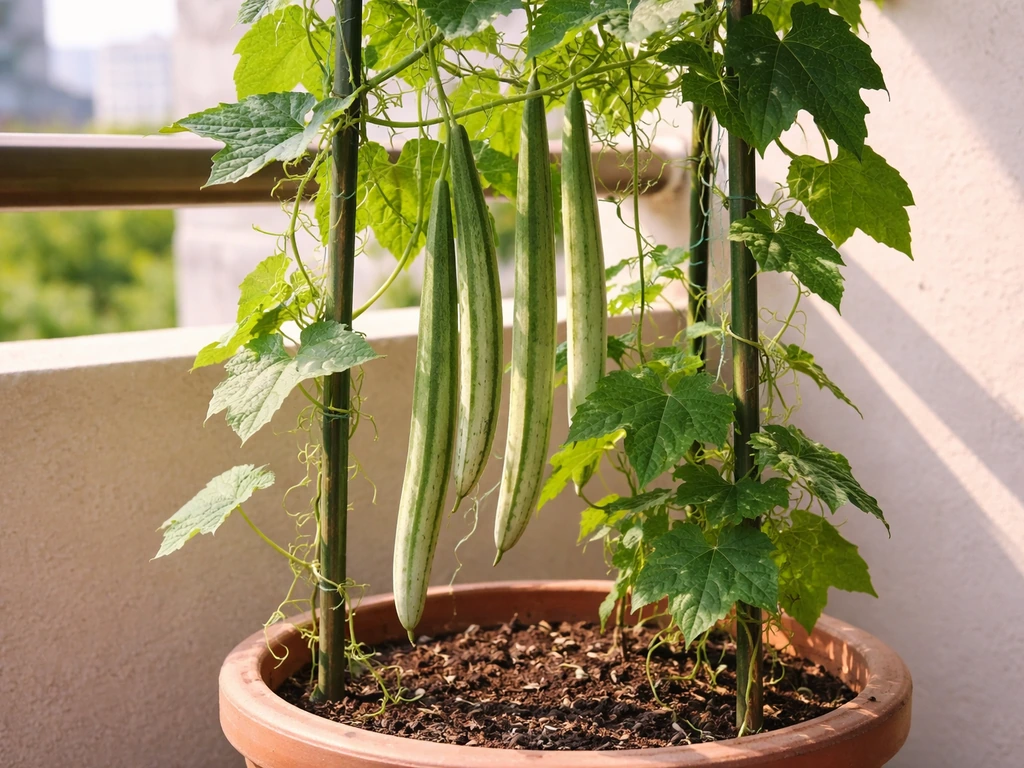
Which pot size and support system snake gourd needs
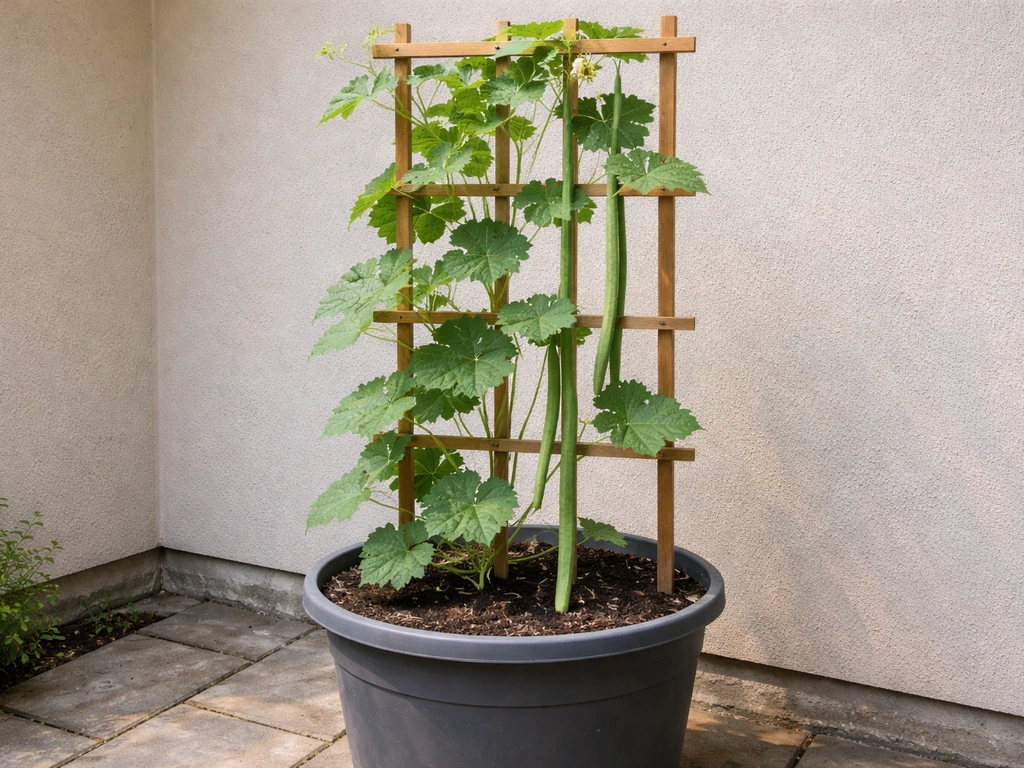
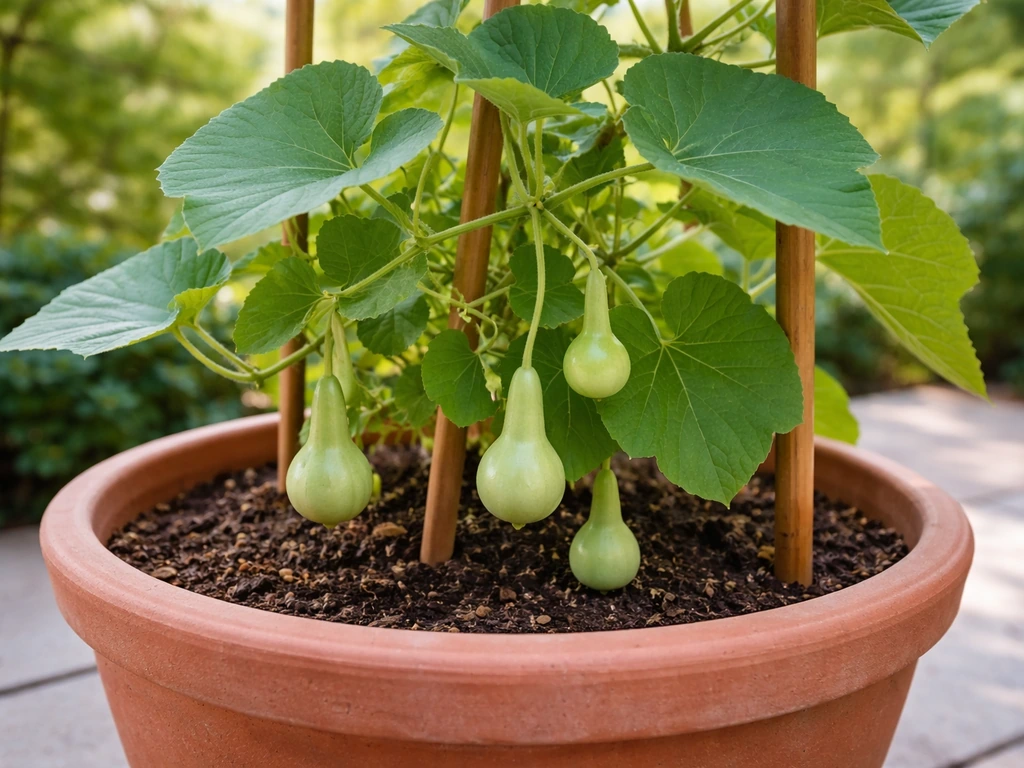
Snake gourd is a vigorous vine. Individual vines can stretch well over 16 feet, and the root system needs room to match. For a single plant, go with a container that holds at least 15–20 gallons. A 16-inch diameter pot that's at least 14–16 inches deep hits the sweet spot. If you can find a larger fabric grow bag (20–25 gallons), even better. Fabric bags breathe well and help prevent the roots from overheating in summer, which matters a lot for a container sitting on a balcony or rooftop.
Don't try to squeeze two plants into one pot thinking you'll get double the fruit. You'll get root competition, poor airflow, and disease pressure instead. One plant per container, every time.
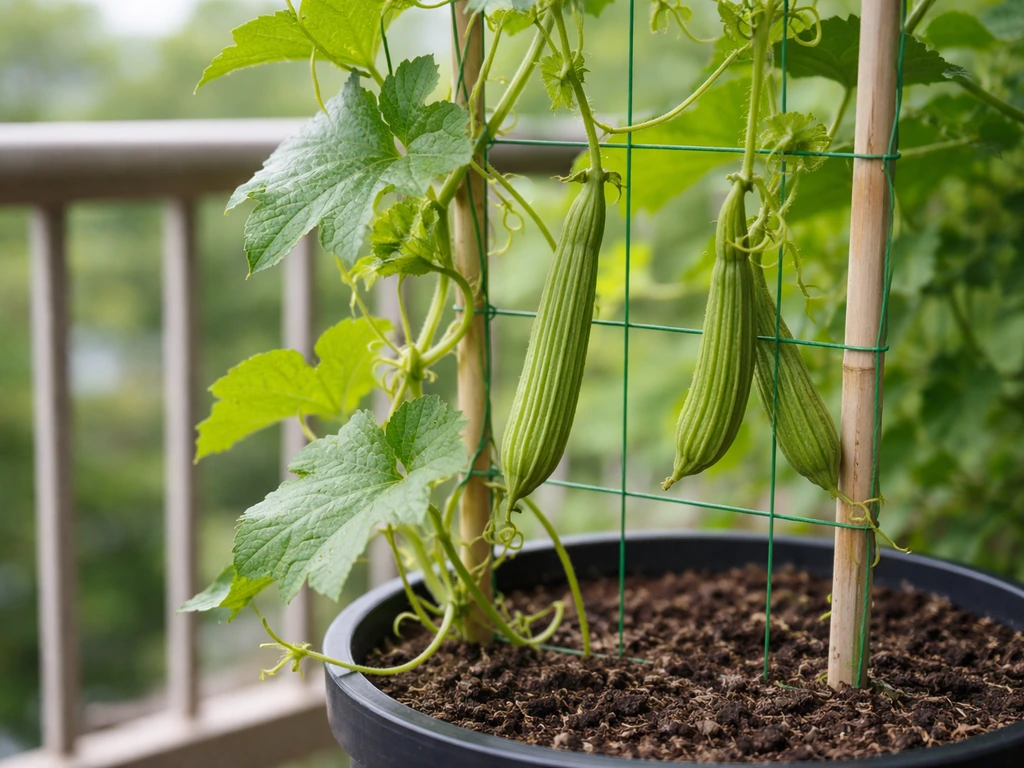
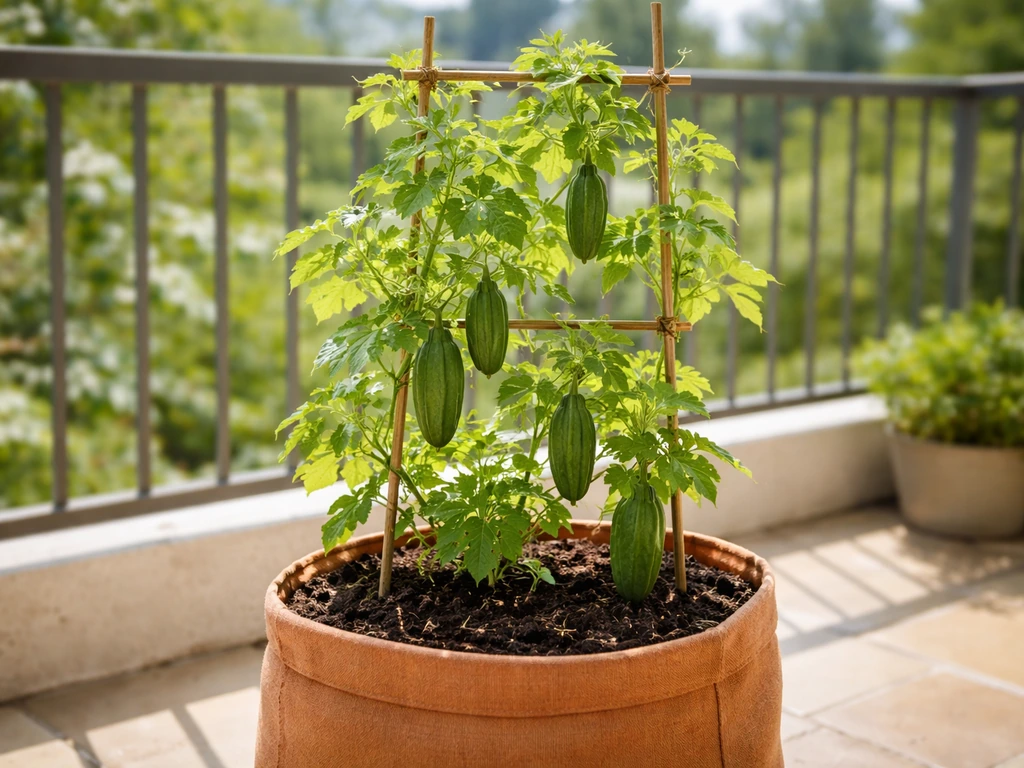
For the support structure, build or install a trellis that reaches at least 5 feet above the pot. A simple A-frame made from bamboo poles works, or you can tie the pot to a wall-mounted wire mesh. The key is stability: snake gourd fruits can grow surprisingly heavy, and a wobbly trellis that tips over mid-season is genuinely heartbreaking. If you're using a freestanding trellis, anchor it into the pot itself by pushing the poles at least 8–10 inches into the soil, then fill around them before planting. Alternatively, place the pot next to a fence or railing and train the vine directly onto it. The goal is to grow the plant vertically so fruits hang freely and vines don't tangle on the ground.
Soil mix, drainage, and container fertilizing plan
Snake gourd is very sensitive to waterlogging. Sit water around its roots for too long and you'll trigger root rot fast, including Phytophthora, which causes a sudden collapse that looks like the plant just gave up overnight. Your soil mix has to drain well while still holding enough moisture to keep the vine hydrated through hot days.
A mix that works reliably in pots: 40% quality potting compost, 30% coarse perlite, 20% aged compost or vermicompost, and 10% coarse sand. That ratio gives you good structure, drainage, and a base of nutrients. Avoid using straight garden soil in a pot. It compacts, drains poorly, and invites all kinds of trouble.
Drainage holes are non-negotiable. Make sure your container has several holes at the base, not just one. If you're using a decorative outer pot, never let the inner pot sit in standing water. Elevating the pot slightly on pot feet or a small platform helps water escape freely.
For fertilizing, snake gourd is a heavy feeder once it starts fruiting. Here's a straightforward plan that works in containers:
- At planting: mix a slow-release balanced fertilizer (like a 14-14-14 granule) into the top few inches of soil according to the package rate.
- Weeks 1–4 (vegetative growth): water with a diluted balanced liquid fertilizer (NPK roughly equal) every 10–14 days to push healthy leaf and vine development.
- Week 5 onward (flowering and fruiting): switch to a lower-nitrogen, higher-potassium formula (something like 5-10-10 or a tomato feed) every 7–10 days. High nitrogen at this stage pushes leaves at the expense of flowers and fruit.
- During peak fruiting: if you're harvesting regularly, keep feeding every week to replace what the plant is putting into fruit production.
Don't skip the potassium step. It's easy to keep feeding a balanced fertilizer out of habit, but the fruit quality and plant vigor during fruiting really do respond noticeably when you shift to a higher-K feed.
Starting from seed vs seedling: timing and planting
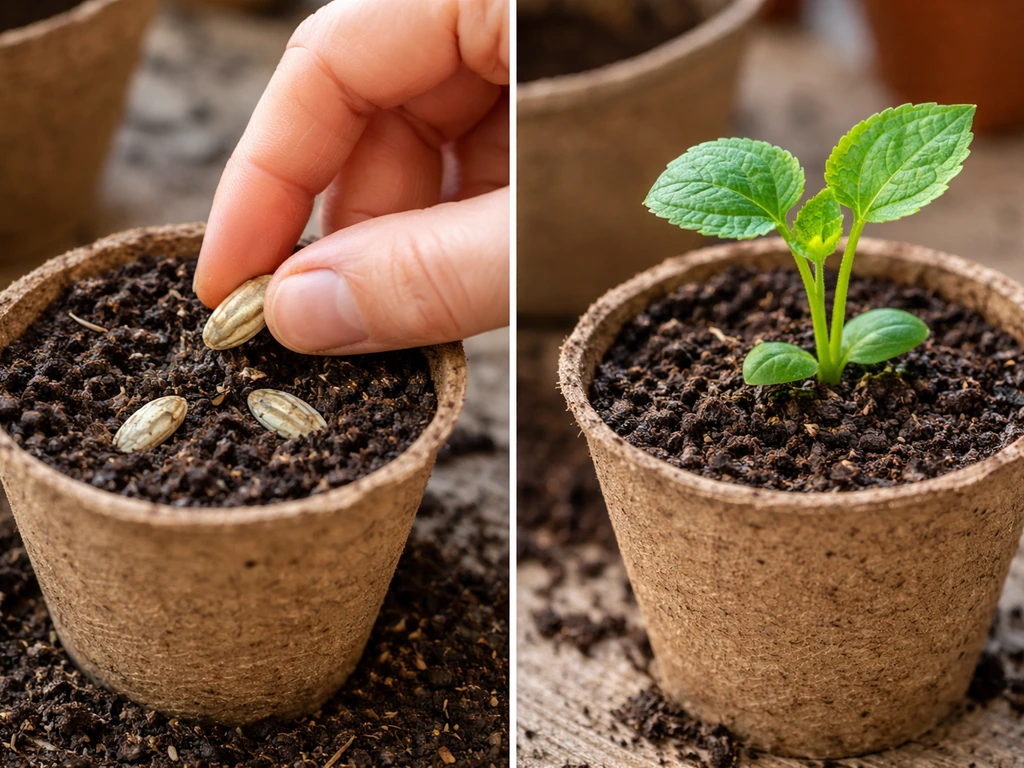
You can go either route, but starting from seed is cheaper and gives you more control over timing. Snake gourd seeds germinate in 10–14 days when the soil temperature is between 70–90°F (21–32°C). If you're starting in late spring or early summer and your climate is already warm, sow directly into the final container. If temperatures are still cool (soil below 70°F), start seeds indoors in small biodegradable peat pots so you can transplant without disturbing roots.
Sow seeds about 1 inch deep, two seeds per peat pot or per container. After germination, identify the stronger seedling and remove the weaker one cleanly with scissors. Don't pull it out, as pulling disturbs the roots of the one you're keeping. The best time to sow in most temperate and subtropical climates is from March through May, or whenever nighttime temperatures are consistently above 60°F. In tropical climates, you can grow snake gourd almost year-round.
If you're buying a seedling from a nursery, look for one that's compact with dark green leaves and no yellowing or leggy growth. Transplant it at the same depth it was growing in its nursery pot. Don't plant it deeper hoping for more roots. Snake gourd doesn't benefit from deep planting the way tomatoes do.
Light, temperature, and watering in containers
Snake gourd loves heat. Its optimum growing temperature is 30–35°C (86–95°F), which makes it ideal for summer container growing on sunny balconies, terraces, and south-facing spots. Give it at least 6–8 hours of direct sunlight daily. Less than that and you'll get a vine that grows but flowers poorly. If you're in a hot climate and your balcony gets intense afternoon sun, the container will heat up quickly, so watch soil moisture more carefully and consider light-colored pots to reduce root zone temperatures.
Watering is where most people go wrong with snake gourd in containers, and it usually goes wrong in one of two ways: too much or too inconsistent. The rule I follow is to check the soil about 2 inches deep. If it feels dry at that depth, water thoroughly until it drains freely from the bottom. If it still feels moist, wait another day. During peak summer heat, that often means watering every day. In cooler stretches or after rain, every 2–3 days may be enough.
Never let the pot sit in a pool of collected water, and never water so lightly that only the top inch gets wet. Shallow watering encourages shallow roots, and then the plant struggles the moment a hot day comes along. Deep, thorough watering followed by letting the top layer dry slightly is the pattern this plant rewards.
Training, pruning, and keeping vines productive in a pot
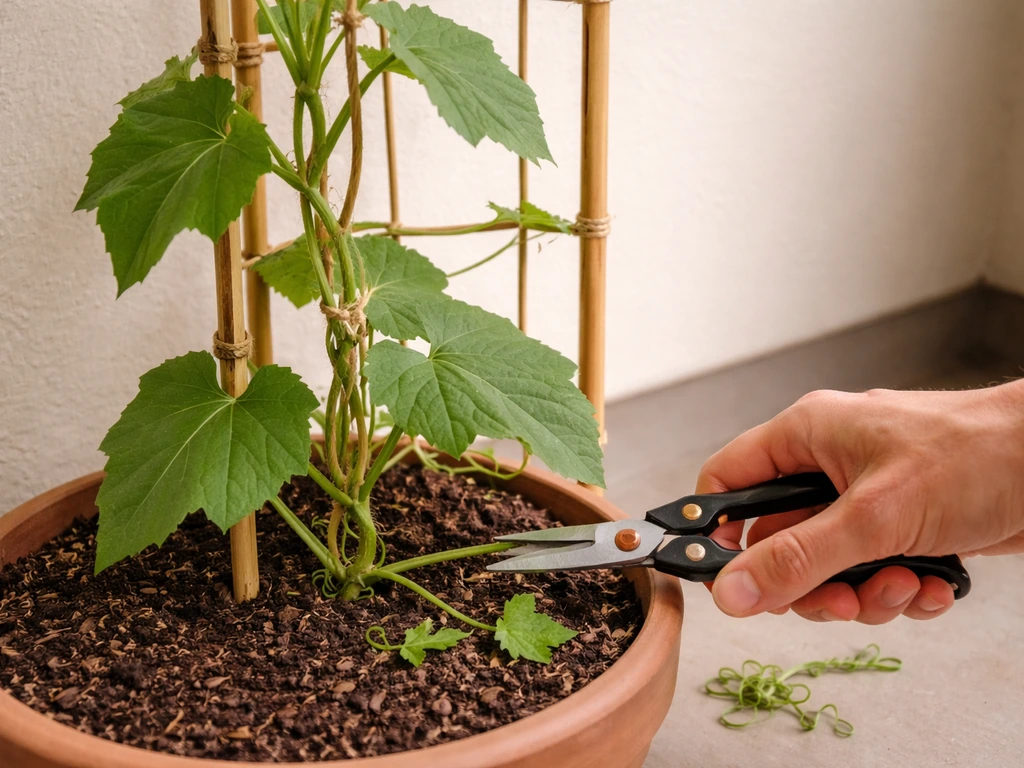
Training snake gourd vertically is essential in a container setup. As soon as the vine puts out its first few tendrils, start guiding the main stem upward along your trellis. You can use soft plant ties or strips of fabric to secure it loosely every foot or so. Don't tie tightly. The vine needs a little freedom to move as it grows and as the wind blows.
Pruning is something a lot of beginners skip because cutting a healthy plant feels wrong. But it genuinely improves your results with snake gourd. Pinching off the growing tip of the main stem once it reaches the top of the trellis encourages lateral (side) shoots, and those lateral branches tend to produce more female flowers. Pruning also improves the ratio of female to male flowers, which means better fruit set. Remove any shoots that are heading downward or sideways away from the trellis structure, and cut off any dead or yellowing leaves promptly to keep airflow good around the base of the plant.
As fruits develop and grow long (snake gourd can reach 1–2 feet or more), they'll hang naturally if you've set up a proper vertical trellis. This hanging position is actually ideal: gravity keeps the fruits straight, and they're less likely to rot from contact with damp leaves or soil. If a fruit is resting against the trellis structure at an awkward angle, gently guide it to hang free.
Pollination and fruit set in a small space
Here's something that catches a lot of growers off guard: snake gourd flowers open late in the day and into the night, and they're primarily pollinated by moths. If you're growing on a high-rise balcony or in a location where moth activity is low (or if you're growing in a screened space), you may see plenty of flowers but very little fruit set. The solution is hand pollination, and it's easier than it sounds.
Flowering typically starts about 5 weeks after planting. Male flowers appear first, and female flowers show up roughly 3 days later. You can tell them apart easily: female flowers have a tiny swelling at the base of the flower (the future fruit), while male flowers sit on a plain stem. To hand-pollinate, go out in the evening when flowers are fully open. Use a small soft brush or simply remove a male flower, peel back its petals, and dab its pollen-covered center directly onto the center of the open female flower.
For best results, use pollen from flowers that have been open for at least 5 hours, and pollinate when the female flower is at peak opening. After pollination, you can loosely cover the female flower with a small paper bag for a day or two to protect the developing fruit set if you want to be precise about it. If a female flower drops off without developing into a fruit, it was either not pollinated, the plant wasn't ready, or conditions (heat or drought stress) caused it to abort. Don't be discouraged. Keep the plant watered and fed consistently and try again with the next flush of flowers.
Pests, diseases, and troubleshooting your container vine
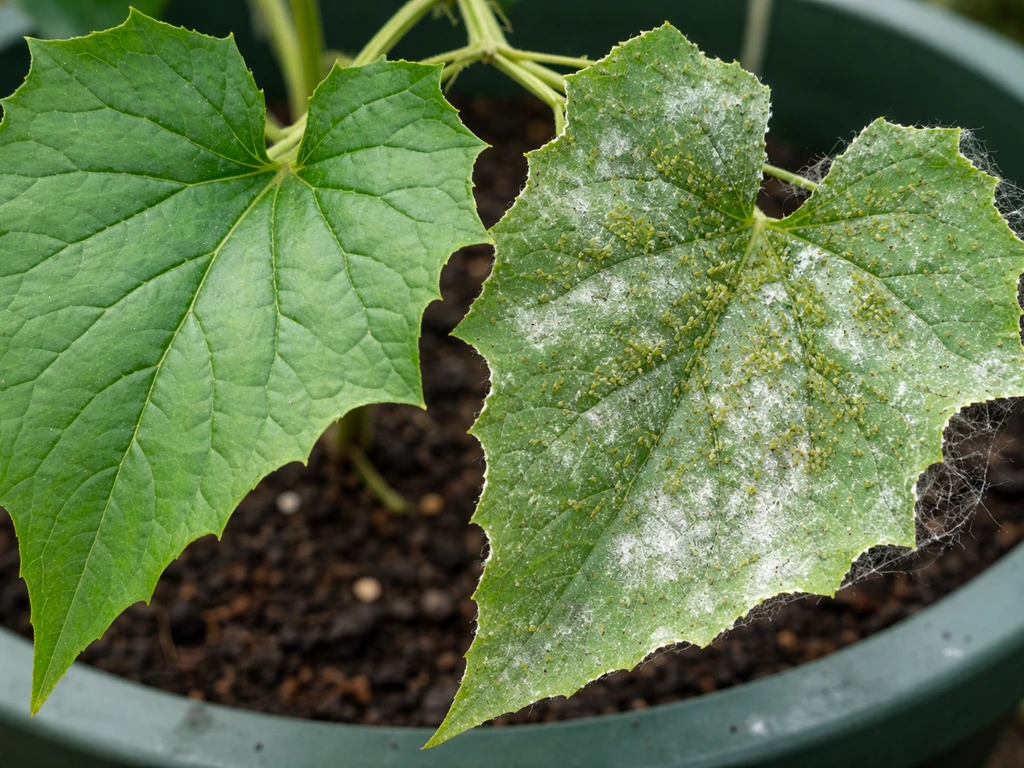
Snake gourd shares most of its pest and disease vulnerabilities with other cucurbits (cucumbers, gourds, melons). Growing in a container gives you a slight advantage because you can move the plant, isolate it, and treat problems quickly.
Common pests to watch for
- Aphids: clusters of tiny green, black, or white insects on new growth and undersides of leaves. Blast them off with water and follow up with neem oil spray.
- Spider mites: fine webbing and stippled, dull-looking leaves, usually in hot dry conditions. Increase humidity around the plant and use neem oil or insecticidal soap.
- Whiteflies: small white insects that scatter when you touch leaves. Sticky yellow traps help, as does neem oil applied in the evening.
- Fruit flies (in tropical regions): females lay eggs in young fruit, causing rot from the inside. Bag developing fruits with paper or fine mesh bags to protect them.
Diseases to watch for
Powdery mildew shows up as a white powdery coating on leaves, usually starting on older lower leaves. It spreads fast in warm days with cool nights and poor airflow. When spraying any treatment, make sure you cover the undersides of leaves thoroughly because that's where the fungus establishes itself. A diluted baking soda spray or a sulfur-based fungicide applied early works well. Improve airflow by pruning dense growth.
Downy mildew (caused by Pseudoperonospora cubensis) produces yellow patches on the top of leaves with a grayish-purple fuzzy growth underneath. It's worse in humid, wet conditions. Avoid overhead watering, improve airflow, and use a copper-based fungicide if it spreads.
Root rot is the biggest container-specific threat. If your plant suddenly wilts despite the soil being wet, suspect root rot from waterlogging. Check the roots (pull the plant carefully): brown, mushy roots confirm it. At that stage, survival is unlikely, but if caught early, you can repot into fresh dry mix after trimming affected roots and treating with a fungicide drench. Prevention is vastly easier: get your drainage right from the start.
Harvest timing and planning your next crop
Snake gourd is typically ready to harvest around 90–100 days from sowing (roughly 12–14 weeks). You don't want to wait for the fruits to fully mature on the vine if you're eating them as a vegetable: harvest when fruits are young, green, and tender, usually when they're between 12–18 inches long depending on variety. At this stage the skin is soft, the flesh is mild, and the seeds haven't fully hardened. Overmature fruits turn orange-red, become bitter, and the flesh turns mushy inside.
Use a sharp knife or pruning shears to cut fruits from the vine. Don't yank or twist them off; that damages the stem and sometimes injures nearby developing fruits. Harvesting regularly encourages the plant to keep setting new fruit, so don't leave mature fruits on the vine. A plant that's harvested consistently every few days in peak season will outproduce one that's allowed to mature and drop fruit.
After your main fruiting season winds down, the vine will naturally slow and look tired. At this point you have two options: cut it back hard and try to coax a second flush (this works in warm climates with a long growing season), or pull the plant out, refresh the potting mix by adding fresh compost and perlite, and start a new seed for the next season. If you're growing in a tropical or subtropical climate, you can often cycle through two crops per year by timing your sowing in early spring and again in late summer.
A quick comparison: snake gourd vs similar container gourds
If you're weighing snake gourd against other gourds for container growing, here's a practical side-by-side. Bitter gourd and ridge gourd are popular container choices too, each with slightly different demands. Ridge gourd in particular also does well in containers if you give it enough pot volume, a strong trellis, and consistent watering how to grow ridge gourd at home in pots. If you want, you can use the same pot-and-trellis container approach for bitter gourd, then fine-tune watering and feeding for its specific needs.
| Feature | Snake Gourd | Bitter Gourd | Ridge Gourd |
|---|---|---|---|
| Minimum pot size | 15–20 gallons | 10–15 gallons | 10–15 gallons |
| Trellis height needed | 5 ft minimum | 4–5 ft | 4–5 ft |
| Heat preference | Very high (30–35°C) | High (25–35°C) | High (25–35°C) |
| Pollination challenge | High (night-flowering, needs moths/hand pollination) | Moderate | Moderate |
| Days to harvest | 90–100 days | 55–70 days | 60–75 days |
| Beginner difficulty | Moderate | Easy to moderate | Easy to moderate |
Snake gourd takes a bit more patience and attention to pollination than bitter gourd or ridge gourd, but the dramatic fruits and the relatively light care once the vine is established make it a satisfying project for anyone who has grown other gourds successfully.
Your action plan: what to do this week and what to watch for
If you're starting today, here's exactly what to do and what success looks like at each stage:
- This week: Get a 15–20 gallon container with drainage holes, mix your soil (40% potting compost, 30% perlite, 20% aged compost, 10% coarse sand), install your trellis firmly, and sow 2 seeds about 1 inch deep. Place the pot in the sunniest, warmest spot you have.
- Days 10–14: Expect germination. When both seedlings appear, cut the weaker one at soil level with scissors.
- Weeks 1–4: Watch for steady leaf growth and the first few tendrils. Begin guiding the vine upward. Feed every 10–14 days with a balanced liquid fertilizer. Water consistently and check soil moisture daily in hot weather.
- Week 5: Flowering begins. Male flowers appear first. Look for female flowers (with the small swelling at the base) 3 days later. Begin hand-pollinating in the evening if you're not seeing natural fruit set.
- Weeks 6–10: Fruits develop after successful pollination. Keep feeding, keep harvesting regularly once fruits reach 12–18 inches, and stay on top of pest checks every few days.
- Days 90–100: Full harvest season is underway. A healthy plant in a good container setup should be producing multiple fruits per week at this point.
The most common reasons container snake gourd fails are: a pot that's too small, a trellis that's too short or wobbly, inconsistent watering, and missed pollination at night. Get those four things right and you're most of the way there. If you want to follow the full container routine, you can use this guide on how to grow gourd in pots to plan each step from potting to pollination. Everything else, the occasional pest, a yellow leaf, a dropped flower, is normal and fixable. Start simple, observe the plant daily, and adjust as you go. That's really all there is to it.
FAQ
What pot size is the minimum that still works if I only have a small balcony space?
Aim for the 15 to 20 gallon range described in the guide, because snake gourd is a vigorous vine with a deep, hungry root system. If you must go smaller, expect reduced fruit length and fewer harvests, and plan to water and fertilize more carefully because the root zone dries out faster in containers.
Can I grow snake gourd in a 10 gallon grow bag if I use a trellis?
It’s usually too tight for consistent results. With 10 gallons, root competition and faster drying often show up as heavy vine growth with weak flowering. If that is your only option, use one plant, increase monitoring (soil moisture daily in hot weather), and accept smaller yields as the tradeoff.
How do I know if my watering is “too much” versus “not enough” in a pot?
Too much water often shows up as sudden wilting while the soil still feels wet, yellowing leaves, and a general collapse pattern, especially after humid or rainy spells. Not enough water usually means the soil is dry 2 inches down and the vine droops gradually, with flowers dropping during the hottest part of the day. Check soil depth first, then inspect leaves and overall plant behavior.
Should I fertilize before I see flowers, or only during fruiting?
You can feed lightly once the plant is established, but the guide’s heavier feeding emphasis is for when fruiting starts. A common mistake is to push high nitrogen too early, which can create lush foliage and delay female flowers. When you first notice fruit set, increase potassium and keep regular feeding intervals so flowers become fruit.
My plant is producing lots of male flowers, but no fruits. What should I check first?
Start with pollination timing and evening conditions. Snake gourd flowers open late and into the night, so hand pollination is often required on balconies with low moth activity. Also confirm you are not over-pruning the main vine and that pruning is done to encourage lateral shoots, since those laterals tend to carry more female flowers.
What is the best way to hand pollinate if I can’t do it every evening?
Pollinate when you see fully open female flowers, ideally in the evening. Use fresh male pollen from flowers that have been open long enough, then dab pollen directly onto the female flower’s center. If you miss a day, don’t force it the next morning, because older flowers may be less likely to set properly under heat and drought stress.
Do I need to prune snake gourd in pots, or can I just train it up?
Training helps, but pruning is still useful in containers because it improves airflow and encourages side shoots where more fruiting happens. Pinch the main tip after it reaches the top of the trellis to promote lateral growth, and remove shoots that grow away from the trellis or downward to keep the canopy manageable.
How do I prevent fruits from snapping or bruising as they hang?
Use stable support and guide fruits so they hang freely without resting hard against the trellis. If a fruit is angled or presses against a hard surface, gently reposition it early, before it thickens. Regular harvesting also reduces the time heavy fruits stay on the plant, lowering the chance of stem damage.
When should I start harvesting, and will harvesting too early affect yield?
Harvest when fruits are young, green, and tender, typically around 12 to 18 inches depending on variety. If you harvest too late, fruits can turn bitter and mushy, and the plant’s energy shifts away from producing new tender fruits. Regular picking every few days in peak season generally increases total yield.
What should I do if I see powdery mildew or downy mildew in my container?
Act early. For powdery mildew, improve airflow by pruning dense growth and cover leaf undersides when applying a treatment. For downy mildew, avoid overhead watering, remove affected foliage if practical, and consider a copper-based approach if it spreads. In both cases, stabilize conditions so leaves don’t stay wet for long periods.
My snake gourd wilted and the soil was wet. What’s the most likely issue and can I save it?
That pattern strongly suggests root rot or waterlogging. Gently check the root ball, healthy roots should be firm, brown mushy roots indicate rot. If you catch it early, repot into fresh dry mix after trimming affected roots and use an appropriate fungicide drench, but if most roots are compromised, survival is unlikely.
How should I manage temperature stress on a rooftop or in intense afternoon sun?
Container heat spikes quickly. Use light-colored pots or breathable fabric grow bags to reduce root zone overheating, and monitor soil moisture more frequently during hot afternoons. If the vine is wilting in peak heat but the soil dries fast, water thoroughly rather than small sips, then allow the top layer to dry slightly before the next watering.
Can I grow snake gourd year-round, and how do I handle the offseason?
In tropical or subtropical climates, you can often cycle through two crops by sowing in early spring and again in late summer. In cooler climates, the plant usually slows when temperatures drop, so expect one main season and plan reseeding for the next warm window. After the main fruiting period, either coax a second flush in long warm seasons or refresh the potting mix and replant for better consistency.
Is there a reliable way to identify female versus male flowers quickly for hand pollination?
Yes. Female flowers have a small swelling at the base, which becomes the future fruit, while male flowers sit on a plain stem. Confirm this before you spend time transferring pollen, since misidentifying flowers is a common reason hand pollination fails.