You can absolutely grow sponge gourd (also called loofah or luffa) in a pot, and it produces real fruit you can eat young or dry into those natural scrubbing sponges. If you want the same container-care success, follow a similar approach when figuring out how to grow snake gourd in pots Sponge gourd. You need at least a 5-gallon container, a sturdy trellis, full sun, and a long warm season of roughly 150 to 200 frost-free days. Get those four things right and the rest is mostly consistent watering and a bit of patience.
How to Grow Sponge Gourd in Pots: Step-by-Step Guide
Marcus Whitley
22 Jun 2026
Choosing the right pot, soil, and sunlight
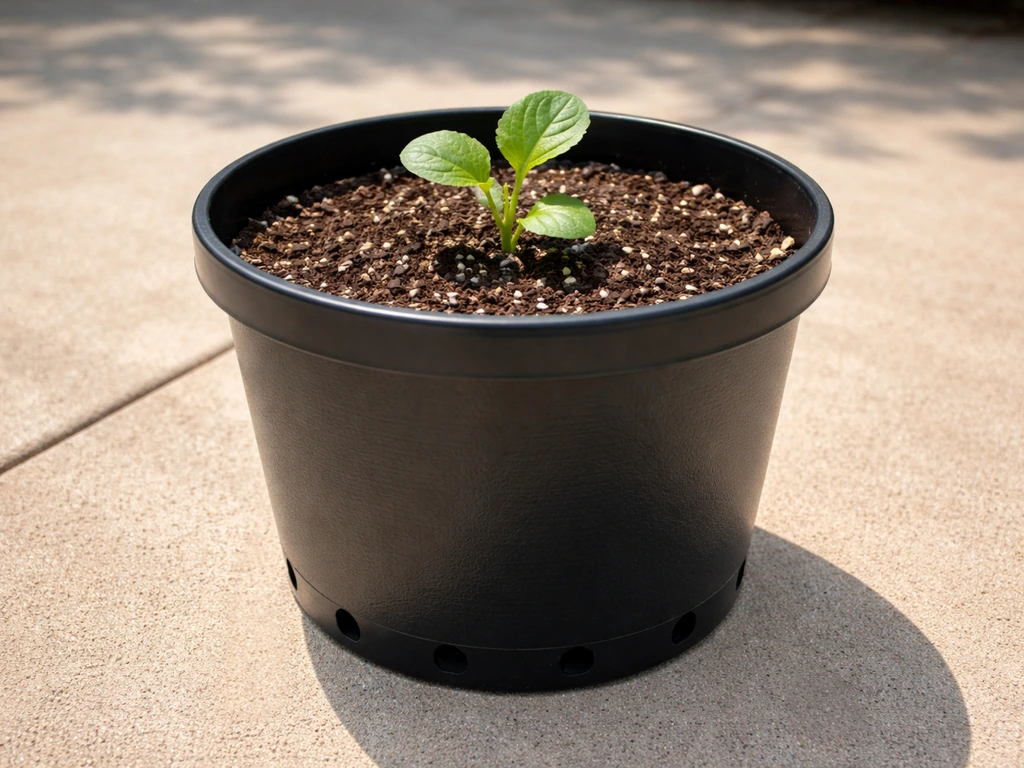
Pot size matters more with sponge gourd than with most vegetables. The vine grows aggressively and the roots need real room. A 5-gallon container (roughly 12 inches in diameter) is the minimum for one plant, but honestly, if you have a 15- to 20-gallon pot available, use it. Bigger roots mean a stronger vine and better fruit set. Whatever you use, it must have drainage holes. Sponge gourd roots rot fast in standing water, so if your pot doesn't drain freely, drill more holes.
Skip ordinary garden soil entirely. It compacts in containers, drains poorly, and suffocates roots. A mix of 70% coco peat and 30% vermicompost works really well. The coco peat keeps things airy and retains just enough moisture without going soggy, and the vermicompost feeds the plant gently from the start. You can also use a good quality potting mix amended with compost and perlite if coco peat isn't easy to find. The goal is a medium that stays evenly moist but never waterlogged.
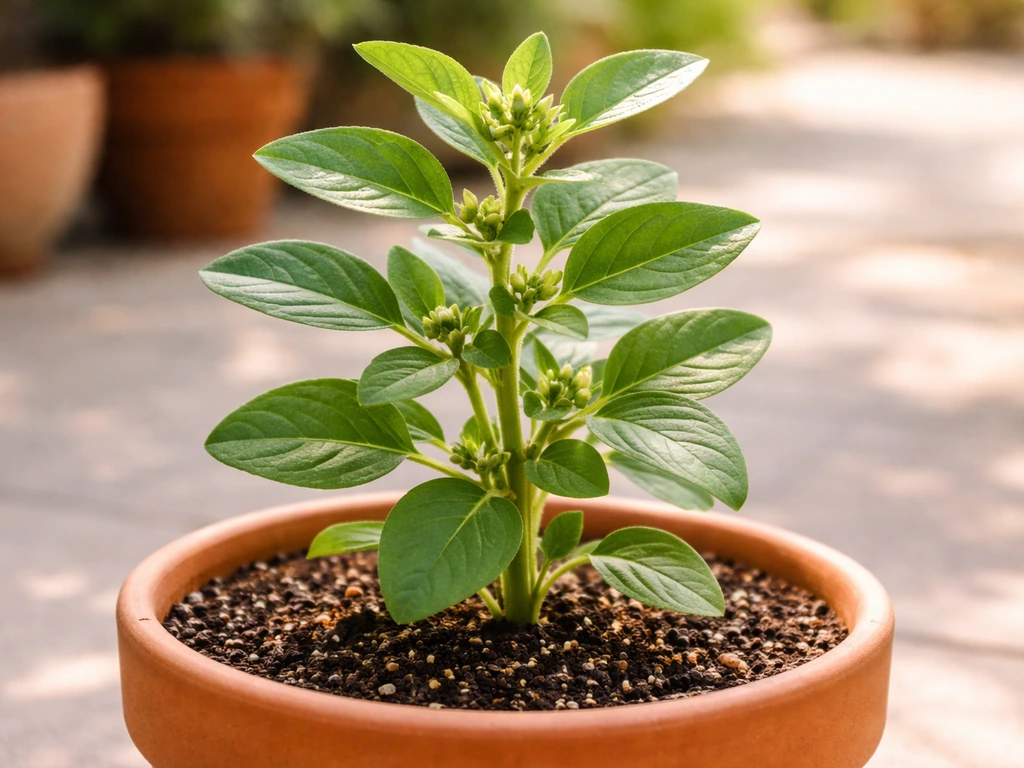
For sunlight, sponge gourd needs at least 6 hours of direct sun every single day. Six hours is the floor, not a comfortable average. If you're placing this on a balcony or patio, pick the sunniest spot you have. A south- or west-facing position is usually best. Poor sun is one of the top reasons container luffa plants produce flowers but no fruit, so don't compromise here. If you want similar container success with ashwagandha, focus on choosing a roomy pot and keeping the soil lightly moist, not soggy container luffa plants.
Varieties and whether to start from seed or seedlings
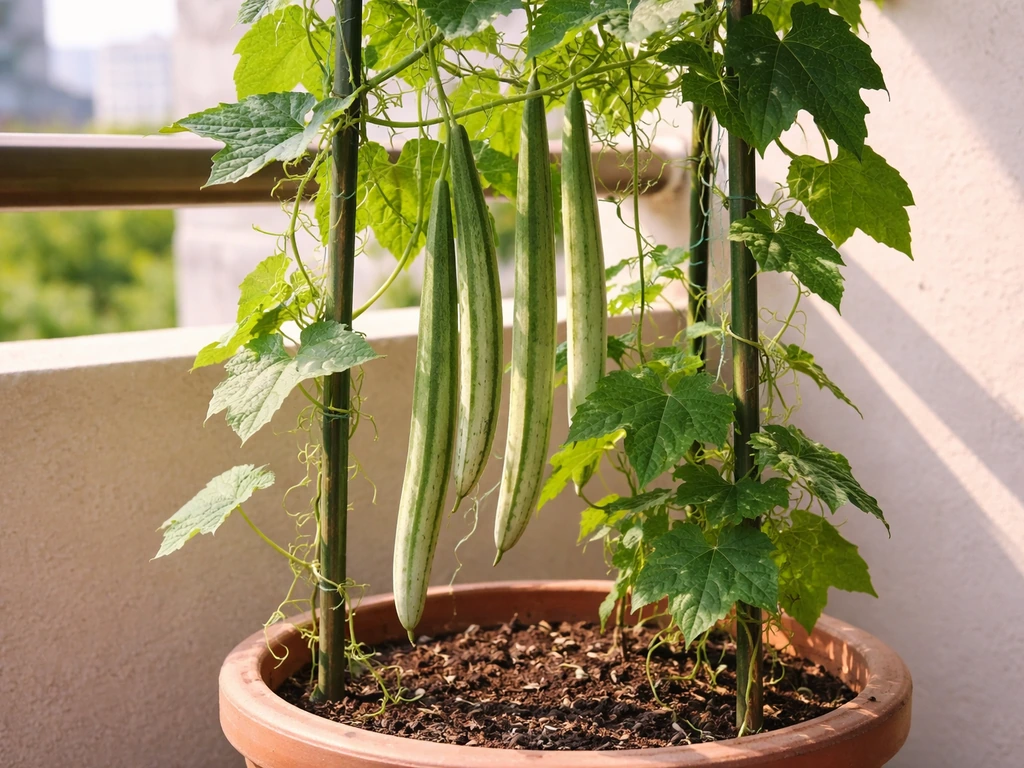
There are two main types of sponge gourd. blank" rel="noopener noreferrer">Luffa aegyptiaca has a smooth, cylindrical fruit and is what most people picture when they think of a loofah sponge. Luffa acutangula has ridged, angled fruits (sometimes called ridge gourd or angled luffa) and is popular as a vegetable. Either can be grown in containers, though L. aegyptiaca takes a bit longer to mature, around 90 to 120 days from transplant, while some L. acutangula varieties come in closer to 80 to 90 days. If your season is short, prioritize variety selection and start seeds early indoors.
Seeds are the most practical starting point, and they're widely available online. Buying seedlings from a nursery is less common for luffa, but if you find them, it's a perfectly fine shortcut. One thing worth knowing: luffa seeds don't love transplanting. If you start indoors, use biodegradable peat pots or soil blocks so you can move the whole thing into your container without disturbing the roots. Transplant shock is real with this plant.
Step-by-step planting in containers
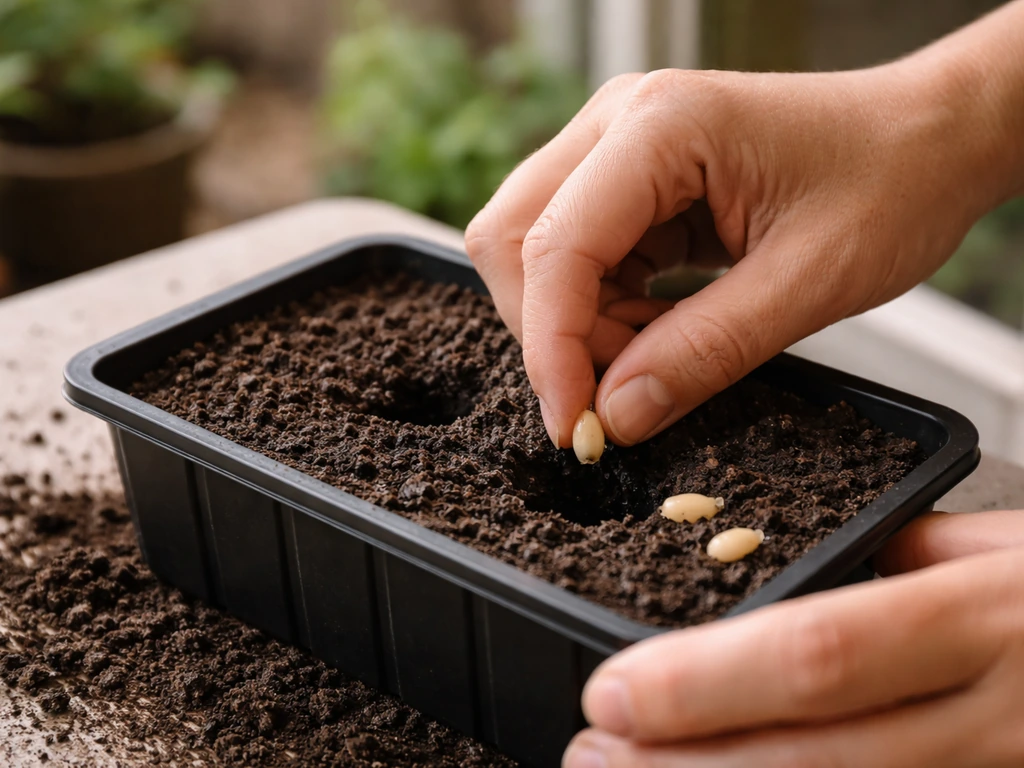
Sponge gourd needs warm soil to germinate, ideally around 70°F (21°C) or warmer. If you're starting indoors, begin 4 to 6 weeks before your last frost date. After planting, focus on consistent container care so you learn how to grow gourd in pots successfully. Before planting, soak your seeds in room-temperature water for 24 hours. This softens the seed coat and genuinely improves germination. You can also clip the very tip of the seed with nail scissors, which helps water penetrate faster. Germination rates for luffa are typically 50 to 80%, so plant two or three seeds per spot and thin to the strongest one.
- Soak seeds in water for 24 hours before planting.
- Fill your container to within 2 inches of the rim with your coco peat and vermicompost mix.
- Make small holes about 1/2 inch deep. Plant 2 to 3 seeds per hole, or one seed per biodegradable pot if starting indoors.
- Cover lightly and water gently so the soil is moist but not drenched.
- Place the container in a warm, sunny spot. Seeds typically sprout in 7 to 14 days.
- Once seedlings reach 2 to 3 inches tall and show their first true leaves, thin to one plant per container by snipping extras at the soil line rather than pulling them out.
- If transplanting an indoor-started seedling into a larger outdoor container, harden it off first. Set it outside in a shaded spot for a few hours per day over 5 to 7 days before leaving it in full sun.
Once your seedling is settled in its final container outdoors, don't rush it. The first week or two may look slow while the roots establish. That's normal. Growth accelerates noticeably once temperatures consistently stay above 70°F and the plant feels secure.
Watering, feeding, and temperature care for heavy vines
Sponge gourd is a heavy drinker, especially once the vine takes off. In summer heat, you may need to water daily. The easy test: stick your finger an inch into the soil. If it's dry, water thoroughly until it runs out of the drainage holes. If it's still moist, hold off. Coco peat helps here because it retains moisture well without staying waterlogged, but containers dry out faster than ground soil, so check regularly. Inconsistent watering is a common cause of flower drop and poor fruit development.
For feeding, sponge gourd is a hungry plant and a container can only hold so many nutrients. Start with a balanced fertilizer (the N-P-K numbers on the bag represent nitrogen, phosphorus, and potassium in that order) to support early leafy growth. Once the vine starts flowering, shift to something slightly lower in nitrogen and higher in potassium, which supports fruit development and overall plant health. A diluted fish emulsion every two weeks works well as a nitrogen source during the growing phase. Potassium deficiency can reduce fruit yield and quality, so if you see weak stems or poor fruiting, a potassium-focused liquid feed can help correct it quickly.
On temperature: sponge gourd loves heat. It thrives between 70°F and 90°F and struggles below 60°F. If you get a surprise cool spell, move the pot indoors or cover it overnight. Frost will kill the plant outright. In tropical or subtropical climates, this is rarely an issue, but in temperate zones, starting seeds early and protecting young plants matters a lot because this crop needs a long runway of 150 to 200 warm days to reach full fruit maturity.
Trellis and pruning for pot-friendly growth
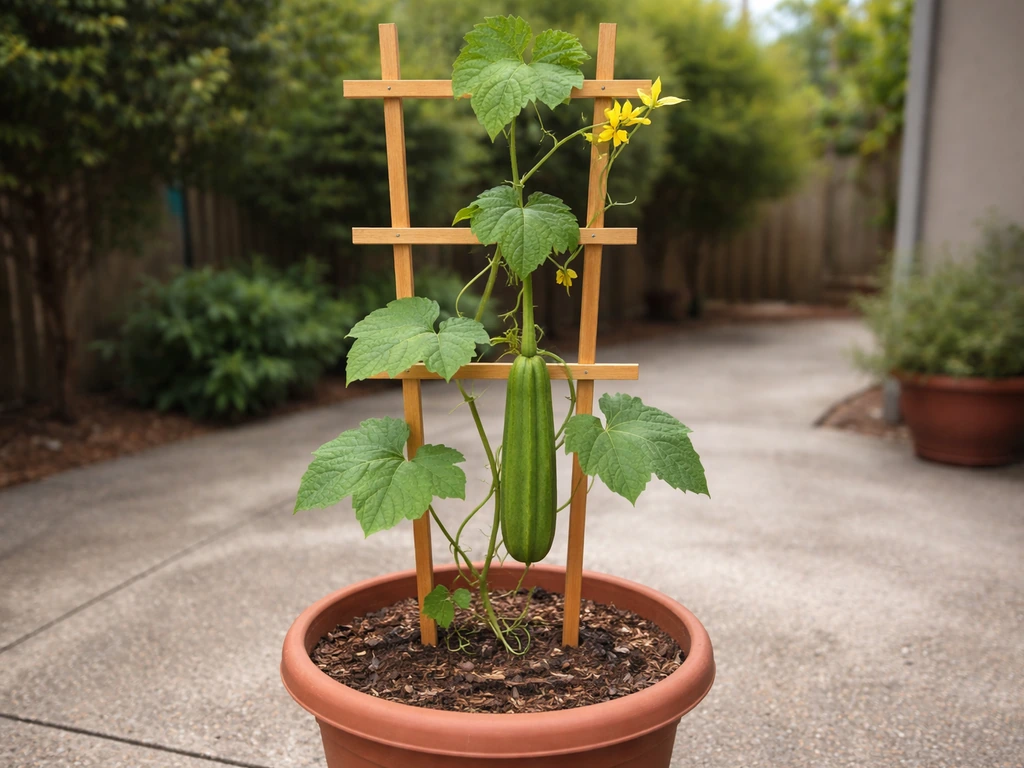
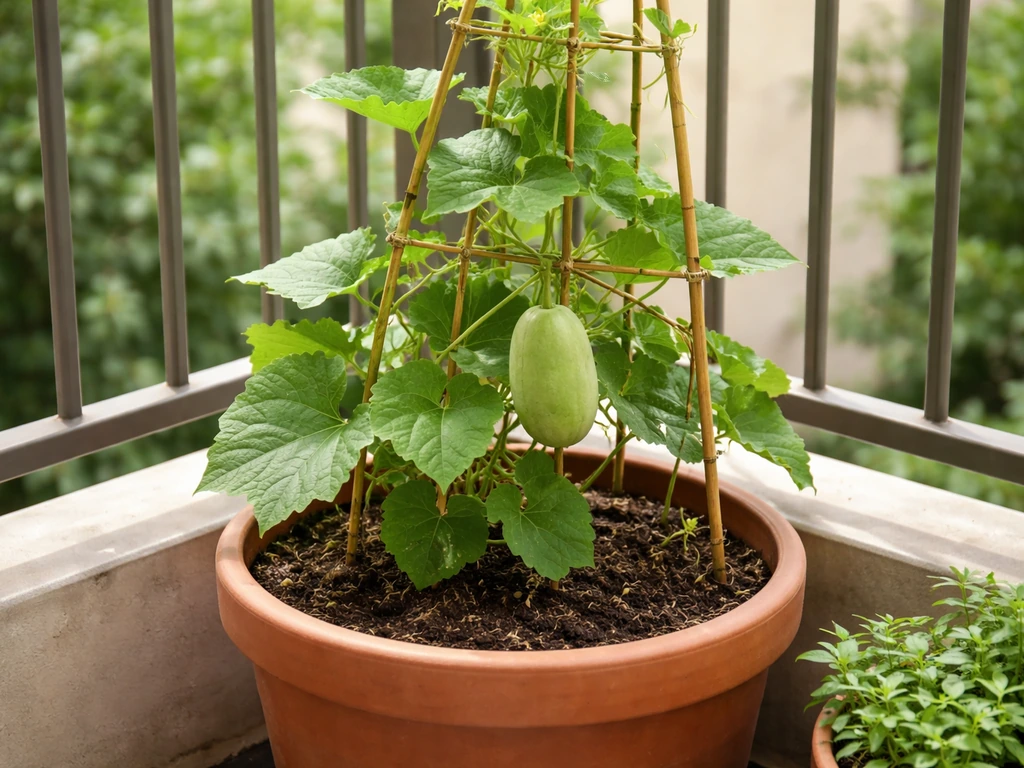
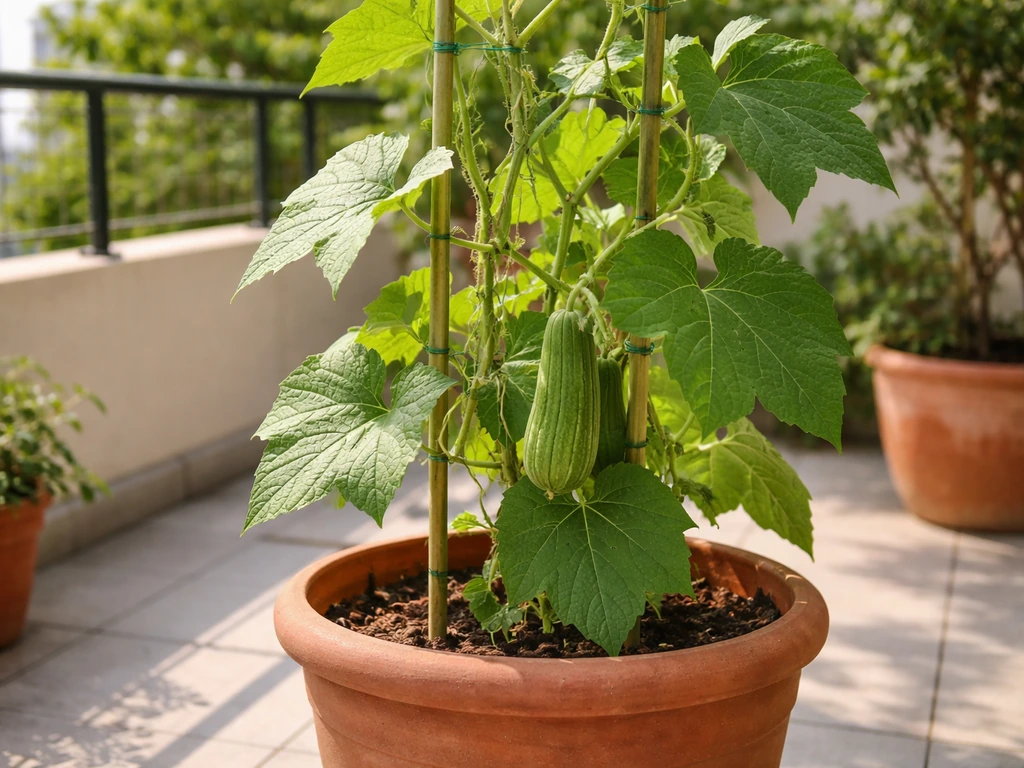
Here's the thing about sponge gourd vines: they can reach 30 feet in the ground. In a pot, you won't hit that, but the vine is still big and vigorous. You need a trellis that won't topple when the plant gets heavy. A freestanding metal or bamboo trellis staked directly into the pot works, but an even better approach is to position the pot next to a wall, fence, balcony railing, or pergola post that you can tie the vine to as it climbs. The support needs to be tall, at least 5 to 6 feet if possible.
Train the main stem up the trellis early by loosely tying it with soft plant ties or strips of fabric. Don't constrict the stem. As side shoots (lateral branches) develop, guide them along the trellis horizontally. This matters because female flowers, which become fruit, appear mainly on lateral branches. If you let the vine just go straight up with no side branches, you'll get fewer fruits.
Once the main stem reaches the top of your trellis, pinch off the growing tip. This is called topping, and it redirects the plant's energy into those side branches and into fruit production. It can feel counterintuitive to cut a healthy growing tip, but it genuinely works. Also remove any crowded, overlapping, or very weak side shoots to keep airflow good through the canopy. Poor air circulation encourages powdery mildew, which is one of the most common problems with this plant.
Pests and diseases to watch for
Container sponge gourd faces the same pest lineup as other cucurbits, with a few that are especially common. Aphids cluster on the undersides of young leaves and shoot tips. Whiteflies are a more serious problem because they reproduce fast, produce sticky honeydew that coats leaves, and weaken the plant quickly. Spider mites show up in hot, dry conditions, leaving tiny yellow speckles on leaves. Cucumber beetles and thrips round out the usual suspects.
For aphids, whiteflies, and spider mites, insecticidal soap spray is your first and most effective tool. Mix it according to the label, spray thoroughly on both sides of leaves, and repeat every 5 to 7 days until the problem clears. Catching infestations early makes a huge difference. Check the undersides of leaves whenever you water.
On the disease side, powdery mildew is the big one. It looks like white or grey dusty patches on leaves and spreads quickly in humid conditions with poor airflow. The key lesson: don't wait to treat it. Once leaves are heavily covered, fungicide becomes much less effective.
At the first sign of powdery mildew, prune off badly affected leaves, improve airflow by thinning the canopy, and start applying a fungicide approved for cucurbits (neem oil or a copper-based spray both work for home use). Downy mildew is similar in urgency but shows as yellow patches on top of leaves with grey-purple fuzz underneath. Same principle: start treatment as soon as you see it.
Rutgers downy mildew control recommendations emphasize that delaying fungicide application until after disease onset can increase selection, so start treatments promptly after symptoms appear start treatment as soon as you see it.
For seedlings specifically, watch out for damping off, which is when newly sprouted seedlings suddenly collapse at the soil line and rot. It's caused by fungal pathogens in overly wet soil. Prevention is much easier than cure: don't overwater, ensure good drainage, and give seedlings good airflow from the start.
Harvest timing and how to tell when it's ready
How you harvest depends on what you want from the fruit. If you're eating sponge gourd as a vegetable, harvest young. Fruits picked at 6 to 8 inches long and still firm with smooth, green skin are tender, mild, and great stir-fried or in curries. At this stage the interior is soft and the skin is thin. Once you let it grow past this point, the flesh becomes fibrous and the texture changes significantly.
If you're growing for a natural loofah sponge, you need to leave the fruit on the vine much longer, until it fully matures and begins to dry. A ripe-for-sponge luffa will turn yellowish-brown, feel noticeably lighter, and the skin will start to shrink and loosen from the fibrous skeleton inside. You'll actually hear it rattle when you shake it. Peel back the dry skin, shake out the seeds, rinse the sponge, and let it dry completely before use. This stage takes the full 150 to 200 day maturation period, so plan accordingly.
Use garden scissors or a sharp knife to harvest rather than twisting or pulling. Cutting the stem cleanly avoids damaging the vine, and regular harvesting of young fruits actually encourages the plant to keep producing.
Troubleshooting slow growth and no fruit
If your plant isn't doing what you expected, run through this checklist before giving up:
| Problem | Likely Cause | Quick Fix |
|---|---|---|
| Slow growth, small leaves | Too little sun or underfeeding | Move pot to a sunnier spot; apply balanced liquid fertilizer |
| Yellowing leaves | Overwatering, nitrogen deficiency, or root rot | Check drainage; let soil dry slightly; add a nitrogen-rich feed like fish emulsion |
| Lots of flowers but no fruit setting | Only male flowers present (common early on), or poor pollination | Wait for female flowers to appear on lateral branches; hand-pollinate by transferring pollen with a small brush |
| Only male flowers, no females | Vine hasn't branched yet or main stem not topped | Pinch the growing tip to encourage lateral branches where female flowers form |
| Wilting even after watering | Root rot from poor drainage or pot too small | Check drainage holes; consider repotting into a larger container with fresh mix |
| Powdery white patches on leaves | Powdery mildew starting | Prune affected leaves, improve airflow, apply neem oil or copper fungicide immediately |
| Fruit drops before maturing | Stress from irregular watering or temperature drop | Water consistently; protect from cold nights; check for pest damage at fruit base |
One of the most common frustrations is an abundance of flowers with no fruit. Luffa plants produce male flowers first, sometimes for several weeks before any female flowers appear. Male flowers sit on straight thin stems. Female flowers have a tiny swollen bump (the immature fruit) right behind the petals. Once you start seeing female flowers, you need pollinators or you need to hand-pollinate. In a balcony or urban setting with limited bee activity, take a small soft paintbrush, collect pollen from a male flower, and dab it onto the center of a female flower in the morning when flowers are fresh. This alone can turn a frustrating season into a productive one.
Growing sponge gourd in a pot is genuinely more demanding than something like tomatoes or beans, mainly because of the vine size, long season, and heat requirements. But it's also deeply satisfying, partly because so few people realize it's even possible in a container. If you're also interested in growing other gourds in pots, the approach for bitter gourd and ridge gourd follows many of the same principles around trellis setup, container size, and hand pollination, so the skills you build here transfer directly. If you want specifics, check out how to grow bitter gourd in pots for the right container size, soil, and care schedule.
FAQ
Can I move my potted sponge gourd outdoors and back inside during cool nights?
Yes, but you should only do it in warm periods and after you see active growth. Sponge gourd is frost-tender, so if nighttime temperatures drop below about 60°F, bring the pot indoors to a bright spot or cover it overnight. Avoid leaving it in a cold, unheated garage, the soil can stay too cool and growth slows dramatically.
What should I do if my sponge gourd is flowering but fruit isn’t forming?
If the vine is growing but fruits stall, check pollination and plant energy balance first. Flowers that open but never set fruit usually mean poor pollination, lack of female flowers timing, or too much nitrogen (lush leaves but weak fruiting). Switch to a potassium-leaning feed once you see flowering, and hand-pollinate female flowers in the morning.
Should I mulch my sponge gourd pot, and what’s risky about it?
Don’t use mulch that stays wet against the stem in a container, it can worsen fungal issues like damping off or powdery mildew. If you want mulch, use a thin layer away from the crown after plants are established (later in the season), and prioritize airflow by keeping the canopy thinned and the trellis trained.
How can I tell if I’m watering too much, and what causes root rot in pots?
Overwatering and slow-draining pots are the fastest path to root rot. Make sure excess water can run out freely, then water deeply only when the top inch is dry. Also, don’t let the pot sit in a saucer or decorative cachepot that holds runoff.
Can I rotate the pot for even sun, and will that hurt the plant?
Because roots are sensitive to disturbance, choose one final container location early and avoid moving the plant once it has started climbing. If you must reposition, do it gradually over a few days (or move the whole pot with the trellis) so the vine and root environment change less abruptly.
I planted 2 or 3 seeds in one pot, when and how should I thin sponge gourd?
Spacing matters even in a single container. If you planted multiple seeds per pot, thin to one strongest plant once you have a couple of true leaves, otherwise the remaining plants compete for nutrients and water and fruit set drops.
What are the signs my sponge gourd is ready for loofah harvest, and what happens if I pick too early?
For loofah harvest, the key is letting the fruit fully dry on the vine, not just drying it in a hurry after picking. Wait until the skin turns yellowish-brown, the sponge feels lighter, and the interior sounds hollow or rattles. If you peel early, the fibers can stay soft and mold more easily.
Why are my sponge gourd fruits coming out crooked or small?
Fruit can get misshapen or fail to fill if the plant experiences heat stress, inconsistent watering, or nutrient imbalance during flowering and early fruit development. Keep soil moisture steady (water when the top inch dries), ensure full sun, and use a potassium-forward liquid feed once flowering begins.
How do I adjust feeding if my potted plant looks burned or overly lush?
In containers, fertilizer salts can build up faster. If leaves look pale or tips burn, flush the pot with plain water until excess drains out, then resume feeding at a lower concentration. A diluted fish emulsion is fine, but stop overfeeding and don’t apply again during very cloudy stretches.
Besides pollination, what training mistakes reduce fruit on potted sponge gourd?
Common “no fruit” issues include timing, pollination, and training. Male flowers often appear first, then female flowers later. Also, female flowers form on lateral branches, so topping early and guiding side shoots horizontally increases your chances of fruit.
What’s the best immediate action when I first notice powdery mildew on my plant?
White or grey powdery patches usually mean powdery mildew, and the fix works best when started early. Remove heavily affected leaves, improve airflow by pruning crowded growth, and spray an approved cucurbit-safe treatment, repeating at the interval on the label. If you wait until the whole canopy is covered, control becomes much harder.