Osteospermum, also called African daisy, grows brilliantly in pots as long as you get three things right: a well-draining mix, a sunny spot, and consistent deadheading. Get those sorted and you'll have bright, daisy-like flowers from late spring right through autumn. Skip any one of them and you'll be looking at a leggy, half-blooming plant wondering what went wrong. This guide walks you through everything, from picking the right variety to what to do when the first frosts show up. If you want to know how to grow an olive tree in a pot, the key is choosing the right container size, using a very well-draining mix, and placing it in as much sun as you can how to grow olive tree in pot.
How to Grow Osteospermum in Pots: Full Container Guide
Marcus Whitley
20 Jun 2026
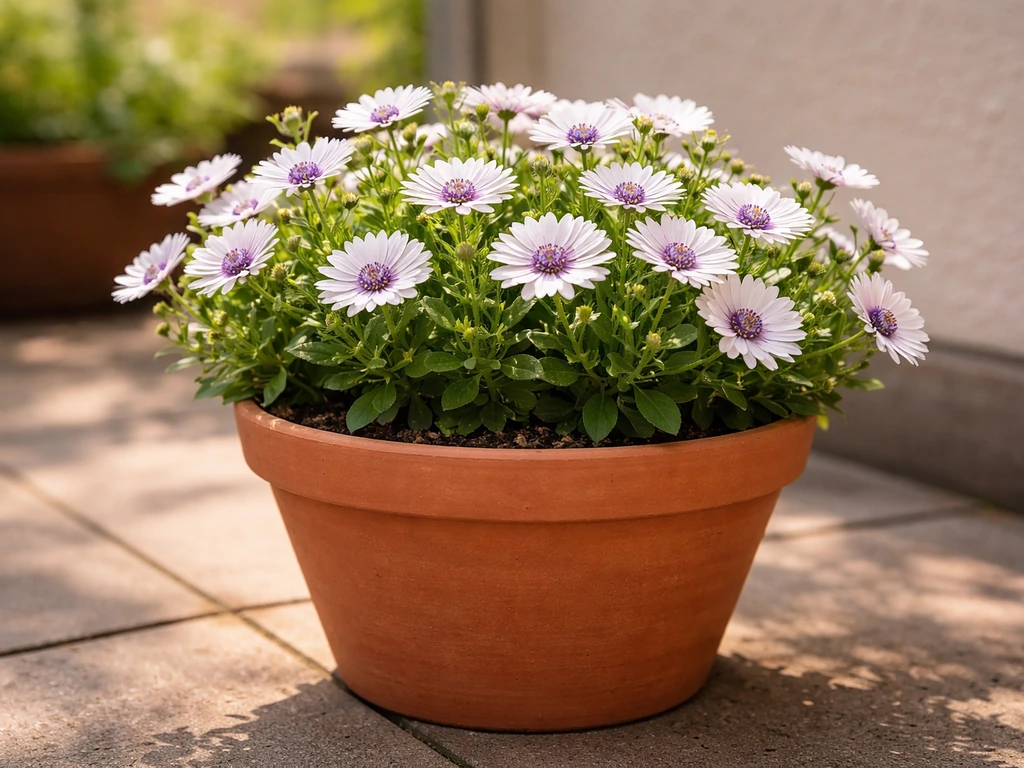
Choosing the right osteospermum varieties for pots
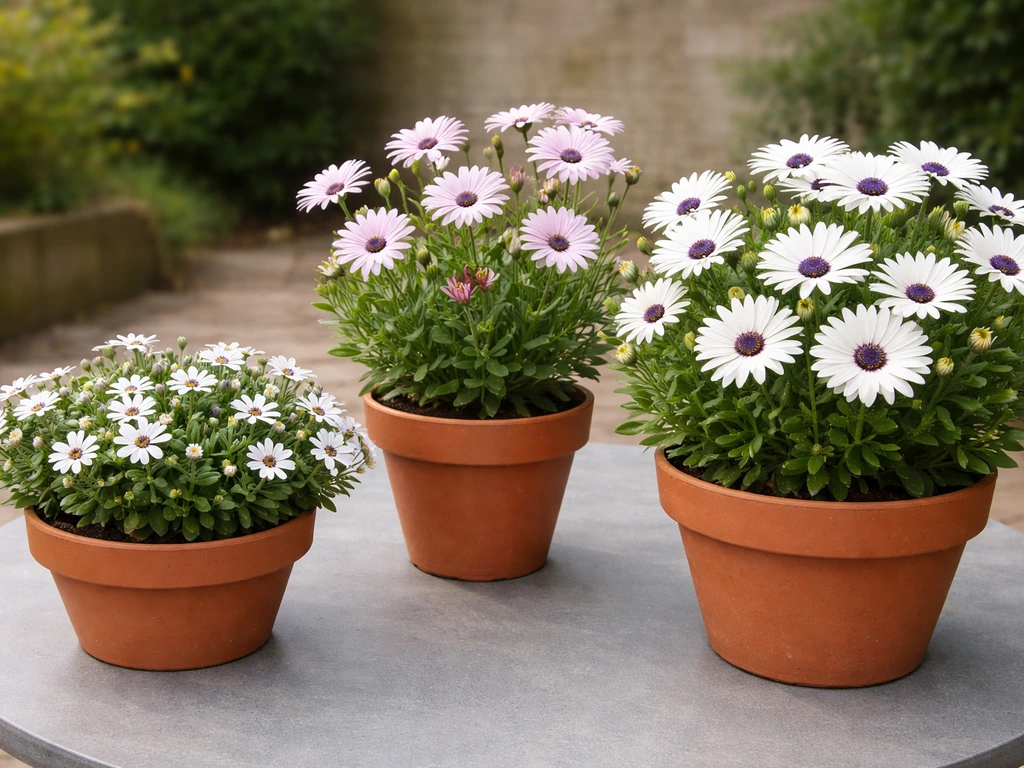
Not all osteospermum varieties behave the same way in containers, and size really matters here. Some varieties can reach 60 cm tall and wide (the Sunny Series, including 'Sunny Philip', is a good example), which is perfectly manageable in a large pot but will quickly swamp a window box. For smaller containers, balcony setups, or hanging baskets, compact series are a much better fit.
The Daisy Chain series is one I'd point beginners toward straight away. It tops out at around 20 to 30 cm tall, stays naturally tidy without much intervention, and was specifically bred with containers in mind. If you’re specifically wondering how to grow oleanders in pots, focus on choosing a large container, using fast-draining soil, and providing lots of sun containers in mind. It won't flop over the sides or crowd out neighbouring plants. If you want something with a trailing habit for a hanging basket or the edge of a large planter, look for Osteospermum fruticosum types. These trail to 2 to 4 feet wide while staying only 6 to 18 inches tall, which gives a lovely cascading effect.
| Variety / Series | Height | Spread | Best Container Use |
|---|---|---|---|
| Daisy Chain series | 20–30 cm | Compact, tidy | Small pots, window boxes, balconies |
| Sunny Series (e.g. 'Sunny Philip') | ~60 cm | ~60 cm | Large pots, patio containers |
| Osteospermum fruticosum (trailing types) | 15–45 cm | 60–120 cm | Hanging baskets, wide planters |
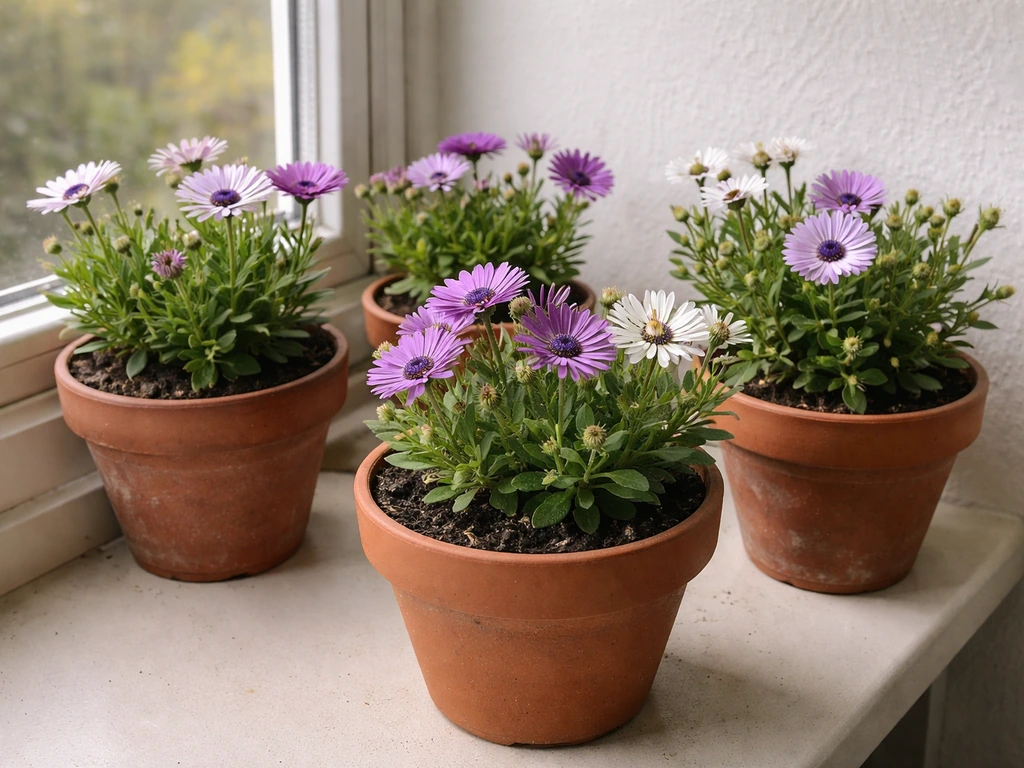
Colours range from white and yellow through to deep purple and coral, and there are even spoon-petalled varieties that look a bit unusual in a good way. When buying, check the mature size on the label before you commit. A plant that looks petite in a 9 cm nursery pot can surprise you by midsummer.
Selecting the pot, location, and growing conditions
For a single compact variety, a pot around 25 to 30 cm (10 to 12 inches) in diameter is a solid starting point. If you're planting a larger variety like one from the Sunny Series, go up to 35 to 40 cm. One common mistake I see people make is going too big too fast, picking a huge pot because they want wiggle room. If you want a similar result with a different plant, follow the right steps for growing a date palm in a pot. The problem is that a large volume of compost around a small root ball stays wet for a long time, and osteospermum hates sitting in soggy soil. Root rot can take hold before the plant even has a chance. Go a size up from what feels necessary, not two or three sizes.
Drainage holes are non-negotiable. If a pot doesn't have them, drill some or choose a different pot. Terracotta pots are a great choice for osteospermum because they're porous, which helps the compost dry out a little between waterings. Plastic pots hold moisture longer, so if that's what you're using, be extra careful not to overwater.
For location, osteospermum needs full sun. We're talking at least 6 hours of direct sunlight per day, and more is better. A south or west-facing spot is ideal in the UK and temperate climates. These plants close their flowers in low light, so a shady corner will leave you with a plant that barely opens all day. A sunny patio, balcony railing, or doorstep is perfect.
Soil and planting setup for container osteospermum
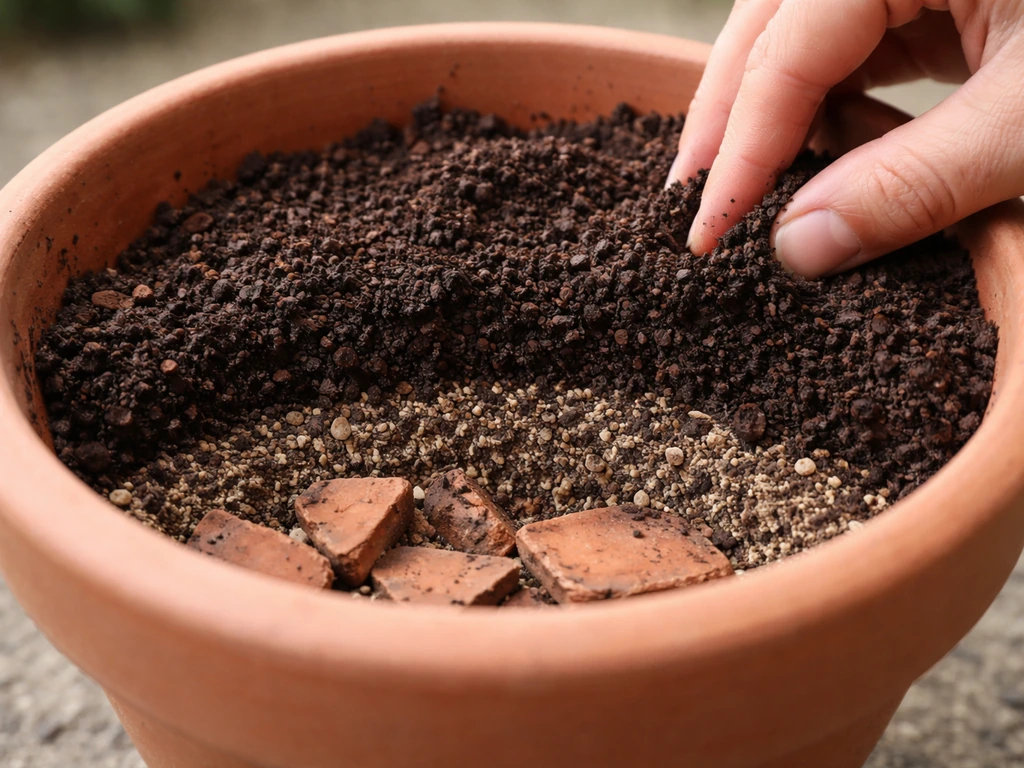
The soil mix is genuinely one of the most important decisions you'll make. Standard multipurpose compost on its own tends to hold too much water for osteospermum's liking. I mix it with about 20 to 30 percent perlite or horticultural grit to open up the structure and improve drainage. This mirrors the kind of lightweight, free-draining mix that commercial growers use to prevent the root rot pathogens (Pythium, Phytophthora, and Rhizoctonia are the main culprits) that thrive in heavy, waterlogged compost.
Before filling your pot, add a layer of crocks (broken terracotta pieces) or gravel over the drainage holes to stop compost blocking them. Then fill with your mix to about 5 cm below the rim, which leaves space for watering without it sloshing over the edge.
Plant your osteospermum at the same depth it was growing in its nursery pot. Don't bury the stem. If you're planting more than one in a larger container, space compact varieties about 20 to 25 cm apart and larger varieties 30 to 35 cm apart. They'll fill in quickly, and good spacing helps airflow around the leaves, which matters for disease prevention later on.
Water well straight after planting to help the roots settle in, then hold back and let the top inch of compost dry out before watering again. This first week or two is when overwatering is most tempting and most damaging.
Watering routine and fertilizing schedule
In active growth (late spring through summer), osteospermum in pots needs watering regularly, but it's not a plant that wants to be constantly wet. The general rule I follow: push your finger an inch into the compost. If it's dry at that depth, water thoroughly until it drains from the bottom. If it's still moist, leave it another day. In a heatwave, a pot in full sun may need watering every day. In a cool, cloudy spell, every 3 to 4 days might be enough. Always respond to what the plant is actually telling you rather than sticking rigidly to a schedule.
When you water, do it thoroughly. A light sprinkle just wets the surface and encourages shallow roots. You want water to move through the whole pot and out the bottom. Empty saucers after watering so the pot isn't sitting in standing water.
For feeding, osteospermum in containers is a hungry plant because regular watering leaches nutrients out of the compost. A balanced, water-soluble fertilizer applied every 2 to 3 weeks through the growing season works well. Some sources suggest every 2 to 4 weeks is fine, so you have a little flexibility there. A tomato feed (which is higher in potassium) from midsummer onwards can encourage more flowers rather than leafy growth. Avoid overfeeding with a high-nitrogen fertilizer mid-season, as you'll end up with lots of lush green leaves and fewer blooms.
Light, temperature, and weather care
Osteospermum is a sun-lover and a warm-weather plant, but it does have a quirk worth knowing: it can sulk in extreme heat. If temperatures regularly push above 30°C (86°F), flowering can slow down noticeably. This is sometimes called heat dormancy, and it's temporary. Keep the plant watered and in place. When temperatures ease, it tends to bounce back and flower again in late summer and autumn. This is actually one of the best things about osteospermum in containers: you can move the pot somewhere slightly cooler or shadier during a heatwave and then return it to full sun.
Wind is another thing to watch for balcony gardeners. Strong wind dries pots out extremely fast and can damage stems and petals. Positioning your pot in a spot with some shelter from the worst gusts, or grouping containers together, helps considerably. Prolonged rain is the other enemy: if your pots can't be moved under cover during a week of heavy rainfall, at least make sure drainage is impeccable so water isn't pooling.
Osteospermum is not frost-hardy in most temperate climates. It can tolerate a light, brief frost in some cases, but freezing temperatures will kill it. Osteospermum typically needs frost protection or bright, frost-free conditions for overwintering in UK climates, and it is important to avoid soggy winter compost to reduce the risk of rot frost-free overwintering and avoiding soggy winter conditions. Once night temperatures start dropping toward 5°C (41°F) consistently, it's time to think about overwintering plans, which I'll cover at the end of this guide.
Deadheading, pruning, and managing growth
This is genuinely the most impactful thing you can do to keep osteospermum flowering all season. When a flower finishes, the plant puts energy into setting seed, and flowering slows down. Deadheading (removing spent flowers) redirects that energy back into producing new buds. I do a quick pass over my pots every few days, snapping or cutting off any faded blooms. It takes 5 minutes and makes a real difference over the course of the season.
If your plant starts to look leggy, with long straggly stems and few flowers, give it a harder trim. Cut stems back by about a third, ideally to just above a leaf node (the point where a leaf joins the stem). This encourages bushy new growth. It feels drastic the first time you do it, but the plant recovers quickly. Mid-season, usually around July, is a good time for this if growth has gotten a bit wild.
Pinching out the growing tips of young plants early in the season (when they have 3 to 4 sets of leaves) encourages branching and a fuller plant shape. This one simple step can make the difference between a thin, upright plant and a bushy, floriferous mound.
Common pests, diseases, and troubleshooting
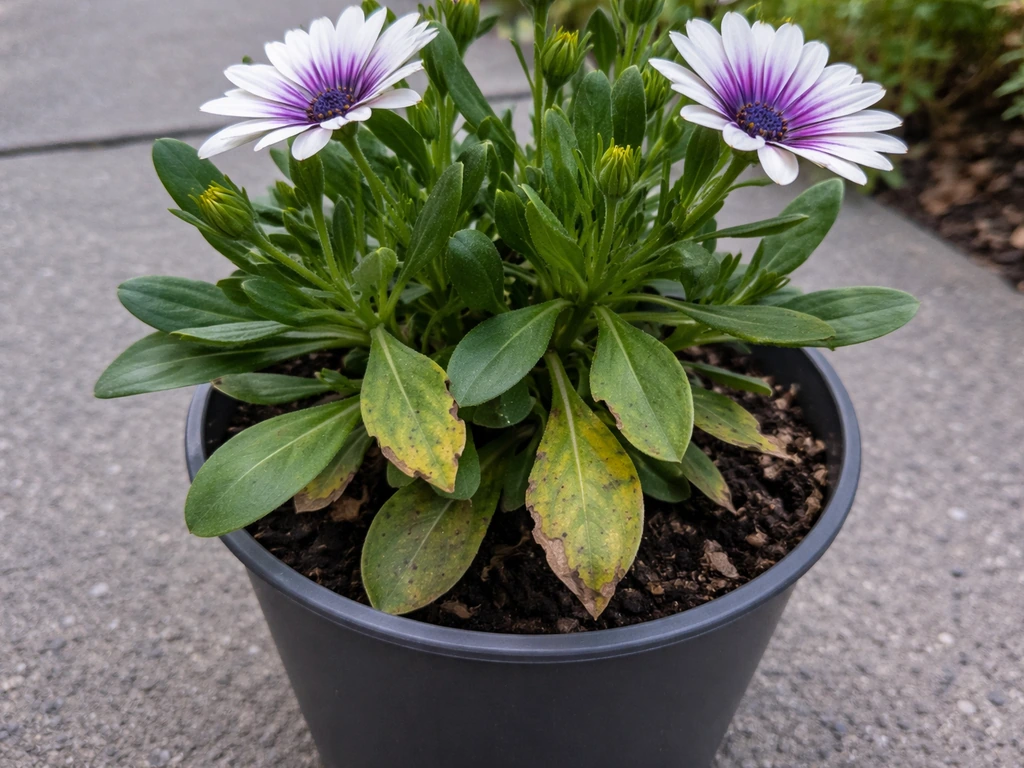
Most problems with container osteospermum come down to watering or airflow issues rather than anything exotic. Here are the ones I run into most often and what to do about each.
Yellowing leaves
The most common cause in pots is overwatering. If the lower leaves are turning yellow and the compost feels consistently wet, ease off watering and check your drainage holes aren't blocked. If yellowing is happening across the whole plant and the compost seems fine, it might be a nutrient deficiency: start a fortnightly feeding schedule if you haven't already.
Wilting despite watering
If you're watering regularly and the plant is still wilting, check the roots. Tip the plant gently out of its pot if you can. Healthy roots are white and firm. Brown, mushy roots signal root rot, usually from overwatering or poor drainage. Remove the damaged roots, let the root ball dry out a bit, and repot into fresh, gritty compost. It's a rescue operation that works more often than you'd expect.
Poor or no flowering
First check your light levels: osteospermum needs proper sun. Then check if you've been overfeeding with a high-nitrogen fertilizer, which pushes leafy growth. Make sure you're deadheading consistently. If it's midsummer and temperatures have been very high, wait it out and you should see flowers return as things cool down.
Powdery mildew
This shows up as a white powdery coating on leaves and is favoured by cool, humid nights followed by warm days, which is very much a standard UK summer. Good airflow around the plant is your best defence, so don't overcrowd your containers. If you see mildew starting, remove affected leaves and consider moving the pot somewhere with better air circulation. A diluted neem oil spray can help manage mild cases.
Gray mold (Botrytis)
Gray mold is a fuzzy grey fungal growth that loves humid, wet conditions with poor ventilation. In a densely packed container during a damp spell, it can spread quickly. Remove any affected plant material immediately, reduce overhead watering (water at the base of the plant rather than over the foliage), and improve airflow by spacing plants properly.
Aphids and whitefly
These are the most common insect pests on osteospermum in containers. Aphids cluster on new shoot tips and under leaves, and whitefly cloud up when you brush the plant. A strong blast of water from a hose often knocks aphids off effectively. For persistent infestations, an insecticidal soap spray works well and is safe to use in a small garden or balcony setting.
Overwintering and replanting in containers
Osteospermum is technically a perennial in mild climates (roughly USDA zones 10 to 11, or sheltered parts of the UK), but in most temperate gardens and certainly anywhere with hard frosts, it's treated as an annual or a half-hardy perennial. If you want to keep palms growing in pots, you’ll need to match them with the right warmth, light, and watering to prevent stress and leaf damage how to grow palms in pots. Your options at the end of the season depend on where you live and how much space you have indoors.
In mild coastal or sheltered UK gardens, you may be able to leave osteospermum outside in its pot year-round with some protection. Move the pot against a south-facing wall, wrap the pot (not the plant) in horticultural fleece or bubble wrap to protect the roots from freezing, and keep the compost on the dry side through winter. Sago palm care in pots has a similar focus on protecting the roots and avoiding waterlogged compost during colder weather how to grow sago palm in a pot. Waterlogged winter compost kills more overwintering osteospermum than the cold does. They strongly dislike soggy conditions at any time of year, but especially in winter.
In colder climates with regular hard frosts, the more reliable option is to bring the pot indoors before the first frost hits. A cool, bright frost-free space like an unheated greenhouse, conservatory, or bright porch works well. Keep the plant barely moist through winter, not dry, just not wet. It will look a bit rough and may drop some leaves, but that's fine. In spring, when temperatures start climbing again and frost risk drops, move it back outside and begin feeding again to kickstart new growth. Sandalwood can also be grown in a pot if you provide warmth, bright light, and a very well-draining potting mix sandalwood tree.
A third option is to take cuttings in late summer (August to September). Snip 8 to 10 cm stems, remove the lower leaves, and push them into a moist gritty compost mix. Keep them on a bright windowsill indoors over winter and pot them up in spring. This is actually the most reliable way to guarantee plants for next year in colder climates, and it's less fuss than trying to overwinter the whole mother plant.
If none of those options appeal and you're happy treating osteospermum as an annual, just compost the plant at the end of the season and buy fresh plants next spring. There's no shame in that approach at all. The plants are usually inexpensive, and starting fresh each year means starting with the most vigorous possible plant.
Whenever you're replanting in the same pot, give it a good clean with diluted garden disinfectant before refilling with fresh compost. Old compost can harbour disease spores from the previous season, and a clean start removes that risk entirely. It's a small step that makes a real difference, especially if you had any root rot or disease problems the previous year. If you want to try something similar with a different plant, learn how to grow olive trees in pots in the UK, including container choice and overwintering.
FAQ
Can I grow osteospermum in a pot without perlite or grit?
You can, but you’ll need to compensate for the slower draining compost. If you skip perlite or grit, use a coarser potting mix and be extra strict about watering only when the top inch dries out. In heavy, peat-rich mixes, osteospermum is more likely to suffer root rot even if the plant looks fine at first.
How do I stop osteospermum flowers from ending early if I deadhead but still get fewer blooms?
Deadheading helps, but heat and nutrition can override it. If days are consistently above about 30°C, flowering may stall temporarily, even with perfect deadheading. Also switch to a bloom-supporting feed (higher potassium) from midsummer, and avoid high-nitrogen fertilizer after early growth.
What’s the best way to water in hot weather so the pot doesn’t stay too wet?
Water thoroughly until it drains from the bottom, then leave until the top inch of compost dries. In heatwaves, it may require daily watering, but the key is that drainage and emptying saucers prevents the pot from sitting in excess water overnight.
My osteospermum gets leggy, but I already deadhead. What else should I do?
Check sun first (it must be at least 6 hours of direct light). If light is solid, trim back by about a third to just above a leaf node to force new side growth, and pinch out tips on younger plants early in the season to build a bushier frame.
Should I use a saucer or cachepot under the pot?
Use one only if you can empty it every time you water. A constantly wet saucer can keep the root zone soggy, which is a common trigger for yellowing and mushy roots. If your pot sits directly on a saucer, monitor it closely and dump excess water promptly.
How can I tell early if I’m overwatering versus underwatering?
Overwatering usually shows as persistent yellowing, compost that stays wet or cool, and later wilting with roots that may turn brown and mushy. Underwatering more often looks like drooping with compost that has dried out through the top inch. When in doubt, use the finger test before adding water.
Do osteospermum pots need feeding year-round?
No. Feed through the active growing season when it is pushing new growth and producing buds. In winter or during a cool-rest period indoors, pause feeding and keep moisture barely on the dry side to avoid rot, since leached nutrients and wet compost are a bad combination.
Why are the leaves getting a white powder or grey fuzzy patches?
Powdery mildew is linked to humid nights and can be reduced by improving airflow and removing affected leaves. Gray mold usually appears in wetter, less-ventilated conditions and spreads faster, so remove infected material, avoid overhead watering, and improve spacing or shelter from persistent rain.
What do I do if pests keep coming back on my balcony plants?
Treat in cycles. Aphids often respond quickly to a strong water jet, but repeat checks every few days matter because they multiply on new growth. For whitefly and persistent infestations, an insecticidal soap spray works best when applied thoroughly to leaf undersides, and you may need more than one treatment.
Can I move my osteospermum pot during a heatwave and still expect flowers later?
Yes, and it’s often beneficial. Move the pot to a slightly cooler or shadier spot during the hottest stretches to reduce heat stress, then return it to full sun once temperatures ease. Keep watering regular, since heat dormancy is temporary but dehydration can still set you back.
How should I overwinter osteospermum in a pot if I don’t have a greenhouse?
A bright, cool, frost-free space is enough, such as an unheated conservatory or a bright porch. Keep the compost barely moist, not wet, because waterlogged winter compost is more lethal than mild cold. If you cannot provide light, the plant may drop leaves, but you can still move it outside in spring once frost risk passes.
Is it worth trying to overwinter the same plant, or should I take cuttings?
In colder climates, cuttings are often the most reliable. Take stem cuttings in late summer, overwinter them indoors on a bright windowsill, and pot up in spring. This avoids risking the mother plant in winter wet and reduces the chance you lose the entire plant.
Can I use a decorative pot or outer cover without drainage holes?
Only if the plant’s actual nursery pot has drainage and the outer cover does not trap water. Never let the drainage water collect in a sealed decorative cachepot. If it does, you’ll need to remove the inner pot to empty it after watering, or choose an outer pot that allows runoff to escape.