Yes, you can grow sugarcane in pots, and it works better than most people expect. You'll need a large container (at least 15–20 gallons), a cutting with several nodes, a well-draining potting mix, and a spot that gets full sun all day. The plant won't get as tall as field-grown cane, but you can absolutely harvest real, chewable, juice-worthy stalks from a container on a patio or balcony. Here's exactly how to do it, start to finish. If you want another pot-friendly, ground-covering plant to try alongside your cane, see how to grow sweetgrass in pots for a related container option.
How to Grow Sugar Cane in Pots: Step by Step Guide
Marcus Whitley
7 Jun 2026
Choosing the right sugarcane variety and container size
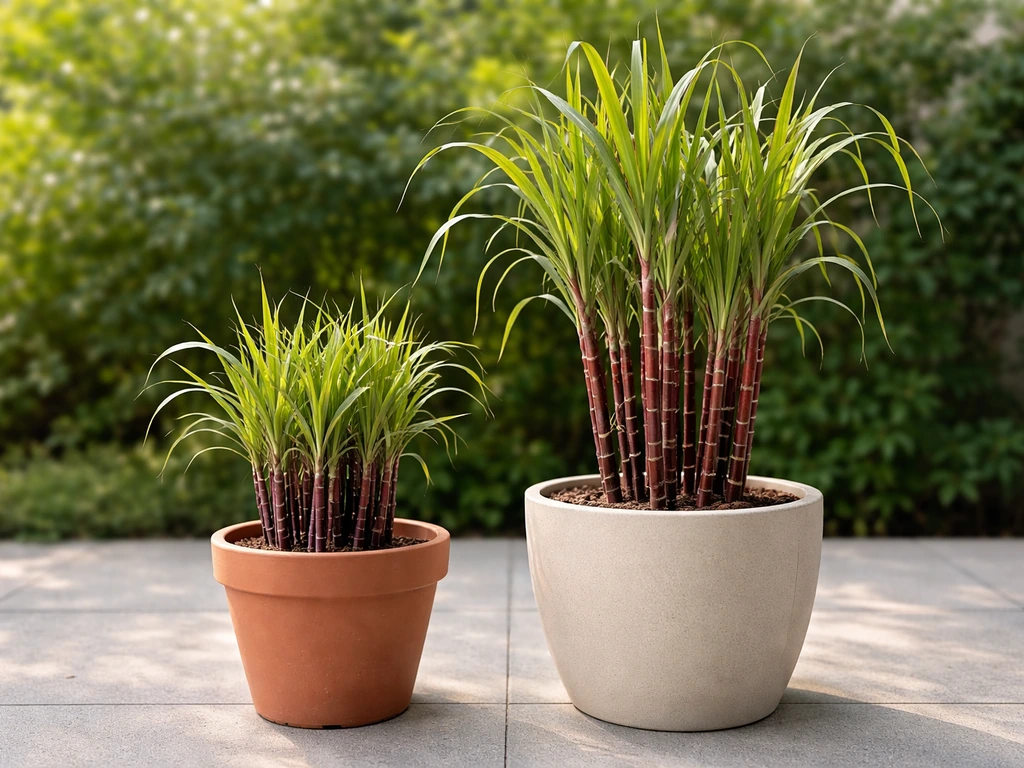
Not all sugarcane varieties behave the same in containers, so picking the right one upfront saves a lot of headaches later. For pot growing, you want compact or moderate-growing cultivars rather than the giant commercial varieties that push 12 feet tall in the ground. Look for these options at local nurseries or online suppliers:
- Saccharum officinarum 'Purple' or 'Red' varieties: These ornamental-edible types are popular, manageable in containers, and look great on a patio. They typically top out at 4–6 feet in pots.
- Yellow Gal (Saccharum officinarum): A classic backyard variety that stays manageable and produces sweet stalks.
- Louisiana Purple and other heirloom types: Widely available as cuttings from home gardeners and farmers markets, and well-suited to container life.
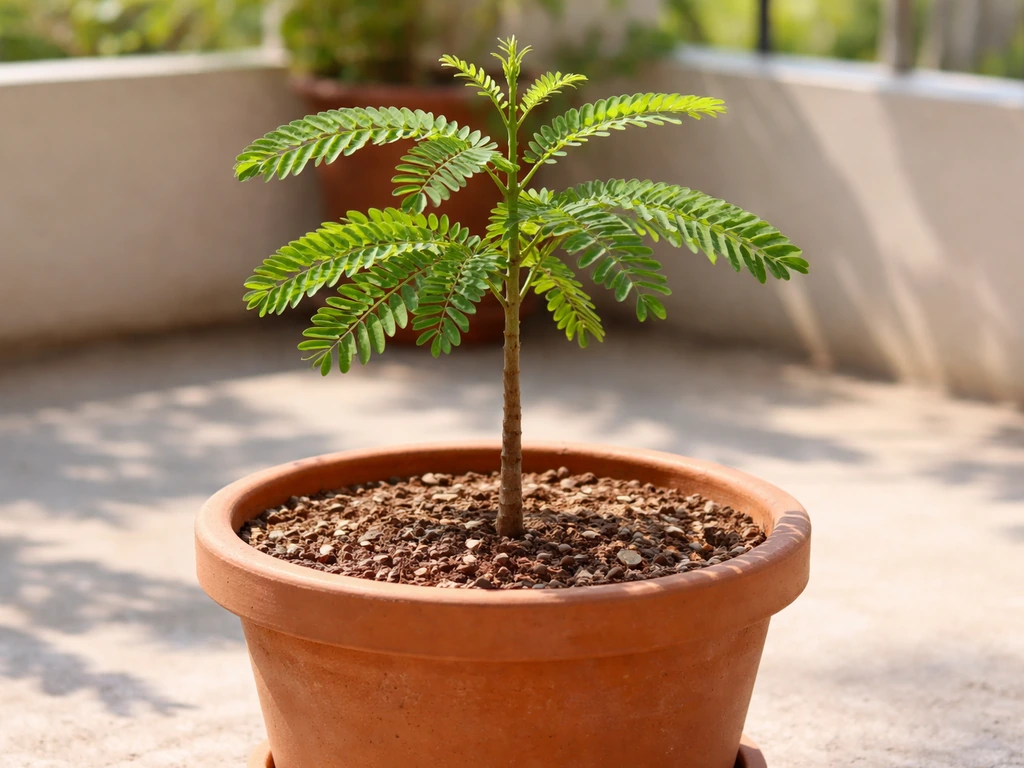
- If you're growing purely for ornamental value and can't find edible cultivars locally, sugarcane plumegrass (Erianthus giganteus) is a close relative that grows 3–8 feet and looks the part, though it's not the same for eating.
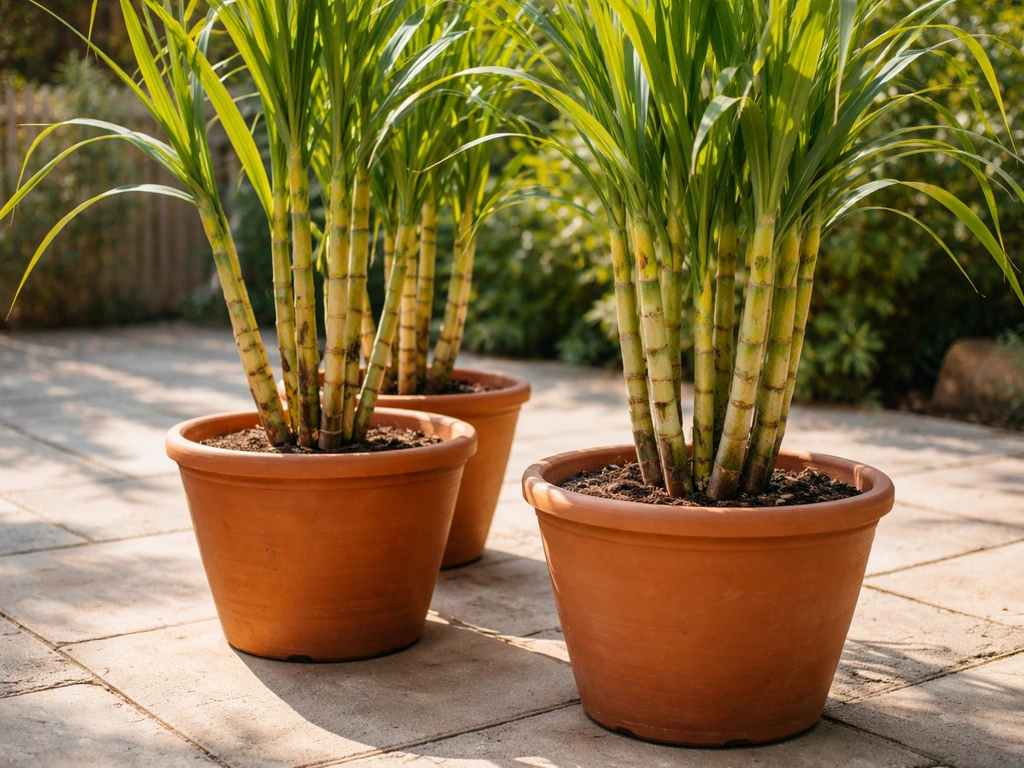
Container size matters more with sugarcane than with almost any other pot plant. Go too small and the roots get cramped, growth stalls, and the stalks stay thin and disappointing. I'd say a 15-gallon pot is your minimum for a single stalk, but a 20–25 gallon container gives you room for 2–3 shoots and produces noticeably better results. Wide, deep containers (at least 18 inches deep and 18–24 inches across) work best because sugarcane roots spread both outward and downward. Heavy-duty plastic, fabric grow bags, or wooden half-barrel planters all work well. Terracotta looks nice but dries out fast, which means more watering work on hot days.
Getting started: planting cuttings and timing
Sugarcane is always started from cuttings, not seeds. The cutting is called a sett or billet, and it's a section of stalk that sprouts new growth from the nodes (those ringed joints you can see along the stalk). Getting the cutting right is half the battle.
How to prepare your cutting
Source your cane from a healthy, mature stalk, ideally from a gardening friend, a farmers market vendor, or an online specialty supplier. Cut the stalk into sections that are roughly 12–24 inches long, making sure each piece has at least 3–6 nodes (the rings on the stalk). More nodes means more sprouting points, which means a better chance of success. If your cutting has a top growing point, cut it off. This sounds counterintuitive, but removing the tip reduces apical dominance, which is just a fancy way of saying it stops the top bud from hogging all the energy and lets the side nodes sprout more evenly.
How to plant the cutting
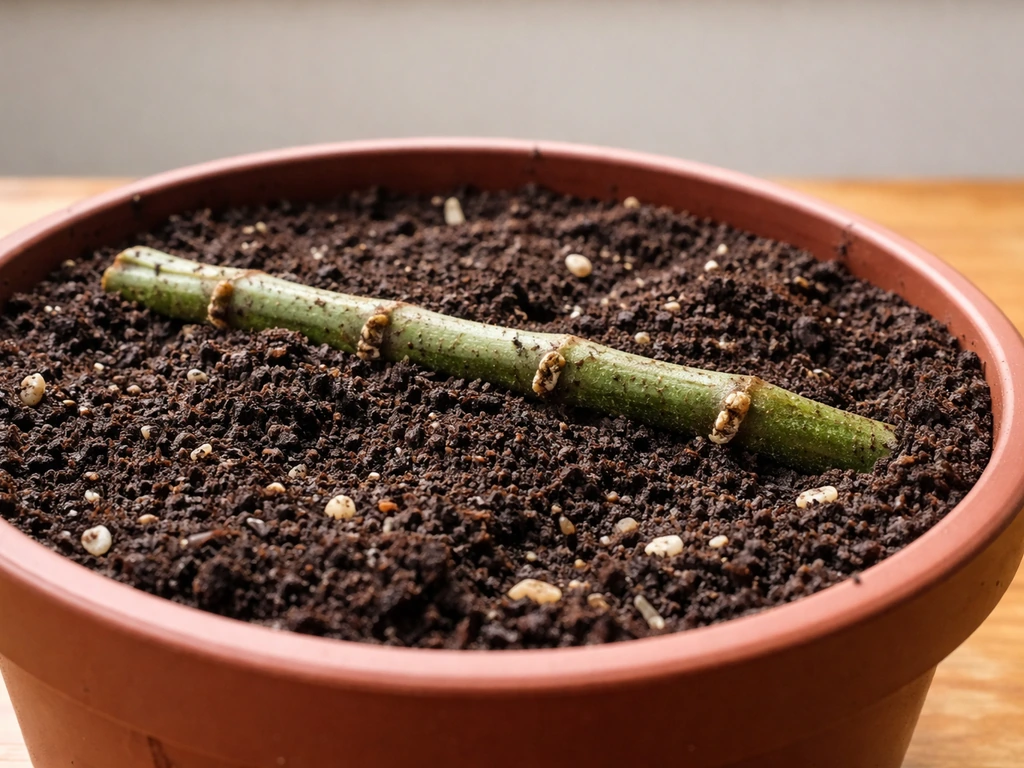
Lay the cutting horizontally in the pot rather than standing it upright. This is the most reliable method for container growing because it puts multiple nodes in contact with moist soil at once. Dig a trench in your potting mix about 2–4 inches deep, lay the sett in flat, and cover it with loosely packed soil. Don't pack the soil down hard; the roots and shoots need to push through easily. Water well right after planting to settle everything in. You can also start cuttings in a shallow tray of compost first (covering them with a layer of compost), then transplant the sprouted sections into your larger pot once you see shoots developing.
Best time to plant
Plant in spring once nighttime temperatures are reliably above 60°F (15°C). Sugarcane is a tropical grass that needs warmth to germinate, and a cold snap after planting can seriously set back or kill your cuttings. In warmer climates (USDA zones 8–11), you have more flexibility. If you're in a cooler zone, starting your cuttings indoors in late winter and moving them outside after last frost is a smart move. Don't rush it; a cutting planted in warm soil two weeks later will outperform one planted in cold soil a month early.
Soil mix, drainage, and fertilizing for container sugarcane
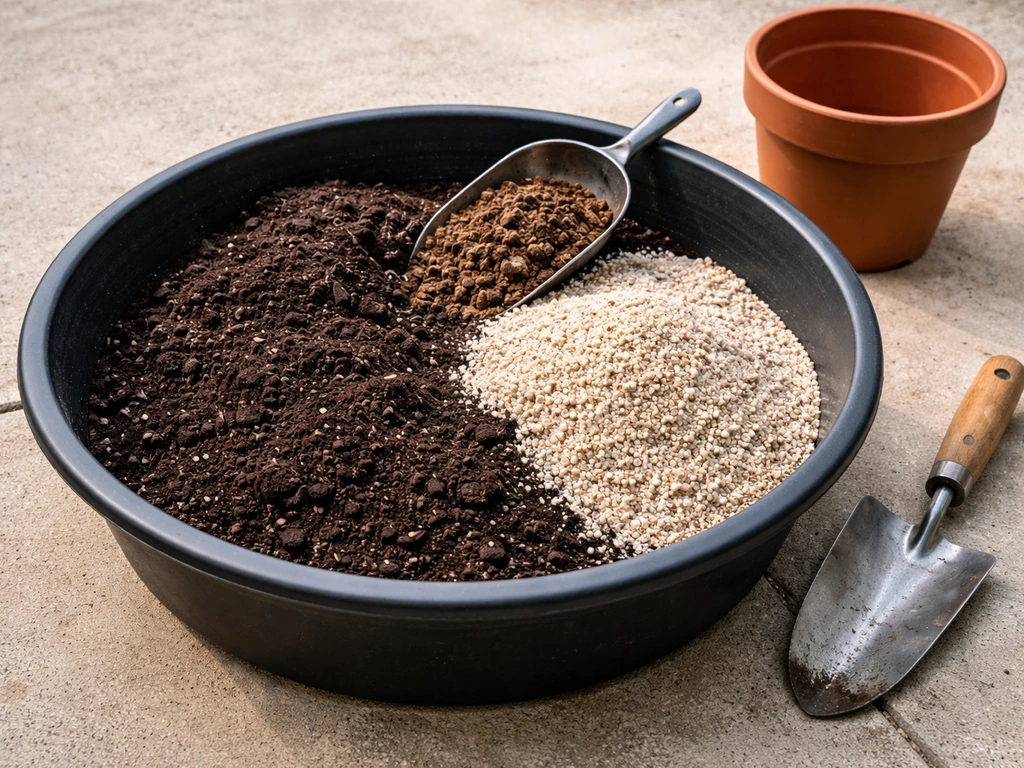
The soil in your pot is doing everything field soil does, but in a fraction of the volume, so getting this right is non-negotiable. Regular garden soil alone is a bad idea in containers because it compacts, drains poorly, and suffocates roots. You want something that holds enough moisture to keep the roots happy but drains well enough that the pot never stays waterlogged.
Recommended potting mix
Mix these ingredients together for a reliable container sugarcane medium:
- 50% high-quality potting mix (not garden soil)
- 25% compost or aged manure (adds nutrients and moisture retention)
- 25% perlite or coarse sand (improves drainage and prevents compaction)
This blend gives your cane the loose, airy root environment it needs while holding enough moisture between waterings. Always make sure your pot has drainage holes at the bottom. If excess water can't escape, the roots will rot no matter how good your soil mix is. If you're using a saucer under the pot, empty it after watering so the pot isn't sitting in pooled water.
Fertilizing schedule
Sugarcane is a heavy feeder, especially during the rapid growing phase in summer. But more fertilizer is not always better in a pot. Over-fertilizing causes salt buildup in the potting mix, which actually burns roots and can cause yellowing leaves and poor growth, the exact opposite of what you want. Here's a simple three-stage approach that works well in containers:
| Growth Stage | Timing | Fertilizer Focus | Frequency |
|---|---|---|---|
| Establishment | First 4–6 weeks after planting | Balanced NPK (10-10-10) at half the recommended dose | Every 3–4 weeks |
| Rapid vegetative growth | Months 2–6 | Higher nitrogen (e.g., 20-10-10) to push stalk and leaf growth | Every 2–3 weeks |
| Maturing/pre-harvest | From month 6 onward | Lower nitrogen, higher potassium (e.g., 5-10-15) to build sugar content | Once a month |
Liquid fertilizers are easier to control in pots than granular ones because you can flush excess salts out by watering thoroughly until it drains freely from the bottom. Do this every 4–6 weeks to prevent salt crust buildup on the soil surface. If you see a white or tan crusty residue forming on the top of your potting mix, that's a salt buildup warning sign and a signal to flush the pot right away.
Sunlight, watering, and temperature and humidity care
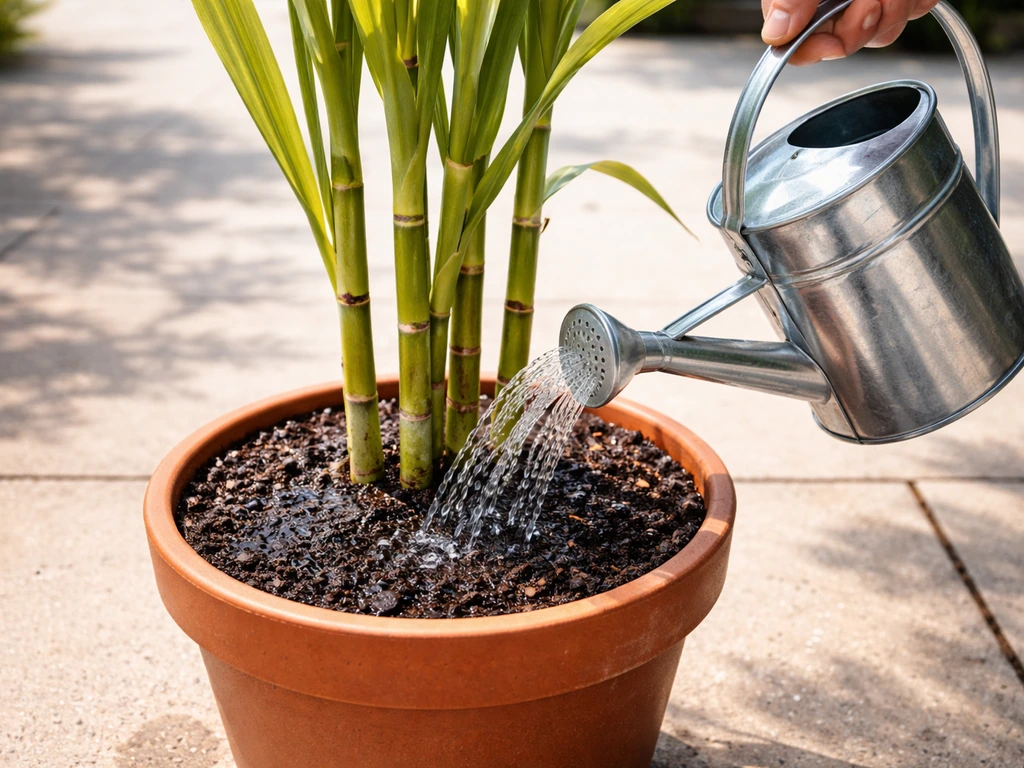
Sun requirements
Sugarcane absolutely needs full sun. I mean a minimum of 6 hours of direct sunlight per day, and 8–10 hours is even better. This is the single biggest factor that separates thriving container cane from weak, spindly, disappointing stalks. If your balcony or patio only gets partial sun, this might not be the right plant for that spot. A south-facing or west-facing location is usually ideal. One big advantage of growing in pots is that you can move the container to chase the best light through the season. For a similar pot-friendly approach with bulbs, learn how to grow tigridia in pots so you can enjoy colorful flowers throughout the season.
Watering
During the establishment phase (the first few weeks after planting), keep the soil consistently moist. You're trying to get those nodes to root, and dry soil will kill that process. After the plant is established and actively growing, let the top 1–2 inches of soil dry out between waterings before watering again. In hot, dry conditions, that might mean watering every 7–10 days with a deep soak (water until it drains out the bottom). In cooler or rainy weather, you can stretch that interval. The key rule is never let the pot sit waterlogged, but never let it fully dry out either. Gardening Know How also emphasizes that proper sugarcane irrigation varies with climatic conditions, soil type, and the specific watering method you use watering depends on climatic conditions, soil type, and the watering method. Stick your finger 2 inches into the soil: if it feels dry, water. If it still feels damp, wait.
Temperature and humidity
Sugarcane is happiest when temperatures are between 70°F and 95°F (21–35°C). It loves heat and humidity, which is why it thrives in tropical and subtropical climates. If you're growing in a cooler region, the growing season is shorter and your stalks may not fully mature, but you can still get good ornamental growth and partially developed stalks. Bring pots indoors or into a heated greenhouse when temperatures drop below 50°F (10°C). Frost will kill the above-ground growth outright, though the rhizomes may survive in the pot if you get them inside in time. High humidity is fine; sugarcane handles it well. What it doesn't handle is cold, wet conditions combined, so avoid placing pots in low spots where cold air and moisture pool.
Managing growth: spacing, support, and knowing when to harvest
Managing shoots and repotting
Once your original cutting establishes, it will begin sending up new shoots called ratoons from the base. This is natural and a sign of a healthy plant. In a container, you don't want to let ratoons multiply indefinitely because they'll compete for root space and nutrients. In a 20-gallon pot, aim for no more than 3–5 main stalks at a time. Remove any weak or very thin new shoots at the base so the energy goes to the strongest stalks. As the root mass grows, you'll notice growth slowing down and the plant looking stressed even with good watering and feeding. That's the sign to pot up: move to a container that's one size larger in diameter (typically 4–6 inches bigger across) and refresh the potting mix at the same time. Expect to repot once a growing season if the plant is really taking off.
Staking and support
Container-grown sugarcane rarely gets tall enough to need heavy staking the way field cane does, but if your stalks are pushing past 5–6 feet, they can become top-heavy and tip in wind. A simple bamboo stake tied loosely to each main stalk is usually all you need. Avoid tying too tightly, which can damage the stalk as it thickens.
When is it ready to harvest?
Sugarcane takes patience. In ideal conditions, stalks reach full maturity in 12–24 months, but in containers you can often harvest younger stalks at the 10–14 month mark, especially if you're chewing them fresh rather than pressing for juice. If you want a different edible plant to try in containers, you can also learn how to grow tinda in pots for a steady harvest of tender, round gourds. A harvest-ready stalk will be firm and thick (ideally at least 1 inch in diameter), have a full set of mature nodes visible along the stalk, and the leaves at the very top will have slowed their new growth rate. If you tap the stalk, it should sound solid rather than hollow. Cut the stalk at the base with a sharp machete or pruning saw. Peel back the outer layer and taste a section: ripe cane has a clearly sweet, juicy chew. The ratoons that remain will continue to grow and can be harvested in subsequent seasons.
Common problems in pots and quick fixes
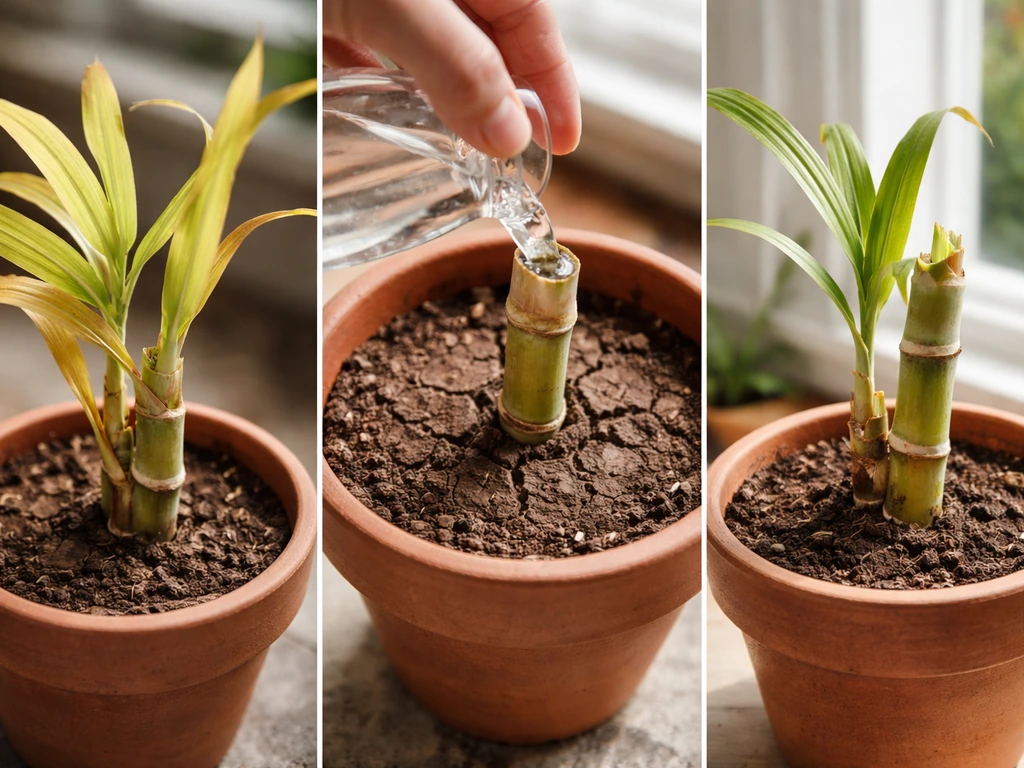
Growing sugarcane in containers is very doable, but a few specific issues come up regularly. Here's what to watch for and how to handle each one quickly.
| Problem | Likely Cause | Quick Fix |
|---|---|---|
| Cutting won't sprout after 4–6 weeks | Soil too dry, too cold, or cutting had no viable nodes | Keep soil consistently moist; move pot to a warmer spot (above 65°F); try a fresh cutting with more visible nodes |
| Yellowing leaves | Nitrogen deficiency, salt buildup, or overwatering/waterlogging | Check drainage first; if draining well, flush pot and apply a nitrogen-rich liquid fertilizer; if soil is soggy, reduce watering frequency |
| White crust on soil surface | Salt buildup from fertilizer or hard water | Flush the pot thoroughly with water until it drains freely; reduce fertilizer dose and frequency |
| Stunted growth despite good sun and water | Roots are pot-bound or nutrient-depleted potting mix | Repot into a larger container with fresh potting mix; resume fertilizing after 2 weeks |
| Aphids or small insects on leaves/stems | Common pest, especially in dry or dusty conditions | Spray with a strong stream of water to dislodge; use neem oil spray or insecticidal soap; monitor weekly |
| White or pale stripe along leaf (leaf scald symptoms) | Bacterial disease (leaf scald) | Remove and dispose of affected leaves; there is no cure, so remove severely affected plants and start fresh with clean cuttings |
| Stalk turns spongy or rots at base | Root rot from waterlogging | Improve drainage immediately; let pot dry more between waterings; cut away rotted portions and treat with a fungicide if caught early |
One disease worth knowing about is sugarcane smut, which shows up as black, whip-like growths emerging from the stalk tip. There's no cure once a plant has it. Pull the whole plant, bag it, and bin it. Don't compost diseased material. Prevention means starting with healthy cuttings from a trusted source and avoiding overhead watering, which spreads spores.
If you enjoy growing big, bold tropical plants in containers, sugarcane fits right in alongside similar large-scale experiments like growing tamarind or tapioca in pots. The principles overlap: large containers, great drainage, generous sun, and patience. Once you get your eye in for how container-grown tropicals behave, sugarcane starts to feel very manageable. Start with a single good cutting in a 20-gallon pot this spring, keep it in the sunniest spot you have, and you'll have a productive, impressive plant that turns heads and gives you real cane to harvest within a year or two. If you want to go a step further, you can also learn how to grow tapioca in pots using a similar approach to warm temperatures, light, and well-draining soil. If you're also wondering whether you can grow tamarind in a pot, the same kind of planning for container size, sun, and watering will apply.
FAQ
Can I grow sugarcane from store-bought cane stalks or grocery cuttings?
Sometimes, but it is hit or miss because many grocery stalks are treated or already dried, and they may not be viable cuttings. If you try, use the freshest stalk you can, cut it into 12–24 inch sections with several nodes, and plant as soon as possible. Expect a lower sprouting success rate than with cuttings sourced from healthy, actively growing plants.
How many nodes should each pot cutting (sett) have for the best results?
Aim for at least 3–6 nodes per cutting piece, and more is generally better if you want stronger, faster establishment. If you only have short sections with 2 nodes, success is possible but growth is slower and you may get fewer ratoon stalks later.
Should I cover the whole cutting with soil, and do I water immediately?
Cover the sett with a loose layer of mix so the nodes are in contact with moisture, typically with 2–4 inches of soil over the cutting. Water right after planting to settle the mix and remove air pockets, but make sure excess water drains from the bottom.
What’s the best way to tell if my potting mix is staying too wet?
Look for consistently damp mix at the surface, a foul smell from the pot, or yellowing leaves paired with slow growth. Also watch saucers, if the pot sits in runoff for long periods, root rot risk rises quickly. Let the top 1–2 inches dry between waterings once the plant is actively growing.
Why are my sugarcane shoots weak or failing after planting?
Most often it is cold soil, not enough sun, or the cutting was planted with too few nodes or with poor contact to moist mix. Make sure nighttime stays reliably warm, choose a sun-packed spot (8 to 10 hours is ideal), and avoid compacting the soil over the sett.
Do I need to fertilize, and how do I avoid burning roots in a pot?
Use light, controlled feeding rather than heavy doses, because salts build up faster in containers. If you fertilize with liquids, follow package rates and flush the pot every 4–6 weeks by watering until it drains freely. If you notice crusty residue on the soil surface, flush immediately and pause feeding until new growth looks healthy.
Can I grow sugarcane in a grow bag instead of a rigid pot?
Yes, heavy-duty grow bags can work well because they are breathable and provide easy root expansion. Choose a large size (around 20 gallons), keep it on a stand or tray for drainage, and be ready to water more often than with plastic tubs because grow bags dry faster.
How do I manage ratoons so the plant does not get crowded?
In a container, limit the number of main stalks to about 3–5 in a 20-gallon pot. Remove thin or weak shoots early at the base so the remaining stalks share less competition. If growth stalls even with good care, repot one size up and refresh the mix instead of just adding more fertilizer.
My sugarcane is getting taller than expected, should I stake it now?
If stalks exceed roughly 5–6 feet and start leaning, stake early with a bamboo cane tied loosely. Tight ties can constrict the stalk as it thickens, so leave slack and adjust once as the cane grows.
When should I harvest container-grown cane, and how can I tell if it is ripe enough?
For fresh chewing, you can harvest younger stalks around 10–14 months in ideal conditions. Choose stalks that feel firm and thick (about 1 inch diameter is a good target), have mature nodes visible along the stem, and have top growth slowed. If you tap it and it sounds solid and dense, it is more likely to be sweet and juicy.
What do I do if I suspect sugarcane smut?
Act fast. Smut produces black, whip-like growths from the tip, and there is no effective cure after infection. Remove the entire plant, bag it, and discard it so spores do not spread. Avoid watering from above, since splashing can move spores between plants.
Can I keep my sugarcane in the same pot year after year?
You can leave it longer than one season, but growth often slows after the container becomes root-bound and nutrients are depleted. The article recommends potting up once per growing season if it is thriving, and refreshing mix during that repotting helps reduce salt buildup and keeps drainage consistent.
What is the safest winter plan for potted sugarcane in cooler climates?
Bring the pot indoors or into a heated greenhouse when temperatures drop below about 50°F (10°C). Do not leave it outdoors where it can freeze, and avoid keeping it in cold, wet conditions. If the plant must stay dormant briefly, keep it bright and reduce watering so the mix does not remain soggy.