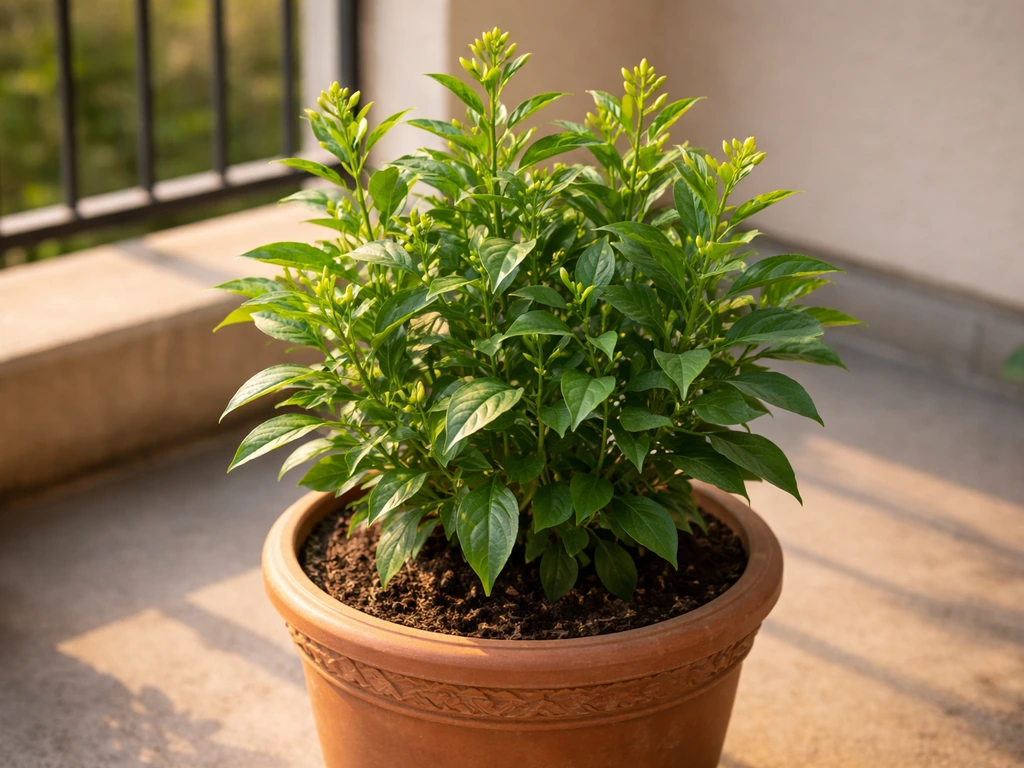
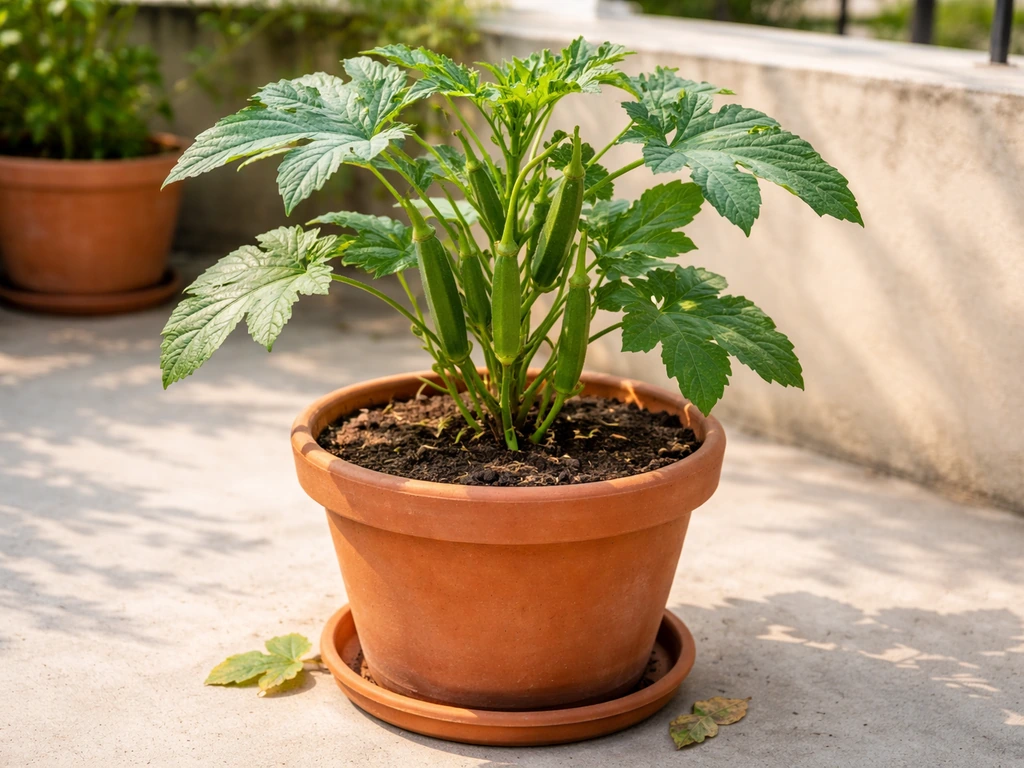
You can absolutely grow bhindi (okra) in pots, and it produces surprisingly well when you get a few basics right: give it a big enough container, full sun for most of the day, and don't let it dry out once it starts flowering. If you want to try a similar container leafy green, follow our guide on how to grow manathakkali keerai in pots for the right pot, soil, and care. A single healthy plant in a 5 to 7-gallon pot can keep you picking tender pods for weeks through the warm season.
How to Grow Bhindi in Pots: Beginner Step-by-Step Guide
Marcus Whitley
23 Jun 2026
Best pot size and setup for container bhindi
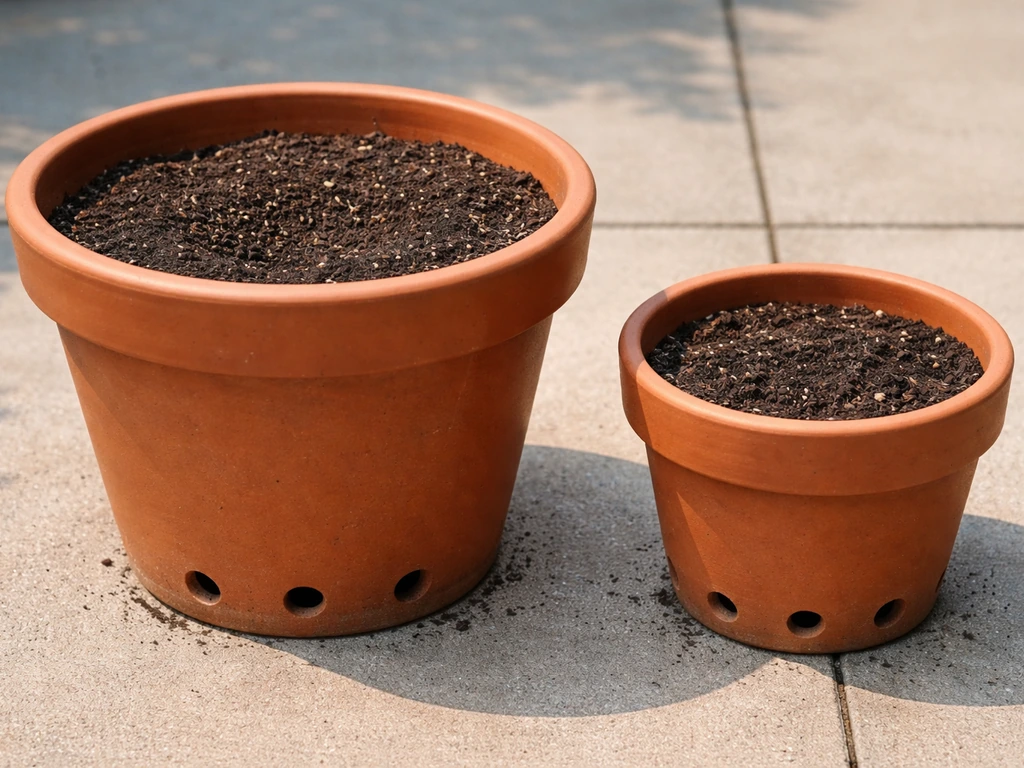
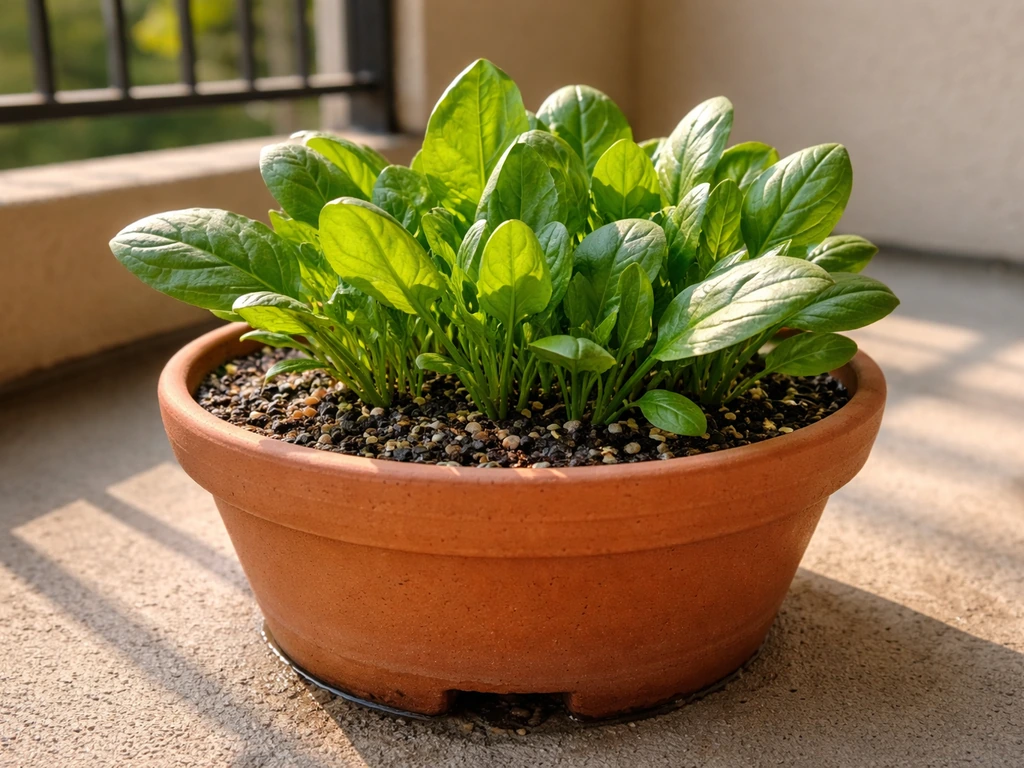
The single biggest mistake people make with pot-grown bhindi is using a container that's too small. Bhindi has a deep taproot and gets tall, so it needs room to anchor itself and pull in water. If you're also wondering how to grow palak in pots, the main ideas are similar: choose the right container size, keep the soil evenly moist, and feed lightly for steady leaf growth.
Go with at least a 5-gallon pot per plant, and if you can find a 7-gallon, even better. That's roughly a pot that's 30 to 35 cm (12 to 14 inches) wide and about as deep. [Stick to one plant per container at that size. ](https://www.
reddit. com/r/containergardening/comments/d88lhh/howmanyokraplantscanigrowina_pot/) Crowding two plants into a 5-gallon pot just means both of them struggle.
For pot material, both clay (terracotta) and plastic work fine, but they behave differently. For container crops, container material matters because different materials like clay and plastic dry out at different rates and hold moisture differently, which affects how long the potting mix stays wet clay (terracotta) and plastic. Clay pots breathe and dry out faster, which can be a problem in peak summer heat when bhindi is already thirsty. Plastic pots hold moisture longer, which is often more forgiving for beginners. If you use clay, just plan to water a little more often. Whatever you pick, drainage holes at the bottom are non-negotiable. Standing water at the roots will kill a bhindi plant faster than almost anything else.
Place a saucer under the pot if you're on a balcony or terrace, but tip it out after watering so water doesn't sit and reabsorb back up. Elevating the pot slightly on pot feet or bricks also helps with drainage and air circulation around the base.
Soil mix and planting method
Don't use plain garden soil in a pot. If you want, you can use the same well-draining potting approach to learn how to grow rajnigandha in pots successfully Don't use plain garden soil in a pot.. It compacts quickly, drains poorly, and tends to carry pests and diseases. You want a well-draining potting mix that also holds some moisture and nutrients. A good working mix is two parts quality potting compost, one part perlite or coarse sand (for drainage), and one part well-rotted compost or vermicompost for fertility. This keeps roots aerated while still giving the plant something to eat.
Bhindi is best started from seed sown directly into its final pot. It doesn't transplant well because of that taproot, and disturbing the roots at seedling stage often sets the plant back significantly. If you do need to start indoors early (more on timing below), use biodegradable peat pots or coir pots that go straight into the ground without root disturbance.
Soak seeds in water for 12 to 24 hours before sowing. This softens the hard seed coat and speeds up germination noticeably. Sow seeds about 1 to 2 cm (half an inch to an inch) deep. Put two seeds per pot, then thin to the strongest one once both have germinated. Don't leave both growing together, even if it feels wasteful. One well-fed plant outperforms two competing ones every time.
Sunlight, temperature, and timing
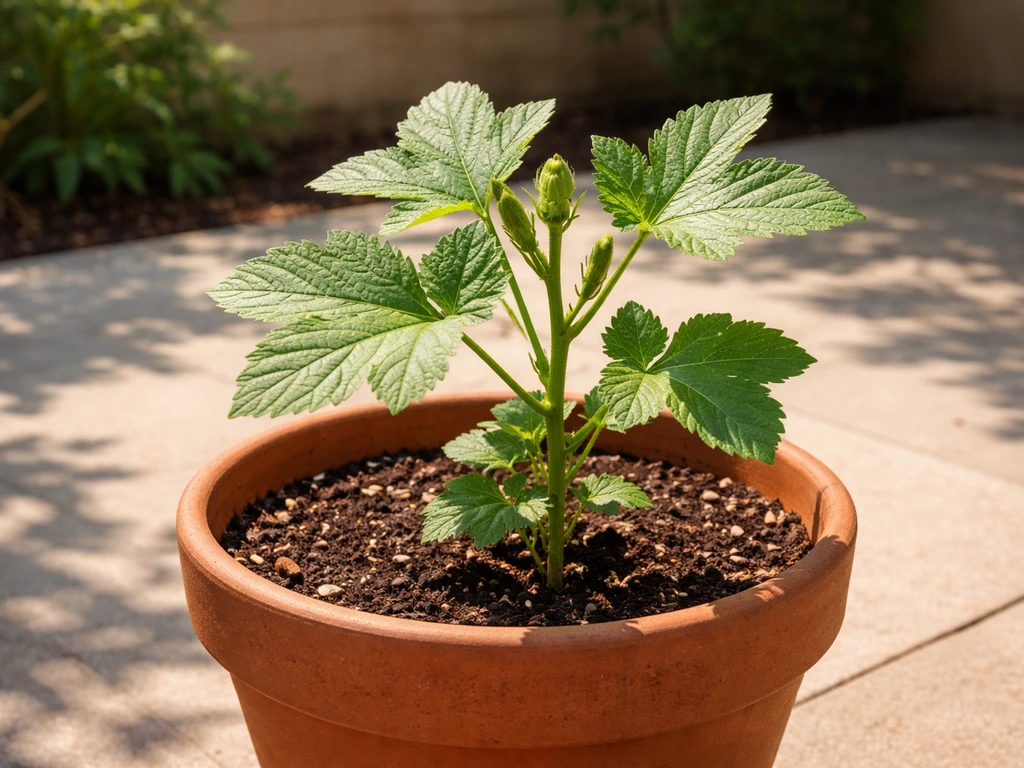
Bhindi is a full-sun, heat-loving plant. The same general container gardening approach also applies if you're learning how to grow kaddu in pots. It needs at least 6 to 8 hours of direct sunlight daily, and it grows best when temperatures are consistently warm. Seeds germinate in soil temperatures between 60°F and 105°F (about 16°C to 40°C), with germination typically taking 5 to 10 days. In warm climates (most of India, Southeast Asia, and tropical regions), you can sow directly any time from late February through July, depending on your monsoon pattern. The key is to avoid sowing when nights are still cold, since cool soil dramatically slows or stalls germination.
If you're in a place with a shorter warm season, start seeds indoors in peat pots 3 to 4 weeks before the last frost date and move the whole pot outside once it's consistently warm. The container advantage here is real: you can chase the sun by moving the pot to the warmest spot on your balcony or rooftop, which a ground gardener simply can't do.
Position your pot somewhere it gets morning sun through midday at minimum. If you want to grow vegetables in pots the right way in Hindi, focus on the basics like pot size, sunlight, and a well-draining soil mix how to grow vegetables in pots in hindi. A south or west-facing balcony usually works well. Avoid spots that are shaded for more than half the day; a shaded bhindi plant produces very few flowers and even fewer pods.
Watering and fertilizing routine in pots
Watering is where most pot-grown bhindi fails, usually from one of two extremes. For a full walkthrough, follow our guide on how to grow karela in pot. Underwatering during the flowering stage directly causes flower drop and reduces yield. Overwatering at any stage promotes root rot. The practical rule: water when the top 2 to 3 cm of soil feels dry to the touch, and water deeply enough that it drains out of the bottom holes. In hot weather, this might mean watering once a day or even twice for a small clay pot. In cooler spells or after rain, hold back and check the soil first.
Once bhindi starts flowering, it becomes especially sensitive to soil moisture stress. Keep watering consistent during this period. Inconsistent watering (flooding then drought cycles) causes bud and flower drop and is one of the most common reasons for poor pod set in container plants.
For fertilizing, think in two phases. Before sowing and during early vegetative growth, the plant needs a balanced feed with nitrogen, phosphorus, and potassium to build strong roots and leaves. For example, Oklahoma State University Extension recommends a [preplant application of nitrogen, phosphorus, and potassium](https://extension. okstate.
edu/fact-sheets/okra-production) based on soil test recommendations as part of a fertilization strategy. Mix a slow-release balanced fertilizer into your potting mix at planting time. Once the plant starts flowering and setting pods (usually around 5 to 6 weeks after germination), shift to a fertilizer lower in nitrogen and higher in potassium and phosphorus. Too much nitrogen at the fruiting stage gives you lush leaves but fewer pods.
A liquid potassium-rich feed every 10 to 14 days through the fruiting season keeps production going well. You can also use diluted liquid vermicompost or banana peel water as a gentle potassium top-up.
Support and pruning for better yields
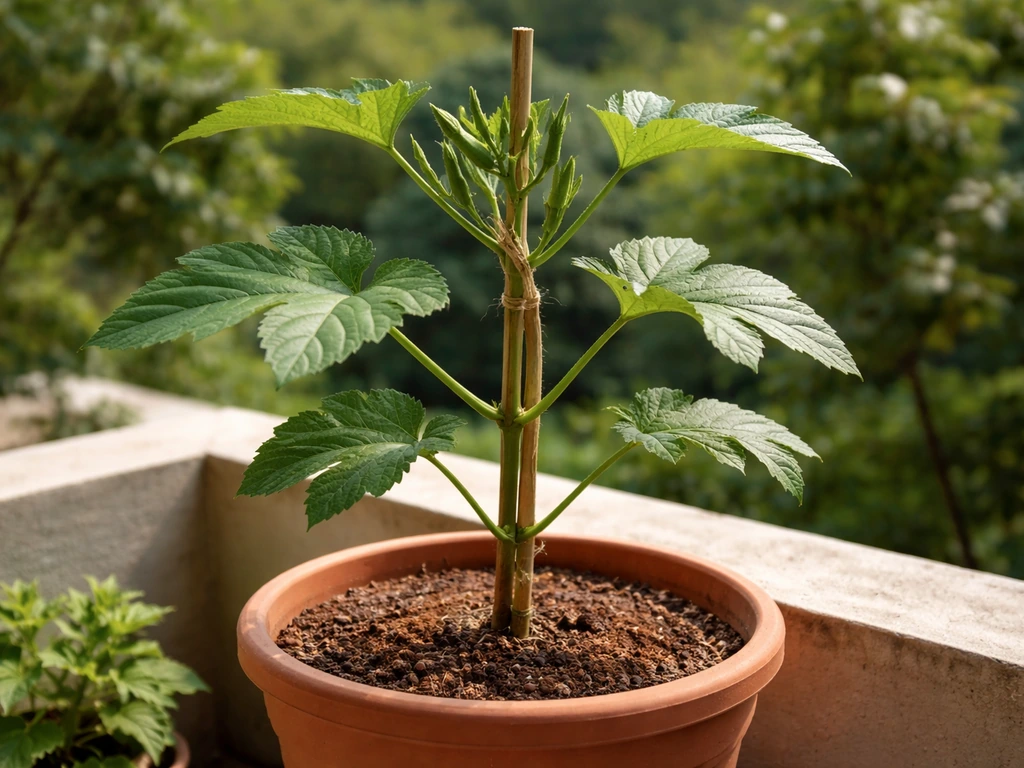
Bhindi plants in pots can get surprisingly tall, sometimes reaching 90 cm to 1.5 meters (3 to 5 feet) depending on the variety. In a container, a top-heavy plant in full leaf is vulnerable to tipping over in wind. Stake the plant once it reaches about 40 to 50 cm tall using a bamboo cane or any sturdy stick, and tie the stem loosely with soft string. This prevents snapping and keeps the plant upright without restricting growth.
Once the plant hits about 60 cm (2 feet) tall, pinch out the main growing tip. This encourages the plant to branch and produce more flowering side shoots, which means more pods overall. It feels counterintuitive to cut off the top of a growing plant, but it genuinely works. You'll see new shoots forming within a week or two, and each one can carry pods. Remove any yellowing lower leaves as they appear, since they drain energy from the plant and can harbour disease.
Common problems in potted bhindi and how to fix them
Growing bhindi in pots concentrates the issues: limited soil volume means nutrient depletion happens faster, drainage problems become more acute, and pests on a single plant can be more damaging. Here's what to watch for and what to do. If you want step-by-step tips, see our guide on how to grow dhaniya in pots.
| Symptom | Likely Cause | Quick Fix |
|---|---|---|
| Yellowing lower leaves | Nitrogen deficiency or overwatering | Check soil moisture first. If not waterlogged, apply a diluted balanced liquid feed |
| Flowers dropping without setting pods | Moisture stress or heat extremes | Water more consistently; move pot to slight afternoon shade during extreme heat peaks |
| Slow or no germination | Soil too cold or seeds too dry | Move pot to a warmer spot; ensure soil temp is at least 18–20°C; soak seeds before next sow |
| White powdery coating on leaves | Powdery mildew (fungal) | Improve air circulation; spray with diluted neem oil solution; remove badly affected leaves |
| Wilting despite wet soil / root rot | Overwatering, poor drainage | Reduce watering immediately; ensure drainage holes are clear; repot into fresh mix if severe |
| Tiny holes in leaves or sticky residue | Aphids, spider mites, or whitefly | Spray with neem oil or insecticidal soap solution; check undersides of leaves; repeat weekly |
| Stunted growth, pale plant overall | Nutrient-depleted potting mix | Apply balanced liquid fertilizer; consider top-dressing with a tablespoon of slow-release granules |
Powdery mildew is worth a special mention because it's common on container bhindi in hot, humid conditions. It shows up as a white or grey dusty patch on leaves and spreads quickly. It won't kill the plant immediately, but a bad infection weakens it and reduces pod production. Neem oil spray (mixed as directed, applied in the evening to avoid leaf burn) is an effective and easy first response. Don't wait for it to spread across the whole plant before acting.
Root rot is the other serious one, and it's almost always caused by overwatering or a pot with poor drainage. If the plant is wilting but the soil feels wet, and you notice a smell or blackened roots if you check, that's root rot. If caught early, letting the soil dry out completely and improving drainage can save the plant. If it's advanced, you may need to repot into fresh, dry mix and trim any blackened roots. Prevention is much easier than treatment: clean potting mix, functioning drainage holes, and not watering by schedule but by checking soil moisture.
Harvesting bhindi in pots and keeping pods coming
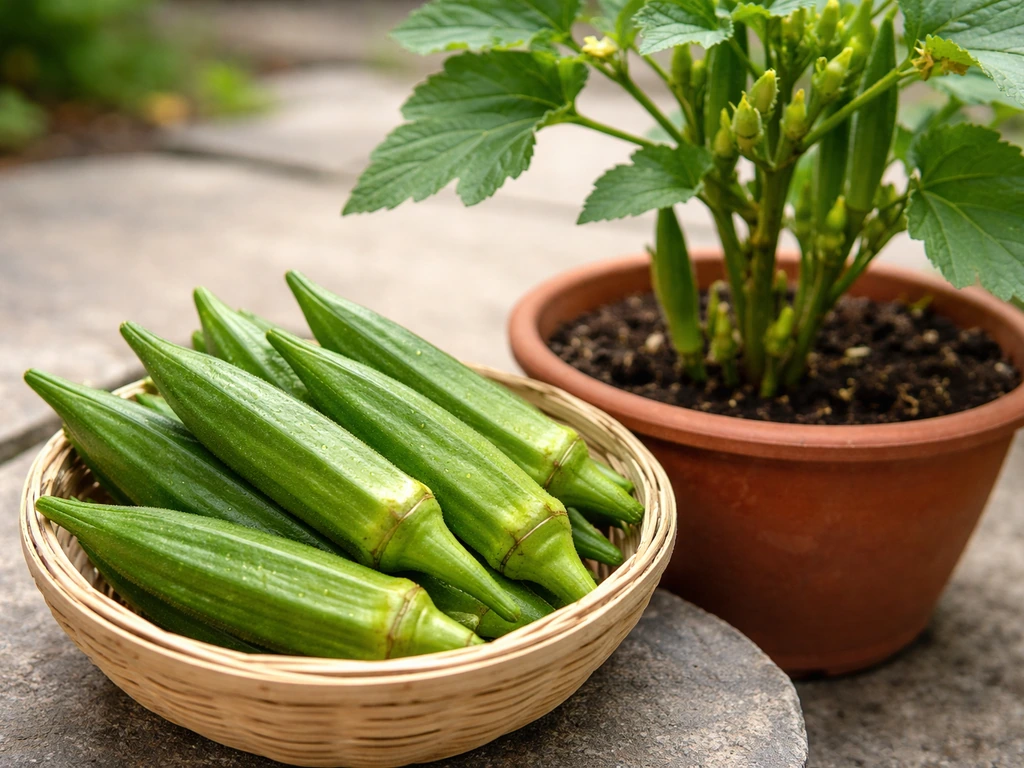
Bhindi is ready to harvest around 50 to 60 days after planting. Once flowers appear, pods develop fast: you can harvest about 4 to 6 days after flowering. The sweet spot for pod size is 5 to 9 cm (2 to 3.5 inches) long, when they're bright green, tender, and snap cleanly. At this size they're perfect for cooking. Leave them longer and they go tough and fibrous very quickly, sometimes within another day or two. It's worth checking your plant every single day once it starts producing.
The harvesting rhythm matters a lot for continuous production. Pick every other day, or at most every two days. Leaving mature pods on the plant signals to it that reproduction is complete and slows down new flower and pod formation. Regular harvesting keeps the plant in production mode. Handle pods gently when picking: bruising causes dark spots on the skin which look unappetizing even if the pod is fine inside.
Use clean scissors or a small knife to cut the stem just above the pod rather than pulling, which can damage the plant. Store freshly picked pods in a paper bag in the fridge and use within 2 to 3 days for best texture. A healthy potted bhindi plant in good sun can produce pods for 8 to 12 weeks through the warm season with consistent care.
A quick setup checklist before you start
- Get a 5 to 7-gallon pot with drainage holes (one pot per plant)
- Fill with a mix of potting compost, perlite or coarse sand, and vermicompost
- Soak seeds overnight, then sow 1 to 2 cm deep (two seeds per pot)
- Place in the sunniest spot available (6 to 8 hours of direct sun daily)
- Water when the top 2 to 3 cm of soil is dry, not on a fixed schedule
- Stake at 40 to 50 cm height; pinch the growing tip at 60 cm
- Switch to a potassium-rich feed once flowering begins
- Harvest pods every 1 to 2 days once they reach 5 to 9 cm
Bhindi is one of the more rewarding vegetables to grow in a pot because the turnaround from flower to harvest is so fast and so visual. Once you've done it once, the process becomes intuitive. If you enjoy growing other vegetables in containers, the same principles around drainage, sun, and consistent watering apply to crops like karela, kaddu, and palak too, each with their own specific tweaks for pot growing. To learn the full pot-by-pot process for bhindi, including sowing, soil, and ongoing care, see this guide on how to grow alugbati in pots.
FAQ
Can I grow bhindi in a 2 to 3 gallon pot if I only want a few pods for home use?
For bhindi, 5 to 7 gallons is the reliable range. In a smaller pot, the taproot has less room to anchor and the soil dries out quickly, which commonly causes flower drop. If you try a smaller container anyway, treat it like a short crop, expect lower yields, and water more frequently, but plan on re-growing rather than expecting long production.
How often should I water bhindi in pots if I’m unsure whether the topsoil is dry?
Do a fingertip check at 2 to 3 cm depth. Water only when that layer feels dry, then water deeply until it drains out the bottom holes. In hot weather clay pots may need daily or near-daily watering, but during cloudy spells or after rain you may need to skip a day. Don’t water on a fixed schedule because pot weight and drying speed change daily.
What should I do if my bhindi plants flower but the pods never set?
Flowering without pods usually points to moisture swings, too much nitrogen, or insufficient sun. Make watering consistent during the flowering period, switch to a potassium-forward feed, and confirm the pot gets at least 6 to 8 hours of direct light. Also avoid crowding, because competition for water and nutrients can reduce pod set.
Is it okay to move a pot of bhindi around to chase sunlight during the day?
Yes, but limit heavy handling. Bhindi is heat-loving and shifting to a warmer, brighter spot can help. Move the pot gently, avoid breaking the soil ball, and keep the plant in the same pot for the whole season to reduce stress. Try not to expose it suddenly to harsher midday sun, acclimate over a couple of days if it was previously in shade.
Should I pinch the top of bhindi, and will it reduce flowering early on?
Pinching at about 60 cm encourages branching and generally increases total pod count. It may pause main-stem growth briefly, but side shoots form soon and then carry pods. If your plant is shorter or stressed (drying out, cold nights, or pest damage), wait until it looks actively growing before pinching.
Why are my bhindi leaves turning yellow from the bottom, is it always a problem?
A few yellowing lower leaves can happen naturally as the plant focuses energy on flowering and fruiting. However, widespread yellowing can signal overwatering, poor drainage, or nutrient imbalance (often too much nitrogen or lack of potassium during fruiting). Remove clearly yellow, non-productive leaves, then check soil moisture and adjust feeding if the yellowing spreads.
Can I start bhindi indoors in a normal plastic seed tray and transplant later?
Bhindi does not transplant well because of the taproot. If you must start early, use peat or coir containers that can go into the pot with minimal root disturbance, then plant into the final pot once warm. Avoid bare-root transplanting, because it often causes setback and fewer pods.
What’s the best way to thin bhindi seedlings when I sow two seeds per pot?
Thin to one strongest seedling as soon as both have germinated and you can clearly identify the better one. Remove the weaker seedling at soil level (snip if needed). Don’t pull it out, because the remaining seedling’s taproot can be damaged.
How do I prevent powdery mildew on container bhindi?
Improve airflow and reduce leaf wetness. Water at the soil level, avoid splashing, and don’t crowd pots together if you’re growing multiple containers. If mildew appears, neem oil is a good early option applied in the evening, but keep monitoring and repeat as directed for the life of the infection to avoid it spreading.
My bhindi plant wilts but the soil is wet, what does that mean?
That pattern often suggests root rot. If the soil feels wet and the plant wilts, stop watering immediately, inspect drainage holes, and check roots if you can. Early root rot may recover if the mix dries and drainage improves, but advanced cases may require repotting into fresh dry mix and trimming blackened roots.
How can I tell if I’m harvesting bhindi at the right stage?
Harvest when pods are bright green and tender, about 5 to 9 cm long, and they snap cleanly when bent. If pods grow longer and feel tough or fibrous within a day or two, you are harvesting late. Start checking daily once flowering begins to catch the window at peak tenderness.
Do I need to use trellis support for every bhindi variety in pots?
Many potted bhindi plants get tall, so support helps prevent tipping in wind. Stake around 40 to 50 cm height and use soft ties so you don’t girdle the stem. If your variety stays compact and your balcony is sheltered, you may get by with lighter support, but never assume the plant will stay upright without it in breezy locations.